

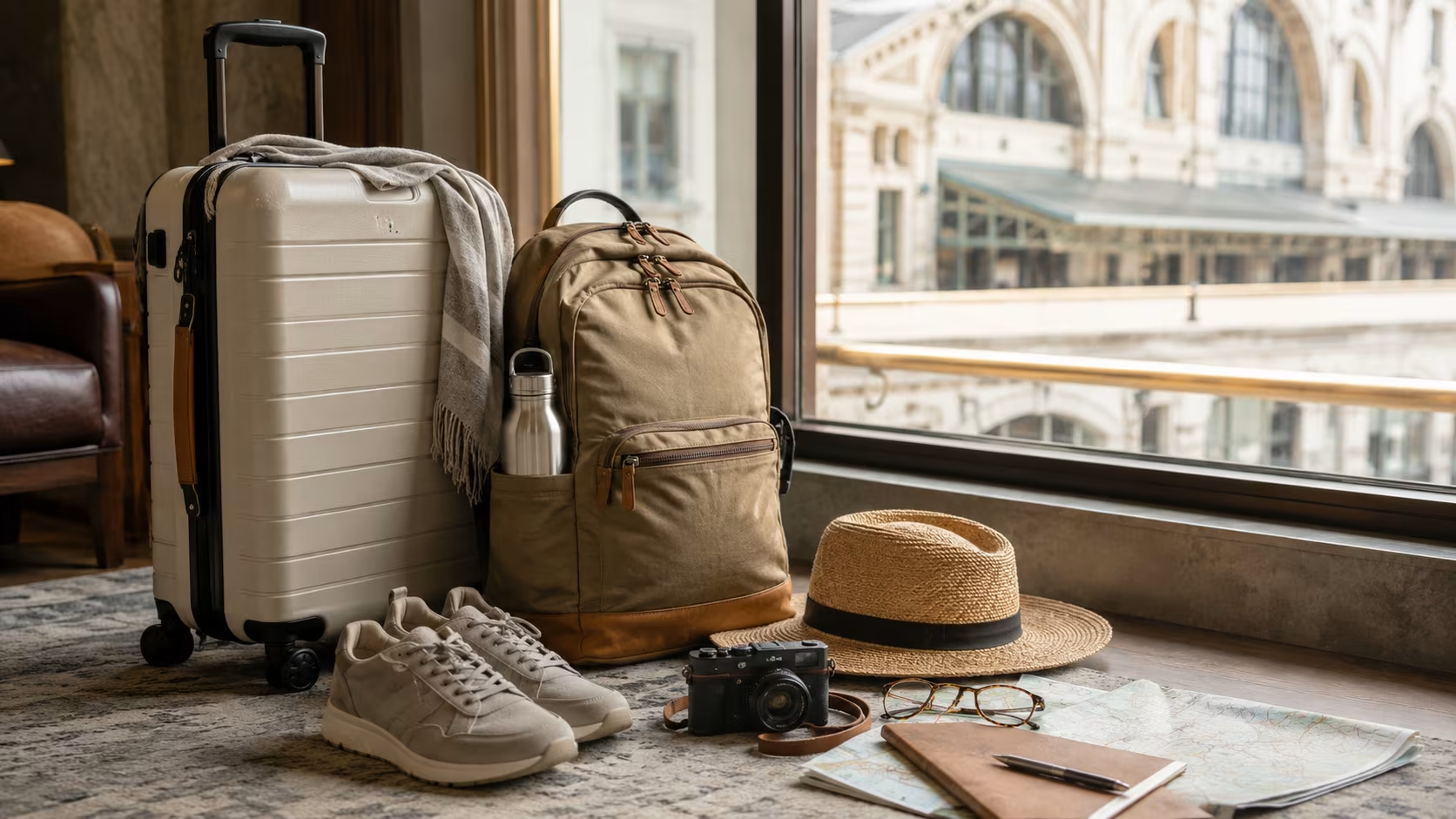
Senior travel — adults 60+ traveling internationally — is the fastest-growing demographic in 2026. Boomers + early Gen Xers have the time, the disposable income, and the experience to travel well. Most senior travelers don't want a curated bus-tour experience that treats them like they need protection from the world. They want real travel with realistic accommodations for changing physical needs.
This is a 2026 field guide for active adults 60+ planning international travel. The advice maps to mobile, healthy seniors with normal age-related considerations — not pre-medical or unable-to-walk situations.
What Changes (and Doesn't) at 60+
The honest mechanics:
Physical Changes
- Recovery time slower. A 12-hour day produces more next-day fatigue than at 40.
- Heat sensitivity higher. Especially at altitude or in humidity.
- Sleep more disrupted by jet lag. Recovery from time-zone shifts takes longer.
- Joint impact accumulates. Cobblestoned + uneven terrain matters more.
- Travel insurance considerations more complex.
- Medication management during international travel.
What Doesn't Change
- The ability to enjoy great experiences.
- The capacity for long walks if pace is reasonable.
- The ability to engage with new cultures.
- The wisdom of slowing down + savoring.
Destination Selection
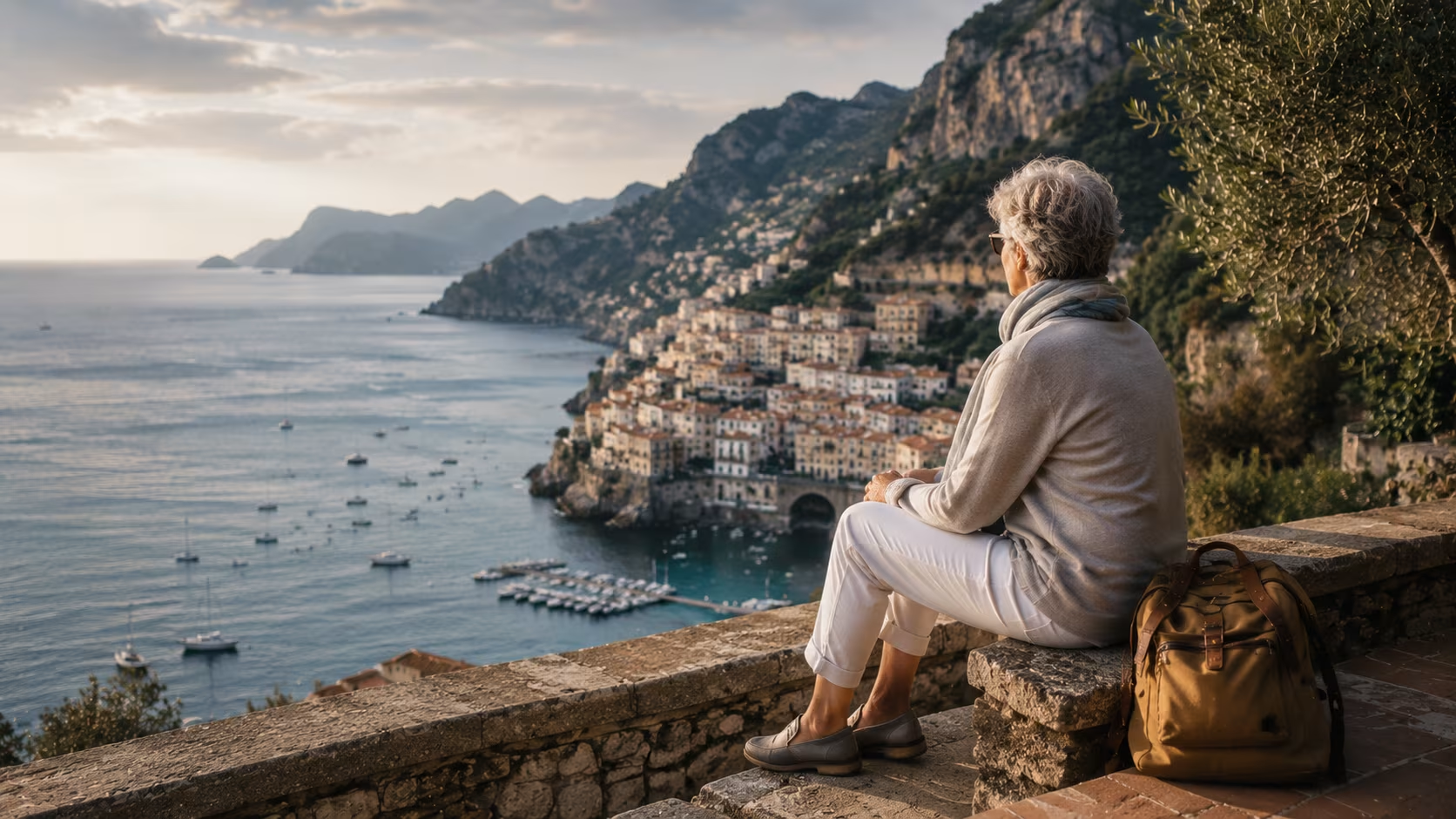
Not every destination works equally for senior travelers.
Strong Senior Destinations
| Destination | Why it works |
|---|---|
| Lisbon, Portugal | Walkable + mild climate + slow pace + English in tourism |
| Vienna, Austria | Tram-accessible + slow café culture + walkable old town |
| Kyoto, Japan | Slow pace + temple gardens + good public transit + safety |
| Tuscany, Italy | Wine country + good food + slow countryside + temperate |
| Provence, France | Similar Mediterranean appeal |
| Quebec City, Canada | Walkable + bilingual + romantic + safe |
| Cinque Terre, Italy | Coastal walking + manageable scale |
| Bath, UK | Roman + Georgian heritage + spa culture |
| Dublin, Ireland | Walkable + cultural + English |
| Copenhagen, Denmark | Bike-friendly + walking + design culture |
| Mexico City, Mexico | Active culture + slower pace areas + altitude consideration |
| Vienna or Salzburg | Music heritage + manageable cities |
| Sintra, Portugal | Less hilly options + day-trip friendly |
| Cruises (specific) | Pre-arranged logistics + medical-on-board (Viking, Crystal, Holland America are senior-friendly) |
Tougher Senior Destinations
| Destination | Why challenging |
|---|---|
| Cusco/Machu Picchu | High altitude (3,400m); requires significant fitness |
| Indian cities (Delhi, Mumbai) | Heat + intensity + transit challenges |
| Sahara desert | Extreme conditions |
| Patagonian trekking | Multi-day extreme outdoor |
| Iceland Ring Road | Driving long distances + remote landscape |
| Cairo | Heat + intensity + sales pressure |
| Marrakech | Souk pressure + chaotic medina |
| Bangkok | Heat + intensity + traffic |
| Dubai | Limited walkability + heat |
Best for First-Time Senior International Trip
If this is your first major international trip + you're 60+:
- Lisbon, Portugal (mild + walkable + slow).
- Tuscany / Italy (countryside + wine + food).
- Quebec City (close + bilingual + safe).
- Vienna (cultural + manageable).
- Lake District / Cotswolds, UK (slow + scenic).
Trip Style Selection

Slow Travel + One-Base Trips
Best for: travelers who prefer depth over breadth.
- 7-10 days in one city + day trips.
- Apartment rental rather than hotel hopping.
- Local rhythm rather than tourist itinerary.
- One major activity per day.
Cruises + Guided Tours
Best for: travelers who prefer pre-arranged logistics.
- River cruises (Viking, AmaWaterways, Avalon) — 1-2 weeks in Europe along Rhine + Danube + Seine; small ships; no flights between destinations; medical staff onboard.
- Ocean cruises with senior demographic (Cunard, Crystal, Oceania).
- Small-group bus tours (Tauck, Insight Vacations, Trafalgar). Pre-arranged logistics; English-speaking guides; manageable groups.
Independent + Slow
Best for: experienced senior travelers wanting flexibility.
- Independent flights + apartments.
- Pre-booked train + bus tickets.
- Self-paced exploration.
- Premium hotels for comfort.
Active + Adventure (For Very Active Seniors)
Best for: seniors who maintained athletic fitness.
- Hiking trips (Cinque Terre, Camino de Santiago, etc.).
- Bike tours.
- Sailing trips.
- Active premium tours.
Pre-Trip Medical Preparation
The most-important difference from younger travel.
Medical Consultation
6-12 weeks before an international trip, especially if going to non-Western destinations:
- Visit travel-medicine clinic for vaccinations + advice.
- Confirm regular medications for full trip duration + buffer.
- Discuss specific destination concerns with your doctor.
- Get prescription for traveler's diarrhea antibiotics if going to risk areas.
- Confirm vaccinations are up to date (tetanus, MMR, COVID, flu).
- Trip-specific vaccinations (hepatitis A, typhoid, yellow fever, etc.).
Medication Management
- Bring prescriptions in original bottles with names matching passport.
- Pack 30-day buffer beyond trip duration.
- Carry copy of prescriptions in case bottles lost.
- Split medications between carry-on + checked luggage if traveling with someone.
- Bring backup medication for chronic conditions.
- Document medical conditions + emergency contacts in phone notes.
Health Documents
- Travel insurance card.
- Medical conditions list (translated for destination if useful).
- Emergency contacts including primary doctor.
- Allergy information.
- Recent ECG / medical records for travelers with cardiac history.
Insurance + Coverage
Travel insurance is non-negotiable for senior travel:
- Comprehensive policy including medical, evacuation, trip cancellation.
- Pre-existing condition waiver required for many; ensure your policy covers your conditions.
- High medical limits — $250,000-$1M minimum.
- Medical evacuation coverage of $500K+.
- 24/7 assistance line.
Recommended providers for seniors:
- Allianz Travel Insurance.
- Travel Guard (AIG).
- HTH Worldwide.
- John Hancock Insurance Agency.
- IMG Global.
Pre-existing-condition waivers typically require purchase within 14-21 days of initial trip deposit + ability to travel at time of purchase.
Accommodation Strategy
What Matters More for Senior Travelers
- Elevator access. Climbing 4 flights with luggage is real friction.
- Quiet location. Sleep matters; partying neighbors don't.
- Climate control. AC + heating reliability.
- Comfortable beds. Hostel mattresses + budget hotels can fail.
- Walking distance to amenities (food, pharmacy, transit).
- Quality bathrooms (good showers, grab bars).
- 24-hour reception for security + assistance.
Hotel Selection
- Mid-tier hotels (4-star) typically work well: comfort + amenities + reasonable price.
- Senior-friendly chains: Marriott, Hilton, Hyatt, IHG.
- Boutique hotels can be excellent but verify accessibility (some old buildings have no elevators).
- Avoid hostels for most senior travelers.
Apartment Rentals
For stays of 5+ nights:
- Verify elevator access.
- Verify ground floor or 1st floor if no elevator.
- Check for stairs in property (some apartments have internal stairs).
- Verify climate control.
- Read recent reviews specifically from older travelers.
Pacing Strategy
The 70% Rule
Plan for 70% of activity ambition vs. younger travel:
- 2-3 major activities per day (not 5-6).
- Rest day every 2-3 active days.
- One slower day per week for built-in recovery.
- Late starts (08:30-09:00 wake; activity by 10:00).
- Earlier finishes (back to hotel by 19:00 with rare exceptions).
Specific Tactics
- Schedule rest after activities. 1-hour break after major museum visit.
- Mid-afternoon hotel return is normal for slow travel.
- Don't try to push through fatigue. A bad day at 60+ takes 2 days to recover.
- Hydrate aggressively. 3+ liters per day; more in heat.
- Eat regularly. Don't skip meals to save time.
- Don't drink heavily. Alcohol metabolism slows after 50; 1-2 drinks max nightly.
Mobility Considerations
Walking Surfaces
Different destinations have different impact:
- Cobblestoned cities (Florence, Prague, Lisbon, Barcelona): can be ankle-twisting + foot-tiring. Comfortable shoes essential.
- Hilly cities (Lisbon, San Francisco, Naples): real elevation gain.
- Stairs at major sights (Coliseum, Sacred Valley sites). Verify before booking.
Footwear
Critical for senior travelers:
- Cushioned walking shoes. Hoka Clifton, New Balance 990v6, Asics Gel-Kayano.
- Two pairs minimum. Rotate to dry between days.
- Break in 2+ weeks before travel.
- Skip new shoes mid-trip.
Walking Aids
- Trekking poles for hiking + uneven terrain.
- Lightweight folding cane if needed for long walking days.
- Pre-trip physical therapy if joint issues.
- Warm-up routine before active days.
Public Transit
- Avoid rush-hour transit when possible.
- Reserve seats on trains.
- Aisle seats for easier movement.
- Senior discounts on many country transit systems.
Food + Drink for Senior Travelers
Adjustments
- Smaller portions at restaurants.
- Lighter dinners to support sleep.
- More vegetable-forward eating.
- Less alcohol.
- More water.
- Avoid extreme spice (bothers digestion at any age, more at 60+).
Specific Tactics
- Eat at the destination's meal times. Spanish dinners at 21:00; Italian dinners at 20:30. Match to local rhythm.
- Apartment kitchen for some meals. Reduces eating-out fatigue.
- Avoid "trying everything" mentality. Pick 2-3 special meals + eat lighter at others.
Stomach Health
- Bottled water in countries with poor tap water.
- Avoid raw vegetables / unpeeled fruit in higher-risk destinations.
- Probiotic supplements before + during trips to risk areas.
- Bring electrolyte powders for dehydration.
- Bring anti-diarrheal medication + pre-prescribed antibiotics if relevant.
Sleep Management
Why It Matters More
- Sleep architecture changes after 60. Less deep sleep; more interruption.
- Jet lag recovery is slower. A 6-hour shift may take 4-5 days vs. 2-3 at 30.
- Cumulative sleep debt produces real decline.
Strategies
- Choose flights that respect your sleep needs. Daytime flights for short trips.
- Build buffer days for jet lag recovery (especially for 6+ hour shifts).
- Maintain bedtime routines as much as possible.
- Black-out curtains + eye mask + earplugs non-negotiable.
- Quality bed matters more than at younger ages.
- Cool room (16-19°C) for better sleep.
- Limit alcohol after 18:00.
- Limit caffeine after 14:00.
- Brief naps (under 30 min) OK; longer naps disrupt night sleep.
Travel-Type Specific Advice
Multi-Generational Trips (With Adult Children + Grandchildren)
- Communicate expectations clearly. Pace, activity level, costs.
- Allow separate time for sub-groups during the trip.
- Don't try to keep up with everyone. Adult children + grandchildren may want longer days.
- Schedule rest days.
Solo Senior Travel
- Build in safety margins. Daily contact with someone at home.
- Consider organized tours with senior demographics for first solo trips.
- Use established platforms (TrustedHousesitters, Servas) for accommodation.
- Travel insurance is essential.
Couples Senior Travel
- Discuss pace expectations. One partner may have slower energy.
- Plan independent activities. Each person has 1-2 solo activities per trip.
- Communicate medical needs to traveling companion.
Senior Cruises + River Cruises
- Verify medical staff onboard.
- Choose smaller ships for senior-friendly atmospheres.
- Specific senior brands: Viking, Crystal, Cunard, Holland America.
- Excursion options matter more than ship size.
Specific Destinations + Considerations
Europe
- Most major European cities have good infrastructure for senior travelers.
- Western Europe generally easier than Eastern.
- Trains > flights for most intra-Europe travel.
- Slower-paced cities (Lisbon, Krakow, Florence) over rapid-paced (Paris CDG, London).
Asia
- Japan is excellent for senior travelers (clean, safe, infrastructure).
- Singapore + Hong Kong + Taiwan similar.
- Thailand + Vietnam + Bali require more adaptation but possible.
- India challenging; consider escorted tours.
Latin America
- Mexico City + Buenos Aires both work for senior travelers (with altitude consideration in CDMX).
- Cuzco/Machu Picchu challenging due to altitude; possible with preparation.
- Patagonia trekking for very active only.
- Caribbean cruise + Yucatán good combinations.
Africa
- South Africa safari lodge-based tours work well.
- Morocco with private guide.
- Kenya / Tanzania with established operators.
- Egypt with private guide; manage heat carefully.
Practical Day-to-Day
Morning Routine
- Late wake (07:30-08:30).
- Slow coffee + breakfast.
- Light stretching.
- Out by 10:00.
Midday
- Major activity 10:00-13:00.
- Real lunch + slow.
- Mid-afternoon rest (14:00-16:00).
Afternoon
- Second activity 16:00-18:00 (lighter).
- Café break.
Evening
- Dinner 19:00-20:30.
- Light walk + early bedtime.
Common Senior Travel Mistakes
- Trying to do everything. Pace destroys.
- Skipping travel insurance. Real consequences.
- Booking long red-eye flights to maximize travel time.
- Not allowing jet lag recovery.
- Drinking heavily at vacation rate from younger years.
- Walking 25 km in cobblestoned shoes.
- Skipping medications because of "vacation."
- Underestimating altitude.
- Visiting in high heat when shoulder seasons easier.
- Booking 4-star hotels when 5-star comfort matters.
- Carrying too much luggage.
- Not pre-arranging airport assistance.
- Pretending physical limitations don't exist.
Resources for Senior Travelers
Tour Operators with Senior Focus
- Road Scholar (educational tours; senior-focused).
- Tauck (premium small-group).
- Viking (river + ocean cruises).
- National Geographic Expeditions.
- Adventures Abroad (active mature travelers).
- Insight Vacations.
Online Communities
- Senior Solo Travel Network.
- Solo Traveler.
- Boomer Travel Patrol.
Travel Insurance for Seniors
- AAA Travel Insurance (member discounts).
- AARP Travel Insurance (member discounts).
- Allianz Travel Senior Plans.
Final Notes
Senior travel in 2026 is more accessible + better-supported than ever. The travelers who get this right pace deliberately + prepare medically + choose destinations realistically + pack modest expectations.
The single best advice choose 1-2 destinations to do really well rather than 5-6 to do superficially. The 14-day stay in Lisbon + Sintra + Porto produces dramatically better experience than 14 days across 8 European cities.
The second-best invest in good walking shoes + comfortable accommodations. The cost difference between mid-tier + premium accommodations is real money but the rest + comfort impact is also real. At 60+, sleeping well + walking comfortably affects the entire trip's quality.
The quietest piece of advice don't apologize for needing to slow down. Slow travel produces deeper experiences than rushed travel at any age; senior travelers often have time + means to really inhabit destinations rather than checking them off. The Lisbon you experience over 10 slow days reveals more than the Lisbon you experience in a 3-day rushed weekend. Lean into the time + the patience that the years have given you.
0 Comments
No comments yet — start the conversation.