

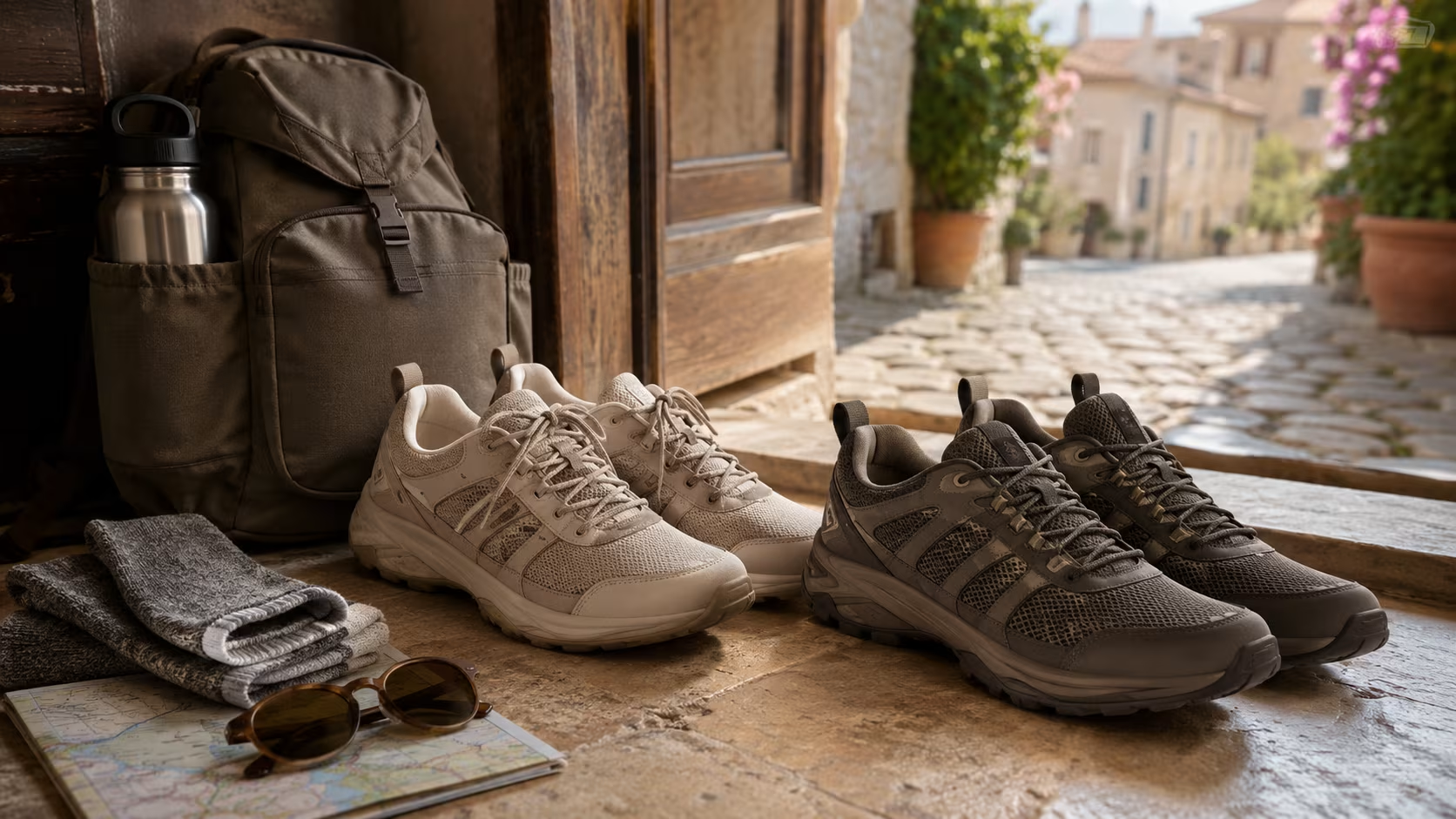
The single most-underrated travel decision is footwear. Travelers who get this wrong spend Day 3 of a 7-day trip nursing blisters at a pharmacy, then walk only short distances for the rest of the week. Travelers who get it right walk 15+ km daily without thinking about their feet.
The answer isn't a single "best travel shoe." The answer is matching the right shoe to your specific use case — which depends on the cities you'll walk, the climate, your existing foot condition, and whether you need shoes that look reasonable for restaurants. This is a 2026 field guide that maps actual recommendations to actual scenarios.
What Makes a Good Travel Shoe
Four factors matter, in roughly this order:
Fit. A perfect-on-paper shoe in the wrong size is worse than a mediocre shoe in the right size.
Cushioning + arch support. 15 km of cobblestones requires real foot protection.
Breathability. Hot summer cities or humid tropical destinations are brutal in non-breathable shoes.
Weight + packability. Travel shoes should ideally be wearable on the plane and not be the bulkiest item in your bag.
Looks matter, but only after the four functional factors are satisfied. A pretty shoe that produces blisters by Day 3 is dead weight.
The Three Travel Shoe Scenarios
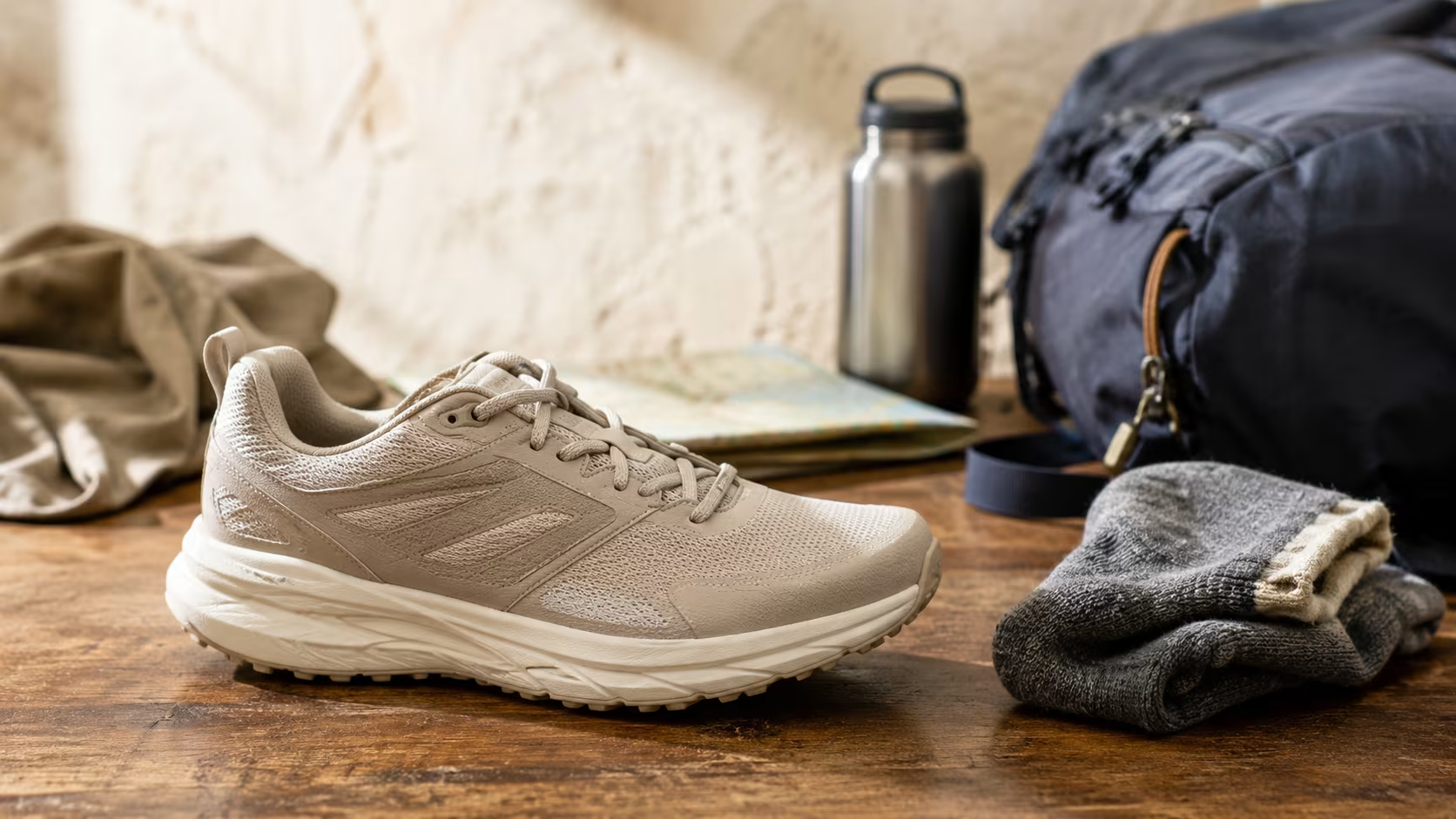
Most travelers face one of three scenarios. Match your shoe to the scenario.
Scenario 1 — City Walking (europe, Asia, North America)
10-20 km of city walking daily. Mix of cobblestones, sidewalks, museum floors, transit standing. Some restaurants you want to feel reasonably dressed at.
Best models:
Allbirds Wool Runners / Tree Runners. Light (180g), washable, look like clean sneakers. Best for warm-weather and travel where weight matters. Trade-off: less arch support than dedicated walkers.
Nike Free Run / Pegasus. Reliable cushioning, multiple width options. Less stylish for nicer dinners.
Hoka Bondi 8 / Clifton. Maximum cushioning. The cushiony nurse-shoe of choice; ugly to some eyes but transformative on cobblestones for travelers with foot issues.
Asics Gel-Kayano / Gel-Nimbus. Mid-tier reliable; serious arch support; not stylish.
Brooks Ghost / Adrenaline. Similar to Asics — running heritage, daily walking, supportive.
On Cloud 5 / Cloudgo. Swiss design; lighter than Hoka; mid-tier cushioning. Reasonable for casual restaurants.
New Balance 990v6. The classic American walker; more cushioning than Allbirds; less than Hoka.
Scenario 2 — Hiking + Active (iceland, Patagonia, Scotland, Mountains)
Uneven terrain, gravel, mud, water crossings. Less restaurant-style; more outdoor focus.
Best models:
Salomon X Ultra 4 GTX. The default trail shoe. Waterproof Gore-Tex, grippy outsole, breaks in fast.
Hoka Speedgoat 5 / Anacapa. Cushioned trail running, reasonable for daylong hikes.
Merrell Moab 3 / Speed. Mid-tier hiker; supportive; some waterproof versions.
La Sportiva Bushido III. Premium trail; technical mountain.
Keen Targhee III. Wide-foot-friendly hiker; durable; less stylish.
Scenario 3 — Tropical / Beach + Walking
Hot, humid, occasional sand or sea. Mix of city walking, beach time, casual restaurants.
Best models:
Birkenstock Arizona / Boston. Genuine all-day comfort; stylish enough for casual restaurants. Limited for cobblestones (no closed toe).
Teva Hurricane XLT2 / Original. Walking-and-water-friendly sandal.
Allbirds Tree Skippers (canvas slip-on). Ventilated; light; canvas dries fast.
Vibram FiveFingers / Xero Shoes Aqua. Beach + water; not for serious city walking.
Sperry Authentic Original (boat shoe). Classic; reasonable for casual restaurants; not for hot pavement walking.
Specific Recommendations by Travel Type
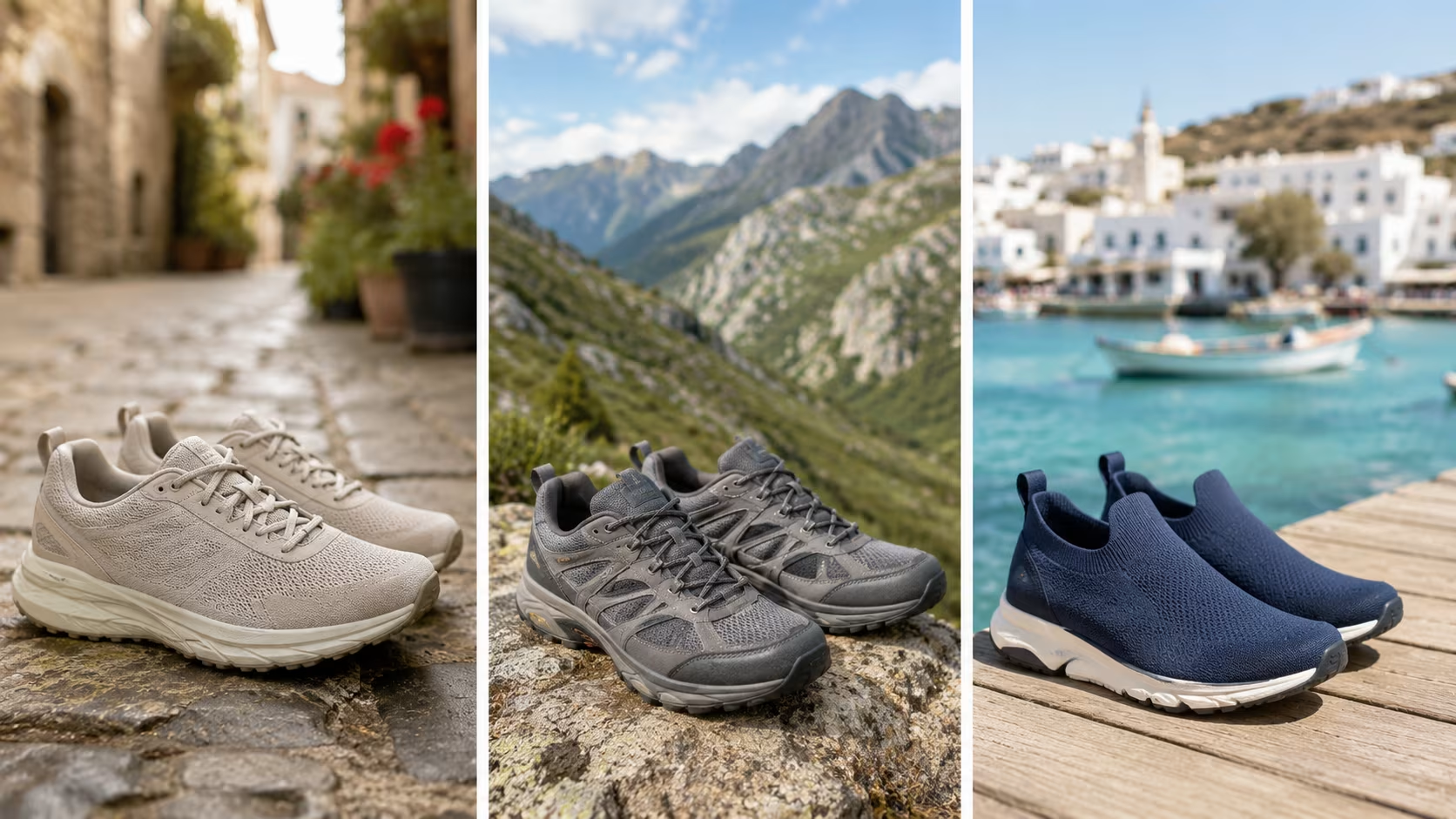
European City Trip (paris, Rome, Amsterdam, Etc.)
The default: Allbirds Tree Runners if weather is dry; Hoka Clifton for serious cobblestone walking with foot issues; On Cloud 5 for the best style-comfort balance.
Mid-tier price: $130–170.
Asian Megacity Trip (tokyo, Bangkok, Seoul, Etc.)
The default: Allbirds Tree Runners for warmth/breathability or Asics Gel-Kayano for serious cushioning.
Mid-tier price: $130–200.
Mediterranean Summer Trip (greece, Spain, Italy, Turkey)
The default: Birkenstock Arizona for one pair (sandals); Allbirds Tree Skippers or Olukai for the closed-toe pair. Hot stone pavement, beach access, casual restaurants — sandals + light closed-toe is the right combination.
Cold-Weather City (copenhagen, Stockholm, NYC in Winter)
The default: Sorel Out 'n About (waterproof, warm, less athletic). Blundstone Chelsea boots (no laces, easy on/off, leather, dressier).
Latin America (mexico City, Buenos Aires, Cusco)
The default: Allbirds Tree Runners for capital cities; Salomon X Ultra for high-altitude or Andean hiking.
Africa Safari
The default: Salomon X Ultra GTX (closed-toe protection from grass, dust); Bedrock Cairn Pro (sandal alternative for hot but non-mosquito areas).
How to Choose Your Size
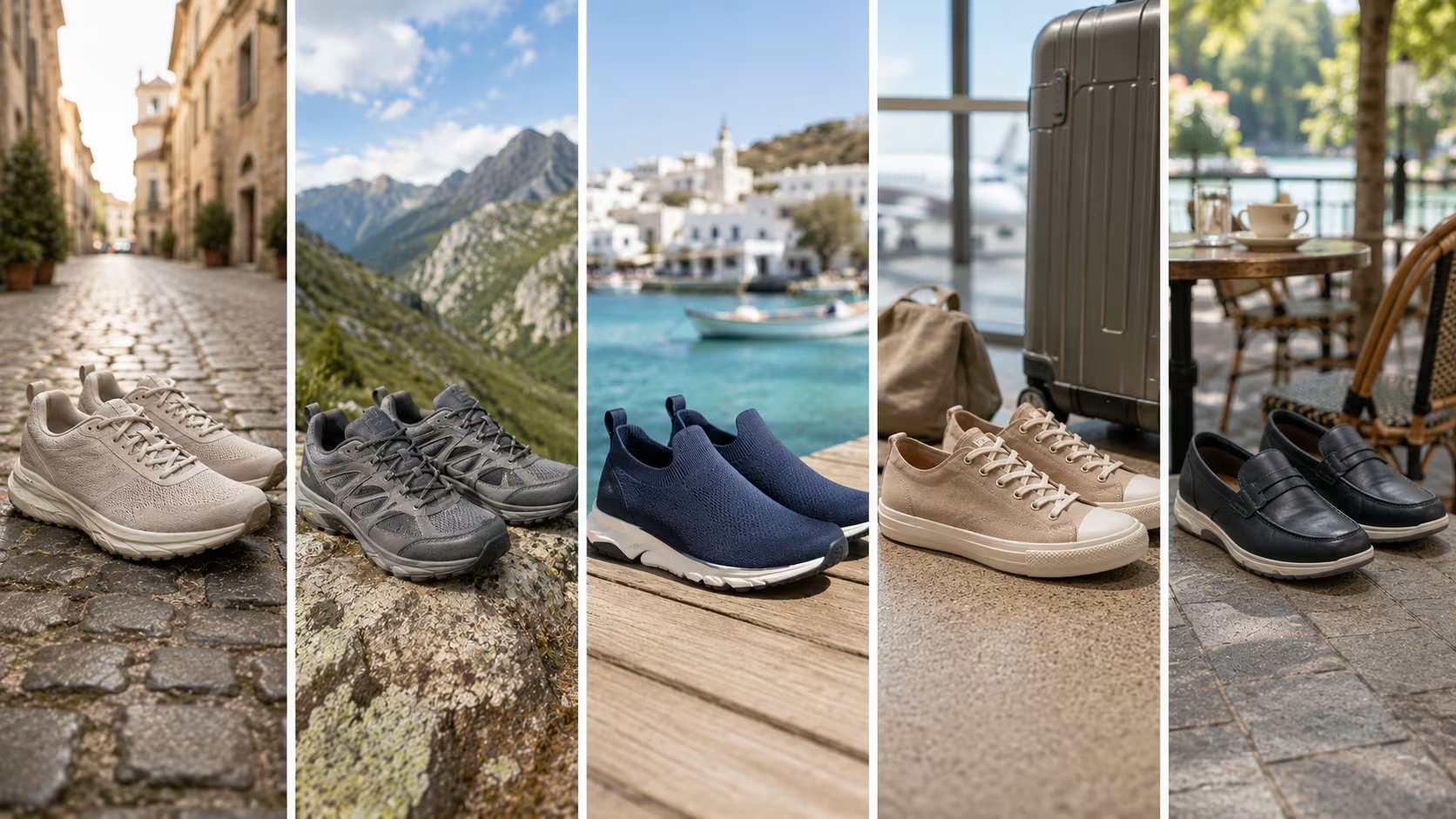
Run a Real Sizing Test
Not online; in a store.
Try shoes at the end of the day. Feet swell during the day; afternoon-fitted shoes accommodate this.
Wear travel socks (the merino socks you'll actually use).
Walk for 5+ minutes in the store. Notice any pinch points.
Ensure thumb-width (~1.3 cm) of space between your longest toe and the front of the shoe.
Heel slip of <0.5 cm is fine; more than that means too loose.
No lateral pinching at the widest part of your foot.
When You Must Buy Online
Buy from retailers with free returns (Zappos, REI, Amazon).
Buy 1-2 sizes at once; return the others.
Test the keepers on extended walks before traveling.
Wide Feet
Brands that offer wide widths: Asics, Brooks, Hoka (Bondi has a wide version), Keen, New Balance, Birkenstock.
Avoid: Allbirds (tend toward narrow), most Salomons.
Narrow Feet
Brands that fit narrow: Allbirds, On Cloud, some Sauconys, Air Jordans.
Adjust laces tightly in mid-foot.
Breaking in New Shoes Before Travel
The single most-common foot disaster: new shoes worn straight off the plane.
The Pre-Trip Break-In Plan
5+ short walks (1–3 km) before departing.
One long walk (5–8 km) in the new shoes; identify any hot spots.
Wear the same socks you'll travel with.
If hot spots appear, apply blister-prevention (Compeed, KT Tape) at that location during travel before walking.
How Long Break-In Takes
Athletic mesh shoes (Allbirds, Asics, Hoka): 2–3 walks.
Leather shoes (Olukai, Sperry, dressier sneakers): 5–10 walks.
Hiking boots / trail shoes (Salomon, Merrell): 3–5 walks including some uneven terrain.
New leather sandals (Birkenstock cork footbed): 1–3 weeks of regular wear before the cork molds to your foot.
Don't break in shoes during the first 2 days of a trip. That's where blisters happen.
Carrying Multiple Pairs
Two pairs is the right number for most trips:
Primary walking shoe (worn most days).
Backup or alternate (for rest days, lighter walking, evening dinners).
The second pair lets each pair dry between days (24-hour drying matters in hot/humid climates) and gives you a backup if one pair gets wet or damaged.
Three pairs is overkill for most trips. Three pairs makes sense for:
Extended (3+ week) trips with mixed climate.
Trips with specific activity needs (hiking + city + beach).
Travelers with foot issues who alternate to manage pressure points.
Wear the Heaviest on the Plane
The heavier pair worn on departure saves bag space.
Socks Matter More Than People Think
A $200 walking shoe with cotton athletic socks delivers worse comfort than a $100 shoe with proper merino socks.
Sock Specifications
Merino wool blend (60%+ merino). Doesn't smell, dries fast, regulates temperature.
Crew or quarter length (not ankle low) — prevents blistering at the heel + ankle.
No-cotton construction. Cotton holds moisture and friction.
Tested fit — same socks during break-in.
Picks:
Smartwool Hike Light Crew.
Darn Tough Light Hiker.
Icebreaker Hike+ Light Crew.
Wrightsock Coolmesh II (synthetic; double-layer; for blister-prone feet).
Specific 2026 Models Worth Knowing
Allbirds Tree Runners (~$110)
Best for: moderate city walking, mild climates, travelers who want one shoe that looks reasonable.
Trade-offs: less arch support; not for 25+ km daily walking; not waterproof.
Verdict: the lightweight casual default. Good first travel shoe.
Hoka Clifton 9 (~$150)
Best for: maximum cushioning; serious daily walking on hard surfaces.
Trade-offs: ugly to many eyes; thick sole feels unfamiliar at first.
Verdict: the orthopedic-comfort default. Travelers with foot issues find these transformative.
On Cloud 5 (~$140)
Best for: best style-comfort balance; reasonable for casual restaurants.
Trade-offs: mid-tier cushioning; not as supportive as Hoka.
Verdict: the European-city aesthetic default.
Asics Gel-Kayano 30 (~$165)
Best for: serious cushioning + stability; multiple widths; reliable.
Trade-offs: very athletic look (won't fit at nicer restaurants); heavier.
Verdict: the long-distance default.
Salomon X Ultra 4 GTX (~$160)
Best for: mixed-terrain trips with hiking. Waterproof; grippy.
Trade-offs: heavier than city shoes; technical look.
Verdict: the Iceland / Patagonia / outdoors-focused default.
Birkenstock Arizona (~$110)
Best for: warm-weather travel, all-day comfort, casual restaurants.
Trade-offs: open toe (not for cobblestones with debris); takes time to break in.
Verdict: the Mediterranean default.
Olukai Ohana / Aliʻi (~$80)
Best for: waterproof slipper-style sandal; great for hot tropical destinations.
Verdict: the Hawaii / Caribbean default.
Blundstone 500 / 550 Chelsea Boots (~$220)
Best for: dressier travel + cold weather; one shoe that does most things.
Trade-offs: heavy; not for hot weather; expensive.
Verdict: the urban-winter default.
What to Skip
Brand-new dress shoes for the first time on a trip.
Leather sneakers that haven't been worn extensively (break in painful).
Vintage or fashion sneakers that prioritize aesthetics over function.
Multiple pairs of running shoes for cities — overkill.
Cheap $30 walking shoes — they fail in 200 km; you spend more replacing them than buying quality.
Heavy boots for short trips. A 1-week European trip rarely justifies hiking boots.
Foot Care During the Trip
Blister Prevention
Apply blister patches preemptively on hot spots before walking.
Compeed, KT Tape, Moleskin patches are the standards.
Vaseline / petroleum jelly on hot spots reduces friction.
Body Glide stick for runners who want active-friction reduction.
Foot Drying
Change socks midday if walking 15+ km.
Air out shoes overnight — don't pack damp shoes back in luggage.
Foot powder (talc-based) for hot/humid climates.
When You Get Blisters
Compeed bandages are dramatically better than regular Band-Aids.
Don't pop intact blisters — the skin is the natural barrier.
If popped, apply antibiotic ointment + clean bandage.
Reduce daily walking until healed (1-2 days).
Common Mistakes
Wearing fashion sneakers for serious city walking. They look great in Instagram; ruin Day 3.
Skipping break-in. Wearing new shoes the first day of a trip.
Bringing only one pair. Wet shoes ruin everything.
Cotton socks. Multiplies blister risk.
Tight-fitting shoes "because they'll stretch." Tight shoes don't stretch enough; they cause damage first.
Loose-fitting shoes "because thicker socks fix it." Heel slip = blisters.
Buying online without testing. Always test before traveling.
Bringing dress shoes to a city trip. Most travelers don't wear them.
Hiking boots for European cities. Overkill; uncomfortable on cobblestones.
Keeping walking shoes after they're worn out. A 500+ km shoe has compressed cushioning; walks become painful even if the shoe looks fine.
When to Replace Walking Shoes
Most athletic walking shoes have a useful life of 500–800 km. Signs to replace:
Visible compression in the midsole foam.
New foot pain at the same daily distance.
Outsole rubber wearing thin at heel or ball.
Unevenness when standing — one side compressed more than the other.
Replace before the next big trip; not in the middle of one.
Final Notes
The right travel shoe is invisible. You stop noticing your feet by Day 3, walk 15+ km without thinking, and arrive at dinner ready to enjoy the meal rather than nursing pain.
The single best advice invest in good shoes, break them in for 2 weeks before travel, and pack two pairs. The $300 you spend on quality footwear pays back across years of travel; the $30 cheap pair fails on Day 3.
The quietest piece of advice when in doubt, choose the more cushioned option. Style follows function. The Hoka Clifton is uglier than the Allbirds Tree Runner, but on cobblestoned Lisbon hills with a 12 kg backpack on, the Hoka is the shoe you'll be glad you brought. The travelers who finish each day still wanting to walk are the ones with shoes designed for walking. The travelers who finish each day in a taxi back to the hotel are the ones who prioritized aesthetics over function.
Scenario → shoe map:
| Scenario | Load | Proven picks |
|---|---|---|
| City walking | 10–20 km/day on cobblestones | light ~180 g washable sneakers |
| Hiking + active | gravel, mud, water crossings | Salomon X Ultra 4 GTX; Hoka Speedgoat 5 / Anacapa |
| Failure cost | blisters by Day 3 of 7 | right choice = 15+ km daily, feet forgotten |
0 Comments
No comments yet — start the conversation.