

The LAN flight from Lima descends over a landscape that makes no concessions to gradual arrival: the desert coast disappears, the Andes appear, and the plane banks steeply into the Cusco valley with cloud-covered peaks on both sides and the red-tiled roofs of the city visible below at an altitude that tells you, even before you step off the plane, that something is different about where you are. Cusco sits at 3,400 meters. Machu Picchu is 2,430 meters, lower and more forgiving, which is why most travelers visit Cusco first and struggle with the altitude, when the correct logic is the opposite: acclimatize in the valley first, go higher into Cusco later, and arrive at Machu Picchu at the end when your blood has caught up with your ambitions.
This is a guide built on that inverted logic, and it produces a different trip than the standard package tour. It starts at lower altitude, builds through the Sacred Valley market towns, reaches Cusco in the middle of the trip when your body is ready for it, and arrives at Machu Picchu on day ten or eleven with genuine physical capacity to walk it rather than gasping through the first hour.
Twelve days is the right length. Ten is the minimum that allows proper acclimatization and doesn't waste time at altitude being ill. More is better if you have it.
Why the crowds are there — and how to work around them
The Sacred Valley-Cusco-Machu Picchu circuit is one of the most visited travel destinations in the world, and it is visited in those quantities because it is genuinely extraordinary: the most significant surviving Inca civilization, a landscape of vertiginous valley geometry and agricultural terracing that is unlike anywhere else on earth, and a living Quechua culture that persists in the market towns and the surrounding villages with a tenacity that has survived Spanish colonialism, land redistribution, and the tourism economy.
The honest challenge the circuit has been intensely packaged. Machu Picchu itself is limited to 2,500 visitors per day (down from previous much higher limits) and requires advance timed-entry tickets that need booking months ahead in peak season. The traditional Inca Trail requires permits that sell out a year in advance for peak months. The train to Aguas Calientes (the gateway town) is operated by two companies that have a near-monopoly on access. This is not a destination you can fully improvise.
That said the over-packaged version of this circuit (the four-day Lima-Cusco-Machu Picchu rush) is not the only version. The twelve-day approach described here uses the circuit as a structure but builds genuinely unhurried time in the Sacred Valley towns (Pisac, Chinchero, Ollantaytambo) that most package tours treat as one-hour stops. Those towns are the reason to come, arguably more than Machu Picchu itself.
This trip is not right for travelers with significant cardiovascular or respiratory conditions. The altitude is real and debilitating for some people, and no amount of determination resolves that. Sea-level destinations are not a lesser choice in that situation. It is also not the right choice for travelers who need reliable infrastructure: the journey from Cusco to Aguas Calientes is train-only (or multi-day hiking), electricity in some valley towns is intermittent, and altitude sickness is unpredictable.
Twelve days: acclimatise low, climb later
Days 1–2: Arrive in Urubamba, Not Cusco
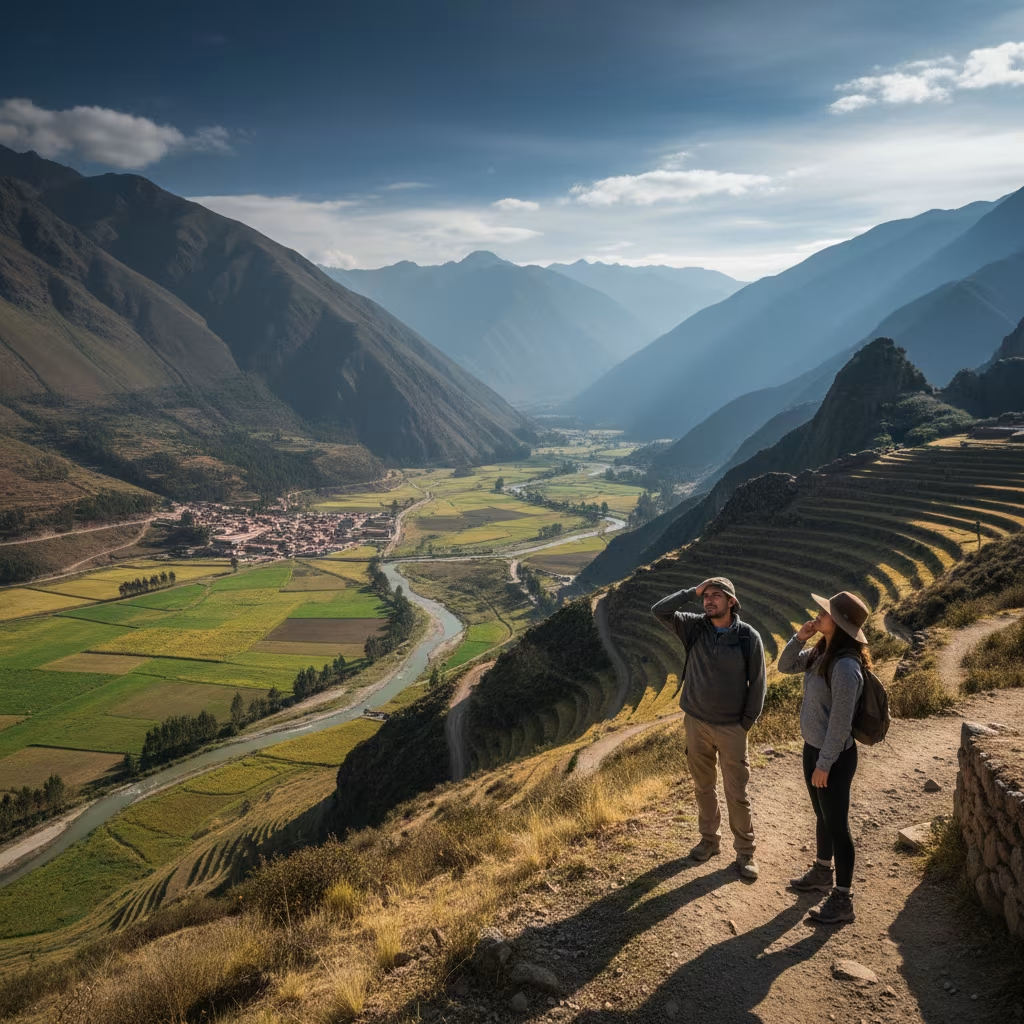
Urubamba is in the Sacred Valley floor at 2,870m, almost 600m lower than Cusco. Flying into Cusco and transferring directly to Urubamba (90 minutes by taxi, about $25) starts your acclimatization at a more manageable altitude. Spend two days here doing very little: short walks in the valley, meals at your hotel, reading. The body needs 36–48 hours at altitude before strenuous activity is advisable. Eat lightly (altitude impairs digestion temporarily), drink water constantly, avoid alcohol entirely for the first 24 hours.
Days 3–4: Pisac and the Sacred Valley Market Towns
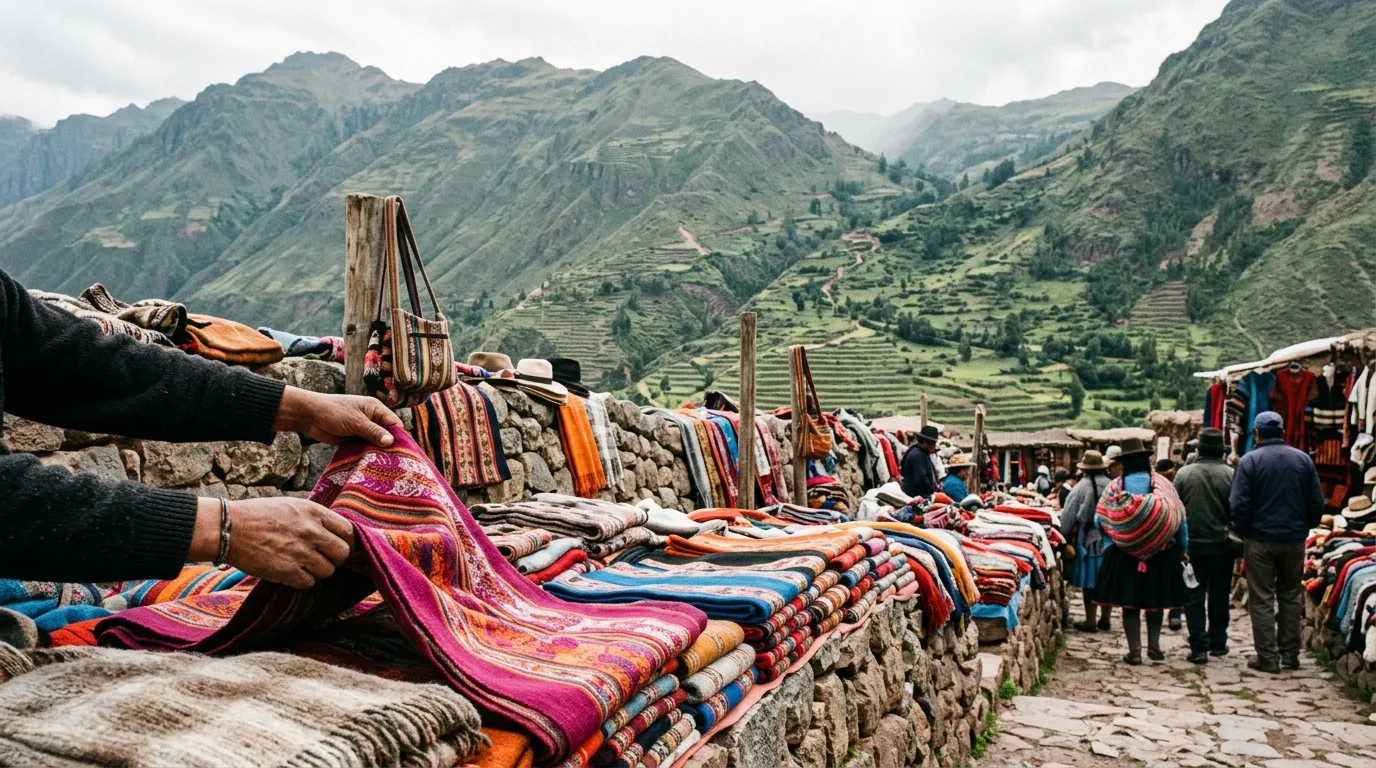
Pisac is 32km east of Urubamba, a town with the best craft market in the Sacred Valley (Tuesday and Thursday morning markets are the authentic versions; the daily tourist market is a less interesting substitute) and a significant Inca site above the town (terraced agricultural platforms and a citadel at 3,300m; save this for day four once you're more acclimatized). Day three: the town and the market. Day four: the archaeological site. Lunch at Ulrike's Café in Pisac, a German-Peruvian institution running for decades, excellent trout and quinoa preparations.
Days 5–6: Ollantaytambo
Ollantaytambo is 80km northwest of Urubamba, the best-preserved Inca town in the Sacred Valley, where the street plan, water channels, and many of the buildings date to the 15th century. The Ollantaytambo fortress (the unfinished Sun Temple on the hillside above town) is the most evocative Inca ruin in the valley: not as famous as Machu Picchu, not as crowded, and the walk up through the terrace system is extraordinary. Stay two nights in Ollantaytambo at El Albergue (a historic guesthouse on the train platform, atmospheric, $100–140/night) or the more accessible Hostal Iskay ($40–60/night, excellent family-run service). Ollantaytambo is also the train departure point for Aguas Calientes. On day six, take the late afternoon PeruRail or Inca Rail service down to Aguas Calientes for the Machu Picchu visits.
Days 7–8: Machu Picchu
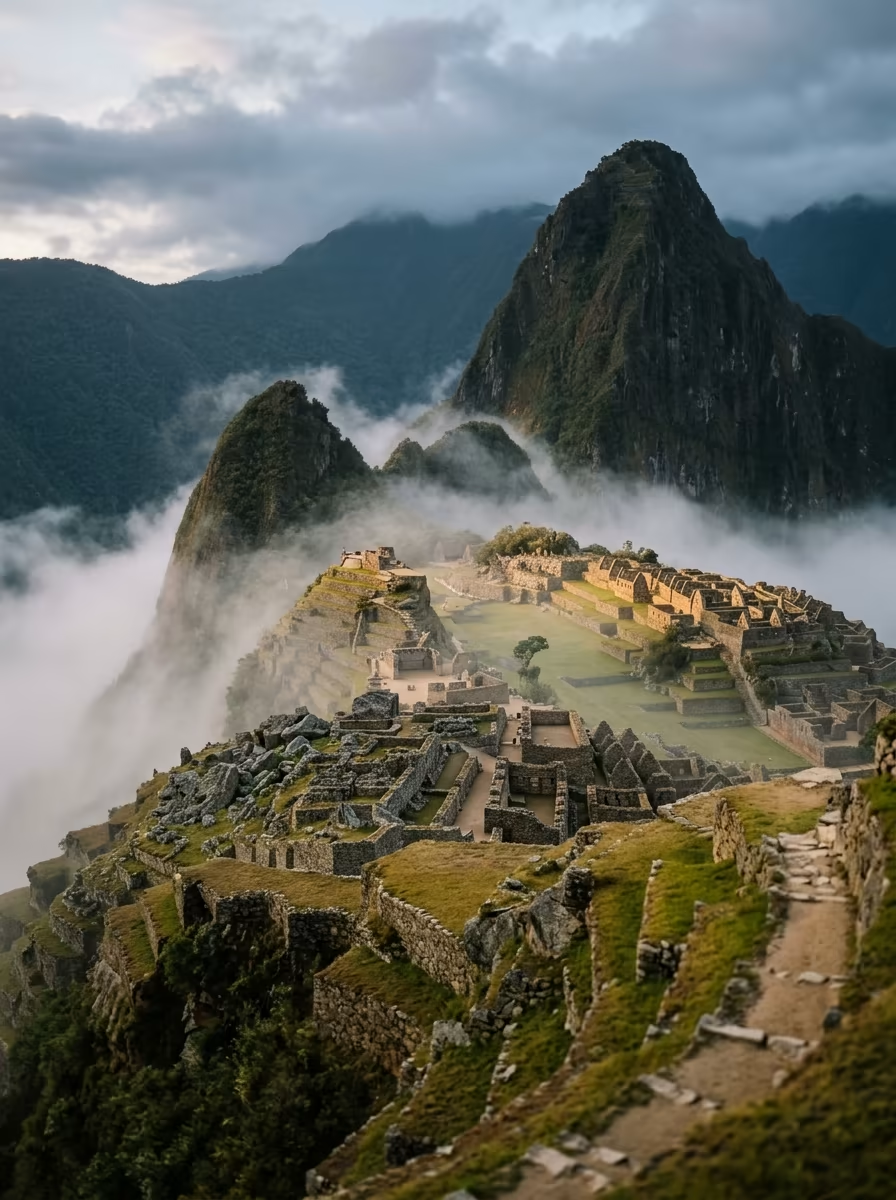
Book timed-entry tickets well in advance (perucultural.gob.pe, the official system). The first entry slot (6 AM) is worth the early alarm: the site in morning mist, before the 10 AM tour groups arrive, is the version of Machu Picchu that exists in the best photographs. Walk the Inca drawbridge path on day seven; the Sun Gate (Intipunku) trail on day eight for the elevated view of the citadel from above. Both require morning departures; the site closes at 5:30 PM. Lunch at Toto's House in Aguas Calientes, a local restaurant without the tourist markup of the hotel dining rooms.
Days 9–11: Cusco
Return to Cusco by train on day nine. By now you've been at altitude for eight days and the city at 3,400m will feel different: functional, walkable. The historic center (a UNESCO World Heritage Site) has the most significant collection of Spanish colonial architecture built over Inca foundations in the Americas. The Church of Santo Domingo is built directly over the Coricancha (the Temple of the Sun, the most important Inca religious site). The juxtaposition of the Spanish nave and the surviving Inca stone walls is the most compressed illustration of conquest architecture anywhere. Day ten: San Blas neighborhood (the artisan quarter, worth a full morning), Mercado San Pedro (the central market, real and local, with excellent fresh juice vendors), and the Cusco Cathedral at the Plaza de Armas. Day eleven: the Sacsayhuamán fortress above the city (30-minute walk from the plaza), the Pisac ruins you saved from day four.
Day 12: Return to Lima
Morning in Cusco for any remaining items (the Chocolate Museum on Calle Garcilaso is worth an hour; the Inca Trail gear shops around the Plaza Regocijo are good for quality Peruvian textiles to take home). Afternoon or evening flight back to Lima and onward connections.
Urubamba, Ollantaytambo or Cusco
Sacred Valley (Urubamba/Ollantaytambo)
The Explora Valle Sagrado is the extraordinary splurge (all-inclusive, $600+/person/night, worth knowing about). The Sol y Luna Lodge in Urubamba is a more accessible mid-range at $150–200/night with an excellent restaurant. Budget: Casa Andina Standard Sacred Valley at $60–80/night; solid, reliable, and part of a Peruvian chain that understands altitude-level service expectations.
Aguas Calientes
Inkaterra Machu Picchu Pueblo Hotel (river-side, cloud forest, $350–500/night, extraordinary setting) is the prestige option. The Sanctuary Lodge (literally at the Machu Picchu entrance) is even more expensive and worth considering if budget allows. Mid-range: Sumaq Machu Picchu Hotel at $200–280/night with good views. Budget: Hostal La Cabaña at $35–50/night, functional and central.
Cusco
JW Marriott El Convento Cusco occupies a 16th-century convent on the Plaza de Armas at $300–450/night; the architecture alone is worth a drink in the lobby. The Inkaterra La Casona (San Blas neighborhood) is a more intimate option at $400–600/night. Mid-range: Casa Andina Premium Cusco at $120–160/night. Budget: Pariwana Hostel Cusco at $20–35/night for private rooms: well-run and centrally located.
Lima to Cusco, then the train to Aguas Calientes
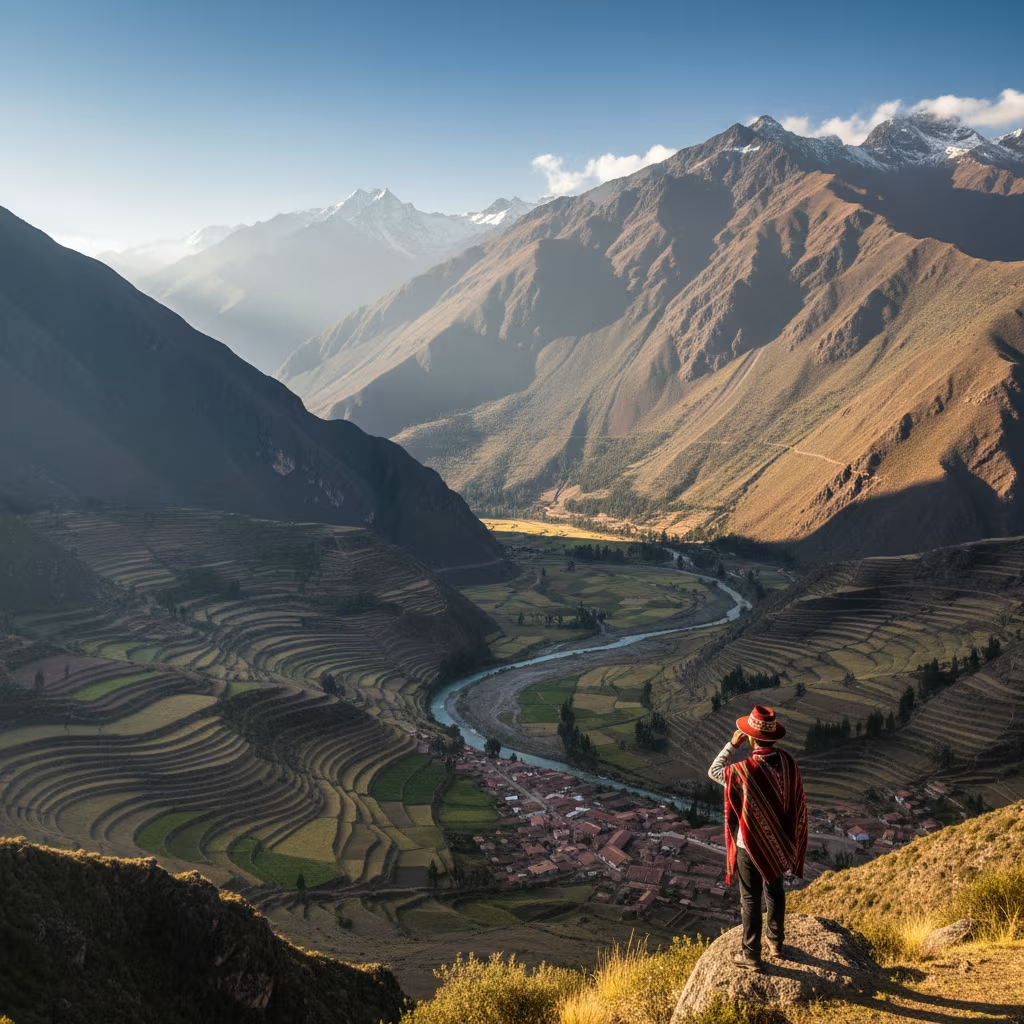
All international flights land in Lima (LIM, Jorge Chávez International Airport). Lima to Cusco: domestic flights operate on Avianca, LATAM, and Viva Air (40 minutes, multiple daily, $50–120 depending on booking timing). Book domestic connections well ahead in high season.
Sacred Valley hired driver or taxi from Cusco airport to Urubamba or Ollantaytambo ($25–40). Colectivos run between valley towns for $2–4. For Machu Picchu, trains from Ollantaytambo or Poroy (near Cusco) to Aguas Calientes run by PeruRail and Inca Rail ($35–90 one way depending on service class). Book at least 4–6 weeks ahead.
Altitude medications consult a doctor before departure about acetazolamide (Diamox), a prescription medication that reduces altitude sickness severity. Coca leaf tea is available everywhere in the valley and provides mild symptom relief (it is not medicinal-strength and does not eliminate altitude effects).
May to October, and the shoulder-season gamble
May to October
The Andean dry season. Clear skies, cold nights (0–5°C in the valley at altitude), warm days (18–22°C). The best months for the Inca Trail and highland hiking. Machu Picchu's famous cloud-forest mist still appears in mornings but the afternoons are reliably clear. High season; book Machu Picchu tickets 3–6 months ahead.
November to April
The wet season. Daily afternoon rains (heavy in January–February), the Inca Trail closes for the entire month of February for maintenance. The landscape is intensely green; the valley is dramatically misty. Machu Picchu is still excellent, the mist over the citadel is the classic image, but hiking trails are muddy. The Inti Raymi festival in Cusco (June 24) is the single most significant date on the calendar.
Peru: altitude, tickets and other questions
Do I need to book Machu Picchu tickets far in advance?
Yes. The official ticketing system (perucultural.gob.pe) is the only valid source; third-party sellers are often scams or markup services. For peak season (June–September), book 3–6 months ahead. For the first daily entry slot and the most popular circuits, even earlier. A timed-entry ticket is required; walk-up entry is no longer permitted.
How serious is altitude sickness?
It's real and can be significant. Symptoms at 3,400m (Cusco): headache, nausea, breathlessness, poor sleep, loss of appetite. Severe altitude sickness (HACE, HAPE) is rare at these altitudes but possible. The protocol: arrive slowly (lowest altitude first), don't exert on arrival day, stay hydrated, avoid alcohol the first 24 hours. If symptoms worsen rather than improve after 24 hours, descend immediately.
What currency do I need?
Peruvian sol (PEN) is the local currency. US dollars are widely accepted in tourist establishments at reasonable rates. Cash is essential in market towns, for colectivos, and at street food stalls. ATMs in Cusco and Aguas Calientes dispense soles; they're less available in smaller valley towns. Carry soles for day-to-day spending.
What's the difference between Inca Rail and PeruRail?
Both operate the Ollantaytambo to Aguas Calientes route and the Poroy (near Cusco) to Aguas Calientes route. Prices and comfort are similar. PeruRail's Vistadome trains have larger windows; Inca Rail's 360° train has panoramic ceiling glass for an additional premium. Book either directly at their websites; prices are the same as third-party aggregators.
Altitude strategy:
| Point | Figure |
|---|---|
| Cusco | 3,400 m — do not start here |
| Urubamba (start here) | 2,870 m; 90 min / ~$25 taxi from Cusco airport |
| Machu Picchu | 2,430 m; capped at 2,500 visitors/day, timed entry |
| Acclimatization | 36–48 hours before strenuous activity; no alcohol first 24 h |
| El Albergue, Ollantaytambo | $100–140/night on the train platform |
0 Comments
No comments yet — start the conversation.