

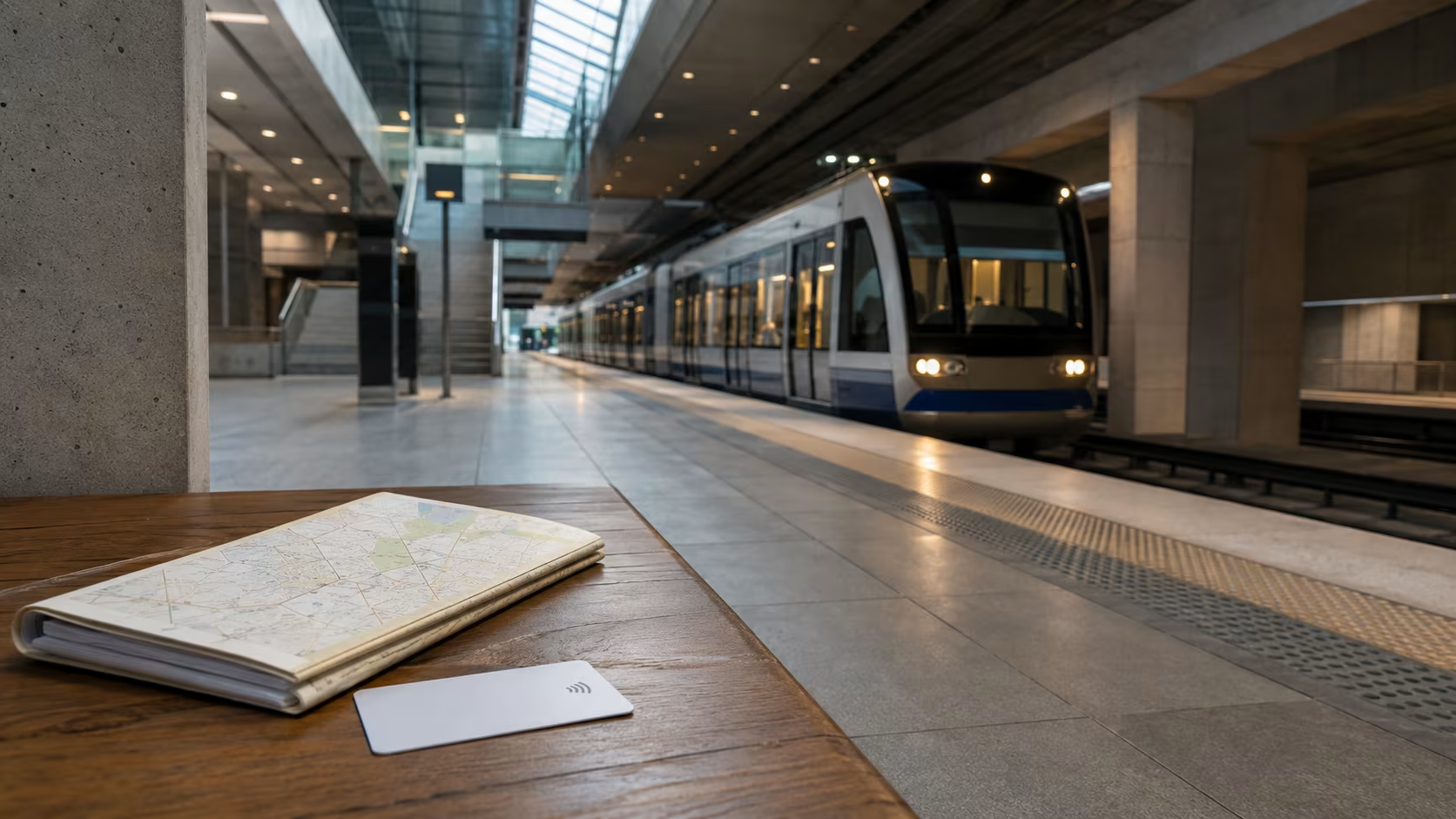
The single most consequential travel skill is reading a city's transit system within an hour of arrival. Travelers who get this right walk into a foreign city with the same baseline competence locals have. Travelers who don't end up wasting 45 minutes per day at ticket machines, getting on the wrong line, or paying $30 for taxi rides that should cost $2.
This is a 2026 guide to using public transit confidently in any city, including the cities where the system is genuinely different from what you know.
The Three Things Every Transit System has
Every urban transit system answers three questions:
- How do you pay?
- How do you find your route?
- What's the etiquette?
Master these in the first hour of arrival and you can use the system competently for the rest of the trip.
How You Pay: the 2026 Map
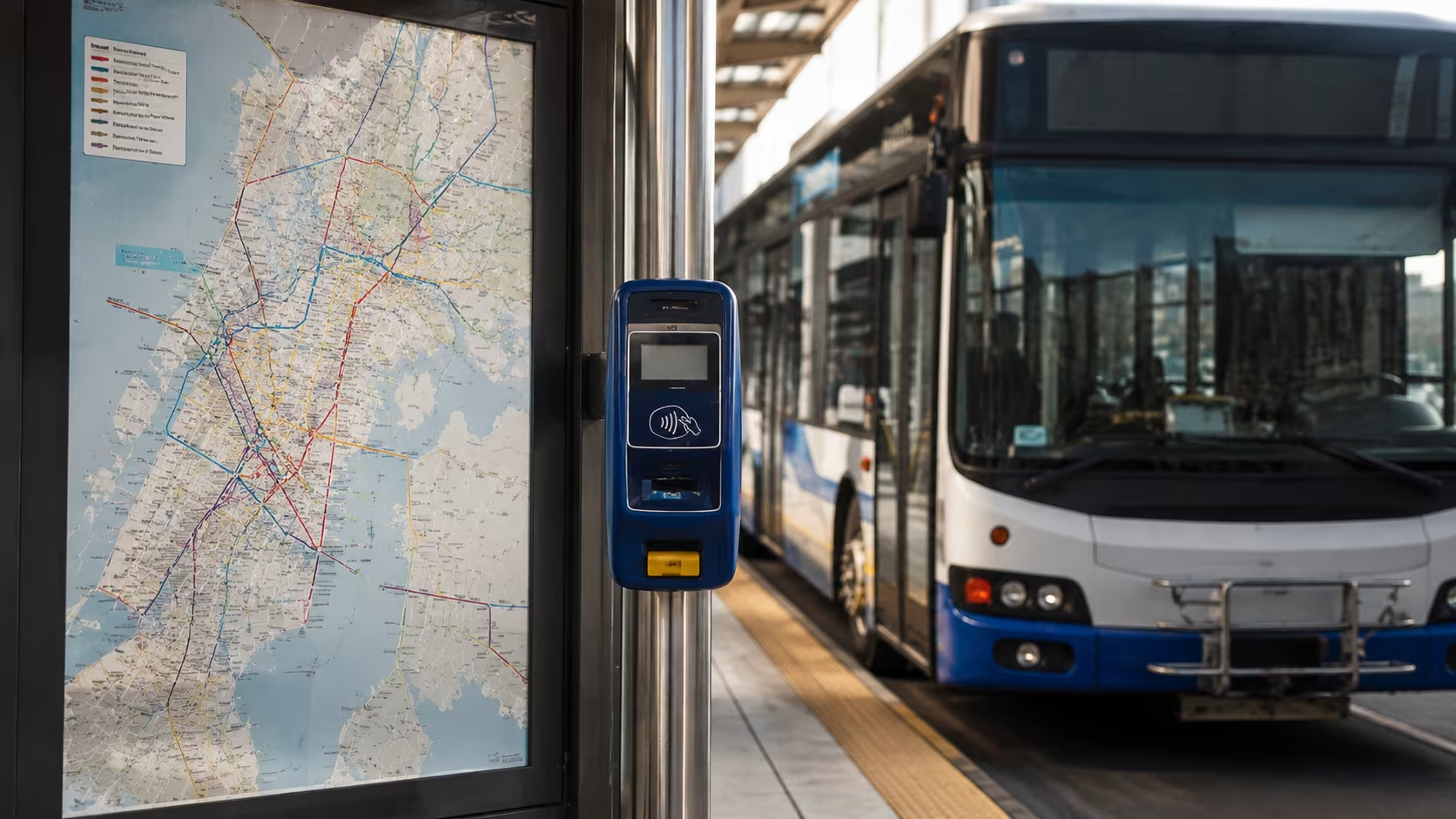
Payment systems are converging globally on three approaches:
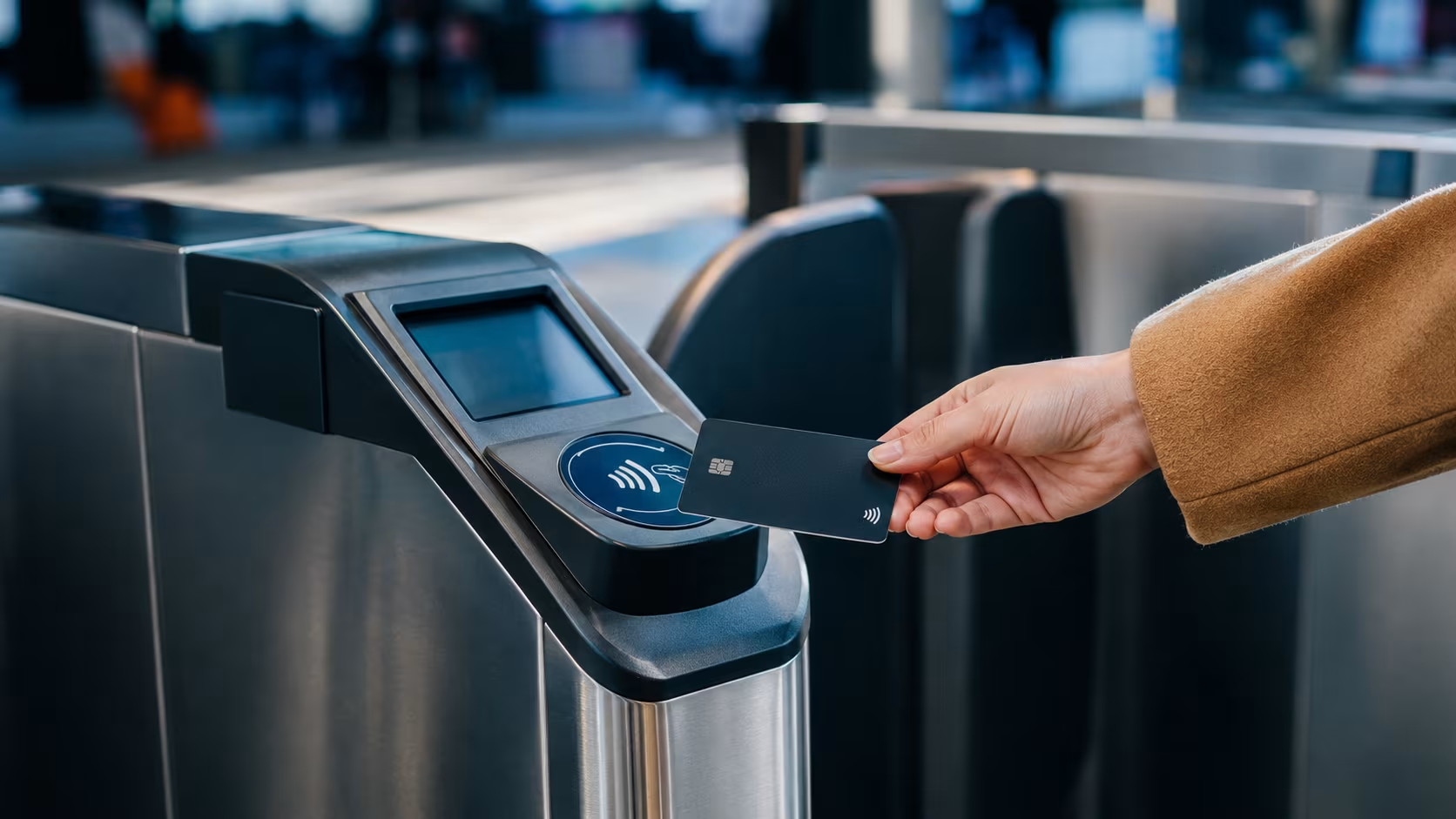
1. Tap-to-Pay with Contactless Card or Phone
The modern default. Tap any contactless credit/debit card or your phone (Apple Pay, Google Pay) at the turnstile or entry gate; the system charges you the appropriate fare. No app needed, no card to buy.
Cities where this is the default: London, Sydney, Singapore, Hong Kong, NYC (since 2024), Chicago, Boston, Stockholm, Amsterdam, Vienna, Kiev (now), Madrid, Brussels, Helsinki, Wellington, much of the UK.
Tip: use a card without foreign-transaction fees, since each tap = a small charge.
2. Smart Card (buy at Station)
A reusable card you load with money at vending machines or staffed kiosks. Tap on entry; tap on exit (in some cities); the system deducts the fare.
Cities where this is dominant: Tokyo (Suica/Pasmo), Hong Kong (Octopus, though tap-to-pay launching), Seoul (T-Money), Bangkok (Rabbit Card), Taipei (EasyCard), Beijing/Shanghai (separate systems), Mexico City (Tarjeta CDMX), Buenos Aires (SUBE), Berlin/Vienna/Munich (the deutschland-ticket aside).
Tip: small refundable deposit (€2–10) gets you the card; load with cash and refill as needed. Most major cities now also have mobile-app versions.
3. Paper Ticket / Single-Ride
The legacy system, still used in some cities. Buy a paper ticket at a vending machine; insert/scan at gate; sometimes validate at machine before boarding.
Cities where paper still dominates or persists: Rome, Naples, parts of Eastern Europe, smaller cities.
Tip: validation is enforced. Buying a ticket but not validating it produces the same fine as having no ticket. Look for the small machines on platforms or in train cars; insert the ticket; it stamps a date/time.
How to Find Your Route
Three tools handle 95% of route-finding in 2026:
1. Google Maps
The global default. Real-time transit data in 100+ cities. Tells you which line, which platform, when the next train comes, and how long the trip takes.
Best for: reliable in established cities, integrates walking/transit/cycling.
Limitations: weak in some smaller cities, occasionally wrong about platforms in complex multi-line stations, no information about which exit at the end (which matters in cities like Tokyo where exits can be 1 km apart).
2. Citymapper
A transit-focused alternative. Better than Google Maps in:
- New York (the bus + subway integration)
- London (the bus integration is excellent)
- Paris (better metro detail)
- Tokyo (more granular exit information)
- Hong Kong, Madrid, Berlin, Singapore
Download before traveling.
3. Local City Apps
Most major cities have an official transit app:
- Tokyo Metro (real-time JR delays)
- TfL Go (London)
- MTA TrainTime (NYC)
- Wiener Linien (Vienna)
- Moovit is a common third-party option that works in many smaller cities where Google Maps' data is weak
For cities where Google Maps doesn't have reliable data (some Asian cities, smaller European), the local app is necessary.
Reading a System You've Never Seen
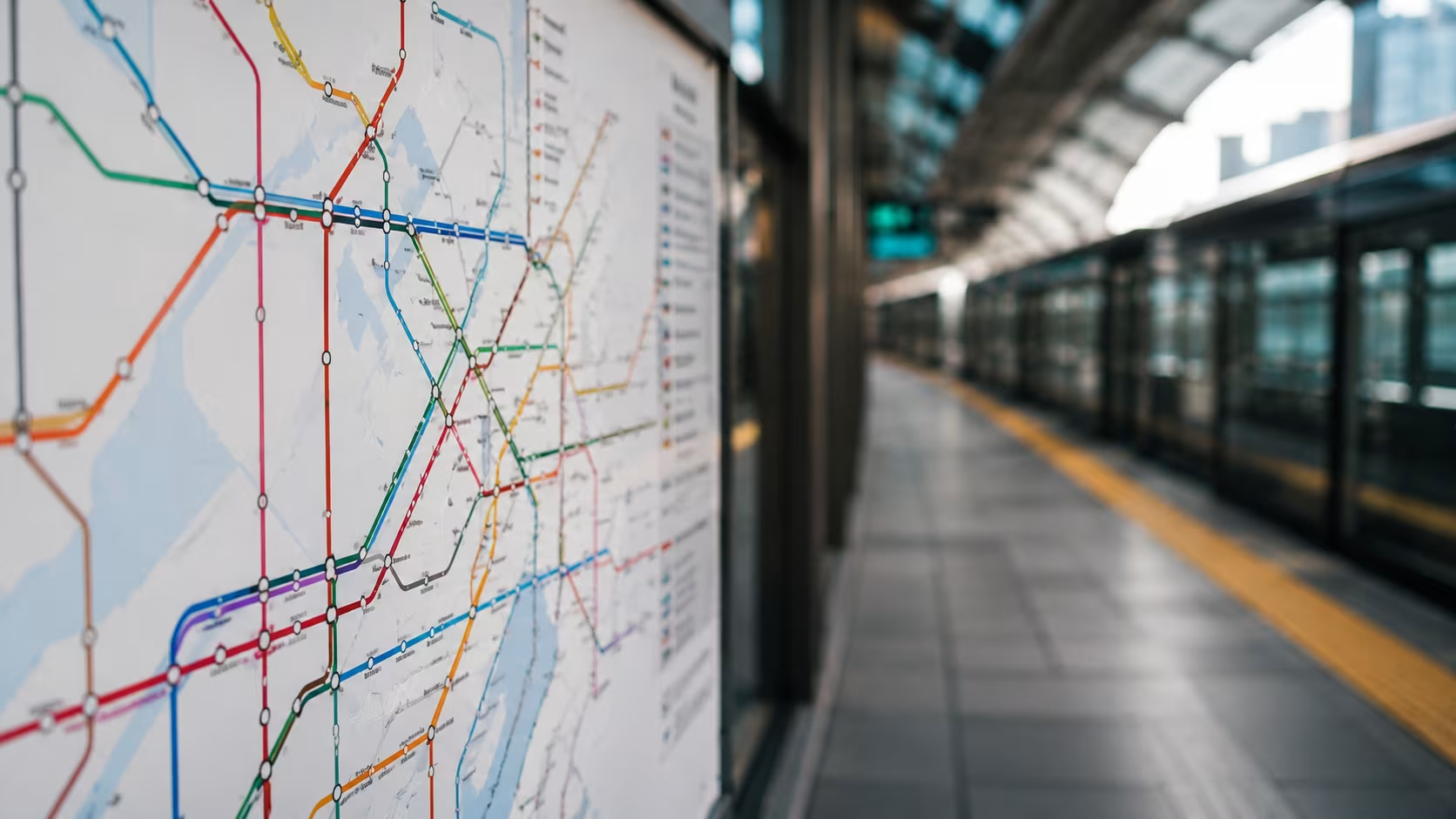
A transit map looks intimidating; the actual logic is usually simple. The 5-minute orientation:
Step 1: Identify the Lines
Most systems use color-coded lines (red, blue, green, etc.) and number/letter labels (Line 1, A, etc.). Larger systems have 5–15 lines; smaller ones have 1–3.
Step 2: Find Your Two Stations
Where you are (start) and where you want to go (end).
Step 3: Identify Direction
Lines run two ways. Direction is identified by the terminus station: the last stop in that direction. "Line 1, Direction Cumbres" or "Northbound" or "Manhattan-bound."
This is where most tourists make mistakes. "Take Line 4" is incomplete; you need "Line 4 toward [terminus station]."
Step 4: Identify Transfers
If the trip requires switching lines, identify the transfer station. Most systems mark transfer stations clearly on the map.
Step 5: Check Frequency
Most city metros run every 2–8 minutes during daytime; less often at night or on weekends. Google Maps usually shows real-time arrival data.
Step 6: Check Service Hours
Different cities have different service ends. London Tube stops around 00:30 (Night Tube on weekends). Tokyo metros stop ~00:30. Berlin and NYC run 24 hours but with reduced frequency. Always check before relying on a 02:00 train.
Standing in the Right Place
A small detail that separates locals from tourists in every system:
- Stand on the right side of escalators, walk on the left (or local equivalent; Tokyo varies by region: Tokyo stands left/walks right, Osaka stands right/walks left).
- Don't block doorways. When the train arrives, step aside for exiting passengers before entering.
- Move into the middle of the car. Crowding at doors is a Western tourist habit; locals fill the cars.
- Watch for designated entry/exit lanes in busy stations (Hong Kong, Tokyo, Singapore). Floor markings show where to queue.
City-Specific Etiquette Rules
Every city has small rules that locals follow without thinking:
Tokyo / Japan
- No talking on phones in train cars. Texts and quiet conversations are fine; phone calls are genuinely not done.
- Quiet voices. Speaking at loud-American volume on the train marks you immediately.
- Don't eat on local subway trains (longer-distance Shinkansen trains are exception).
- Form lines. Multiple parallel lines at platform doors during peak hours.
- Women-only cars (often pink-marked) during morning rush hour. Men should not enter.
London
- Mind the gap. Real warning, real gap on some lines.
- Stand right, walk left on escalators.
- Don't sit in priority seats (front of bus, marked seats on tube) unless you need them.
- The Oyster card or contactless equivalent is universal.
Paris
- Hold the door open briefly for someone running for the train.
- Folding seats (strapontins): give them up if the car is crowded.
- No food on Metro lines 1, 2, 4, 6, 14 (signage varies but the rule applies on busy lines).
NYC
- Stand to the right of the door, not in front of it.
- Move to the middle of the car; don't crowd the doors.
- No "showtime" for tourists: the dancers performing on subway cars are technically illegal; tipping them is not required.
Berlin
- Honor system. No turnstiles. Buy a ticket; validate before boarding. Random checks; €60 fine for not having ticket.
- No food and drink on most public transit (especially BVG).
Hong Kong
- Octopus card for everything (transit, 7-Eleven, vending machines).
- Don't run for the train. The doors close fast and locals just wait the 2 minutes for the next.
- Quiet voices like Tokyo.
Singapore
- No food, no drink, no chewing gum on the MRT. Strictly enforced.
- Stand on the left side of escalators (this differs from many other places).
- Don't sit in priority seats unless you need them.
Mexico City
- Women-only cars (pink-marked) on Metro Line 1 and others during peak hours.
- Pickpocketing is real on Lines 1 and 2; phone in front pocket.
- Avoid 17:00–20:00 on the central lines if possible.
Istanbul
- Honor system for surface trams (T1); İstanbulkart card or Apple Pay tap-in.
- The Bosphorus ferry is part of the system; same card.
- Get off at the same exit you entered when possible; entering one side and exiting the other can technically cause a fare problem.
Common Tourist Mistakes
1. Buying Tickets for Each Ride
Most systems have day passes (1-day, 3-day, 7-day) that pay back after 5–7 single rides. If you'll use transit 4+ times in a day, buy the day pass.
2. Buying the Wrong Day Pass
Many systems have multiple day passes: single-zone, multi-zone, with airport transfer, without. Read carefully or ask the attendant. The €15 city center day pass doesn't cover the €4 airport ride.
3. Skipping Validation
In cities with paper tickets (Rome, Naples, parts of Eastern Europe), inserting the ticket in the validation machine is mandatory. A bought-but-unvalidated ticket = same fine as no ticket.
4. Ignoring Honor System Warnings
Berlin, Vienna, Prague, Munich, Stockholm all run honor systems. The fine for getting caught (€60–105) is small but real.
5. Standing on the Wrong Side
In cities where stand-right-walk-left is the rule (most), standing two-abreast blocks the walking lane and marks you as a tourist immediately.
6. Putting Bags on Adjacent Seats
During peak hours, every seat counts. Locals notice.
7. Not Knowing the Last Train
Missing the last train often means a $40+ taxi back to your hotel. Verify before going out.
8. Getting on the Wrong Direction
Most common single mistake. Always identify the direction by terminus station before boarding.
9. Using Outdated Maps
Transit systems get extended. The app you used in Berlin in 2018 doesn't show the new metro extension. Update or download fresh.
10. Trying to Use US Magnetic-Stripe Cards
In most modern systems, US magnetic-stripe cards no longer work. Bring contactless or get a smart card.
When to Skip Public Transit
Public transit is right ~85% of the time. The exceptions:
- Heavy luggage to/from airport. Some metros physically cannot accommodate large suitcases. Taxi or rideshare.
- Deep night (00:30–05:00). Most systems have reduced or no service.
- Very short trips (under 800 m). Walking is faster than the platform-to-platform total.
- Multi-stop tours. Hop-on-hop-off bus or organized tour can be more efficient than transit + walking.
- Heavy rain in cities without indoor station access. Especially in cities with surface trams.
How Locals Actually Use Transit
A local in any major city does these things automatically:
- Knows their daily routes by line + direction without checking apps.
- Uses contactless tap (or smart card) without thinking.
- Stands in the same spots on the platform that align with the door at their target station.
- Waits for the next train if a car is too full rather than squeezing in.
- Reads the news/listens to music in transit, not staring at signage.
- Knows which exits to use (the right exit can save 200m of walking).
Visitors can mimic 80% of this within a few days. The other 20% comes from being a local.
A Specific Routine for Day 1 in a New City
Hour 1. Arrive at airport/station. Find the transit kiosk. Buy whichever pass option seems best (research 5 minutes ahead of arrival).
Hour 2. Take the first transit ride (airport to hotel). Pay attention to:
- Signage style and language
- Direction labeling system
- Average frequency
- Crowding norms
- Etiquette signals
Hour 3. Drop bags at hotel. Take a second transit ride (hotel to a sight or restaurant).
By this point, you've used the system 2–3 times. The pattern is set.
When to Ask for Help
Locals in transit stations are usually willing to help direct foreigners; a polite "excuse me, which platform for X?" gets a clear answer. Station attendants are paid to help.
What NOT to do:
- Stand looking confused for 10 minutes hoping someone offers help.
- Block the platform while debating directions.
- Trust unsolicited "help" from people not in uniform; in some cities (Naples, Buenos Aires, parts of Eastern Europe) this is part of a pickpocketing setup.
Final Notes
The traveler who masters local transit moves through a foreign city with confidence. The traveler who skips it pays 5–10x more in taxis, sees less of the city's neighborhoods, and misses the daily rhythm.
The single best piece of advice: in your first hour in a new city, use public transit at least once intentionally. Even if you'd otherwise take a taxi. The 30-minute investment pays back across the entire trip.
The second-best: download Citymapper for the city before you leave home. Verify it has the data. Then trust the routing; locals do.
Transit orientation cheat sheet:
| Step | Figure |
|---|---|
| Cost of not knowing | ~45 min/day + $30 taxis for $2 rides |
| Payment convergence | 3 approaches; contactless default in London, Sydney, Singapore, NYC (2024+) |
| Card deposit | €2–10 refundable |
| Route apps | 3 tools cover 95% of route-finding; live data in 100+ cities |
| System size | big networks 5–15 lines; small ones 1–3 |

0 Comments
No comments yet — start the conversation.