

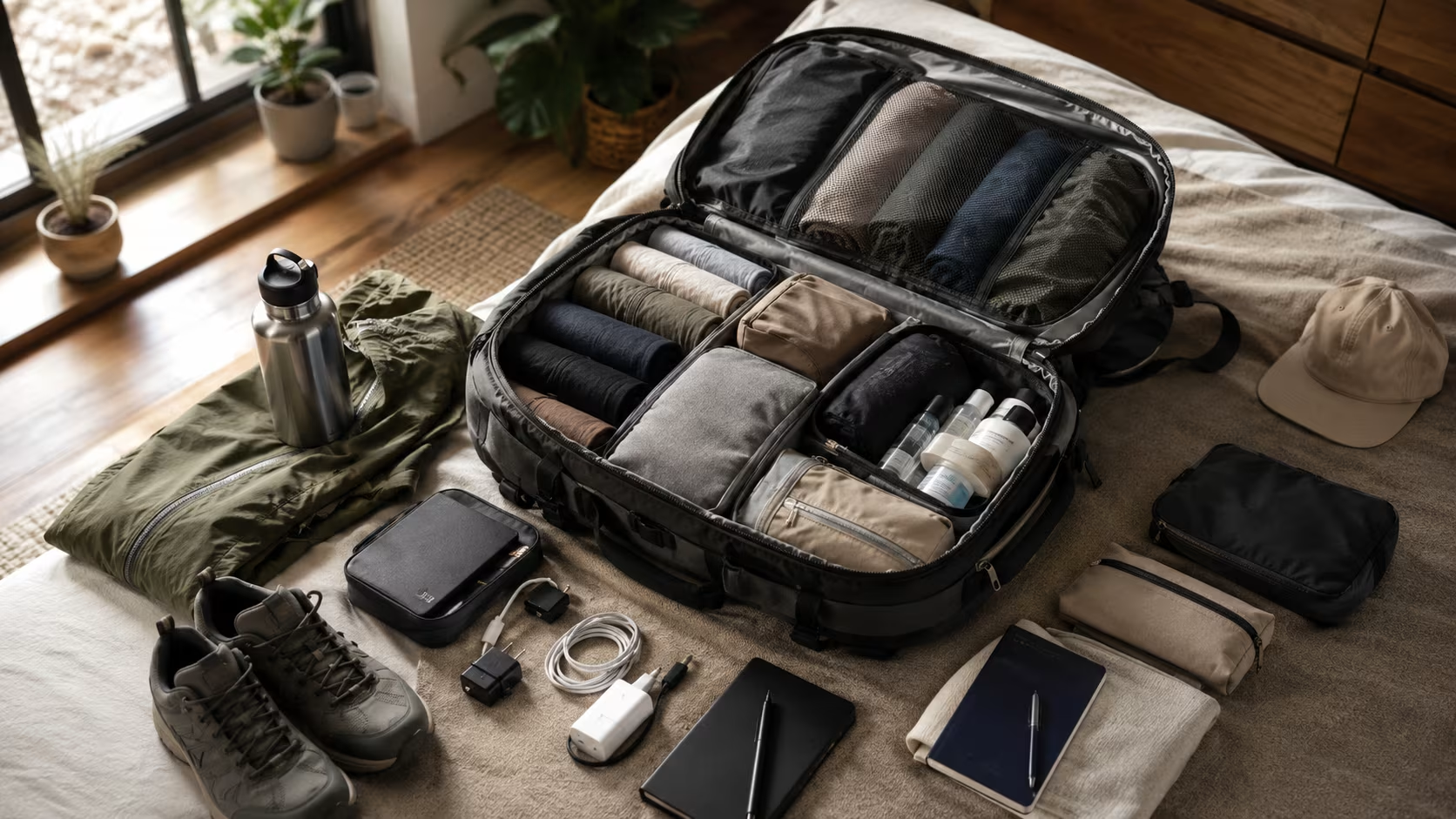
Packing for 3-6+ month trips is fundamentally different from packing for 2-week trips. The temptation is to pack more (longer trip = more stuff). The travelers who succeed pack roughly the same amount as for a 14-day trip — they wash clothes regularly, replace items as needed, and accept that the trip will adapt rather than the packing predict every scenario.
This is a 2026 field guide for sabbatical-takers, digital nomads, gap-year travelers, and anyone planning extended journeys.
The Core Principle
Pack for 14 days; assume you'll do laundry weekly.
A 6-month trip + a 2-week trip use the same clothing rotation; the long-trip traveler does laundry 12+ times instead of 1.
The math:
- 7-9 days of clothing (versus 14-day standard pack).
- Laundry every 7 days during the trip.
- Replace worn items as needed (every 2-3 months for cheap items).
- Buy specific items at destinations as needed (cold-weather layer if going somewhere unexpectedly cold).
The alternative — packing for every possible scenario — produces an impossible bag.
What's Different About Long Trips
Multi-Climate Reality
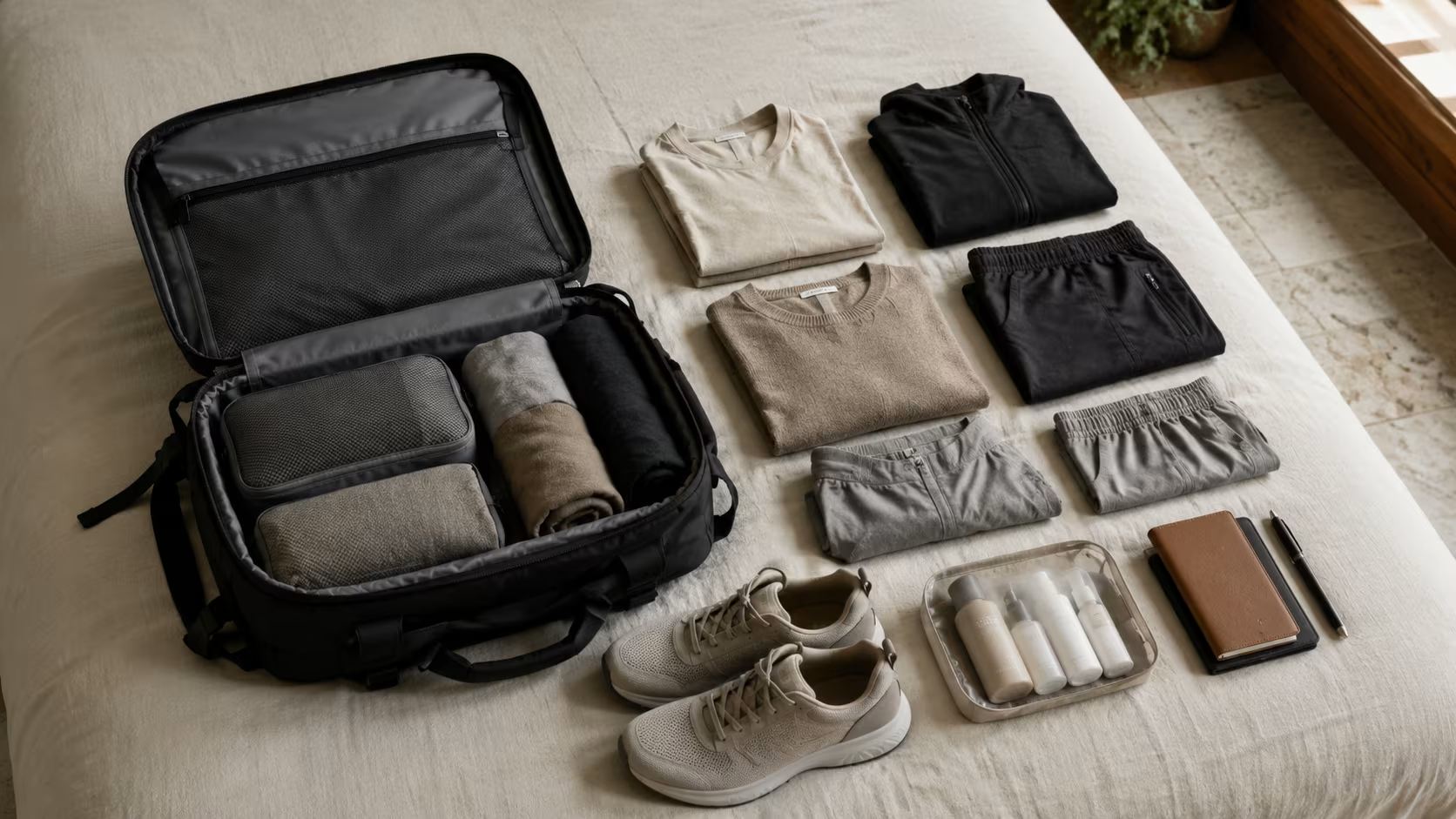
A 6-month trip likely crosses climates. Buenos Aires winter (May-September) → Lisbon summer → Iceland autumn → Bali tropical wet → back to Buenos Aires summer. The packing must handle all of these or buy at destinations.
Wear-and-Tear
Clothing degrades faster on long trips. Daily wear + multiple machine washes + travel friction wear out items in 2-4 months that would last 1-2 years at home.
Identity Shifts
What fits your style at home may not fit your travel context. The traveler who started with 3 button-up shirts may discover after 2 months they want only t-shirts.
Buying at Destinations
Replacing items at destinations is easier than people expect. Most major cities have Uniqlo, H&M, Zara, Decathlon for basic clothing replacement. Hotels in some destinations have laundry; nomads find apartments with washing machines.
The Long-Trip Packing List
Tops (5-7 items)
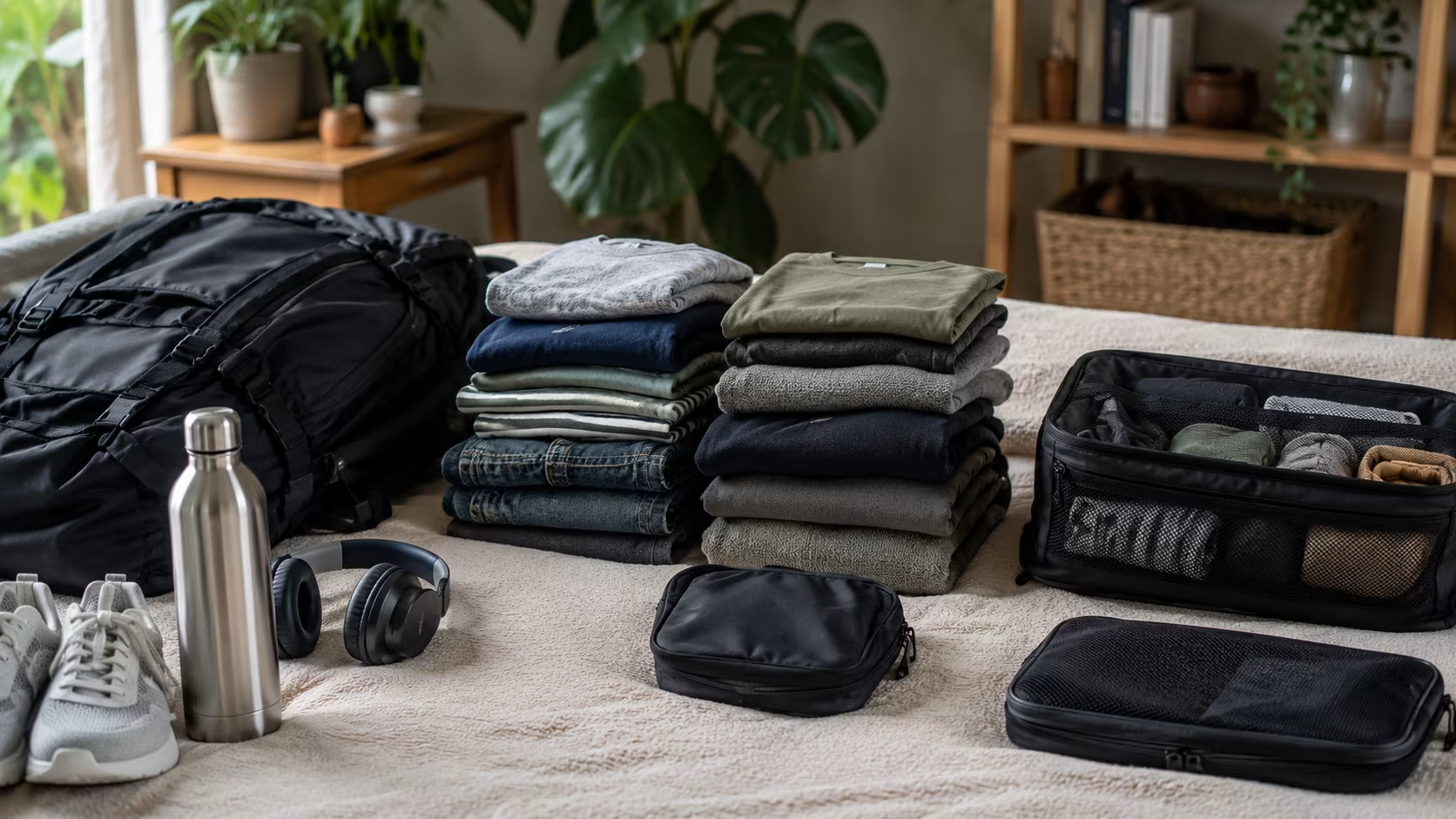
- 3-4 t-shirts (merino wool blend; durable for daily wear).
- 1-2 button-up shirts (linen or chambray; can dress up or down).
- 1 long-sleeve henley or merino sweater (for cool weather + AC).
- 1 dressier top for restaurants.
Not more. The temptation is to add "in case I want variety"; resist.
Bottoms (3-4 items)
- 2 pairs travel pants (one quick-dry technical, one chinos or merino blend).
- 1 pair shorts (warm climates).
- 1 pair swimwear (for beach + pool).
Outerwear (2-3 items)
- Light puffy jacket (Uniqlo Ultra Light Down or Patagonia Down Sweater) — packs to fist size.
- Rain jacket (Patagonia Houdini or similar packable shell).
- Optional: heavier insulation if going into serious cold.
For multi-climate trips, the layered system handles 5°C to 25°C. Below 5°C requires destination-specific shopping.
Footwear (2-3 pairs)
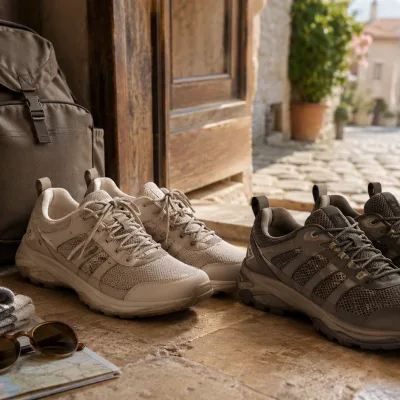
- Walking shoes (primary daily — Allbirds Wool Runners, Nike Free Run, Hoka Clifton, etc.).
- Backup shoes (Birkenstocks for warm weather + casual evenings; or leather sneakers for dressier).
- Optional: hiking boots if doing serious outdoor (book separate carry; otherwise rent at destination).
Underwear (7-9 days)
- 7-9 pairs underwear (merino or synthetic; rotate via laundry).
- 5-7 pairs socks (merino blend; durable).
- 2-3 bras (for women) — sports bra + 1-2 standard.
Sleepwear (1 set)
- 1 pajama set (light merino or cotton).
Toiletries Strategy
Carry-On Restrictions Matter
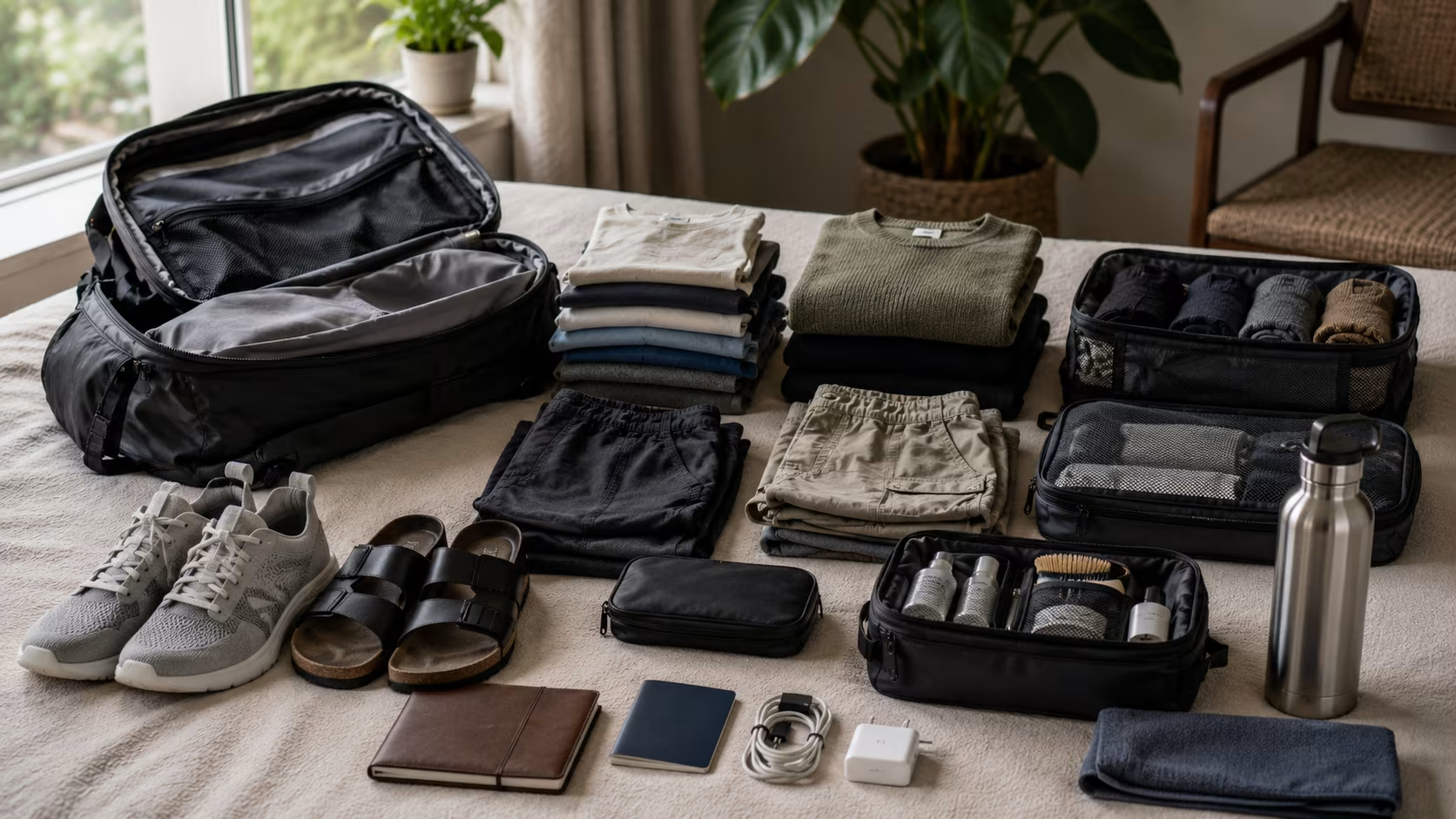
Liquid restrictions (100ml/3.4oz) apply to international flights. Pack accordingly.
What to Pack
- Toothbrush + toothpaste (small).
- Deodorant (solid stick; not always considered liquid).
- Soap or shower gel (small).
- Shampoo + conditioner (small bottles or shampoo bar).
- Sunscreen (small bottle).
- Razor + blades.
- Floss.
- Skincare basics — moisturizer, lip balm.
- Prescription medications (full trip supply + 30-day buffer).
- Vitamin D + multivitamin for long trips (variable destination food).
Buy at Destinations
Avoid packing more than 1-2 weeks of consumables. Buy fresh shampoo + soap + sunscreen + lotion at destinations. International brands available almost everywhere.
Specific Items Worth Bringing
- Water filter bottle (LifeStraw Go) for destinations with poor water.
- Probiotics (some travelers find them helpful for stomach adjustment).
- Insect repellent if traveling to mosquito-borne illness zones.
- Anti-malaria medication (per destination needs; consult travel doctor).
- First-aid kit (bandaids + antibiotic ointment + pain relievers + anti-diarrhea + electrolyte powder).
- Quality sunglasses (UV-rated).
Tech
Essential
- Laptop + charger (essential for working remotely or connecting with family).
- Phone + charger (with multi-currency apps).
- Power bank (10,000-20,000 mAh).
- Wireless earbuds (for flights + working in cafés).
- Universal travel adapter.
- External SSD or backup drive for photos + work files.
Optional
- eReader (Kindle Paperwhite or Kobo) — much lighter than books.
- DSLR or mirrorless camera for photo enthusiasts.
- Drone for travel content creators (check airline + destination regulations).
- iPad for casual reading + travel notes.
Documents + Money
- Passport (with at least 6 months validity beyond return date).
- Photocopies of passport (in cloud + with someone at home).
- Two payment cards (different banks; in different bags).
- Wise / Revolut multi-currency card.
- International driver's license if you'll rent cars.
- Travel insurance documents (printed + cloud-backed).
- Prescription documentation for any medications carried.
- Vaccination records for trips to relevant destinations.
Specific Gear by Trip Type
Sabbatical (Slow Travel)
More variety, less function:
- 2-3 outfits per category (you'll be in apartments, eating dinners, etc.).
- One "nice" outfit for occasional dressier moments.
- Workout gear (resistance bands, light running shoes).
- Reading material (Kindle).
- Notebook + pens for journaling.
Digital Nomad
Functional + low-maintenance:
- Tech-heavy. Laptop + monitor stand (portable; Roost or similar) + good headphones.
- Comfortable, low-maintenance clothing.
- Yoga / exercise gear.
- Coffee setup if you're particular (small AeroPress).
Backpacker / Adventure
Functional + durable:
- Quick-dry everything.
- Good hiking shoes.
- Daypack for daily use.
- Headlamp.
- Sleeping bag liner for hostels.
- Padlock for hostel lockers.
- Money belt (less common in 2026 but real for some destinations).
The Bag Itself
Carry-On Travel Backpack
For most long-trip travelers: a 40-50L travel backpack works.
Specific picks:
- Tortuga Outbreaker (45L) — premium travel backpack.
- Osprey Farpoint 40 / 55 — popular budget choice.
- Cotopaxi Allpa 35 / 42 — colorful + functional.
- Patagonia Black Hole 32 / 55 — durable.
- Aer Travel Pack 3 (35L) — minimalist + durable.
Daypack
Separate daypack for daily city walking + personal item on flights:
- Patagonia Black Hole 25L.
- Bellroy Tokyo Tote.
- Aer City Pack.
- Bellroy Apex Backpack.
Roller Bag (Alternative)
For non-hiking-heavy trips:
- Away Carry-On.
- Tumi Voyageur.
- Travelpro Maxlite 5.
Wheeled bags work for most travel; the trade-off is awkwardness on stairs + uneven streets.
What to Skip
- Multiple pairs of dress shoes. One pair leather sneakers handles dressier needs.
- Multiple jeans. Cotton jeans dry slowly; pack travel pants instead.
- Hair styling tools. Most hotels have hair dryers; otherwise air-dry.
- Travel iron. Most clothes you should travel with don't need ironing.
- Travel shaving equipment beyond electric razor.
- Multiple coats. One light puffy + one rain shell handles most.
- Heavy reading material. Kindle.
- Backup phone. Almost always dead weight.
- "In case" items. If you don't use it weekly at home, skip it.
- Specialized gear for unlikely scenarios. Buy at destination if needed.
Specific Multi-Climate Strategies
Tropical Heat Days
Pack for the warm-weather days:
- 2-3 light shirts.
- 1 pair shorts.
- 1 swimwear.
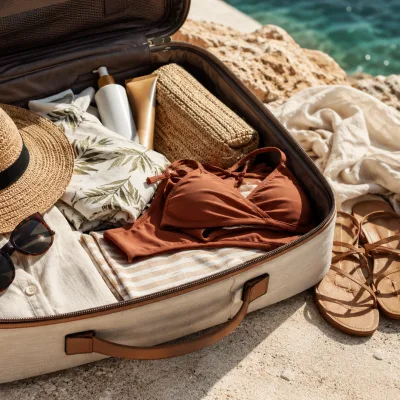
- 1 sun hat.
- 1 sunglasses.
Mediterranean Spring/Summer
- 2 light tops + 1 long sleeve.
- 1-2 pairs travel pants.
- 1 pair shorts.
- Light jacket.
Cool European Weather
- 2 long-sleeve tops.
- 1 sweater.
- 1 puffy jacket.
- 1 rain shell.
- Long pants only.
- Closed-toe shoes only.
Cold Mountain / Cold Climate
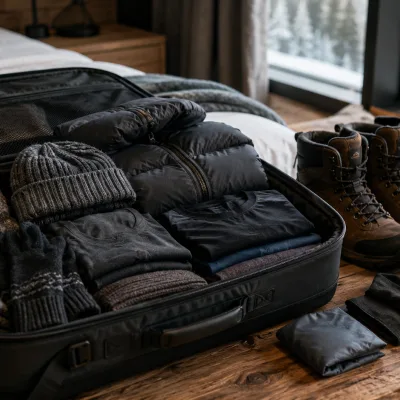
- Heavy puffy jacket.
- Hardshell waterproof jacket.
- Insulated boots.
- Heavy gloves + hat.
- Multiple base layers.
For truly cold destinations, often easier to buy specific cold-weather gear at destination than pack heavy items for the entire trip.
Specific Tactics
Color Palette
Pick 2-3 base colors that work together. Examples:
- Black + gray + navy + white. Classic; works for almost anywhere.
- Olive + tan + cream + navy. Outdoor/adventure aesthetic.
- Black + cream + olive. Minimalist.
Coordinated colors mean every top works with every bottom — your packing list is dramatically smaller.
Merino Wool Investment
Merino is genuinely transformative for long-trip packing. Properties:
- Doesn't smell (contains natural lanolin).
- Dries fast.
- Insulates when wet.
- Comfortable across temperatures.
- Easy machine wash.
Brands: Icebreaker + Smartwool + Allbirds + Wool Prince + Merino Tech.
A merino t-shirt + base layer + sweater costs more upfront ($60-100/piece) but pays back across long trips.
Compression Cubes
Packing cubes organize. Eagle Creek Pack-It cubes + Peak Design Packing Cubes + REI Co-op Multi-Compartment Cubes. Compression versions reduce volume 30-40%.
What to Wear on the Plane
- Heaviest items.
- Comfortable but versatile.
- Closed-toe shoes (cooler than sandals on AC).
- Layers (cabins are cold).
Buying at Destinations
Major international brands available almost everywhere:
- Uniqlo — most major Asian + European + US cities. Affordable basics.
- H&M — global. Affordable basics.
- Zara — global. Mid-range.
- Decathlon — Europe + Asia + India. Sport + outdoor.
- Patagonia / North Face — multiple cities globally.
- Cotopaxi — emerging in Europe + Latin America.
Local brands worth knowing:
- Cos (Spanish, Asian + European cities).
- Brunello Cucinelli (Italian, premium).
- Mango (Spanish, Europe + Latin America).
- Massimo Dutti (Spanish, premium-mid).
Replacing items at destinations is dramatically cheaper than packing the full inventory.
Laundry Strategy
Weekly Washing
The defining habit of long-trip packing.
Options:
- Hotel laundry service ($15-40 per load; convenient).
- Coin laundromat ($5-10; cultural-immersion bonus).
- Drop-off wash-and-fold service ($8-25; common in many cities).
- Apartment washer/dryer (best for long stays).
Most city neighborhoods have at least one option within 10-min walk.
Hand-Washing Backup
For merino wool, occasional hand-washing in hotel sink works:
- Soak in cold water with travel laundry soap.
- Gently squeeze (don't twist or wring).
- Roll in towel to remove water.
- Hang dry overnight.
Merino dries in 12 hours; cotton in 24-48.
Travel Laundry Soap
- Soap bars (Dr. Bronner's, etc.) for occasional washes.
- Travel laundry detergent (small bottles or soap leaves).
Common Long-Trip Packing Mistakes
- Packing for every scenario. Trip is dynamic; you'll adapt.
- Bringing too much "nice" clothing. You'll wear comfortable + versatile items 90% of the time.
- Bringing too many shoes. 2-3 pairs is enough.
- Packing tons of toiletries. Buy at destinations.
- Bringing a suitcase that's full at departure. No room for souvenirs or replacements.
- Cotton everything. Slow to dry; smelly when sweaty.
- Skipping merino. Real difference for long trips.
- Bringing every charger + cable. USB-C handles most modern devices.
- Bringing books. Kindle.
- Bringing exercise equipment beyond resistance bands. Most cities have gyms.
- Forgetting backup chargers. One spare cable is the right amount.
- Bringing too many medications. Pharmacies abroad sell most.
- Not bringing eye mask + earplugs. Long-trip sleep matters.
Sample 6-Month Packing List
Based on a multi-climate trip starting in autumn:
Wear on plane:
- Travel pants (Outlier or Bluffworks).
- Long-sleeve merino top.
- Light merino sweater.
- Walking shoes.
- Wallet + phone in pockets.
In carry-on backpack:
- 3 merino t-shirts.
- 1 chambray button-up.
- 1 collared shirt for nicer occasions.
- 1 pair travel pants (different style).
- 1 pair shorts.
- 1 swim shorts.
- Pajama set.
- 7 underwear, 5 socks.
- Birkenstock sandals.
- Light leather sneakers.
- Patagonia Houdini rain jacket.
- Uniqlo Ultra Light puffy.
- Toiletry bag (1-week supplies).
- Tech bag (laptop, charger, power bank, adapter, headphones).
- Documents + cash.
- Kindle.
- Compact resistance bands.
- Eye mask + earplugs.
In personal item (daypack):
- Important documents (passport copy, prescriptions, insurance).
- Headphones.
- Snacks for flight.
- Light layer for cabin.
- Empty water bottle.
- Phone charger.
- 1 backup t-shirt + underwear (in case checked luggage delays).
Total weight: ~9-12 kg.
Adjustments by Trip Type
Tropical-Only Trip (Bali/Thailand for 6 months)
Reduce: cold-weather layers (drop puffy + heavier items). Add: more swimwear + UPF sun shirts + reef shoes.
Mountain / Cold Trip (Patagonia / Iceland for 6 months)
Reduce: shorts + warm-weather items. Add: heavy insulated jacket + insulated boots + serious base layers.
Mixed Multi-Climate
Default list (above) handles most.
When to Adjust Mid-Trip
Buy When You Realize You Need It
- Cold-weather destination you didn't expect → buy at Decathlon + Uniqlo at destination.
- Worn-out walking shoes → buy replacement at destination.
- More cooking gear → buy at destination if staying in apartments long-term.
Donate / Mail Home
- Items you've discovered you don't use → donate locally.
- Items getting in the way → mail home if cost-effective.
- Heavy souvenirs → ship home rather than carry.
Final Notes
Packing for 6+ months is about restraint, not abundance. The travelers who pack lightly + adapt at destinations enjoy long trips dramatically more than those who pack heavily + drag bags through 12 cities.
The single best advice: pack for 14 days; do laundry weekly; replace worn items at destinations. This produces a manageable bag + a sustainable lifestyle for the entire trip.
The second-best: invest in 2-3 quality merino base items before your trip. The cost ($150-250) pays back across years of travel; merino is genuinely transformative for long-trip comfort + simplicity.
The quietest piece of advice: every long trip teaches you what you actually need. Pack what you think you need; observe what you actually use; donate or mail home what you don't. By month 2-3, your bag will have shrunk to its actual minimum + every remaining item will earn its weight. The traveler who arrives home knows exactly what they'd pack next time + has stopped guessing.
0 Comments
No comments yet — start the conversation.