

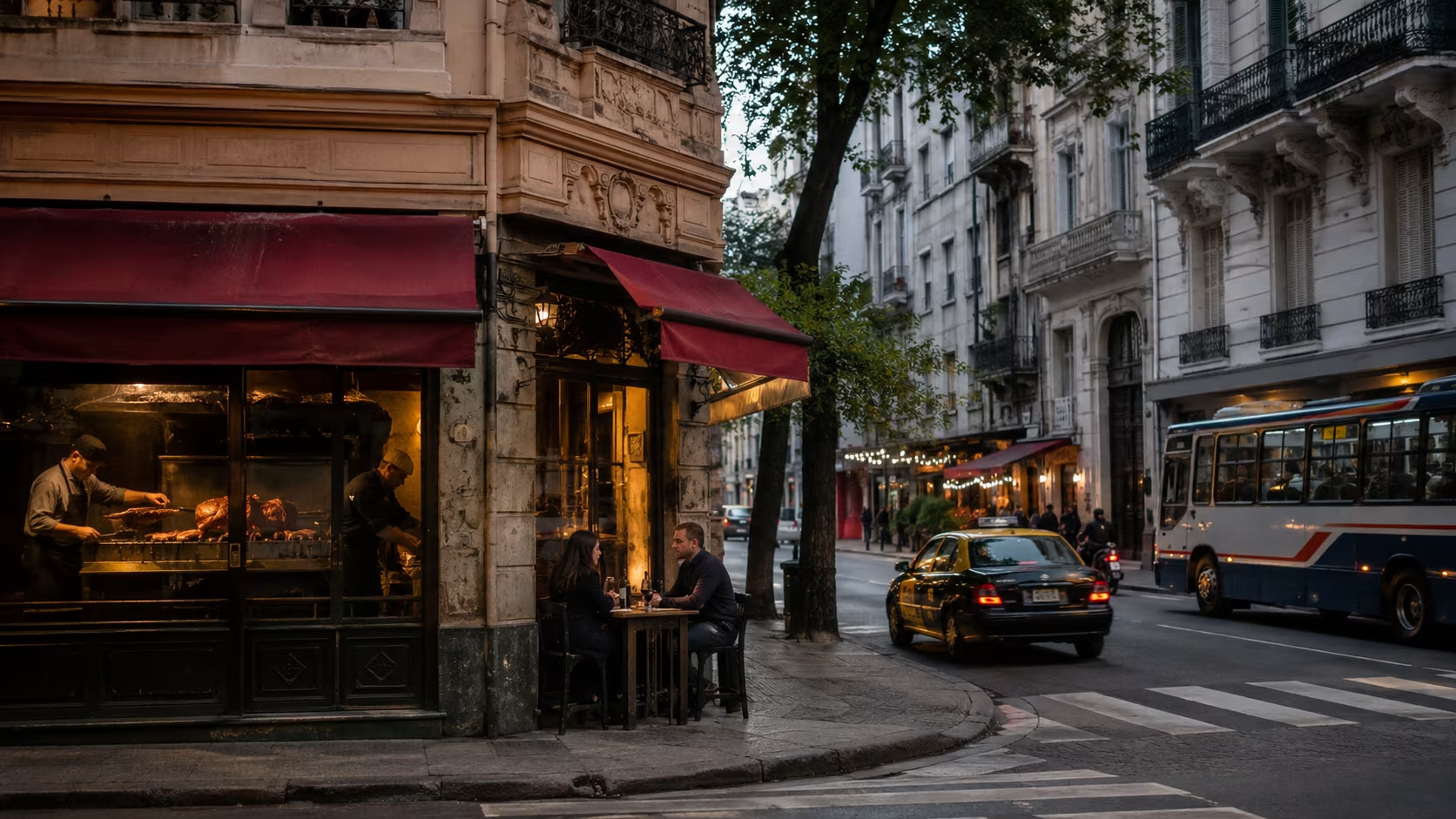
Buenos Aires in 2026 is a different city than the one travelers visited in 2022. Argentina's economy has stabilized after the Milei reforms; the dual-exchange-rate "blue dollar" gymnastics are mostly gone, dollar-denominated cards work normally, and inflation has dropped from triple digits to high-single-digits. The city is still cheap by Western European standards, but no longer absurdly so for foreign-currency earners.
What hasn't changed: the cafés, the asados, the world-class steaks at one-third European prices, the late dinners that start at 22:00, and a city architecture that genuinely looks European but whose energy is unmistakably Latin American.
This is a 4-day guide for first-timers who want to understand the city beyond the standard tour-bus stops.
Quick Facts
Item | Detail |
|---|---|
Country | Argentina |
Currency | Argentine peso (ARS), much more stable since late 2024, ~1,200 ARS/USD in early 2026 |
Language | Spanish (rioplatense dialect); English in tourist areas |
Time zone | ART (UTC-3, no DST) |
Tourist tax | None nationally; Buenos Aires city: 0% |
Best time | March–May (autumn) and September–November (spring) |
Visa | Visa-free for US, EU, UK, Canada, Australia, NZ; 90 days |
Trip length | 4–5 days |
When to Go
March to May (autumn). The sweet spot. Mild weather (15–24°C), trees in golden color along Recoleta avenues, fewer tourists. May is the city's best photographic month.
September to November (spring). The other prime window. Trees flowering (jacarandas in November are the city's signature pink/lilac display), longer daylight, mild temperatures.
December to February (summer). Hot (28–35°C+), humid. Many Porteños leave the city for the coast (Mar del Plata, Pinamar). Restaurants close in January for vacation. The city is quieter but hot.
June to August (winter). Cool (10–18°C), gray, occasionally rainy. Cafés are at their best in winter. Tango shows are in full season.
Avoid
December 24–25, January 1 (most restaurants close).
Holy Week (Easter Thursday–Sunday): some restaurants close.
Getting in
Ezeiza International Airport (EZE). 35 km southwest of central Buenos Aires. Default international gateway.
From EZE to Central Buenos Aires
Taxi: $20–30 USD via official Manuel Tienda Léon counter, or marked taxi at the curb. The flat-rate counter is more reliable.
Uber: $15–25 USD; works at the airport since 2023.
Bus 8 (city bus, 2 hours, very local): $0.80, only worth it for serious budget travelers.
Aeroparque (AEP). Domestic and Latin American flights. 5 km from Recoleta. Taxi $5–10.
Getting Around
Buenos Aires has a strong public transit system, but the city is large enough that walking + transit + occasional taxi is the best combination.
SUBE card. The transit smart card. Buy at any kiosk for ARS 1,500 (refundable deposit). Tap for subte (subway), bus, train.
Subte (subway). Six lines. Clean, fast. Single ride: ~ARS 800 (under $1 with SUBE card). Avoid 17:00–20:00 weekdays.
Buses (colectivos). Comprehensive but require knowing which line. Use the Cuándo Subo or Moovit apps.
Taxis. Black-and-yellow city taxis with meters. Use the official Radio Taxi services or Uber/Cabify. Don't take a freelance taxi from the airport.
Walking. Recoleta, Palermo, San Telmo are all walkable internally. Between first-time-visitors-2026-guide" class="auto-link" target="_blank" rel="noopener">neighborhoods is usually a 15–30 minute walk.
Bikes. Free EcoBici bike share network across the city. Apple Pay + the EcoBici app handle registration.
Where to Stay
Buenos Aires has a very strong neighborhood (barrio) culture. The barrio you choose changes the entire trip.
Palermo (soho / Hollywood)
The creative-and-restaurant district. Boutique hotels, dozens of restaurants per block, easy walking, Tuesday and Saturday markets at Plaza Serrano. Best first-timer pick.
Recoleta
Elegant residential, the European-architecture flagship neighborhood. Recoleta Cemetery, Recoleta Cultural Center, the Beaux-Arts buildings of Avenida Alvear. Higher-end hotels.
San Telmo
Historical heart of the city. Cobblestoned streets, antique markets (Sunday's Plaza Dorrego market is the institution), tango bars, more raw and atmospheric. Lower-priced. Walking distance to the city center.
Centro / Microcentro
The business district. Plaza de Mayo, Casa Rosada, the obelisk. Convenient for sightseeing but less neighborhood feel; quieter on weekends.
Belgrano
North of Palermo. More residential, Chinese quarter (Buenos Aires has South America's largest Chinatown), quieter mornings.
Avoid as a Base
Constitución, Once. Useful transit hubs but mixed safety.
Far suburbs (Liniers, Caballito). Too far for a 4-day trip.
Realistic 2026 nightly prices (4-star, weekday, shoulder):
Neighborhood | Mid-range | Higher-end |
|---|---|---|
Palermo | $80–140 | $200–400 |
Recoleta | $100–180 | $280–600 |
San Telmo | $50–100 | $150–280 |
Centro | $60–110 | $180–350 |
What to Book in Advance
Tango Show
Many tourist shows; quality varies. The high-end:
Rojo Tango at the Faena Hotel: most polished, dinner included, $190–250 USD per person, book 1–2 weeks ahead.
Café de los Angelitos: historical building (since 1890), traditional show, $90–140 with dinner.
El Querandí: mid-priced, San Telmo location.
For real tango (without the dinner-show packaging), visit a milonga (social tango venue) where locals dance:
La Catedral (Almagro): most famous; informal, accommodates beginners.
Salón Canning: more traditional; respectful etiquette expected.
Maldita Milonga at Buenos Ayres Club: central, Friday and Sunday nights.
Milongas are usually 100–200 ARS entry. Don't dance without invitation; observe etiquette.
Steakhouse Dinner (parrilla)
The city's premier parrillas book up:
Don Julio: the best-known, Palermo. Always book 2–3 weeks ahead. Standing aperitivo while you wait.
La Cabrera: also Palermo, accepts walk-ins after early seating.
Parrilla Peña: Centro, working-class classic, walk-up usually fine.
El Pobre Luis: Belgrano, Uruguayan-style, local favorite.
Football Match (river or Boca)
2026 season runs February–December. Tickets to River Plate (El Monumental) and Boca Juniors (La Bombonera) sell out quickly. Tour packages (with safe transit, English-speaking guide) are how most travelers see games, $80–150 USD per person via Landing Pad BA, FutbolPro, or hotel concierge.
Don't try to buy at the gate; tickets are not sold there to non-members for most matches.
Recoleta Cemetery Tour
Cemetery is free. A guided tour (offered by city tourism, free, in English on most days at 14:00) gives the full Eva Perón / Argentine elite history. Highly worth doing.
Day 1 — Centro and San Telmo
09:00. Coffee in San Telmo. Bar Plaza Dorrego for old-school. Coffee Town for proper espresso.
10:00. Plaza Dorrego in San Telmo (Sundays only: the antique market). Walk through San Telmo's cobbled streets. The Mercado de San Telmo is a covered market with food stalls and antiques.
12:00. Walk north to Plaza de Mayo. The Casa Rosada (Pink House, the presidential office). Behind it: Casa Rosada Museum, free, allows 90 minutes for the political history.
13:30. Lunch in Centro. Café Tortoni (the city's most famous historical café, since 1858, touristy but the room itself is the experience). El Cuartito for proper Argentine pizza. Pizzería Güerrín for working-class pizza.
15:00. Walk Avenida de Mayo to Plaza del Congreso. The street is one of the city's grand axes; the Palacio Barolo (a Dante's Divine Comedy-themed building, with rooftop tour) is the highlight midway.
16:30. Café Tortoni for the second visit (if you missed the first), or a quieter alternative.
18:00. Walk back through the central district. Florida pedestrian street (touristy and aggressive, but a quick walk through is part of the experience).
20:30. Dinner. Don Julio if you booked. Parrilla Peña for walk-up traditional. El Banco Rojo in San Telmo for casual sandwiches and craft beer.
Day 2 — Recoleta and Palermo
09:30. Coffee in Recoleta. L'Épi, Hard Coffee.
10:30. Recoleta Cemetery. Free. The 4,800 elaborate tombs of Argentine elite, including Eva Perón's (the Duarte family vault, line up at the back rows). Free guided tour at 14:00; otherwise self-guide with the map. Allow 90 minutes.
12:30. Lunch in Recoleta. El Sanjuanino for empanadas and locro. Filo for casual Italian.
14:00. Museo Nacional de Bellas Artes (National Fine Arts Museum). Free entry. The Argentine 19th-20th century collection is the highlight; respectable European section. Allow 90 minutes.
16:00. Walk through Recoleta to Palermo via the Bosques de Palermo (the city's central park network). Rose garden, Japanese garden ($5), boating lake.
18:00. Café in Palermo Soho. Lattente for proper coffee. Notable Café for traditional.
20:30. Dinner in Palermo. Don Julio (mentioned). Pony Line at the Four Seasons for cocktails before. i Latina (Colombian-Argentine fusion). Tegui (modern Argentine, two-Michelin-star; booking is hard but possible 4–6 weeks ahead).
Day 3 — Tango Day
11:00. Coffee in Palermo or San Telmo.
12:00. Lunch.
14:00. Free walking tour focused on tango history (multiple companies offer; BAFreeTour is the established one, tip-based). Or self-guide through Almagro and Boedo, the working-class neighborhoods where tango was born.
16:00. Tango lesson. DNI Tango (Almagro) and Escuela Argentina de Tango at Galerías Pacífico both offer beginner-friendly drop-in classes for $25–40, no partner needed.
18:00. Aperitivo at a Palermo bar.
20:00. Dinner.
22:30. Tango show or milonga. The show is the polished tourist experience. The milonga is the real one. Salón Canning has its peak nights Tuesday and Friday; La Catedral Tuesday and Friday.
Day 4 — Choose: La Boca, Tigre Delta, or Day Trip to Colonia
Path A: La Boca and El Caminito
10:00. Taxi or bus to La Boca. Walk Caminito (the famous painted-wood-panel street). Crowded with tour groups; the photographs are real but the street is a tourist stage.
11:00. Visit La Bombonera (Boca Juniors stadium). Tour available daily, 90 minutes, $35.
13:00. Lunch at one of the parrilla-and-show places along Caminito (touristy) or escape to El Obrero (working-class classic, since 1954, in nearby Barracas).
Note
La Boca outside Caminito and the stadium is genuinely working-class and not a tourist-friendly walk. Stay in the 4-block tourist strip.
15:00. Taxi back to central Buenos Aires for slow afternoon.
Path B: Tigre Delta
09:30. Train from Retiro to Tigre (50 minutes, $5).
10:30. Tigre town. Boat tour through the delta of the Paraná River (1.5 hours, $15–25 USD). The delta is a network of waterways with stilted houses; locals commute by boat.
13:00. Lunch at a Tigre delta restaurant.
14:30. Boat back. Train to Buenos Aires.
Path C: Day Trip to Colonia, Uruguay
08:30. Buquebus ferry from Puerto Madero. 1-hour fast ferry to Colonia del Sacramento, Uruguay. $50–80 USD round-trip. Border control on board.
10:00. Arrive in Colonia. Walk the small Old Town, UNESCO World Heritage, Portuguese-Spanish-Brazilian architectural mix. Allow 4 hours.
14:00. Lunch at a Colonia parrilla.
16:30. Ferry back. Arrive Buenos Aires by 18:00.
What to Eat
The Beef
Argentine beef is the trip's headliner. The cuts:
Cut | Translation | Notes |
|---|---|---|
Bife de chorizo | Sirloin steak | Standard order, juicy |
Ojo de bife | Ribeye | Marbled, rich |
Bife de lomo | Tenderloin | Most tender, less flavor |
Vacío | Flank | Tougher, more flavorful |
Asado de tira | Short ribs | Slow-cooked, fatty |
Entraña | Skirt steak | Cheap, intensely flavored |
Chinchulines | Small intestine | Acquired taste, traditional |
Mollejas | Sweetbreads (thymus) | Argentine asado classic |
Order "jugoso" for medium-rare; "a punto" for medium. "Bien cocido" (well-done) is genuinely insulting at most parrillas. Sides: provoleta (grilled cheese), chorizo (sausage), morcilla (blood sausage), papas fritas (fries), simple salad.
Other Anchors
Empanadas. Beef, chicken, ham-and-cheese, spinach, sweet corn (humita). Regional variations (Salteñas, Mendocinas, etc.).
Milanesa. Breaded fried beef cutlet. Comfort food classic. Napolitana version with ham, tomato, melted cheese on top.
Pizza. Argentine pizza is genuinely distinct: thicker crust, more cheese, often with palm hearts or olives. Pizzería Güerrín is the institution.
Choripán. Grilled chorizo on a baguette with chimichurri. Working-class lunch standard.
Locro. Hearty bean-and-corn stew, often with pork. Traditional, served on national holidays.
Provoleta. Grilled provolone cheese with oregano and chili. Asado starter.
Mate. Caffeine-strong tea drunk through a metal straw (bombilla) from a hollow gourd. Cultural ritual; sharing the gourd is a friendship gesture.
Helado (ice cream). Argentine ice cream is excellent, Italian-influenced, intensely flavored. Cadore, Rapanui, Persicco are the city's institutions.
Dulce de leche. Caramelized milk sauce, on everything sweet.
Alfajores. Two cookies sandwiching dulce de leche. Coffee-shop staple.
Wine
Argentine wine is one of the world's great underappreciated traditions. Mendoza Malbec is the headline, but Cafayate Torrontés (white) and Patagonian Pinot Noir are equally serious.
Buenos Aires wine bars worth visiting:
Aldo's Vinoteca
Pain et Vin
Mostrador del Café Vinoteca
Bottle prices at restaurants typically $15–35 USD for a quality Mendoza.
Costs and Budget
2026 daily budgets per person, excluding flights and hotel (USD):
Style | Per day | Notes |
|---|---|---|
Backpacker | $25–45 | Hostel, empanadas, walking, occasional museum |
Mid-range | $60–110 | Mix of casual and proper restaurants, tango show, transit |
Comfortable | $130–200 | Better restaurants, parrilla dinners, taxi rides |
Higher-end | $300+ | Tasting menus, private tour, hotel breakfasts |
Practical Info
Currency. Peso has stabilized substantially after late 2024 reforms. Use ATMs (low fees compared to 2022). Most restaurants and hotels accept cards normally now. Exchange offices (cuevas) still exist but offer narrower spreads.
Cards. Western cards work at most restaurants, hotels, and stores. Some smaller places still cash-only.
Tipping. 10% at restaurants. Round up taxis. Hotel housekeeping $1–2/day.
English. Common in tourist areas (Palermo, Recoleta hotels). Less so in Centro, Boca, San Telmo.
Late dinner schedule. Restaurants open at 20:00 but most locals don't arrive until 22:00. Booking for 21:30 is normal.
Late nightlife. Bars and clubs don't peak until 02:00–04:00. Many close by sunrise.
Sundays. Many shops closed; the Sunday San Telmo antique market is the headline activity.
Pickpocketing. Real on subte during peak hours, in crowded markets, around tourist sites. Standard precautions.
The "mustard scam." Someone surreptitiously sprays liquid on you, then a "helpful" stranger appears to clean it while accomplices pickpocket. Common in San Telmo and around tourist plazas. Walk away from anyone offering unrequested help if you've just been splashed.
Common First-Timer Mistakes
Eating dinner at 19:00. Most restaurants don't open until 20:00. Many are empty until 21:30.
Skipping the parrilla because of vegetarianism. Many parrillas have excellent salads, provoleta, milanesa de berenjena (eggplant), and pasta options.
Doing only a tourist tango dinner show. A milonga visit is the actual cultural experience; show is the polished version.
Crossing into Boca beyond Caminito. Stay in the 4-block tourist strip; the surrounding neighborhood is genuinely working-class and not safe for unfamiliar tourists.
Missing the Recoleta Cemetery free tour. Without context, the cemetery is just an elaborate graveyard; with context, it's a tour of Argentine political and cultural history.
Not reserving Don Julio. The most famous parrilla in the city; walk-ups stand 60+ minutes (with the famous outdoor wine while you wait).
Trying to do Iguazú as a day trip. Iguazú Falls is 90 min by flight + 30 min drive each way; minimum 2 days, ideally 3.
Forgetting that Argentina is in the southern hemisphere. January is summer; July is winter. Pack accordingly.
Final Notes
Buenos Aires rewards the traveler who slows down to its rhythm. Late dinners, long café lunches, an unscheduled afternoon. Four days is enough to see the headline neighborhoods and have one full evening of tango and one proper steak dinner. A fifth day buys you a Tigre or Colonia day trip.
The city's gift is the contradiction it embodies: European architecture and Latin energy, sophisticated food at unsophisticated prices, an obsession with literature and tango and politics that runs through cab drivers' conversations as much as university lectures. The Buenos Aires that stays with you is the long late-night dinner with a good Malbec, on a Tuesday, in October, in a Palermo backstreet you'll never find again.
0 Comments
No comments yet — start the conversation.