

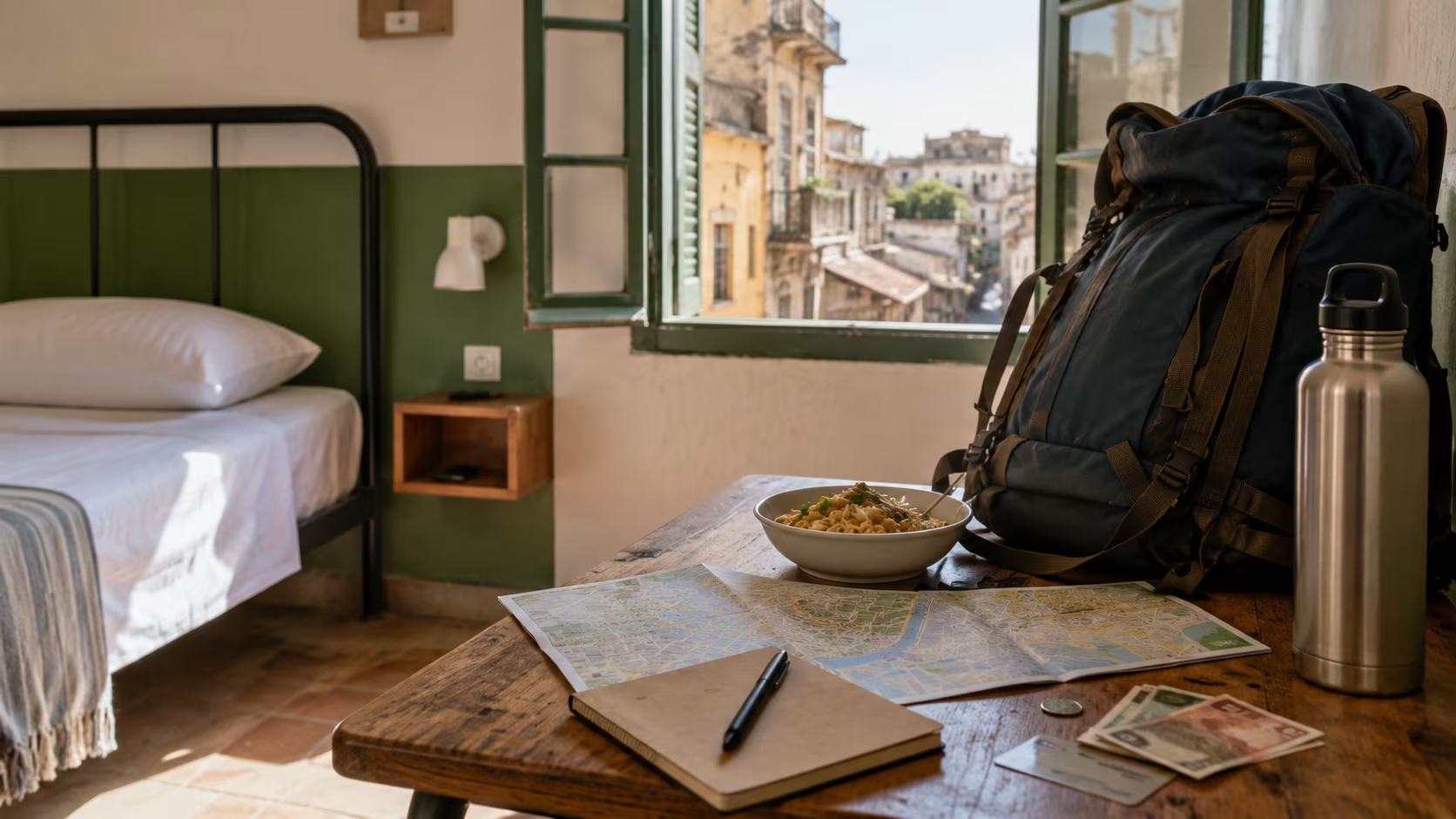
$50 a day excluding flights is a real budget for serious travel. It rules out luxury hotels + tasting menus + private tours. It enables 6 months of travel for $9,000 in many destinations. The travelers who make it work aren't sleeping in cars + eating ramen — they're choosing destinations carefully, staying in hostels or budget apartments, eating local + working-class food, walking + using public transit, and accepting trade-offs that wealthier travelers don't make.
This is a 2026 field guide for travelers who want to travel meaningfully on a budget — gap-year backpackers, budget-conscious nomads, post-graduate explorers, anyone for whom $50/day is the constraint.
What $50/Day Actually Buys
The budget covers: accommodation + food + local transit + occasional attractions + small extras. It excludes: flights, travel insurance, major tours, premium experiences.
Daily Spending Allocation (Sample)
In a budget destination ($50/day works easily):
- Accommodation: $20-25 (hostel dorm or budget apartment).
- Food: $15-20 (local restaurants + street food + occasional supermarket).
- Transit: $3-5 (public transit + occasional taxi).
- Attractions/extras: $5-10 (occasional museum, drink, etc.).
In a more expensive destination ($50/day requires effort):
- Accommodation: $25-35 (hostel; possibly outside city center).
- Food: $15-20 (mostly self-catering + cheap restaurants).
- Transit: $5-10 (public transit only).
- Attractions/extras: $0-5 (mostly free activities).
Where $50/Day Works Easily
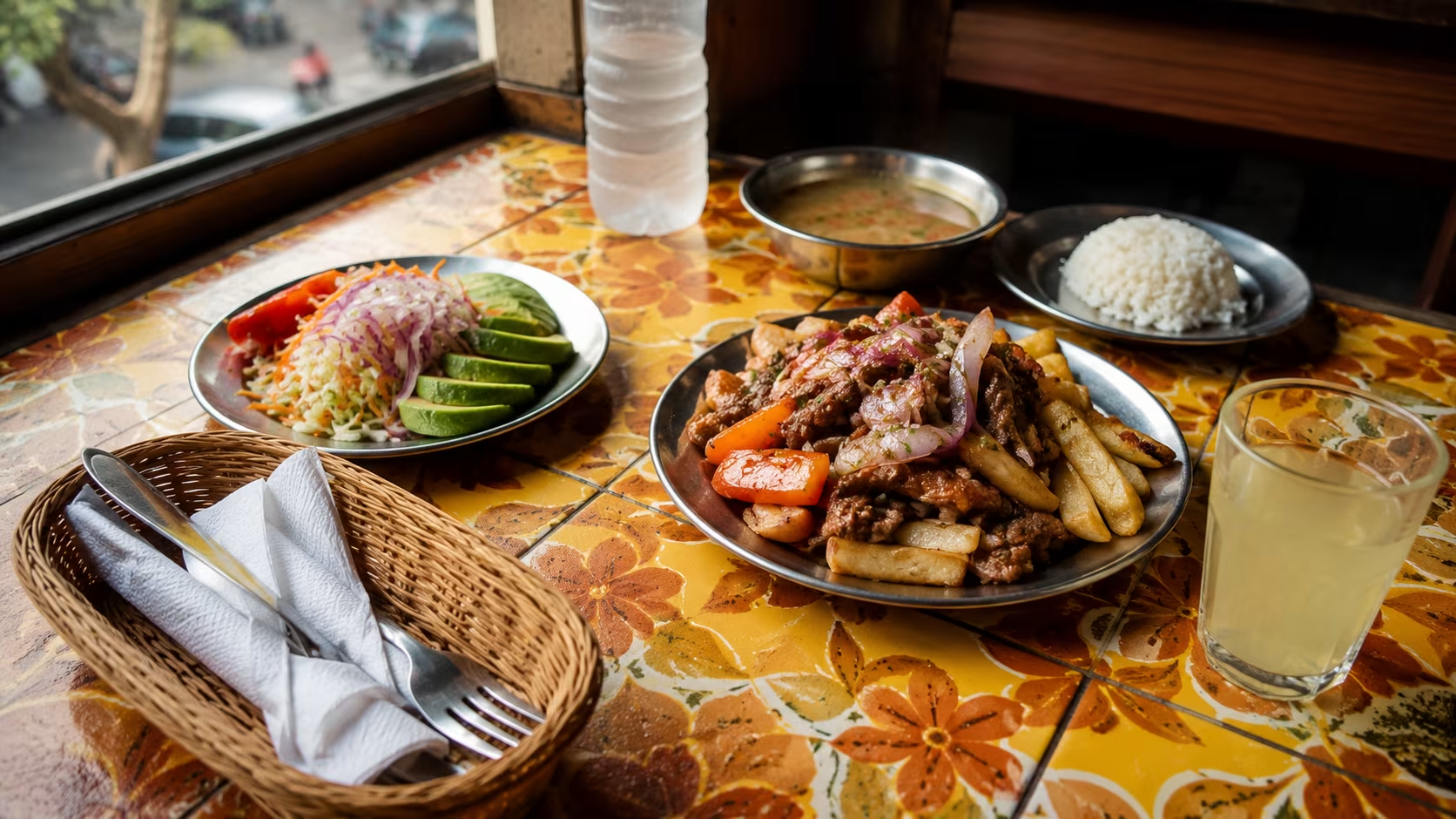
Destinations where $50/day is a comfortable budget:
Southeast Asia
- Vietnam (Hanoi, Hoi An, Saigon, Da Nang). Possible on $25-35/day.
- Thailand (Bangkok, Chiang Mai, smaller towns). Possible on $30-50/day.
- Cambodia. Possible on $25-40/day.
- Laos. Possible on $25-40/day.
- Indonesia (Bali, Java). Possible on $25-50/day.
- Philippines (Manila + smaller cities). Possible on $30-50/day.
Central + South America
- Mexico (most cities). Possible on $35-50/day in non-tourist destinations; tourist hubs harder.
- Guatemala. Possible on $25-40/day.
- Colombia (Medellín, Cartagena, Bogotá). Possible on $30-50/day.
- Peru (Cusco, Arequipa). Possible on $30-50/day.
- Bolivia. Possible on $25-40/day.
- Argentina (post-Milei reforms). $40-60/day.
- Ecuador. Possible on $30-45/day.
Eastern Europe
- Hungary (Budapest). Possible on $40-60/day.
- Romania. Possible on $30-45/day.
- Bulgaria. Possible on $30-45/day.
- Czechia (Prague). Possible on $40-60/day.
- Poland. Possible on $35-50/day.
- Albania. Possible on $25-40/day.
- Serbia. Possible on $30-45/day.
Central Asia + Caucasus
- Georgia (Tbilisi). Possible on $30-50/day.
- Turkey (Istanbul, smaller cities). Possible on $35-55/day.
- Uzbekistan. Possible on $30-45/day.
Africa
- Morocco. Possible on $35-55/day (cities + small towns).
- Egypt. Possible on $30-50/day.
- Kenya (excluding safari days). Possible on $40-55/day.
Where $50/Day Is Harder
Western Europe + most developed countries:
Tough on $50/Day (Possible but Restrictive)
- Spain, Portugal, Italy (smaller cities; not Rome/Barcelona).
- Greece (smaller towns).
- Croatia (off-season).
- Romania (slightly easier than other EU).
Very Tough on $50/Day
- France, Germany, Austria (capitals).
- UK (especially London).
- Netherlands, Denmark, Sweden, Norway, Switzerland (Northern Europe).
- Iceland.
- United States (most major cities).
- Canada, Australia, New Zealand.
- Japan, South Korea (urban centers).
- UAE, Singapore.
In these countries, $50/day usually means hostel dorm + supermarket meals + walking everywhere + skipping most paid attractions.
Accommodation Strategy
The single largest variable.
Hostels
The budget-traveler default. Dorm beds typically $10-30 in budget destinations; $30-60 in expensive cities.
Hostel-finding tools:
- Hostelworld.com + app (the global standard).
- Hostelbookers, Booking.com hostel sections.
- Local hostel networks in some regions.
What to look for:
- High ratings (8+/10).
- Mixed dorms with under 8 beds (less crowded).
- Female-only dorms for solo female travelers.
- Privacy curtains + outlets per bed (modern hostels).
- Location (closer to center = more expensive but less transit cost).
- Free breakfast (saves $5-10/day).
- Kitchen access (allows cheap self-catering).
- Real laundry facilities.
Budget Hotels + Guesthouses
For travelers preferring private rooms:
- Family-run guesthouses in budget destinations: $25-50/night.
- Budget hotel chains (Ibis Budget, Premier Inn).
- Private rooms in hostels: $40-80/night.
Airbnb / Vrbo
For stays of 3+ nights, apartments often beat hostels for cost-per-night + amenity access.
Couchsurfing + Hospitality Networks
- Couchsurfing.com (still active, requires verified profile + history).
- Trustroots, BeWelcome (alternatives).
- Servas International.
Free accommodation in exchange for genuine cultural exchange. Not for everyone; some risk; rewards the right traveler.
House Sitting
TrustedHousesitters + similar platforms. Pet care in exchange for free stay. Free + immersive. Best for solo travelers comfortable with animals + responsibility.
Work Exchange
Workaway, WWOOF, HelpX — work 4-5 hours/day in exchange for accommodation + food. Reduces daily costs to near-zero.
Food Strategy
The second-largest variable.
Eat Local + Working-Class
In most countries, local working-class restaurants are 3-5x cheaper than tourist restaurants for same/better food.
Specific tactics:
- Hawker centers / food courts (Singapore, KL, Bangkok). Full meals for $2-5.
- Working-class lunch menus ('menú del día' in Spanish-speaking; 'menu turistico' in Italy is often actually budget). $5-10 for full meal.
- Street food in cuisine-rich destinations. $1-5 per meal.
- Markets + bakeries for breakfast + snacks.
- Self-catering for breakfast at hostel kitchens.
Self-Catering
For stays of 3+ nights, cooking some meals at hostel kitchen or apartment saves significantly.
Sample budget breakfast bread + cheese + fruit + coffee. $2-3.
Sample budget dinner rice + vegetables + protein. $3-5 home-cooked.
Restaurant Tactics
- Lunch "set menus" (often half the dinner price for similar food).
- Happy hours for drinks.
- Standing-bar drinks in Italy, Spain (cheaper than terrace).
- Skip the buffet at fancy hotels. Local cafés serve better breakfast for 1/4 the price.
Drink Tactics
- Tap water in countries where safe.
- Filtered water bottle (LifeStraw Go) in countries with poor water.
- Local beer at supermarkets ($1-2) vs. bars ($3-7).
- Drinking culture varies; in some countries, supermarket drinking + outdoor benches is cheaper + culturally acceptable.
Transit Strategy
Public Transit + Walking
The foundation of budget travel.
- Day passes for cities you'll explore.
- Walk between districts when possible.
- Bicycle rentals in cycle-friendly cities.
- Bus + metro over taxi.
Long-Distance
- Bus is cheaper than train + flight in most countries.
- Train for longer journeys + scenic value.
- Flights booked 2-4 weeks ahead through Skyscanner + Google Flights.
- Sleeper buses + trains save accommodation cost (1 night = 1 day budget saved).
Specific Tactics
- Overnight transit to save night accommodation.
- Avoid premium-class options (often 2-3x the price).
- Book 2-4 weeks ahead for best fares.
- Use local apps for ride-hailing (often cheaper than Uber): Grab in SE Asia, Cabify in Latin America, Beat in Greece, etc.
Activities + Attractions
Free or Low-Cost
- Free walking tours in most major cities. Tip-based ($10-20 per person).
- Public museums on free days. Many European museums have one free day per week or first Sunday.
- Beaches.
- Public parks.
- Markets.
- Street markets + festivals.
- Religious sites (often free or low cost).
- Architectural walks.
Reduced-Cost
- Student discounts (with student ID).
- City passes that include multiple attractions (only worth it if you'll use 5+ items).
- Combined tickets vs. individual.
- Off-peak hours (Last entries often discounted).
Skip the Premium
- Tourist tours that bus you to multiple expensive sights.
- Premium observation decks when free walking equivalents exist.
- Helicopter rides + private boats.
- Private guides.
Daily Budget Tactics
Track Spending
Know what you spent each day. Apps like:
- Trabee Pocket.
- TravelSpend.
- Splitwise (for shared expenses).
- Spreadsheet (most flexible).
Adjust Based on Reality
If you're over budget on Day 3, recalibrate Day 4:
- More self-cooking.
- Skip paid attraction.
- More walking.
If you're under budget on Day 3, occasional splurge:
- One nicer dinner per week.
- One paid tour per destination.
- One nicer accommodation per week.
Weekly Reset
Review spending weekly + adjust strategy.
Time Investment
Budget travel costs more time. Be honest about the trade-offs.
Time-Saving Tactics
- Stay in fewer destinations longer (don't move every 2-3 days).
- Choose destinations with clusters of attractions (less transit per day).
- Cook meals you can leave + return to (instead of waiting around).
Time-Costing Activities
- Comparing prices across multiple booking sites.
- Walking longer distances instead of taxis.
- Cooking instead of eating out.
- Doing laundry yourself.
- Reading reviews + planning instead of paying for organized tours.
Specific Money-Saving Tactics
Money
- Wise / Revolut multi-currency accounts for low-fee international spending.
- Withdraw larger amounts less often to minimize ATM fees.
- Pay in local currency (not the offered home-currency conversion).
- Travel-rewards credit cards for points + protections.
Tech
- Free SIM cards / eSIM (Airalo $5-15 for the trip).
- Free Wi-Fi at cafés + hostels.
- Offline Google Maps to avoid data usage.
- Translation apps (Google Translate has offline language packs).
Communication
- WhatsApp + Telegram for free messaging.
- VoIP for phone calls (Skype, FaceTime).
- Skip international roaming.
Buying at Destinations
- Replace items at destinations rather than overpacking + carrying.
- Buy local clothing if needed (often cheaper than home brands).
- Buy souvenirs from working-class markets (3-4x cheaper than tourist shops).
Specific Trip Types
Backpacking Through SE Asia (3 Months on $50/Day)
- Stay in $10-20 hostels.
- Eat $1-3 street food meals.
- Bus between cities ($5-15 per leg).
- Free walking tours + temples + beaches.
Total: $40/day; the saved $10/day for occasional splurges.
Backpacking Latin America (3 Months on $50/Day)
- Stay in $15-30 hostels.
- Eat at $3-8 local restaurants.
- Buses + occasional flights between cities.
- Mix of free + paid activities.
Total: $50/day.
Eastern Europe (1 Month on $50/Day)
- Stay in $20-35 hostels or budget apartments.
- Eat working-class restaurants + supermarket.
- Trains + buses between cities.
- Mostly free activities.
Total: $50/day.
Western Europe Budget (Smaller Cities Only)
- Stay in $30-50 budget hotels + hostels.
- Self-catering + occasional cheap restaurants.
- Trains + walking.
- Mostly free attractions.
Total: $60-80/day even with discipline; $50/day not realistic in capitals.
Common Budget-Travel Mistakes
- Trying to do Western Europe + budget travel. Mostly fails; choose another region.
- Cheapest hostels in worst neighborhoods. Sometimes cost-saving costs more in transit.
- Eating only at supermarkets. Misses local food culture.
- Skipping all paid activities. Some are worth the cost.
- Long bus rides without sleeper option. Wastes a day.
- Free walking tours without tipping. They're tip-based; $10-15 expected.
- Booking accommodation last-minute in peak season. Prices spike.
- Eating at restaurants targeting tourists. 2-3x markup.
- Buying in convenience stores instead of supermarkets.
- Drinking at hotel bars. 2-3x markup vs. local bars.
- Not trying free local activities. Beach, parks, walking neighborhoods.
- Overpacking + extra-baggage fees.
When to Splurge
Even on $50/day budget, occasional splurges are sustainable + meaningful:
- One nice dinner per week ($30-60). The cultural experience.
- One major experience per destination. Cooking class, tour, museum.
- One nicer accommodation per month. Recovery night.
- Specific destination experiences (sunrise at Angkor Wat is worth the cost; the city walls of Dubrovnik vs. just looking from outside).
Budget Travel Lifestyle Considerations
Mental Health
Budget travel produces real fatigue:
- Constant decision-making about cost.
- Less comfortable accommodations.
- More walking + transit time.
- Less buffer for unexpected costs.
Build in rest days; don't let budget become an obsession.
Social Aspects
Hostels + free walking tours + group activities produce social connections that hotel-stayers miss.
Health
Don't compromise on:
- Travel insurance (mandatory).
- Medications + vaccinations.
- Bottled water in countries with poor water.
- Reasonable sleep + nutrition.
Final Notes
$50/day is a real budget that enables substantial travel. The travelers who make it sustainable are systematic about destination choice + accommodation + food + transit + activities. The travelers who make it miserable try to apply rich-country expectations to budget travel.
The single best advice choose your destination based on your budget. $50/day enables 6 months in Southeast Asia or 4 months in Latin America or 2 months in Eastern Europe — but only 1-2 weeks in Western Europe. Match the trip to the budget.
The second-best stay longer in fewer places. The cheapest day is the day you don't transit. Five nights in one apartment is cheaper than five nights across five hotels.
The quietest piece of advice budget travel isn't poverty travel. Eating at a $5 working-class restaurant in Vietnam isn't deprivation; it's cultural participation. The traveler who learns to live on $50/day in budget destinations isn't suffering — they're often having a deeper experience than the $300/day luxury traveler in the same city, who spent the day in air-conditioned bubbles + saw the same place at a remove. The constraint shapes the experience; the experience often improves with the constraint.
0 Comments
No comments yet — start the conversation.