

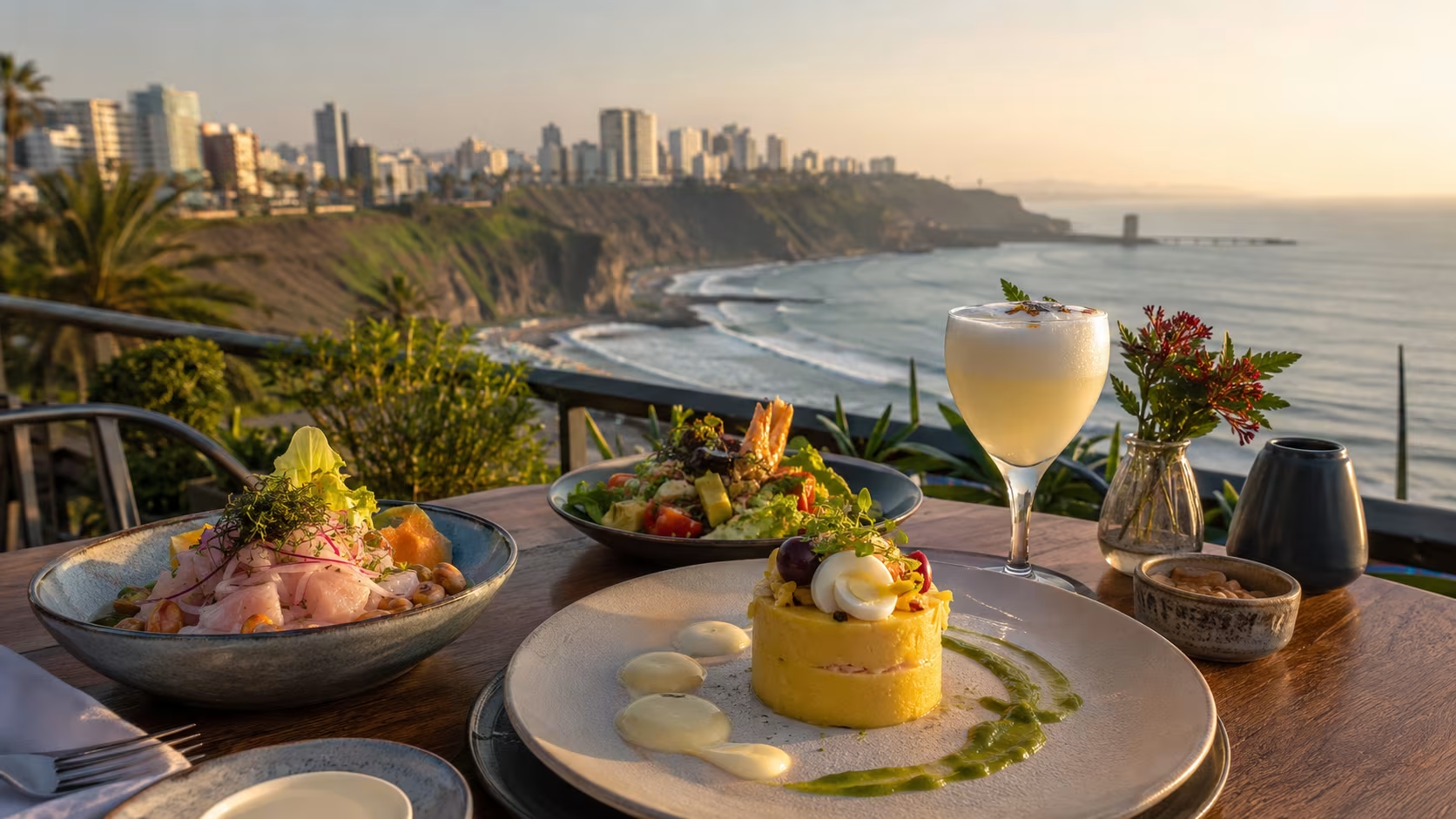
Lima is the most-discussed food city in Latin America. The combination of indigenous Peruvian + Spanish colonial + Chinese (Chifa) + Japanese (Nikkei) + Italian + African influences produces one of the world's most distinctive regional cuisines. The 2026 city has multiple restaurants in the World's 50 Best Restaurants ranking; Central was named the world's best restaurant 2023; modern Peruvian cooking has reshaped Latin American gastronomy.
Most first-time visitors plan Lima as a 1-2 day stopover before continuing to Cusco/Machu Picchu. The city deserves 3-4 days for proper engagement with the food scene + the historic colonial center + the modern Miraflores + Barranco districts. The Pacific coastline + the dramatic cliff-top neighborhoods produce a city visually distinct from any other Latin American capital.
Quick Facts
| Item | Detail |
|---|---|
| Country | Peru |
| Currency | Peruvian sol (PEN), ~3.7 PEN/USD in 2026 |
| Languages | Spanish + Quechua; English in tourist areas |
| Time zone | PET (UTC-5, no DST) |
| Tourist tax | None |
| Best time | December–April (warmer + drier) |
| Visa | Visa-free 90 days for US, EU, UK, Canada, Australia, etc. |
| Trip length | 3–4 days |
When to Go
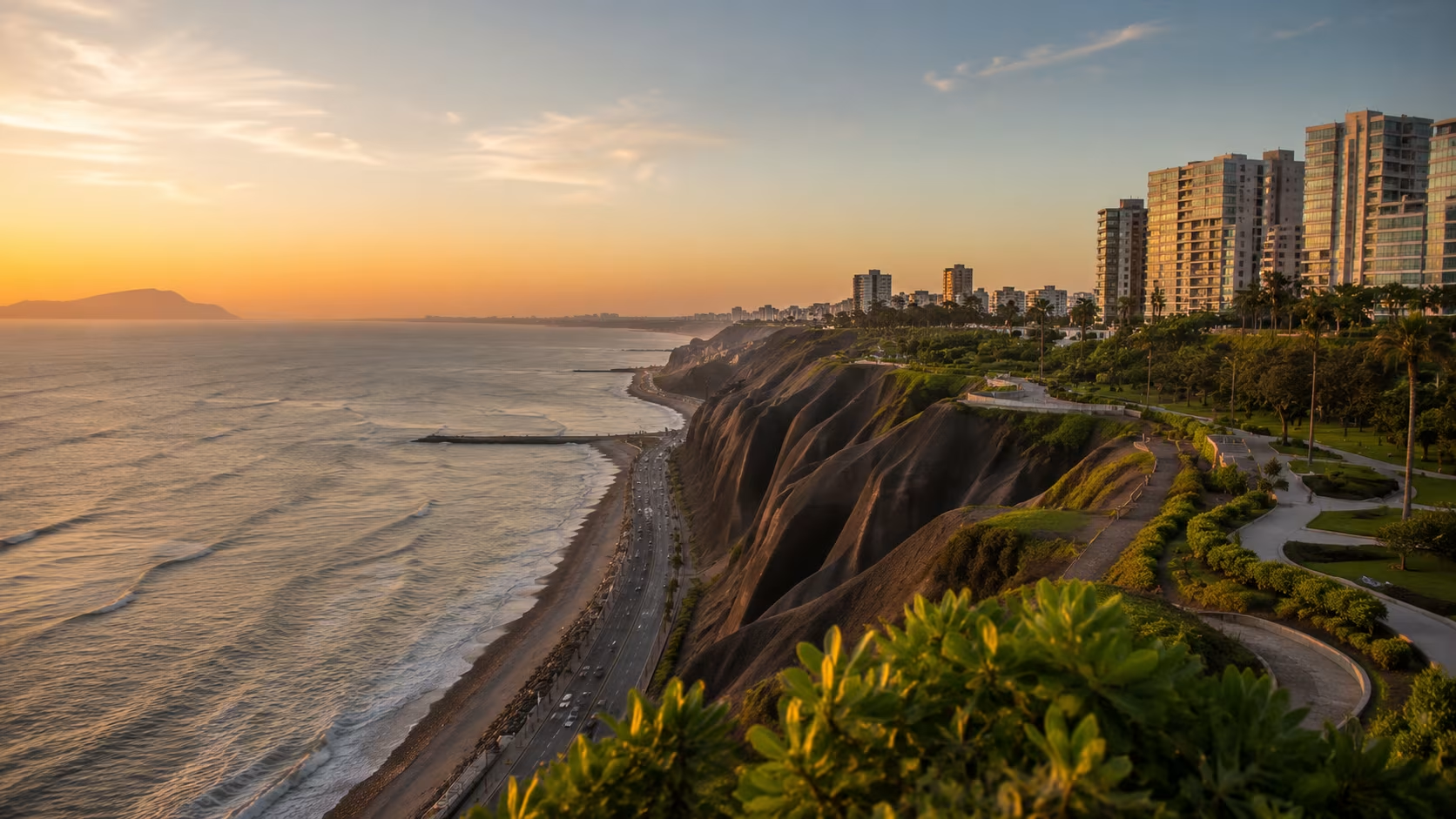
Lima sits 12°S of the equator on a coastal desert. Climate is shaped by the cold Humboldt Current; weather is mild but distinctively gray for much of the year.
December to April (summer). The best window. Sunny + warm (22-28°C). The garúa (low coastal fog/drizzle) lifts. Beach culture peaks.
May to November (cooler season). Cool (15-20°C); persistent garúa fog (the city is gray most days). Locals call this period "the gray winter." Different mood; not unpleasant but visually monotonous.
Avoid:
- Major Peruvian holidays for transit issues.
- August-September for the worst of garúa fog.
Getting In
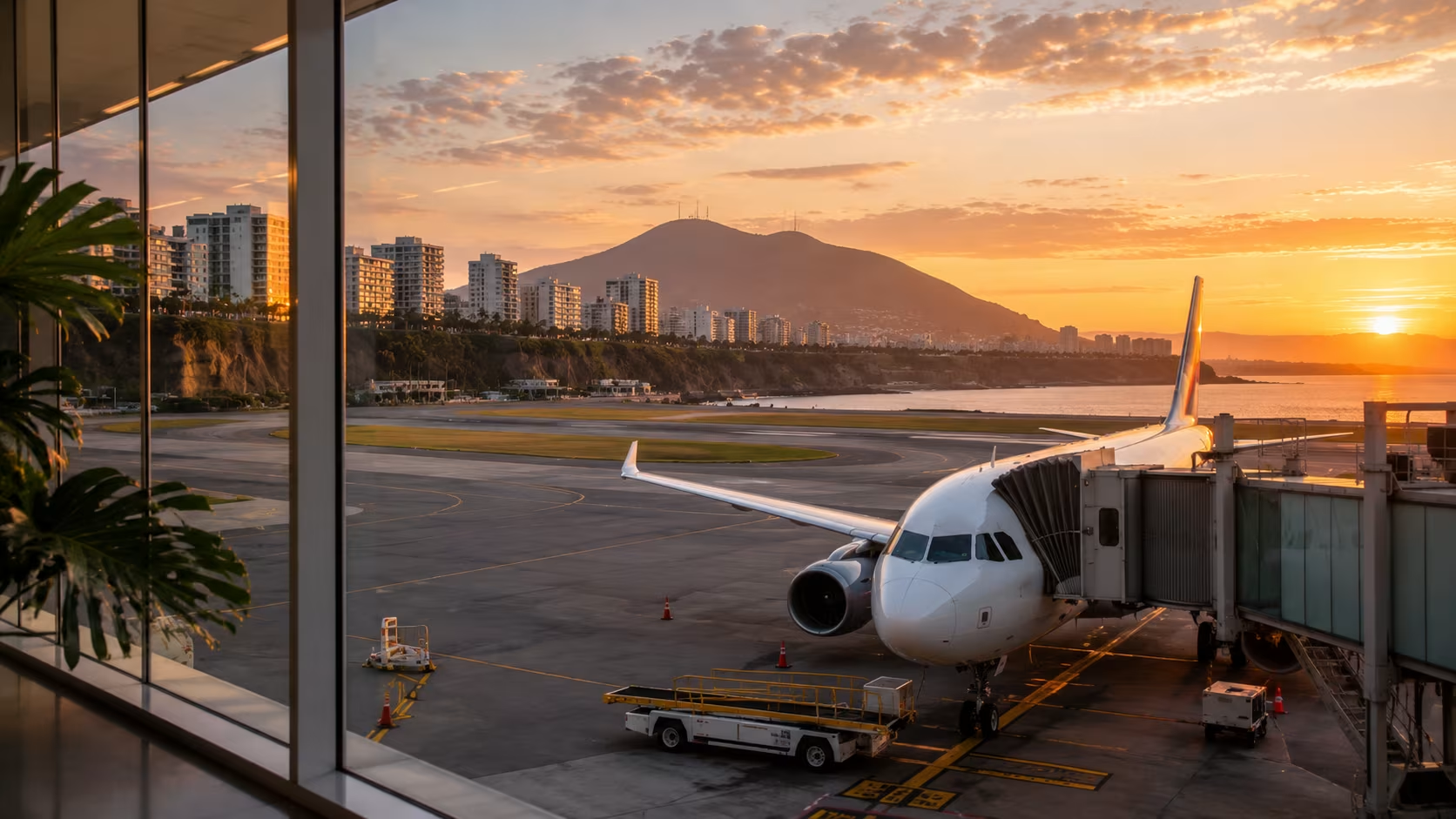
Jorge Chávez International Airport (LIM). 14 km north of central Lima.
From LIM:
- Authorized taxi from arrivals (Taxi Green): 70-90 PEN ($19-24) to Miraflores, 30-60 min.
- Uber: 50-75 PEN. Reliable.
- Hotel transfer: 100-180 PEN.
- The new metro Line 4 (delayed from 2024) eventually will connect; verify status.
Getting Around
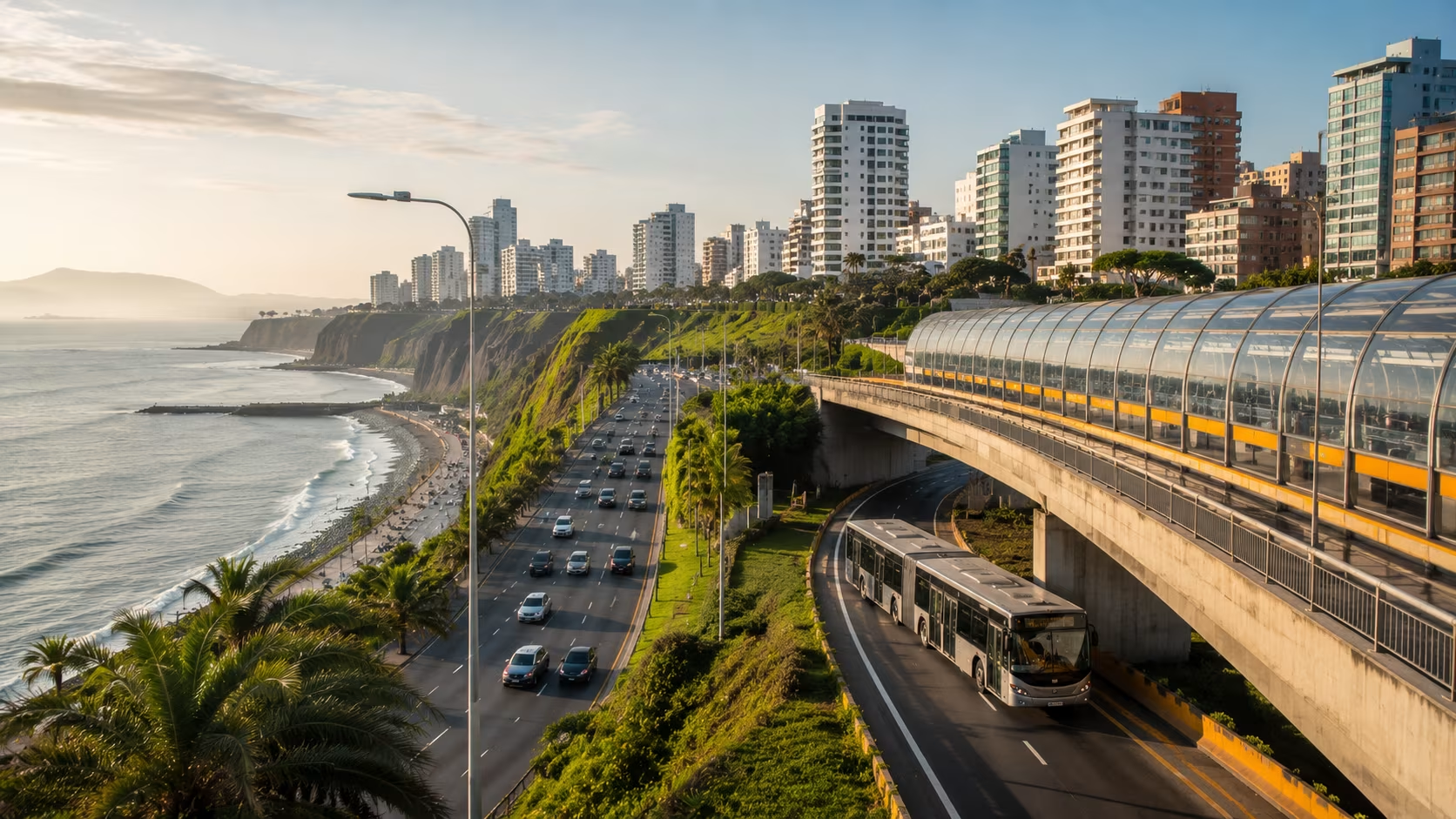
Lima is enormous + traffic is real. Plan generous travel times.
Walking
Miraflores + Barranco walkable internally. Centro Histórico walkable.
Uber + Cabify + Beat
The defaults for tourists. Cheap (15-50 PEN for typical central trips). Reliable.
Metropolitano (BRT Bus)
Rapid bus system on dedicated lanes. Useful for Centro-Miraflores route.
Metro
Line 1 only currently operational; mostly serves outer suburbs.
Walking the Malecón
The 6-km coastal cliff-top promenade between Miraflores + Barranco. Free; spectacular Pacific views; locals jogging + walking + paragliding from the cliffs.
Where to Stay
Lima's neighborhoods feel different from each other.
Miraflores
The central tourist district. Walking distance to the Malecón (cliff-top promenade), restaurants, shopping. Premium hotels (Belmond Miraflores Park, JW Marriott).
Barranco
The bohemian + creative-class district south of Miraflores. Boutique hotels in restored 19th-century buildings. Walking distance to art galleries + cafés.
San Isidro
The upscale residential + business district. Quieter than Miraflores; more polished. Premium hotels.
Centro Histórico (Centro de Lima)
The colonial Old Town (UNESCO since 1991). Visit by day; not recommended as a base (less polished, lower-tier hotels).
Avoid as a base
- Centro Histórico for safety + comfort reasons (visit by day).
- Far suburbs for short trips.
- Around the airport for sightseeing.
Realistic 2026 nightly prices (4-star, weekday, shoulder, USD):
| Neighborhood | Mid-range | Higher-end |
|---|---|---|
| Miraflores | $90-180 | $250-700 |
| Barranco | $80-160 | $230-500 |
| San Isidro | $130-230 | $300-800 |
| Centro Histórico | $50-110 | $150-300 |
What to Book in Advance
Premium Restaurants (Months Ahead)
The World's 50 Best-listed restaurants:
- Central (Virgilio Martínez; #1 in 2023; books 6+ months ahead). 14-course tasting menu following Peruvian altitudes from sea level to highlands.
- Maido (Mitsuharu Tsumura; Nikkei = Japanese-Peruvian fusion).
- Mayta (modern Peruvian).
- Astrid + Gastón (Gastón Acurio's flagship).
- Kjolle (Pía León's restaurant).
Walking Tours
Food-focused walking tours of Centro + neighborhoods: $40-100 per person.
Cooking Class
Multiple operators teach cebiche + Pisco Sour + traditional Peruvian. Half-day: $50-150.
Day 1 — Centro Histórico + Larcomar
08:30. Coffee at hotel.
09:30. Drive (30-60 min depending on traffic) to Centro Histórico. UNESCO since 1991.
10:30. Plaza Mayor (Plaza de Armas). The central square. Free. Catedral de Lima (12 PEN). Palacio de Gobierno (changing of the guard ceremony).
12:00. Convento de San Francisco (15 PEN). The 17th-century church + monastery + catacombs (with bones of 25,000+ buried). 60 minutes including catacombs tour.
13:00. Lunch in Centro. El Cordano (the famous historic restaurant since 1905). L'Eau Vive (the priest-run French restaurant). Casa de Tamales for working-class.
14:30. Walk Jirón de la Unión + Plaza San Martín.
15:30. Drive back to Miraflores (30-60 min in afternoon traffic).
17:00. Larcomar. The cliff-built shopping center with Pacific Ocean views. The best spot for sunset over the Pacific.
18:00. Sunset on Miraflores cliffs. Walk the Malecón.
19:30. Dinner. Central if booked (months ahead). Maido (Nikkei). Astrid + Gastón. La Mar (the famous Gastón Acurio cebicheria).
Day 2 — Miraflores + Barranco
08:30. Coffee in Miraflores. Tostaduría Bisetti (specialty). Origen Tostadores de Café (specialty). Café Tres Monos.
09:30. Walking the Malecón. From the central Miraflores park area south toward Barranco. The 6 km coastal cliff-top promenade. Allow 90 minutes.
11:30. Huaca Pucllana (15 PEN). The pre-Columbian adobe pyramid in the middle of Miraflores. Allow 60 minutes.
13:00. Lunch. La Mar (Gastón Acurio's iconic cebicheria — books 1-2 weeks ahead, lunch only). El Mercado (cebiche + Peruvian seafood). Pescados Capitales (popular).
15:00. Barranco walking. The bohemian district south of Miraflores. Visit:
- Puente de los Suspiros (Bridge of Sighs) — the iconic wooden bridge.
- Bajada de los Baños (the path down to the ocean).
- MATE — Museo Mario Testino (the photographer's museum, 30 PEN).
- Museo Pedro de Osma (private collection in colonial mansion, 30 PEN).
Allow 2.5 hours.
18:00. Aperitivo in Barranco. Ayahuasca Bar (the famous bar in a colonial mansion, atmospheric). Victoria Bar (cocktails).
19:30. Dinner. Isolina (modern Peruvian; Barranco). Cala (modern; coastline view). Amaz (Amazon-themed, modern).
Day 3 — Food Day + Museums
09:30. Coffee.
10:30. Mercado de Surquillo No. 1 (15-min Uber from Miraflores). The local working-class market. Tropical fruits, fish, ceviche-by-the-pound, chicha morada juice. Buy lunch ingredients or eat at a market stall. Allow 90 minutes.
12:30. Cooking class if booked. Or:
13:00. Lunch at a working-class cebicheria. El Veridico de Fidel (Pueblo Libre, working-class institution). Punto Azul (multiple locations, working-class cebiche).
15:00. Larco Museum. 35 PEN. The private collection of pre-Columbian Peruvian art (3,000+ years; Chimú, Mochica, Nazca, Inca civilizations). Allow 2.5 hours.
18:00. Sunset at the Magic Water Circuit (the 13-fountain illuminated park, 4 PEN entry, evening only). Touristy but distinctive.
20:00. Dinner. Astrid + Gastón if booked. Mayta (modern Peruvian). Maido (Nikkei) if not booked yet.
Day 4 — Choose: Day Trip, Beach, or Slow Day
Path A — Pachacamac Day Trip
40 km south. The pre-Columbian religious complex (UNESCO consideration). Smaller than Cusco-area sites but historically significant. Half-day excursion.
Path B — Beach Day at Punta Hermosa
50 km south. The popular surf beach. Day excursion.
Path C — Day Trip to Paracas + Ballestas Islands
250 km south. The famous "poor man's Galapagos" — boat tour to see sea lions + penguins + birds. Long day (4 hours each way). Better as overnight.
Path D — Slow Lima Day
Morning at the MALI (Lima Art Museum, 30 PEN).
Lunch at a Miraflores restaurant.
Afternoon at Parque del Amor (the cliff-top park with the famous El Beso sculpture).
Final dinner at one of the 50 Best restaurants you haven't visited.
What to Eat
Peruvian cuisine is one of the world's great regional traditions. Lima specifically is the most-recognized hub.
Headline Dishes
| Dish | What it is |
|---|---|
| Cebiche / Ceviche | Raw fish marinated in lime juice + onion + chili + cilantro + sweet potato + corn. The national dish. |
| Tiradito | Sashimi-style Peruvian preparation (sliced fish in lime + chili sauce; no onion). Nikkei influence. |
| Lomo Saltado | Beef stir-fried with onions + tomatoes + soy sauce + chilis + fries + rice. Chinese-Peruvian (Chifa) fusion. |
| Aji de Gallina | Spicy chicken stew with cream + chili + walnuts. National classic. |
| Causa | Layered yellow potato + chicken/fish/avocado dish. The classic appetizer. |
| Anticuchos | Skewered grilled beef heart. Working-class street food. |
| Pollo a la Brasa | Peruvian rotisserie chicken. National working-class lunch + dinner. |
| Arroz con Pollo | Rice with chicken. Comforting. |
| Rocoto Relleno | Stuffed spicy pepper. Arequipa region; available in Lima. |
| Pisco Sour | National cocktail (pisco brandy + lime + syrup + egg white + Angostura). |
| Chicha Morada | Purple corn drink with pineapple + cinnamon + clove. Working-class non-alcoholic. |
| Inca Kola | Yellow national soda. |
Where to Eat
World's 50 Best:
- Central (Virgilio Martínez; #1 in 2023; 14-course altitudinal menu).
- Maido (Nikkei; Mitsuharu Tsumura).
- Mayta (modern Peruvian).
- Astrid + Gastón (Gastón Acurio).
- Kjolle (Pía León).
Modern Peruvian:
- Isolina (modern Peruvian; Barranco).
- Cala (modern; coastline view).
- Amaz (Amazon-themed).
- El Mercado (cebiche + seafood).
- La Mar (Gastón Acurio's cebicheria; lunch only).
Traditional + Casual:
- El Cordano (since 1905).
- Punto Azul (working-class cebiche, multiple locations).
- El Veridico de Fidel (working-class).
- Pollería La Granja Azul (the famous pollo a la brasa institution).
- Don Tito for working-class polleria.
Markets + Working-Class:
- Mercado de Surquillo No. 1.
- Mercado de Magdalena.
- Anticucheria de Don Tito (working-class anticuchos).
Costs and Budget
2026 daily budgets per person, excluding flights and hotel (USD):
| Style | Per day | Notes |
|---|---|---|
| Backpacker | $20-40 | Hostel, working-class meals, walking |
| Mid-range | $50-90 | Mix of casual and proper restaurants, attractions, Uber |
| Comfortable | $130-220 | Better restaurants, premium experiences, taxis |
| Higher-end | $400+ | World's 50 Best tasting menus, luxury hotels, private guide |
Practical Info
- Cards. Accepted at hotels and mid-tier+ restaurants. Cash for street food, taxis, smaller establishments.
- Tipping. 10% standard at restaurants. Round up Uber. 20-50 PEN per day for hotel housekeeping.
- English. Common in tourist areas. Less in residential neighborhoods.
- Sundays. Most restaurants open. Some museums closed.
- Pickpocketing. Real in Centro Histórico + on public transit. Standard precautions.
- Crime. Tourist neighborhoods (Miraflores, Barranco, San Isidro) safe in daytime + reasonable in evening. Centro at night requires caution. Use Uber rather than walking unfamiliar areas after dark.
- Tap water. Bottled only.
- Garúa fog. May-November can be persistent gray. Pack accordingly.
- Altitude. Lima at sea level; no altitude issues.
- Coca tea. Available; legal; cultural ritual.
Common First-Timer Mistakes
- Treating Lima as 1-day stopover. The food scene deserves 3+ days.
- Not booking premium restaurants 4-6 months ahead. Central + Maido sell out far in advance.
- Eating only at chain restaurants. Lima's working-class + premium restaurants are equally distinctive.
- Visiting Centro at night without precaution. Less polished than Miraflores; standard urban safety.
- Drinking heavy Pisco Sours on Day 1. Real hangover potential.
- Skipping Barranco. It's the city's most-distinctive recent neighborhood.
- Eating ceviche only in tourist restaurants. Working-class cevicherias are dramatically better.
- Visiting in mid-September expecting sunny weather. Garúa fog peaks.
- Underestimating traffic. 30-min Uber rides become 90 min during evening rush.
- Drinking tap water + ice from street vendors.
- Not trying Nikkei cuisine. Peruvian-Japanese fusion is a distinct + remarkable tradition.
Final Notes
Three to four days in Lima is the right length for a focused first food + colonial city visit. One Centro day; one Miraflores + Barranco day; one premium food + museum day; one excursion or slow final day.
The quietest piece of advice: visit Lima specifically for the food. The combination of Andean indigenous + Spanish colonial + Chinese (Chifa) + Japanese (Nikkei) + Italian + African heritage produces flavors found nowhere else. The Lima that stays with you isn't the cliff photograph; it's the cumulative weight of one of the world's great culinary traditions, born from immigration + geography + native ingredients (the Humboldt Current produces some of the world's most distinctive seafood; the Andes + Amazon contribute thousands of native potato + corn + chili varieties; the Chinese + Japanese diaspora brought their own techniques + the marriage produced new cuisines), all expressed daily across hundreds of restaurants from working-class polleries to the world's #1 ranked Central.
0 Comments
No comments yet — start the conversation.