
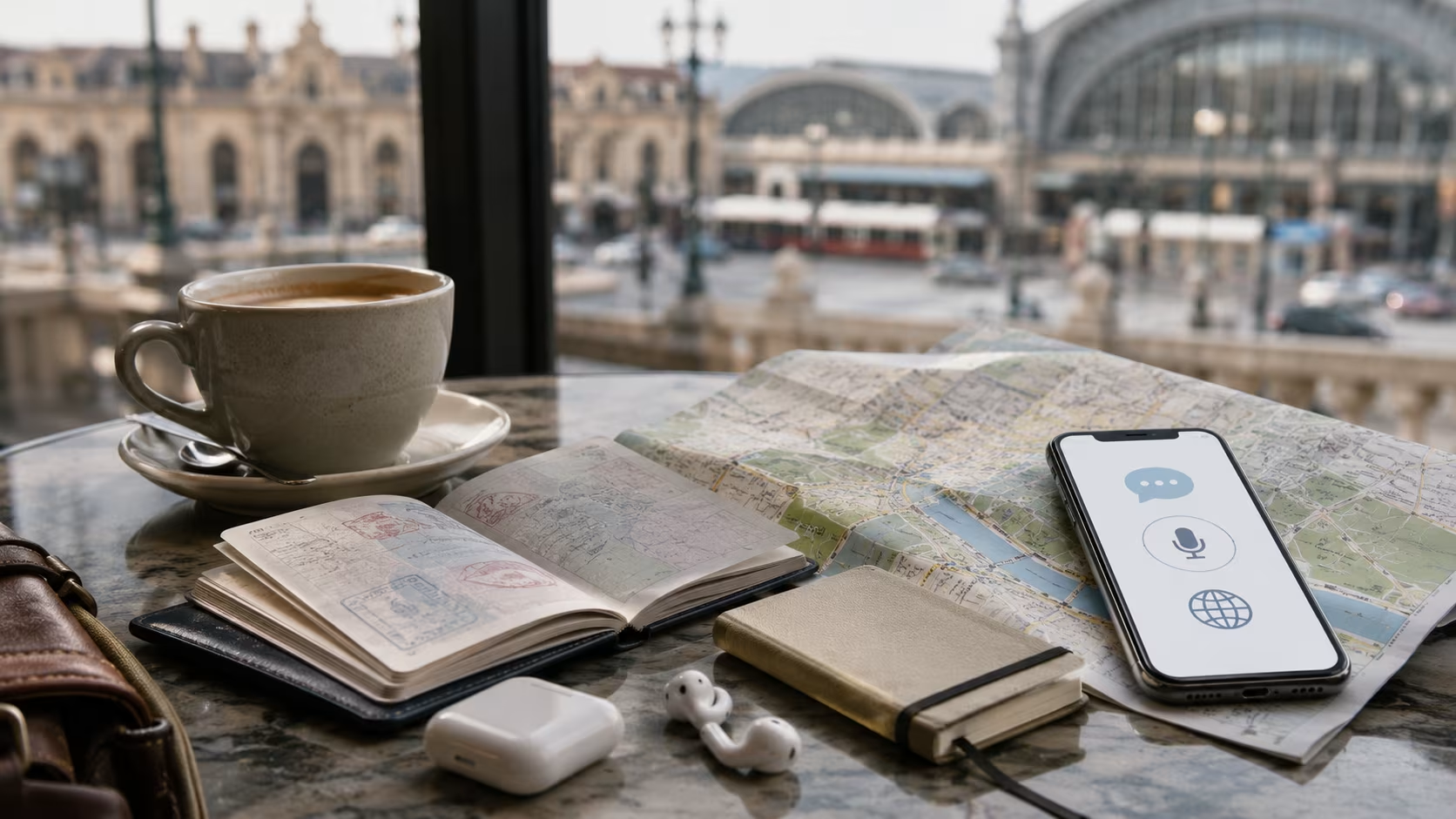
Traveling in countries where you don't speak the language is more accessible in 2026 than ever — Google Translate handles real-time speech, AirPods do live translation, English signage is universal in major tourist areas, and most service workers in tourist zones speak some English. But the traveler who relies entirely on this is missing 80% of cultural exchange + getting tourist-tier service.
The travelers who get this right learn a small vocabulary deliberately, use translation tools strategically, and respect the local language even when they don't speak it. The investment is small (10-30 minutes per country); the cumulative impact across a trip is real.
This is a 2026 field guide for travelers who want to navigate non-English-speaking countries confidently without becoming fluent.
The Core Principle
Most service workers + locals appreciate effort more than fluency. A traveler who attempts the local greeting + has "thank you" + "please" + numbers ready receives dramatically better service than one who defaults immediately to English.
The hierarchy of effort:
- Greeting in local language. Single most-impactful word.
- "Thank you" + "please."
- Numbers (for prices + ordering).
- "Yes" / "no" / "excuse me."
- Specific food + service vocabulary.
Learning these takes 15 minutes per country. The return is dramatic.
The 2026 Translation Tools
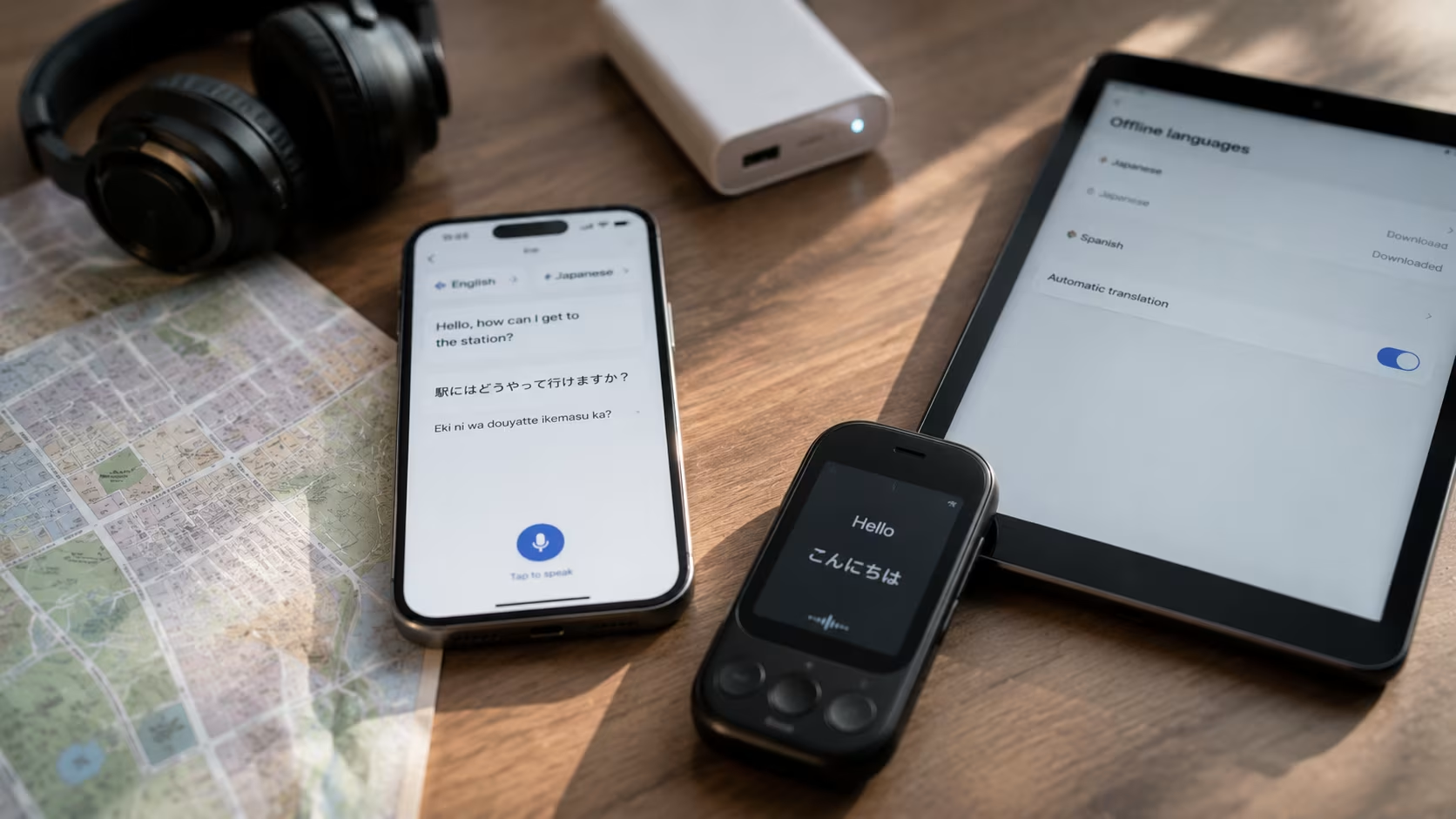
The technology has matured significantly:
Google Translate
The global standard. Free; works in 130+ languages.
Key features:
- Conversation mode. Real-time spoken translation between two languages.
- Camera mode. Point phone at signs/menus for instant text translation.
- Offline language packs. Download before traveling for use without internet.
- Phrasebook. Save useful phrases for quick access.
Limitations: technical accuracy varies; idiomatic translations sometimes wrong.
Apple Translate
Built into iPhones. Similar to Google but works offline more reliably for some languages.
DeepL
More accurate than Google for European languages (German, French, Spanish, Italian, Portuguese, Polish, Russian). Free tier sufficient for travel.
Microsoft Translator
Built into some Microsoft devices + the Translator app. Good multi-language conversation mode.
Apple AirPods Live Translation
Introduced 2024. AirPods Pro 2/3 + iPhone for real-time spoken translation. Works for short conversations.
Specific Apps for Specific Languages
- Pleco for Chinese (Mandarin + Cantonese).
- Wadoku for Japanese (German-Japanese).
- Linguee for nuanced European-language translations.
Pre-Trip Language Preparation
15-30 minutes of preparation per country saves significant friction:
Step 1: Learn 10 Essential Words/Phrases
For any language:
- Hello (formal).
- Hello (informal).
- Thank you.
- Please.
- Yes.
- No.
- Excuse me / sorry.
- Goodbye.
- "Do you speak English?"
- Numbers 1-10 + how to ask price.
Step 2: Learn Specific Travel Vocabulary
- "Bathroom" / "toilet."
- "How much?"
- "The bill, please."
- "Where is...?" + landmark words.
- "I would like..."
- "Without [item]" (for dietary restrictions).
- "This" (pointing at menu).
Step 3: Phrase-Practice with App
- Duolingo for systematic language learning.
- Memrise for travel phrases.
- Speakly for travel-focused vocabulary.
A week of 15 min daily before travel produces real conversational effort.
Step 4: Save Useful Phrases in Phone
Save the basic phrases in Apple Notes or Google Keep. Reference quickly when needed.
Country-Specific Quick Vocabulary
Italian (Italy)
- Ciao (informal hello/goodbye).
- Buongiorno (formal hello/morning).
- Buonasera (good evening).
- Grazie (thanks).
- Per favore (please).
- Scusi (excuse me).
- Quanto costa? (how much?).
- Il conto, per favore (the bill, please).
- Vorrei... (I would like...).
French (France)
- Bonjour (hello — mandatory entering shops).
- Bonsoir (good evening).
- Merci (thanks).
- S'il vous plaît (please).
- Pardon / Excusez-moi (excuse me).
- Parlez-vous anglais? (do you speak English?).
- L'addition, s'il vous plaît (the bill, please).
- Combien? (how much?).
Spanish (Spain + Latin America)
- Hola (hello).
- Buenos días (good morning).
- Buenas tardes (good afternoon).
- Buenas noches (good evening).
- Gracias (thanks).
- Por favor (please).
- Perdón / Disculpe (excuse me).
- ¿Cuánto cuesta? (how much?).
- La cuenta, por favor (the bill, please).
- ¿Habla inglés? (do you speak English?).
German (Germany + Austria + Switzerland)
- Hallo (hello).
- Guten Morgen (good morning).
- Guten Tag (good day).
- Danke (thanks).
- Bitte (please / you're welcome).
- Entschuldigung (excuse me).
- Wie viel? (how much?).
- Die Rechnung, bitte (the bill, please).
- Sprechen Sie Englisch? (do you speak English?).
Portuguese (Portugal + Brazil)
- Olá (hello).
- Bom dia (good morning).
- Obrigado (thanks — masculine speaker).
- Obrigada (thanks — feminine speaker).
- Por favor (please).
- Com licença (excuse me).
- Quanto custa? (how much?).
- A conta, por favor (the bill, please).
Greek
- Yassas (formal hello).
- Yassou (informal hello).
- Efharisto (thanks).
- Parakalo (please / you're welcome).
- Signomi (excuse me).
- Poso kanei? (how much?).
- Ton logariasmo, parakalo (the bill, please).
Japanese
- Konnichiwa (good day).
- Ohayō gozaimasu (good morning).
- Konbanwa (good evening).
- Arigatō / Arigatō gozaimasu (thanks).
- Sumimasen (excuse me / sorry).
- Hai (yes).
- Iie (no).
- Eigo wa hanasemasu ka? (do you speak English?).
- O-kanjō kudasai (the bill, please).
Mandarin Chinese
- Nǐ hǎo (hello).
- Xièxie (thanks).
- Bù kèqi (you're welcome).
- Duìbuqǐ (excuse me / sorry).
- Yes = no direct equivalent; verb-repeat "is/isn't" pattern is standard.
- Duōshǎo qián? (how much?).
Mandarin tones are real; rough English-letter pronunciations need practice or app help.
Korean
- Annyeonghaseyo (formal hello).
- Kamsahamnida (formal thanks).
- Jweo / Yeogi (please / here).
- Eolma-eyo? (how much?).
- Yeong-eo halsu isseyo? (do you speak English?).
Thai
- Sawatdee khrap (male speaker hello).
- Sawatdee kha (female speaker hello).
- Khob khun khrap (male thanks).
- Khob khun kha (female thanks).
- Tao rai khrap/kha? (how much?).
Thai uses gender-specific particles ("khrap" for men, "kha" for women).
Vietnamese
- Xin chào (hello).
- Cảm ơn (thanks).
- Xin lỗi (excuse me).
- Bao nhiêu tiền? (how much?).
Arabic (Egypt + Morocco + UAE)
- Salaam (peace; informal hello).
- As-salamu alaykum (formal hello — "peace be upon you"). Reply: wa-alaykum as-salaam.
- Shukran (thanks).
- Min fadlak / fadlik (please).
- Ana asef (sorry, masculine speaker).
- Bekam? (how much? Egypt). Behshekher? (Morocco).
Arabic dialects vary by country; classical Arabic phrases work universally as polite gesture.
Hebrew (Israel)
- Shalom (hello/goodbye/peace).
- Toda (thanks).
- Bevakasha (please / you're welcome).
- Slicha (excuse me).
- Kama oleh? (how much?).
Practical Tactics for Specific Situations
At Restaurants
- Greet on arrival.
- Point at menus. Saying "I'll have this" + pointing works universally.
- Use Google Translate Camera mode for menu translation if no English version.
- Ask staff for recommendations with a smile + "What's your specialty?" gesture (point at menu + raise hands).
- "Bill, please" in local language at the end.
At Markets + Shops
- "How much?" in local language is essential.
- Calculator method: vendors often type the price on a calculator + show. You type your counter-offer; vendor types higher; you settle.
- Polite refusal: "No thank you" + walking is universal.
Asking for Directions
- "Where is [destination]?" in local language + pointing at map.
- Show address on phone screen rather than reading it aloud (pronunciation issues).
- Look for landmarks. Ask about specific buildings rather than addresses.
Public Transit
- Use Google Maps directions with destination written in local language.
- Tap-to-pay systems work without language requirements.
- Show destination on phone if asking about routes.
Emergencies
- "Help" in local language.
- "Police" / "Doctor" in local language.
- Translation app for medical situations.
- Show passport. International symbol; immediately understood.
Specific Country Strategies
Countries Where Almost Everyone Speaks English
- Netherlands, Denmark, Sweden, Norway, Iceland, Finland, Singapore, Hong Kong (English universal); Israel, UAE, Malaysia (English very common).
- Strategy: basic greeting + thanks; English for everything else.
Countries With High English in Tourism
- Italy, Spain, Portugal, France (in tourist areas + cities), Germany, Austria, Czech Republic, Croatia, Greece, Turkey, Thailand, Vietnam, Indonesia, Mexico, Argentina, Brazil, Australia, NZ.
- Strategy: learn 10 phrases; rely on English for complex interactions.
Countries Where English is Limited
- Japan (universal in Tokyo + tourist areas; rural + everyday lower); Korea (similar); China (especially outside tourist zones); rural Russia + some Eastern Europe; rural Latin America; rural Africa.
- Strategy: more vocabulary; translation app on standby; use Pleco/Wadoku for written communication; gestures + photos.
Countries With Specific Phonetic Challenges
- Mandarin has 4 tones — wrong tone changes word meaning. Use translation app for spoken; written is easier.
- Vietnamese has 6 tones.
- Thai has 5 tones.
- Arabic has sounds (the guttural ḥ, the throat-stop ع) not in Western languages.
- Polish + Slavic clusters of consonants are difficult initially.
Strategy: for tonal languages, the translation app's voice feature is more reliable than your own pronunciation initially.
What Locals Notice (Even If They Don't Say)
The Greeting Test
A traveler entering a Parisian boulangerie with "Bonjour, madame" gets dramatically warmer service than one starting in English. Same in Italy with "Buongiorno," Spain with "Buenos días," Germany with "Guten Tag."
The cumulative impact of greeting in local language across 50+ daily interactions is significant.
Effort vs. Fluency
Most service workers don't expect fluency. They appreciate effort. Even a clearly-accented "Buongiorno" + "Grazie" + "Quanto costa?" produces friendlier interactions.
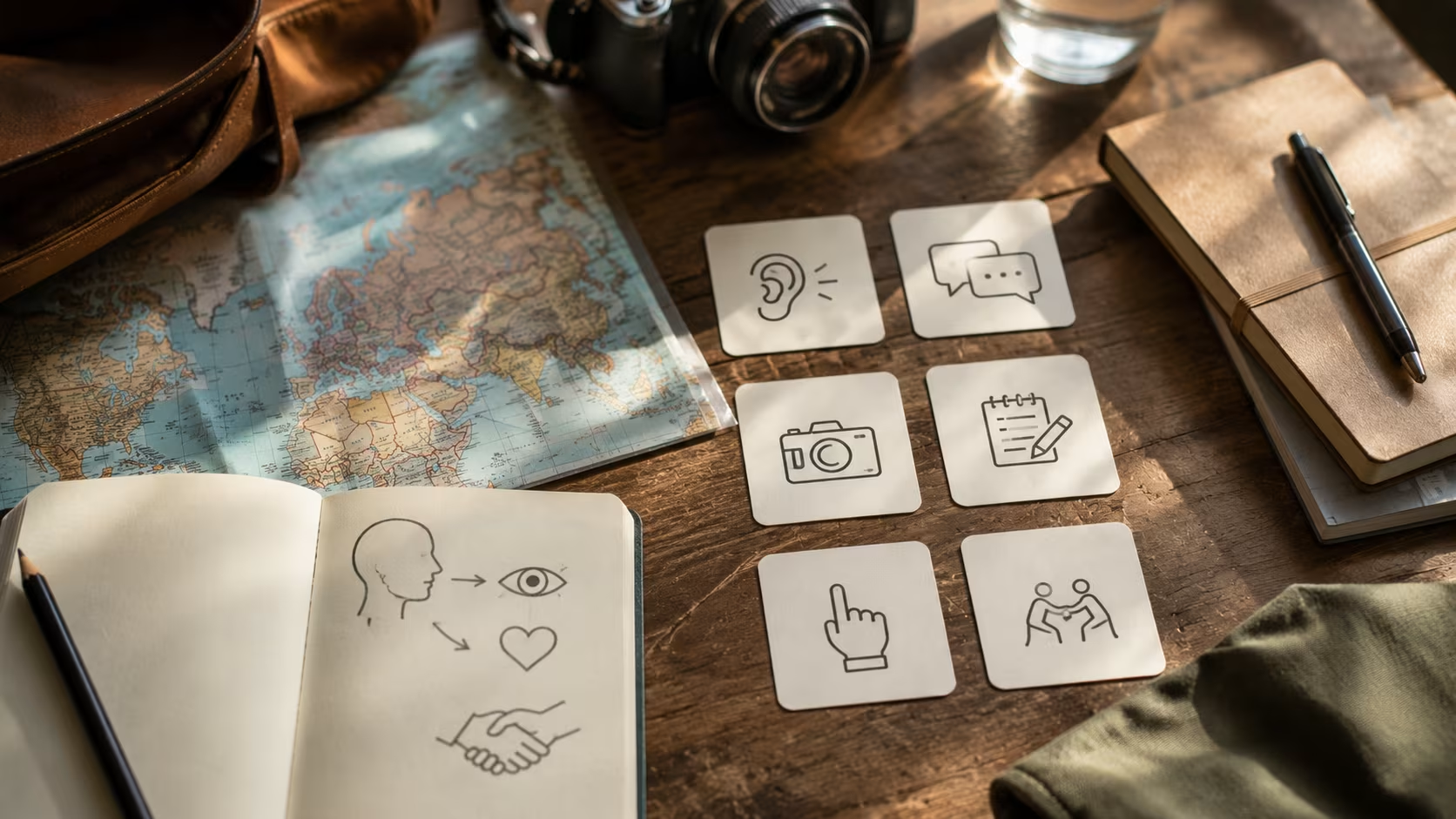
Body Language Universals
- Smiling. Universal.
- Eye contact. Mostly universal (some Asian cultures consider sustained eye contact with elders rude).
- Hand gestures. Mostly universal but with cultural exceptions (the "OK" hand sign means different things across cultures; left-handed gestures rude in some Muslim countries).
- Pointing with finger. Considered rude in some Asian cultures; pointing with whole hand more polite.
What to Avoid
Loud English
Speaking louder doesn't make you understandable to non-English speakers. It just makes you louder. Speak normally; use translation tools instead.
Assuming Everyone Speaks English
The "why don't you speak English?" attitude (especially common from native English speakers) is genuinely rude. The default should be "I'm sorry I don't speak [local]; do you speak English?"
Speaking in Slang or Idioms
Non-native English speakers usually understand standard English. Idioms, slang, and quick speech don't translate. Speak slowly; use simple words.
Pretending to Understand When You Don't
Nods + smiles when you don't understand cause real problems later ("yes, I understand that the train left at the wrong time"). Better to admit you don't understand + try again with translation app.
Using English Pronunciation of Local Words
"Pa-RI" rather than "Pa-REE" (Paris); "BAR-suh-LOH-nuh" rather than "Bar-thuh-LOH-nuh" (Barcelona). Locals notice; learning the local pronunciation matters.
Specific Translation App Tactics
Conversation Mode
When you need real-time translation:
- Launch Google Translate.
- Set both languages.
- Tap "Conversation" mode.
- Speak; the app translates aloud in real-time.
- Other person speaks; their words translate aloud in your language.
Works well for short conversations. Less reliable for nuanced + technical topics.
Camera Mode
For menus, signs, ingredients lists:
- Open Google Translate.
- Tap camera icon.
- Point at text.
- Real-time translation overlays the original.
Handles 90+ languages. Works offline if language pack downloaded.
Offline Languages
Download before traveling:
- Google Translate → settings → "Offline translation."
- Download languages you'll need.
- Works without internet at no cost.
Essential for transit areas where Wi-Fi is unreliable.
Saved Phrases
Save common phrases:
- Translate the phrase.
- Tap the star icon.
- Access saved phrases without re-typing.
Allows quick reference without retyping common needs.
When Translation Apps Fail
Apps aren't perfect. Common failure modes:
- Idiomatic phrases ("break a leg," "piece of cake").
- Technical vocabulary (medical, legal, technical specifics).
- Cultural references.
- Formal vs. informal pronoun choices (translates to default formal usually).
- Tonal languages. Speech-to-text occasionally misinterprets tones.
Backup tactics:
- Show written form instead of spoken.
- Use simpler synonyms.
- Break complex sentences into pieces.
- Use universal symbols (numbers, gestures).
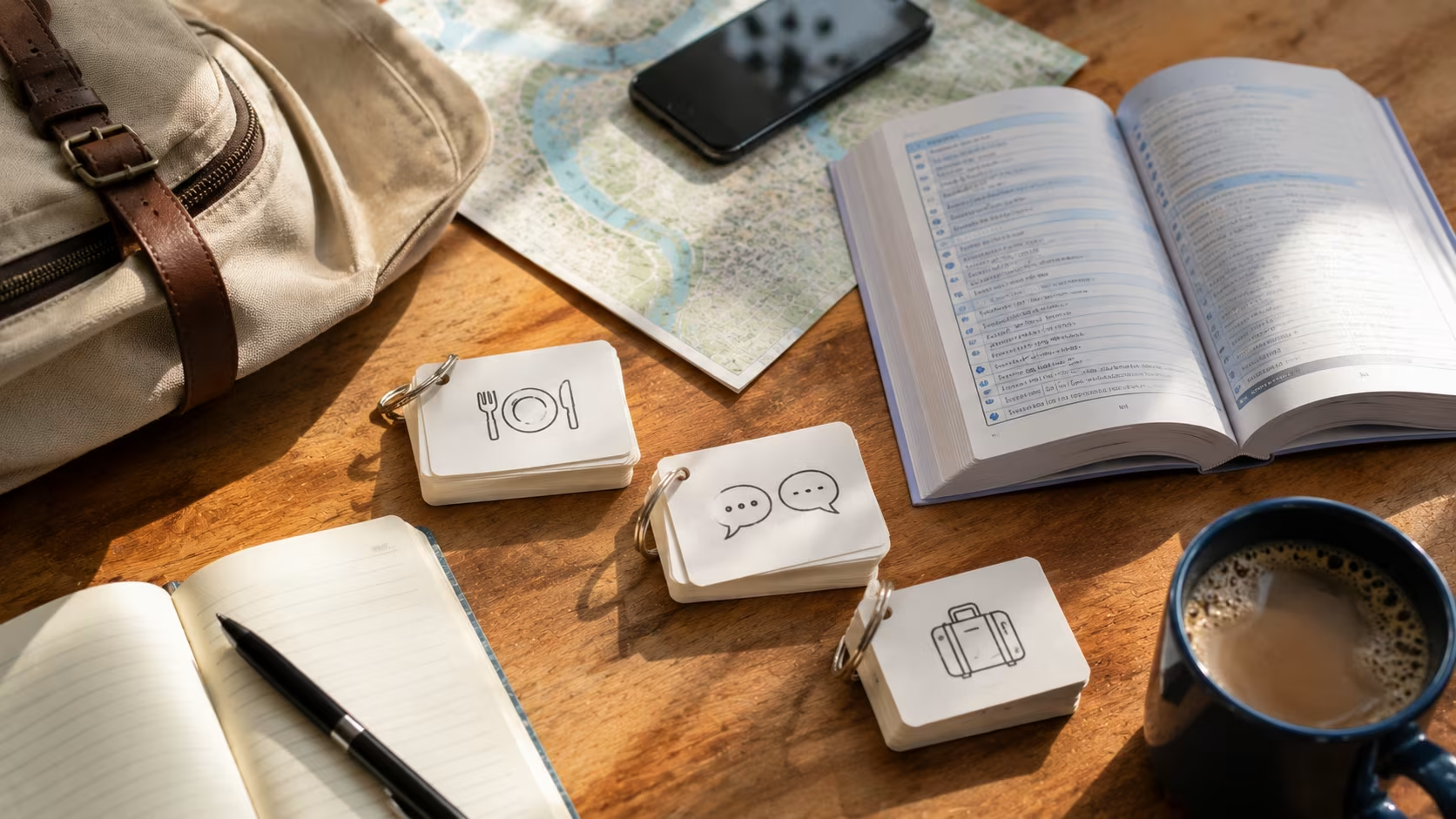
Phrase Cards That Work
For situations where translation apps fail or aren't appropriate, prepared phrase cards help. Examples:
Medical Card
"I have an emergency. Please call a doctor or take me to a hospital. I am a tourist. My passport is in my pocket." In local language.
Allergy Card
"I have a serious allergy to [allergen]. I cannot eat any food containing this. Please confirm with the chef." In local language.
Lost Card
"I am lost. I need to get to [hotel]. Can you help me?" In local language.
Services like Allergy Translation Cards (allergytranslation.com) and Phrase Cards apps prepare these for specific countries.
When to Hire a Translator/Guide
For specific situations, professional translation makes sense:
- Medical emergencies beyond basic phrases.
- Legal issues (police interactions, insurance claims).
- Real-estate negotiations for long-term rentals.
- Banking + complex financial situations.
- Technical travel (high-altitude trekking with specific safety briefings).
Local hotels can often connect travelers with English-speaking guides + translators.
Specific Countries: Hierarchy of English Difficulty
Easiest (English Universal)
Netherlands, Denmark, Sweden, Norway, Iceland, Singapore, UAE, Malaysia, the Philippines.
Easy (Major Tourist Cities + Many Locals)
Most Western European countries + Australia + NZ + Israel + Hong Kong + the Caribbean + most of Mexico tourist zones.
Moderate (Tourist Areas English; Elsewhere Limited)
Most Eastern European countries + Greece + Turkey + Thailand + Vietnam + Indonesia + Brazil + Argentina + Peru + most Middle Eastern countries.
Harder (Tourist Areas Some English; Limited Elsewhere)
Japan + South Korea + Taiwan + parts of China + parts of Russia + rural Latin America + rural Africa.
Hardest (Limited English Even in Tourism)
Mainland China outside major cities; rural Japan; rural Korea; some African countries; parts of Central Asia + Caucasus + Middle East.
Final Notes
Language isn't a barrier to travel; it's a layer of effort that produces compound returns. The traveler who invests 15 minutes per country learning 10 phrases gets dramatically better service + warmer interactions + more authentic cultural exchange than the one who relies entirely on English + translation apps.
The single best advice: learn the local greeting before any trip. "Bonjour" / "Buongiorno" / "Konnichiwa" / "Sawatdee." The first word out of your mouth in any interaction sets the tone. Locals notice + respond.
The second-best: download offline language packs in Google Translate before you leave. The single moment you'll need translation most is the moment you don't have signal. Pre-download removes this friction.
The quietest piece of advice: don't apologize for not speaking the local language. Apologizing repeatedly ("I'm so sorry I don't speak French") is awkward; the second time you're asking for a coffee, the apology is exhausting both for you + the server. Learn the basics; use them; thank in local language; let the rest be in English. Locals appreciate effort + don't expect fluency.


0 Comments
No comments yet — start the conversation.