

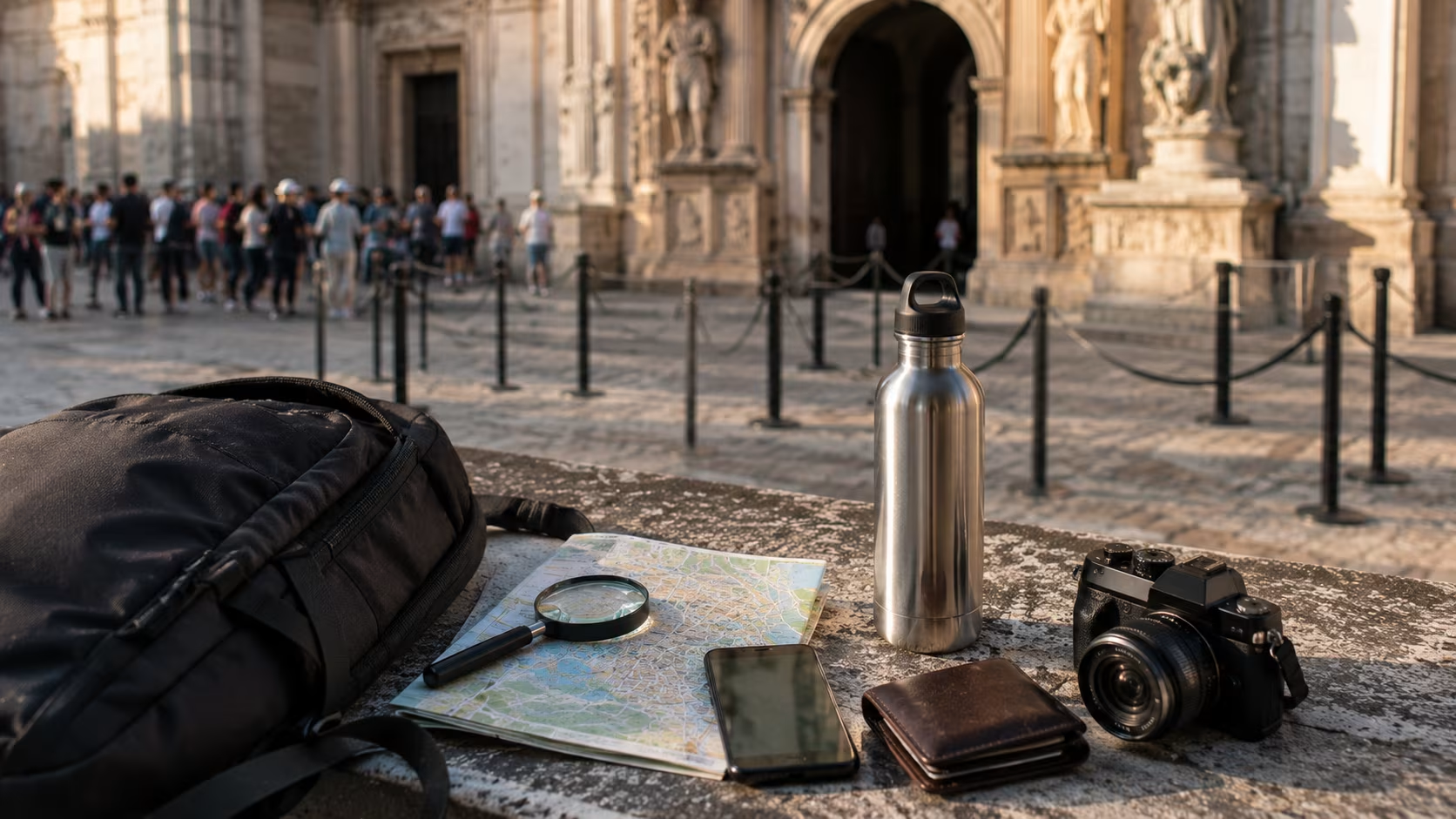
Tourist-zone pricing is a real tax on travelers. The €5 espresso at the Trevi Fountain that costs €1.20 around the corner. The €40 "city tour ticket" that sells the same bus ride everyone else pays €25 for. The €30 "local craft" that costs €5 at a market. The patterns repeat across countries: tourist density correlates with price inflation in food, transit, attractions, and shopping.
The travelers who avoid these traps don't skip the major sights — they navigate the pricing differently. The same Eiffel Tower experience can cost €30 (with deliberate planning) or €120+ (with default tourist behavior). Same Trevi Fountain visit; €5 coffee or €1.20. Same Brandenburg Gate; €0 to walk past or €25 to take a paid "tour" that just walks past.
This is a 2026 field guide for not paying tourist prices when local prices are available.
The Universal Pattern
Across countries, the same indicators predict tourist-zone overpricing:
- Proximity to a major sight. Within 200 meters of a top tourist attraction, prices typically run 100-300% above neighborhood averages.
- Multilingual menus + photographic food displays. Almost always indicates tourist-targeted dining.
- Restaurants with promoters trying to bring people in. The ones that need active marketing usually deliver less for more.
- Tourist-tier souvenir shops. Mass-market items branded with the city's name; rarely actually local.
- Currency-exchange storefronts in tourist zones. Usually 8-15% worse rates than bank ATMs.
Learning to identify these patterns is the most-valuable money-saving travel skill.
Food: Where the Money Goes
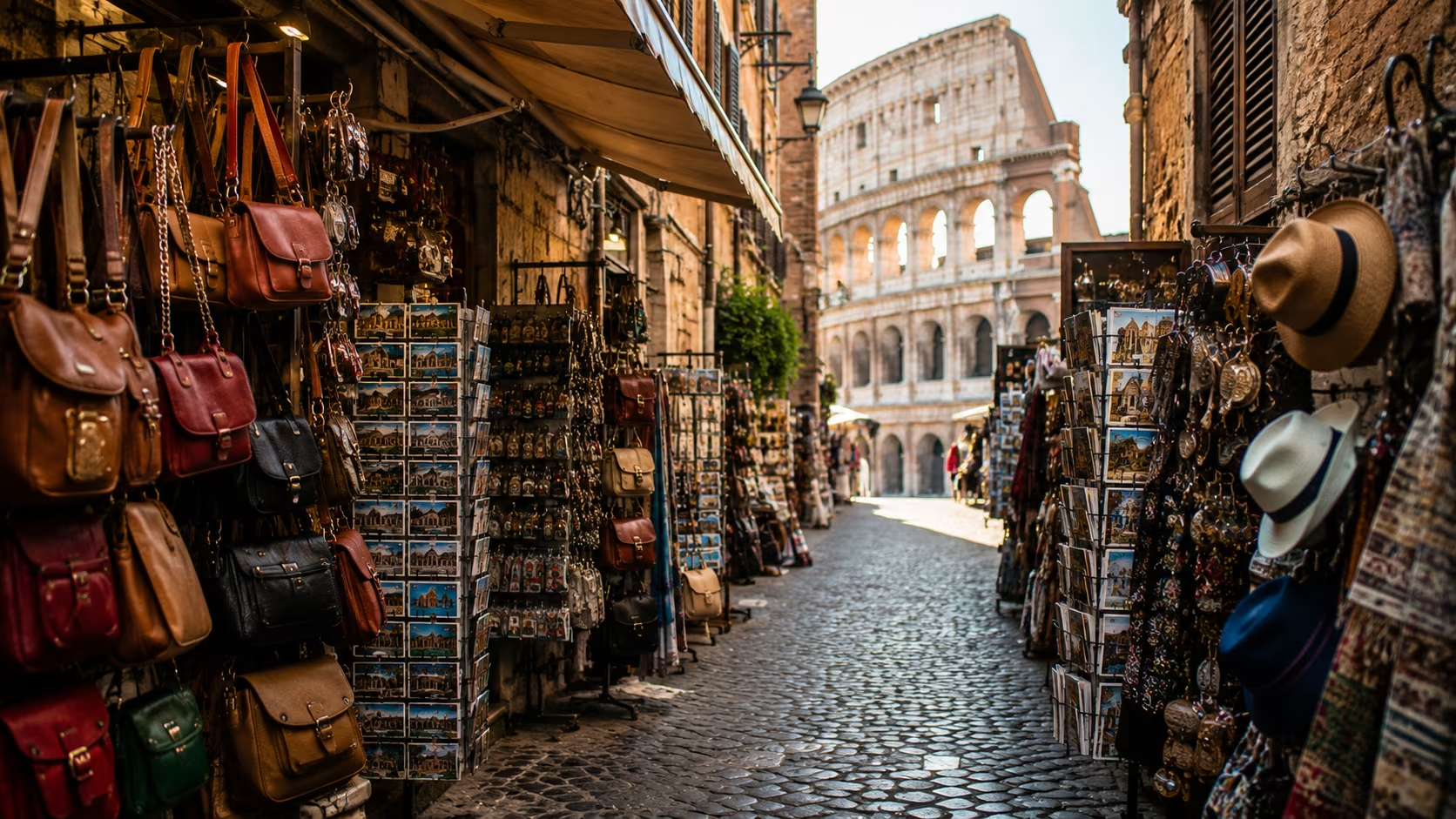
Food is where most travelers overpay most. Three rules:
Rule 1: The Three-Block Rule
Walking three blocks (in any direction) from a major tourist sight typically reduces restaurant prices by 30-50%. The food quality often improves, since residential locals are eating there and have functioning standards.
Examples:
- Three blocks from the Trevi Fountain: prices drop from €25 pasta plates to €12-15.
- Three blocks from the Eiffel Tower: pricing drops from €30+ lunches to €15-20.
- Three blocks from St. Peter's Square: same drop applies.
This isn't approximate; it's predictable.
Rule 2: Skip the Photographic Menu
Menus with photographs are tourist-targeted. The food is rarely as good as the photos suggest. The pricing is inflated. Walk past.
Rule 3: Eat Where Locals Eat at Local Hours
- Lunch in Spain: real lunch is 14:30-16:00. Restaurants serving "lunch" at 12:00 are tourist-targeted.
- Dinner in Italy: locals eat 20:30-22:00. Restaurants serving dinner at 18:00 are tourist-targeted.
- Lunch in Germany: 12:00-14:00 is standard.
- Dinner in Japan: 19:00-21:30. Counter sushi at 17:00 may be tourist-targeted.
Matching local meal times reveals where locals actually eat.
Specific Food Tactics
Stand at the bar in Italy + Spain. Counter prices are often 30-50% lower than terrace prices for the same coffee, the same wine, the same small plates.
Avoid the "daily special" without prices. Restaurants in tourist zones sometimes have "specials" priced 50-100% above regular menu items. Ask the price before ordering.
Skip the bread basket. In Italy, the coperto (cover charge) is €1-4 per person — legitimate. Higher charges (€10+) are gouging. Some tourist restaurants bring "complimentary" bread + olives + small plates that appear on the bill.
Eat at markets. Most tourist cities have major food markets (Mercado Central in Madrid, Mercato Centrale in Florence, Borough Market in London, La Boqueria in Barcelona). Counter food is dramatically cheaper than equivalent restaurants.
Skip restaurants with promoters. A restaurant that needs a person outside trying to bring you in is usually not the best — quality places have queues without external marketing.
Tickets: The Online Discount
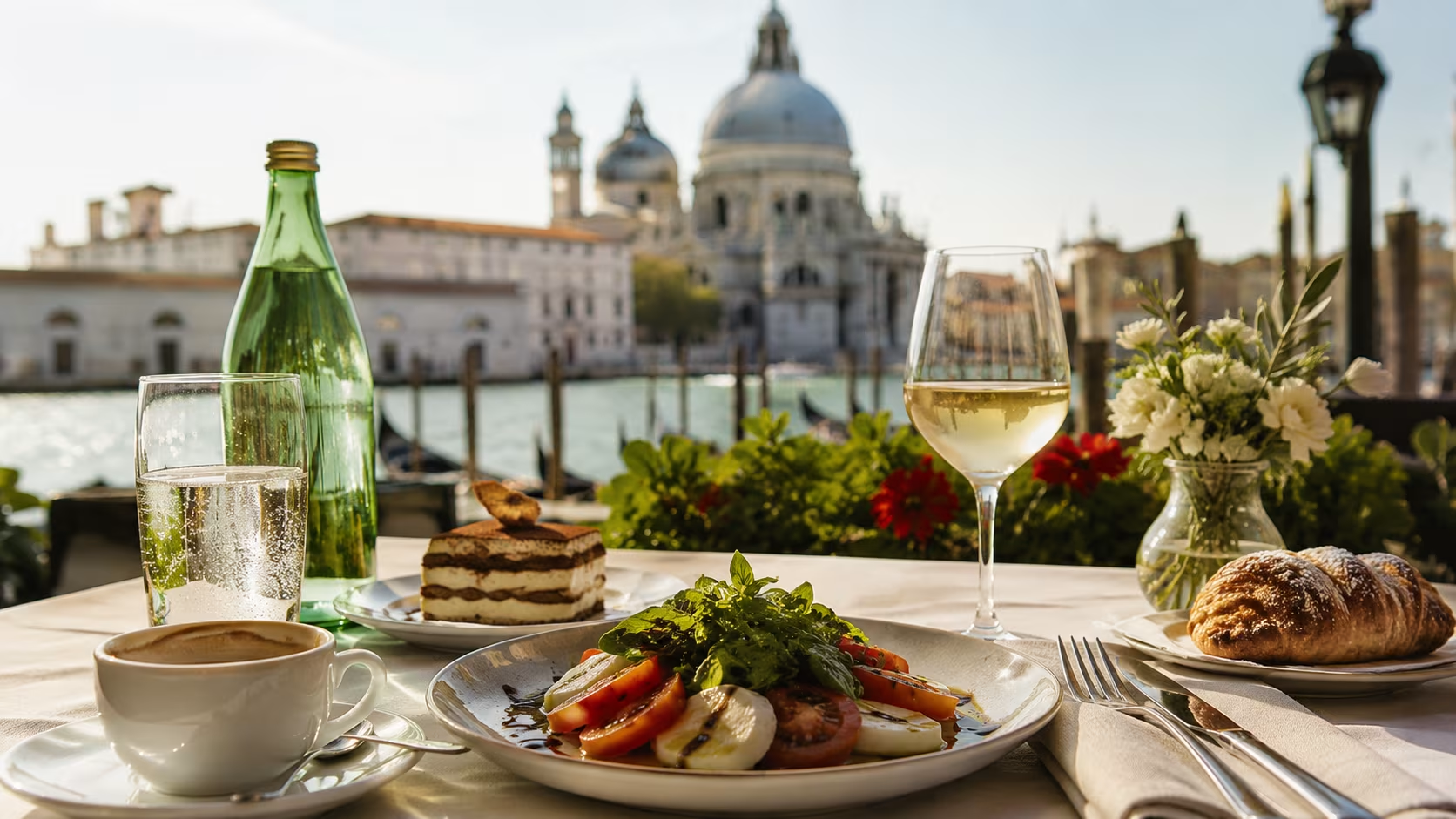
Most major attractions sell tickets in two tiers: walk-up (full price) + online advance (often 5-15% discount + skip-the-line privilege). Booking ahead saves both money + queue time.
Specific Tactics
Book directly with the attraction's official website. Skip third-party tour aggregators (which usually mark up the same ticket).
Look for "first-entry" or "opening-time" slots. Often least crowded + sometimes cheaper.
Combo tickets at heritage sites. The combined ticket for multiple sites is usually 30-50% cheaper than buying individually. Examples:
- Rome's combined Colosseum + Forum + Palatine.
- Paris's combined Notre-Dame + Sainte-Chapelle (when offered).
- Vienna's Schönbrunn + Sisi Museum combined.
Free museum days. Many cities have one day per week or month with free museum entry. Crowds are real but for budget travelers it's significant savings.
Free walking tours. Common in most cities; tip-based (€10-20 per person). Not actually free but significant savings over paid tours, often led by local guides with deeper knowledge.
Skip official audio guides. Many museums sell €5-8 audio guides; Rick Steves' free audio walking tours + Voicemap apps offer similar quality for free.
Transit: The Day Pass
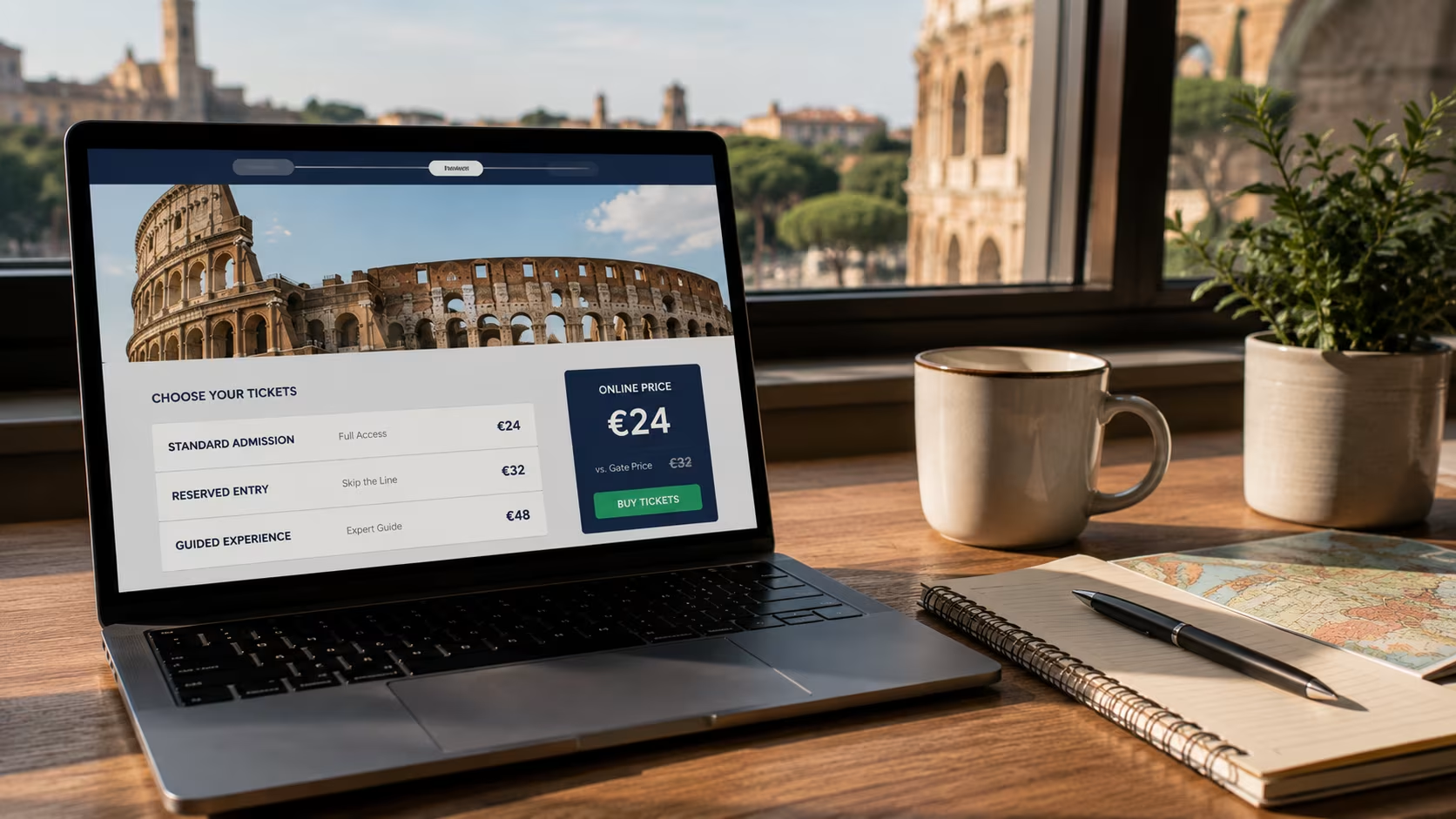
The single most-common overpayment in transit: buying single-ride tickets when day passes pay back after 3-4 rides.
Universal Tactics
Day passes break even at 3-5 rides. If you'll do this many trips in a day, buy the pass.
Walking saves money. Most central tourist neighborhoods are walkable to each other; using the metro for 2-3 stops on flat ground is wasteful.
Skip the airport "luxury" transit. The Heathrow Express is £25 vs £12 Elizabeth Line; the Narita Express is ¥3,640 vs ¥1,200 regular train; the Madrid Express bus is €8 vs €4.50 metro. Same time savings; double the price.
Apple Pay / Google Pay tap-in in most modern cities. Don't buy paper tickets at premium prices.
Avoid airport taxi flat fares to Plaza Mayor / Times Square / Marienplatz. Most cities have rail or bus connections at 1/3 the cost.
Shopping: The Local Market Rule
Most "local crafts" sold at tourist-zone shops are mass-produced + marked up 200-400%. The same items at outdoor markets, smaller workshops, and non-tourist neighborhoods cost dramatically less.
Specific Tactics
Visit local markets, not gift shops. Italian markets (Mercato Centrale Florence, Campo de' Fiori in Rome) sell the same olive oil at half the price of tourist gift shops nearby.
Skip the obvious souvenirs. Branded items ("I ❤ Paris" T-shirts, Eiffel Tower keychains, Florence-printed scarves) are imported, not local. The same kitsch is cheaper at any chain store.
Look for working artisans. Genuine local crafts (ceramics in Granada, glass in Murano, leather in Florence's Oltrarno, lace in Bruges) are usually sold at workshops, not tourist shops.
Buy at smaller cities + towns. The same Italian olive oil costs 50% more in Rome's Centro Storico than at a roadside stand outside Lucca.
Avoid "hand-made" claims at tourist shops. Most aren't.
Negotiate at markets. In Mediterranean + Asian markets, first-quoted prices are typically 30-100% above what locals would pay. Counter at 30-40% of the asking price; settle around 50-60%.
Currency Exchange: The Bank ATM Rule
The single most-common money loss in international travel: using bad currency-exchange providers.
Specific Tactics
Use bank ATMs, not currency-exchange storefronts. Bank ATMs typically offer rates within 1% of mid-market. Storefronts (especially "0% commission" ones) typically offer 8-15% above mid-market.
Decline "dynamic currency conversion" at every transaction. When asked "Pay in your home currency or local?" — always pay in local. The DCC option marks up rates 5-15%.
Avoid Euronet ATMs at airports + tourist zones. They're rebranded to look like banks but operate as currency-exchange providers with poor rates + high fees.
Withdraw larger amounts less often. Most cards charge per-transaction ATM fees ($3-5). Withdraw $300 once instead of $100 three times.
Use multi-currency accounts. Wise, Revolut, etc. give real exchange rates with low fees. See the Travel Money Field Guide.
Tours: The Self-Guided Alternative
Many guided tours sell what travelers can do themselves for free or much cheaper.
Self-Guided Walking Tours
Rick Steves' free audio guides (his website + Audio Europe app) cover most major European cities for free. Same content as €30-60 paid tours.
GPSmyCity + Voicemap offer self-guided walking tours for €0-10 per city.
Wikipedia + Google Maps + Wikitravel combined provides 80% of what guided tours offer.
When Tours Are Worth It
Heritage-site tours where context matters. Auschwitz, the Vatican, the Forum + Palatine — guides genuinely add value beyond what readable signs provide.
Cooking classes + workshops. Actual hands-on activities; not replicable.
Wine tours with transportation. A driver + wine tasting + lunch in the Tuscan countryside is genuinely a package.
Multi-day tour packages that handle complex logistics (Galápagos cruises, African safari).
When Tours Are Usually Not Worth It
City walking tours of free public spaces. You're paying for a guide to walk you through streets you could walk yourself.
"Skip-the-line" tours that bundle the actual ticket. Ticket itself is buying online directly is usually cheaper.
Group bus tours of major sights. Same as the self-guided alternative + less time at each stop.
Hotels: The Direct Booking Strategy
See the Hotel Savings Field Guide for full detail. Headline tactics:
- Use member-only rates (sign in to chain loyalty programs).
- Book during shoulder season (50-70% savings).
- Stay just outside tourist zones (15-min walk from major sites for 30-50% lower hotel costs).
- Direct contact with hotels for off-season + long-stay discounts.
Specific Country Examples
Rome
- Avoid: restaurants on Piazza Navona, Trevi Fountain, Spanish Steps, Vatican area.
- Walk to: Trastevere for evening dining (much better quality + price).
- Espresso: counter-served at any neighborhood bar (€1.20-1.50). Touristy terraces: €3-5.
- Tickets: book Vatican Museums + Borghese Gallery online ahead.
Paris
- Avoid: Champs-Élysées chain restaurants, Tuileries terraces.
- Walk to: Latin Quarter, Le Marais, or Saint-Germain side streets.
- Coffee: café crème at the bar (€1.50-2) vs. terrace (€4-6).
- Tickets: book Louvre, Musée d'Orsay, Sainte-Chapelle online.
Florence
- Avoid: restaurants near the Duomo + Ponte Vecchio.
- Walk to: Oltrarno, San Frediano, or Santa Croce side streets.
- Tickets: book Uffizi, Accademia, Duomo Pass at official sites.
- Skip: branded leather shops on the main streets — better quality + prices in the Oltrarno workshops.
Venice
- Avoid: Piazza San Marco restaurants.
- Walk to: Cannaregio, Castello, or Giudecca side streets.
- Cicchetti at bacari are dramatically cheaper than equivalent Venetian restaurants.
- Skip: the gondola at peak hours (€90-110); evening gondola is the same price + more atmospheric.
Amsterdam
- Avoid: Damrak street + Red Light District restaurants.
- Walk to: Jordaan, De Pijp, or Oost neighborhoods.
- Skip: Heineken Experience tour without booking ahead.
- Tickets: Anne Frank House + Van Gogh Museum book months ahead.
Barcelona
- Avoid: Las Ramblas restaurants.
- Walk to: El Born, Gràcia, or Eixample side streets.
- Skip: photographers at Park Güell + Sagrada Família selling "professional photos."
- Markets: La Boqueria has tourist + local sections; the back-side stalls are better prices.
Tokyo
- Avoid: Shibuya Crossing-area chain restaurants.
- Walk to: Yanaka, Shimokitazawa, or smaller districts.
- Skip: themed restaurants (Robot Restaurant, etc.) — touristy + overpriced.
- Eat: standing sushi bars (Tachigui sushi) for premium quality at moderate prices.
Bangkok
- Avoid: Khao San Road area dining.
- Walk to: Chinatown (Yaowarat), Ari, or local-residential neighborhoods.
- Skip: rooftop restaurants for the food (great views; mediocre food at premium prices).
- Eat: hawker centers + neighborhood street food.
Marrakech
- Avoid: Jemaa el-Fnaa restaurant terraces.
- Walk into: the souks for spice + leather purchases.
- Skip: the Western-priced restaurant menus on the famous square.
- Negotiate: in souks aggressively; first quotes are 3-4x what locals pay.
When Tourist Pricing Is Reasonable
Some tourist-priced experiences are genuinely worth it:
- Premium experiences with limited inventory. Eiffel Tower observation, Burj Khalifa view, Palace of Versailles — you can't replicate these.
- Famous restaurants you specifically want. Café Tortoni (Buenos Aires), Café de Flore (Paris), Caffè Florian (Venice) — the historical experience is real.
- Convenient transit when time matters. Sometimes the airport express train is worth the premium.
- Tickets to sold-out events. When shows + venues genuinely sell out, the only option is paid.
Know when to pay the premium + when to walk three blocks.
Common Tourist Mistakes
- Assuming "local" branded shops are local. Most aren't.
- Eating at restaurants directly facing major sights. The view is the same from a café 50 meters away at half the price.
- Buying tickets from people approaching you in the street. Sometimes legitimate; often overpriced + sometimes scams.
- Tipping in cash + finding it's been added to the bill. Read the receipt before tipping.
- Accepting unsolicited photos from "professional photographers" at major sights. They demand €10-30 for the photo afterward.
- Paying for restaurant items that arrive without being ordered. Decline unrequested bread + appetizers.
- Buying water at a tourist-zone café. €5 for a 500ml bottle. Walk one block to a supermarket: €1.
- Booking through random tour aggregator sites. Sometimes legitimate; often markup over direct booking.
- Believing "only-today special discount" claims. They almost always continue tomorrow.
- Not asking the price before ordering. "Specials" are often premium-priced.
- Falling for the "my brother runs this restaurant" approach. Friendly local-help may be paid commission to bring you to a specific place.
Final Notes
Avoiding tourist pricing isn't about avoiding tourism — it's about not paying double for the same thing. The travelers who get this right enjoy the same major sights, eat at the same neighborhoods, and ride the same transit as everyone else; they just navigate the pricing layer better.
The single best advice walk three blocks from any major tourist site before doing anything that involves paying money. The price drop is dramatic; the quality usually improves; the experience is more authentic.
The second-best book major attraction tickets online directly with the operator, in advance, for the first-entry slot. Saves money, time, and crowd friction simultaneously.
The quietest piece of advice identify the locally-loved café in each new city within 24 hours of arriving. Use it as your daily anchor. The €1.50 cappuccino + the slow morning + the same chair every day produces a different relationship with the city than the €5 cappuccino at the obvious tourist café. The savings compound; more importantly, you're participating in the city's daily life rather than its tourist-economy.
0 Comments
No comments yet — start the conversation.