

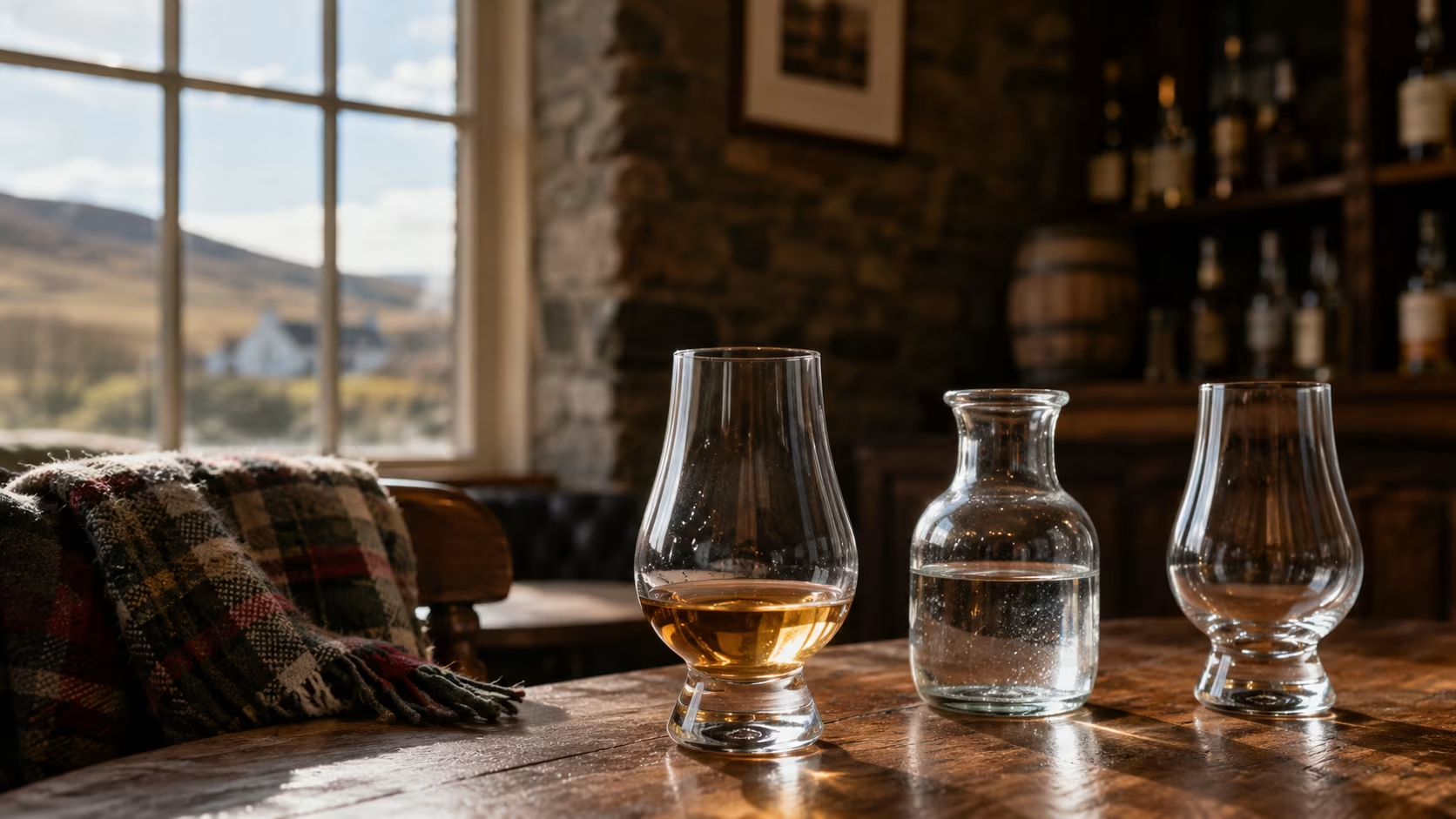
Scotch whisky is one of the world's great regional spirits — only legally produced in Scotland, with rules so strict (specific grains, oak barrels, minimum 3-year aging) that imitations elsewhere can't be called Scotch. The 2026 industry continues a renaissance that began in the 1990s + 2000s; new distilleries opening, traditional methods revived, single malts dominating + blends finding their renewed niche.
For visitors to Scotland — the historical home of whisky — drinking properly is part of the cultural experience. The traveler who knows the regional differences, can order with confidence in a pub, and visits a distillery thoughtfully has dramatically richer experiences than the one who drinks generic blends + skips the heritage.
This is a 2026 field guide for travelers in Scotland (or anyone serious about Scotch).
What Makes Scotch Whisky Distinct
Legal Requirements
For a spirit to be called "Scotch whisky," it must:
- Be produced in Scotland.
- Use only water, malted barley (and other grains for some types), and yeast.
- Be matured in oak casks of no more than 700 liters for at least 3 years.
- Be bottled at minimum 40% alcohol by volume (ABV).
- Have no flavor additives except plain caramel coloring.
Five Categories
- Single malt Scotch — made from 100% malted barley at a single distillery.
- Single grain Scotch — single distillery; can use other grains.
- Blended malt Scotch — single malts from multiple distilleries blended.
- Blended grain Scotch — single grains from multiple distilleries blended.
- Blended Scotch — mixture of malt + grain whiskies (the most common, including big brands like Johnnie Walker, Dewar's).
Most "premium" whisky discussion focuses on single malts. Blends are the working-class daily category.
The Five Whisky Regions
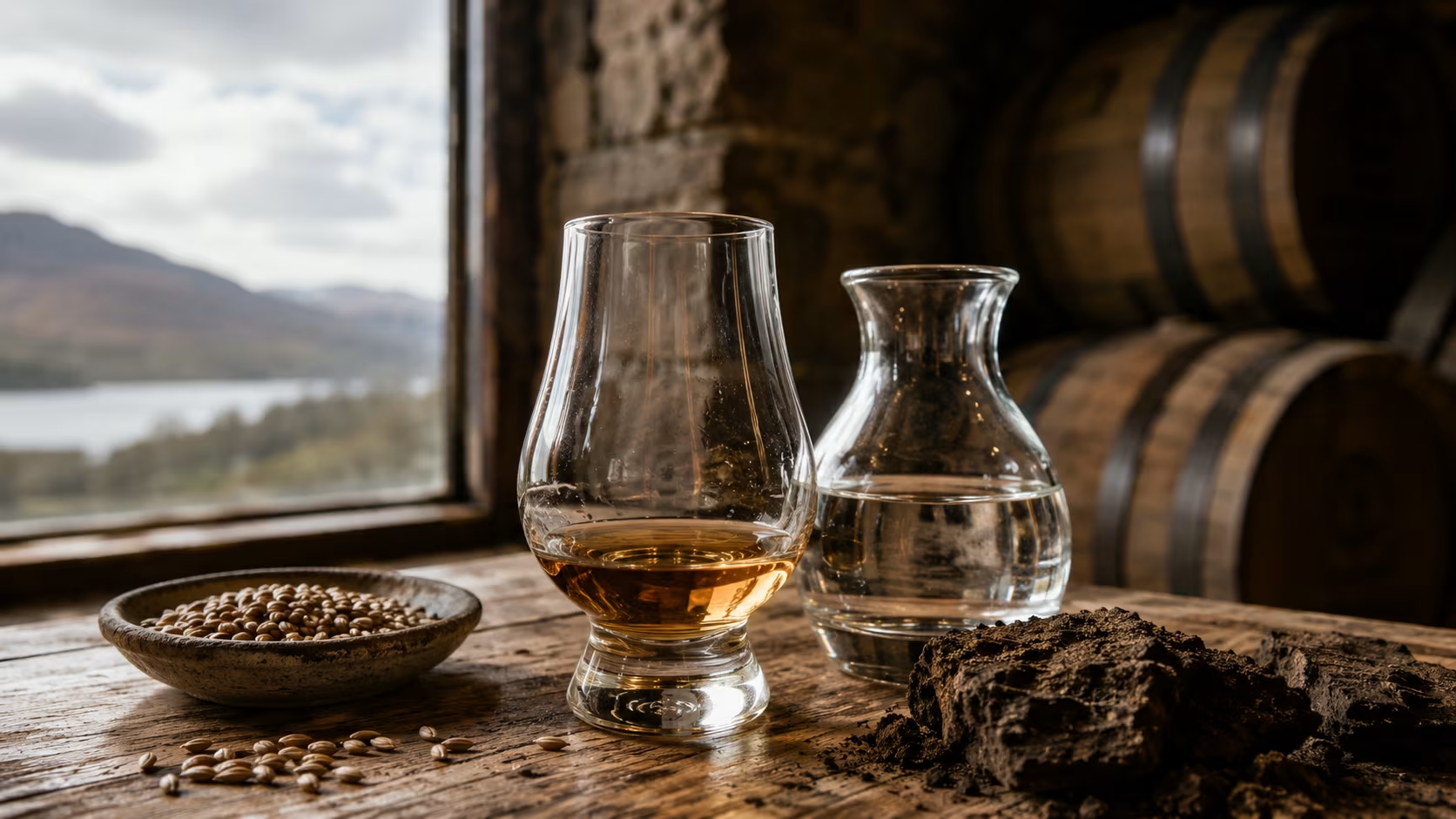
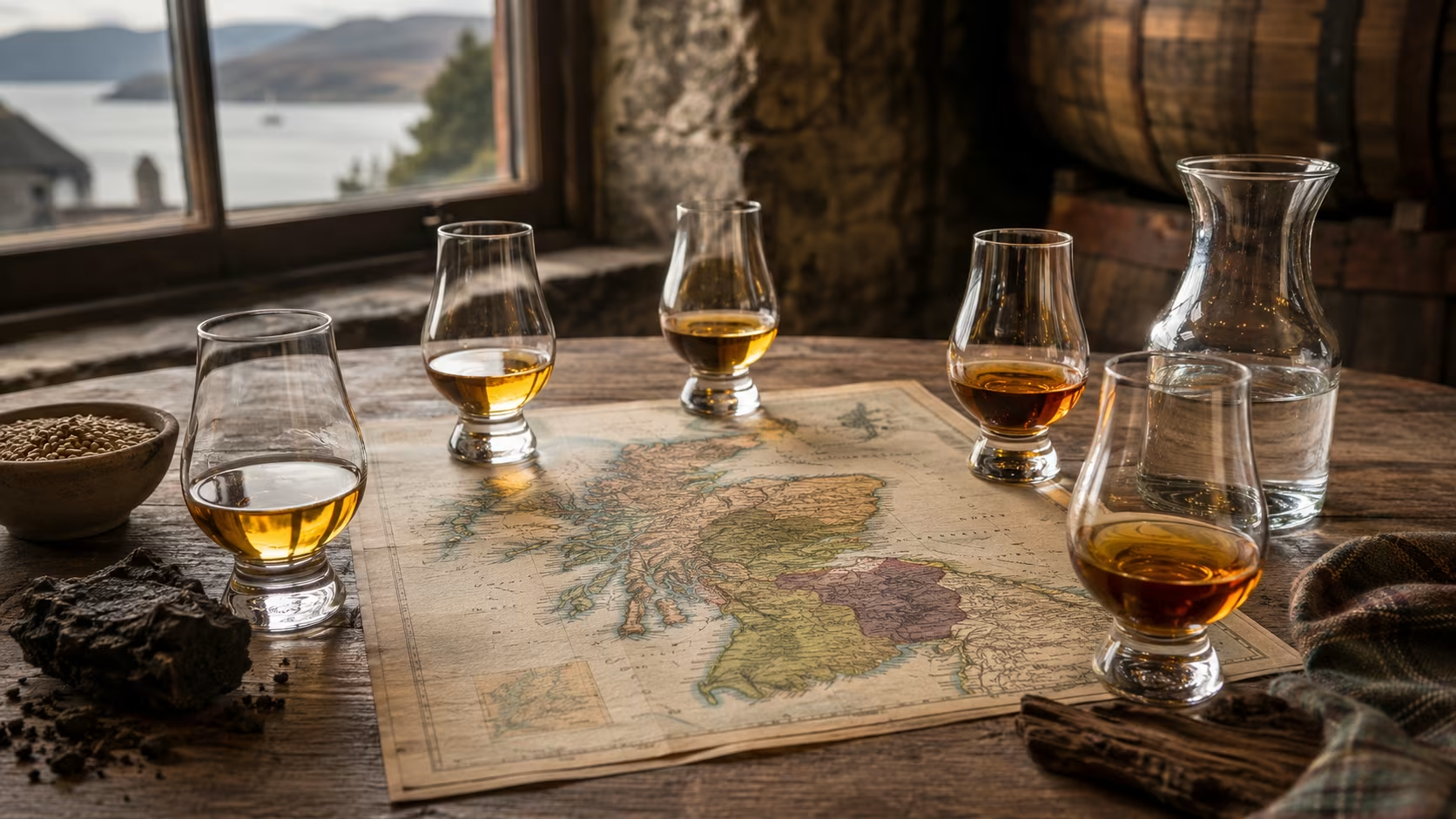
Scotch is produced in five legally-recognized regions, each with distinct characteristics. The regional generalizations have exceptions (some Speyside whiskies are smoky; some Islay whiskies are gentle), but the patterns hold for the majority.
Speyside
The heart of Scottish whisky-making. ~50 distilleries — the highest concentration globally. Centered on the river Spey in northeast Scotland.
Style: generally elegant, fruity, sweet, often light. Sherry cask aging common.
Famous distilleries:
- Macallan — sherry-aged premium.
- Glenlivet — the classic Speyside sweet style.
- Glenfiddich — accessible; the world's largest-selling single malt.
- Aberlour — sherry cask + heritage.
- Balvenie — premium; honeyed.
- Glen Grant.
- Glenfarclas.
Islay (pronounced "EYE-luh")
The small Hebridean island. ~9 active distilleries; characteristically intense, peated whiskies.
Style: smoky, peaty, medicinal, maritime. The flavor of burnt heather + iodine + smoke + sea salt.
Famous distilleries:
- Lagavulin — the iconic Islay; the heaviest peat.
- Laphroaig — "the most challenging Scotch"; medicinal + smoky.
- Ardbeg — extreme peat + complexity.
- Bowmore — slightly gentler Islay.
- Bunnahabhain — softer Islay (less peaty).
- Bruichladdich — modern, often unpeated.
- Caol Ila.
- Kilchoman — newer (2005), small-batch.
Highland
The largest geographical region. Diverse styles. Generally medium-bodied + drinkable.
Style: ranges from light (Glenmorangie) to robust (Dalmore) to lightly smoky (Highland Park, technically Orkney).
Famous distilleries:
- Glenmorangie — light + delicate.
- Dalmore — rich + sherry-cask-aged.
- Oban — coastal Highland; lightly smoky.
- Highland Park (Orkney) — lightly peated + heathery.
- Old Pulteney — coastal.
- Scapa.
- Jura (a separate island; technically Island Scotch).
Lowland
Small region in southern Scotland. Generally lighter, gentler whiskies.
Style: light, floral, often described as "breakfast whisky."
Famous distilleries:
- Auchentoshan — triple-distilled.
- Glenkinchie — light + sweet.
- Bladnoch.
Campbeltown
A small region (1 town, 3 active distilleries) on the Mull of Kintyre. Once "the whisky capital" of Scotland (1870s); now smallest region.
Style: maritime, briny, sometimes lightly smoky, often dense.
Famous distilleries:
- Springbank — the institution; cult following.
- Glen Scotia.
- Glengyle (Kilkerran brand).
How to Order in a Scottish Pub
The Basics
- "A whisky" = a single dram (~25-35ml). The standard order.
- "A double" = double measure.
- "With water" = with a small splash to open the flavor.
- "With ice" (only acceptable for casual blends; serious whisky drinkers don't ice).
- "Neat" = no water; no ice.
- "Specific malt + age" — "A Glenfiddich 12, please."
- "Whatever the bartender recommends" — gets you a curated experience.
What's Available
- Working pubs: typically 5-15 single malts + standard blends.
- Whisky bars: 100-500+ single malts.
- Specialty whisky shops attached to bars: entire libraries.
Specific Famous Pubs/Bars
- Bow Bar (Edinburgh) — the institution.
- The Devil's Advocate (Edinburgh) — boutique.
- Whiski Rooms (Edinburgh) — premium.
- Brewdog Doghouse Edinburgh for craft beer focus + good whisky.
- The Pot Still (Glasgow) — extensive whisky range.
- Òran Mór (Glasgow) — converted church + atmospheric.
- Sandy Bell's (Edinburgh) — folk music pub.
Serving Etiquette
- Don't add ice to single malts unless ordering specifically.
- A small splash of water is acceptable + often improves the dram (especially cask-strength whiskies).
- Specifically asking for water marks you as someone who knows what they're doing.
- Sniff first. Smell the whisky before sipping.
- First sip is small. "Numbing" sip; the second sip reveals more.
- Drink in small amounts over time. A dram should last 15-20 minutes minimum.
- "Cheers!" + eye contact in Scotland; "Slàinte" (pronounced "SLAHN-juh") is Gaelic + appreciated by Scots.
Whisky Tasting Vocabulary
Useful terms for ordering + discussing:
Common Descriptors
- Smoky / Peaty — the burnt-heather flavor from peat-fired malting.
- Fruity — apple, pear, citrus, dried fruit notes.
- Sweet / Honeyed — syrup, vanilla notes.
- Sherry-cask-aged — aged in sherry barrels; often dark, raisin-like.
- Bourbon-cask-aged — aged in American oak; vanilla, caramel.
- Maritime / Coastal — salt, brine, seaweed notes.
- Floral — blossom, hay, light.
- Spicy — pepper, cinnamon, clove.
- Medicinal — iodine, antiseptic (especially Islay).
- Peat — bog-fire smoke, the defining Islay characteristic.
- Cask-strength — bottled at full cask alcohol (often 50-65% ABV); not diluted.
- Single barrel / Single cask — from one specific cask only.
- Age statement — minimum age (e.g., "12 year old" = whiskey at least 12 years aged).
Reading a Bottle
A Scotch label tells you:
- Distillery name + brand.
- Age (years aged in cask before bottling).
- Type (single malt, blended, etc.).
- Cask type (bourbon barrel, sherry oloroso, ex-port, etc.).
- ABV (alcohol by volume).
- Distillation year (vintage; sometimes shown).
- Bottling year.
- Cask number (single-cask whiskies).
Visiting a Distillery
What to Expect
Most Scottish distilleries offer tours; most include:
- Visitor center introduction.
- Walking through production stages (mashing, fermentation, distillation, maturation).
- Cask warehouse visit (smell of aging whisky is part of the experience).
- Tasting at end — typically 3-5 different drams.
- Shop access.
Tour Tiers
- Standard tour: 60-90 minutes; £15-30; basic tasting.
- Premium tour: 2-3 hours; £45-90; rare drams + cask-strength tastings.
- Master class / blending experience: £150-400; multi-hour deep-dive.
- VIP / private tour: £500+; full distillery access + exclusive tastings.
Booking Strategy
- Book months ahead for popular distilleries (Macallan, Glenlivet, Lagavulin, Ardbeg).
- Book 1-2 weeks for less-famous distilleries.
- Visit by car or organized tour — public transit is limited in distillery regions.
Specific Famous Distilleries to Visit
Speyside (Highest Density)
Multiple distilleries within 30-mile radius of Aberlour or Dufftown:
- Macallan.
- Glenlivet.
- Glenfiddich.
- Aberlour.
- Balvenie.
- Cardhu.
- Glen Grant.
A Speyside distillery-hopping trip can cover 4-6 distilleries in 3 days.
Islay
The small island has 9 active distilleries — visiting all is a 3-4 day trip.
- Lagavulin — the heaviest peat.
- Laphroaig — medicinal.
- Ardbeg — extreme peat.
- Bowmore — gentler Islay.
- Bruichladdich.
Access: ferry from Kennacraig (mainland Scotland) to Port Ellen (Islay). 2 hours.
Highland
Glenmorangie + Highland Park + Oban + Dalmore — spread across larger geography.
Lowland
- Auchentoshan (near Glasgow).
- Glenkinchie (near Edinburgh).
Whisky Touring Strategies
Day Trip from Edinburgh
Visit Glenkinchie distillery (the closest single-malt distillery to Edinburgh). Day tour or self-drive.
Speyside Multi-Day Tour
3-4 days based in Aberlour or Dufftown. Day visits to 3-4 distilleries. The famous Malt Whisky Trail (8 distillery + 1 cooperage drive route, 100+ miles).
Islay Trip
4-7 days on Islay. Combine distillery visits + island culture + walks. Ferry-based; book ahead.
Whisky Bar Crawls
For city-based travelers wanting to taste many whiskies without visiting distilleries:
Edinburgh:
- The Bow Bar.
- The Devil's Advocate.
- Whiski Rooms.
- Sandy Bell's.
- Brewdog Doghouse.
Glasgow:
- The Pot Still.
- Òran Mór.
- The Whisky Project.
Pairing Whisky
With Food
Classic pairings:
- Sherry-cask whisky + dark chocolate.
- Smoky Islay + smoked salmon.
- Speyside + cheese plate.
- Highland + roasted lamb.
- Lowland + soft cheese.
- Cask-strength + dark chocolate or aged cheese.
Without Food
Most whisky enthusiasts drink it as standalone — small dram with optional water; no food competition.
What Doesn't Work
- Whisky with mixers (other than water). Not in serious whisky-drinking culture.
- Whisky with sweet drinks (cola, ginger ale).
- Whisky shots. It's a sipping spirit, not a shot spirit.
Buying Whisky in Scotland
Specialty Whisky Shops
- Royal Mile Whiskies (Edinburgh, central) — extensive range.
- Cadenhead's (multiple Scottish locations) — independent bottler.
- The Whisky Shop (multiple locations).
- Loch Fyne Whiskies.
- Drinkmonger.
Distillery Direct Sales
Many distilleries sell exclusive bottlings only available on-site or to club members.
Tax Considerations
Buy at airport duty-free for the best prices on premium bottles. UK duty + tax adds significantly to in-country prices.
International shipping is sometimes possible from specialty shops (verify destination customs rules).
What to Try as a First-Timer
Recommended Tasting Progression
If you're new to whisky, start gentle:
- Lowland or light Highland — Auchentoshan 12, Glenkinchie 12, Glenmorangie 10.
- Speyside light — Glenlivet 12, Glenfiddich 12.
- Speyside richer — Aberlour 12, Macallan 12 Sherry Oak.
- Highland medium — Oban 14, Highland Park 12.
- Light Islay — Bunnahabhain 12, Bowmore 12.
- Heavy Islay — Lagavulin 16, Laphroaig 10, Ardbeg 10.
If you reverse this progression (heavy Islay first), the gentler whiskies will seem flat.
Beginner-Friendly Whiskies
- Glenmorangie 10 Original — light + accessible.
- Glenfiddich 12 — the most-sold single malt.
- Glenlivet 12 — classic Speyside.
- Highland Park 12 — gentle smoky Highland.
- Auchentoshan 12 — Lowland triple-distilled.
"You Should Try Once" Whiskies
- Lagavulin 16 — the iconic Islay.
- Macallan 18 Sherry Oak — premium sherry-cask.
- Springbank 10 — Campbeltown classic.
- Highland Park 18.
Whisky Etiquette + Mistakes
Common Tourist Mistakes
- Adding ice to premium single malt. Acceptable for blends; insulting for premium.
- Asking for premium whisky on the rocks at a serious whisky bar.
- Drinking it as a shot. It's a sipping spirit.
- Saying "scotch" instead of "whisky." In Scotland, "whisky" is the default; "Scotch" is mostly used by foreigners. Locals say "a whisky" or "a dram."
- Pronouncing "whiskey" with the 'e'. Scottish whisky has no 'e'; Irish whiskey + American whiskey do.
- Mixing different distilleries' whiskies at a tasting (you'll be unable to discern characteristics).
- Drinking too quickly. A dram should last 15-20 minutes.
- Comparing only by age. A 30-year-old isn't always better than a 12; cask + distillery matter more.
- Ordering doubles by default at fancy whisky bars (often a single is meant to be sipped slowly).
Common Scottish Whisky Vocabulary
Useful terms:
- Dram — single measure of whisky.
- Wee dram — small whisky.
- A nip — small drink.
- Slàinte — "cheers" in Gaelic.
- Slàinte mhath (slahn-juh-vahth) — "good health."
- Cratur (kra-tur) — old term for whisky.
- Uisge beatha (oosh-ka-bay) — Gaelic for "water of life"; the etymology of "whisky."
- Cask — barrel.
- Maturation — aging in cask.
- Dunnage warehouse — earth-floor warehouse with three-cask stacks.
- Angels' share — the 2% per year that evaporates from casks.
Beyond the Pub: Whisky-Related Activities
Whisky Festivals
- Whisky Fringe (Edinburgh, August).
- Spirit of Speyside Festival (Speyside, May).
- Feis Ile (Islay, May) — the famous Islay whisky festival.
- Glasgow Whisky Festival (November).
- Edinburgh Whisky Stramash (May).
Whisky-Themed Hotels
Some hotels specialize in whisky experiences:
- The Balmoral Hotel (Edinburgh) — has a whisky cellar.
- The Pot Still adjacent hotels in Glasgow.
- Distillery-attached hotels in Speyside (Macallan Estate, etc.).
Final Notes
Scottish whisky is one of the world's great regional spirits. Drinking it properly in Scotland is part of the cultural experience. The traveler who tastes whisky thoughtfully across regions returns home with palate + appreciation that years of research couldn't replicate.
The single best advice visit at least one distillery during a Scotland trip. The smell of fermenting mash + maturing whisky in the warehouse + tasting freshly-poured drams from cask + speaking with the working distillers reveals more about whisky than years of bar-tasting.
The second-best try whiskies across different regions. The contrast between a Speyside Glenlivet + an Islay Laphroaig + a Highland Highland Park reveals the diversity within the Scotch category.
The quietest piece of advice don't be intimidated by the snobbery sometimes attached to whisky. Drink what you enjoy; learn what you like; respect the cultural tradition while not pretending to be more sophisticated than you are. Scottish bartenders + distillery guides genuinely respond to honest interest more than pretense. A traveler asking "I don't know much; what would you recommend for someone just starting?" gets a better experience than the one trying to impress with vocabulary they don't fully command.
0 Comments
No comments yet — start the conversation.