


Slow travel — staying in one place for 2+ weeks — produces a different relationship with daily rhythm than vacation travel. The constant decision-making of "what do I do today?" becomes exhausting after weeks. The travelers who succeed with slow travel build daily routines that anchor the trip + create space for both productivity + exploration. The travelers who don't drift; days slip by; the trip ends with vague memories + minimal accomplishment.
This is a 2026 field guide for slow travelers — sabbatical-takers, digital nomads, gap-year travelers, anyone staying in one location for weeks. The advice maps to apartments + hotels + co-living spaces + extended hostel stays.
Why Routine Matters in Slow Travel
The Decision-Fatigue Problem
Vacation travelers make hundreds of decisions per day (what to eat, where to walk, what to see). Vacation travelers tolerate this because the trip is short.
Slow travelers face the same decisions for weeks. Without structure, decision fatigue produces:
- Constant low-grade exhaustion.
- Skipped meals or repetitive eating.
- Unscheduled days that drift.
- Procrastinated work.
- Missed local cultural experiences.
The Identity Gap
Daily life at home has implicit structure (work hours, gym schedule, family dinner, weekly rituals). Slow travel removes this structure. Without replacement, the days feel formless + the trip becomes "I was there, but what did I do?"
The Productivity Gap
Working remotely + slow traveling sounds glamorous. Without daily rhythm, neither work nor travel happens well.
Anchor Points

A daily routine in slow travel needs anchor points — specific times for specific activities. These are the day's structure; everything else fills in around them.
Morning Anchor
The most-important anchor. Same wake time each day (within ±60 min). Same first 90 minutes structure: wake → coffee → first walk → breakfast → first work block or first activity.
Lunch Anchor
Real lunch at predictable time. Even if eating alone or at home.
Afternoon Anchor
Mid-afternoon break, typically 14:00-16:00. Often a slow café visit, walking, or light activity.
Evening Anchor
Dinner at predictable time. Even if take-out from local restaurant.
Bedtime Anchor
Consistent within ±60 min. Sleep matters more on long trips than short.
A Sample Slow-Travel Daily Routine

This assumes a 6-month sabbatical or extended slow-travel period:
07:00 — Wake
- Open windows; light enters.
- Drink water.
- Brush teeth.
07:15 — Morning Walk
- 30-minute walk in the neighborhood.
- Sunlight exposure (regulates circadian rhythm).
- No phone — observation only.
07:45 — Coffee + Reading
- Local café for proper coffee.
- 30 minutes reading (book, news, journal).
- Slow start; not rushed.
08:30 — Breakfast
- Light meal at home or café.
- Continue reading or planning.
09:00-11:30 — First Work Block (if working)
- Focused work; no email/messaging until break.
- Phone in another room or do-not-disturb mode.
- 90-min focused; 30-min break.
11:30-12:00 — Break
- Walk, stretch, change scene.
- Quick errands or laundry.
12:00-13:30 — Lunch + Slow Time
- Real lunch at home or restaurant.
- 60-90 minutes total — eating + slowing down.
13:30-15:30 — Activity Block
- Local exploration: museum, walking new neighborhood, language class, craft class.
- One major activity per day.
15:30-16:30 — Café + Rest
- Café visit for second coffee or tea.
- 60 minutes downtime.
- Write/journal/read.
16:30-18:00 — Second Work Block (if needed) or More Activity
- Lighter work session if needed.
- Or: longer walk, errands, social time.
18:00-19:00 — Wind-Down
- Light activity.
- Apartment time.
- Maybe pre-dinner drink.
19:00-20:30 — Dinner
- Real dinner.
- Either home-cooked or restaurant.
- Slow eating.
20:30-21:30 — Evening Activity
- Walking, reading, light entertainment.
- Not heavy social or alcohol-heavy.
21:30-22:00 — Wind-Down
- Final reading.
- Phone away.
- Bed by 22:00.
Total Structure
- 5-6 hours work (if working remotely).
- 2-3 hours focused exploration (museums, classes, walks).
- 2-3 hours slow time (cafés, reading, rest).
- Several meals anchoring the day.
This structure produces both productivity + meaningful travel.
Adaptations for Different Travel Types
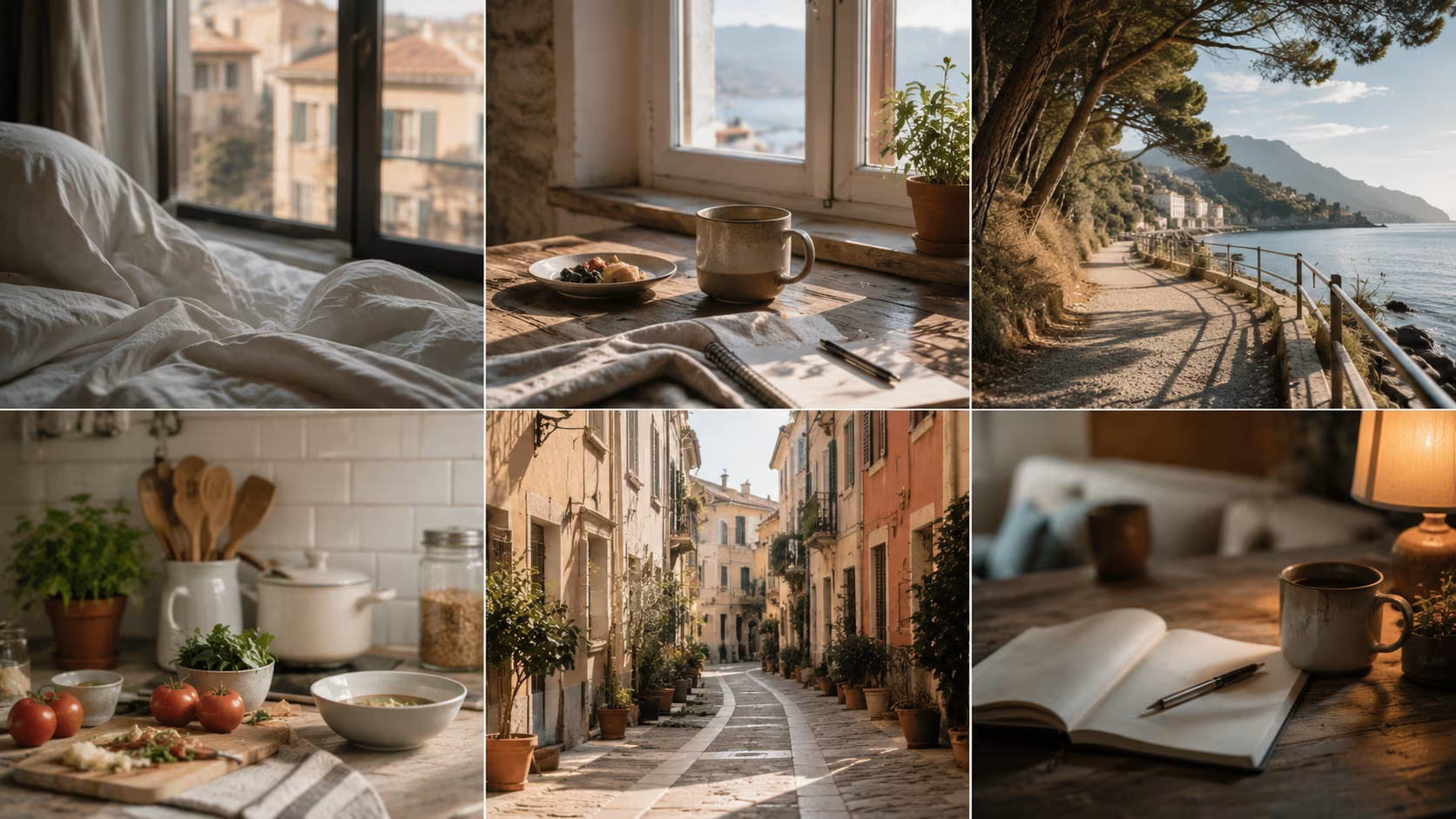
Vacation-Mode Slow Travel (No Work)
Reduce work blocks to zero; expand exploration + rest. Add evening cultural activities (concerts, dinners with new acquaintances).
Heavy-Work Slow Travel (Full-Time Work)
Working 7-8 hours daily. Maintain work blocks; reduce afternoon activity to 1 hour. Focus on weekend exploration. Dinner is the social anchor.
Solo Slow Travel
Evening can be lonely. Schedule one social activity per week (cooking class, language partner, expat meetup). Phone calls home regularly.
Couple/Family Slow Travel
Negotiate daily structure. Different partners may want different rhythms. Plan together; respect that one partner may want morning gym while other wants slow breakfast.
Retirement Slow Travel
Adjust pace down. More rest blocks; lighter activity blocks. Cultural events + meals + slower exploration.
Specific Routine Components
Morning Walk
Critical. The 30-minute morning walk:
- Sets circadian rhythm.
- Provides sunlight (especially needed for first week of new destination).
- Familiarizes you with the neighborhood.
- Introduces you to local coffee shops + bakeries.
- Produces incidental discoveries (markets opening, locals' routines, good photo spots).
Walk the same route the first 1-2 weeks; expand once familiar.
Coffee Ritual
Find one local café you like in the first 1-3 days. Return daily. The barista becomes a familiar face; the café becomes your anchor.
This seems trivial; it isn't. The familiar café provides emotional stability across weeks of changing scenery.
One Daily Activity
Pick one substantive activity per day:
- Museum visit.
- Cooking class.
- Language exchange.
- Walking tour.
- Coffee with local.
- Visit to a market.
- Bicycle ride.
- New neighborhood walk.
- Yoga class.
Not 5; one. The depth of engagement matters more than quantity.
Daily Movement
Something physical every day:
- Long walk (8+ km city walking counts).
- Hotel/apartment workout (20-30 min).
- Yoga session (in person or YouTube).
- Bike ride.
- Pool swim.
- Hike.
Movement maintains energy + sleep quality across weeks.
Daily Reading
30-60 minutes per day, preferably non-screen:
- Local writer's books (more meaningful while there).
- Travel writing.
- Fiction set in or about the place.
- News (one curated source; not endless scrolling).
Weekly Larger Activities
One major weekly activity:
- Day trip to nearby destination.
- All-day cooking class.
- Multi-hour cultural event (festival, opera).
- Specific hike or natural-area visit.
- Weekend at a different destination.
Local Connections + Routine
Daily routine produces connection. After 2 weeks of the same café:
- Barista knows your order.
- Other regulars recognize you.
- Conversations begin.
- Locals may invite you to social events.
- Recommendations emerge.
The slow-travel relationships are different from any vacation interactions; they happen because of routine.
Schedule Anchor Strategies
Use a Calendar
Digital calendar with daily structure visible:
- Wake time.
- Work blocks.
- Lunch + dinner times.
- Activity slots.
- Bedtime.
Not to enforce rigid schedule but to provide visible structure.
Habit Tracking Apps
- Streaks (iOS) for daily habit.
- Habitica for gamified.
- Way of Life for tracking.
Daily checkmarks keep you honest about routine adherence.
Recurring Reminders
Calendar reminders for:
- Lunch (don't skip).
- Afternoon break (mandatory).
- Reading time.
- Wind-down hour.
Adapting the Routine
First Week: Establish Base
Don't try to maintain home routine perfectly. Adjust to:
- Time zone.
- Local meal times.
- Daylight patterns.
- Local rhythm.
Weeks 2-3: Stabilize
Lock in daily anchors. Same wake time; same coffee; same lunch; same bedtime.
Weeks 4+: Expand
As base routine works, add:
- Weekly larger activities.
- Social connections.
- Deeper exploration of the place.
- Specific projects or learning goals.
Resetting When Off-Track
If the routine drifts:
- Acknowledge it.
- Pick one anchor (usually morning) to reset.
- Use that anchor to rebuild.
- Don't try to fix everything at once.
What Drifts the Routine
Common disruptors + responses:
Late Night Out
- Don't catastrophize.
- Wake at usual time the next day.
- Lighter activity day.
- Earlier bedtime that night.
Bad Sleep
- Limit caffeine.
- Earlier bedtime.
- Sleep mask + earplugs if environmental.
- Don't make it a multi-day pattern.
Travel Day (Moving Bases)
- The day before: light activity.
- Travel day: minimal additional activity.
- New base: re-establish morning routine the first morning.
Visitors + Family
- Communicate routine to them.
- Find compromises.
- Schedule social activities into evening + weekends.
- Don't sacrifice morning routine.
Bad Weather
- Indoor activities.
- Reading + writing.
- Apartment workout.
- Don't lose the day.
Mood Days
- Slow days are OK.
- Maintain meals + sleep.
- Skip optional activities.
- Don't extend into multiple days.
Long-Trip Sustainability
The 1/3 Rule
For any trip over 3 months:
- First third: new + exciting; routine establishes.
- Middle third: the test. Routine matters most. Boredom + low motivation common.
- Final third: wind-down + return-prep.
The middle third is when slow-travel routine pays off most. Without routine, the middle becomes drift.
Variety Within Routine
Maintain anchors but vary content:
- Same café, different reading material.
- Same morning walk, different attention.
- Same daily activity slot, different activities.
Routine doesn't mean repetition. The structure is consistent; the content evolves.
Mental Health Maintenance
Long slow trips produce real psychological challenges:
- Loneliness.
- Identity questions ("who am I without my home routine?").
- Drift.
- Productivity guilt.
- Travel-comparison social media exhaustion.
Daily routine + maintained connections + scheduled rest mitigate. Therapy (online sessions work) for serious issues.
Specific Place-Based Adaptations
Hot Climates (Bali, Mexico City, Bangkok)
- Earlier wake (06:30) to enjoy cooler hours.
- Long midday rest (13:00-16:00).
- Active evening hours.
- Dinner late (20:00+).
Cold Climates (Northern Europe, Scandinavia)
- Later wake (08:00-08:30).
- Indoor focus during shorter daylight.
- Outdoor walks during peak light.
- Earlier dinner.
Mediterranean Pace (Spain, Italy, Greece)
- Match local rhythm.
- Late lunch (14:30).
- Siesta possible (15:00-17:00).
- Late dinner (21:00+).
Latin American Pace
- Similar Mediterranean pattern.
- Late dinner (20:00+).
- Weekend social emphasis.
Asian City Pace
- Earlier mornings.
- Active days.
- Earlier dinners (Japan especially).
Tools for Slow-Travel Routine
Productivity Tools
- Notion for daily planning.
- Things or Todoist for tasks.
- Calendar app with daily structure.
Habit Trackers
- Streaks (iOS).
- Habitica.
- Way of Life.
Health Apps
- Garmin/Apple Watch for movement tracking.
- MyFitnessPal for nutrition awareness.
- Sleep tracking.
Local Apps
- Google Maps for daily navigation.
- TripAdvisor for activity ideas.
- Local restaurant + cultural event apps for the city.
Common Slow-Travel Mistakes
- Trying to maintain home routine exactly. Adapt to local rhythm.
- Trying to be a tourist daily. That pace doesn't sustain.
- No structure at all. Days drift.
- Skipping breakfast or lunch. Pattern destroys.
- Late nights consistently. Sleep debt accumulates.
- Drinking heavily nightly. Health degrades.
- No movement days. Energy declines.
- Phone-scrolling instead of reading. Time wasted.
- No weekly larger activity. Trip becomes routine without depth.
- Constant social media tracking of others' trips. Comparison exhausting.
- Saving major activities for "later." Later doesn't come.
- Not building local connections. Slow travel without locals = vacation.
- Pretending you don't need rest.
- Maximum-utilization mindset. Trip becomes work.
Final Notes
Slow travel rewards routine. The travelers who arrive home from 6-month trips genuinely refreshed + having accomplished things did this with daily structure. The travelers who arrive home wondering "where did the time go?" did not.
The single best advice establish three anchor times in the first 3 days at any new long-stay destination. Wake time, lunch time, bedtime. Lock these. Everything else fills in around them.
The second-best pick one local café in week 1 + return daily. The familiarity provides emotional stability + the relationships develop. By month 2, the café feels like home.
The quietest piece of advice routine isn't the opposite of adventure. It's the structure that makes sustained adventure possible. The traveler who maintains daily anchors has more energy + more presence for actual exploration than the traveler who improvises everything. Random days produce random memories; structured days produce both productivity + the depth of engagement that long trips reward.


0 Comments
No comments yet — start the conversation.