

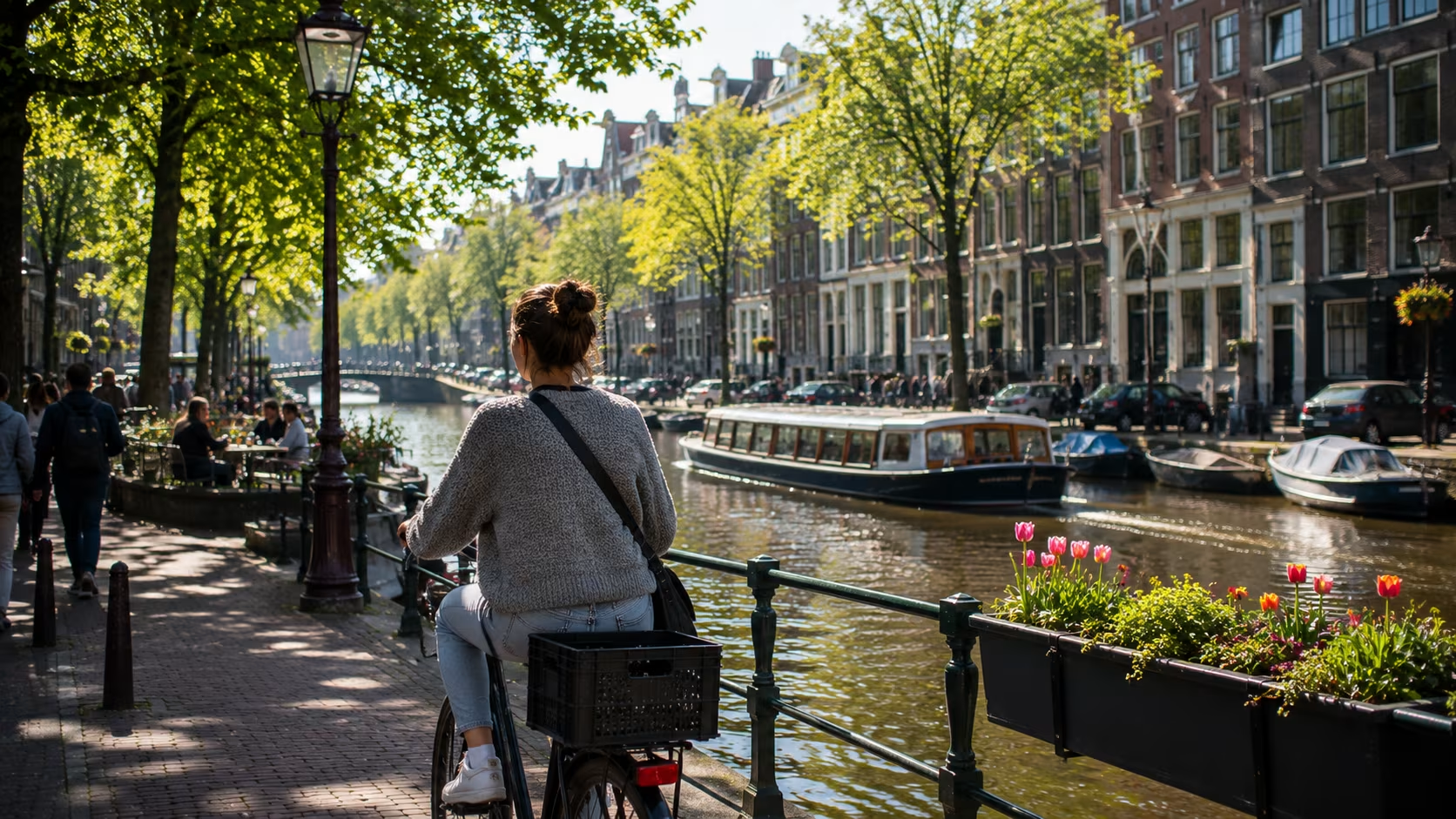
Amsterdam in 2026 is a city actively trying to host fewer tourists in its central canals and more in its outer neighborhoods, and they are partly succeeding. The city has banned new hotels in the center, ended cruise-ship docking at the central terminal (rerouting to Ijmuiden), and run the "Stay Away" campaign aimed at British stag parties. The cumulative effect: the same beautiful city, slightly less crushed, with the worst tourist behavior pushed to the periphery.
This is a guide for someone with three to five days who wants to see the canals, ride a bike without dying, and skip the parts the city itself wishes you'd skip.
Quick Facts
| Item | Detail |
|---|---|
| Country | Netherlands |
| Currency | Euro (€) |
| Language | Dutch; English near-universal |
| Time zone | CET (UTC+1) / CEST (UTC+2) |
| Tourist tax | 12.5% of room rate (highest in Europe) |
| Best time | April–May, September |
| Visa | Schengen, 90 days for most non-EU |
| Trip length | 3–4 days |
When to Go
April to mid-May. The sweet spot. Tulip season (mid-April peak), Keukenhof open, daylight long, average highs 14–18°C. King's Day on April 27 turns the entire city into a national party.
Mid-May to August. Long days, beer gardens full. July–August is mobbed and accommodation expensive.
September. The other quiet window. Schools back, prices drop, the canals look better in slightly slanted light.
October to March. Cold, often rainy, but the city looks beautiful in winter darkness with canal lights. December has the Light Festival across the canals, genuinely one of the best winter events in Northern Europe.
Avoid: the week around King's Day (April 27) for accommodation prices unless you specifically want the party. Avoid the first weekend of November (Amsterdam Dance Event) if you don't want clubs and crowds.
Getting There
Schiphol (AMS) is one of Europe's hubs. 18 km southwest of central Amsterdam. Three options:
- Train. €5.90 to Centraal Station, 17 minutes, every 10 minutes. Use any major card or buy at the station kiosks. The default.
- Taxi. €45–55 to central neighborhoods.
- Uber/Bolt. €30–45.
Amsterdam is also a major rail hub. Eurostar from London: 4 hours. Thalys from Paris: 3h 20min. Direct trains from Berlin: 6h 30min.
Getting Around
Amsterdam's transit is excellent and the city is small enough to walk most places.
OV-chipkaart (smart card) or Apple Pay / Google Pay. Tap on, tap off. €1 base + €0.190/km on metro/tram/bus. The credit-card tap-in is universal as of 2024 and the simplest option for tourists.
Single-use day pass. €9 per 24 hours, sold at any tram stop. Usually a money-loser unless you'll do 6+ rides.
Trams. The default for moving around the center. Lines 2, 4, and 5 hit most central destinations.
Metro. Less useful in central Amsterdam (mostly serves outer neighborhoods).
Bicycles: the Real Local Mode
More than a third of Amsterdam's daily commutes happen on bikes, and the cycling infrastructure is the best in the world. Three things to know:
- Locals are fast and impatient. Tourist cyclists wobbling, stopping in the bike lane, taking selfies: these are the source of most of the friction between Amsterdammers and visitors. Stay right, signal turns, do not stop on the path.
- Walking on a bike lane is not a small mistake. It's the bike equivalent of walking on a highway. The brick-paved bike paths are usually a different color (red or pink) from the gray pedestrian path. If you see a bell coming up behind you, move.
- Rental options. MacBike, Yellow Bike, A-Bike at central locations, €15–25 per day. Yellow Bike rents at hostels with a discount. Tourist bikes are deliberately yellow or a-ridable color so locals can see them coming. Don't be insulted; it's a safety feature.
Bike helmets aren't legally required and locals don't wear them; for tourist visitors unfamiliar with cycling, helmets are still a sensible call.
Where to Stay
The city is small. Anywhere central is walkable, but the neighborhood you sleep in changes the trip's feel.
Jordaan
The single best first-timer pick. West of the historic core, narrow streets, working bookshops and cafés, the canals at their most photogenic. Walking distance to Anne Frank House, Westerkerk, and the Nine Streets. Mid- and higher-range hotels.
Canal Belt (grachtengordel)
The horseshoe of historic canals. Quintessential Amsterdam. Hotel prices premium. Choose Herengracht, Keizersgracht, or Prinsengracht (the inner canals) for the most central base.
De Pijp
South of center, formerly working-class, now restaurant-heavy. The Albert Cuypmarkt is the daily street market. Calmer at night than the center, real neighborhood feel.
Oost (east)
New creative neighborhood, lower hotel prices, walking distance to Tropenmuseum and Oosterpark. Less central but well-connected by tram.
Avoid as a Base
- Red Light District (De Wallen). Stay or visit anywhere else. The neighborhood has been the focus of the city's anti-tourism campaign, and staying there in 2026 marks you as someone the city is actively trying not to attract.
- Around Centraal Station. Convenient for trains; nothing else recommends it.
- Suburbs (Amstelveen, Diemen). No reason for a 4-day trip.
Realistic 2026 nightly prices (4-star, weekday, shoulder):
| Neighborhood | Mid-range | Higher-end |
|---|---|---|
| Jordaan | €230–340 | €450–800 |
| Canal Belt | €260–380 | €500–1,000 |
| De Pijp | €180–270 | €380–620 |
| Oost | €160–240 | €320–500 |
What to Book in Advance
Anne Frank House
Tickets release exactly 6 weeks ahead. They sell out within hours for popular slots. €17. Book at the moment they release, not the day before your trip. Without a ticket, you cannot enter.
Van Gogh Museum
Timed entry strictly enforced. Book 2–3 weeks ahead. €22. The 09:00 slot has the smallest crowds. Friday late opening (until 21:00 some weeks) is genuinely beautiful with quieter evening light.
Rijksmuseum
Timed entry. Book a few days ahead. €25. Plan 3–4 hours. The Night Watch (Vermeer's, sorry, Rembrandt's; Vermeers are nearby) is the headline; the museum's depth is the actual reason to come.
Stedelijk Museum
Walk-up usually fine. Modern and contemporary art. €22.
Concertgebouw Concert
If you want classical music, the building is the most acoustically perfect concert hall in the world by reputation. Lunchtime concerts on Wednesdays are free. Evening concerts €30–110, book 2–4 weeks ahead.
Day 1 — Canal Belt and Anne Frank
08:30. Coffee at a Jordaan or Canal Belt café. Real coffee, not tourist-trap coffee. Lot Sixty One in De Pijp, Toki, Scandinavian Embassy.
09:30. Anne Frank House timed entry. Allow 90 minutes. The audio guide is included.
11:30. Walk the Jordaan. Brouwersgracht and Bloemgracht are the most photogenic canals. Westerkerk's tower (the church Anne references in her diary) climbs €9, limited timed slots, book ahead in summer.
13:00. Lunch in Jordaan. Café Restaurant De Reiger for Dutch classic. Winkel 43 for the most famous apple pie in the city, possibly overhyped but enjoyable.
14:30. The Nine Streets (De Negen Straatjes). Boutique shopping, vintage stores, design shops. The crossing canals offer the best ground-level photos of the canal architecture.
16:00. Canal cruise. Those Damn Boats is the underrated electric cruise option. Pure Boats for slightly larger groups. Avoid the big-fleet operators with massive boats; they're the boat equivalent of tour buses.
17:30. Wine bar in Jordaan. Wijnbar Boelen & Boelen for natural wine. Glouglou for the calmer evening version.
20:00. Dinner. Indonesian rijsttafel is the Dutch import-cuisine classic. Sampurna in De Pijp or Tempo Doeloe for the proper version. €40–55 per person for the full spread.
Day 2 — Museum Quarter
08:30. Coffee in Museumkwartier or De Pijp.
09:00. Van Gogh Museum opening slot. Allow 2.5 hours. The chronological route is intentional; resist the urge to skip ahead.
12:00. Lunch on Museumplein or in De Pijp. Stach for grocery-quality salads, Bagels & Beans for a working café meal.
13:30. Rijksmuseum. Allow 3.5 hours. The 17th-century galleries (Rembrandt, Vermeer, Hals) are the headline; the Asian Pavilion is the underused asset; the library is the prettiest room in the building.
17:30. Walk through Vondelpark. The city's central park, jogging-cycling-meeting territory. Continue to a café on the Overtoom.
19:30. Dinner in De Pijp. Bar Botanique for plant-forward, Volt for elevated Dutch, De Hapjeshoek for casual brown-café feel. €30–60 per person.
Day 3 — Bicycle Day
The day to rent a bike. Pick a 12 km loop that doesn't require highway-level cycling skills.
09:30. Pick up rental near your hotel.
10:00. Cycle north along the canals to NDSM Werf via the free passenger ferry from Centraal Station. Industrial-converted creative district, good lunch options, the Eye Filmmuseum visible across the IJ.
13:00. Lunch at Pllek (a beach-bar restaurant on the IJ) or NDSM-Loods.
14:30. Ferry back. Cycle east along the IJ to Eastern Docklands. Modern architecture cluster: NEMO Science Museum, Renzo Piano's Eye Pavilion-equivalent buildings, the Dutch Maritime Museum.
16:00. Cycle to Park Frankendael in Watergraafsmeer. Quiet city park, working-class and family neighborhoods, very far from the tourist core.
17:30. Beer at Brouwerij 't IJ, the windmill-adjacent craft brewery. Outdoor garden, working-class neighborhood feel.
19:00. Cycle back to your hotel. Drop the bike. Dinner near home.
Day 4 — de Pijp, Heineken, or Day Trip
Path A: de Pijp Deep Dive
09:00. Albert Cuypmarkt, the city's biggest daily street market. Mostly local-focused; a few tourist-targeted stalls. Stroopwafel made on the spot is genuinely worth doing.
11:00. Heineken Experience. €25. Touristy but well-produced. Allow 90 minutes.
13:00. Lunch at Bakers & Roasters for brunch or Avocado Show for the photogenic version.
15:00. Sarphatipark walk; Coster Diamonds tour; or just a slow afternoon at a café.
18:00. Dinner: Bar Mick or De Japanner for Asian-leaning small plates. Or the Foodhallen for the indecisive.
Path B: Day Trip to Haarlem or Utrecht
Haarlem. 15 minutes by train. €4.50 one-way. Smaller, calmer, postcard-Dutch architecture without the tourist density. Frans Hals Museum, Grote Markt, Vleeshal. Half day or full day.
Utrecht. 30 minutes by train. €8.50 one-way. Full-size canal city, two-level canal walks (the lower level is unique to Utrecht). Larger and more student-y than Haarlem. Full day.
What to Eat
Amsterdam's food scene is multicultural by default. The Dutch national cuisine is honest but limited; the city's character comes from Indonesian, Surinamese, Turkish, and Japanese influence.
Dutch Anchors
- Stroopwafel. Two thin waffles glued with caramel syrup. Best fresh from a market stall.
- Bitterballen. Deep-fried beef ragout balls. Standard bar snack with beer.
- Haring. Raw herring with onions and pickles, eaten standing at a fish stall. Spring catch is best.
- Erwtensoep. Pea soup so thick a spoon stands up in it. Winter only.
- Apple pie. Tall, cinnamon-heavy. Winkel 43 is the famous one.
- Cheese. Gouda is the export; old Gouda (oude kaas) at 2+ years aged is the better tasting.
Indonesian / Indo-Dutch
The legacy of colonial trade. Rijsttafel ("rice table") is a 12–25 dish spread for two; the standard celebration meal. Sampurna, Tempo Doeloe, Restaurant Blauw.
Turkish / Middle Eastern
De Pijp and Oost are full of Turkish bakeries (banket), pide places, and shawarma. The Albert Cuypmarkt's Turkish sandwich vendors do a working lunch under €10.
Surinamese
A late-1970s wave brought Suriname's Indo-Caribbean cuisine. Roti (flatbread + curry) is the standard. Warung Spang Makandra in De Pijp.
Costs and Budget
2026 daily budgets per person, excluding flights and hotel:
| Style | Per day | Notes |
|---|---|---|
| Backpacker | €60–95 | Hostel, casual lunches, walking and biking |
| Mid-range | €110–170 | Mix of cafés and proper dinners, museums, occasional taxi |
| Comfortable | €200–290 | Better restaurants, full museum days, taxis |
| Higher-end | €380+ | Tasting menus, hotel breakfasts, private boat |
Practical Info
Language. Dutch, but English is genuinely universal. Even older Amsterdammers speak fluent English. No need to learn Dutch beyond "dank u wel" (thank you).
Money. Cards everywhere. Tap-to-pay almost universal. Carry €30 cash for the rare exception (some markets, public toilets).
Tipping. Service usually included. Round up at cafés, 5–10% at sit-down for good service.
Cannabis. Legal in coffee shops (which are not coffee shops; they sell cannabis). Cafés sell coffee. The distinction is enforced by signage. Tourists buying cannabis is technically still permitted in Amsterdam in 2026, though the broader trend has been toward residents-only restrictions in other Dutch cities.
Smoking. Not allowed in restaurants, bars, or coffee shops (cannabis cafés get exception under specific rules).
Bikes are the dominant traffic. Look both ways at every crossing, twice. Bike paths, then car traffic, then back.
Sundays. Most museums open. Many shops close at 18:00. Restaurants reservation-recommended.
Common First-Timer Mistakes
- Standing in the bike lane to take a photo. Most dangerous tourist mistake in the city.
- Not booking Anne Frank House. Walk-ups don't exist.
- Spending an evening in the Red Light District for the spectacle. It's a city neighborhood with sex workers; treating it as a zoo is exactly what the city's anti-tourism campaign targets.
- Renting a bike on day one. Get oriented on foot first; bike on day two or three.
- Buying tickets to every museum. Three is plenty for four days.
- Drinking heavily in the city center. Stag-party tourists made this Amsterdam's biggest social problem; the city has noticed.
Final Notes
Amsterdam is the rare city that has decided what kind of visitor it wants and is openly steering. The 2026 city is calmer in the canals than it was in 2018, more polished in its outer neighborhoods, and tougher on the worst kind of tourism. As a respectful visitor doing canal walks, museum days, and one cycling afternoon, you arrive in exactly the version of the city the residents want you to see.
Three to four days is enough to leave with the city in your bones: the canals at golden hour, the bike-bell rhythm of a Tuesday morning, the quiet pleasure of a brown café when the rain is gentle outside. Pace it slowly. Skip the postcard list. Walk where the bikes don't go.
0 Comments
No comments yet — start the conversation.