

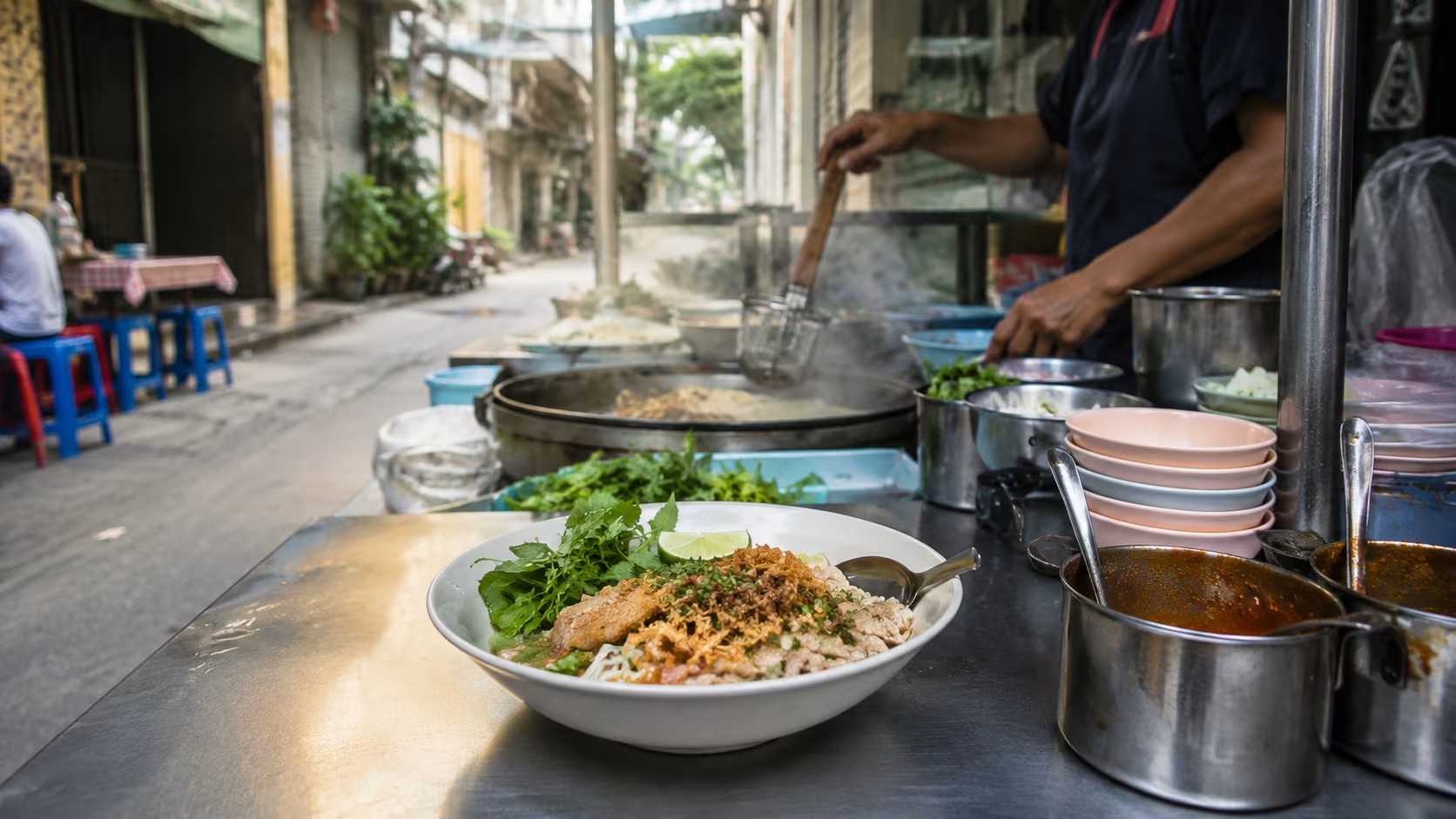
Bangkok in 2026 is a city quietly running away from its old reputation. The backpacker chaos of Khao San Road is now a small theme park that locals largely avoid. The street food scene has produced more Michelin Bib Gourmand restaurants than any other Asian capital. The Sukhumvit and Sathorn districts have skyscraper-and-craft-cocktail-bar densities that rival Tokyo. And the city's transit system (the BTS Skytrain plus the new MRT extensions) has made the previously brutal traffic increasingly optional.
None of this means the temples, the river, and the markets are gone. They're better than ever, with proper preservation and signage. The first-time visitor's job is to combine the headline cultural sites with at least one proper food day and one Sukhumvit evening.
This is a 4-day guide for first-timers who want the real city, not the Khao San version of it.
Quick Facts
| Item | Detail |
|---|---|
| Country | Thailand |
| Currency | Thai baht (฿), ~36 ฿/USD in 2026 |
| Language | Thai; English in tourist and business areas |
| Time zone | ICT (UTC+7, no DST) |
| Tourist tax | None nationally (300 ฿ "tourism fee" was discussed but not implemented through 2026) |
| Best time | November–February |
| Visa | Visa-free for US, EU, UK, Australia, Canada, NZ, etc., 60 days from mid-2024 |
| Trip length | 3–5 days |
When to Go

November to February (cool season). The sweet spot. Dry, daytime highs 28–32°C, low humidity. November is the most pleasant month. Crowds at peak.
March to May (hot season). Hot (35–40°C), humid, occasional thunderstorms. Songkran (Thai New Year, April 13–15) is one of Asia's great street festivals: a citywide water fight. Spectacular and exhausting.
June to October (rainy season). Humid (28–34°C), short heavy afternoon rain showers most days. Less tourist-dense; cheaper hotels. Air quality often best in this period (rain washes out pollution).
Avoid
- Songkran weekend if you don't want soaked clothing every day.
- Chinese New Year (late January or early February) for a few days when Chinatown closes.
- Rainy day air-quality wins are real but the haze season (typically January–April) hits hard in some years.
Getting in
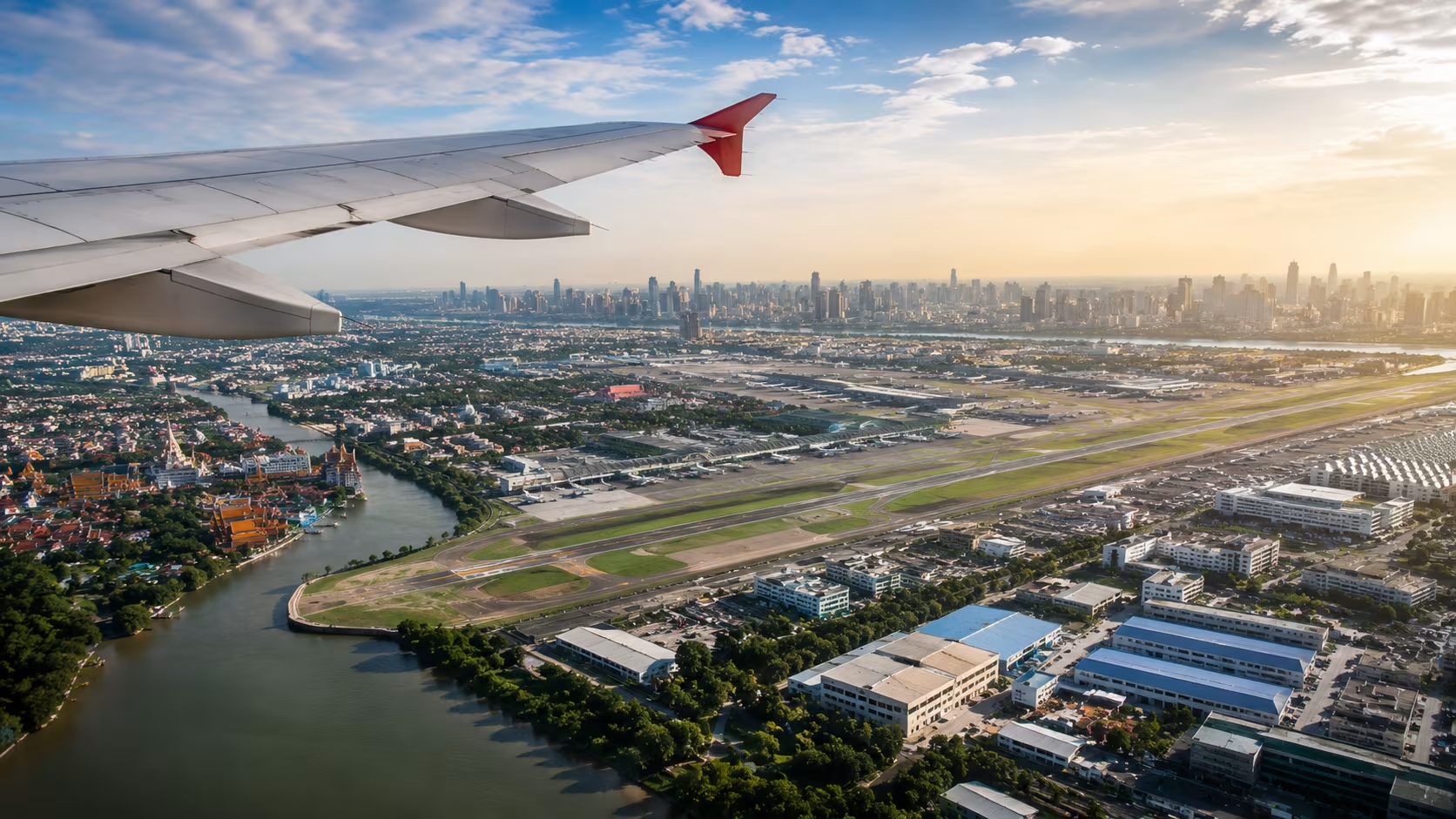
Bangkok has two airports.
Suvarnabhumi (BKK). International primary. 30 km east of central Bangkok.
- Airport Rail Link to Phaya Thai (then BTS): 45 baht, 26 min. The default.
- Taxi: 280–400 baht with meter (insist on "meter"); 50 baht highway tolls extra. Add 50 baht if you book at the airport ticket counter (worth it).
- Grab/Bolt: 350–500 baht.
- Limousine taxi: 800–1,500 baht (skip).
Don Mueang (DMK). Low-cost carriers. 24 km north.
- Bus A1 to Mo Chit BTS: 30 baht.
- Taxi: 250–350 baht plus tolls.
- SRT train: 5–10 baht to Bang Sue, then BTS.
Getting Around
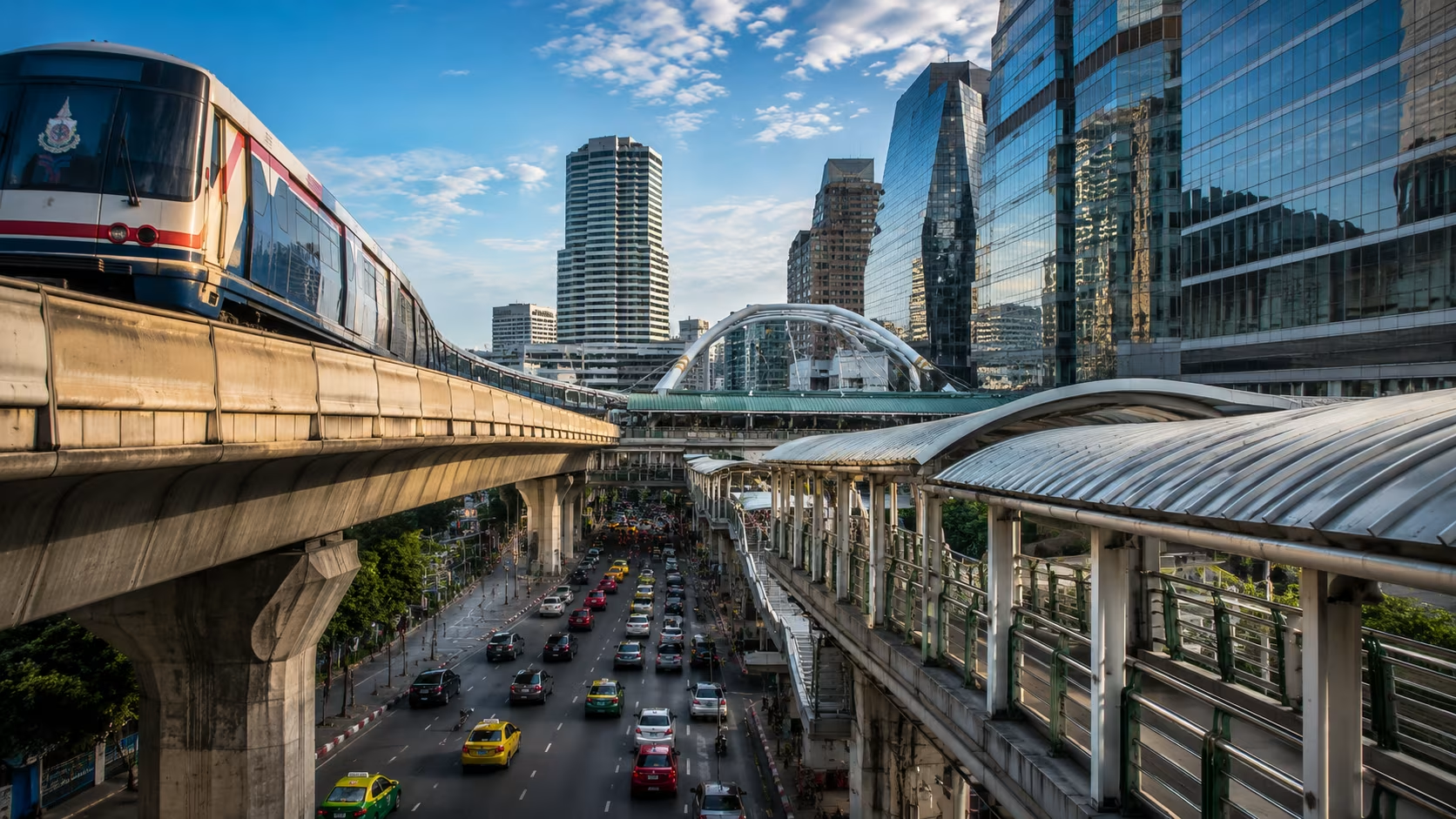
Bangkok's transit has improved enormously in the past decade. Most of what visitors come to see is now reachable by BTS (Skytrain) + MRT (subway) + occasional taxi.
BTS (Skytrain). Three lines (Sukhumvit, Silom, Gold), elevated. Single ride 17–62 baht depending on distance. Rabbit Card (100 baht refundable + balance) is the standard pass. One-Day Pass (150 baht) is worth it if you'll do 5+ trips.
MRT (subway). Two lines (Blue, Purple). Connects to BTS at multiple stations. Single ride 17–45 baht.
Taxi. Plentiful, cheap, but stuck in traffic during peak hours. Use Grab or Bolt apps for transparency on routes and pricing. "Meter taxi" is the default; refuse drivers who quote a flat fare.
Tuk-tuk. The three-wheeled motorized rickshaws. More expensive than taxis (drivers know they're a tourist novelty) but worth doing once for the experience. Negotiate hard before getting in. 80–200 baht for short trips.
Motorcycle taxi (motosai). Orange-vested drivers at most major intersections, cheap and fast through traffic. 30–80 baht for short trips. Wear the helmet they offer.
Boat (Chao Phraya River). The Chao Phraya Express boat is a working commuter line, useful for visiting riverside temples. Tourist boat: 200 baht/day pass. Local boats (orange flag): 14–32 baht per ride.
BTS + MRT + boat is the locals' default. Avoid taxis during 16:00–20:00 weekdays.
Where to Stay
Bangkok is enormous. The neighborhood you stay in is the single highest-leverage decision after booking flights.
Sukhumvit (BTS Asok / Phrom Phong)
The expat-and-business district. Skyscraper hotels, mall districts (Terminal 21, EmQuartier), nightlife on Soi 11, dozens of mid-tier restaurants. Best base for first-timers: easy BTS access to most sights, English signage everywhere, walkable in zones.
Silom / Sathorn
Financial district. Skyscraper hotels, Patpong night market (the seedier nightlife stretch), some of the city's best high-end restaurants. Quieter on weekends.
Riverside (sathorn / Bang Rak / Khlong San)
Along the Chao Phraya. The Mandarin Oriental, Peninsula, Shangri-La are here. Boat access to temples is the killer feature. Quieter at night than Sukhumvit.
Old City (rattanakosin)
Near the Grand Palace and Wat Pho. Older hotels, less BTS connectivity, shorter walk to temple sites. Best for a heritage-focused trip.
Khao San Road Area
The famous backpacker strip. Hostels, cheap food, party crowd. The version locals avoid; not where any thoughtful first-timer should base.
Chinatown (yaowarat)
Dense, atmospheric, best evening street food in the city. Some boutique hotels (often in restored shophouses). Walking distance to Old City.
Avoid as a Base
- Khao San Road area: see above.
- Far suburbs (Lat Phrao, Don Mueang area): too far from sights for a 4-day trip.
Realistic 2026 nightly prices (4-star, weekday, shoulder, USD):
| Neighborhood | Mid-range | Higher-end |
|---|---|---|
| Sukhumvit | $80–150 | $250–500 |
| Silom/Sathorn | $90–170 | $300–700 |
| Riverside | $130–220 | $400–1,200 |
| Old City | $60–110 | $200–400 |
| Chinatown | $50–90 | $150–280 |
What to Book in Advance
Grand Palace and Wat Phra Kaew
The city's top sight. Same complex contains the Royal Palace, Wat Phra Kaew (Temple of the Emerald Buddha). Walk-up tickets 500 baht. Strict dress code: shoulders covered, knees covered, no transparent clothing. Cover-up rentals available at the gate but lines are long.
Wat Pho
Reclining Buddha temple, the city's largest. 200 baht. Walk-up. Allow 90 minutes. The traditional Thai massage school is on-site (bookable for 60-min massages, 460 baht, one of the best massage values in the city).
Wat Arun
The Temple of Dawn, across the river. 200 baht. Walk-up. Reachable by 4-baht ferry from Tha Tien pier near Wat Pho.
Cooking Class
Many operators. Budget options ($30–50 USD) for half-day at well-reviewed schools: Silom Thai Cooking School, Maliwan Cooking School. Premium options ($100–180) include market shopping with a chef. Book 2–3 days ahead.
Massage
No booking needed for casual neighborhood massage. For premium spas (Health Land, Asia Herb Association, Let's Relax), book a day ahead. 1-hour traditional Thai massage: 250–450 baht standard; 800–1,400 baht premium spa.
Floating Markets (damnoen Saduak, Amphawa)
Day trip from Bangkok, 100–150 km away. Most travelers do via tour ($25–50 USD) since logistics on own are involved. Amphawa (weekend evenings only) is the more authentic, less staged option than Damnoen Saduak (which has become a tourist set piece).
Day 1 — Old City Temples
07:30. Coffee in the Old City. Tha Tien Café for views. Roots (in Sathorn but central enough). Featherstone Bistro Cafe for a serious sit-down.
08:30. Wat Phra Kaew + Grand Palace. Arrive at opening (08:30) for cooler weather and smaller crowds. Allow 2.5 hours. The Emerald Buddha (a small jade-green statue, 66 cm tall, in the main shrine) is the most sacred Buddha image in Thailand. The palace state rooms tour adds 30 minutes.
11:30. Walk south to Wat Pho. The Reclining Buddha (46 m long, gilded) is the headline. The temple complex is large; allow 90 minutes including the massage school if booked.
13:30. Lunch in the Old City. Krua Apsorn (Michelin Bib Gourmand, the city's most respected traditional Thai restaurant). Roti Mataba for southern-Thai roti and curry.
15:00. Cross-river ferry from Tha Tien pier to Wat Arun. The temple's central prang (tower) is climbable; the porcelain mosaic close-up is striking. 200 baht. Allow 60 minutes.
16:30. Boat or taxi back across to a riverside hotel for an early evening cocktail. Sirocco (sky bar at Lebua Hotel, the Hangover 2 rooftop). Vertigo at Banyan Tree. The Speakeasy at Hotel Muse.
19:30. Dinner. Bo.lan (modern traditional Thai). Sühring (German, two-Michelin-star). Issaya Siamese Club (Thai contemporary). For street food: Jeh Yo (Bib Gourmand) or Polo Fried Chicken.
Day 2 — Markets and Chinatown
08:00. Coffee in Sukhumvit or Silom.
09:00. Choose: Chatuchak Weekend Market (Saturdays + Sundays only, BTS Mo Chit station). 8,000+ stalls, 4 hours minimum if you want to walk it properly. Pick a section: clothing/textile (Sections 4–5), home goods (Sections 1–3), pet section (Section 8, visit briefly even if not planning to buy; the market is a Bangkok institution).
For Weekday Visitors
JJ Green Night Market (Friday-Saturday-Sunday evenings, smaller, vintage-focused) or skip to other activities.
13:00. Lunch at Chatuchak food court or back in Sukhumvit.
15:00. Mall break. Bangkok's malls are climate-controlled refuges. Terminal 21 (Asok) for whimsical floor-themed shopping. EmQuartier + EmSphere (Phrom Phong) for higher-end. CentralWorld (Chitlom).
18:00. Chinatown (Yaowarat). Walk Yaowarat Road as the food vendors set up (peak from 18:30 onward). The seafood stalls between Yaowarat and Charoen Krung are the institution. T&K Seafood (red-shirt branch) is the most famous; Rut & Lek (blue-shirt branch) is the rival. Both walk-ups.
20:30. Continue Chinatown walking. The narrow lane (soi) Soi Texas has fish-and-pork-blood soup specialists. Hua Seng Hong for sit-down dim sum. Roti Tony for Indian-style flatbread.
22:00. Cocktails at Tep Bar (a late-night Thai cocktail bar in Chinatown, with traditional music) or Ba Hao (Chinese-Thai cocktails in Yaowarat).
Day 3 — Modern Bangkok
09:30. Coffee in Sukhumvit.
10:30. Choose:
- Jim Thompson House (BTS National Stadium). The Thai silk magnate's traditional teak house, now a museum with art and antiquities. 200 baht. Allow 90 minutes. The garden is the underused asset.
- Bangkok Art and Culture Centre (BACC, BTS National Stadium). Free. Modern art space, contemporary Thai works, cafés. Allow 2 hours.
12:30. Lunch. Polo Fried Chicken (the city's most famous fried chicken). Jay Fai (the famous Michelin-starred street food cook; book the day before, expect to wait 1–3 hours). Pa Kong (Bib Gourmand, working-class central Thai).
14:30. Cooking class (if booked). Or alternatively: spa + massage afternoon at Asia Herb Association (Sukhumvit branches), Health Land, or Let's Relax. Premium spa: Banyan Tree Spa, Mandarin Oriental Spa.
18:00. Aperitivo. Tep Bar (revisited) or The House on Sathorn at the W Hotel.
20:30. Dinner.
22:30. Sukhumvit nightlife if you want it. Soi 11 is the bar street. Soi 4 at Silom is the gay-and-mixed nightlife strip.
Day 4 — Choose: Floating Market, Ayutthaya, or Spa Day
Path A: Floating Market Day Trip
Damnoen Saduak is the famous floating market, touristy and choreographed, but the photographs are real. 100 km southwest of Bangkok. Tour: 600–1,200 baht for a half-day with hotel pickup.
Amphawa is more authentic. Open Friday-Saturday-Sunday afternoons only. 75 km southwest. Boat trips on the local canal (50 baht per person) include firefly tours after sunset. Tour: 800–1,500 baht.
Path B: Ayutthaya Day Trip
The former capital of Siam (1351–1767), 80 km north of Bangkok. UNESCO World Heritage. Multiple temple ruins, the famous Buddha-head-in-tree-roots image. Train from Hua Lamphong (15–20 baht for slow, 65 baht for express, 90 min) or van/bus. Or full-day private guided tour: $60–90 USD per person.
Allow 6 hours on the ground including bicycle or tuk-tuk circuit between temples.
Path C: Spa and Sukhumvit
Full massage, spa, mall, café day. Suit for travelers fatigued by 3 days of intensive sightseeing. Mid-day food coma at any of the city's working-class restaurants.
What to Eat
Bangkok food is one of the best urban food scenes in the world. The classics anchor the trip; the contemporary Thai movement (the past 5–8 years) has elevated traditional dishes to global recognition.
Headline Dishes
| Dish | What it is |
|---|---|
| Pad Thai | The famous stir-fry. Decent everywhere; legendary at Thip Samai (the original, since 1966). |
| Tom Yum Goong | Hot and sour shrimp soup. Spicy, sour, herbal. |
| Tom Kha Gai | Coconut chicken soup. Mellower. |
| Som Tam | Green papaya salad. The Lao/Isan-influenced spicy variant is the working-class default. |
| Pad Krapow | Stir-fried minced pork or chicken with holy basil. Fried egg on top. The Thai equivalent of a sandwich, a quick lunch standard. |
| Khao Soi | Northern Thai curry noodle soup. Coconut-milk-rich, with crispy fried noodles on top. |
| Massaman Curry | Mellow southern curry, beef + potato + peanut. Less spicy than green or red curries. |
| Boat Noodles (Kuay Tiao Reua) | Bowls of intense beef or pork broth. Wat Som Klang in Pratu Nam is the institution. |
| Khao Man Gai | Hainanese chicken rice. Working-class lunch. |
| Mango Sticky Rice | The dessert. Best in mango season (March–May). |
Where to Eat
- Jay Fai: one-Michelin-star street food (the woman in goggles cooking crab omelets). Book day before; expect 1–3 hour wait.
- Krua Apsorn: Bib Gourmand traditional Thai. Multiple locations.
- Polo Fried Chicken: the city's most respected fried chicken.
- Thip Samai: original pad thai, 1966, near the Old City.
- Bo.lan: modern traditional Thai, multi-course tasting.
- Sühring: German, two-Michelin-star.
- Le Du: modern Thai with Western technique, one-Michelin-star.
- Sorn: southern Thai, two-Michelin-star (extremely difficult booking).
- 80/20: modern Thai, Bib Gourmand.
- Som Tam Nua: best green papaya salad in the city.
- Jeh Yo: Bib Gourmand for tom yum noodle soup.
- Hua Seng Hong: Chinatown dim sum institution.
Street Food Etiquette
- Order in pieces. "Pad krapow gai khai dao" = pork/chicken stir-fry with fried egg. Have one or two phrases ready.
- Mix sauces. Most stalls have small jars of sugar, fish sauce, chili flakes, vinegar. Add to taste.
- Sit at the plastic stools. That's the experience.
- Cash. Most street stalls are cash-only.
- Hygiene. Look for stalls with high turnover; Bangkok hygiene is generally excellent at busy stalls. Avoid stalls with food sitting unrefrigerated for hours.
- Spice level. Default is genuinely spicy. "Mai phet" ("not spicy") tones it down; "phet noi" ("a little spicy") finds a middle.
Costs and Budget
2026 daily budgets per person, excluding flights and hotel (USD):
| Style | Per day | Notes |
|---|---|---|
| Backpacker | $20–35 | Hostel, street food, BTS, walking |
| Mid-range | $50–90 | Mix of street and proper restaurants, tuk-tuks, massages |
| Comfortable | $130–200 | Better restaurants, premium spa, taxis |
| Higher-end | $300+ | Tasting menus, river cruises, luxury hotels |
Bangkok remains one of the most cost-effective major capitals in the world. A 1-hour traditional Thai massage at a quality neighborhood spa costs $7–13.
Practical Info
- Cards. Accepted at hotels, malls, and most mid-tier restaurants. Cash for street food, taxis, and small shops.
- Tipping. 5–10% at sit-down restaurants if no service charge. 20–50 baht for hotel housekeeping. Round up taxis.
- English. Universal in tourist areas; common in Sukhumvit business zones; less in residential neighborhoods. Younger Thais speak more English than older.
- Temples. Modest dress required (shoulders, knees covered). Remove shoes at indoor shrines. Don't touch monks (women specifically: Buddhist monks cannot accept anything from a woman directly).
- Royal family. Lese-majesté laws are strictly enforced. Don't make any negative comment about the royal family.
- Cannabis. Legalized for personal recreational use in 2022; recriminalized partially in 2024 with new restrictions. Many dispensaries operate but the legal status remains in flux. If interested, check current 2026 regulations.
- Pickpocketing. Less common than European tourist cities. Standard precautions in crowded markets.
- Scams. "The Grand Palace is closed today" is the classic; a tuk-tuk driver appears to take you to other temples (and gem shops with kickback). The Grand Palace is open every day except for state events. Walk past anyone telling you it's closed.
- Air quality. February–April hazy season has been bad in some recent years. Check IQAir.com on your travel dates.
Common First-Timer Mistakes
- Going to Khao San Road thinking it's the city. It's a small backpacker theme park; locals avoid it.
- Eating only at restaurant chains in malls. Bangkok's food legend is the street food, working-class restaurants, and (newer) Michelin-starred contemporary Thai.
- Skipping the temples for nightlife. Wat Phra Kaew, Wat Pho, Wat Arun are unique world-heritage spaces.
- Trying to tour the temples in late afternoon. Heat and crowds are brutal. Morning is the only good time.
- Booking flat-rate taxi/tuk-tuk. Insist on metered or use Grab/Bolt.
- Wearing the wrong clothes to temples. Shoulders and knees must be covered. Slip-on shoes save constant unlacing.
- Eating one meal a day because of jet lag. Bangkok is a graze-all-day city. 3–5 small meals fit the rhythm better than 2 large ones.
- Trying to do Bangkok + Chiang Mai + islands in 7 days. Either Bangkok or northern Thailand or southern islands deserve focused time. 7 days for one of three; 12+ for two; 18+ for all three.
Final Notes
Bangkok rewards the traveler who slows down to neighborhood pace. Four days is enough for the headline temples, one full evening of Chinatown street food, one Sukhumvit dinner-and-rooftop night, and one slow morning at a café before the heat kicks in.
The quietest piece of advice: skip the night-bazaar tourist circuits and find a working-class neighborhood at 19:00 on a Tuesday. The plastic stools, the smell of charcoal and chili and lime, the rapid-fire Thai of the cook, the noodle soup that costs 60 baht and is one of the best things you'll eat all year. That's the Bangkok that stays with you.
0 Comments
No comments yet — start the conversation.