

Cruise ships are concentrated petri dishes — 3,000-6,000 passengers + crew sharing buffets, AC systems, surfaces, and bathrooms for 7-21 days. Norovirus outbreaks make headlines occasionally; routine illness (gastrointestinal, respiratory, sun-related) is more common but underreported. The CDC tracks 100+ cruise-ship illness outbreaks per year, most affecting 100-500 passengers.
The travelers who stay healthy on cruises do specific things deliberately. The travelers who don't end up spending 2-5 days of a 7-day cruise in a cabin recovering. This is a 2026 field guide for cruise passengers wanting to stay functional + enjoy the trip.
What Makes Cruises a Health Risk
Understand the mechanics:
Confined Population
3,000+ passengers from dozens of countries sharing physical spaces. One sick passenger spreads to many quickly.
Buffet Service
Multiple-touch food service. Hand-to-food contamination. Some norovirus outbreaks trace to buffet items handled by infected passengers.
Recirculated Air
Air-conditioning systems on ships circulate same air through cabins. Respiratory illnesses spread room-to-room.
Shared Surfaces
Elevators + handrails + door handles + dining tables + casino chips + spa equipment touched by thousands daily.
Sun + Heat
Deck environment + tropical destinations + sunscreen-skipping = real sun illness risk.
Motion
Ship movement causes seasickness, especially in rough seas.
Buffet + Open Bar Culture
Over-eating + over-drinking + dehydration produce more illness.
Pre-Cruise Preparation
Vaccinations
- Up-to-date routine vaccinations (MMR, tetanus, COVID, flu).
- Hepatitis A for cruises with port calls in higher-risk regions.
- Yellow fever for South American + African destinations.
- Typhoid + cholera for some itineraries.
Consult travel medicine clinic 6-8 weeks before sailing.
Travel Insurance
Mandatory for cruises. Cover:
- Medical care abroad.
- Medical evacuation ($500K+).
- Trip interruption (if you have to disembark early).
- Cancellation (if you get sick before departure).
Pre-existing condition waivers required for many; ensure your policy applies.
Medications
- All prescription medications for full trip + buffer.
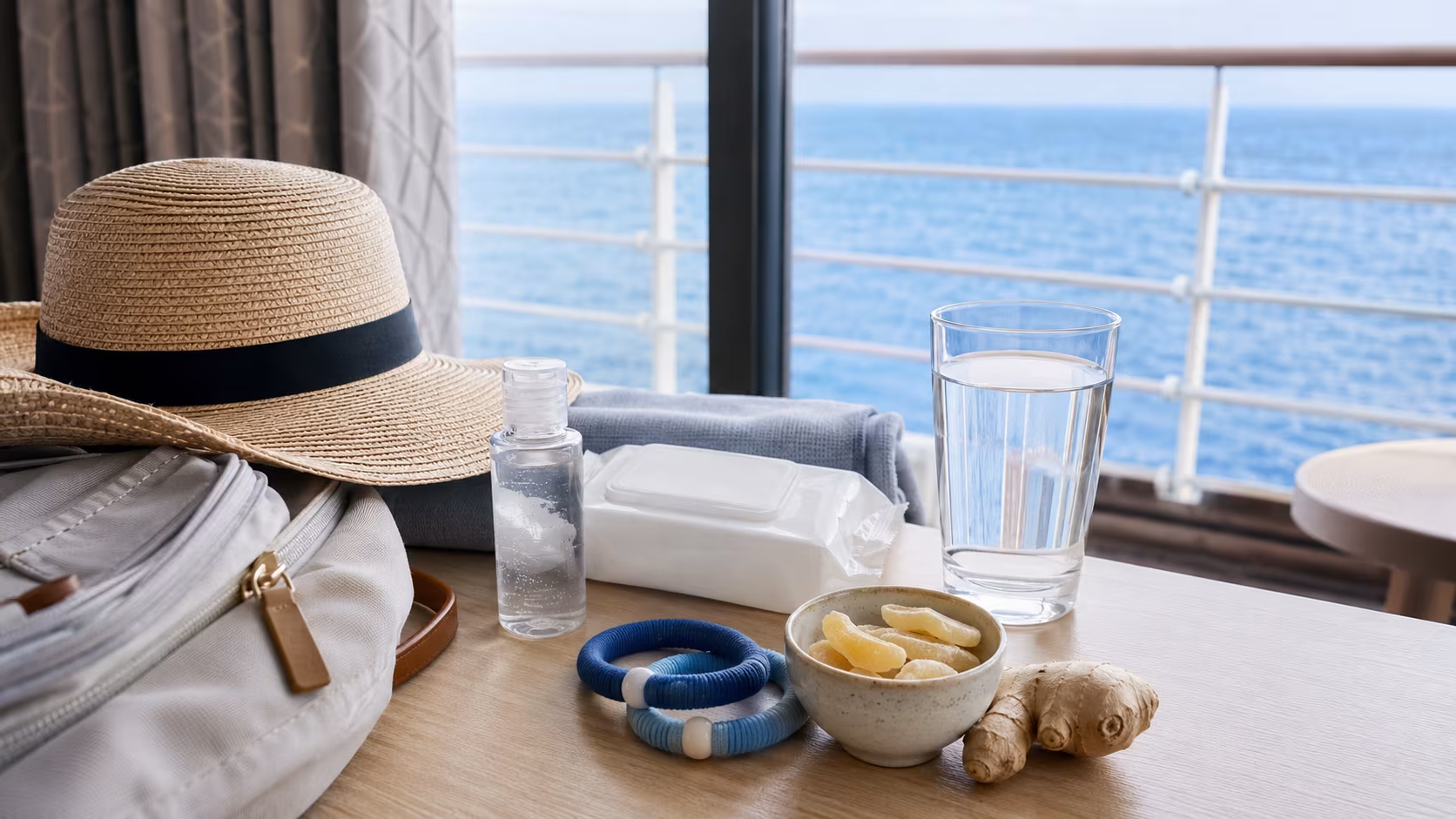
- Anti-motion-sickness (Bonine, Dramamine, scopolamine patches if susceptible).
- Anti-diarrheal (Imodium).
- Pain relievers (ibuprofen + acetaminophen).
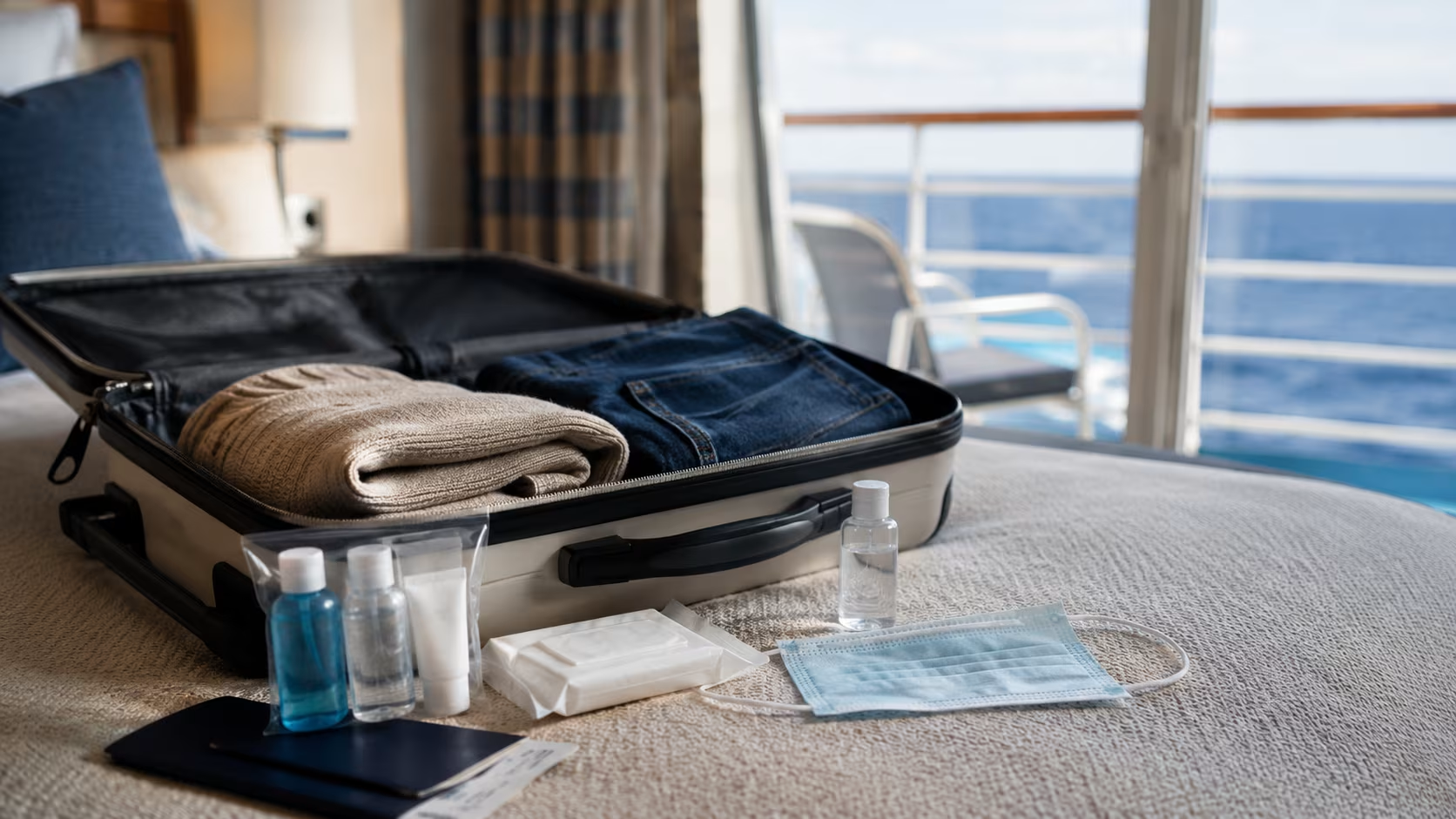
- Hand sanitizer (60%+ alcohol).
- First-aid basics.
Health Clearance
- Ship has medical center but limited facilities.
- Pre-existing conditions require clearance for some cruise lines.
- Pregnancy past 24 weeks typically prohibited.
- Recent surgery consultations required.
At Embarkation
Health Screening
- Most cruises require health questionnaire at boarding.
- Don't lie about illness — boarding while sick is a real concern; some cruise lines deny boarding for symptomatic passengers (which is good for everyone else).
Vaccination Verification
- Some cruises require COVID vaccination + recent test.
- Check current requirements for your specific cruise line + destination.
Daily Health Habits Onboard
Hand Hygiene
The single most-effective prevention.
- Wash hands frequently with soap + water.
- Hand sanitizer before all meals.
- Don't touch face with unwashed hands.
- Wash hands after using bathrooms + before eating.
- Wash hands when entering cabin from public areas.
Buffet Safety
- Use serving utensils consistently.
- Avoid items that have been sitting at temperature for extended periods.
- Choose high-volume stations with high turnover.
- Cooked items > raw items at buffets.
- Avoid the salad bar if water source is uncertain.
- Skip the buffet during peak hours to avoid the highest-touch periods.
Hydration
- 3+ liters of water per day.
- More in heat or after alcohol.
- Bottled water in port cities with poor water systems.
- Avoid ice in tap-water-uncertain ports.
Sleep
- Sleep in cool, dark cabin.
- Stable bedtime despite ship parties.
- Avoid eating + drinking heavily within 2 hours of bed.
- Cruise activity calendars are designed to maximize spending; adjust to your real energy.
Movement
- Walk daily. The ship is large; daily walking on deck (or ship gym) maintains circulation + energy.
- Avoid all-day-buffet sedentary mode that causes 2-3 lb weight gain per cruise day.
Norovirus Prevention
The headline cruise-ship illness. Acute gastroenteritis spreading rapidly through populations.
How It Spreads
- Contaminated food/water (sometimes from infected food handlers).
- Surface contact (handrails, elevator buttons, etc.).
- Person-to-person (close-contact areas).
- Aerosol (less common, possible with vomiting).
Prevention Tactics
- Aggressive hand washing.
- Avoid handling buffet utensils that other people just used.
- Use cabin bathroom when feeling at all gastrointestinal.
- If you feel ill, stay in cabin + report to medical center.
- Avoid casino + crowded spaces when an outbreak is active.
What to Do If You Get It
- Stay in cabin. Mandatory isolation typically.
- Hydrate aggressively. Pedialyte or oral rehydration salts.
- Pain relievers for cramps.
- Anti-diarrheal medication in some cases.
- Soft food when hungry returns (BRAT — banana, rice, applesauce, toast).
- Notify ship medical center so they can track + prevent further spread.
- Recovery typically 1-3 days.
Motion Sickness
The second-most-common cruise illness.
Who's Susceptible
- Anyone can get it; some more than others.
- Inner-ear sensitivity is the underlying mechanism.
- Certain ship areas worsen (high decks, far ends of ship feel motion most).
- Rough seas + storms are worst.
Prevention
- Take medication preemptively (Bonine 30 min before departure; Dramamine 30 min; scopolamine patches 4 hours before).
- Sea-Bands (acupressure wristbands) work for some.
- Ginger (real ginger or candied) helps some.
- Cabin location matters. Mid-ship, low-deck cabins feel less motion.
- Stay hydrated.
- Limit alcohol.
When You Get Seasick
- Lie down in cabin.
- Look at horizon if outdoor (ship windows or deck).
- Eat dry crackers + ginger.
- Avoid heavy meals.
- Take medication (Bonine, Dramamine).
- In severe cases: seek medical center for IV fluids + scopolamine patches.
Sun + Heat Illness
UV at Sea
UV reflects off water; cruise destinations often tropical. Sunburn risk + heat exhaustion + heat stroke real.
Prevention
- SPF 50+ sunscreen applied 30 min before sun + reapplied every 90 min.
- Reef-safe sunscreen if visiting reef destinations.
- Wide-brim hat + UPF sun shirts.
- Sun avoidance 11:00-15:00.
- Hydrate aggressively.
- Limit alcohol in heat.
- Watch for heat exhaustion signs (dizziness, weakness, profuse sweating).
Respiratory Illness
Recirculated Air
Ship AC systems share air across cabin areas. Respiratory infections spread.
Prevention
- Wear masks in highly crowded areas if respiratory illness is circulating.
- Ventilation matters. Open balcony if you have one.
- Avoid close contact with visibly sick passengers.
- Hand washing prevents respiratory + GI illness alike.
Eating + Drinking Wisely
Buffet Strategy
- Sit at table on edge of buffet area (less foot traffic).
- Wash hands before eating + after returning to seat.
- Pace yourself. Many passengers eat 3-4 plates per buffet meal; this isn't health-supporting.
- Cooked items first. Reduces contamination risk.
- Vegetables + fruit for fiber + vitamin balance.
- Avoid leaving food on plates between visits.
Restaurant Choices
Cruise specialty restaurants (priced higher than included buffet) often have:
- Better food quality.
- Smaller portions.
- Less rushed service.
- Lower contamination risk.
The 2-3 specialty meals per cruise produce better experience + better health than 21 buffet meals.
Alcohol Management
- Limit to 2-3 drinks per day for most passengers.
- Drink water between alcoholic drinks.
- Skip excessive happy hour.
- Don't pressure drink in heat.
- Cruise drink packages can produce overdrinking. Don't feel obligated to maximize the package.
Specific Dangerous Mistakes
Skipping Hand Sanitizer
The single most-effective prevention. Use it every time you enter a dining area; before all meals; after using public bathrooms.
Ignoring Crew Health Screening
Crew members are often the first vector for outbreaks. Pay attention to ship outbreak announcements.
Continuing to Activities When Symptomatic
If you start feeling unwell, stay in cabin + report to medical center. Other passengers will appreciate it.
Visiting Pool When Sick
Norovirus + other GI illnesses spread via pools.
Drinking Beyond Capacity
2-3 drinks for most passengers; 4+ becomes problematic in cruise environment.
Skipping Sun Protection
Day 1 sunburn ruins multiple subsequent days.
Eating Buffet at Peak Hours
The lunch + dinner peaks (12:00-13:30 + 18:00-20:00) have highest contamination risk.
Cabin Health Maintenance
Daily
- Open balcony for fresh air for 30+ min daily.
- Use cabin bathroom rather than public when possible.
- Wash hands when entering cabin from public.
- Daily 30-min cabin time for rest.
Cabin Items to Bring
- Hand sanitizer.
- Tylenol/Ibuprofen.
- Pepto-Bismol for stomach upset.
- Anti-diarrheal.
- Sun-care items.
- Personal water bottle.
- Comfortable clothes for cabin time.
Specific Destinations Considerations
Caribbean Cruises
- High UV exposure at all stops.
- Tropical heat + humidity.
- Bottled water at ports.
- Reef-safe sunscreen.
- Sun shirts.
Mediterranean Cruises
- Heat in summer; mild rest of year.
- More walkable port cities = more daily exercise.
- Different food cultures at each port.
- Hydration in heat.
Alaska / Northern Cruises
- Less sun risk.
- More cool-weather illness (respiratory).
- Layered clothing.
- Watch for cold + flu spread.
Antarctic / Arctic Cruises
- Specialized expedition cruises with medical staff.
- Cold-weather illness prevention.
- Extreme weather protection.
Asian / Long-Haul Cruises
- Variable port conditions.
- Vaccination + health prep more critical.
- Bottled water at ports.
When to Seek Medical Help
Immediately
- High fever (>38.5°C / 101.3°F).
- Persistent vomiting (more than 4 hours).
- Severe dehydration (dizziness, dry mouth, dark urine).
- Severe pain.
- Cardiac symptoms.
- Severe allergic reaction.
- Injuries from falls in shower or rough seas.
Same-Day
- Persistent fever.
- Severe diarrhea + cramps.
- Severe sunburn.
- Worsening symptoms.
Schedule for Next Day
- Mild persistent illness.
- Routine prescription refills.
- Minor injuries.
Ship Medical Centers
What's Available
- Basic emergency care.
- Trauma stabilization.
- Minor surgery for emergencies.
- IV fluids.
- Limited specialist consultation.
- Medications for common conditions.
What's Limited
- Major surgery.
- Specialist consultation.
- Long-term care.
- Specialized testing.
For serious illness or injury, ship may divert to nearest port for evacuation.
Costs
- Emergency consultation typically $200-500.
- More serious treatment can run thousands.
- Travel insurance is critical.
Family Considerations
Children + Cruises
- Cruise lines have children's clubs with medical staffing.
- Children get sick more often in shared environments.
- Sun protection critical for children.
- Pre-trip pediatric consultation for major cruise.
Senior + Cruises
- Cruise medical centers suited for senior travelers.
- Pre-existing condition disclosure required for many cruise lines.
- Medical evacuation insurance non-negotiable for seniors.
Specific Cruise Line Approaches
Different cruise lines handle health differently:
Premium Lines (Crystal, Cunard, Viking, Oceania)
- Smaller passenger counts (typically 800-1500).
- Better passenger-to-crew ratios.
- More medical staff.
- Better food quality (less buffet emphasis).
Mass-Market Lines (Royal Caribbean, Carnival, Norwegian, MSC)
- Larger ships (3000-6000 passengers).
- More buffet emphasis.
- Higher illness-spread risk statistically.
- Standard medical care.
Adventure / Expedition Lines
- Smaller ships.
- Specialized medical staff.
- Higher physical activity.
- Different illness profile (injury > virus).
What Cruise Lines Do for Outbreaks
When norovirus or similar hits:
- Increase sanitation dramatically.
- Restrict buffet self-service.
- Mandate hand sanitizer at all dining areas.
- Quarantine affected passengers.
- Notify CDC if US-based.
- Update passengers on status.
Pre-Cruise Health Checklist
- Travel insurance with cruise-appropriate coverage.
- Vaccinations up to date.
- Trip-specific vaccinations if applicable.
- Prescription medications for full trip + 30-day buffer.
- Anti-motion-sickness medications.
- First-aid + over-the-counter medications.
- Sunscreen (reef-safe + broad spectrum).
- Hand sanitizer.
- Health questionnaire completed truthfully.
- Pre-existing condition consultation if applicable.
- Recent medical clearance for major conditions.
Common Cruise Illness Mistakes
- Drinking heavily on Day 1. Sets up dehydration + illness for entire trip.
- Skipping sunscreen "because it's just the deck."
- Eating from buffet during peak rush.
- Touching face after handling buffet utensils.
- Sharing food + drinks.
- Continuing activities when symptomatic.
- Skipping hand sanitizer.
- Drinking unfiltered water at ports.
- Ignoring outbreak announcements.
- Not reporting to medical center when needed.
- Forgetting medications.
- Underestimating motion sickness.
- Drinking ship pools + hot tubs daily (warm water + chlorine + concentrated bodies = real risk).
Final Notes
Cruise illness is largely preventable with consistent habits. The traveler who washes hands frequently, takes preventive motion-sickness medication, applies sunscreen, hydrates aggressively, eats moderately, and watches for outbreak warnings has a dramatically better cruise experience than the one who doesn't.
The single best advice aggressive hand hygiene + hand sanitizer use eliminates 80% of preventable illness. Make this a hourly habit on cruise.
The second-best pace your eating + drinking. Buffets + open bars are designed to maximize spending; they're not designed for your health. Eating 60% of what you would normally + drinking 50-70% of what you might extract maximum value from typically produces better experience + health than the maximum-extraction approach.
The quietest piece of advice if you start feeling unwell, stay in your cabin. Reporting to the medical center prevents spreading to other passengers + gets you treatment faster. The 24-48 hours of cabin recovery you take is dramatically less than the 4-7 days you might otherwise force on a sick passenger sharing buffet utensils with you.



0 Comments
No comments yet — start the conversation.