

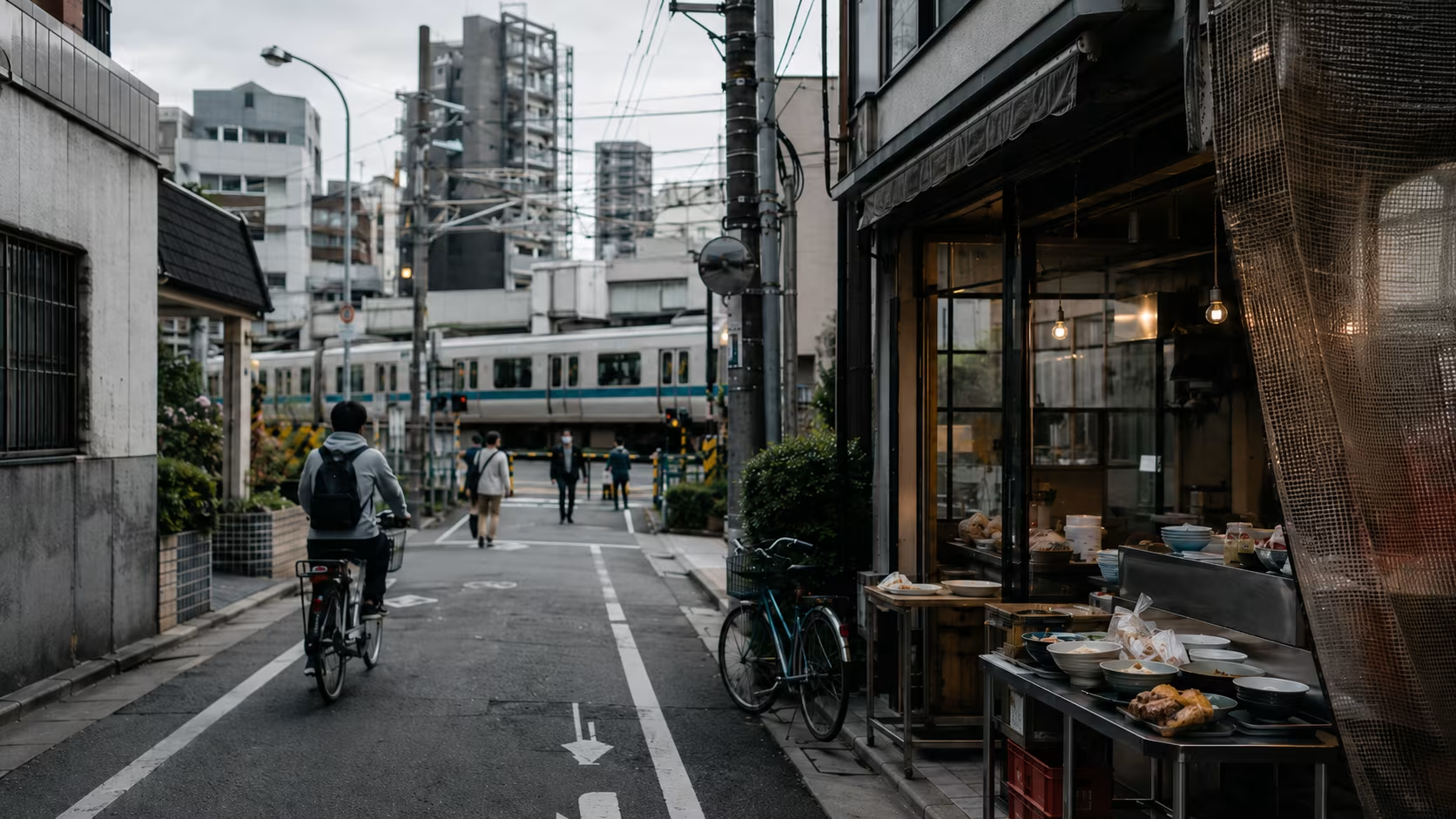
Tokyo gets sold as either impossibly expensive or surprisingly cheap, depending on which guidebook you opened last. The truth in 2026 is somewhere in between, and which side you land on depends almost entirely on three decisions: which neighborhood you sleep in, whether you eat where the salarymen eat, and whether you over-plan the days.
This guide is built for someone with five to seven days, a normal mid-range budget, and no Japanese language background. No "hidden alleys" copied from someone else's blog, no claims that a 7-Eleven sandwich is a culinary revelation. Just the numbers, the neighborhoods, the trains, and the things that actually justify the long flight.
Quick Facts
| Item | Detail |
|---|---|
| Country | Japan |
| Currency | Japanese Yen (¥) |
| Language | Japanese; English signage on transit and major sights |
| Time zone | JST (UTC+9, no DST) |
| Plug type | Type A, 100V (US plugs fit, voltage drops) |
| Tipping | Not expected, often refused |
| Best time to visit | Late March–April (sakura), October–November (autumn) |
| Average trip length | 5–7 days |
| Visa | 90 days visa-free for 68 countries including US, UK, EU, AU |
When to Go
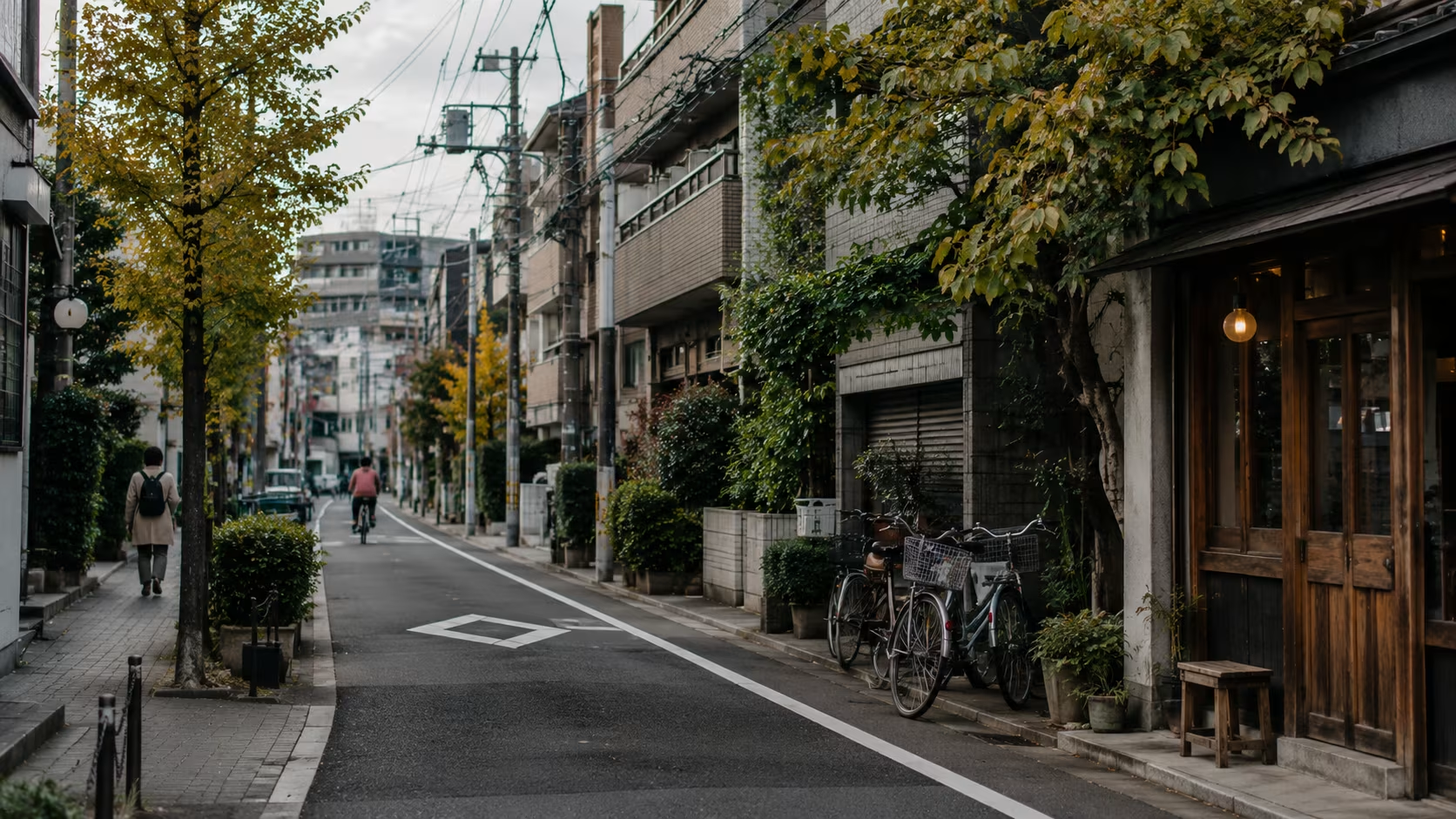
Tokyo's seasons are pronounced, and the calendar matters more than in most cities.
Late March to mid-April (sakura season). Cherry blossoms peak around March 25–April 5 in Tokyo, give or take five days depending on the year's winter. Hotels triple in price and book out two months ahead. Worth it once in a lifetime, but anyone trying to do Tokyo + Kyoto in a week during peak bloom is signing up for a stressful trip.
Late April to early June. The crowds drop, the temperature settles around 18–24°C, and azaleas, wisteria, and roses keep the gardens flowering. One of the best windows in the year.
Mid-June to early July. Rainy season (tsuyu). Daily showers, humid, but rarely a wash-out; most days have several dry hours. Hotels are cheaper, museums are quieter, hydrangeas bloom.
July to August. Hot and brutally humid (32°C+ with 80% humidity is normal). Festivals are at their best, fireworks every weekend, but walking the city is genuinely uncomfortable. Avoid unless you specifically want festival season.
September. Typhoon risk through mid-month. Late September is shoulder territory.
October to mid-November. The other premium window. Autumn colors peak in Tokyo proper around late November, in mountain areas like Nikko and Hakone earlier (mid-October).
December to February. Cold but dry. Temperatures hover around 5–12°C. Crowds thin, illuminations light up Roppongi, Marunouchi, and Yebisu Garden Place. Underrated season for first-timers who don't mind layers.
Avoid
Golden Week (April 29–May 5) and Obon (mid-August). Domestic travel surges, accommodation doubles, shinkansen tickets sell out.
Getting There
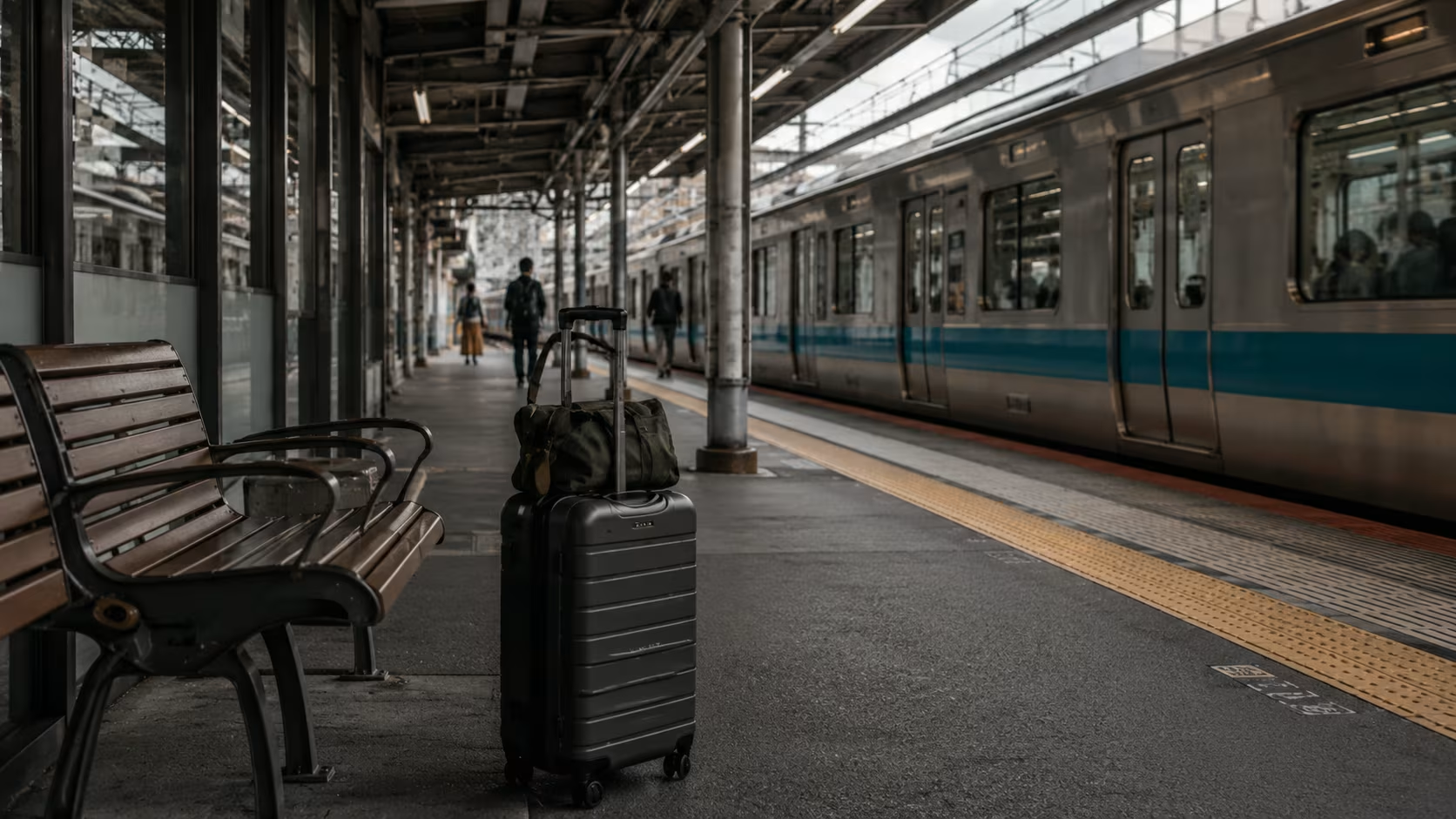
Tokyo has two international airports. Which one you fly into changes your day.
Narita (NRT). 60 km east of central Tokyo. Most long-haul carriers. Three options to the city:
- Narita Express (N'EX): ¥3,070 to Tokyo Station, 60 minutes. Reserved seats. The flagship option.
- Keisei Skyliner: ¥2,580 to Ueno, 41 minutes. Faster but Ueno-side only.
- Limousine Bus:¥3,200 to most major hotels. Slower (90+ minutes) but doors-to-door.
Haneda (HND). 15 km south of central Tokyo. More domestic and regional Asia, plus newer long-haul routes. Closer, faster, but slightly fewer options:
- Tokyo Monorail: ¥520 to Hamamatsucho, 18 minutes. Cheapest by a mile.
- Keikyu Line: ¥330 to Shinagawa, 12 minutes. Even cheaper, well-connected.
- Limousine Bus:¥1,230 to most hotels.
If you can choose, Haneda saves you 90 minutes both ways. Worth $40–80 more on the ticket.
Getting Around
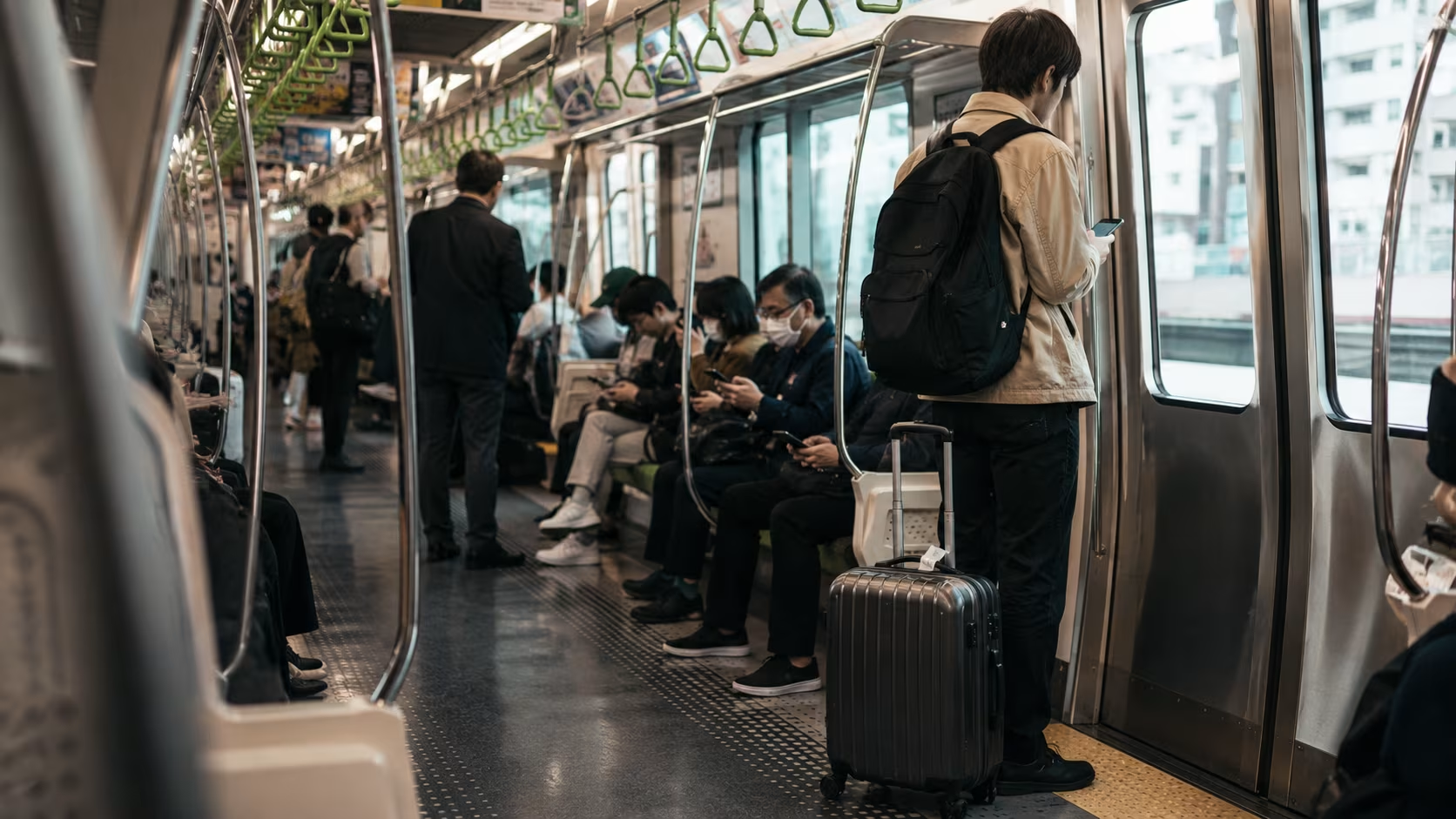
Tokyo's transit is the best in the world, and also the most overwhelming on day one. The mental shift: stop trying to understand the system, and just use the IC card.
Buy a Suica or Pasmo IC card at any major station kiosk. ¥500 deposit (refundable), load ¥3,000–5,000 to start. Tap in, tap out, the card calculates the fare. Works on:
- All Tokyo Metro and Toei subway lines
- All JR trains in greater Tokyo
- All buses
- Most convenience stores
- Many vending machines
This one card replaces every paper ticket decision. Skip the 24/48/72-hour subway passes unless you're doing 6+ trips per day on subway-only lines, which most first-timers don't.
Apple Pay / Google Pay Suica. Since 2023, Japanese IC cards work natively in Apple Wallet and Google Pay. If you have an iPhone or modern Android, add Suica before you fly and skip the kiosk entirely. Top up from a credit card whenever it runs low.
Google Maps is reliable for transit directions. It tells you which platform, which exit, and how much. Use it instead of trying to read system maps.
JR Pass. Famously useful for Tokyo + Kyoto + Osaka, but it was repriced in October 2023 and again in 2025. Current 7-day national JR Pass: ¥50,000. Round trip Tokyo–Kyoto on the shinkansen alone is ¥27,000. The pass now only saves money if you're also doing a third major leg (Hiroshima, for example). For Tokyo-only trips, skip the JR Pass entirely.
Where to Stay
This is the highest-leverage decision of the trip. The metro makes everywhere reachable, but the neighborhood you sleep in shapes your evenings, your morning coffee, your accidental wandering.
Shinjuku
Massive station, every line goes here, neon-bright at night. Most first-time bookings happen in Shinjuku because it's familiar from movies. Reasonable choice with one caveat: the area east of the station (Kabukicho, the famous neon stretch) is loud and tourist-heavy. Stay west, in Nishi-Shinjuku, for skyscraper-quiet calm with the same connections.
Shibuya
Famous crossing, busy 24/7, lots of restaurants and shops. Best if you're under 30 and want to be in the middle of it. Older travelers often find it exhausting after day three.
Ginza & Marunouchi
The luxury core. Department stores, high-end restaurants, Tokyo Station next door. Quieter at night than Shinjuku/Shibuya. Better for design-shop and museum-heavy trips. More expensive.
Asakusa
The "old Tokyo" district. Sensoji Temple, traditional storefronts, lower buildings. Great morning vibe, calmer at night. Subway connections are decent but not as fast as central neighborhoods.
Nihonbashi
Underrated for first-timers. Central, quieter than Ginza, walking distance to Tokyo Station. A working neighborhood that empties at night, which means real local restaurants and good prices.
Ueno
Keisei Skyliner from Narita lands here. Big park, museums, slightly older feel, lower hotel prices. Strong choice for mid-range budgets.
Realistic 2026 nightly prices (4-star, weekday, shoulder season):
| Neighborhood | Mid-range (¥) | Higher-end (¥) |
|---|---|---|
| Shinjuku | 16,000–24,000 | 35,000–60,000 |
| Shibuya | 18,000–28,000 | 40,000–70,000 |
| Ginza/Marunouchi | 25,000–40,000 | 60,000–150,000 |
| Asakusa | 12,000–20,000 | 30,000–50,000 |
| Nihonbashi | 15,000–22,000 | 32,000–55,000 |
| Ueno | 11,000–18,000 | 25,000–40,000 |
At ¥150 = $1, mid-range comes out roughly $80–180 per night. Capsule hotels and business hotels (Tokyu Stay, Sotetsu Fresa, APA, Toyoko Inn) run ¥9,000–14,000 per night for clean, small, perfectly functional rooms.
What to Eat
Tokyo has more Michelin stars than any city in the world (212 starred restaurants in the 2026 guide), but the city's real food story is the depth of the unstarred middle. The bowl of noodles a salaryman eats on his lunch break is, by global standards, exceptional.
The Anchor Dishes
Ramen. Several styles: tonkotsu (rich pork broth), shoyu (soy-based), miso (Sapporo-style), shio (clear salt). Strong shops queue at lunch. Ichiran is the famous tourist version (it's fine); for better, look at Tsuta, Afuri, Mensho, or any neighborhood shop with a vending machine ticket system at the door.
Sushi. A budget option exists: kaiten (conveyor belt) chains like Sushiro and Kura run pieces at ¥150–300. The mid-tier sit-down sushiya (¥3,000–6,000 omakase lunches) is the sweet spot for first-timers who want to taste real sushi without the ¥30,000 dinner commitment.
Tempura. Specialist shops fry to order. Tendon (tempura over rice) is the casual lunch version, ¥1,200–1,800. Ten-Asakusa, Kaneko Hannosuke, and Tsunahachi all do good tendon.
Yakitori. Grilled chicken, every part of the bird, beer alongside. Late-evening territory. The Yurakucho viaducts area, Ebisu Yokocho, and Shinjuku's Omoide Yokocho ("Piss Alley") are atmospheric clusters. Skip the explicit tourist places with English menus on the door; sit down anywhere with smoke coming out and locals lined up.
Tonkatsu. Breaded pork cutlet. Maisen and Butagumi are the destination spots. ¥2,000–3,500 for a proper set with rice, miso soup, shredded cabbage, pickles.
Soba and udon. Especially good in cold weather. Stand-up shops at every station do bowls for ¥400–600 in 90 seconds. Higher-end soba shops (Tamawarai, Hosokawa) approach Michelin territory.
Eating on a Budget
A real-world meal budget for a couple in Tokyo, 2026:
| Meal | Type | Cost (per person) |
|---|---|---|
| Convenience store breakfast | Onigiri + coffee | ¥400–600 |
| Department store basement lunch | Bento box | ¥800–1,400 |
| Lunch set at a sit-down restaurant | Teishoku | ¥1,200–2,000 |
| Casual ramen dinner | Bowl + drink | ¥1,500–2,500 |
| Mid-range dinner | Sushiya, tonkatsu, izakaya | ¥3,500–7,000 |
| Higher-end dinner | Specialty + drinks | ¥10,000+ |
Department store basements (depachika) are an underrated lunch hack. Mitsukoshi, Isetan, Takashimaya: every basement floor is a high-quality food hall, prepared bento boxes mark down 30–50% after 18:00.
Convenience Stores
7-Eleven, FamilyMart, Lawson. Better than they have any right to be. Fresh sandwiches, onigiri, fried chicken, bottled coffee, dessert. A meal under ¥800. Use them for travel days, not all days.
Areas to Explore
Asakusa & Ueno
Half a day. Sensoji Temple opens at 6:00, the Nakamise-dori shopping street fills with crowds by 10:00. Walk the temple before 8:00 for actual quiet. Continue south to Ueno Park, the Tokyo National Museum (¥1,000, the country's best collection), and the Ameya-Yokocho market street.
Shibuya & Harajuku
A day. Start at Meiji Shrine (calmer in the morning), walk through Yoyogi Park, exit into Harajuku's Takeshita Street (manage expectations: it's young, loud, sugary), continue through Omotesando's design-shop boulevard, end at Shibuya Crossing for the late-afternoon flow. Shibuya Sky observation deck is genuinely good if the day is clear (¥2,500, book ahead).
Ginza & Marunouchi
Half a day. Tokyo's polished retail and gallery side. The Imperial Palace gardens are free and underused. Continue through Ginza's wide streets; Sundays they close to traffic. Stop at Itoya (a 12-floor stationery flagship) and Ginza Tsutaya (an art-focused bookstore worth a coffee).
Akihabara
A half day for anime, manga, electronics, and arcade culture. Real specialist shops mixed in with chain tourist draws. Skip the maid cafés if your tolerance for kitsch is low.
Roppongi & Toranomon Hills
Evening territory. Mori Art Museum at the top of Roppongi Hills is one of the city's strongest contemporary art spaces (open until 22:00 most nights). Toranomon Hills opened newer towers in 2023–2024 with strong restaurants and sky views.
Yanaka, Nezu, Sendagi
The "old Tokyo" cluster northeast of Ueno. Low buildings, walkable streets, traditional cafés, a working old neighborhood with a fraction of the tourist load. Half a day, easily blended with a morning at Ueno.
Day Trips
Hakone
Hot springs, lakeside views, the Hakone Open Air Museum. Round trip from Shinjuku in 2 hours by Romance Car limited express. Worth a one-night stay at a ryokan if the budget allows; doable as a day trip if not.
Kamakura
Beach town with the Great Buddha (Daibutsu) and a clutch of temples. 60 minutes by JR from Tokyo. Combine with Enoshima for a slow seaside day.
Nikko
World heritage shrines and waterfalls in the mountains. Two hours by train. Long day, autumn (mid-October to early November) is when this becomes spectacular. Earlier sunsets in winter mean missing the light.
Yokohama
30 minutes south. Chinatown, the redbrick warehouse district, the world's largest cup-noodle museum (yes, actually). Better as an evening trip than a day.
Costs and Budget
Realistic 2026 daily budgets, per person, excluding flights and hotel:
| Style | Per day (¥) | USD approx |
|---|---|---|
| Backpacker / capsule | 6,000–9,000 | $40–60 |
| Mid-range | 12,000–18,000 | $80–120 |
| Comfortable | 22,000–32,000 | $145–215 |
| Higher-end | 45,000+ | $300+ |
A few specific anchors: a 90-minute ramen dinner with beer is around ¥2,500, a department-store bento lunch is ¥1,200, a Tokyo Metro 24-hour pass is ¥800 (only worth it on heavy-transit days), a museum entry runs ¥1,000–2,500.
Practical Info
Cash. Japan was famously cash-only for decades. Tap-to-pay (mostly Suica/Pasmo) is now everywhere a credit card was, and many small places accept no card at all. Carry ¥10,000–15,000 in cash for the day. ATMs at 7-Eleven and post offices accept foreign cards reliably.
English. Less than reputation suggests. Restaurant staff and small shops often have minimal English. Google Translate's camera mode handles menus. The transit system has English signage everywhere. Memorize "sumimasen" (excuse me / thank you for the trouble); it carries 80% of the politeness load.
Wi-Fi and SIM. Pocket Wi-Fi rentals at the airport are obsolete. Buy an eSIM before flying. Airalo, Saily, Ubigi all sell Japan plans for ¥2,000–4,000 covering a week with 10–20 GB.
Manners that matter. Don't eat or drink while walking (snack outside the convenience store you bought it at). Don't talk loudly on the train. Tipping is awkward and refused; leave the cash.
IC card refund. Suica and Pasmo deposits can be refunded at JR or subway counters at the end of the trip, but the line is rarely worth ¥500. Just keep the card for next time.
A Practical 5-Day Itinerary
Day 1 Land, hotel check-in, walk Shibuya/Harajuku to fight jet lag, early dinner at a ramen shop, sleep at 22:00.
Day 2 Sensoji at 7:30, breakfast at the temple-side market, Ueno museum, afternoon walk through Yanaka, dinner in Kanda or Akihabara.
Day 3 Imperial Palace east gardens at opening, Marunouchi/Ginza walking, lunch at a depachika, afternoon at the Mori Art Museum, evening yakitori in Yurakucho.
Day 4 Day trip: Hakone or Kamakura. Back by dinner. Mid-range sushiya in the evening.
Day 5 Last day for the things you scoped on previous walks. Late lunch tonkatsu, Don Quijote shopping run, leave for airport with Suica still loaded.
Common First-Timer Mistakes
- Trying to do Tokyo + Kyoto in 5 days. It's possible but exhausting. Pick one and go deep.
- Buying the JR Pass without doing the math. For Tokyo-only, it's a money loser since the 2023 price increase.
- Booking on the wrong end of Shinjuku. East side is loud all night. West is calm.
- Eating breakfast at the hotel. Hotel breakfasts in Japan are mediocre and overpriced. Walk to a coffee shop or the corner FamilyMart.
- Going to Mt. Fuji as a day trip. Five hours of transit each way for a maybe-cloudy view. Hakone or a Fuji-area overnight gives you actual time at the mountain.
- Over-planning the days. Walking Tokyo without a target is one of the city's pleasures. Leave a half-day open.
Final Notes
Tokyo rewards rhythm. The first day overwhelms (too many people, too many signs, too much choice), and by day three the system stops feeling foreign. The city is set up to be navigated; you just need a few days for that mental switch to happen.
Five days is enough for a real first trip. Seven gives you a day trip plus an evening of nothing, which is the kind of evening you'll remember. Anything longer and you should be thinking about Kyoto or a smaller city as a second leg.
The quiet honest pitch: the things people remember about Tokyo aren't the famous corners. It's the late-night walk back from the second restaurant, the warmth of a barely-lit ramen shop, the moment in a department store basement where someone in a uniform hands you a perfect peach and bows. Pace the trip so those moments have room.
0 Comments
No comments yet — start the conversation.