

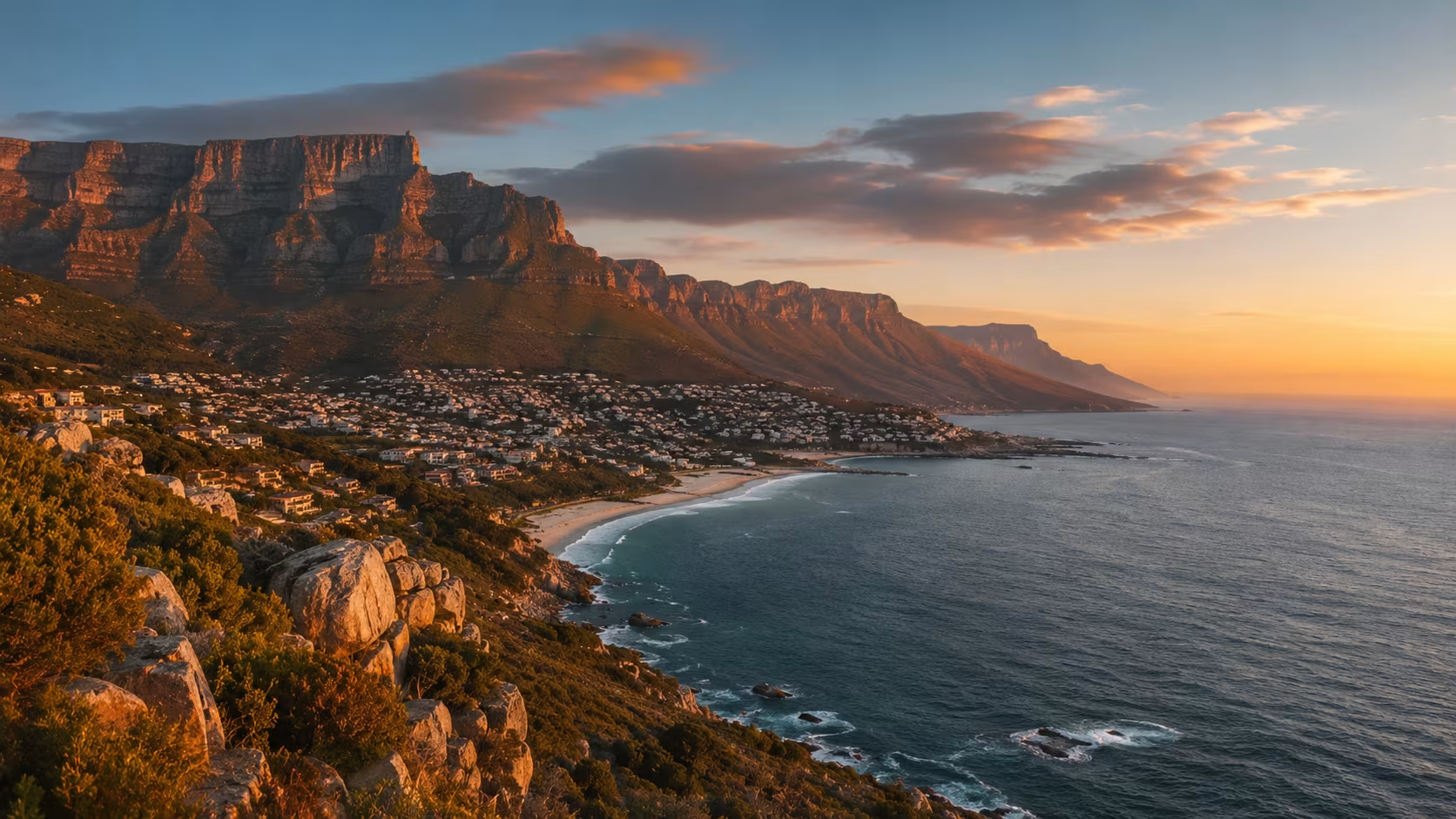
Cape Town is among the most beautifully sited major cities in the world. Table Mountain rises 1,085 meters directly behind the central business district; the Atlantic and Indian Oceans nearly meet at the Cape Peninsula 50 km south; the Cape Winelands lie 45 minutes east. The city has its own unique cultural texture — a blend of Dutch colonial heritage, Cape Malay (the descendants of enslaved Southeast Asians), Xhosa and Khoi-San indigenous communities, and post-apartheid 1990s-onward South African.
The 2026 city is more developed than the version travelers visited in the 2010s. The V&A Waterfront has expanded; Sea Point's promenade has become world-class; the wine industry has internationalized. The persistent challenges remain — inequality is visible everywhere; load-shedding (electricity rationing) intermittently disrupts daily life; some neighborhoods are not safe at night. The travelers who get this right plan accordingly.
This is a 4-day guide for first-timers who want the headline experiences plus enough context to navigate the city's complexity.
Quick Facts
| Item | Detail |
|---|---|
| Country | South Africa |
| Currency | South African rand (ZAR), ~18 ZAR/USD in 2026 |
| Languages | English, Afrikaans, Xhosa (and 8 other official languages); English universal |
| Time zone | SAST (UTC+2, no DST) |
| Tourist tax | 1% bed levy added to most hotel bills |
| Best time | November–March (Southern Hemisphere summer) |
| Visa | Visa-free for US, EU, UK, Canada, Australia, etc. for 90 days |
| Trip length | 4–5 days |
When to Go
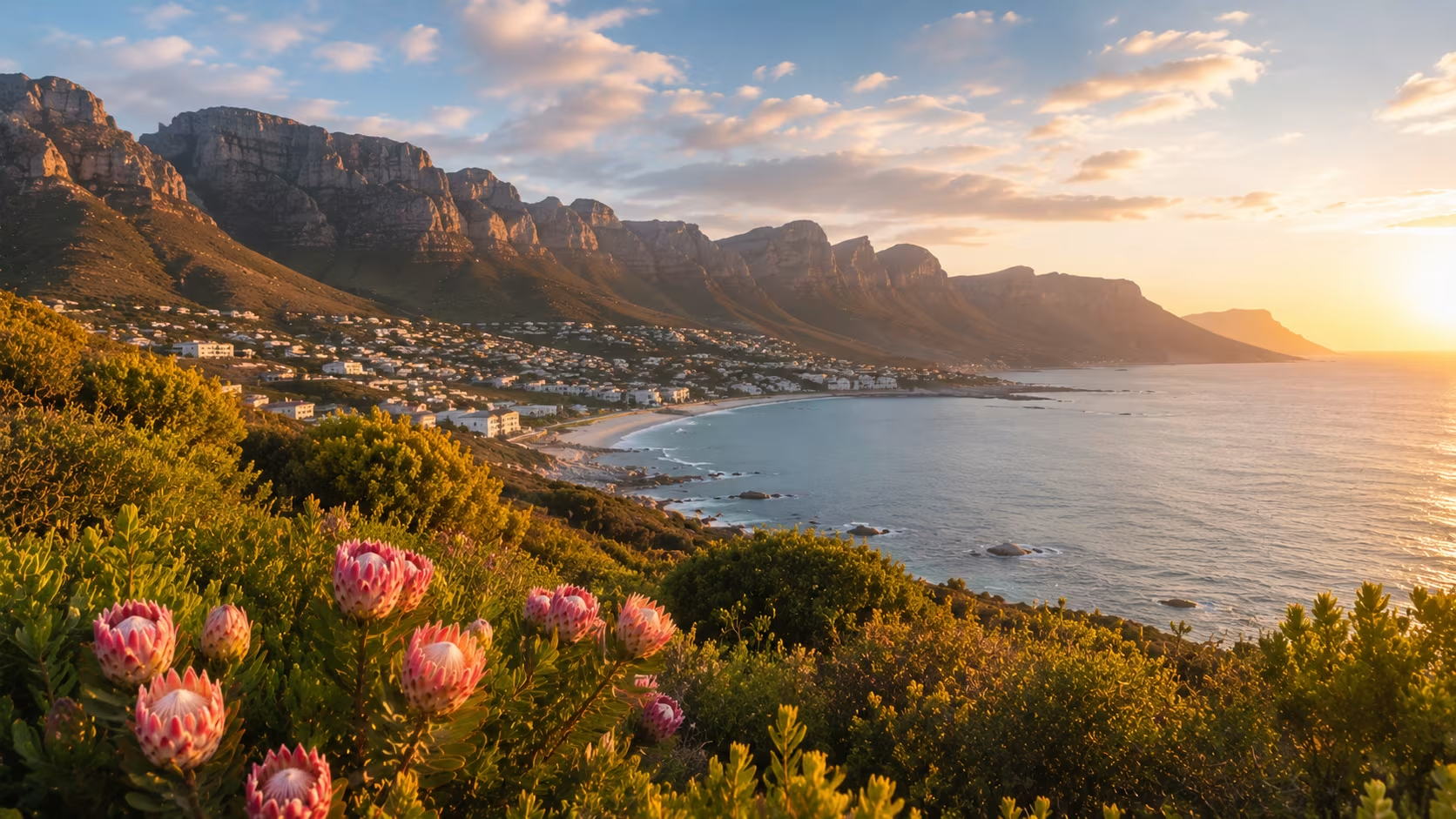
November to March (summer). The sweet spot. Long sunny days (15+ hours of daylight in December), warm (highs 22-30°C), pleasant evenings. Christmas + New Year is peak local tourism; book early.
April to mid-May (autumn). Shoulder. Weather warm (15-25°C); fewer tourists; wineries are at their peak as harvest season arrives.
Mid-May to August (winter). Cool (8-18°C), occasional rain. Low tourist density; very low hotel prices. Whale-watching season starts on the Western Cape coast (June-November). The Atlantic side gets more rain than the False Bay (Indian Ocean) side.
September to October (spring). The wildflower season — namaqualand wildflowers further north peak in mid-August to mid-September.
Avoid:
- Mid-December to mid-January for peak crowds + premium pricing (it's South African summer holiday).
- Cape Town wind season — November and February-March can have severe "southeaster" winds; some outdoor activities cancel.
- Heavy rain weeks — June-July occasional but real.
Getting In
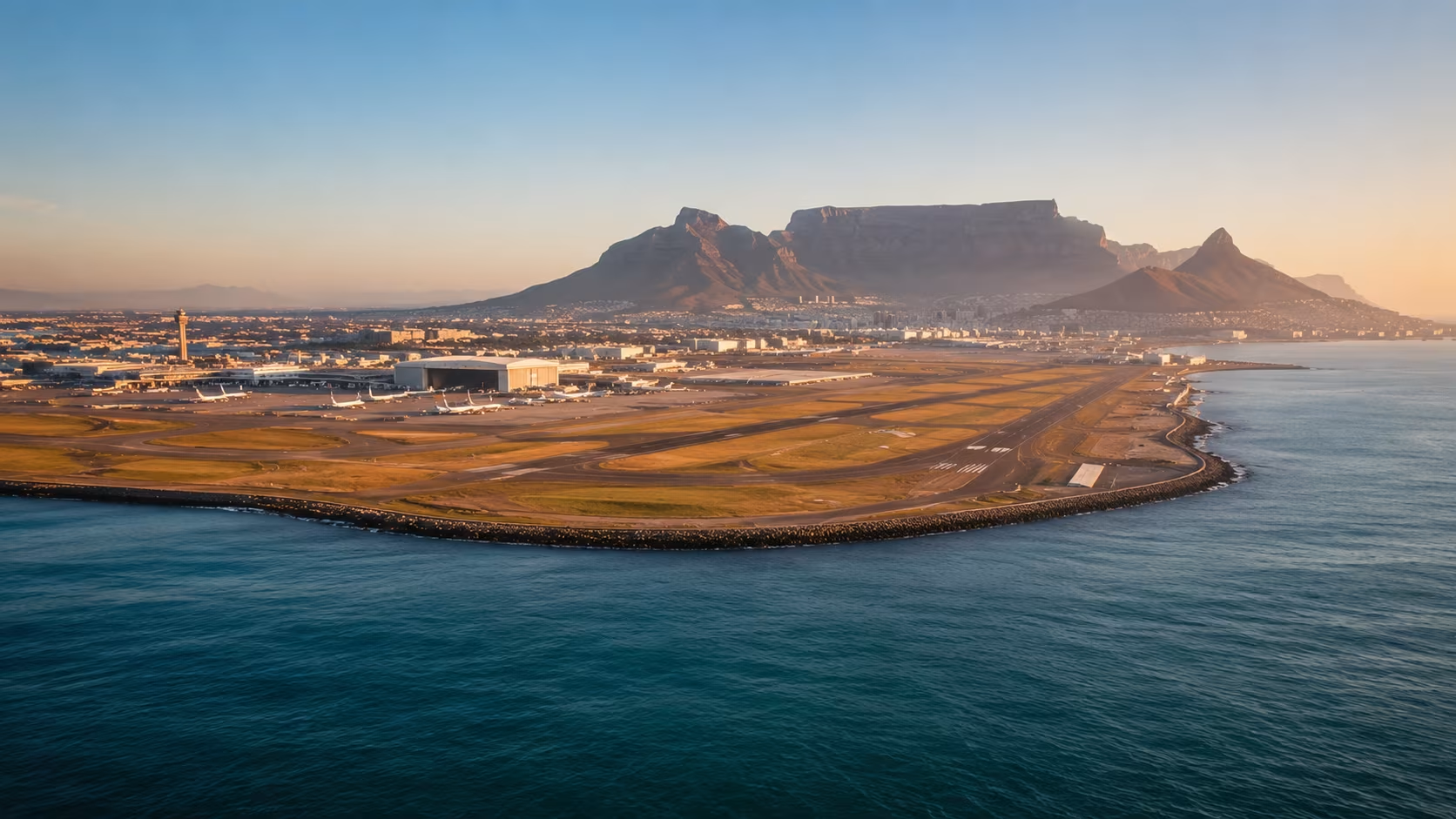
Cape Town International Airport (CPT). 22 km southeast of central.
From CPT:
- MyCiti BRT bus: 130 ZAR ($7), 30 min to central. Limited frequency.
- Taxi: 350-500 ZAR ($19-28).
- Uber/Bolt: 280-450 ZAR ($16-25). Reliable, recommended for tourists.
- Hotel transfer: 500-800 ZAR.
Cape Town is also a major rail hub. Trains to Johannesburg (the famous Blue Train + Premier Class luxury rails), Pretoria, and the Garden Route are operational; intercity passenger rail in South Africa is mostly tourist-focused premium service rather than cost-effective transit.
Getting Around
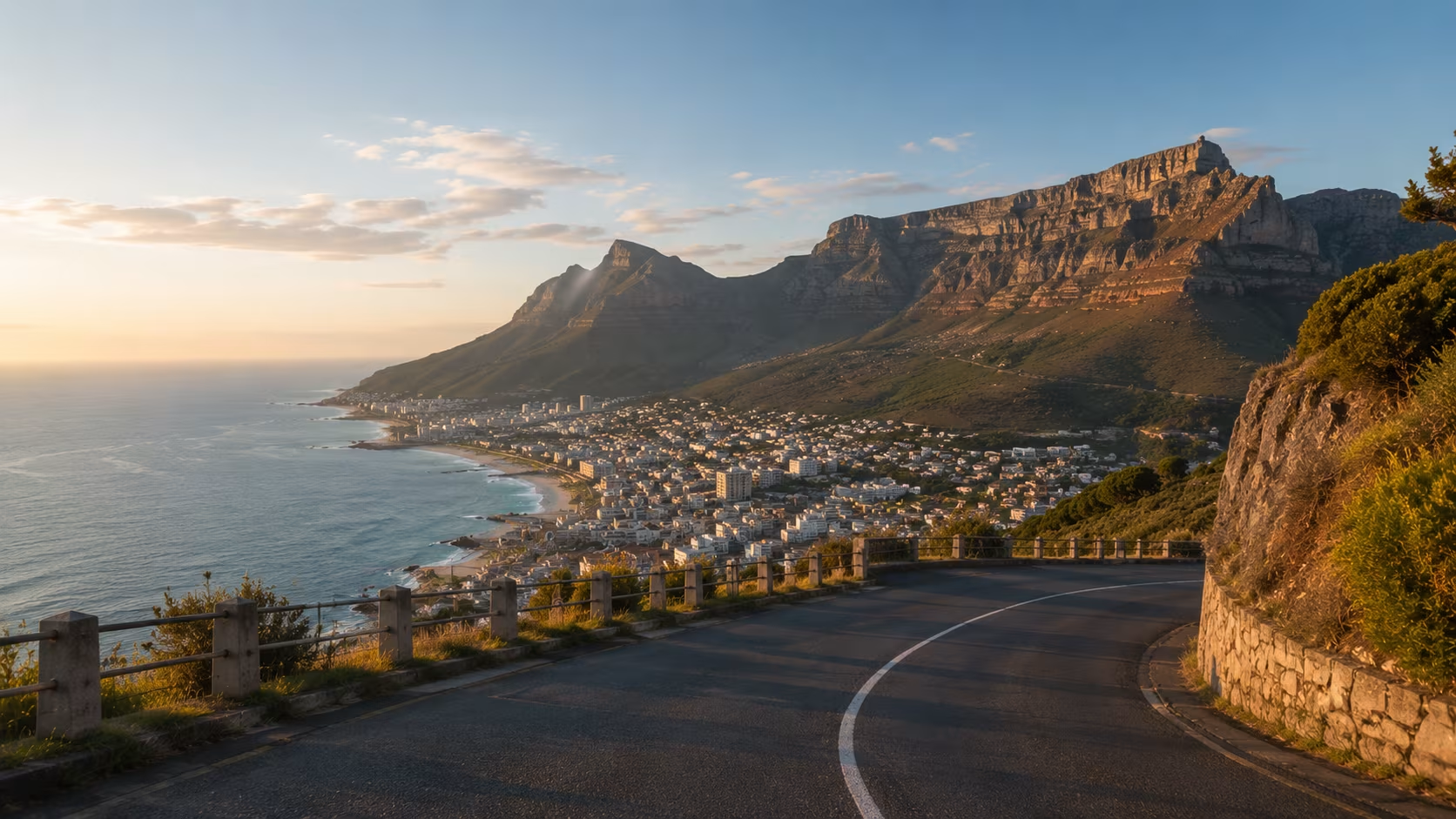
Cape Town is spread out across multiple districts; central walking + Uber/Bolt covers most needs.
MyCiti BRT (Bus Rapid Transit)
The central transit system. Limited routes; covers central, V&A Waterfront, Sea Point, Camps Bay. MyConnect Card (rechargeable) at any station. Single ride 18-25 ZAR.
Uber + Bolt
The defaults for most tourists. Both operational and reliable. Prices similar; choose whichever has nearest driver. Most central trips: 60-150 ZAR.
Taxis (Metered)
Reliable but more expensive than Uber/Bolt. Use these from the airport or hotel rank.
Walking
City Bowl (the central business district), Bo-Kaap, Sea Point Promenade, V&A Waterfront, Camps Bay are walkable internally. Between districts requires transit.
Driving
Renting a car is recommended if you'll do day trips (Wine Country, Cape Peninsula). Drive on the left side (former British colony). Many drivers find this challenging if not used to it.
Don't drive at night in some areas (specifically: avoid the N2 highway between airport and city in the middle of the night; the route passes informal settlements and has had carjackings).
Where to Stay
Cape Town's neighborhoods feel different from each other.
City Bowl (Central Business District)
The historical core. Walking distance to Long Street, Bo-Kaap, Company's Garden, the central restaurants. Boutique and chain hotels.
V&A Waterfront
The redeveloped harbor. Tourist-dense but well-organized. Premium hotels (One&Only, Cape Grace, Silo Hotel). Walking distance to many family-friendly attractions.
Sea Point
The Atlantic coast residential neighborhood. Walking promenade, sunset views, mid-tier hotels and Airbnbs. 10 minutes by Uber to City Bowl.
Camps Bay
The upscale beach suburb. Trendy boardwalk, premium hotels, beach access. 15 minutes from City Bowl.
Clifton
The most-exclusive beach neighborhood. Premium hotels and apartments overlooking Clifton 1-4 beaches.
Constantia / Tokai
The Cape's wine-growing southern suburbs (technically still Cape Town). Vineyards, country atmosphere. 30 minutes from City Bowl. Most-loved neighborhood for travelers who want quiet.
Bo-Kaap
The historic Cape Malay quarter — colorful houses, narrow cobblestone streets. Some boutique guesthouses; pricier per square meter due to character.
Avoid as a base
- Far suburbs (Bellville, Mitchells Plain, Khayelitsha) — distant + safety considerations.
- Around Cape Town Station only — convenient for transit but transitional area.
Realistic 2026 nightly prices (4-star, weekday, shoulder, USD):
| Neighborhood | Mid-range | Higher-end |
|---|---|---|
| City Bowl | $80-150 | $250-500 |
| V&A Waterfront | $200-380 | $500-1,500 |
| Sea Point | $90-180 | $250-500 |
| Camps Bay | $180-350 | $500-1,000 |
| Clifton | $250-500 | $700-2,500 |
| Constantia | $130-250 | $400-800 |
What to Book in Advance
Table Mountain Cable Car
400 ZAR ($22) round-trip. Book online for time slots. Cable car closes during severe wind (the famous Cape Town "tablecloth" weather). Allow 2.5 hours.
Robben Island
The former prison where Nelson Mandela was held for 18 years. Now UNESCO World Heritage. 600 ZAR ($33) including ferry. Books out 2-3 weeks ahead. Allow 4 hours including ferry.
Cape Point + Cape Peninsula
Day tour with hotel pickup or self-drive. The southwesternmost point of the African continent (Cape Point) + Cape of Good Hope. Day tour: 800-1,500 ZAR per person.
Wine Country Day Trip
Stellenbosch, Franschhoek, or Constantia (closer). Day tours with driver: 1,500-3,500 ZAR per person.
Premium Restaurants
- The Test Kitchen (closed since 2021; chef Luke Dale-Roberts now at The Test Kitchen Fledgeling).
- La Colombe (12-course tasting menu, books 4-8 weeks ahead).
- Shortmarket Club (modern South African).
- Greenhouse at the Cellars-Hohenort (premium).
Day 1 — City Bowl + Bo-Kaap
08:00. Coffee in City Bowl. Origin Coffee Roasting (multiple locations). Truth Coffee (the famous steampunk-themed café). Espressolab Microroaster.
09:30. Company's Garden + South African Museum. The historical garden (founded 1652 by the Dutch East India Company); the museum has good natural history + paleoanthropology collections. Free for the gardens; museum 50 ZAR. Allow 90 minutes.
11:30. Walk to St. George's Cathedral (where Desmond Tutu preached during apartheid). Free, modest dress preferred.
12:00. Long Street. The historical bohemian-and-shopping street. Walk slowly.
13:00. Lunch in City Bowl. Bismillah Restaurant for Cape Malay (working-class). Kloof Street House for upscale. Burrata for Italian.
14:30. Bo-Kaap. The historic Cape Malay quarter. Colorful houses (originally painted vibrant colors after the abolition of slavery as a symbol of freedom). Visit the Bo-Kaap Museum (60 ZAR) for context. Walk slowly. Allow 90 minutes.
16:30. Walk back through City Bowl to your hotel for slow time.
18:30. Sunset at Signal Hill (the lower hill next to Lion's Head). Drive up; sunset over Cape Town and Atlantic. Free.
19:30. Dinner. The Test Kitchen Fledgeling (Luke Dale-Roberts modern South African). Pot Luck Club (Old Biscuit Mill). Janse & Co (modern South African).
Day 2 — Table Mountain + V&A Waterfront
08:30. Coffee. Check Table Mountain wind status (the cable car closes during the southeaster).
09:30. Table Mountain. Cable car (booked) up. Walk the easy paths along the top (allow 2 hours). The Western viewpoint over Atlantic; the Eastern viewpoint over Indian Ocean side. Cable car back down or hike (the "Platteklip Gorge" trail is 90 min down; not for beginners).
12:30. Lunch at the cable-car upper café or in the city.
14:00. V&A Waterfront. The redeveloped harbor. Walking around the boats, the Two Oceans Aquarium (R250, decent), the Cape Town Diamond Museum, the upscale shopping (Watershed, V&A Food Market).
16:00. Zeitz Museum of Contemporary Art Africa (MOCAA). The leading contemporary art museum on the African continent. Located in a converted grain silo on the V&A. 200 ZAR. Allow 90 minutes.
18:00. Sunset at the V&A.
20:00. Dinner. Den Anker at the V&A (Belgian + South African). Belthazar for upscale. Den Anker mentioned.
Day 3 — Cape Peninsula Day Trip
Full-day excursion. Drive yourself or book a tour.
08:30. Hotel pickup or rental car.
10:00. Boulders Beach (Simon's Town). The famous African penguin colony. 200 ZAR. Allow 60-90 minutes.
12:00. Drive to Cape Point + Cape of Good Hope. The southwestern tip of Africa. Funicular up to the lighthouse view (R110); allow 2 hours.
14:00. Lunch at Two Oceans Restaurant (at Cape Point).
15:30. Drive back via Chapman's Peak Drive (the world-famous coastal road, 8 km of cliffs and hairpin turns). 60 ZAR toll. Allow 60 minutes.
17:00. Stop at Camps Bay for sunset cocktails.
19:30. Dinner. Codfather for casual seafood. The Bungalow at Clifton for upscale beachfront.
Day 4 — Choose: Wine Country, Robben Island, or Slow Day
Path A — Cape Winelands Day Trip
Stellenbosch + Franschhoek are the headline wine destinations (both 45-60 minutes from Cape Town).
- Day-tour package with driver: 1,500-3,500 ZAR per person. Picks up at hotel; visits 3-4 wineries; lunch included.
- Self-drive rental + designated driver if you don't want to pre-book. Reserved tasting slots at top wineries (Boschendal, Babylonstoren, Tokara) recommended.
The Franschhoek Wine Tram (a hop-on-hop-off circuit between 9 wineries) is a popular alternative; book ahead.
Path B — Robben Island
4-hour excursion including ferry. Booked. Heavy and historically essential. The tour is led by former prisoners.
Path C — Slow Cape Town Day
Morning at the District Six Museum (the apartheid-era forced-removal neighborhood). 70 ZAR. Allow 90 minutes.
Lunch at Sea Point or Camps Bay.
Afternoon at Kirstenbosch Botanical Gardens. The famous gardens with proteas, fynbos (the Cape Floral Kingdom — one of six globally; the world's smallest). 230 ZAR. Allow 3 hours.
Sunset at Llandudno Beach (the secluded beach south of Camps Bay).
Evening at one final restaurant.
What to Eat
Cape Town's food scene blends multiple traditions: Cape Malay (Indonesian/Malay-influenced cuisine from the Dutch East India trade era), British colonial, Afrikaner farmhouse, contemporary South African.
Headline Dishes
| Dish | What it is |
|---|---|
| Bobotie | Sweet-spiced minced beef + egg-custard topping. The unofficial South African national dish, Cape Malay origin. |
| Cape Malay curry | Spiced curry with Cape Malay influences (gentler than Indian; sweeter; with raisins or dried fruit). |
| Bunny chow | Hollowed-out bread loaf filled with curry. Durban-origin, but available in Cape Town. |
| Boerewors | The traditional South African farmer's sausage. Grilled. |
| Biltong | Air-dried meat strips; the South African beef jerky. |
| Snoek | The Western Cape fish; smoked, grilled, or curried. |
| Yellowtail | Cape fish; grilled or curried. |
| Malva pudding | Spongy caramel cake; classic South African dessert. |
| Koeksisters | Plaited fried dough with sugar syrup. |
| Melktert | Milk tart pastry. |
| Pinotage | South Africa's signature red grape (a Pinot Noir + Cinsaut cross). |
| Chenin Blanc | The country's most-produced white. |
| Rooibos | The famous red bush tea, native to the Cedarberg. |
Where to Eat
Modern South African:
- The Test Kitchen Fledgeling (Luke Dale-Roberts).
- La Colombe (premium tasting menu).
- Shortmarket Club (modern).
- Greenhouse at Cellars-Hohenort (Constantia).
- Belmond Mount Nelson Hotel restaurant (afternoon tea + fine dining).
- Kloof Street House (modern, casual, City Bowl).
Cape Malay / Traditional:
- Bismillah Restaurant (working-class Cape Malay institution, Bo-Kaap).
- Bayside Cafe (Cape Malay).
- Africa Café (touristy, multi-country African dishes; controversial but accessible).
- Mariam's Kitchen (working-class Cape Malay, multiple locations).
Working-Class / Casual:
- Old Biscuit Mill (Saturday market, multiple food stalls).
- Bree Street restaurants (the trendy block).
- Mojo Market (Sea Point).
- Truth Coffee (steampunk café).
Wine Country:
- Babel at Babylonstoren (farm-to-table with vineyard view).
- The Werf at Boschendal (modern South African).
- Tokara (Stellenbosch).
- Le Quartier Français at Franschhoek.
Costs and Budget
2026 daily budgets per person, excluding flights and hotel (USD):
| Style | Per day | Notes |
|---|---|---|
| Backpacker | $35-60 | Hostel, casual lunches, Uber, free attractions |
| Mid-range | $80-140 | Mix of casual and proper restaurants, attractions, day trips |
| Comfortable | $200-320 | Better restaurants, premium tour, taxi |
| Higher-end | $500+ | Tasting menus, luxury hotel breakfasts, private safari extension |
Cape Town is moderately priced for a major capital — cheaper than European or US equivalents, but more expensive than other South African cities.
Practical Info
- Cards. Universal. Most places card-only or contactless.
- Tipping. 10-15% standard at sit-down restaurants. Round up taxis. 20-50 ZAR for parking attendants (formal and informal car guards).
- English. Universal.
- Sundays. Most things open. Some restaurants close.
- Pickpocketing. Real in tourist areas; low-grade. Standard precautions.
- Crime. Cape Town has higher rates than most European or Asian capitals. Stick to tourist neighborhoods at night. Use Uber/Bolt rather than walking unfamiliar areas after dark. Don't display valuables openly.
- Load-shedding. Electricity rationing affects Cape Town intermittently. Most upscale hotels have generators; some smaller places don't. Charge devices when power is on.
- Water. Tap water is safe in most central neighborhoods.
- Wind. The southeaster ("Cape Doctor") wind can be severe November-February. Some outdoor activities cancel; cable car closes; Robben Island ferry sometimes suspended.
- Sun. UV is intense; SPF 50+ mandatory.
- South African history. Apartheid ended in 1994; the country's transition is ongoing. The visible inequality (very wealthy and very poor in close proximity) can be jarring for first-time visitors. Discuss thoughtfully.
Common First-Timer Mistakes
- Trying to climb Table Mountain on a windy day. The cable car closes; the hike is dangerous in high winds.
- Booking only V&A Waterfront hotels. Convenient but tourist-dense; missing the city's character.
- Skipping the Cape Peninsula day trip. It's the city's most-photographed excursion.
- Not reserving Robben Island in advance. Books out 2-3 weeks ahead.
- Underestimating the size. Cape Town spreads across 60 km of coast; transit between districts adds up.
- Visiting in mid-December without booking. South African summer holiday — premium pricing, packed.
- Walking unfamiliar areas at night. Use Uber/Bolt.
- Drinking only Pinotage. South African Chenin Blanc and Cap Classique (sparkling) are equally celebrated.
- Skipping the District Six Museum. Apartheid-era forced-removal history is foundational.
- Trying to extend to Kruger National Park (safari) in a 4-day trip. Kruger is 1,800 km away; flights required; at minimum 3 additional days.
- Not packing layers. Cape Town weather can shift dramatically; coastal wind real even in summer.
- Visiting Boulders Beach in mid-day expecting empty penguins. Crowds peak; arrive early.
Final Notes
Four days in Cape Town is the right length for a focused first visit. One City Bowl + Bo-Kaap day, one Table Mountain + V&A day, one Cape Peninsula day, one wine country or slow day. A fifth day buys you Robben Island + an additional wine day.
For travelers extending into a South African safari, add 3-5 days minimum for Kruger or Phinda or Madikwe (most accessible from Johannesburg, not Cape Town).
The quietest piece of advice: walk the Sea Point Promenade at sunset on a clear evening. The 4-km coastal walk passes the rocky shore + Atlantic + dolphins occasionally + locals jogging + Capetonians actually living their lives. The Cape Town that stays with you isn't the postcard from Table Mountain (which most visitors do in the first 24 hours). It's the daily quality of life — the way the light comes off the Atlantic, the way the city's geography produces a daily encounter with the sea, and the calm that comes with watching the sun set over open water at the southwestern edge of the African continent.
0 Comments
No comments yet — start the conversation.