
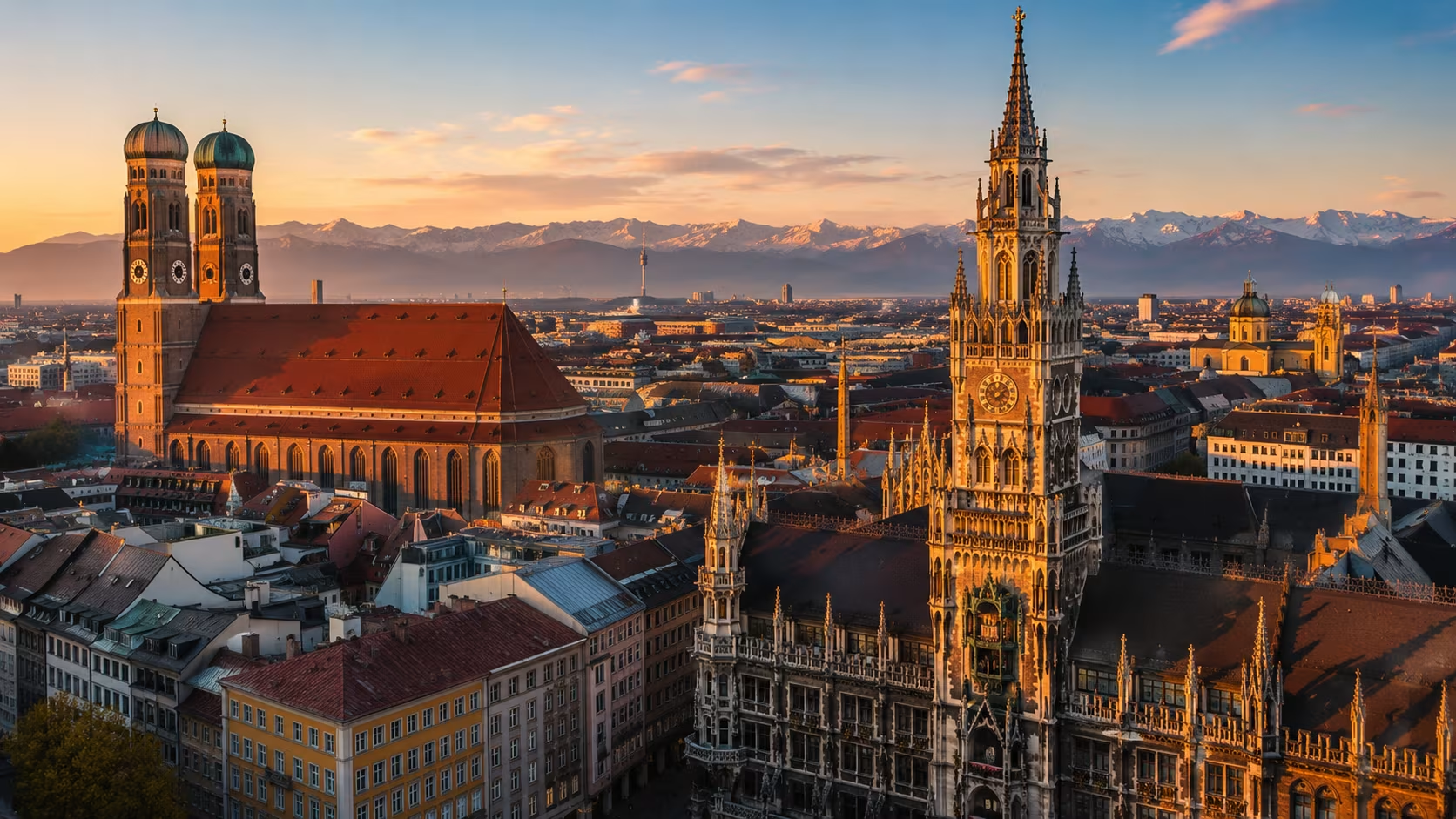
Munich is Germany's most-loved city by Germans themselves. The combination of Bavarian regional identity (which feels distinct from northern Germany), the beer-garden culture, the Alpine proximity, and the unusually well-preserved historical center produces a city that's prosperous, polished, and deeply rooted in tradition.
First-time visitors usually plan Munich as a 2-day stopover before continuing to Salzburg or Prague. The city deserves 3 focused days: one for the historical Altstadt and Marienplatz, one for museums (Munich has Germany's three best art museums clustered in one neighborhood), and one for either Bavarian Alps day-tripping or beer garden + slow city walking. October's Oktoberfest is a separate trip entirely — the city is at maximum tourist density and standard accommodations triple in price.
This is a 4-day guide for first-time visitors who want both the imperial-Bavarian Munich and the everyday city.
Quick Facts
| Item | Detail |
|---|---|
| Country | Germany (Bavaria) |
| Currency | Euro (€) |
| Language | German (Bavarian dialect); English widely spoken |
| Time zone | CET (UTC+1) / CEST (UTC+2) |
| Tourist tax | None in Munich (Bavaria) |
| Best time | May–June, September |
| Visa | Schengen, 90 days for most non-EU |
| Trip length | 3–4 days |
When to Go
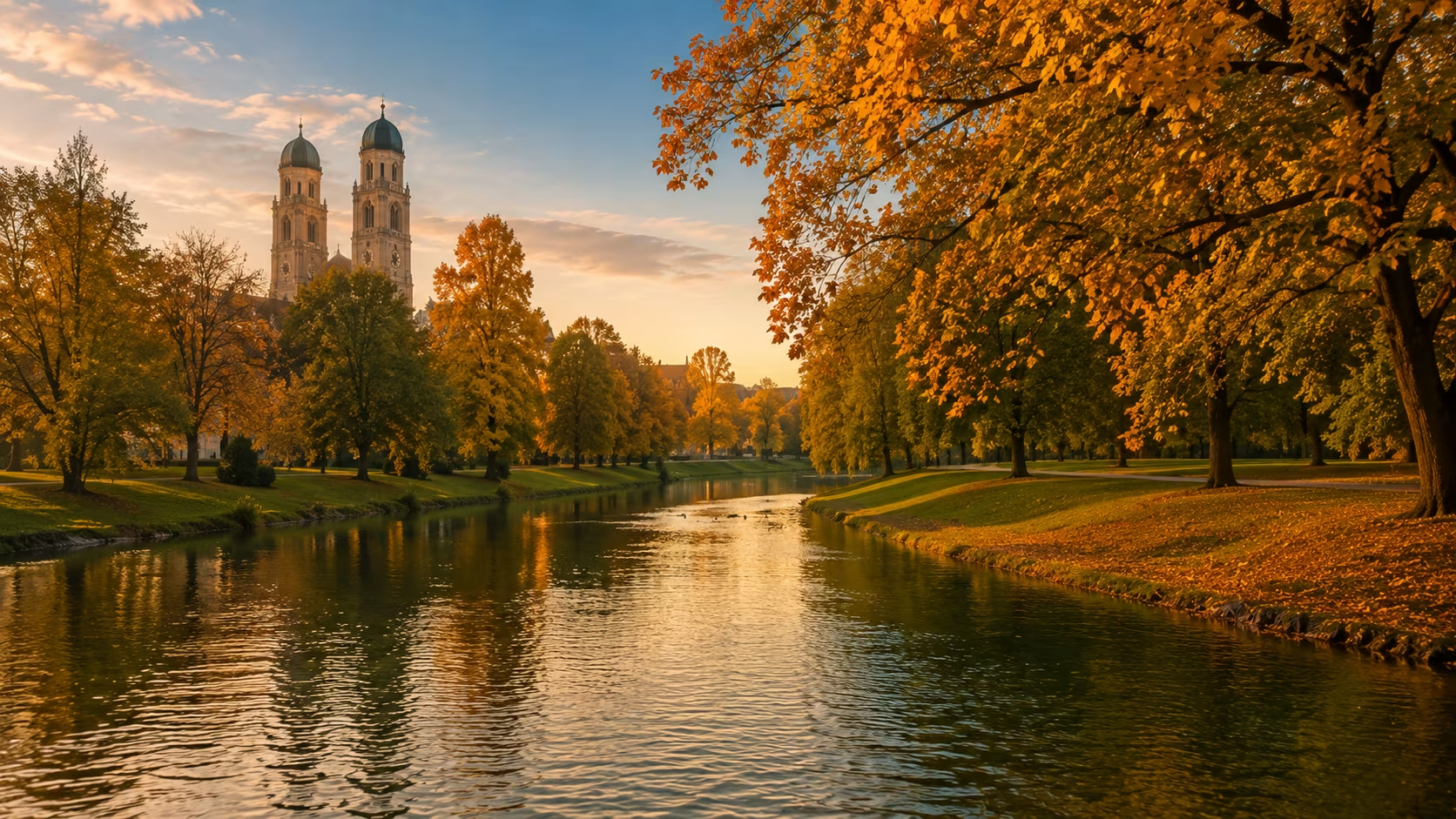
May to June. The sweet spot. Beer gardens fully operational, mild weather (15-22°C), Englischer Garten in full leaf.
September (mid-month before Oktoberfest opens). Pleasant weather, lower crowds.
Mid-September to early October (Oktoberfest). The famous beer festival. Hotel prices triple; book months ahead. A different trip from a normal Munich visit.
Late October to March. Cool to cold (-2 to 10°C). Christmas markets in late November-December are a real local draw.
Avoid:
- Oktoberfest weeks unless you specifically want it.
- Christmas Eve and Christmas Day when most things close.
Getting In
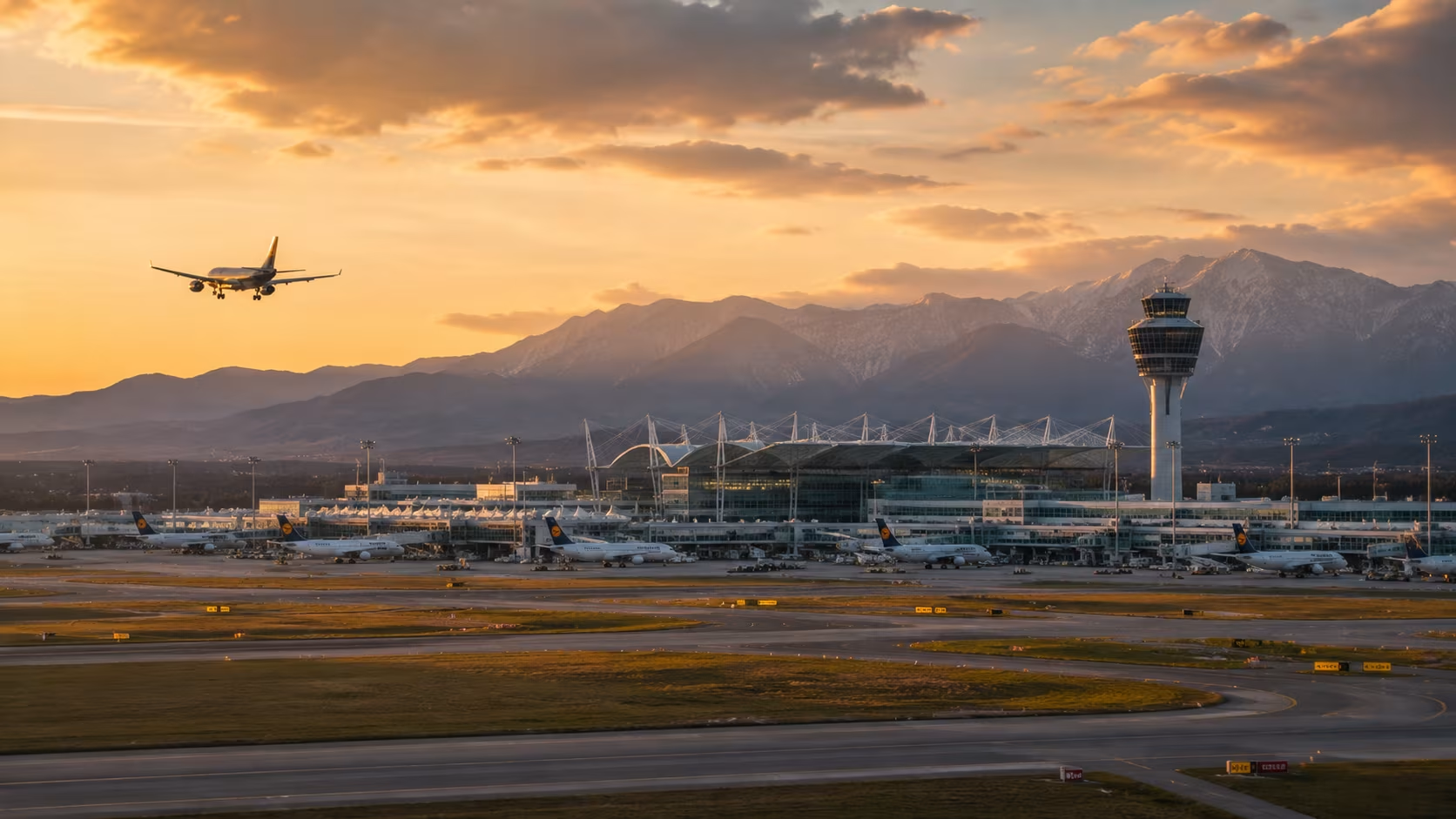
Munich Airport (MUC). 35 km northeast of central.
From MUC:
- S-Bahn (S1 or S8) to central station: €13.20, 40 min.
- Lufthansa Express Bus: €13, 45 min.
- Taxi: €70-90, 35-50 min.
- Uber/Bolt: €55-75.
Munich is also a major rail hub. Trains to Salzburg (90 min), Vienna (4 hours), Berlin (4 hours), Paris (6 hours).
Getting Around
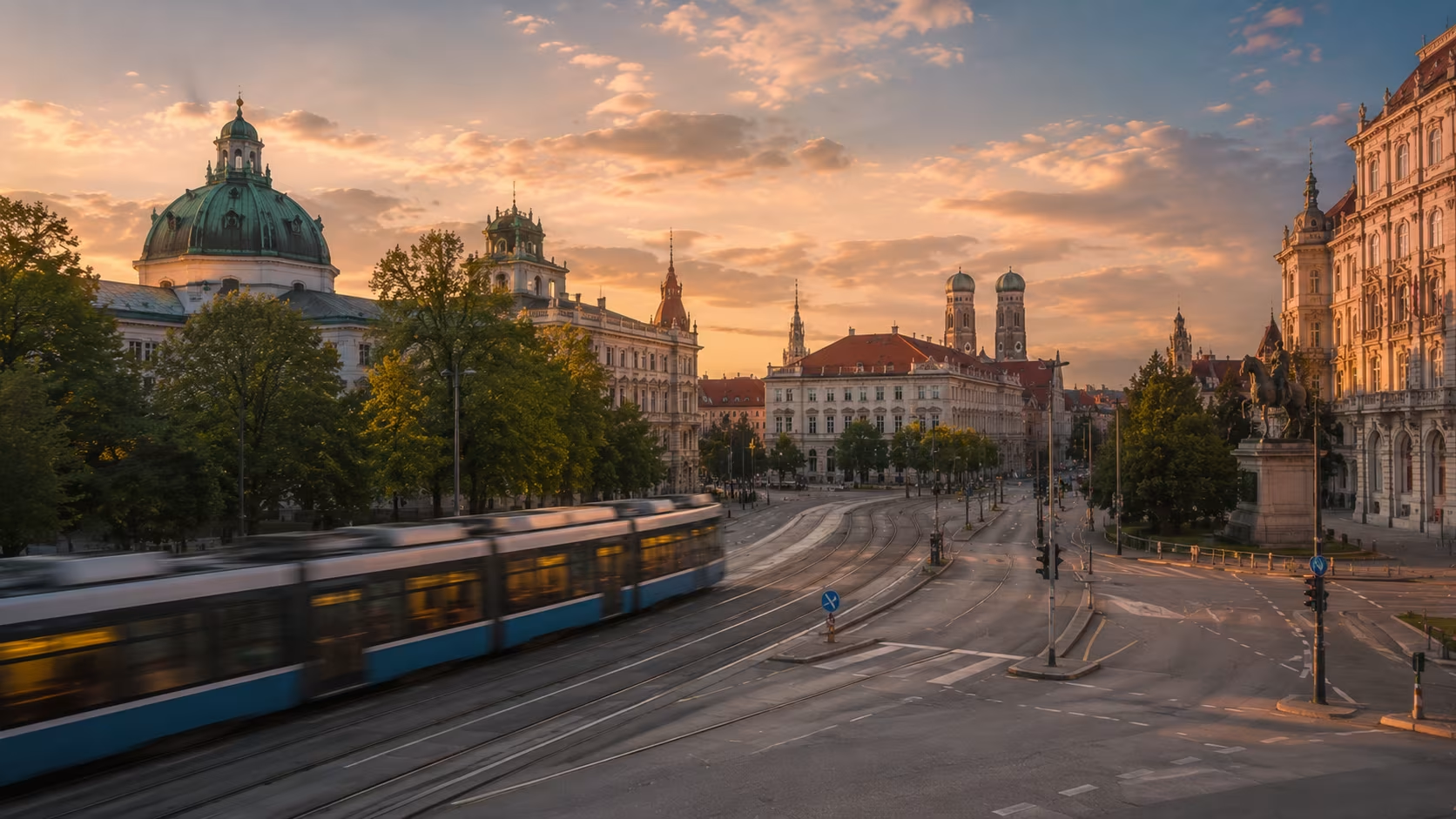
U-Bahn + S-Bahn + Bus + Tram
The MVV system covers everything. Single ride €4 (1 zone); 24-hour pass: €8.20. Apple Pay / Google Pay tap-in works on most lines.
Walking
The central Altstadt covers roughly 1 km × 1 km. Walking handles most central sights.
Bicycle
Flat city; good infrastructure. MVG Rad is the public bike share. Many hotels have bikes available.
Where to Stay
Munich's neighborhoods:
Altstadt (Old Town)
The historical core. Marienplatz, Frauenkirche, the imperial buildings. Tourist density at peak. Premium hotels.
Maxvorstadt
The museum district. Walking distance to all three Pinakothek museums + Glyptothek + Kunstareal cluster. Mid-range to higher-end hotels.
Schwabing
The bohemian neighborhood. Cafés, university adjacent, walking distance to Englischer Garten.
Glockenbachviertel
The LGBTQ-friendly creative-class district. Restaurants, bars, walking distance to central.
Haidhausen
The restored 19th-century neighborhood across the Isar. Quieter, charming, less central but well-connected.
Avoid as a base
- Far suburbs (Pasing, Dachau city) — too far for 4-day trip.
- Around Hauptbahnhof only — convenient for trains but transitional area.
Realistic 2026 nightly prices (4-star, weekday, shoulder):
| Neighborhood | Mid-range | Higher-end |
|---|---|---|
| Altstadt | €230-340 | €450-900 |
| Maxvorstadt | €170-260 | €380-700 |
| Schwabing | €160-250 | €350-650 |
| Glockenbachviertel | €170-260 | €380-700 |
What to Book in Advance
Neuschwanstein Castle Day Trip
The famous fairy-tale castle 130 km southwest. Tour package: €60-110. Self-drive + tickets: €17 castle ticket + driving. Books 2-4 weeks ahead in summer.
Pinakothek Museums Combined Ticket
Alte, Neue, and Pinakothek der Moderne. €12 each, or €13 combined day pass. Walk-up usually fine.
Hofbräuhaus or Augustiner-Keller Beer Hall
Walk-up. The famous Hofbräuhaus is touristy; the Augustiner-Keller (close to central station) is the real version.
Premium Restaurants
- Tantris (1971, Michelin two-star).
- Atelier at Bayerischer Hof (Michelin two-star).
Day 1 — Altstadt
08:30. Coffee. Man Versus Machine for serious coffee. Mahlefitz for casual specialty.
09:30. Marienplatz. The central square. The 11:00 (and 12:00 + 17:00 in summer) Glockenspiel chime at the New Town Hall — the mechanical figures perform a 12-minute show. Touristy but worth seeing once.
10:30. Frauenkirche (Cathedral of Our Lady). Free. The twin-domed cathedral that's Munich's iconic skyline element. Climb the tower (€9) for panoramic views.
12:00. Viktualienmarkt. The historic open-air food market. Sausage stalls, cheese counters, bratwurst kiosks. Lunch here at one of the stalls.
13:30. Residenz (the imperial palace, Wittelsbach dynasty residence 1508-1918). The largest city palace in Germany. €11. Allow 2 hours.
16:00. Walk through Hofgarten + Odeonsplatz + Theatinerkirche (the Italian-Baroque court church).
17:30. Hofbräuhaus for early beer (touristy) or Schneider Bräuhaus (the older, less-touristy alternative).
19:30. Dinner. Schneider Bräuhaus (since 1872, traditional Bavarian). Andreas Hofer for upscale Bavarian. Augustiner Klosterwirt.
Day 2 — Museum District
09:00. Coffee.
09:30. Alte Pinakothek. The Old Masters collection (Rubens, Dürer, Rembrandt). €12. Allow 2.5 hours.
12:00. Lunch at the museum café or in Maxvorstadt. Marais West for casual.
13:30. Pinakothek der Moderne (modern art + design). €12. Allow 2 hours.
16:00. Englischer Garten. The 4-km-long urban park (larger than New York's Central Park). Visit the Surfwave at Eisbach (locals surf a standing wave year-round) and the Chinese Tower beer garden.
18:30. Beer + pretzel at the Chinese Tower. Order a Maß (1 liter beer, ~€7).
20:30. Dinner. Tantris if booked. Café Glockenspiel for atmospheric. Schwarzes Schaf for casual modern Bavarian.
Day 3 — Bavaria Day Trip
Path A — Neuschwanstein + Linderhof
The two famous Mad King Ludwig II castles.
07:30. Hotel pickup or train.
10:30. Neuschwanstein Castle. The famous Disney-inspiration castle. €17. 35-minute guided tour only.
13:00. Lunch in Hohenschwangau village.
14:30. Linderhof Palace. Ludwig's smaller but more elaborate palace.
18:30. Return to Munich.
Path B — Salzburg Day Trip
90 minutes by train. €15-30 round-trip. Mozart's birthplace, Hohensalzburg fortress, Salzach River, baroque old town. UNESCO World Heritage.
Path C — Dachau Concentration Camp Memorial
22 km northwest. Free entry. Heavy and historically essential. Allow 4 hours including audio guide.
Path D — Slow Munich Day
Morning at the Deutsches Museum (the world's largest science and technology museum, €15).
Afternoon at Olympiapark (the 1972 Olympics site).
Evening at a beer garden.
Day 4 — Choose: BMW Welt + Olympiapark, Beer Garden Day, or Slow Day
Path A — BMW Welt + Olympiapark
BMW Welt (free) + BMW Museum (€10). The car-design museum.
Then Olympiapark with the famous tent-roof architecture.
Path B — Beer Garden Tour
The defining Munich experience. Visit 3-4 across an afternoon:
- Augustiner-Keller (the working-class institution).
- Hirschgarten (the largest beer garden in the world, 8,000 seats).
- Chinese Tower in Englischer Garten.
- Augustiner Bräustuben (the brewery itself).
Order a Maß at each. Bring a hearty pretzel for snack.
Path C — Slow Munich Day
Morning at a small museum (Lenbachhaus for Blue Rider expressionism — Kandinsky, Klee).
Afternoon at Viktualienmarkt for slow lunch + market browsing.
Final Munich evening at a beer garden.
What to Eat
Bavarian cuisine is meat-centric, hearty, and deeply traditional.
Headline Dishes
| Dish | What it is |
|---|---|
| Weißwurst | White veal sausage with sweet mustard. Eaten before noon traditionally. |
| Schweinshaxe | Roast pork knuckle. The Bavarian Sunday classic. |
| Schnitzel | Breaded fried veal cutlet. Wiener Schnitzel = veal; Schnitzel Wiener Art = pork. |
| Knödel | Bread or potato dumplings. Sides with most meat dishes. |
| Sauerbraten | Pot-roasted beef with sweet-sour sauce. Sunday classic. |
| Leberkäse | Bavarian meatloaf. Working-class lunch. |
| Brezn (pretzel) | The Bavarian pretzel. Sold from carts in beer gardens. |
| Obatzda | Cheese spread (camembert + butter + paprika + onion + caraway). Beer garden snack. |
| Apfelstrudel | Apple strudel. The Austrian-Bavarian classic. |
| Bavarian beer | Helles, Weißbier (wheat beer), Dunkles, Pilsner. Munich's six major breweries (Augustiner, Hofbräu, Hacker-Pschorr, Löwenbräu, Spaten, Paulaner) define the local scene. |
Where to Eat
Traditional Bavarian:
- Schneider Bräuhaus (since 1872).
- Augustiner Klosterwirt.
- Wirtshaus in der Au (the famous traditional restaurant).
- Andreas Hofer for upscale.
- Spatenhaus an der Oper (since 1896).
Beer Halls / Beer Gardens:
- Hofbräuhaus (touristy but the historical institution).
- Augustiner-Keller (the real working-class version).
- Hirschgarten (largest in the world, family-friendly).
- Chinese Tower at Englischer Garten.
- Park Café.
Modern German:
- Tantris (Michelin two-star).
- Atelier at Bayerischer Hof (Michelin two-star).
- Restaurant 181 (modern, Olympiapark tower).
- Werneckhof (modern Bavarian).
Working-Class:
- Viktualienmarkt sausage stalls.
- Schmalznudel - Café Frischhut (since 1880, the famous fried-dough pastries).
- Cafe Glockenspiel for atmospheric (Marienplatz views).
Costs and Budget
2026 daily budgets per person, excluding flights and hotel:
| Style | Per day | Notes |
|---|---|---|
| Backpacker | €60-90 | Hostel, Wurst stand lunches, walking, transit |
| Mid-range | €100-160 | Mix of casual and proper restaurants, museums, transit |
| Comfortable | €180-280 | Better restaurants, Neuschwanstein day, taxis |
| Higher-end | €450+ | Tasting menus, premium hotels, private guide |
Practical Info
- Cards. Universal in tourist areas. Cash useful at smaller traditional restaurants.
- Tipping. Service charge typically included. Round up at cafés. 5-10% at sit-down for good service. Tell the server total amount when paying (German pattern).
- English. Universal in tourism. German is the daily language; younger Bavarians speak English fluently.
- Bavarian dialect. Locals speak Bavarian (different from Hochdeutsch standard German). Most Bavarians speak both; tourists won't notice.
- Sundays. Most museums open. Many shops closed except in tourist zones; restaurants generally open.
- Pickpocketing. Real around tourist sites. Standard precautions.
- Quiet hours (Ruhezeit). 22:00-06:00. Loud parties draw real complaints.
- Smoking. Banned indoors at restaurants.
- Crime. Among lowest in Europe. Standard urban precautions.
Common First-Timer Mistakes
- Spending all day at Hofbräuhaus. It's tourist-targeted. Walk to Augustiner-Keller for the real Bavarian beer-hall experience.
- Trying to do Neuschwanstein in mid-afternoon. Crowds peak; queues real. Arrive at opening 09:00.
- Skipping the Englischer Garten. It's central, free, and the city's signature green space.
- Not booking Tantris or Atelier in advance. Walk-ups don't exist for Michelin tier.
- Visiting during Oktoberfest expecting normal city. It's not normal.
- Underestimating Bavarian portions. Schweinshaxe is enormous. Schnitzel is large. Order accordingly.
- Drinking only Augustiner. Munich has six major breweries; sample each.
- Skipping Dachau because it's heavy. It's foundational and historically essential.
- Trying to add Salzburg + Neuschwanstein + Dachau in one day. Each is a half-day; pick one.
- Not wearing comfortable shoes. Cobblestoned Altstadt is fine; the day-trip walks are real.
Final Notes
Four days in Munich is the right length for a focused first visit. One Altstadt day, one museum + Englischer Garten day, one Bavaria day trip, one beer garden + slow day.
The quietest piece of advice: spend a Saturday afternoon at the Augustiner-Keller beer garden. Order a Maß. Watch the families share long communal tables. The Munich that stays with you isn't the Marienplatz photograph; it's the relaxed Bavarian afternoon at a working-class beer garden where 2,000 strangers share tables, eat sausage and pretzels, drink half a liter of beer over an hour, and the city's prosperity and tradition is visible in the casual quality of an ordinary Saturday.
0 Comments
No comments yet — start the conversation.