

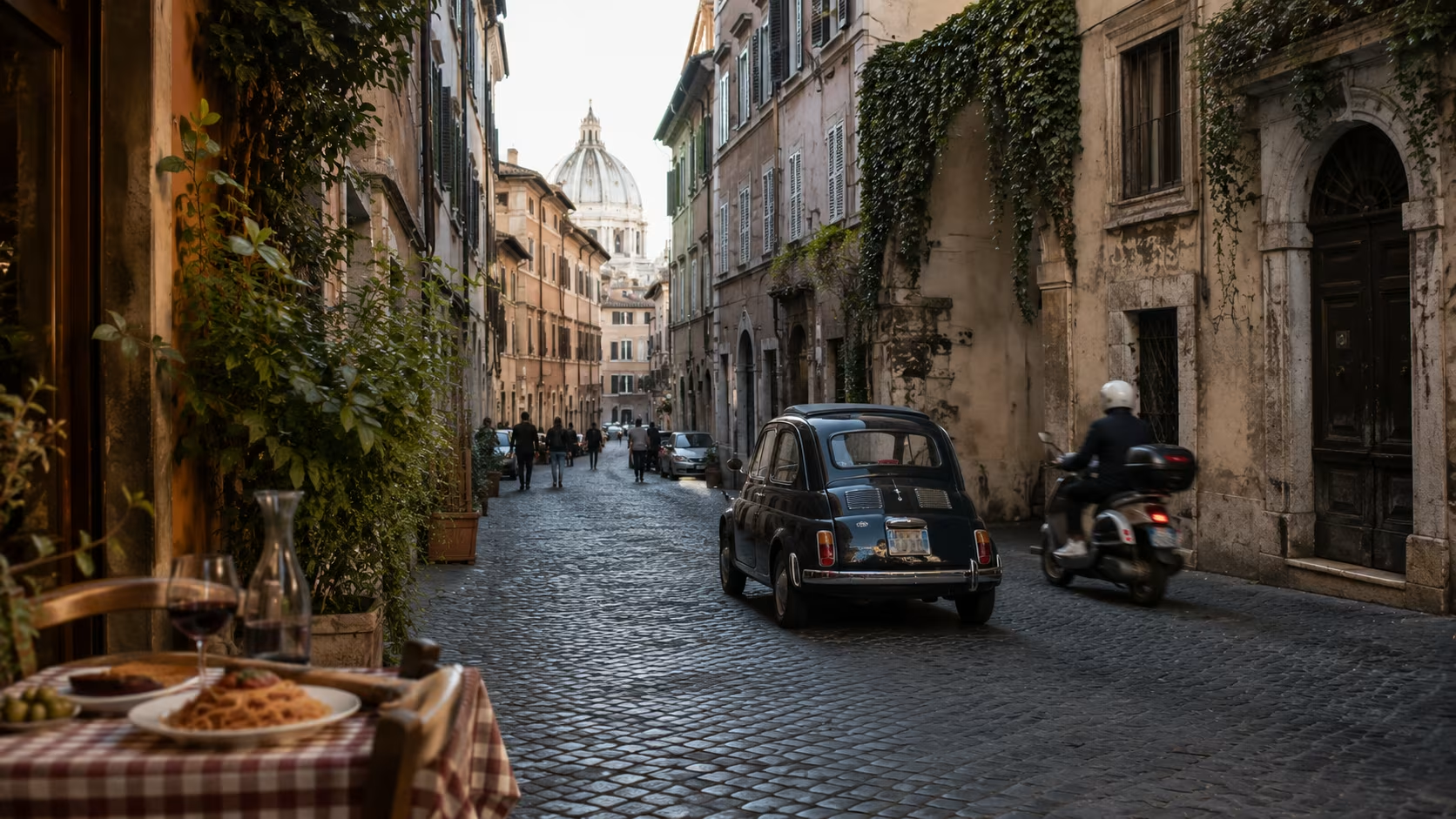
Rome rewards walking and punishes hurry. Pack a day with five sights at five corners of the city and you'll spend most of it underground in the metro and on your feet at the wrong angle. Cluster sights by neighborhood, time your meals at the Italian rhythm, and book the two or three things that genuinely sell out, and the city opens up.
This is a four-day itinerary built for first-time visitors with mid-range budgets. It assumes you've already accepted that you'll come back. Rome is not a city to optimize. The plan below covers the headlines and leaves built-in slack for the things you'll discover by accident, which is half of what makes Rome Rome.
Quick Facts
| Item | Detail |
|---|---|
| Country | Italy |
| Currency | Euro (€) |
| Language | Italian; English in tourist areas |
| Time zone | CET (UTC+1) / CEST (UTC+2) |
| Tourist tax | €4–€10 per person/night (band by hotel star) |
| Best time | April–May, September–October |
| Average trip length | 3–5 days |
When to Go
April to early June. The sweet spot. Highs of 18–26°C, gardens flowering at the Aventine and Borghese, the Easter rituals and the Roman holiday on April 21 (the city's birthday) bringing real local energy. Crowds are heavy but manageable.
Mid-June to August. Hot and crowded. Days routinely above 33°C, stones and pavement radiating heat through the evening. Many Romans leave the city in August (Ferragosto, August 15, is functionally a national pause). Restaurants close, but tourist density triples.
September to October. The other prime window. Light goes warm in the late afternoon, restaurants reopen after summer breaks, gardens still photograph well into early November.
November to March. Quieter and rainier. Christmas markets at Piazza Navona and the Vatican's Nativity scene are real local events. Rome looks beautiful empty.
Avoid the Jubilee crowd surge. 2025 was the Catholic Jubilee year, which doubled hotel prices. By 2026 the tide has receded but pilgrims continue arriving in noticeable numbers through year-end.
Getting There
Rome has two airports.
Fiumicino (FCO): 30 km southwest, the international hub. Three options:
- Leonardo Express to Termini, €14, 32 minutes, every 15 minutes. The default.
- FL1 regional train to Trastevere or Tiburtina, €8, 45 minutes. Cheaper but slower.
- Taxi flat rate €55 to anywhere inside the Aurelian Walls. Verify the meter shows the flat fare.
Ciampino (CIA): 15 km southeast, mostly low-cost carriers. Bus to Termini for €6 takes 40 minutes. Taxi flat rate €40.
Rome is also one of Italy's two main rail hubs. Frecciarossa from Florence: 95 minutes, €25–55. From Naples: 70 minutes, €30–60. From Milan: 3 hours, €40–95.
Getting Around
Rome is a walking city for visitors. The historic center is roughly 4 km × 3 km, and most distance between sights runs 15–20 minutes on foot. The metro skips around the historic center (it had to be re-routed around archaeology): useful for outer trips, less useful for daily sightseeing.
Buy a Roma Pass only if you're doing 5+ paid attractions in 2 or 3 days. Otherwise, individual tickets are fine.
Single ticket (BIT): €1.50, valid 100 minutes across metro/bus/tram. 24-hour pass: €7. 48-hour: €12.50. 72-hour: €18.
Buy at metro stations, tobacco shops (tabacchi, look for the white "T" sign), or the ATAC mobile app.
Taxis. Hailable on the street is rare. Find a taxi rank (most squares have one) or call. Apps: itTaxi, Free Now. Uber Black exists in 2026 (premium pricing only); Bolt rolled out in 2025 with regular taxi rates.
Walking shoes are non-negotiable. Rome's cobblestones are real, ancient, and uneven. Fashion shoes will hurt you by hour two.
What to Book in Advance
The single biggest first-timer mistake in Rome is showing up at major sights without timed tickets. The lines now exceed two hours at peak times for what used to be walk-up sights.
Vatican Museums + Sistine Chapel
Book directly at museivaticani.va. Tickets release months ahead. Book the 08:00 or 09:00 slot for the smallest crowds inside the Sistine. €17 base; €25 "early bird" 07:30 entry; €35 "after-hours" Friday evenings (May–October). Skip third-party tour resellers: they mostly mark up the same ticket.
The Sistine Chapel is the bottleneck. Even with timed entry, the Sistine itself is uncomfortably crowded by 10:00 in any month. The 08:00 slot delivers an actual contemplative 20 minutes; the 11:00 slot is a shoulder-to-shoulder crawl.
Colosseum + Roman Forum + Palatine Hill
Book at parcocolosseo.it. Combined ticket €18, valid 24 hours, covers all three. Book the timed Colosseum entry: Forum and Palatine are open-access with the same ticket. Reserved arena floor adds €6 and is worth it for the perspective. Underground tour adds €15 and is the only way to see the hypogeum (the gladiator service tunnels).
Borghese Gallery
Timed entry strictly enforced. Two-hour visit slots only. Book 1–2 weeks ahead. €15. The collection (Bernini sculptures, Caravaggios, Titians) is one of the world's best small museums and one of Rome's most underrated.
Doria Pamphilj Gallery
A private palace turned art museum, walk-up still works most of the time. €16. Worth it for one of the best Velázquez portraits ever painted.
Where to Stay
The single highest-leverage decision after booking flights. Rome's neighborhoods feel different and define the trip.
Centro Storico (around Piazza Navona)
The headline neighborhood. Pantheon, Piazza Navona, Trevi Fountain, Spanish Steps all walkable. Picture-perfect streets. Tourist-density highest in Rome. Hotel prices premium. Stay here for sightseeing convenience; expect noise.
Trastevere
West of the river, traditionally working-class, now a restaurant and bar district. Streets feel village-like, dinner spots open everywhere, calmer mornings. Walking distance to Vatican and historic center. Mid-range and higher.
Monti
Between the Colosseum and Termini. Bohemian, more local than Centro Storico, walking distance to the Forum, Colosseum, and Centro. Probably the strongest first-time pick after Centro.
Aventine
A quiet leafy hill south of the Forum. Residential, calmer evenings, the famous Knights of Malta keyhole view. Better for second-time visitors who want quiet.
Prati
North of the Vatican. Wide grid streets, less tourist density, more high-end shopping and middle-class apartment feel. Walking distance to St. Peter's. Quieter than Centro at night.
Avoid as a Base
- Termini area. Convenient for trains; otherwise the seediest big-city zone in Rome at night.
- EUR / Garbatella / outer Rome. Far from anything you came to see.
- Pyramide / Ostiense. Up-and-coming for locals; still far for first-timers.
Realistic 2026 nightly prices (4-star, weekday, shoulder):
| Neighborhood | Mid-range | Higher-end |
|---|---|---|
| Centro Storico | €240–340 | €500–900 |
| Trastevere | €180–260 | €380–650 |
| Monti | €170–250 | €350–600 |
| Aventine | €160–230 | €330–550 |
| Prati | €150–220 | €300–500 |
Day 1 — Ancient Rome
Start with the headline ancient cluster. Book the 09:00 Colosseum entry slot.
08:30. Coffee + cornetto at any Monti or Centro counter bar. Standing, three minutes, €2–3.
09:00. Colosseum. Full visit including arena floor: 90 minutes. The crowds compress; the architecture decompresses you.
11:00. Roman Forum. Walk from the Colosseum directly into the Forum entrance. 90 minutes minimum to walk the central path; longer if you take the side detours to the House of the Vestals.
12:30. Palatine Hill. Continue uphill from the Forum. The gardens, the Stadium of Domitian, the views of the Circus Maximus from the south side. Skip if you're tired; come back tomorrow morning if you're not. 60 minutes.
13:30. Lunch in Monti. Walk north to Via Urbana or Via dei Serpenti. Mid-range trattorias do the Roman classics (cacio e pepe, carbonara, gricia, amatriciana) for €10–15 a plate. Trattoria Monti is the institution; book 24 hours ahead. Otherwise Mordi e Vai for a working-class sandwich at the Testaccio market or Taverna Romana in Monti.
15:00. Slow afternoon. Walk Monti's narrow streets, vintage shops on Via del Boschetto. Or sit at a café terrace.
17:00. Capitoline Museums. Half a day's worth in 90 minutes; the Marcus Aurelius equestrian statue and the She-Wolf bronze are the central pieces. €15.
19:30. Apertivo at a wine bar. Roscioli (also a salumeria, buy ham at the counter, ask for a glass). Salumeria Roscioli is the bigger version with a real menu.
20:30. Dinner. Stay close to your hotel base. The walk back is part of the trip.
Day 2 — Centro Storico and the Tiber
09:00. Pantheon. Free entry since 2023's reversed plan to charge €5. Standing inside while the oculus is open in the early morning is one of the city's quiet pleasures. 30 minutes.
10:00. Piazza Navona. Bernini's Fountain of the Four Rivers in the middle, the Sant'Agnese in Agone church on the western side. Avoid the restaurants on the piazza (tourist factories); walk one block off for coffee.
11:00. Sant'Ivo alla Sapienza. Borromini's spiral church, hidden in the courtyard of the old University of Rome. Open Sunday mornings only most of the year; check current hours. Worth a small detour for one of the most underrated Baroque interiors in the city.
12:00. Lunch in Centro. L'Antico Vinaio for sandwiches if quick (the Roman branch of the Florence original); Armando al Pantheon for sit-down classic Roman fare (book ahead, no walk-ins).
14:00. Trevi Fountain. Walk through the back streets from the Pantheon, ten minutes. The fountain is mobbed always; the surrounding alleys (Via dei Crociferi, Via di San Vincenzo) are quieter and photograph better.
15:00. Spanish Steps + Via dei Condotti. The shopping street Italians actually use lives one block north on Via Borgognona. Window-shop without paying brand prices.
16:30. Piazza del Popolo. The northern gateway of the historic center. Climb the Pincio terrace above for sunset views over the city.
18:00. Wander down Via del Babuino back into Centro. The street is lined with antique shops; almost free to walk.
20:00. Dinner in Trastevere. Cross Ponte Sisto. Da Enzo al 29 is the institution; queue 19:30 sharp or book months ahead. Tonnarello for a casual cousin. Da Teo less photogenic but consistently good.
Day 3 — Vatican
A full day, intentionally. Vatican Museums + St. Peter's Basilica is a 5-hour minimum.
07:30. Vatican Museums early entry slot if you booked it. Otherwise 09:00 standard slot. Skip the breakfast at the Vatican; eat at a Prati café first.
08:30. Inside the museums. The route is one-way; budget 90 minutes for the Egyptian, Etruscan, and earlier rooms; 30–40 minutes for the Raphael Rooms; 30 minutes for the Sistine Chapel. The official one-way route exits into St. Peter's via a side door: take it (saves the full St. Peter's queue).
12:00. St. Peter's Basilica. Free, no booking. Allow 90 minutes. Climb the dome (€10) if your knees handle 551 steps. The interior is the most theatrically religious space in Europe.
14:00. Late lunch in Prati or Borgo. L'Arcangelo for proper Roman pasta in a calm setting. Bonci Pizzarium ten-minute walk for the city's best pizza al taglio.
16:00. Castel Sant'Angelo. The fortress at the river. €15. Walk the ramparts, see the papal apartments. The view of St. Peter's dome at sunset is the city's classic photograph.
18:30. Walk back to your hotel via Ponte Sant'Angelo (the Bernini-angel bridge) and through Centro.
20:00. Dinner. After the day you've had, stay close. Roman pasta. A glass of Cesanese.
Day 4 — Choose: Borghese, Aventine, or Day Trip
Path A: Villa Borghese
09:00. Borghese Gallery. Two-hour timed slot. €15. The Bernini sculptures (Apollo and Daphne, The Rape of Proserpina, David) are why people study art.
11:00. Walk Villa Borghese gardens. The lake, the Terrazza del Pincio for a view down on Piazza del Popolo, the small zoo if children are involved.
13:00. Lunch in Parioli or back in Centro.
15:00. Free afternoon. The Galleria Doria Pamphilj if not already done. Or shopping along Via del Babuino. Or a long Roman afternoon at a wine bar.
Path B: Aventine and Testaccio
09:00. Aventine Hill. The Knights of Malta keyhole (a clever architectural illusion of St. Peter's framed through a door peephole). Sant'Sabina basilica with its 5th-century carved doors. The Orange Garden (Giardino degli Aranci) for the Roman skyline view.
11:30. Walk down to Testaccio. Old slaughterhouse district turned working-class food neighborhood. Testaccio Market for working lunch.
14:00. Pyramide and Protestant Cemetery. The pyramid (a real Roman pyramid built around 12 BC); the cemetery contains Keats and Shelley. Quiet, walkable, free.
16:00. Walk along the Tiber back toward Centro.
Path C: Day Trip to Ostia Antica
The Roman port city, frozen by silt, less famous than Pompeii but better preserved in many ways. Train from Roma Lido station, €1.50 (covered by Roma transit pass). 30 minutes to the site. Allow 4 hours on the ground. Back in Rome by late afternoon for one more dinner.
What to Eat
Roman cuisine is built on five pasta dishes and one anchor meat preparation. Master those and you've covered most of what locals order.
The Five Roman Pastas
| Pasta | What it is |
|---|---|
| Cacio e pepe | Pecorino, black pepper, pasta water. Sounds simple; emulsion is hard. |
| Carbonara | Egg, guanciale, pecorino, black pepper. No cream. |
| Amatriciana | Tomato, guanciale, pecorino. The red cousin of carbonara. |
| Gricia | Guanciale and pecorino. Carbonara minus the egg. |
| Pasta alla Norma (variant Sicilian) | Tomato, eggplant, ricotta salata. Less Roman but commonly served. |
Guanciale (cured pork jowl) is the secret of half of Roman cuisine. Pancetta is a substitute non-Romans accept; bacon is not.
Other Anchors
Saltimbocca alla Romana. Veal cutlets with prosciutto and sage. Classic.
Coda alla Vaccinara. Oxtail braised in tomato. Old-school slaughterhouse-district dish.
Carciofi alla Romana / alla Giudia. Roman artichokes, two preparations. Roman-style is braised; Jewish-style is twice-fried, crispy outside.
Supplì. Fried rice ball with mozzarella inside. Street-snack standard.
Pizza al taglio. Rectangular slices sold by weight. Different from Naples-style, lighter, crisper. Bonci is the originator.
Maritozzi. Cream-stuffed brioche, breakfast pastry. Roman classic, currently having a revival.
Costs and Budget
2026 daily budgets per person, excluding flights and hotel:
| Style | Per day | Notes |
|---|---|---|
| Backpacker | €60–95 | Hostel, casual lunches, walking everywhere |
| Mid-range | €100–160 | Mix of trattorias and bars, 2 paid attractions, occasional taxi |
| Comfortable | €180–280 | Better restaurants, wine, full attraction days |
| Higher-end | €380+ | Tasting menus, private tours, luxury hotel breakfasts |
A few specific anchors: a proper trattoria dinner with wine for two runs €60–95 in Trastevere; a counter espresso is €1.20; a 24-hour transit pass is €7; an after-dinner amaro is €4–7.
Practical Info
Language. Basic Italian helps; English widely spoken in tourist zones. "Buongiorno" entering, "grazie" leaving: the minimum.
Money. Cards accepted almost everywhere. €30–50 cash for the rare cash-only trattoria.
Tipping. Service usually included. Round up at cafés, leave €1–2 per person at sit-down meals if service was good.
Pickpocketing. Real on the metro (Line A especially), around the Colosseum, and at the Spanish Steps. Phone in front pocket only.
ZTL zones. The historic center has restricted-traffic zones with automatic camera fines. If renting a car, drop it before entering the city center; never drive into Centro.
Sundays. Most museums open. Many small shops closed.
Common First-Timer Mistakes
- Doing the Vatican on day one. Five hours of museum-walking on the day you arrive jet-lagged is brutal. Day two or three.
- Skipping the timed Colosseum ticket. Walk-up tickets effectively don't exist anymore.
- Eating dinner near a major sight. Walk three blocks in any direction; quality jumps, prices drop.
- Trying to see Naples + Rome + Florence in 5 days. It's possible; it's miserable. Pick one.
- Wearing fashion shoes. The cobblestones do not care.
- Buying €4 espressos at terraces. Walk to a counter bar; pay €1.20.
- Throwing coins into the Trevi Fountain expecting it to be quiet. It's the busiest spot in the city; the legend is real, the experience is shoulder-to-shoulder.
Final Notes
Four days in Rome is a real first trip. You'll cover the headlines, eat well, walk hard, and leave with a head full of corners you didn't have time to investigate. That's the point: Rome is not a city to finish. The first trip earns the second one.
The quietest piece of advice: leave a half-day unscheduled. Walk a neighborhood without a target. Sit at a café for an hour and refuse to plan. The Rome that stays with you is the one with built-in slack.
0 Comments
No comments yet — start the conversation.