

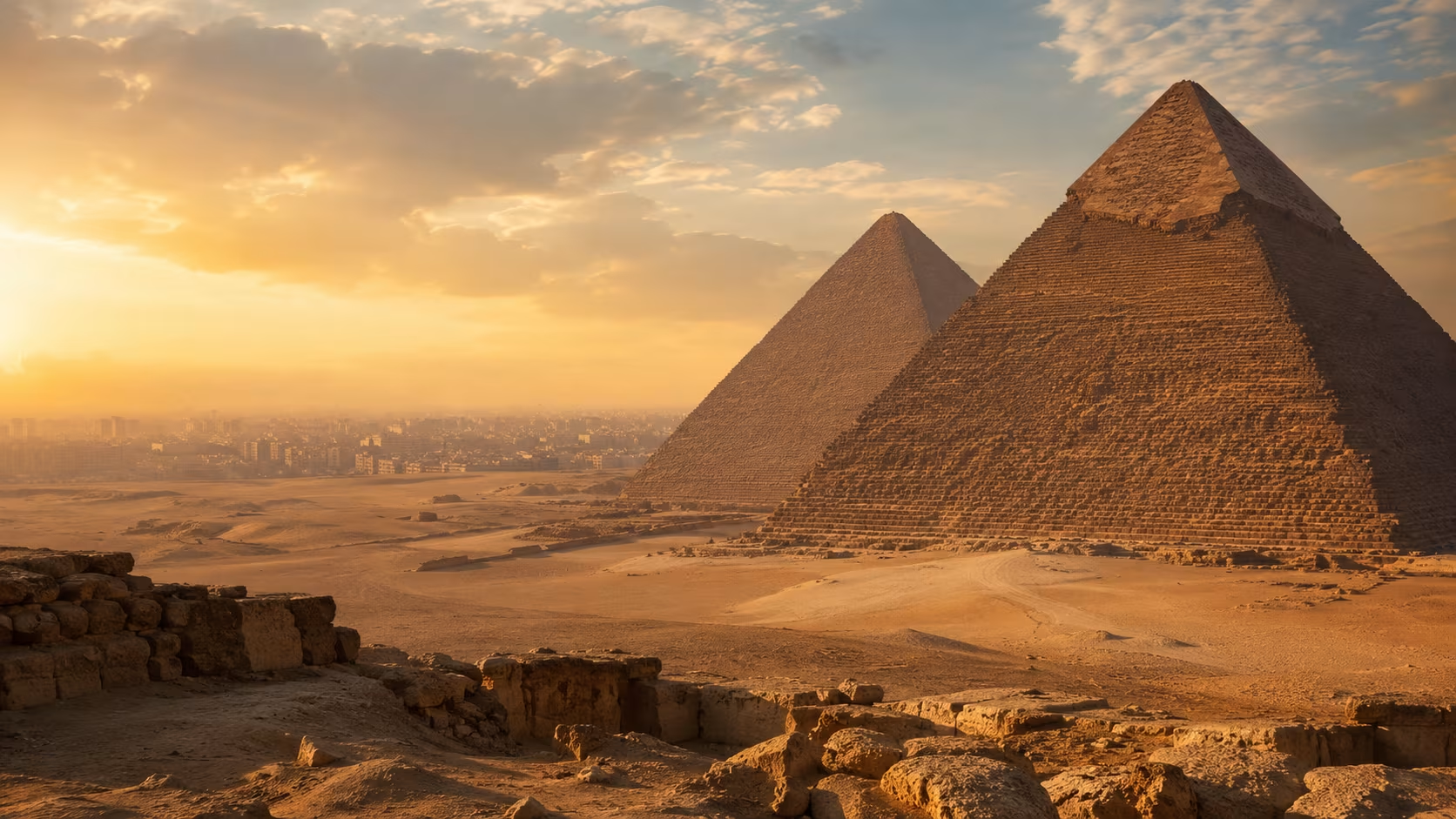
Cairo is the largest city in Africa and the Arab world, with 22+ million people in the greater metropolitan area, and 5,000+ years of history layered into a single dense urban sprawl. The 2024 opening of the Grand Egyptian Museum (GEM) — the world's largest museum dedicated to a single civilization — has reshaped the standard Cairo itinerary; the GEM at Giza now competes with the pyramids themselves as the city's primary draw.
First-time visitors face two challenges: the city's intensity (traffic, dust, heat, sales pressure at major sights) and the historical density (5,000 years of significance compressed into a tight area). The trip works for travelers who accept Cairo's pace, manage their energy, and don't try to optimize every minute. The trip fails for travelers expecting a polished tourist destination.
This is a 4-day guide for first-timers who want the headline experiences (pyramids, museum, Islamic and Coptic Cairo, the Nile) plus enough rest time to actually enjoy them.
Quick Facts
| Item | Detail |
|---|---|
| Country | Egypt |
| Currency | Egyptian pound (EGP), ~50 EGP/USD in early 2026 |
| Language | Arabic (Egyptian dialect); English in tourist areas |
| Time zone | EET (UTC+2, no DST since 2014; reinstated 2023) — verify current status |
| Tourist tax | None |
| Best time | October–April |
| Visa | E-visa or visa-on-arrival ($25) for most countries; 30 days |
| Trip length | 3–4 days for Cairo + Giza |
When to Go
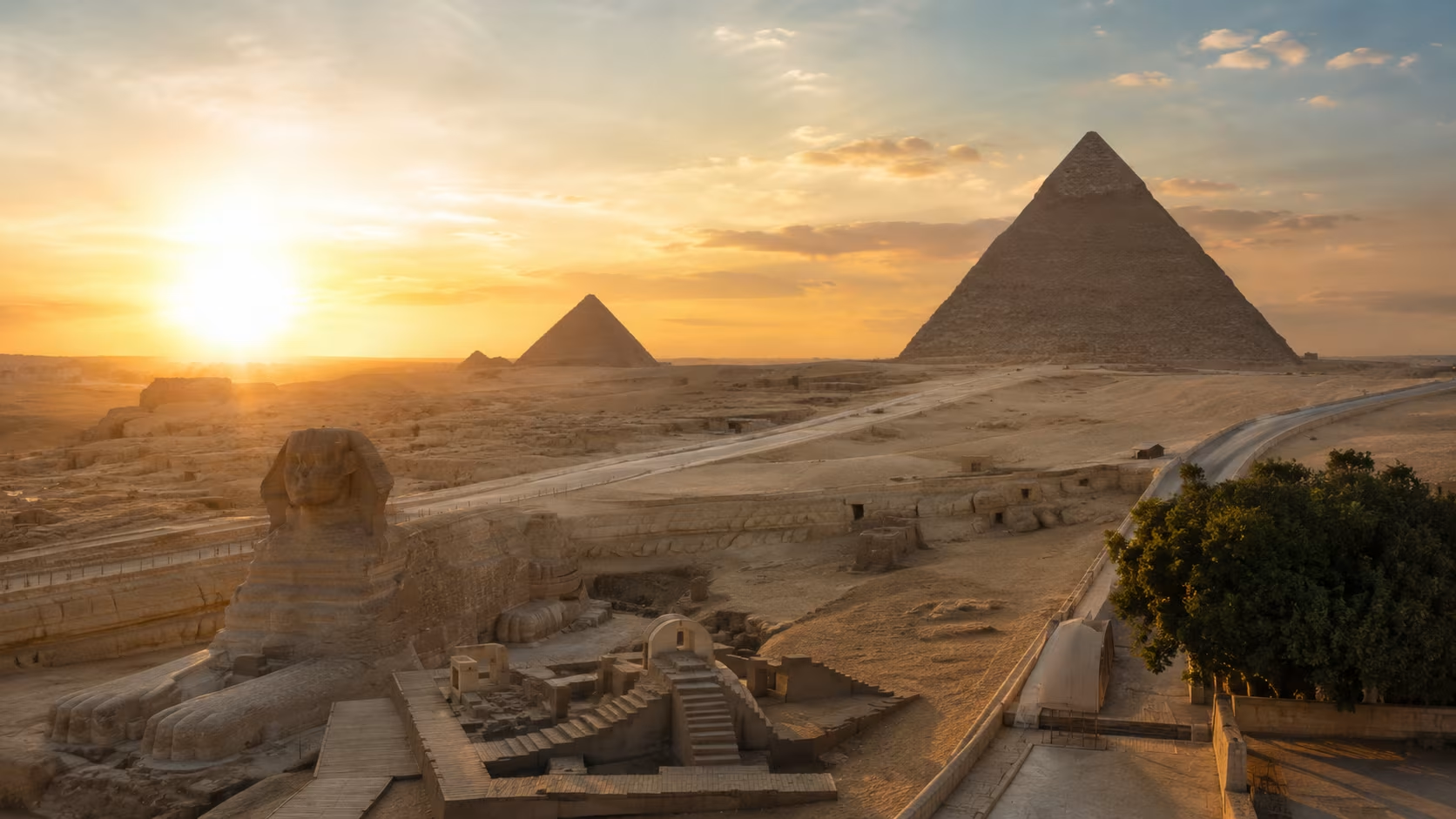
October to April. The window. Daytime highs 18–28°C; pleasant; manageable. December and January are coolest, with brief cold snaps possible (12°C nights).
May to September. Hot. June-August often 38–42°C+; tourist density lower; some hotel discounts. Khamsin sandstorms (typically March-May) can degrade visibility for days.
Avoid:
- Ramadan (mid-February to mid-March in 2026) — many restaurants closed during the day; tourist services reduced. Iftar at sunset is a real cultural event for those interested.
- Summer (mid-June to early September) if heat-sensitive.
- Eid al-Fitr / Eid al-Adha for crowded transit.
- Coptic Christian holidays for closures of certain churches.
Getting In
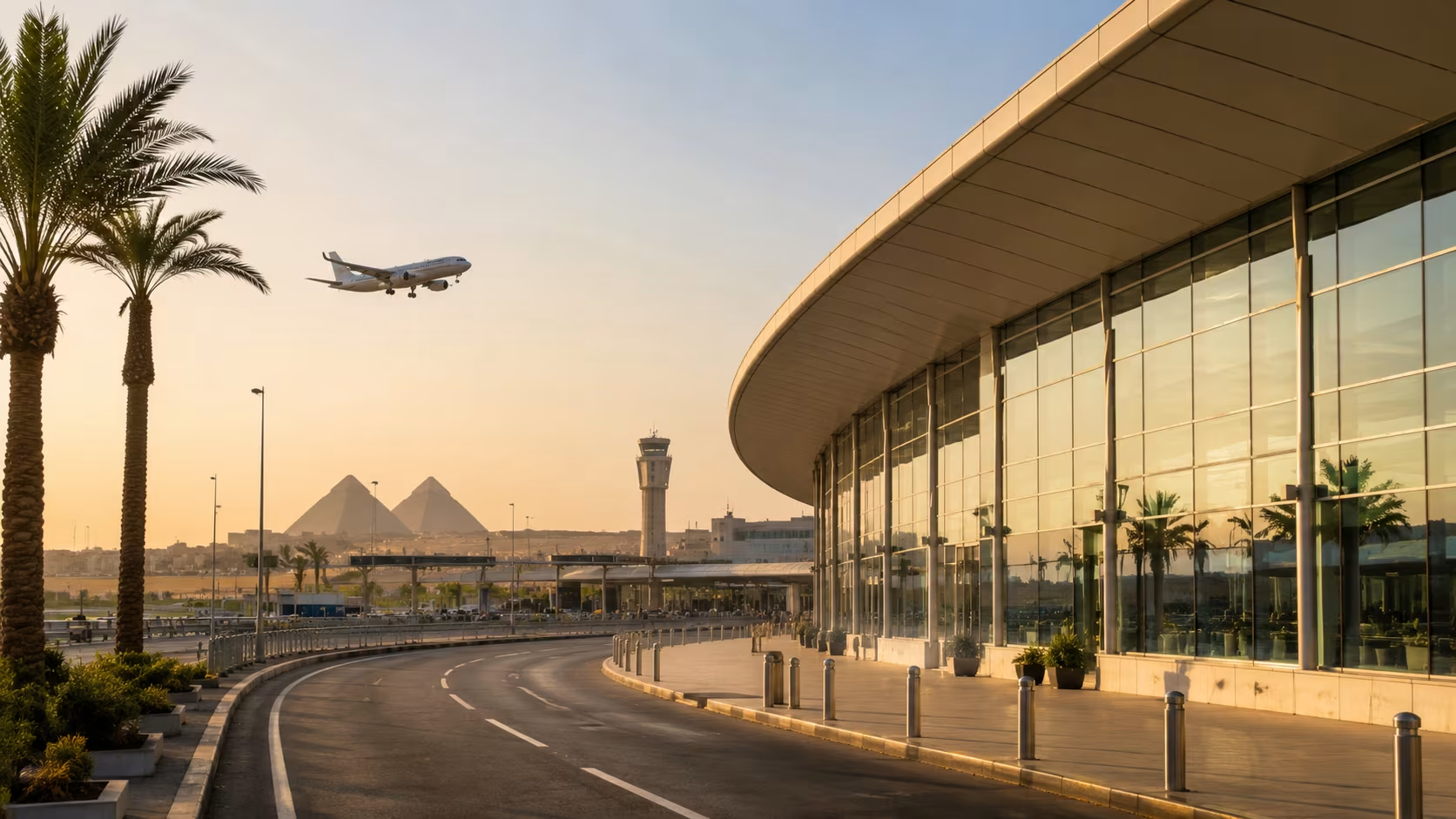
Cairo International Airport (CAI). 22 km northeast of central Cairo.
From CAI:
- Bus + Metro combination: cheap but complex. Skip with luggage.
- Hotel transfer: 600–1,200 EGP ($12–24). Recommended for the first arrival.
- Taxi (white cabs with meter): 350–600 EGP if you can negotiate the meter. Most insist on flat rates.
- Uber/Careem: 350–550 EGP. Reliable.
Direct rail-to-Cairo on the long-discussed monorail line is operational as of 2024. Connects the New Administrative Capital (NAC) to central Cairo, but airport access is via the same separate metro.
Getting Around
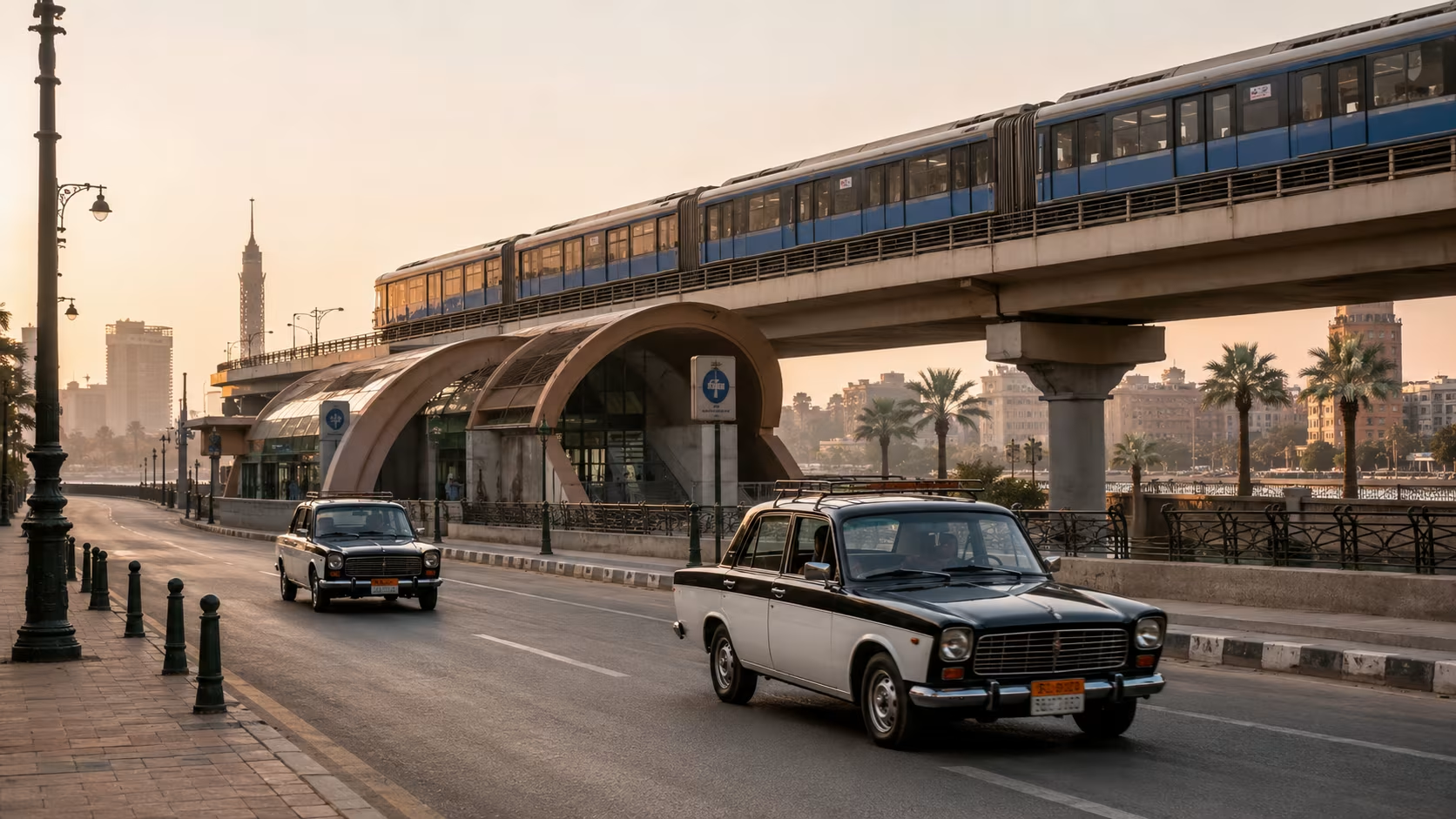
Cairo's traffic is brutal. The city is enormous, and crossings during peak hours can take hours. Most movement happens by Uber/Careem.
Metro
Three functioning lines (1, 2, 3). Line 3 expanded westward to connect Giza in 2022. Single ride: 8–20 EGP. Cheapest and fastest option for most central trips. Women-only car at the front of the train (most lines).
Uber + Careem
The defaults for most tourists. Cheap (50–200 EGP for typical central trips), reliable, English-language confirmation. Use these over street taxis for 90% of moves.
Taxis
White taxis (with meter) and black-and-white taxis (without). Meters are required by law but often "broken" for tourists; insist on the meter or negotiate before entering.
Walking
Islamic Cairo (Khan el-Khalili area) is walkable; Tahrir Square area is walkable. Between districts, walking is impractical due to distance + traffic.
Felucca
The traditional Nile sailboat. 60-90 minute Nile rides for 200–400 EGP per person on the Cairo Corniche. Worth doing once.
Where to Stay
Cairo's neighborhoods are spread over a vast area; pick a base near your priorities.
Downtown Cairo (Tahrir / Garden City)
Near Tahrir Square + the Egyptian Museum. Walking distance to colonial-era architecture + downtown commerce. Mid-range hotels.
Zamalek
The upscale residential island in the middle of the Nile. Quieter, expat-friendly, good restaurants. Premium hotels (the Cairo Marriott, the Sofitel).
Garden City
The upscale residential district between downtown and Maadi. Premium hotels (the Four Seasons First Residence, the Hilton).
Maadi
The expat-residential district 12 km south. Quieter; more international restaurants. Inconvenient for sightseeing but pleasant for slow stays.
Giza
Near the pyramids. Hotels with pyramid views (Marriott Mena House, Steigenberger). Convenient for one full pyramid day; less central for other Cairo activities.
Heliopolis
Northwest, near the airport. Less convenient for sightseeing.
Avoid as a base
- Far suburbs (6th of October City, New Cairo) — too far for a 4-day trip.
- Around Khan el-Khalili souq — beautiful for shopping but loud and chaotic at night.
Realistic 2026 nightly prices (4-star, weekday, shoulder, USD):
| Neighborhood | Mid-range | Higher-end |
|---|---|---|
| Downtown | $60–110 | $180–350 |
| Zamalek | $90–170 | $250–500 |
| Garden City | $130–250 | $380–800 |
| Giza (with pyramid view) | $120–230 | $400–1,200 |
| Maadi | $50–100 | $150–300 |
What to Book in Advance
Grand Egyptian Museum (GEM)
The new museum at Giza, near the pyramids. Opened phased starting 2023; full opening completed 2024. The most-comprehensive Egyptian artifact museum in the world; the entire Tutankhamun collection (5,000+ objects, including the famous gold mask) moved here from the old Egyptian Museum. 250–500 EGP depending on ticket type. Books out 2-4 weeks ahead in peak season. Allow 6 hours minimum to do justice to the collection.
Pyramids of Giza + Sphinx
450 EGP (general entry); 600 EGP (with interior of one pyramid). Walk-up usually fine but get there early (06:00 opening) to beat both heat and crowds. Allow 4 hours for the full Giza Plateau.
Saqqara + Memphis
Pharaoh Djoser's Step Pyramid (the oldest pyramid in Egypt, 2670 BC) at Saqqara. 200 EGP. Memphis, the ancient capital. 80 EGP. 30 km south of Cairo. Most travelers do this as a half-day excursion combined with the Pyramids.
Egyptian Museum (Old, on Tahrir Square)
The original museum opened 1902. Most of the Tutankhamun collection has moved to the GEM, but the museum remains an important repository. 200 EGP. Walk-up. Allow 3 hours.
Sound and Light Show at the Pyramids
300–600 EGP depending on language. Multiple language showings nightly. Touristy but the production is well-done.
Premium Restaurants
- Sequoia (Zamalek). Books 1-2 weeks ahead.
- Sass Café Cairo (Zamalek). Mediterranean. Books 1 week ahead.
- Naguib Mahfouz Café (Khan el-Khalili). Iconic location; books online.
Day 1 — Pyramids of Giza Day
05:30. Hotel pickup (book your driver in advance). The Pyramids open at 06:00–07:00 depending on season; arriving at opening means smaller crowds and cooler weather.
07:00. Pyramids of Giza. The three Great Pyramids (Khufu, Khafre, Menkaure) + the Great Sphinx. The pyramid of Khufu (the largest, 138m, built 2570 BC) can be entered for an additional 600 EGP — claustrophobic and tiring; not for everyone. Allow 3-4 hours total.
11:00. Camel ride (optional). Negotiate before agreeing — 200-400 EGP for a 30-minute ride; double or triple if not negotiated. Refuse aggressive sales offers; the ride is fine but optional.
12:00. Lunch at a Pyramids-area restaurant. 9 Pyramids Lounge for the iconic photograph view. Mena House for upscale lunch with pyramid views.
14:00. Grand Egyptian Museum (GEM) (booked). The world's largest museum dedicated to a single civilization. Opened in phases 2023-2024. Holds the entire Tutankhamun collection plus 100,000+ other artifacts. Allow 4 hours minimum; longer if you let it.
18:30. Return to hotel. Rest.
20:00. Dinner. Felfela (working-class Egyptian institution). Sequoia (Zamalek, riverside).
21:00. Optional Sound and Light Show at the Pyramids. 1 hour show; in English or Arabic depending on the night.
Day 2 — Islamic Cairo
08:30. Coffee at hotel.
09:30. Drive (Uber) to Citadel of Saladin. The 12th-century fortress on a hill overlooking the city. Within: the Mosque of Muhammad Ali (the famous "Alabaster Mosque," 19th-century, the most-photographed mosque in Cairo). The Citadel + Mosque tickets together: 250 EGP. Allow 2 hours.
11:30. Sultan Hassan Mosque + Al-Rifa'i Mosque (across from each other in the Citadel area). Sultan Hassan is one of the largest medieval mosques in the world (1356-1363). 100 EGP combined. Allow 60 minutes.
12:30. Walk into Islamic Cairo (Al-Muizz Street). The medieval main thoroughfare. Multiple medieval mosques + madrasas + caravanserais along the route, each architecturally significant. Walk slowly with a guide if possible. Allow 2 hours.
14:30. Lunch in Islamic Cairo. Khan el-Khalili Café in the souq. El-Fishawy café (since 1773; Naguib Mahfouz wrote here).
16:00. Khan el-Khalili Souq. The medieval bazaar, since 14th century. Spices, silver, copper, perfume, antiques. Negotiate hard; first quotes are 2-4x what locals pay. Allow 90 minutes for slow walking.
18:00. Walk to Al-Azhar Park. The 30-hectare park created from a former garbage landfill (opened 2005); now one of the most-loved public spaces in Cairo. Sunset over the Old City + Citadel + minarets. Free.
19:30. Dinner. Naguib Mahfouz Café in Khan el-Khalili (touristy, scenic). Sequoia in Zamalek for upscale Egyptian. Abou Tarek (working-class koshari institution since 1950).
Day 3 — Coptic Cairo + Nile
09:00. Coffee.
10:00. Coptic Cairo. The historic Christian quarter, predating the Islamic conquest. Walking the area:
- Hanging Church (Al-Muallaqa): the most-respected Coptic church, built atop a Roman gatehouse. Free.
- Coptic Museum: the world's most important collection of Coptic artifacts. 100 EGP.
- Saint Sergius and Bacchus Church (Abu Serga): traditionally where the Holy Family hid during their flight to Egypt. Free.
- Ben Ezra Synagogue: former Jewish quarter; now a museum. Free.
Allow 2.5 hours.
13:00. Lunch in Coptic Cairo or back near central. Andrea Mariotinia (in Garden City) for Egyptian. Tabouleh for working-class Lebanese in Zamalek.
14:30. Egyptian Museum (the old one on Tahrir Square). Even with most Tutankhamun pieces moved to the GEM, the original museum remains a serious repository: the royal mummies hall, the Khufu boat, the early dynasty artifacts. 200 EGP. Allow 2.5 hours.
17:30. Tahrir Square. The site of the 2011 Egyptian revolution. Now restored. Walk the surrounding downtown streets.
18:30. Felucca on the Nile. Traditional sailboat; 60-90 minute ride. 200-400 EGP per person. Sunset on the Nile is one of the city's defining experiences.
20:30. Dinner. Felfela for traditional Egyptian. Andrea Mariotinia for Egyptian fine dining.
Day 4 — Choose: Saqqara, Alexandria Day Trip, or Slow Day
Path A — Saqqara + Memphis
30 km south of Cairo.
08:30. Hotel pickup.
09:30. Saqqara — Pharaoh Djoser's Step Pyramid (2670 BC, the oldest pyramid in Egypt). 200 EGP. Visit the new Imhotep Museum (opened 2006) within the site for context. Allow 2.5 hours.
12:00. Memphis — the ancient capital of Old Kingdom Egypt. The colossal statue of Ramses II + alabaster sphinx. 80 EGP. 60 minutes.
13:30. Lunch at the visitor center.
14:30. Return to Cairo.
Path B — Alexandria Day Trip
200 km north of Cairo. The historic Mediterranean port city. Cleopatra's library + the new Bibliotheca Alexandrina (opened 2002 as the modern echo of the ancient library). Roman catacombs. Mediterranean atmosphere different from Cairo's desert intensity.
Full-day trip with driver: ~$80-120 USD. Or train: 2.5 hours each way.
Path C — Day at the Nile + Slow City
Morning at Cairo Tower for the panoramic city view (200 EGP).
Lunch on a Nile riverside terrace.
Afternoon at Khan el-Khalili if not done thoroughly Day 2.
Late afternoon at a Cairo café for proper coffee and slow time.
Final dinner at one of the Zamalek restaurants you haven't tried.
What to Eat
Egyptian cuisine has its own identity, distinct from broader Arab cuisine. Working-class dishes are inexpensive and substantial; the upscale scene has improved since the 2010s.
Headline Dishes
| Dish | What it is |
|---|---|
| Koshari | Lentils + rice + macaroni + chickpeas + crispy onions + tomato sauce. The unofficial national dish. Working-class everywhere. |
| Ful medames | Slow-cooked fava beans with cumin, garlic, lemon. Standard breakfast. |
| Falafel (Ta'ameya) | Egyptian falafel made with fava beans (different from Levantine chickpea version). |
| Molokhia | Soup made from jute leaves; thick green texture. |
| Mahshi | Stuffed vegetables (peppers, eggplant, zucchini, vine leaves) with rice and herbs. |
| Kebda | Liver, often grilled or sautéed. |
| Hamam mahshi | Stuffed pigeon. |
| Fattah | Layered rice + bread + meat dish. Holiday classic. |
| Konafa | Sweet pastry made of shredded phyllo. |
| Basbousa | Semolina cake with sweet syrup. |
| Egyptian coffee | Strong, dark, with cardamom. Drunk slowly. |
Where to Eat
Working-Class:
- Abou Tarek (the famous koshari institution since 1950, downtown).
- Felfela (since 1959, traditional Egyptian, multiple locations).
- El Tabei El-Domyati for working-class koshari.
- El Fishawy café (since 1773 in Khan el-Khalili).
- Foul Mohammed Ahmed for breakfast ful + ta'ameya.
Mid-Tier / Tourist-Friendly:
- Andrea Mariotinia (Garden City) for upscale Egyptian.
- Naguib Mahfouz Café (Khan el-Khalili) for traditional with views.
- Maison Thomas for Italian-Egyptian fusion.
- Sequoia (Zamalek) for riverside fine dining.
Premium:
- Birdcage at Conrad Cairo for upscale Egyptian.
- Sequoia (mentioned).
- Sabaya at Westin for upscale Lebanese.
Costs and Budget
2026 daily budgets per person, excluding flights and hotel (USD):
| Style | Per day | Notes |
|---|---|---|
| Backpacker | $20–35 | Hostel, koshari + ful, walking, public transit |
| Mid-range | $50–100 | Mix of casual and proper restaurants, museums, Uber |
| Comfortable | $130–220 | Better restaurants, premium tour, taxis, cocktails |
| Higher-end | $300+ | Tasting menus, private guide, luxury hotel breakfasts |
Cairo is among the cheapest major capitals in the world for foreign-currency earners (the Egyptian pound has weakened significantly since 2022). A koshari lunch: 30-60 EGP. Sit-down dinner mid-range: 200-400 EGP per person.
Practical Info
- Currency. Egyptian pound is volatile. Withdraw from bank ATMs (avoid currency exchange offices that quote USD prices).
- Cards. Accepted at hotels and mid-tier restaurants. Cash for street food, taxis, small shops.
- Tipping. Baksheesh (small tipping) is genuinely expected for many services — bathroom attendants, hotel porters, mosque shoe-keepers, tour guides. 5-20 EGP appropriate. Round up restaurant bills 10%.
- English. Common in tourist areas. Less in residential and rural neighborhoods. Younger Egyptians speak more English than older.
- Sales pressure. Real and constant at major tourist sites. Polite but firm "no thank you" + walking is the expected response. Don't let touts attach themselves to you.
- Mosques. Modest dress required. Shoes off. Women cover hair (head scarves provided at major mosques).
- Friday. The Muslim Sabbath. Major mosques have prayer times when non-Muslim visitors are restricted. Most museums and tourist sites operate normal Friday hours.
- Heat. Real and constant in summer. Schedule indoor breaks.
- Pickpocketing. Real around tourist sites. Standard precautions.
- Scams. "The pyramid is closed today" — a tuk-tuk driver appears to take you to alternative sites + souvenir shops with kickback. The Pyramids are open every day.
- Photography. Almost everywhere. Some photo bans at certain mosques and at military/police facilities.
Common First-Timer Mistakes
- Trying to optimize the city. Cairo isn't a checklist destination; it rewards slowness.
- Visiting the Pyramids in mid-afternoon. Heat + crowds peak. Arrive at opening (06:00).
- Skipping the GEM thinking the old Egyptian Museum is enough. The old museum has lost most of its blockbuster pieces; the GEM has them all.
- Eating only at chain restaurants. Egyptian working-class food is excellent and cheap.
- Negotiating taxi fares without the meter. Use Uber/Careem to skip the negotiation.
- Buying the obvious souvenirs from Khan el-Khalili. First quotes are 3-4x what locals pay.
- Hiring a freelance guide outside major sites. Some are excellent; some are scams. Use hotel concierge or pre-booked operators.
- Visiting in summer. Heat is brutal.
- Trying to do Cairo + Luxor + Aswan in 5 days. Either Cairo + Pyramids (3-4 days) or extended (8-12 days) including Luxor and a Nile cruise.
- Not booking the GEM in advance. Walk-up queues exceed 90 min.
- Dressing inappropriately at religious sites. Cover shoulders and knees; women should cover hair at mosques.
- Drinking tap water. Bottled only.
Final Notes
Four days in Cairo is the right length for a focused first visit, with the Grand Egyptian Museum + Pyramids + Islamic Cairo + Coptic Cairo as the core. A fifth day adds Saqqara or Alexandria. A Cairo + Luxor / Aswan combined trip needs 8-12 days.
The quietest piece of advice: spend 90 minutes at El-Fishawy café in Khan el-Khalili in the late afternoon. Order a mint tea. Watch the alley. The Cairo that stays with you isn't the Pyramids photograph (which most travelers see in the first hour) but the slow afternoon in a 250-year-old café where the same families have run the same business for generations, while the city — chaotic, dusty, dense, intensely alive — flows past at its own unhurried pace.
0 Comments
No comments yet — start the conversation.