

Tipping is one of the most reliably misunderstood parts of international travel. Americans over-tip in countries where service workers earn salaries; Europeans under-tip in countries where service workers depend on tips. Locals everywhere can spot a confused tourist by the number on the bill.
This is what to actually leave (and where, and how) in 30+ countries that travelers regularly visit. The headline rule: research before you go, tip the way locals do, and don't assume the back-home rule applies.
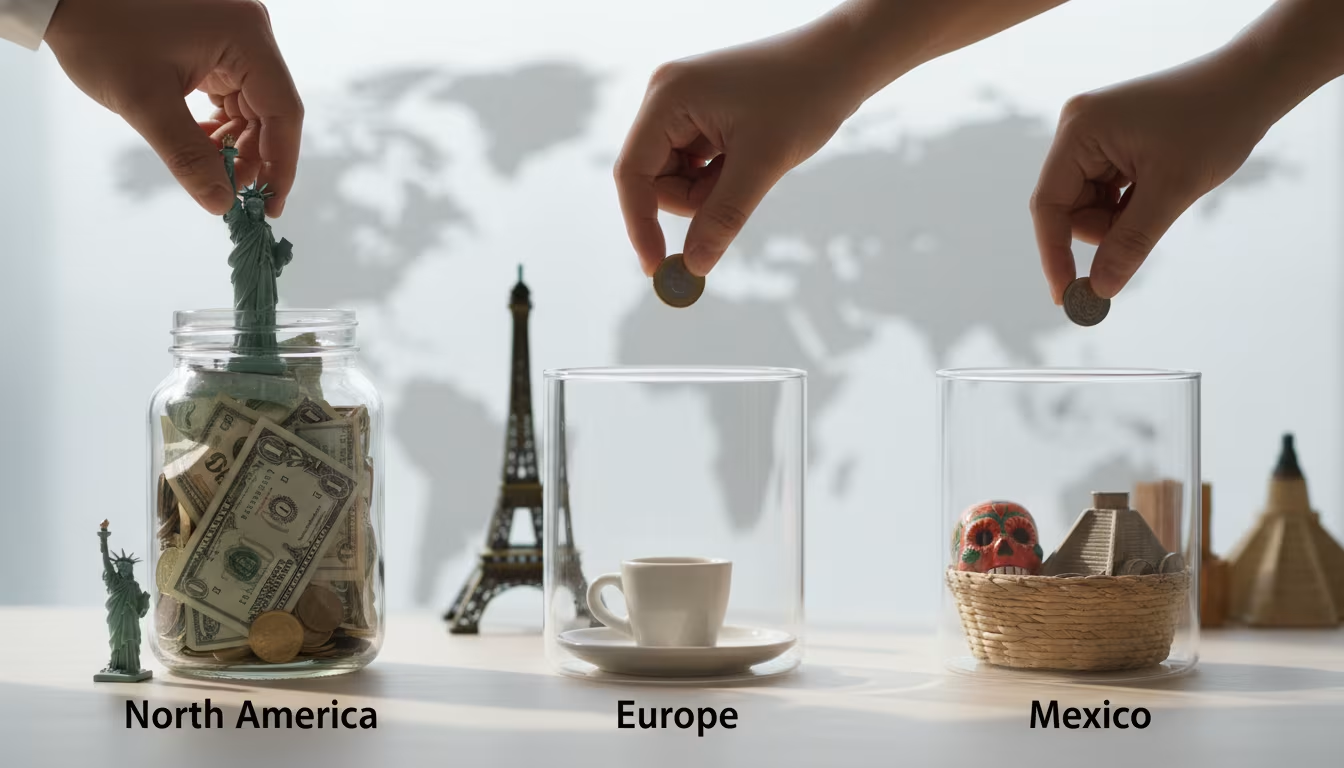
The Three-Way Global Split
At a global level, tipping conventions break into three rough zones:
| Zone | What it means | Example countries |
|---|---|---|
| Tipping mandatory | Service workers depend on tips; under-tipping is genuinely rude | US, Canada (some provinces), Mexico (tourism), South Africa, Egypt |
| Tipping appreciated, modest | Service is paid; tips are a small percentage | Most of Europe, UK, Australia, NZ |
| Tipping unusual or refused | Tipping can confuse or offend | Japan, South Korea, Iceland, Switzerland (mostly) |
Within each zone, country-specific norms vary. The full breakdown follows.
North America
United States
The most tip-dependent country in the world. Service workers in 43 states can be paid below federal minimum wage on the assumption they make tips. Under-tipping has real consequences for the server.
| Service | Standard tip |
|---|---|
| Sit-down restaurant | 18–22% pre-tax |
| Counter-service / coffee | 0–15% (the screen prompts are aggressive; small tips fine) |
| Bar | $1–2 per drink, or 18–20% on tab |
| Taxi / Uber | 15–20% |
| Hotel housekeeping | $3–5/day, left in the room |
| Hotel bellhop | $2–3/bag |
| Hairdresser/spa | 18–20% |
| Tour guide | $10–20/half day, $30–50/full day |
2026 Note
The "tipflation" backlash is real; counter-service tip prompts (often suggesting 20–30% on a $4 coffee) have produced widespread tip fatigue. Tipping below 18% at sit-down restaurants is still considered rude; 0–10% on a $4 counter coffee is socially acceptable.
Canada
Similar to the US but slightly lower expectations.
| Service | Standard tip |
|---|---|
| Sit-down restaurant | 15–20% |
| Bar | $1–2/drink |
| Taxi | 10–15% |
| Hotel housekeeping | C$3–5/day |
| Tour guide | C$10–20/half day |
Provinces vary. Quebec follows roughly American norms. Other provinces are slightly less tip-dependent.
Mexico
Tipping in tourist zones is expected; tipping in non-tourist zones is appreciated but not always practiced.
| Service | Standard tip |
|---|---|
| Sit-down restaurant | 10–15% |
| Bar | 10–15% on tab; 10 pesos/drink |
| Taxi | Round up |
| Hotel housekeeping | 30–50 pesos/day |
| Resort all-inclusive staff | 20–50 pesos for individual service |
| Tour guide | 100–200 pesos/half day |
Europe
Generally lower than the US. Service is paid; tips are a small thank-you for good service.
Western Europe
France
Service compris ("service included") is mandatory by law on all bills. The included service charge is the server's wage component.
| Service | Standard tip |
|---|---|
| Restaurant | Round up or leave €1–5 for very good service |
| Café | Round up to nearest euro |
| Bar | €0.50–1 per drink |
| Taxi | Round up |
| Hotel housekeeping | €1–2/day |
Italy
Service usually included (coperto or servizio). Tipping beyond is optional and modest.
| Service | Standard tip |
|---|---|
| Restaurant | 5–10% if not included; round up if included |
| Café (counter) | Don't tip |
| Bar | Round up |
| Taxi | Round up |
| Hotel housekeeping | €1–2/day |
Spain
Not a tipping culture; round-up appreciated.
| Service | Standard tip |
|---|---|
| Restaurant | 5–10% for good service; nothing if not |
| Tapas bar | Round up |
| Taxi | Round up |
| Hotel | €1–2/day for housekeeping |
Portugal
Similar to Spain. Round up at cafés; 5–10% for restaurants on good service.
Germany
Service included by law (Bedienung im Preis). Tipping is small and expected to be told to the server, not left on the table.
| Service | Standard tip |
|---|---|
| Restaurant | 5–10%, told to server when paying |
| Café | Round up |
| Taxi | Round up to nearest euro |
| Hotel housekeeping | €1–3/day |
Important
In Germany, you tell the server the total amount you want to pay (e.g., "32 euro" on a 28-euro bill), and they hand you the difference. Don't leave money on the table. That's not the local way.
Netherlands
Low-tip culture. 5–10% on restaurant bills for good service.
Belgium
Service included. Round up or leave 5–10% for good service.
Switzerland
Service included; the Swiss don't tip much, and over-tipping is considered odd. Round up only. Some upscale places may add a service charge of 10%.
Austria
Low-tip culture. 5–10%, told to the server when paying.
UK and Ireland
Service sometimes included ("service charge"); when not, 10–12.5% at restaurants is standard.
| Service | Standard tip |
|---|---|
| Restaurant | 10–12.5% if service not added |
| Pub (food at bar) | No tip |
| Pub (table service) | Round up or 10% |
| Taxi | Round up to nearest pound |
| Hotel housekeeping | £1–2/day |
| Tour guide | £5–10/half day |
Northern Europe / Scandinavia
Denmark, Sweden, Norway, Finland
Low-tip cultures. Service is well-paid; tips are not expected.
| Service | Standard tip |
|---|---|
| Restaurant | Round up or 5% for excellent service |
| Café | Don't tip |
| Taxi | Round up |
| Hotel housekeeping | Optional |
Iceland
Service and gratuity always included by law. Tipping is genuinely not expected, for restaurants, tour guides, taxis, or anything else. The country is on most travelers' "don't tip" list.
Eastern Europe
Generally appreciative-tip cultures (10% standard).
Czech Republic
10% at sit-down restaurants. Round up at cafés and pubs.
Poland
10–15% at restaurants. Round up elsewhere.
Hungary
10–15% at restaurants. Note: in Budapest, some tourist-trap restaurants have begun adding mandatory "service charge" of 12–15%, so read the bill carefully and don't double-tip.
Greece
5–10% at restaurants. Round up at cafés. Taxi: round up.
Croatia
10–15% at restaurants. Higher in tourist zones (Dubrovnik, Hvar).
Turkey
10–15% at restaurants. Round up at cafés. Taxi: round up. Tip in cash; some places add it to credit card with awkward results.
Russia, Ukraine, Belarus
10–15% at restaurants when feasible. Tipping fluid, varies city to city.
Asia
Mostly non-tipping cultures, with important exceptions.
Japan
Do not tip. Tipping in Japan can be confusing, embarrassing, or offensive. Service is included in the price; the work itself is the dignity. Leaving money for a hotel housekeeper, a taxi driver, or a server is genuinely not done. The exception is leaving a small amount in an envelope (with the bill stapled to it) for a private tour guide for a multi-day arrangement.
If you accidentally tip a Japanese taxi driver, they may chase you down to return the money. Don't put yourself or them through it.
South Korea
Not a tipping culture. Tips at restaurants and taxis are not expected and sometimes refused. International hotels and resorts catering to Western tourists may have shifted toward accepting them.
China
Generally not a tipping culture, with growing exceptions in tourist zones and high-end hotels.
| Service | Standard tip |
|---|---|
| Restaurant (local) | None |
| Restaurant (international hotel/tourist zone) | 10% |
| Taxi | None |
| Hotel housekeeping | 10–20 yuan |
| Tour guide | 100–200 yuan/day |
Hong Kong
Service charge (10%) often included. Round up if not. International hotels follow Western tipping more.
Thailand
Tipping appreciated but not required.
| Service | Standard tip |
|---|---|
| Restaurant | 5–10% or round up |
| Taxi | Round up |
| Hotel housekeeping | 20–50 baht/day |
| Massage | 50–100 baht for 1-hour |
| Tour guide | 200–400 baht/half day |
Vietnam
Similar to Thailand. 10% at restaurants, round up taxis, 20,000–50,000 dong for housekeeping.
Indonesia
Service charge (5–10%) often included at hotels and tourist restaurants. Tip beyond is appreciated but not expected. 10,000–50,000 rupiah for various services.
Singapore
Similar to Hong Kong. Service charge typically included; round up beyond.
India
Tip-expected culture in tourist zones.
| Service | Standard tip |
|---|---|
| Restaurant | 7–10% if not included |
| Bar | 7–10% |
| Taxi | Round up |
| Hotel housekeeping | 100–200 rupees/day |
| Tour guide | 500–1,500 rupees/half day |
| Driver (multi-day) | 500–1,000 rupees/day |
Middle East and North Africa
Generally tip-expected cultures.
Egypt
Tipping (baksheesh) is a recognized social institution. Small tips for many services.
| Service | Standard tip |
|---|---|
| Restaurant | 10–15% |
| Café | Round up |
| Taxi | Round up |
| Hotel housekeeping | $1–2/day |
| Boat captain (Nile cruise) | $5–10/day |
| Tour guide | $20–40/day |
Morocco
Tipping (pourboire) widely expected for services.
| Service | Standard tip |
|---|---|
| Restaurant | 5–15% |
| Café | Round up |
| Taxi | Round up |
| Hotel housekeeping | 10–20 dirhams/day |
| Tour guide | 100–300 dirhams/day |
UAE (dubai, Abu Dhabi)
Service charge (10%) usually included. Tipping beyond is appreciated.
| Service | Standard tip |
|---|---|
| Restaurant | 10% if no service charge |
| Bar | 10% |
| Taxi | Round up |
| Hotel housekeeping | 10–20 AED/day |
Israel
10% at restaurants. Round up at cafés. Tour guides: $30–50/day.
Jordan
Low tipping culture historically; tourist tipping has spread the habit.
Africa
Mostly tipping-positive, varying significantly.
South Africa
10–15% at restaurants. R5–10 for car park attendants and gas station attendants. R30–50/day for hotel housekeeping. Significant tip-dependent culture.
Kenya, Tanzania
10–15% at restaurants. Important: safari guides + cooks + drivers expect significant tips for multi-day trips ($15–30/day total per guest split among the team is the norm).
Oceania
Australia
Low-tip culture. Service is well-paid.
| Service | Standard tip |
|---|---|
| Restaurant | 5–10% for excellent service |
| Café | Don't tip |
| Taxi | Round up |
New Zealand
Nearly identical to Australia. Tipping is genuinely optional.
South America
Brazil
Service charge (10%) often included. Round up beyond. Taxi: round up.
Argentina
10% at restaurants when service not included. Tipping in pesos is normal but inflation has made the math tricky, so round up to round numbers.
Chile
10% expected at restaurants (some places add it as "sugerencia," meaning suggestion). Taxi: round up.
Peru, Colombia, Ecuador
10% at restaurants; round up taxis. Tour guides $10–20/half day.
Cruise Ships
Most cruise lines now bill a daily "gratuity" automatically ($16–25 per person per day in 2026). This goes to the dining staff, room steward, and crew pool. You can:
- Leave the auto-gratuity in place and not worry about it (most travelers' default).
- Remove or reduce the auto-gratuity at guest services and tip individually (more work, only worth it if service was poor).
- Add to the auto-gratuity for excellent service from specific staff.
Bartenders typically get 18% added to drinks; spa staff 18% on services; specialty restaurants their own auto-gratuity layer.
How to Actually Tip
A few practical points across countries:
Cash Vs. Card
In many countries, tipping on a credit card means the tip ends up at the restaurant's bank rather than the server's pocket. Cash tips ensure the server gets the money. Pay the bill on card; leave the tip in cash.
Exceptions
US restaurants almost universally pass card tips through to servers. The credit-card-tip-disappearing problem is mostly a Europe/Latin America concern.
Telling the Server (german Pattern)
In Germany, Austria, Switzerland, and parts of Eastern Europe, you tell the server the total amount you want to pay when they bring the card terminal or cash register. Don't leave money on the table: they may not see it before another customer takes it.
"servizio Incluso" / "service Compris"
If the bill says service is included (in any language), additional tipping is genuinely optional and modest.
Carrying Small Bills
In tip-cultures (US, Mexico, Egypt, India), keep small bills and coins on you. A taxi driver getting handed a 500-peso bill for an 80-peso fare won't be able to make change.
Common Tipping Mistakes
- Tipping in Japan. Don't.
- Tipping at counter-service in Europe. Don't, except round up.
- Tipping a percentage of pre-tax in countries that show only post-tax bills. Tip on the displayed total.
- Forgetting service is included in France or Italy and tipping 20% on top.
- Tipping in foreign currency that the worker can't easily exchange. US dollars work in many countries; obscure currencies may go in the trash.
- Forgetting the bellhop, valet, or housekeeper while tipping the server. Many travelers tip restaurants well and ignore the rest of the hospitality staff.
- Refusing to round up in Europe. Even where tipping isn't required, leaving the exact bill is mildly cheap.
Final Notes
The single best rule is to research the country before you go and follow local norms. Over-tipping in non-tipping countries is not generous; it's a misunderstanding. Under-tipping in tip-dependent countries is not frugal; it's underpaying a worker.
The second-best rule: when in doubt, watch what locals do at the table next to you. They've solved this problem; you can copy them.

0 Comments
No comments yet — start the conversation.