
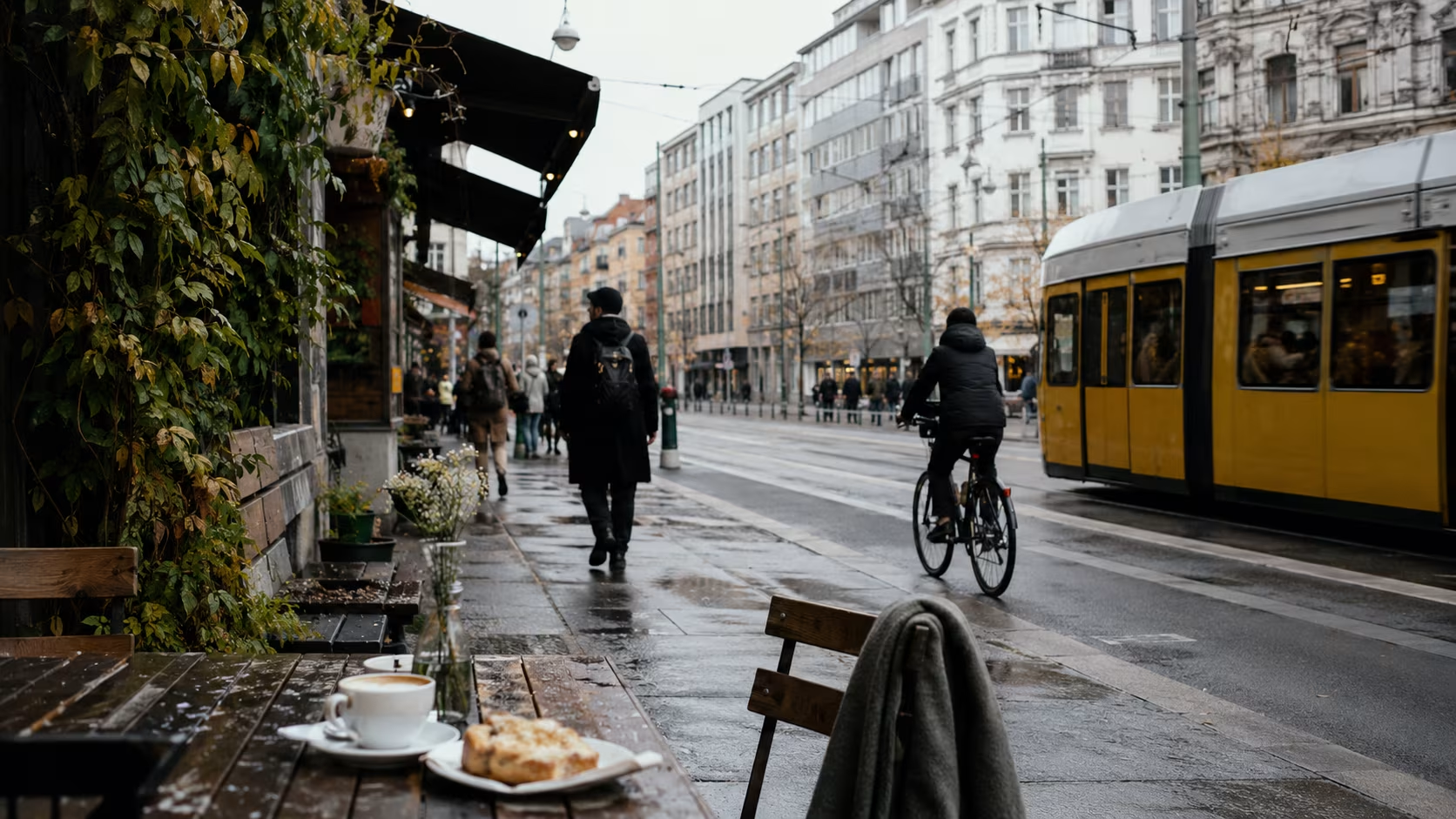
Berlin in 2026 is more expensive, more polished, and more crowded than the city tourists fell in love with in the early 2010s. Rents have doubled since 2018. Tempelhof and Görlitzer Park no longer feel like accidents. The cheap-and-grungy creative ferment has migrated to Leipzig, Marseille, and outer-ring boroughs the average tourist won't see. Berghain still has its line, but the city around it has grown up.
None of that means Berlin isn't worth visiting. It means the version of Berlin you see depends entirely on which neighborhoods you stay in and how you spend your days. The city has more world-class museums and historical sites than any other German city by a wide margin, plus a food scene that has quietly become one of the most diverse in Europe.
This is a 4-day first-timer guide written for the city as it actually is in 2026, not the version your friends visited in 2014.
Quick Facts
| Item | Detail |
|---|---|
| Country | Germany |
| Currency | Euro (€) |
| Language | German; English widely spoken |
| Time zone | CET (UTC+1) / CEST (UTC+2) |
| Tourist tax | 5% of room rate, capped at 21 nights |
| Best time | May–June, September |
| Visa | Schengen, 90 days for most non-EU |
| Trip length | 3–4 days |
When to Go
May to June. The sweet spot. Long days, parks fill up with people drinking on blankets, biergartens open, average highs 18–22°C. Karneval der Kulturen in late May is one of Europe's better street festivals.
July to August. Hot (sometimes 32°C+, brutally so for a city without much air conditioning), tourist-dense, but the city has 20:30 sunsets and the longest beer-garden hours.
September. The other prime window. Weather mild, schools resumed, Festival of Lights in October making it a mini second-best time.
November to February. Dark and cold. The Christmas markets (Gendarmenmarkt, Charlottenburg) are real local events worth a winter visit. January–February drag.
Avoid:
- Oktoberfest weeks (mid-September to early October): Berlin doesn't celebrate but Munich-bound transit pricing surges.
- Trade-fair weeks (IFA early September, ITB early March): hotel rates can triple.
Getting in
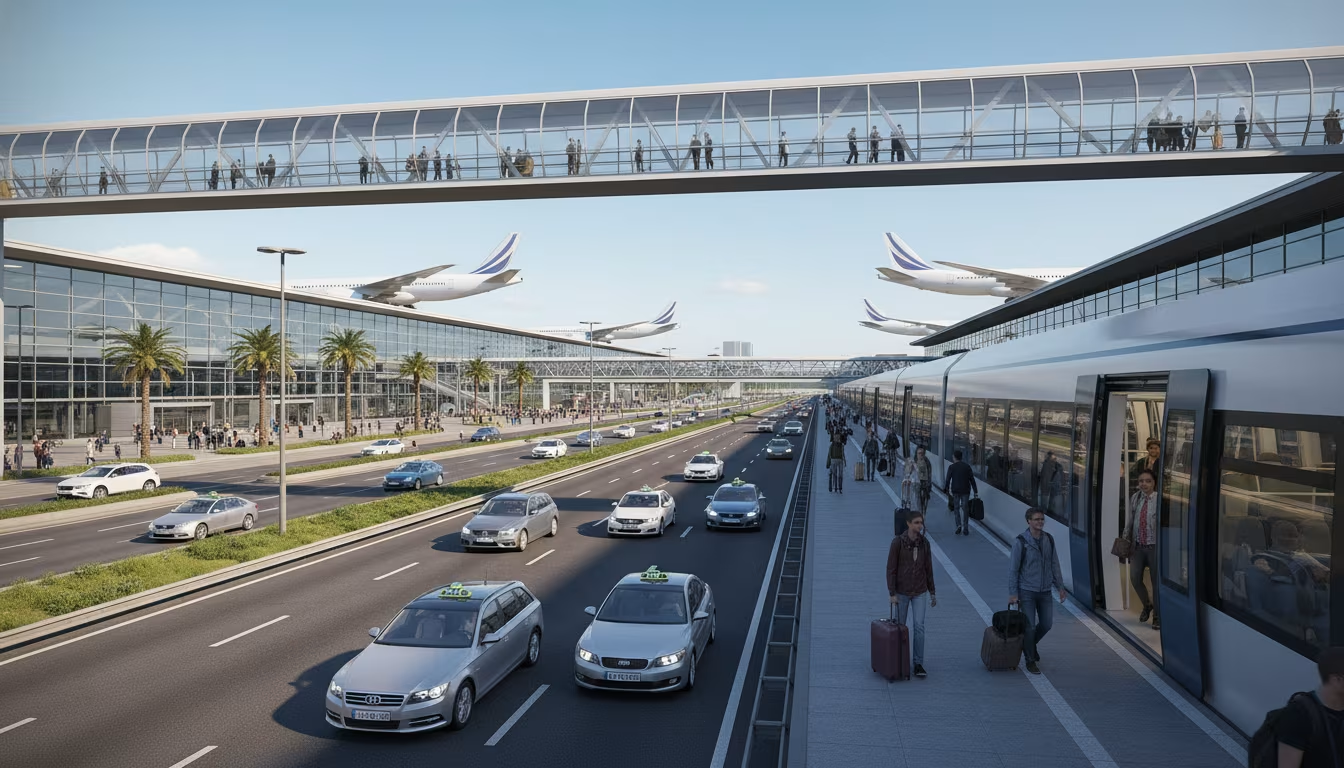
Berlin Brandenburg Airport (BER) opened in 2020 after a decade-long delay. Single airport, 25 km southeast of central Berlin.
From BER to central Berlin:
- Airport Express (FEX): €4.40, 30 min to Hauptbahnhof.
- S-Bahn (S9, S45): €4.40, 50 min, more local stops.
- Taxi: €50–60 to Mitte.
- Uber/Bolt: €35–50.
Berlin is also a major rail hub. Hauptbahnhof connects to most German cities and to Prague, Vienna, Warsaw, Amsterdam (now via direct ICE).
Getting Around
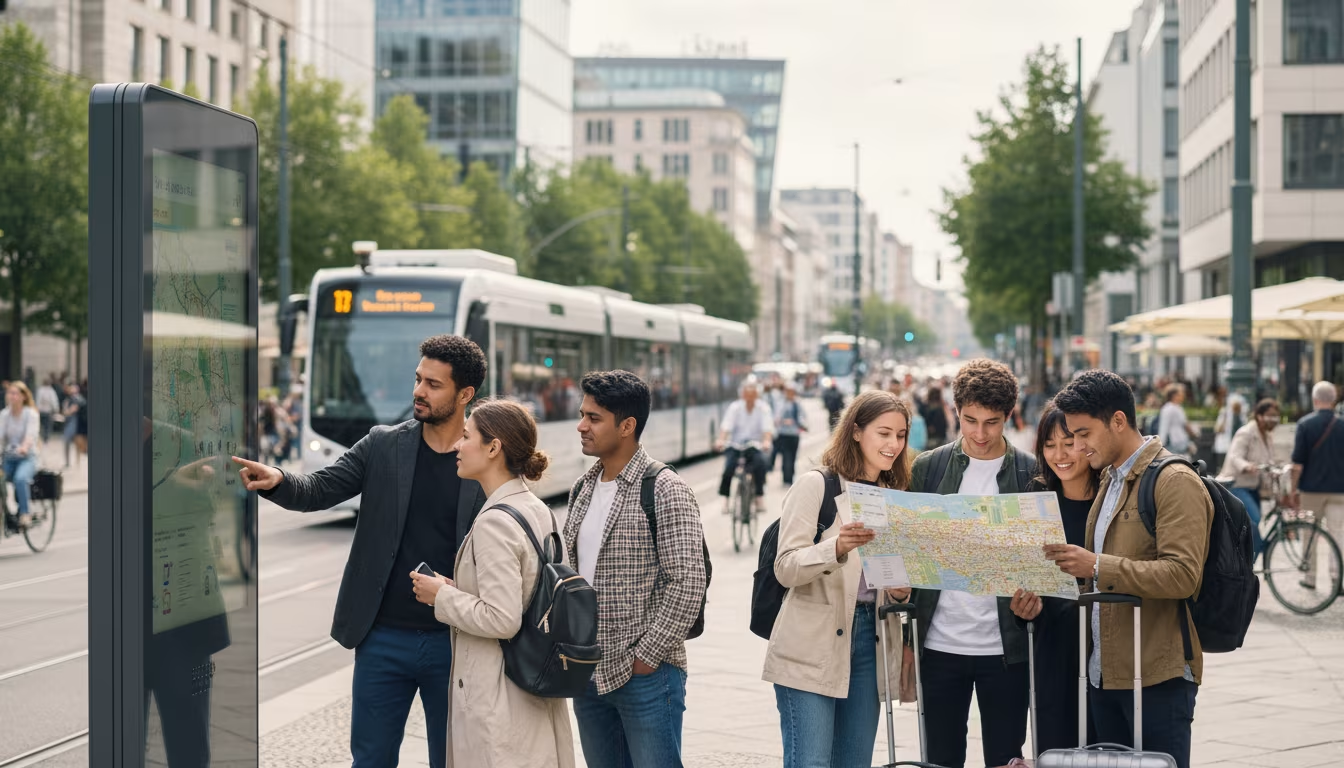
Berlin's transit is excellent. The U-Bahn (subway) and S-Bahn (commuter rail) cover the entire central city.
Tickets. Single ride €3.80 (zone AB, the central city + airport). Day pass €10.60 (24h AB). Weekly pass €43.50.
Important. Berlin is one of Europe's last major cities operating on a proof-of-payment honor system. There are no turnstiles. Plain-clothes ticket inspectors do random checks; getting caught without a ticket is €60. Always validate or buy a ticket before boarding.
Deutschlandticket. €58/month nationwide unlimited public transit pass. Almost never worth it for a 3–4 day visit.
Bicycles. Berlin is mostly flat with growing bike infrastructure. Rental: €12–20/day from Lidl Bike, Donkey Republic, or local shops. Less universal than Amsterdam but increasingly real.
Taxis. Easy to find on the street near major squares. Apps: FREE NOW, Bolt, Uber. Base fare €3.90, then €2.30/km.
Where to Stay
Berlin has a true neighborhood culture; the kiez (district) you choose changes the trip significantly.
Mitte (central)
Government quarter, museum island, Brandenburg Gate. Touristy but historically the heart of the city. Hotel prices premium. Stay here for sightseeing convenience; expect that you're in the most international part of town.
Prenzlauer Berg
North of Mitte, formerly working-class East Berlin, now boutique-and-stroller-heavy. Helmholtzplatz, Kollwitzplatz, the Mauerpark Sunday flea market. Walking distance to Mitte. The most tourist-friendly kiez feel without being a tourist zone.
Kreuzberg
The headline alternative neighborhood for two decades. Turkish-German cultural roots, the canal at Maybachufer, late-night bars, food trucks. Two halves: SO36 (eastern, edgier, Görlitzer Park) and 61 (western, slightly polished, Bergmannstraße). Stay in 61 if you want the energy without the late-night chaos.
Friedrichshain
East of Kreuzberg, club and bar district, the East Side Gallery (the Berlin Wall section painted by 100+ artists). Younger crowd, cheaper accommodations, the Boxhagener Platz weekend market is a real local event.
Neukölln
Further south, the latest creative migration zone, mixed-immigrant working-class roots underneath the gentrification layer. Kreuzkölln (the part bordering Kreuzberg) is the most visitor-friendly. Schillerkiez to the south is more local-only.
Charlottenburg
West Berlin's old central district. KaDeWe department store, the Kurfürstendamm shopping boulevard, Charlottenburg Palace. Calmer, more business-suit, less youth-creative. Stay here only if Berlin's eastern energy is not your goal.
Avoid as a Base
- Around Hauptbahnhof. Convenient for trains, soulless otherwise.
- Alexanderplatz immediate vicinity. Tourist plaza, no neighborhood feel.
- Far suburbs (Spandau, Marzahn). No reason for a 4-day trip.
Realistic 2026 nightly prices (4-star, weekday, shoulder):
| Neighborhood | Mid-range | Higher-end |
|---|---|---|
| Mitte | €170–250 | €380–650 |
| Prenzlauer Berg | €130–200 | €280–450 |
| Kreuzberg 61 | €140–210 | €300–500 |
| Friedrichshain | €110–170 | €240–400 |
| Neukölln | €110–170 | €230–380 |
| Charlottenburg | €130–200 | €280–500 |
What to Book in Advance
Reichstag Dome
Free, but mandatory advance registration with passport details. Book at bundestag.de 2–3 weeks ahead. Allow 90 minutes including security. The glass dome by Norman Foster is one of the city's signature architectural pieces.
Pergamon Museum
Closed for major renovation through 2027. Some rooms reopened in late 2025; full reopening expected 2027. Check status before assuming it's open.
Neues Museum (bust of Nefertiti)
Walk-up usually fine but timed entry available. €14. The Egyptian collection alone is worth 2 hours.
Stasi Museum (lichtenberg)
Walk-up fine. €10. The actual former Stasi headquarters; the Erich Mielke office preserved like he just stepped out. One of the most striking museum experiences in Berlin.
Berlin Wall Memorial (bernauer Straße)
Free, outdoor, walk-up. The single best Berlin Wall site in the city, better than Checkpoint Charlie, better than the East Side Gallery as historical experience.
Berghain
Not bookable. Not guaranteed. The line snakes Saturday nights from 02:00 onward. Sven Marquardt's bouncing crew turns away ~70% of would-be entrants. If you want to try: come solo or in pairs (groups rarely make it), wear black, don't talk in line, don't approach the door staff with anything other than "Allein" (alone) or your party size in German.
Day 1 — Cold War Berlin
08:30. Coffee in Mitte or Prenzlauer Berg. The Barn is the city's coffee specialist (a few locations).
09:30. Brandenburg Gate. The headline photograph of the city. 10 minutes; it's not a deep stop.
10:00. Memorial to the Murdered Jews of Europe (Holocaust Memorial). The Peter Eisenman field of 2,711 concrete stelae. Walk through; resist taking selfies on the stelae (the city has been pleading with tourists about this for over a decade). The underground Information Center is heavy and necessary. Allow 60 minutes total.
11:30. Walk to Topography of Terror, free outdoor and indoor exhibition on the site of the former Gestapo and SS headquarters. The most dense Nazi-era documentation in the city. Allow 90 minutes.
13:00. Lunch in Kreuzberg. Curry 36 for currywurst (the West Berlin street food). Mustafa's Gemüse Kebap at Mehringdamm if you want to wait in the legendary line, 60+ minutes typical.
14:30. Berlin Wall Memorial at Bernauer Straße. Free, outdoor, the only place in Berlin where a section of the wall + death strip + watchtower is preserved as it was. The visitor center is small but excellent. 90 minutes.
16:30. Optional: Stasi Museum in Lichtenberg (S-Bahn 20 min). Or back to the central city for slow café time.
19:30. Dinner. Mitte if staying central; Prenzlauer Berg if you want the gastropub-and-natural-wine scene.
Day 2 — Museums
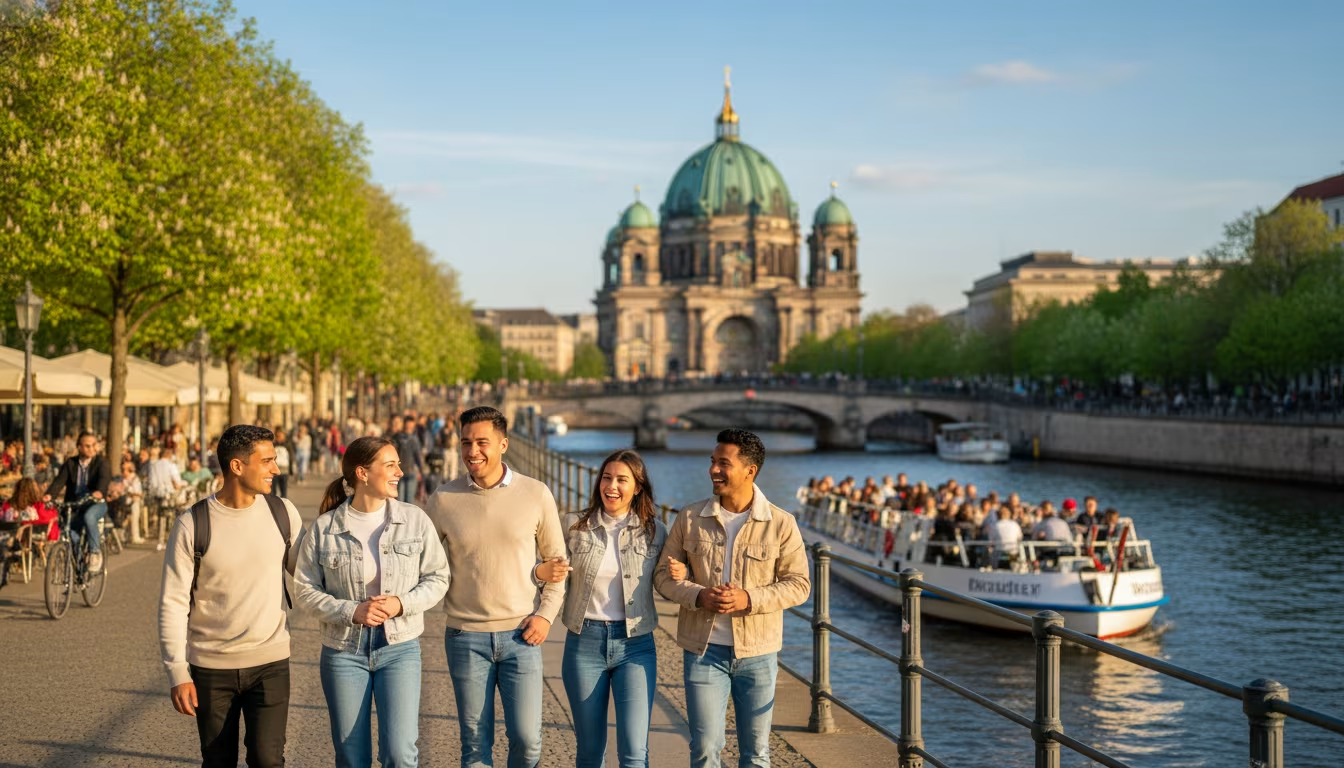
Museum Island and the surrounding historical core.
09:00. Neues Museum. Egyptian collection, the Bust of Nefertiti. Allow 2 hours.
11:30. Either Alte Nationalgalerie (19th-century European painting) or Bode Museum (Byzantine and Italian sculpture). Pick one; both are full afternoons in their own right.
14:00. Lunch in Mitte. Hackescher Hof for German classics in a courtyard setting; Mogg in the Old Jewish Girls' School for pastrami and matzo ball soup.
15:30. DDR Museum. Touristy but well-done, with interactive recreations of East German daily life. €13. 90 minutes.
17:30. Walk to Hackesche Höfe (the historic linked courtyards) and the Scheunenviertel (the old Jewish quarter). The streets retain their pre-war scale better than most of the city.
19:30. Dinner near Rosenthaler Platz. Pauly Saal for high-end German; Mr. Susan for natural wine and small plates; Lokal for casual.
Day 3 — Kreuzberg, Friedrichshain, East Side Gallery
The day to spend in the eastern half of the city.
09:30. Markthalle Neun in Kreuzberg. The historic market hall, Thursday Street Food and the Saturday market are the institutional events. On other days: a few good lunch counters and the bakery.
11:00. Walk along the Landwehrkanal. The canal-side (especially Maybachufer and Paul-Lincke-Ufer) is what most travelers picture as "Berlin in summer." Tuesday and Friday Turkish Market (Türkenmarkt) at Maybachufer is a working neighborhood market.
13:00. Lunch. Burgermeister at Schlesisches Tor (under the U-Bahn track, a converted public toilet, serves the city's best burger). Defne for Turkish fine dining. Ora for Israeli small plates.
14:30. Walk East Side Gallery, the longest preserved section of the Berlin Wall (1.3 km). Free, outdoor, often graffitied over the original 1990 art. Iconic: the Brezhnev-Honecker kiss ("My God, Help Me to Survive This Deadly Love").
16:00. Friedrichshain. Boxhagener Platz, the Sunday flea market if it's Sunday. Otherwise café and walking.
18:00. Aperol or wine at a Kreuzberg or Friedrichshain café terrace.
20:00. Dinner. Lode & Stijn in Kreuzberg for high-end Dutch-influenced. Standard for Roman-style pizza. Tribeca for casual.
22:00 onwards (optional). Bar-hopping. Kreuzberg's Schlesisches Tor cluster, Friedrichshain's RAW Gelände complex (multiple bars and clubs in a former rail yard), or the Neukölln Weserstraße strip.
Day 4 — Tiergarten, Charlottenburg, or a Day Trip
Three paths.
Path A: Tiergarten + Reichstag
09:00. Walk through Tiergarten park (the city's central green space). Stop at the Soviet War Memorial in the western half, then the Victory Column.
11:00. Reichstag dome (timed entry you booked).
13:00. Lunch in Mitte.
14:30. Schloss Bellevue (German Federal President's residence) walk-by, then the Hansaviertel (1950s Modernist housing project, an architecture nerd's pleasure).
Path B: Charlottenburg + KaDeWe
09:30. Charlottenburg Palace. €17. Allow 2 hours.
12:00. Lunch on Kurfürstendamm.
14:00. KaDeWe, the second-largest department store in Europe. The 6th-floor food hall is the actual reason to visit.
16:00. Kaiser-Wilhelm-Gedächtniskirche (the bombed-out memorial church preserved as a war ruin).
17:30. West Berlin café culture on Savignyplatz.
Path C: Day Trip to Potsdam
The Prussian palace city, 30 minutes from central Berlin by S-Bahn (€4.40 with zone C ticket).
09:30. S7 to Potsdam Hauptbahnhof. Bus to Sanssouci Park.
10:00. Sanssouci Palace + Park. The Frederick-the-Great rococo palace, with extensive formal gardens. €14 palace + free park. Allow 4 hours for the park; longer if you visit multiple buildings.
14:30. Lunch in Potsdam Old Town.
15:30. Cecilienhof (the palace where the 1945 Potsdam Conference was held, the original conference table preserved).
17:30. Train back to Berlin.
What to Eat
Berlin's national-cuisine identity is shallow; what makes the food scene exciting is the immigrant layers and the recent international wave.
Classic Berlin
- Currywurst. A Berliner working-class invention: pork sausage, ketchup with curry powder, paprika. Curry 36 at Mehringdamm; Konnopke's Imbiss in Prenzlauer Berg is the classic. €4–5 with fries.
- Döner Kebap. Invented in Berlin in the 1970s by Turkish immigrants. Mustafa's Gemüse Kebap is the famous one (60+ min wait). Many neighborhood spots equally good with no line.
- Schnitzel + Bier. Henne in Kreuzberg (chicken schnitzel only, since 1907). Zur Letzten Instanz in Mitte (Berlin's oldest restaurant, since 1621).
- Eisbein. Boiled pork knuckle with sauerkraut. Old-school Berlin; not on every menu anymore. Marjellchen in Charlottenburg keeps it.
- Königsberger Klopse. Veal meatballs in caper-cream sauce. Comfort food classic.
- Berliner. Jam-filled doughnut. Bakery counter staple.
The International Layer
- Vietnamese. Berlin's Vietnamese community is large; Madame Ngô for proper pho, Chen Che for upmarket.
- Israeli/Middle Eastern. Ora for high-end, Chuzpe for casual.
- Italian. Strong presence. Standard for Roman pizza, Trattoria à Muntagnola for Sicilian.
- Turkish. Beyond döner: Hasir for the original 1971 Turkish-grill restaurant, Defne for fine dining.
- Korean. Sun Quan in Kreuzberg, Kimchi Princess for casual.
Fine Dining
Berlin has more Michelin stars than any German city after Munich. Tim Raue (Asian-influenced, two-star), Rutz (German-fine, three-star), Nobelhart & Schmutzig (only-local-ingredients, two-star). All three book 3–8 weeks ahead.
Costs and Budget
2026 daily budgets per person, excluding flights and hotel:
| Style | Per day | Notes |
|---|---|---|
| Backpacker | €50–80 | Hostel, currywurst lunches, walking, museum days |
| Mid-range | €90–140 | Mix of casual and good restaurants, museums, transit |
| Comfortable | €160–240 | Better restaurants, club covers, taxis |
| Higher-end | €350+ | Tasting menus, private tours, hotel breakfasts |
Practical Info
- Cash culture. Berlin is more cash-based than most major Western European cities. Many casual restaurants and bars are still cash-only or have €15–20 card minimums. Carry €100 cash.
- Sundays. Most shops closed except bakeries and station-area kiosks (Spätis). Restaurants and museums open.
- Quiet hours (Ruhezeit). 22:00–06:00 weekdays and Sundays. Loud parties in apartments draw real complaints; even outdoor seating areas wind down.
- English. Almost universal in restaurants, hotels, and shops. Older Germans outside tourist zones may not speak English; younger Germans almost always do.
- Smoking. Restaurants and bars vary. Some bars allow indoor smoking; restaurants almost never. "Raucherkneipe" (smoking pub) is sign for indoor smoking permitted.
- Crime. Generally low. Pickpocketing on busy U-Bahn lines, especially U2 around tourist sites. Standard precautions.
Common First-Timer Mistakes
- Spending the full first day at Checkpoint Charlie. It's a tourist photo-op with replica signage; walk past it and visit the Berlin Wall Memorial at Bernauer Straße instead.
- Trying to enter Berghain at 22:00. The serious crowd shows up 02:00–06:00 Saturday/Sunday morning. The 22:00 line is mostly tourists who will be turned away.
- Booking a single neighborhood and never leaving. Berlin's value is in the contrast between districts. Walk between them; ride the U-Bahn often.
- Skipping the Stasi Museum. It's 30 minutes by U-Bahn; nothing else in the city compares.
- Eating at the Brandenburg Gate area. Tourist factories with tourist prices.
- Assuming all transit has turnstiles. It doesn't. Buy or validate a ticket before boarding.
- Photographing the Holocaust Memorial as a fashion shoot. The city's residents are tired of asking tourists not to do this. The memorial is a serious historical site.
Final Notes
Berlin in 2026 is a polished version of itself, more expensive than its reputation suggests, but still richer in 20th-century history than any other European capital. Four days is enough to see the headline sites and walk a real neighborhood; one more day buys you a Potsdam excursion or a deeper look at Kreuzberg/Neukölln nightlife.
The city rewards walking. Most of what's interesting happens between the stops on a tour bus. Pick a Kreuzberg café terrace on a Tuesday afternoon and watch what walks by. That's the city tourists came looking for; it still exists.
0 Comments
No comments yet — start the conversation.