

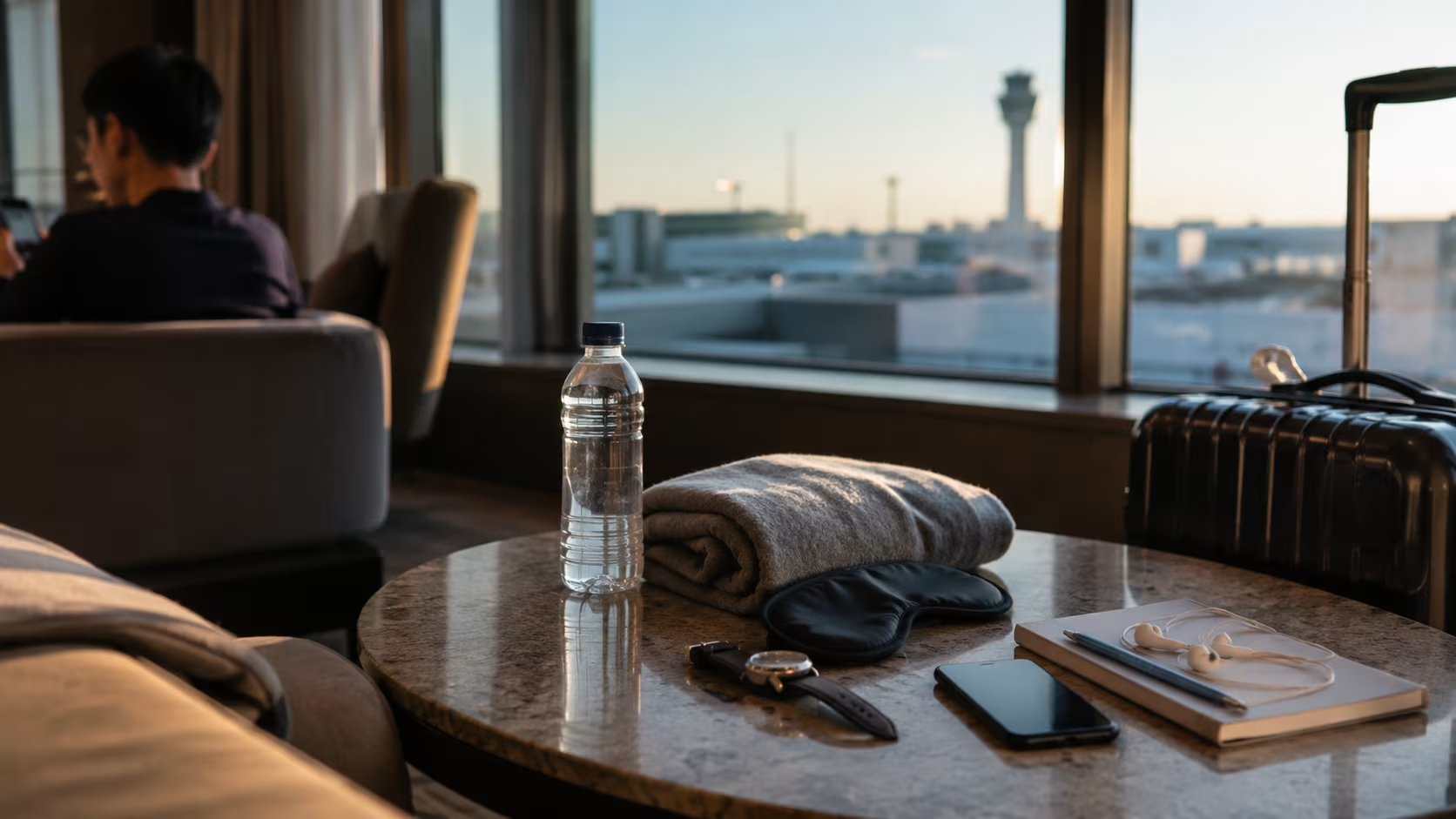
Jet lag is not a vibe. It's a measurable misalignment between your internal body clock (the suprachiasmatic nucleus, the cluster of cells in the hypothalamus that runs your circadian rhythm) and the local time at your destination. Every cell in your body is on a 24-hour cycle, and after a long flight, those cycles are temporarily unsynced.
The good news: the body clock can be shifted, predictably and on purpose, with three levers: light, melatonin, and meals. The bad news: most travel advice ignores the biology and offers folk remedies ("just stay up till bedtime!") that work for short flights but fail at six time zones or more.
This is a practical protocol drawn from current sleep medicine, including the 2024 American Academy of Sleep Medicine guidelines and the 2026 update on circadian alignment. It works in both directions and scales with the number of time zones crossed.
How Jet Lag Actually Works
Your internal clock runs on roughly a 24.2-hour cycle, reset every day primarily by light. When you fly, your environment changes time zones in hours; your body clock shifts at a maximum natural rate of about one hour per day eastward and one and a half hours per day westward.
Fly from London to Tokyo (eight hours east) and your clock will fully resync naturally in about 8 days. Fly the same route west and you'll be aligned in roughly 5–6 days. The protocol below cuts those numbers in half or better.
Direction Matters More Than Distance
- Eastward travel (London→Tokyo, NYC→Paris, LA→NYC) is harder. You're shortening your day, asking the body to fall asleep before its biological night.
- Westward travel (Tokyo→London, Paris→NYC, NYC→LA) is easier. You're lengthening the day, which the natural 24.2-hour cycle prefers.
Crossing zones matters more than total flight time. A 14-hour flight that doesn't cross many time zones (north–south) produces fatigue but not jet lag.
The Three Levers
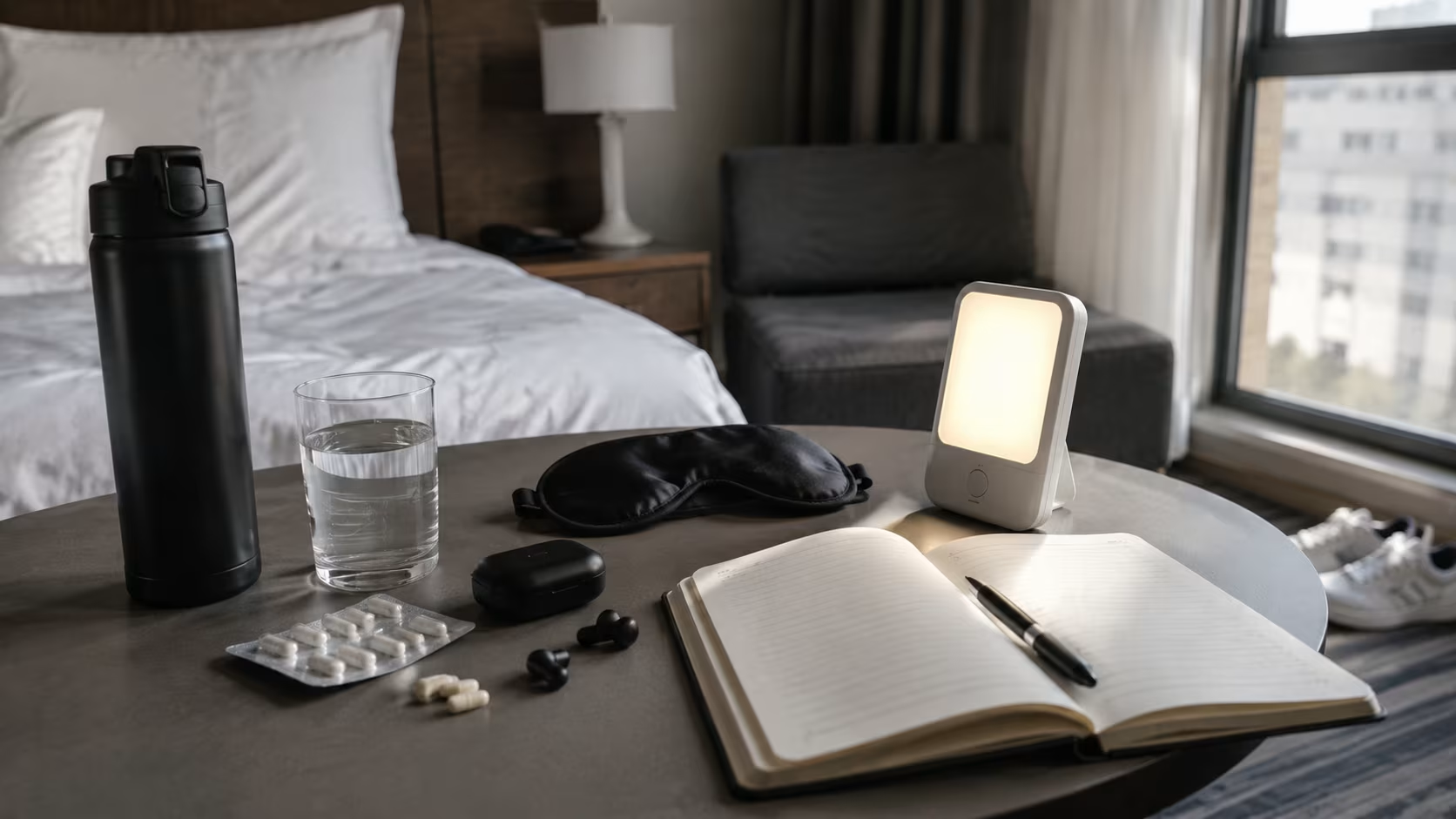
Light Exposure
Light is the strongest signal your body clock receives. Specifically, bright light early in the biological morning advances the clock (makes you a morning person), and bright light in the biological evening delays the clock (makes you a night person).
This is why getting outside on arrival is the universal advice, but the timing is more specific than "go outside." Light at the wrong moment makes jet lag worse.
Melatonin
Melatonin is the hormone your pineal gland releases starting roughly 2 hours before your habitual bedtime. Taking it as a supplement is a circadian shifting tool, not a sleep aid. Dosed wrong, it has no effect or makes you groggy. Dosed right, it shifts your body clock.
Effective dose: 0.3–0.5 mg. Most over-the-counter melatonin sold in the US is 3–10 mg, which is 10–30 times more than research suggests is optimal. The high doses overwhelm receptors and may be less effective. Look for brands offering low-dose tablets or split tablets.
Meal Timing
A secondary peripheral clock lives in your liver and digestive system, set partly by when you eat. Aligning meals with destination meal times reinforces the light and melatonin signals. Less powerful than the first two, but it removes resistance.
The Protocol
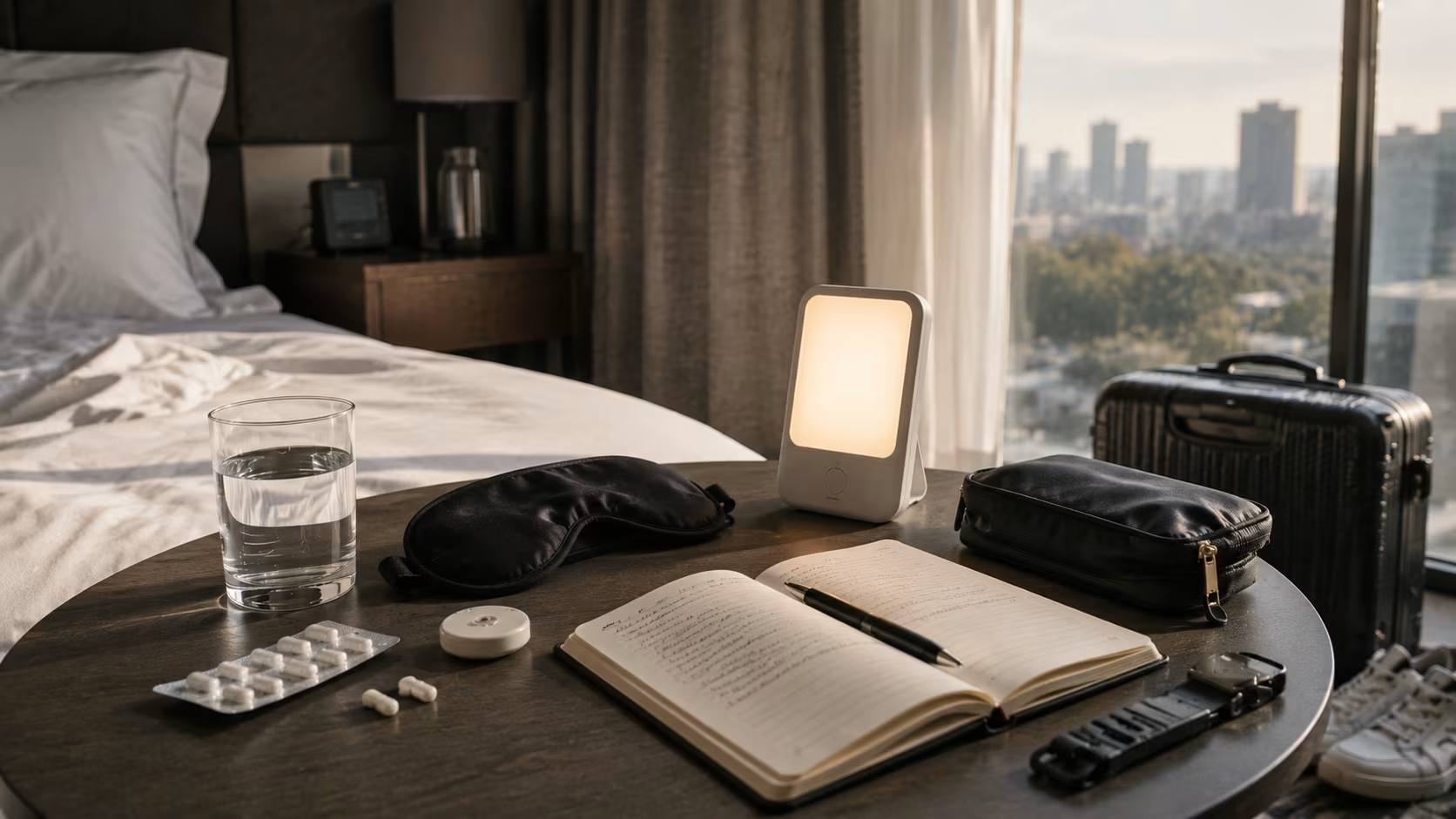
Eastward Travel (3+ Time Zones East)
Three Days Before Departure
- Shift bedtime earlier by 1 hour each night.
- 30 minutes of bright light within 30 minutes of waking. (Outside is better than a light box, but a 10,000-lux therapy lamp works in winter.)
- Avoid bright light in the late evening: dim the lights in the house starting 2 hours before bed.
Day of Flight
- If possible, choose a flight arriving in the destination's evening (18:00–22:00 local). This gives you a natural sleep window soon after landing.
- Set your watch to destination time at the gate. Mentally commit.
- Skip alcohol on the flight. It fragments sleep and worsens dehydration. Caffeine before the flight only.
On the Plane
- Sleep when it's nighttime at your destination, not your origin.
- Wear a sleep mask, earplugs, neck pillow. The plane will not help you.
- 0.3–0.5 mg melatonin 30 minutes before your target sleep window.
- Avoid heavy meals; eat lightly on the schedule of your destination.
Arrival Day (eastbound)
- Bright light exposure in the morning (08:00–10:00 local).
- Avoid bright light in the early afternoon (12:00–15:00). Sunglasses if you're outside.
- Light dinner; bedtime around 22:00 local.
- 0.3–0.5 mg melatonin 1–2 hours before target bedtime.
Days 2–4
- Continue the morning light + evening melatonin pattern.
- Eat meals on local time even if you're not hungry.
- Naps over 30 minutes will set you back. If you must nap, set a 20-minute alarm.
Westward Travel (3+ Time Zones West)
Three Days Before Departure
- Shift bedtime later by 1 hour each night.
- Bright light in the late evening to push your clock later.
- Sleep in (within reason).
Day of Flight
- Choose a flight arriving in the destination's afternoon or evening.
- Stay awake on the plane during your destination's daylight hours.
- Coffee strategically, especially in the destination's morning hours.
Arrival Day (westbound)
- Bright light exposure in the late afternoon and evening (16:00–20:00 local).
- Avoid bright morning light the first morning; keep curtains drawn until 09:00 if you wake earlier.
- Stay awake until at least 21:00 local even if exhausted.
Days 2–4
- Late-afternoon light, normal evenings.
- Resist morning naps; they will pull your sleep schedule earlier than you want.
- Caffeine before noon only after day 2.
Specific Routes
London → Tokyo (8 Zones East)
- 3 days before: shift bedtime earlier by 1 hour/night.
- Flight typically arrives Tokyo morning. Stay awake; bright light at 09:00–11:00.
- Wear sunglasses 12:00–15:00 local.
- 0.3 mg melatonin at 19:00 local for the first 4 nights.
- Sleep in your normal time window from arrival night onward.
NYC → Paris (6 Zones East)
- Skip the 3-day pre-shift if you can't commit; just commit on the flight.
- Sleep on the plane (red-eye landing in morning).
- 0.5 mg melatonin 2 hours into the flight, sleep mask down.
- Bright morning light at the airport. Stay outside for 30+ minutes.
- Push through to 21:00 local on day 1, melatonin at 20:00.
Tokyo → LA (8 Zones West)
- Flight typically arrives morning local time, but it's already evening for your body.
- Avoid bright light until destination afternoon: sunglasses or stay in.
- Stay awake until 21:00 local. Coffee at 14:00 if needed.
- Day 2: late afternoon outdoor light to keep pushing clock later.
Sydney → London (10 Zones West, or Shortest East Depending on Routing)
The ultra-long-haul case. Two-stop trips with a layover work as built-in adjustment time. A 24-hour Singapore stopover halfway is not just a break: it's a halfway clock-shift.
What Doesn't Work
Advice that survives the internet but not the research:
"Just power through to bedtime." Works for 3 zones, fails at 6+. The body clock doesn't care about willpower; it needs the right zeitgebers.
"Drink lots of water." Hydration prevents fatigue from dehydration, which is real but separate from jet lag. Water is necessary, not sufficient.
"Take a sleeping pill on the plane." Sedatives cause sleep without shifting the body clock. You wake up groggy in the same time zone biologically. Melatonin shifts; benzodiazepines and Z-drugs don't.
"Eat the special jet lag diet." The Argonne and other complex meal protocols have not consistently outperformed simple meal-timing alignment in studies.
"Take massive doses of melatonin." 5–10 mg is not more effective than 0.3–0.5 mg, and is more likely to leave you groggy. Higher doses are not safer or more powerful.
"Adjust on the plane by walking around." Movement reduces deep vein thrombosis risk and helps you stay alert. It does not shift the body clock.
Pre-Flight Checklist
- Sleep mask, earplugs, neck pillow packed in carry-on, not checked
- Low-dose melatonin (0.3–0.5 mg), buy in a country that sells low-dose tablets
- Sunglasses for the destination
- Watch or phone set to destination time at the gate
- Hotel reservation confirmed for arrival day (don't arrive at midnight without a room)
- Light snacks for the flight on destination meal schedule
- Caffeine plan: coffee at 09:00 destination time max
What to do when the Plan Fails
The protocol is not magic. Sometimes you'll wake at 04:00 anyway and stare at the ceiling. The recovery moves:
- Don't reach for the phone. Screen light is bright morning light to your body. Read on paper or e-ink.
- Don't lie there past 30 minutes. Get up, do something quiet (read, stretch), wait until you feel sleepy again.
- Don't catastrophize. Even one or two bad nights still resolve faster than a passive approach.
- Don't take more melatonin in the middle of the night. It will leave you groggy through the next day.
- Light caffeine at 09:00. Skip the second cup.
A missed night extends recovery by about a day. Two missed nights probably means restarting the protocol on day 1 with morning light and committed bedtime.
Special Cases
Short trips (under 4 days at destination). Don't shift. Stay on home time as much as possible: schedule meetings and meals at hours that align with your origin clock. Going for a weekend NYC→London and trying to flip is more disruptive than just being a slightly off-rhythm tourist.
Flights with kids. Children adjust faster than adults but suffer the misalignment more visibly. Light exposure and meal timing are still the strongest tools. Skip the melatonin without a pediatrician's okay; AAP guidance has been cautious as of the 2024 update.
Frequent flyers. People who travel weekly across many zones develop chronic circadian disruption with measurable effects on metabolism and cognition. The protocol still helps trip by trip but the cumulative cost is real. Consider negotiating routes with longer stops.
Overnight long-haul flights with morning arrival. The classic transatlantic eastbound. Sleep aggressively from 23:00 origin time, wake at 06:00 destination time, walk into bright airport-exit light. This is the easiest direction to manage with the protocol.
Realistic Expectations
With the full protocol, recovery times collapse:
| Zones crossed | Without protocol | With protocol |
|---|---|---|
| 3 | 2–3 days | 1 day |
| 6 | 5–6 days | 2–3 days |
| 8 | 7–8 days | 3–4 days |
| 10+ | 8–10 days | 4–5 days |
The protocol cuts recovery by roughly 50–60%, which is the difference between a useless first three days of a trip and a functional one.
Final Notes
Jet lag is one of the few travel problems with a real, evidence-based solution most people never use. The protocol takes attention but not money: a sleep mask, low-dose melatonin, and a willingness to use sunglasses on a sunny morning when your body wants light.
The single biggest mistake is underestimating it. People plan a 10-hour flight with care and then wing the recovery, treating jet lag as a vague malaise. Treat it instead as a specific, predictable misalignment with three controllable inputs, and the trip you've spent thousands of dollars on starts on day one instead of day four.



0 Comments
No comments yet — start the conversation.