

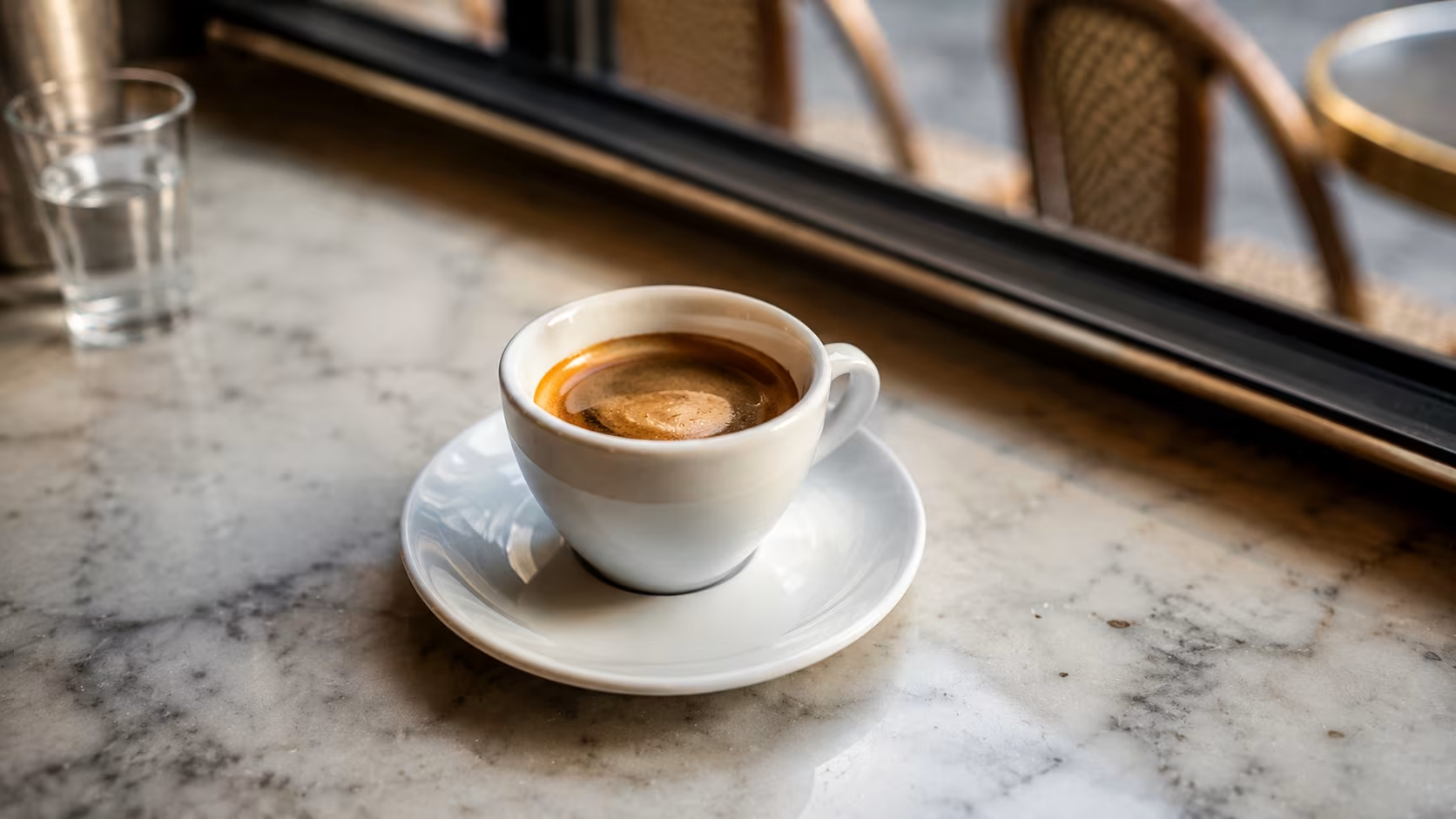
Coffee is one of the most-globalized beverages, but how you drink it differs dramatically by country. The order that's normal in Vienna is foreign in Vietnam. The cup size standard in Italy is half what it is in Australia. The cultural ritual around coffee — quick standing-bar drink versus 90-minute sit-down — varies more than the coffee itself.
This is a 2026 field guide for travelers who want to order coffee correctly in different countries. Knowing the local vocabulary and rituals isn't just polite — it usually produces better coffee. The traveler who orders "a latte" at a Viennese coffeehouse gets a different (and worse) drink than the traveler who orders a Melange. The traveler who tries to order Vietnamese coffee with oat milk in Hanoi gets a baffled look.
This is what to actually order, country by country, in 2026.
The Global Coffee Map
Four broad coffee cultures cover most of the world's traditions:
| Tradition | Where | Style |
|---|---|---|
| Italian / Mediterranean | Italy, Spain, Portugal, France | Espresso-based, small cups, quick standing service |
| Viennese / Central European | Austria, Germany, Czech Republic | Espresso-based + milk variations, sit-down ritual |
| Nordic / Specialty | Scandinavia, Australia, NZ, US | Filtered, single-origin, larger cups, café atmosphere |
| Vietnamese / Indochinese | Vietnam, Thailand, parts of SE Asia | Strong robusta + condensed milk, ice common |
| Turkish / Levantine | Turkey, Greece, Middle East | Unfiltered, finely ground, served in small cups |
| Japanese | Japan | Pour-over, kissaten cafés, very slow extraction |
Each has its own vocabulary and ritual.
Italy
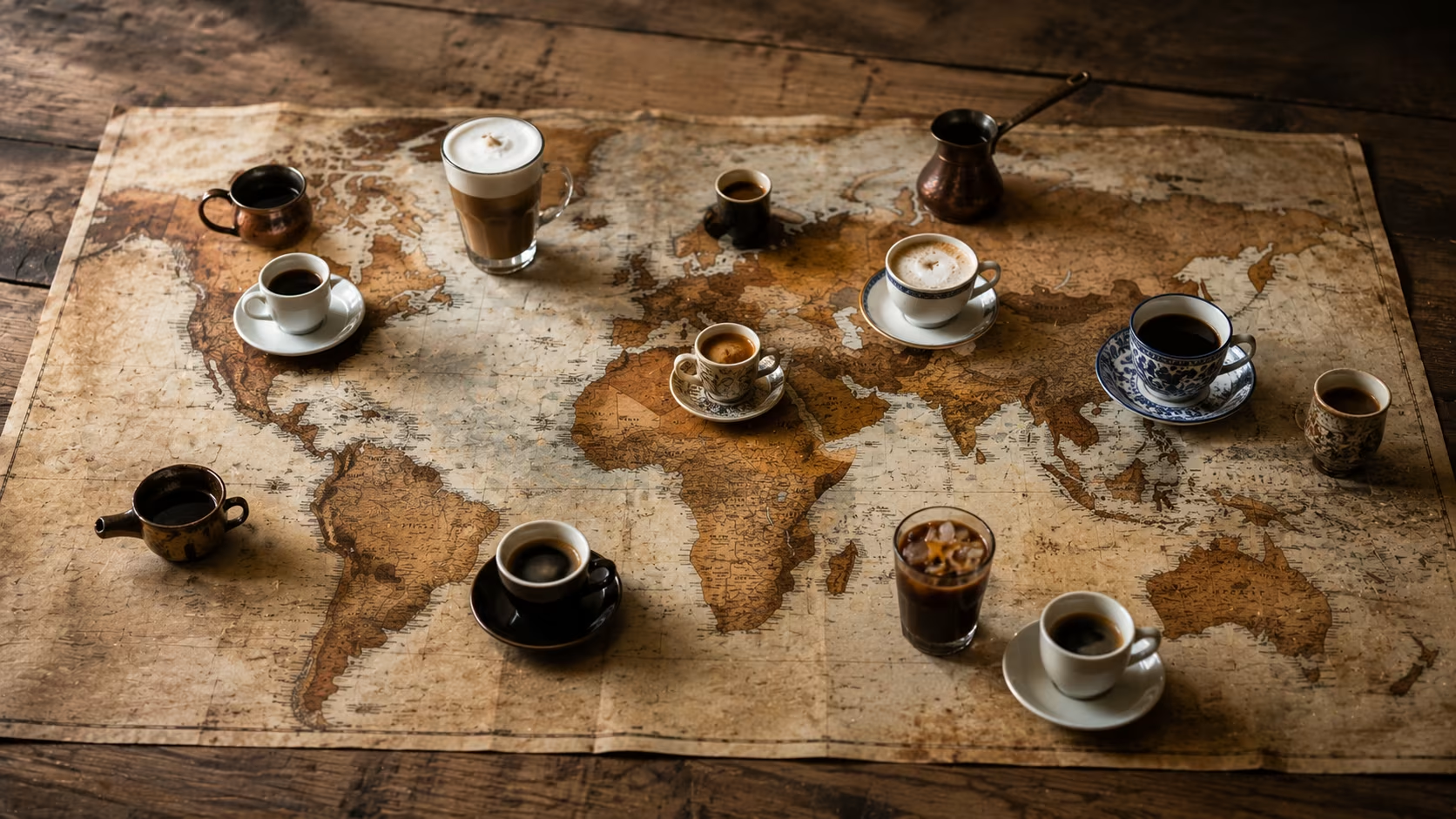
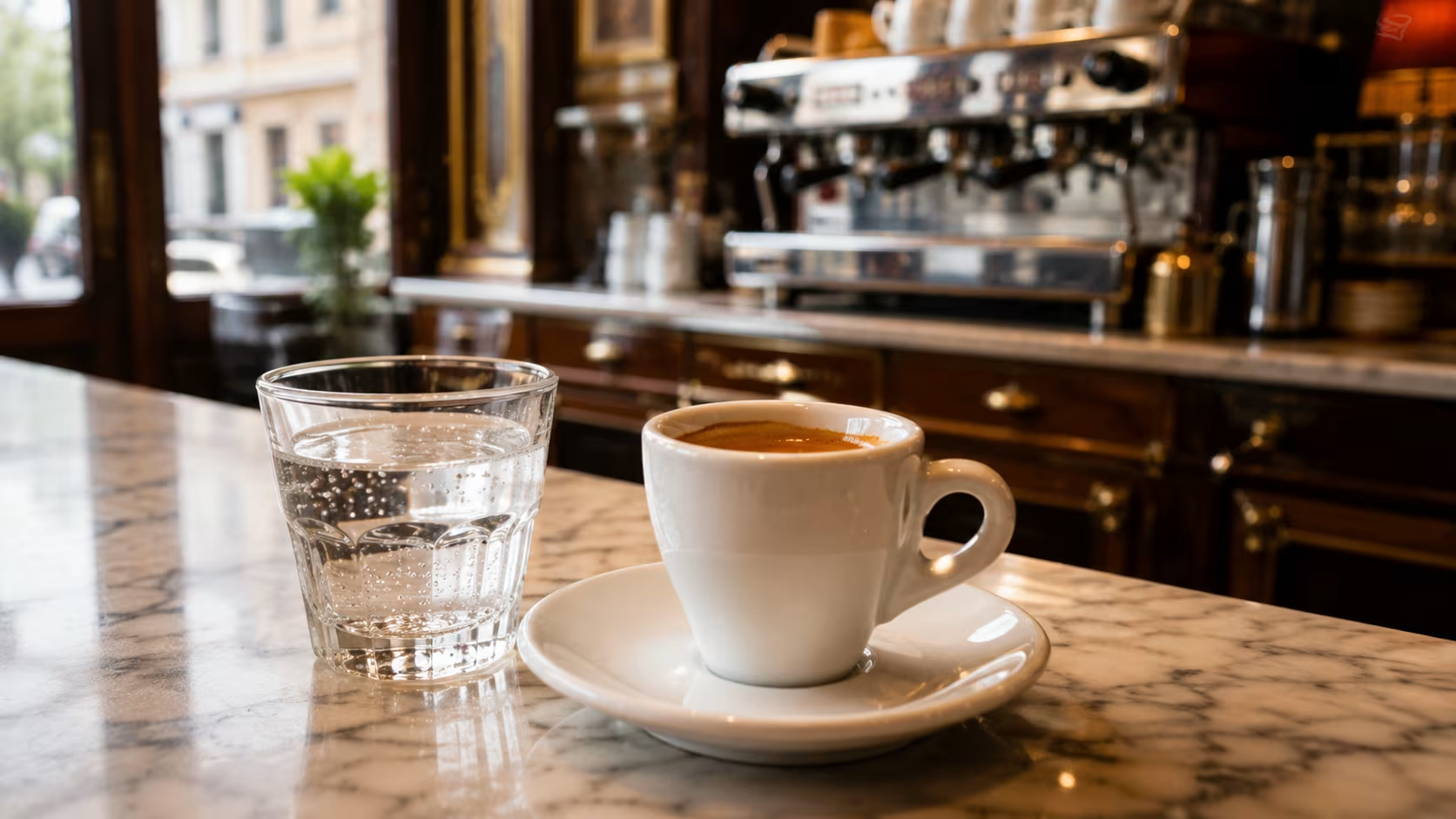
The defining coffee culture for much of the world. Strict ritual + specific terminology.
What to Order
| Order | What you get |
|---|---|
| Espresso (or just "caffè") | Single shot. Standard order. ~25 ml. |
| Caffè doppio | Double espresso. ~50 ml. |
| Caffè ristretto | Restricted/short espresso. Less water; more concentrated. |
| Caffè lungo | Lengthened espresso. More water; longer extraction. |
| Caffè macchiato | Espresso "stained" with a drop of foam milk. |
| Cappuccino | Espresso + steamed milk + foam. Breakfast drink ONLY. |
| Caffè latte | Espresso + steamed milk. Breakfast drink. |
| Caffè marocchino | Espresso + cocoa + steamed milk. Bittersweet. |
| Caffè corretto | Espresso "corrected" with grappa, brandy, or sambuca. After-dinner. |
| Caffè americano | Espresso + hot water (similar to American filter coffee). |
The Rules
- Cappuccino is a breakfast drink only. Ordering cappuccino after 11:00 marks you as a tourist. Italians don't drink milk-based coffee with or after meals.
- Espresso is post-meal standard. After lunch and dinner, espresso closes the meal.
- Drink standing at the bar. Ordering at a counter and drinking standing costs €1.20-1.50. Sitting at a terrace can triple the price for the same coffee.
- Drink fast. Espresso is a 60-second drink, not a 30-minute ritual.
- No syrups, no oat milk. Italian baristas resist these orders politely; some refuse them.
Common Mistakes
- Ordering cappuccino at 21:00 after dinner.
- Asking for a "latte" (in Italian, this means a glass of milk, not milk coffee).
- Sitting at the terrace and complaining about the price.
- Adding sugar to a marocchino (it's already sweet).
Spain
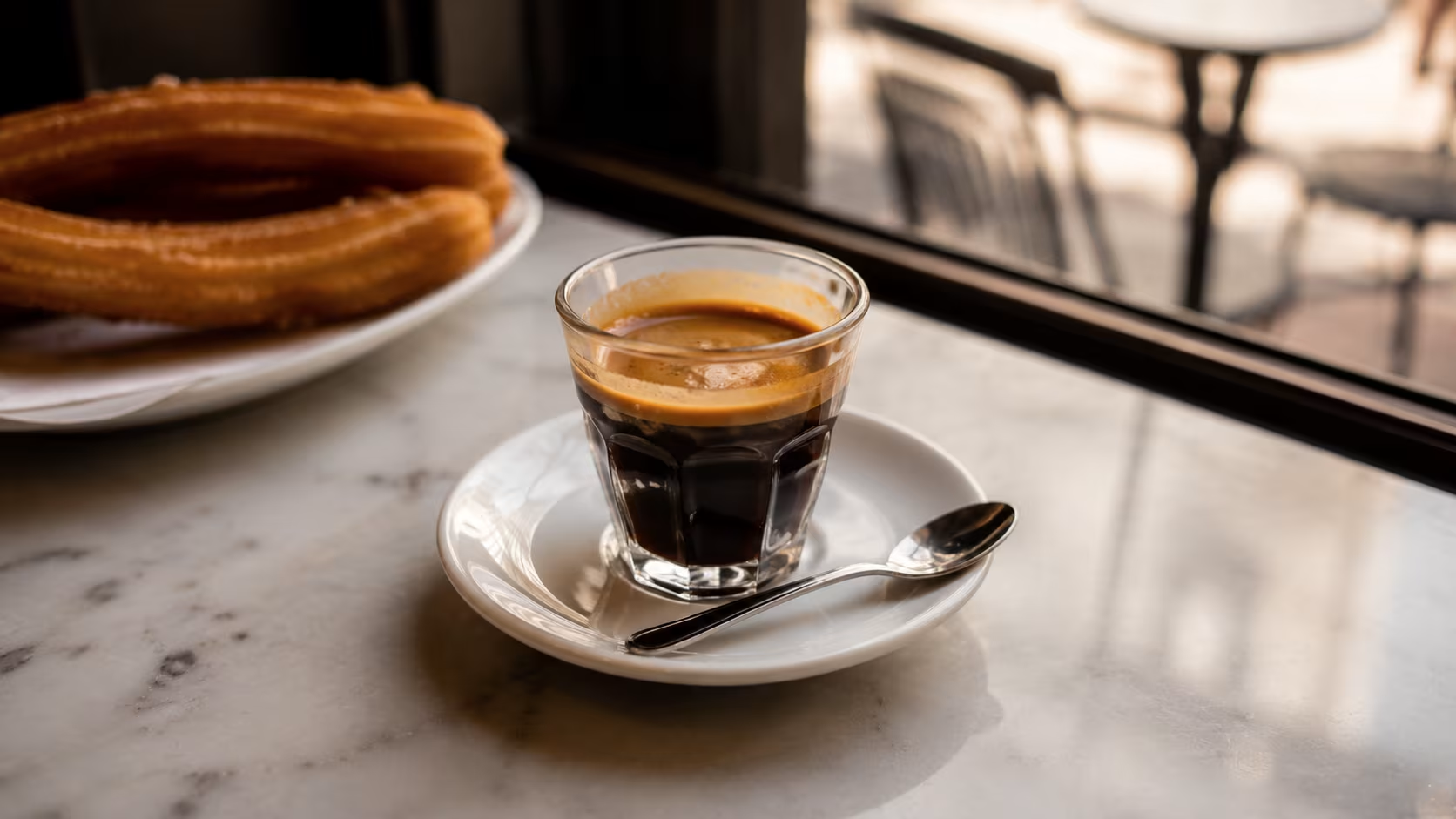
Similar to Italy but with regional variations.
What to Order
| Order | What you get |
|---|---|
| Café solo | Espresso. Standard. |
| Café cortado | Espresso "cut" with a small splash of milk. |
| Café con leche | Espresso + steamed milk in larger cup. Breakfast standard. |
| Café americano | Espresso + hot water. |
| Café manchado | Mostly milk + a touch of espresso. Children's coffee. |
| Carajillo | Espresso + spirit (brandy, rum, or whisky). |
| Café bombón | Espresso + sweetened condensed milk. Valencia specialty. |
The Rules
- Café con leche is the breakfast drink.
- Café solo or cortado for post-meal.
- Carajillo at the end of dinner with a digestif spirit.
- Stand at the bar for cheaper price (similar to Italy).
Portugal
Distinct vocabulary from Spain (despite similar tradition).
What to Order
| Order | What you get |
|---|---|
| Bica (Lisbon) / Cimbalino (Porto) | Espresso. Local terms; "café" works too. |
| Galão | Espresso + steamed milk in a tall glass. Breakfast classic. |
| Meia de leite | Espresso + steamed milk in a coffee cup. Breakfast standard. |
| Carioca | Weak coffee (made with already-used grounds). Cheap. |
| Café com cheirinho | Coffee with a shot of brandy or aguardente. After-dinner. |
| Café gelado | Iced coffee. |
The Rules
- Café standing at the counter (like Italy/Spain) for €0.80-1.20.
- Pastéis de nata (custard tart) traditional with morning coffee.
France
French coffee culture is less developed than Italian; quality varies enormously.
What to Order
| Order | What you get |
|---|---|
| Café (or "un café") | Espresso. Standard. |
| Café crème | Espresso + foamed milk. |
| Café au lait | Coffee + milk in larger cup; less common in cafés (more home-drink). |
| Café noisette | Espresso "hazelnut" — a drop of milk, lighter than crème. |
| Café allongé | Lengthened espresso (similar to Italian lungo). |
| Café gourmand | Espresso served with a small assortment of mini-desserts. |
| Décaféiné | Decaf. |
The Rules
- Café for breakfast standard.
- Espresso post-meal.
- Café au lait less common in cafés in 2026 (mostly a home drink); ordering it gets you café crème.
- Specialty third-wave cafés increasingly common in Paris (Coutume, KB, etc.).
Vienna / Austria
The most-ritualized coffeehouse culture in Europe. UNESCO recognized as cultural heritage.
What to Order
| Order | What you get |
|---|---|
| Melange | Espresso + steamed milk + foam. The Viennese standard. |
| Großer Brauner | Large espresso with small jug of milk on side. |
| Verlängerter | "Lengthened" — espresso with hot water (similar to Americano). |
| Einspänner | Espresso topped with whipped cream, in a tall glass. "Carriage-driver's drink." |
| Kapuziner | Small dark coffee with drop of cream. |
| Mocca | Strong espresso. |
| Pharisäer | Coffee + rum + whipped cream. |
| Maria Theresia | Coffee + orange liqueur + whipped cream. |
The Rules
- Coffeehouses are sit-down rituals, not quick stops. Spending 60-90 minutes with one melange + a newspaper is normal.
- Servers will leave you alone after the order. The pace is the cultural product.
- Order a small water (free) alongside the coffee — it's the traditional companion.
- Pastry pairings: Sachertorte, Apfelstrudel, Kaiserschmarrn.
- Avoid asking for "latte" or "cappuccino" at traditional coffeehouses; the servers will be confused.
Germany
Less defined coffee culture than neighbors; quality varies. Bavaria + Vienna influence stronger.
What to Order
| Order | What you get |
|---|---|
| Kaffee | Filtered coffee in a cup. Working-class default. |
| Espresso | Espresso. |
| Cappuccino | Cappuccino, German-style (often weaker than Italian). |
| Latte macchiato | Espresso + lots of steamed milk. |
| Filterkaffee | Filtered drip coffee. |
The Rules
- Coffee + cake (Kaffee und Kuchen) is a 4 PM weekend ritual, especially Sunday.
- Modern third-wave specialty cafés increasingly common in Berlin, Munich, Hamburg.
Czech Republic
Similar to Germany / Vienna.
What to Order
| Order | What you get |
|---|---|
| Káva | Coffee. Generic. |
| Espresso | Espresso. |
| Cappuccino | Cappuccino. |
| Vídeňská káva | Vienna-style coffee with whipped cream. |
| Turek | Turkish-style coffee (unfiltered, in cup). Working-class tradition. |
The Rules
- Specialty café scene strong in Prague (EMA Espresso, Kavárna co hledá jméno).
- Traditional cafés serve large cups; cake pairing common.
Vietnam
One of the world's distinctive coffee cultures. Vietnam is the world's second-largest coffee producer (mostly robusta).
What to Order
| Order | What you get |
|---|---|
| Cà phê đen (đá) | Black coffee, hot or iced. Strong. |
| Cà phê sữa (đá) | Coffee with sweetened condensed milk, hot or iced. The signature drink. |
| Cà phê trứng | Egg coffee. Hanoi specialty (invented 1946). Espresso + whipped egg yolk + sugar + condensed milk. |
| Cà phê dừa | Coconut coffee. Modern variant. |
| Bạc xỉu | Light coffee (more milk than coffee). Saigon specialty. |
| Cà phê chồn | Civet/weasel coffee. Premium; controversial (animal welfare concerns). |
The Rules
- Phin filter. Vietnamese coffee is brewed via a small metal filter sitting on the cup. The drip is slow (5-7 minutes). Wait patiently.
- Sweetened condensed milk is the standard pair, not regular milk.
- Robusta beans dominate (different from arabica). Bitter, strong, high-caffeine.
- Iced coffee (đá) is the standard summer order; ice and condensed milk balance the bitterness.
- Cà phê trứng (egg coffee) is specifically Hanoi; can't be ordered with confidence elsewhere.
Turkey / Levant
Unfiltered, finely-ground tradition. UNESCO-recognized cultural heritage.
What to Order
| Order | What you get |
|---|---|
| Türk kahvesi | Turkish coffee. Strong; finely-ground; brewed in cezve (small copper pot). |
| Sade | Plain. No sugar. |
| Az şekerli | Slightly sweet. |
| Orta | Medium sweet. |
| Çok şekerli | Very sweet. |
The Rules
- Specify sugar level when ordering. "Orta" (medium sweet) is the standard order.
- Wait for grounds to settle. The bottom of the cup is grounds; don't drink the last sip.
- Read the grounds (fal). Traditional fortune-telling using the leftover coffee grounds. Touristy version available; locals do it casually.
- Pair with Turkish delight (lokum). The traditional companion.
- Drink slowly. Turkish coffee is a 30-minute ritual, not a quick bar drink.
Greece + Cyprus
What to Order
| Order | What you get |
|---|---|
| Ελληνικός καφές (Ellinikos kafés) | Greek coffee. Identical to Turkish coffee in preparation. |
| Φραπέ (Frappé) | Iced shaken instant coffee with foam. Greek invention from 1957. National drink. |
| Φρέντο εσπρέσσο (Freddo Espresso) | Iced espresso. Modern alternative to frappé. |
| Φρέντο καππουτσίνο | Iced cappuccino. Cold-foamed milk on top. |
The Rules
- Greeks rebranded "Turkish coffee" as "Greek coffee" after the 1923 Asia Minor catastrophe; preparation is identical.
- Frappé is the summer staple. Sit at a beach café with a frappé for 2 hours; standard Greek summer behavior.
- Freddo cappuccino has surpassed frappé among younger Greeks since 2015.
Australia + New Zealand
The coffee culture that reshaped the global café scene. Strong specialty tradition.
What to Order
| Order | What you get |
|---|---|
| Flat White | Espresso + steamed milk with thin micro-foam. Created here. |
| Long Black | 2 espresso shots over hot water (Australian Americano). |
| Short Black | Single espresso. |
| Macchiato | Espresso with dot of milk. |
| Piccolo Latte | Mini latte (~90 ml). |
| Magic | Melbourne-specific: double-shot piccolo with thicker microfoam. |
| Babyccino | Children's drink: foamed milk + chocolate sprinkles. Genuinely served. |
The Rules
- Flat white is the local default. A flat white in Australia is genuinely different from a flat white at Starbucks (smaller, more concentrated, less milk).
- Specialty coffee culture is mature. Most cafés grade beans, single-origin options common, baristas are professionals.
- Order "a flat white" not "a latte" for the local experience.
- Skim/oat/almond milk substitutions widely available without judgment (different from Italy).
United States + Canada
The globalized chain culture (Starbucks, Tim Hortons) plus growing specialty third-wave.
What to Order
| Order | What you get |
|---|---|
| Drip coffee | Filter coffee. Standard. |
| Espresso | Espresso. |
| Latte | Espresso + lots of steamed milk + light foam. American-style is larger and milkier than Italian. |
| Cappuccino | American cappuccino is similar to Italian but typically larger. |
| Americano | Espresso + hot water. |
| Cold brew | Coffee steeped cold for 12-24 hours. Strong, smooth, less acidic. |
| Iced coffee | Hot-brewed coffee chilled. |
| Pour-over | Specialty filter coffee. Single cup at a time. |
| Affogato | Espresso poured over vanilla gelato. |
The Rules
- Cup sizes are larger than European norm.
- Customization is welcome — milk substitutes, syrups, flavor shots.
- Specialty cafés (third wave) in cities increasingly serve Italian-style espresso.
- Coffee shops as workspaces is normal — laptop work for hours is acceptable in the chain (Starbucks especially).
Japan
A distinct, contemplative coffee tradition that predates the global specialty wave.
What to Order
| Order | What you get |
|---|---|
| Café au lait (カフェオレ) | Coffee + milk. Standard at kissaten. |
| Espresso | Espresso. |
| Drip coffee (ドリップ) | Pour-over. Often slow-brewed. |
| Iced coffee (アイスコーヒー) | Iced coffee. Standard summer order. |
| Cold brew | Cold brew. |
| Kissaten | Traditional café tradition (coffee + cake + slow time). Many old kissaten use vintage equipment. |
The Rules
- Kissaten culture (literally "tea house" but coffee-focused) is centuries old. Slow service, ceramic cups, focus on craft.
- Vending machine coffee is genuinely good; canned coffee is a cultural staple.
- Specialty café scene in Tokyo (% Arabica, Onibus, Glitch) is among the world's best.
- Don't rush. Japanese coffee culture rewards patience.
Ethiopia
The origin of coffee. Distinct ceremony tradition.
What to Order
| Order | What you get |
|---|---|
| Macchiato | Espresso + foamed milk. Italian influence (former colony). |
| Buna | Coffee. Generic Ethiopian term. |
| Coffee ceremony | Traditional household ceremony — green beans roasted, ground, brewed in front of guests. 60-90 minute ritual. |
The Rules
- Coffee ceremony is a major cultural event; if invited, the ritual takes 60-90 minutes (3 rounds of progressively weaker coffee).
- Modern cafés in Addis Ababa serve Italian-influenced espresso drinks.
- Three rounds of coffee in ceremony — 1st (Abol) is strongest; 3rd (Bereka) is the blessing round.
Ordering Etiquette: Universal Rules
What to Skip
- "Just a regular coffee" in non-English-speaking countries — "regular" is meaningless. Use the local term.
- Asking for "a small espresso" — espresso is small by definition.
- Adding milk to espresso at a fine restaurant after dinner — espresso post-meal is small and dark.
- Ordering coffee with savory food outside breakfast — coffee in Mediterranean cultures is breakfast and after-meal, not with main meals.
Universal Tactics
- Watch what locals order at the bar. Match.
- Stand at the counter in espresso cultures (Italy, Spain, Portugal) for cheaper price.
- Avoid touristy-decorated cafés at major plazas. Walk one block off; quality usually rises and price drops.
- Specialty cafés exist almost everywhere now. Serious specialty (third-wave) coffee cafés exist in 100+ cities globally; ask locals.
- Bring small change. In espresso cultures, coffees cost €1-2; large bills are awkward.
Specialty Coffee Around the World
The "third wave" specialty coffee movement has spread globally since 2010. In 2026, most major cities have multiple serious specialty cafés.
Where to Find Them
- Italy: mostly Rome, Milan; less in tourist cities. Ditta Artigianale in Florence is the institution.
- Spain: Right Side Coffee, Hola Coffee in Madrid + Barcelona.
- Portugal: Hello, Kristof + Fábrica Coffee Roasters in Lisbon.
- France: Coutume, KB, Substance in Paris.
- Germany: The Barn in Berlin; Man Versus Machine in Munich.
- Czech Republic: EMA Espresso, Kavárna co hledá jméno in Prague.
- UK: Workshop, Monmouth, Caravan in London; Roastery & Bakehouse in Edinburgh.
- Sweden: Drop Coffee in Stockholm.
- Denmark: Coffee Collective in Copenhagen.
- Australia: anywhere; the country invented modern specialty.
- Vietnam: specialty separate from traditional. The Workshop + Shin Heritage Coffee Bar in Saigon.
- Japan: % Arabica, Onibus, Glitch in Tokyo; Kurasu Coffee in Kyoto.
- South Korea: Coffee Libre, Center Coffee in Seoul.
- US: Blue Bottle, Stumptown, Verve, Sightglass, Heart, hundreds of others.
Final Notes
Coffee in 2026 is more globalized than ever — specialty third-wave cafés exist in most major cities; chain coffee (Starbucks) is everywhere. But the local tradition still rewards travelers who learn it.
The single best advice in any new country, observe at one café for 10 minutes before ordering. Watch what locals drink, when they drink it, where they sit. The pattern reveals itself fast. Then order matching what you saw.
The quietest piece of advice in Italy, France, Vienna, or Spain, sit at a café terrace for 60 minutes with one small coffee and a local newspaper. Don't pull out a laptop. The coffee culture in Mediterranean and Central European countries isn't fast caffeine delivery — it's a structured ritual for being publicly idle. The traveler who masters this slow café ritual is participating in the local culture more genuinely than the one optimizing the museum schedule.
0 Comments
No comments yet — start the conversation.