
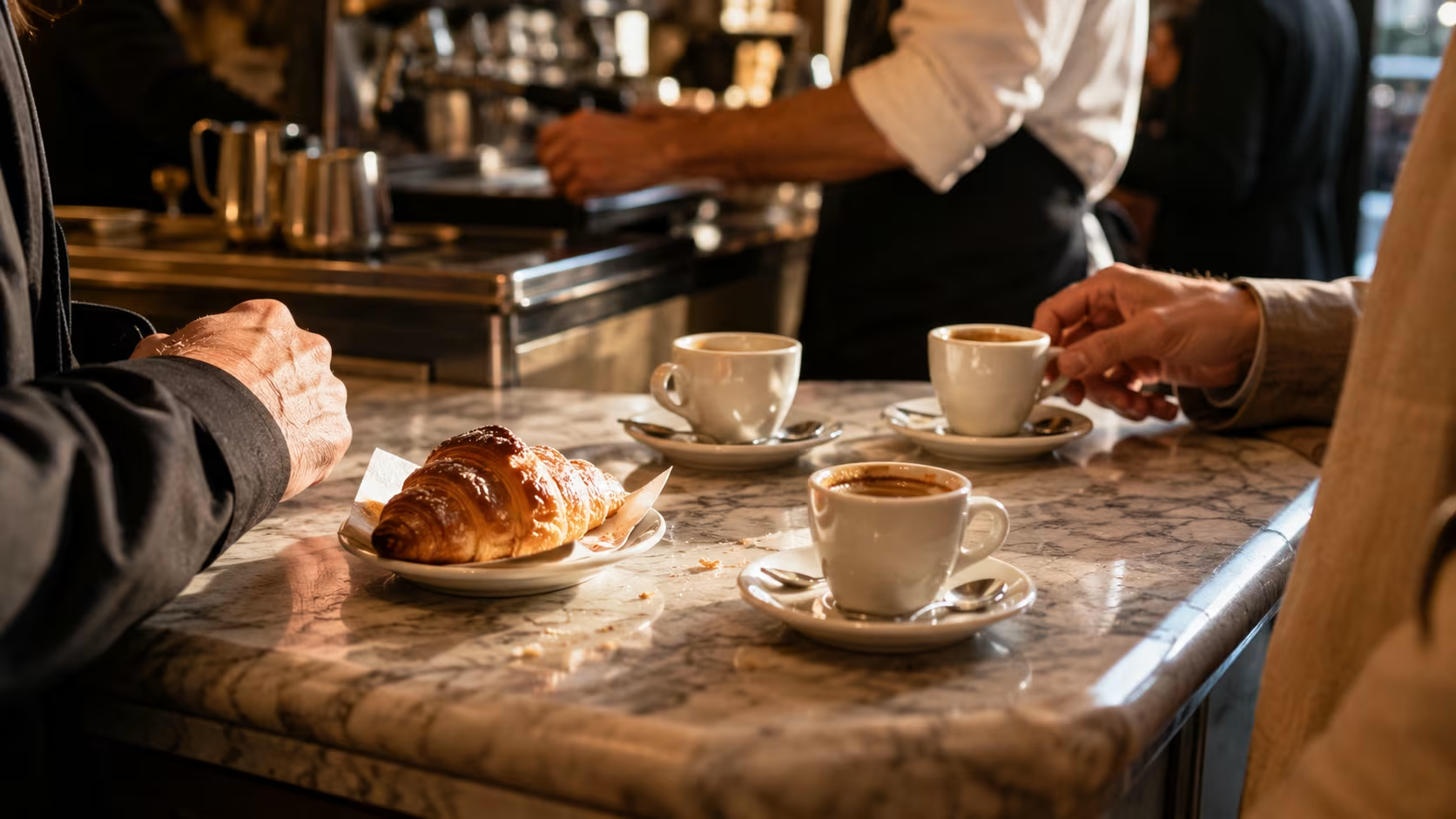
Italian coffee culture is the closest thing the country has to a national religion, and like most religions, it comes with rituals tourists routinely break by accident. The cappuccino-after-dinner stare, the milk-in-coffee-after-eleven raised eyebrow, the standing-vs-sitting-pricing surprise on the receipt: every one of these is a five-minute lesson the moment it happens.
This guide is written so it doesn't have to. The actual vocabulary on the menu, the unwritten time rules, where Italians stand, what they order, and the specific traps in Rome, Milan, Naples, and Florence. Use it once and you stop reading as a tourist when you walk into a bar.
First: a Bar is Not a Bar
The Italian word bar means coffee shop. Most serve alcohol too, but "andiamo al bar" almost always means "let's get coffee." The morning coffee bar around the corner from your hotel is the most useful piece of vocabulary in this guide.
You'll order at the bar (the actual counter), drink while standing, and leave inside three minutes. That's the default. If you sit at a table, prices double or triple, and the rhythm of the visit changes entirely.
The Time-of-Day Rules
The single most important thing to internalize: what you drink depends on the clock.
| Time | What Italians order |
|---|---|
| 06:00–11:00 | Cappuccino, latte macchiato, caffè + cornetto |
| 11:00–14:00 | Caffè (espresso), caffè macchiato |
| After 14:00 | Caffè, caffè macchiato, ristretto |
| After 18:00 | Caffè only, often with grappa or amaro chaser |
The "no milk after 11" rule is mostly real. Italians rarely drink milky coffee after a meal because the dairy is thought to interfere with digestion. Ordering a cappuccino after lunch isn't illegal, but you'll get the look.
Workaround: if you genuinely want a cappuccino at 16:00, order it. Italians know tourists don't follow the rule. The cappuccino will arrive without comment in 99% of bars. The rule exists more as cultural signaling than as enforcement.
Real Exception
In northern Italy and Milan especially, late-morning cappuccinos creep into the noon hour, and a 11:30 order is unremarkable. The rule tightens as you go south.
The Actual Menu
Forget Starbucks vocabulary entirely. The Italian coffee menu is shorter, denser, and uses different words for everything.
Base Drinks
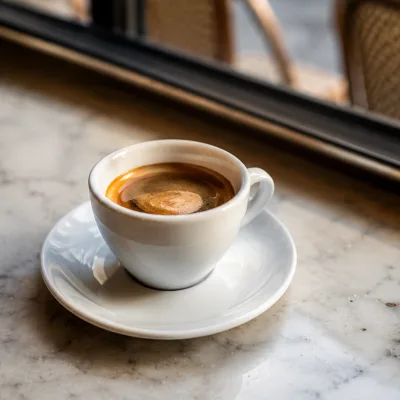
Caffè. Just "caffè" means a single shot of espresso. ~30 ml in a small ceramic cup. The default order. Half the country drinks 4–6 of these a day.
Caffè doppio. A double shot of espresso. ~60 ml, same cup. Less common; ordering shows you mean business.
Caffè ristretto. A short, concentrated espresso. Same beans, less water. Stronger flavor, smaller volume. The "I know what I'm doing" choice.
Caffè lungo. A long espresso, more water pulled through. Larger volume, slightly weaker per ml. The opposite of ristretto.
Caffè americano. Espresso topped with hot water. Closer to American filter coffee. Italians don't drink this; it exists because tourists do.
With Milk
Cappuccino. Espresso with steamed milk and foam, total ~150 ml. Morning only by tradition. The defining Italian breakfast drink.
Caffè latte. Espresso with mostly hot milk, small amount of foam, served in a tall glass. Not the same as a Starbucks "latte"; it actually has less coffee in proportion. Order with caution: in Italy, asking for a "latte" gets you a glass of milk. Always say caffè latte.
Latte macchiato. Hot milk "stained" with a small amount of espresso. Even milkier. A morning drink.
Caffè macchiato. The reverse: an espresso "stained" with a tiny amount of foamed milk. Acceptable at any hour. Probably the best compromise drink for tourists who want milk after lunch: the milk amount is negligible.
Marocchino. A small glass with cocoa powder dusted on the bottom, then espresso, then a little foamed milk on top. Northern Italy, especially Piedmont. Beautiful in layered form.
Variations
Caffè corretto. Espresso "corrected" with a splash of grappa, sambuca, or brandy. Traditionally a winter morning order. Truckers at 6 AM at autostrada rest stops.
Caffè shakerato. Espresso shaken with ice and sugar in a cocktail shaker, served in a martini glass. A summer drink. Surprisingly refreshing.
Caffè freddo. Pre-made cold coffee, often pre-sweetened, refrigerated, served in a small glass. Common in southern Italy in summer. Not iced coffee.
Caffè in vetro. Espresso served in a small glass cup instead of ceramic. Some claim it changes the flavor (the wider lip changes airflow); others claim it's just preference. Worth trying once.
Caffè decaffeinato (or just "deca"). Decaf. Available everywhere; quality varies but is generally good.
Sweet Pairings
Cornetto. The Italian croissant. Three main types:
- Vuoto (empty / plain)
- Crema (custard cream)
- Cioccolato (chocolate)
- Marmellata (fruit jam, usually apricot)
The morning standard is un cappuccino e un cornetto, about €2.50–3.50 in most cities.
Pasticcini. Mini pastries from a glass case. Usually two or three with afternoon coffee.
Biscotti. Often tucked alongside the espresso for free at higher-end bars.
The Standing-vs-Sitting Pricing Trap
This is the surprise tourists notice on the receipt. At a bar, drinking standing at the counter (al banco) costs less than sitting at a table (al tavolo). The difference can be significant: a €1.20 espresso at the counter becomes €4 at an outdoor table on a tourist square.
Real pricing examples (2026, mid-range city):
| Drink | Al banco | Al tavolo (interior) | Al tavolo (terrace, tourist square) |
|---|---|---|---|
| Caffè | €1.20 | €1.80 | €4.00 |
| Cappuccino | €1.50 | €2.50 | €5.50 |
| Caffè + cornetto | €2.50 | €4.50 | €8.00 |
| Spritz | €5 | €7 | €12 |
The surcharge is legal and disclosed (tariffario posted near the menu in most bars), and it's not a scam. It's paying for the table, not the drink. Tourist-square spots in Venice (Piazza San Marco), Rome (around the Pantheon), and Milan (in front of the Duomo) charge the maximum the law allows.
The Local Move
Stand at the counter. Drink in three minutes. Pay €1.50. Walk on. You can do this five times a day for the price of one terrace cappuccino in a tourist square.
When to Sit
When you're actively having a meeting, reading the paper, escaping the rain, or want a slow afternoon. The price is the rent.
How to Actually Order
The sequence at a counter bar:
- Pay first at the cassa (register). Tell the cashier what you want, get a receipt (scontrino).
- Take the receipt to the bar counter. Hand it to the barista. Often you'll lay a small coin on top as a tip; this is optional but appreciated.
- Order again at the counter. "Un caffè, per favore." The barista nods and pulls your espresso.
- Drink it standing. Three minutes max.
- Don't tip extra at the end. The €0.10 coin you left is the tip.
Some smaller bars skip the cassa step: you order, drink, pay at the end. Watch what locals do; it's clear within 10 seconds whether you pay first or last.
City-Specific Notes
Rome
The city's coffee tradition is pinned to a few historic bars. Sant'Eustachio Il Caffè (near the Pantheon) and Antico Caffè Greco (on Via dei Condotti) are old institutions; the latter is also expensive and theatrical. Tazza d'Oro and Roscioli Caffè are the working-quality default.
Rome bills its caffè with sugar already added by default at some bars; ask for "senza zucchero" if you don't want sugar.
Avoid the bars directly on the Spanish Steps and Piazza Navona. The terrace mark-ups exceed even Italian standards.
Milan
More northern European in coffee culture: third-wave specialty coffee shops are increasingly common. Pavè, Orsonero, and Cofficina serve flat whites, V60, and other modern preparations alongside traditional espresso.
The traditional anchor is Marchesi 1824 (now associated with Prada), where the Milanese have espresso and pasticcini at 11:00.
Milan tolerates late-morning cappuccinos better than the rest of the country.
Naples
The most opinionated coffee city in Italy. Espresso is darker, smaller, and almost syrupy compared to the north. Caffè del Professore in Piazza Trieste e Trento and Gran Caffè Gambrinus are the historic spots. Both still have working bars with €1.20 counter espressos.
The Neapolitan tradition of caffè sospeso (paying for two coffees and leaving one as a credit for someone who can't afford one) survives at many old-school bars. It's still a real thing in 2026; ask for "un caffè e un sospeso" to participate.
Naples coffee is sweeter by default, since they sometimes add sugar to the moka pot itself.
Florence
Center of the slowest-changing coffee culture. Caffè Rivoire on Piazza della Signoria is the famous tourist option. Local: Ditta Artigianale, the city's specialty roaster, has multiple locations and changed the city's coffee map starting around 2014.
Watch for the table charge specifically in Florence; the city has the highest tourist-square markups in Italy after Venice.
Venice
Caffè Florian in Piazza San Marco is the most expensive coffee on Earth in Italian terms (€11–14 for an espresso at the table, plus €6 if there's music). It's beautiful, historic, and worth the experience once. Don't make it your daily bar.
Almost any bar one alley off the main piazzas serves the same coffee for €1.40 al banco. Walking 200 meters saves €10.
What Italians Don't Order
Some drinks exist only on tourist menus:
- Iced lattes / iced cappuccinos: not Italian. Order caffè freddo or caffè shakerato for cold options.
- Pumpkin spice anything: not a thing.
- Skinny / fat / soy / oat versions: alternative milks are available in big cities ("latte di soia," "latte di avena") but not asked for in traditional bars.
- Espresso macchiato as a tall drink: a macchiato in Italy is small.
- Caffè to go in a paper cup: historically rare. Take-away coffee culture has grown post-2020 but is still a minority preference.
Coffee Times Through an Italian Day
The daily rhythm:
07:00, breakfast. Cappuccino + cornetto, standing, three minutes. Almost never at home.
10:30, pausa. A short break with a caffè macchiato. The espresso pause is a real social ritual.
13:30–14:00, after lunch. A ristretto or caffè doppio. Specifically not cappuccino.
16:00, the afternoon caffè. Often paired with a small chocolate or biscotto.
After dinner. Caffè or caffè corretto. Espresso closes the meal; restaurant servers will offer it as "un caffè?" before bringing the bill.
What to Pay
Real 2026 prices for a counter espresso (al banco):
| City | Average caffè |
|---|---|
| Rome | €1.20 |
| Milan | €1.30–1.50 |
| Naples | €1.10 |
| Florence | €1.40 |
| Venice (off main squares) | €1.50 |
| Bologna | €1.20 |
| Turin | €1.20 |
A government-set price ceiling on counter espresso doesn't exist, but most bars stay near €1.20 because Italians would notice immediately if it crept higher. Bars charging €2 al banco are catering to tourists.
The Italian Coffee Words You'll See on Receipts
- Espresso: espresso, sometimes labeled this way on machines but rarely on receipts.
- Caffè in vetro: espresso in glass.
- Cappuccino chiaro / scuro: light / dark cappuccino (more or less milk).
- Cappuccino tiepido: lukewarm cappuccino, by request, for those who don't want it scalding.
- Marocchino: see above.
- Bicerin: Turin specialty: layered coffee, chocolate, and cream.
- Caffè americano: American-style.
- Caffè in tazza grande: coffee in a large cup, for slightly larger volume.
The Quiet Etiquette
- Don't ask for it "to go" if you're inside the bar at 8 AM. Drink standing, three minutes, leave the cup.
- Don't apologize for breaking the milk-after-eleven rule. Order, drink, move on. The shame-circuit only activates if you act ashamed.
- Don't sit at a tourist-square table and act surprised at the bill. Read the tariffario.
- Don't order an espresso at a Starbucks-style chain (yes, Starbucks exists in Italy now, since 2018). The point is the local bar.
- Don't confuse macchiato (Italian: tiny dot of milk on espresso) with the American "caramel macchiato" (large milky drink with caramel syrup). They're nothing alike.
- Don't tip more than €0.10–0.20 at a counter bar. Anything more reads as tourist excess.
A Day's Coffee Itinerary in Rome
08:00. Stand at Sant'Eustachio Il Caffè. Cappuccino. €1.50.
11:00. Walk to the Pantheon. Tazza d'Oro counter. Caffè. €1.20.
14:00. After lunch in Trastevere. Any neighborhood bar. Caffè macchiato. €1.30.
16:30. Caffè Sant'Anselmo near the Aventine. Caffè + small pastry. €3.20.
21:30. Sitting after dinner near Campo de' Fiori. Caffè doppio + amaro. €6 plus the €4 amaro.
Total: under €17 for a full day's caffeine, and you've drunk like a Roman.
Final Notes
Italian coffee culture is not difficult. It's just specific. The vocabulary is small enough to learn in a week, the time rules are real but soft, and the standing-vs-sitting math is easy once you see it on one receipt.
The larger pleasure of getting it right: you stop reading as a tourist in coffee bars within a couple of days, which means baristas talk to you slightly differently, and the small-talk Italian that emerges from a 90-second espresso encounter is genuinely one of the country's best cultural exports.
0 Comments
No comments yet — start the conversation.