

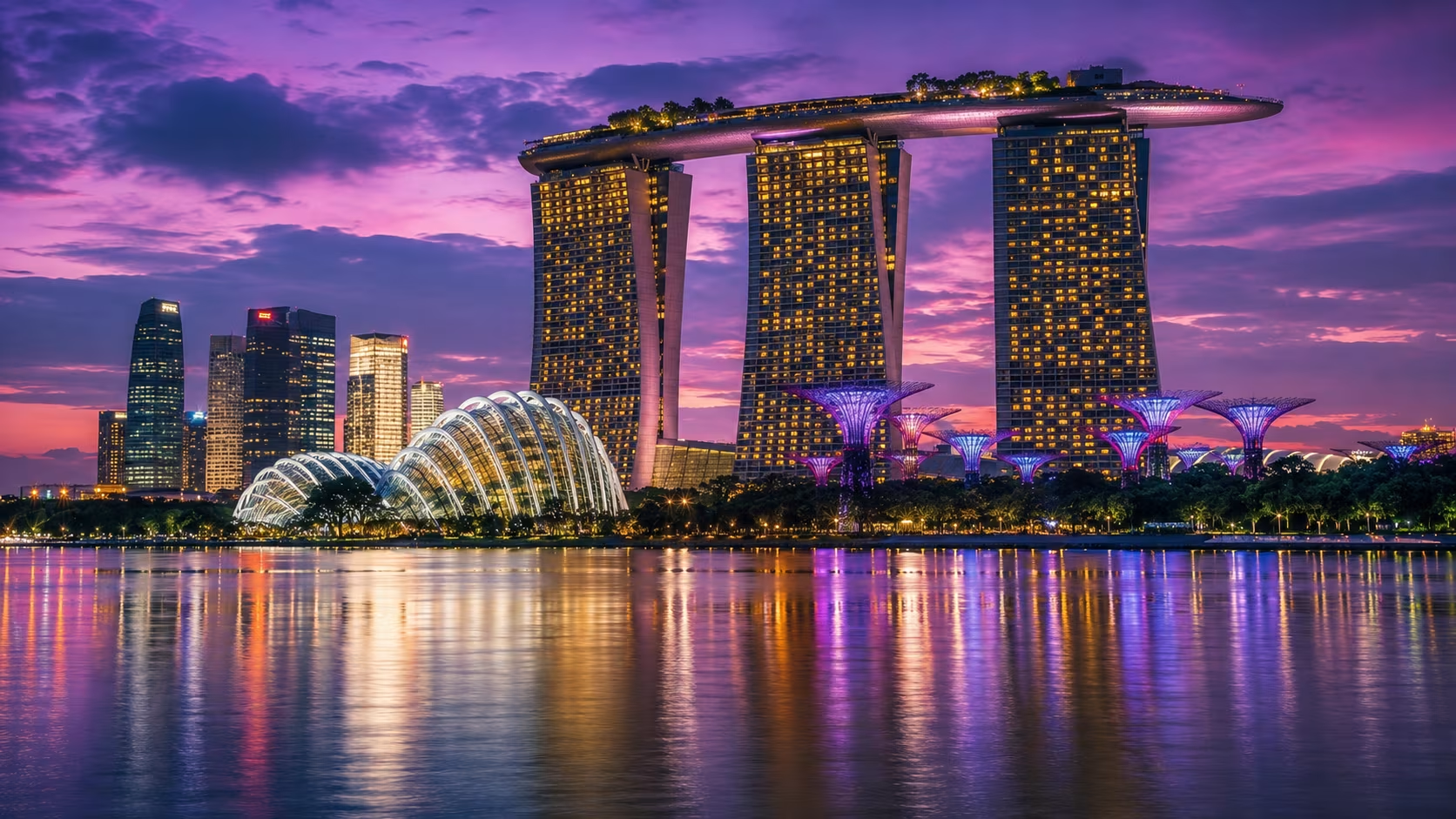
Singapore is the world's only fully functional city-state in 2026, 5.9 million people on a 728 km² island, with the world's third-busiest port, the world's best airport (per most rankings), and a per-capita GDP higher than the US. It's also one of the strangest cities for a first-timer to read. The combination of a hyper-modern downtown, three distinct heritage districts (Chinatown, Little India, Kampong Glam), one of the world's great food cultures (concentrated in hawker centres), and rules so specific they're internationally famous (chewing gum control, the famous fines) produces a city that's simultaneously easy to navigate and culturally rich.
Most first-timers see Singapore in 2–3 days as a stopover. That's the city's traditional positioning (between long-haul flights to Australia, between Malaysia and Bali), but it sells the city short. Four days lets you cover the headline sights, eat at three or four hawker centres properly, see a heritage district at neighborhood pace, and have one calmer day in the gardens.
Quick Facts
| Item | Detail |
|---|---|
| Country | Singapore |
| Currency | Singapore dollar (SGD), ~1.35 SGD/USD in 2026 |
| Languages | English (admin/business), Mandarin, Malay, Tamil; English near-universal |
| Time zone | SGT (UTC+8, no DST) |
| Tourist tax | 9% GST + service charge ~10% (most restaurants) |
| Best time | February–April, July–September |
| Visa | Visa-free 30–90 days for most countries |
| Trip length | 3–4 days |
When to Go
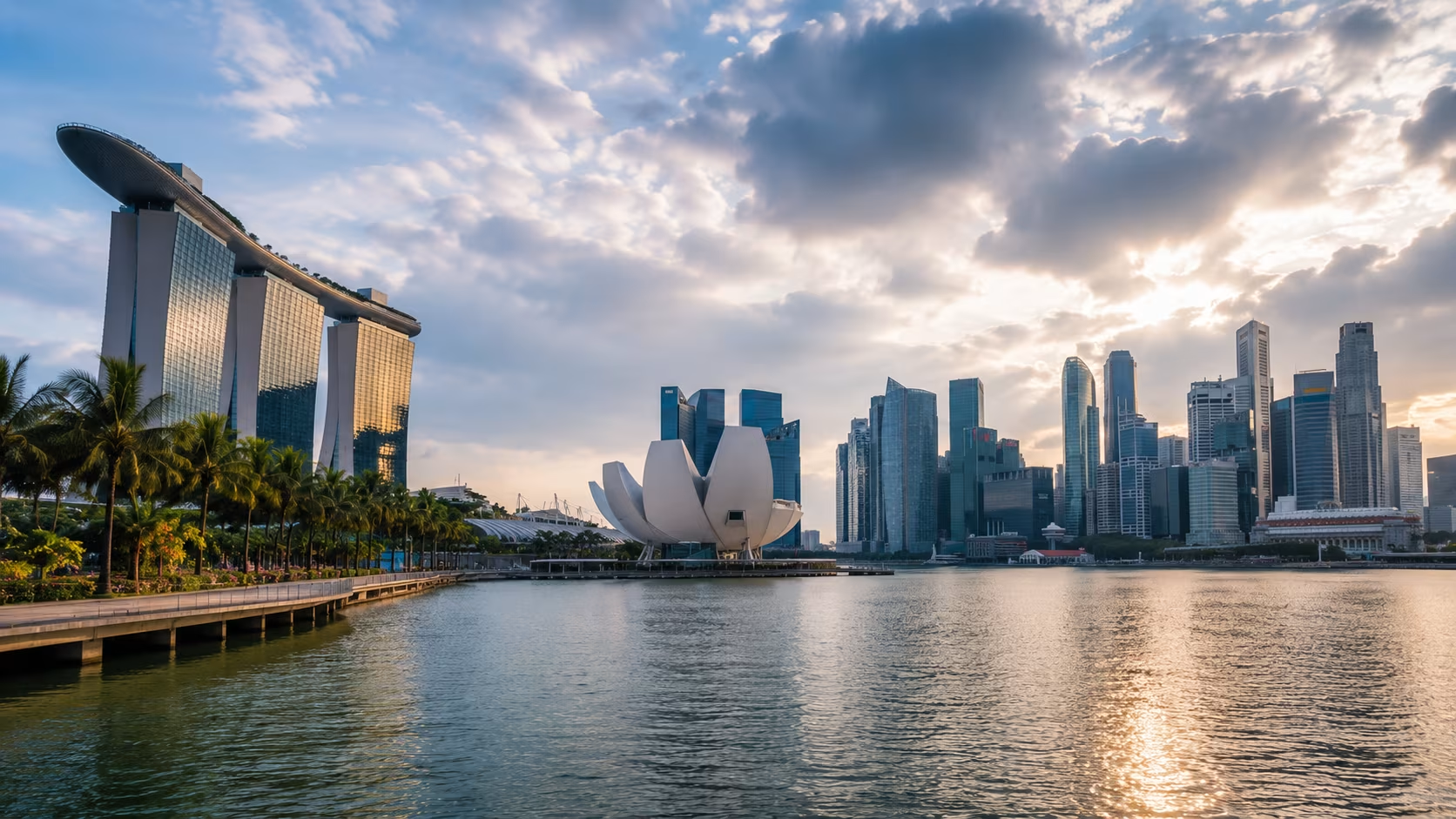
Singapore is 1° north of the equator, so weather varies less than most travel destinations. Daily highs hover at 29–32°C year-round; rain is common most months.
February to April
The driest months. Light wind, high humidity, the city's most pleasant feel.
May to September
Hotter and wetter, with afternoon thunderstorms most days. The June Singapore Food Festival is a draw.
October to January
Northeast monsoon, more sustained rain. December has Christmas decorations across Orchard Road.
Avoid:
- Chinese New Year (late January or early February). Chinatown is closed for several days; many restaurants and shops shutter.
- Hari Raya (varies). Some restaurants in Kampong Glam closed during the Eid period.
- Singapore Grand Prix weekend (mid-September). Hotel prices triple; central streets close for the night race.
Getting in
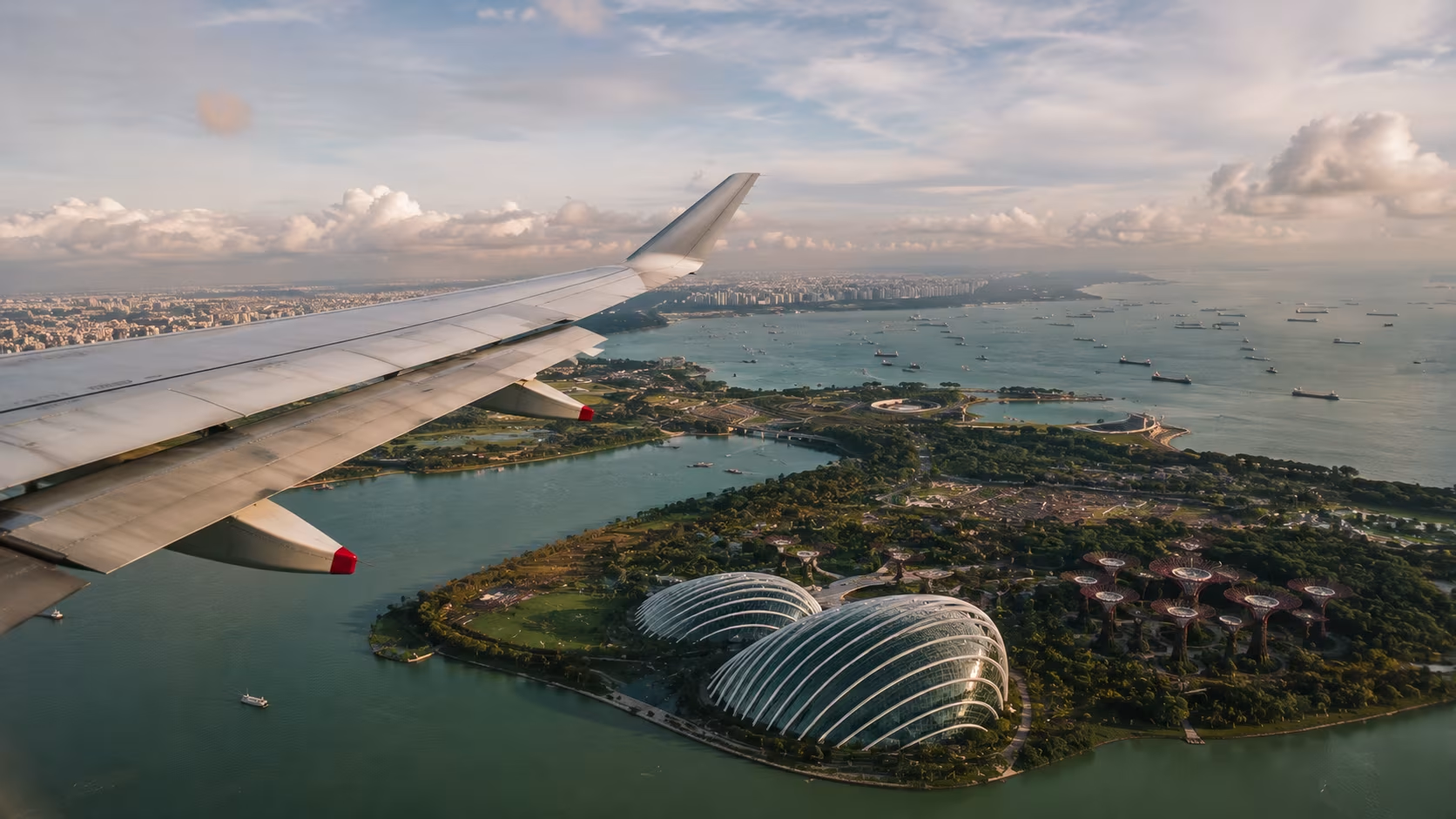
Singapore Changi Airport (SIN). 17 km east of central Singapore. Consistently ranked the world's best airport.
From SIN:
- MRT (subway): SGD 2.50, 35 min to City Hall. The default. Use any contactless credit card or your phone (Apple Pay, Google Pay) at the gate; the system charges you the appropriate fare.
- Taxi: SGD 30–50 to most central destinations. Add SGD 3–8 for airport surcharge.
- Grab (the Southeast Asian Uber): SGD 25–40.
- Airport shuttle: SGD 10. Drops at major hotels.
Most travelers spend at least 30 minutes exploring Changi itself before leaving. Jewel Changi (the indoor shopping/garden complex with the world's tallest indoor waterfall) is open to non-passengers.
Getting Around
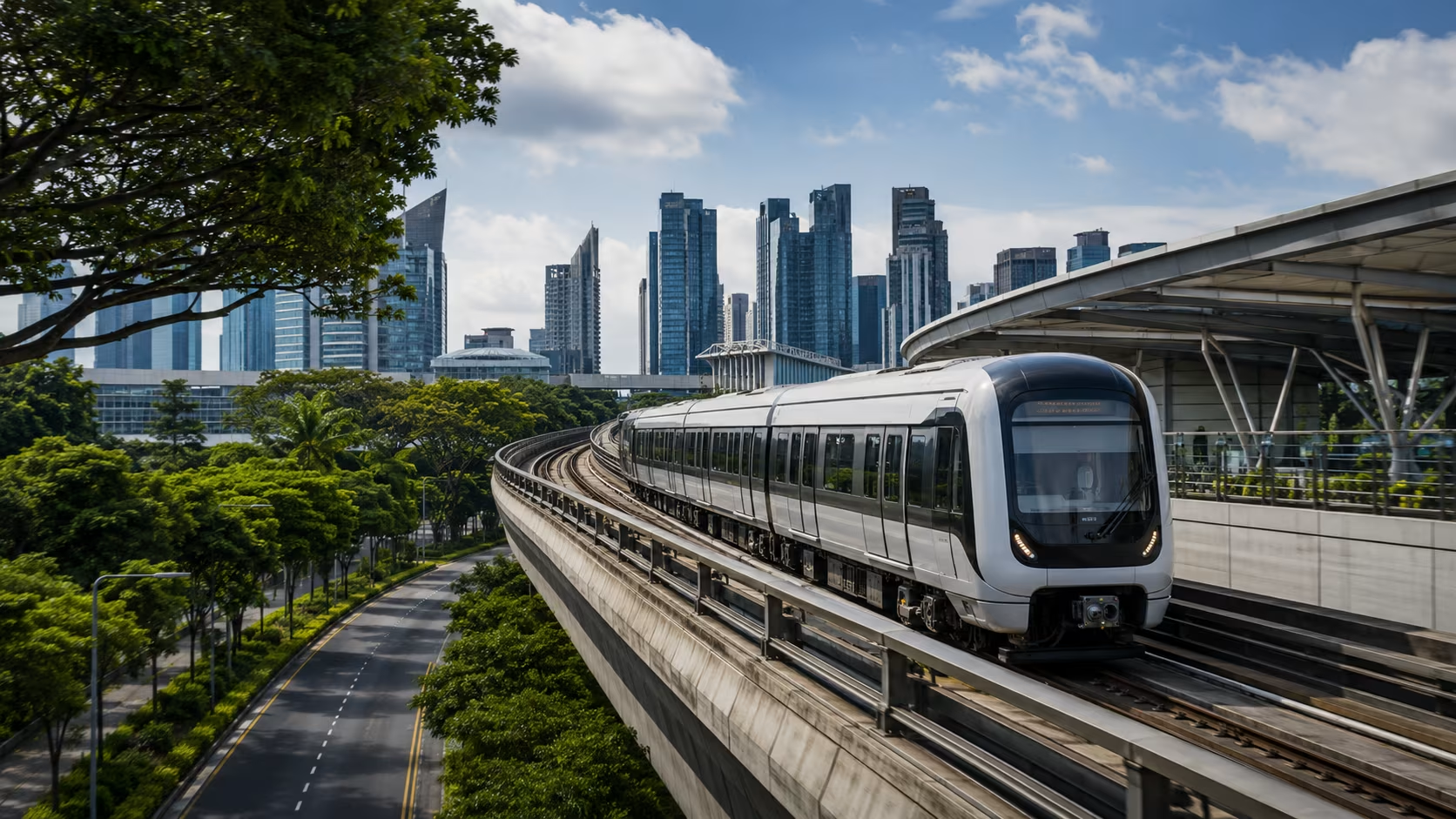
Singapore's transit is often cited as the world's most efficient. Most of what you came to see is reachable by MRT + walking.
MRT (subway)
Fully driverless. 6 lines (Red, Green, Purple, Yellow, Brown, Blue). Single ride: SGD 1.30–2.50. Tap any contactless card or phone at the gates. EZ-Link card (rechargeable) at any station for SGD 5 + balance. Most foreign tap-and-pay cards work natively.
Lines genuinely useful for tourists: Red Line (covers MBS, Marina South, Orchard Road, Chinatown, Little India). Green Line (covers Botanic Gardens, Bugis, Tanjong Pagar). Yellow Line (Kampong Glam).
Bus
Complements the MRT. Same payment system. Useful for the eastern coast and outer destinations.
Walking
Downtown core (Chinatown to Marina Bay) is walkable in cool months. The intense heat and humidity make multi-hour walks challenging year-round.
Taxi / Grab
Taxis are still common (ComfortDelGro is the largest fleet). Standard fare: SGD 3.20 base + SGD 0.22 per ~400m. Average central trips: SGD 8–18. Grab is usually 20–40% more expensive but gives English-speaking confirmation.
Where to Stay
Singapore is small enough that most central locations are convenient. The neighborhood you choose is more about character than convenience.
Marina Bay
The headline modern district. Marina Bay Sands (the iconic three-tower hotel with the sky park), Gardens by the Bay, Esplanade. Walking distance to the central business district. Premium pricing.
Orchard Road
The shopping district. High-end hotels, mall after mall. Convenient for shopping; less character at night.
Chinatown
The heritage Chinese district. Boutique hotels in restored shophouses. Walking distance to most central sights. Some budget options.
Little India
The Indian heritage district. Smaller hotels, atmospheric streets. Walking distance to MRT to most other zones. Cheaper accommodations.
Kampong Glam / Bugis
The Malay-Arab heritage district. The most photogenic shop houses. Walking distance to Bugis MRT.
Tanjong Pagar / Outram
West of Chinatown. Quieter; some boutique hotels in shophouse conversions; growing restaurant scene.
Sentosa Island
Resort island south of Singapore. Universal Studios, beach resorts. For travelers prioritizing beach and theme park; less central.
Avoid as a Base
- Far suburbs (Jurong, Tampines): convenient for residents, less so for tourists.
- Sentosa if not specifically going for the island theme.
Realistic 2026 nightly prices (4-star, weekday, shoulder, USD):
| Neighborhood | Mid-range | Higher-end |
|---|---|---|
| Marina Bay | $250–400 | $500–1,500 |
| Orchard Road | $200–340 | $450–900 |
| Chinatown | $130–230 | $320–600 |
| Little India | $90–180 | $250–450 |
| Kampong Glam | $130–230 | $300–550 |
What to Book in Advance
Marina Bay Sands SkyPark Observation Deck
The iconic ship-shaped sky park 200m above ground level. SGD 32 for non-guests. Hotel guests have free access. Sunset slot is the best; sells out 2+ weeks ahead in peak season.
Gardens by the Bay (cloud Forest + Flower Dome)
The two indoor gardens. SGD 30–53 combined ticket. Walk-up usually fine; book online for skip-the-line.
National Gallery Singapore
The largest museum of modern Southeast Asian art. SGD 20. Walk-up. Allow 2–3 hours.
Singapore Zoo / Night Safari / River Wonders
World's most respected zoo, particularly the Night Safari (the world's first nighttime zoo). Combo passes available. Book ahead in school holidays.
Universal Studios Singapore (sentosa)
Mid-priced theme park. Booking ahead saves 10–20%; off-peak weekdays much shorter queues.
Esplanade Theatres
The "durian-shaped" performing arts complex. Book Singapore Symphony Orchestra or other shows 1–4 weeks ahead.
Day 1 — Marina Bay
08:30. Coffee at hotel. Or Toby's Estate in Robertson Quay if walking.
09:30. Gardens by the Bay. The Supertree Grove (free), the Cloud Forest (SGD 22), the Flower Dome (SGD 22). Both domes worth seeing; Cloud Forest is more dramatic. Allow 3 hours.
12:30. Lunch at Marina Bay Sands food court (Rasapura Masters) for casual. Or CÉ LA VI at the top of MBS for upscale.
14:00. Marina Bay Sands SkyPark Observation Deck (booked). Allow 60 minutes.
15:30. ArtScience Museum at MBS (SGD 25). Lotus-shaped building, rotating exhibitions, often Future World immersive digital art.
17:30. Walk along Marina Bay promenade. Pass the Merlion statue at the bay's mouth (touristy but iconic).
19:00. Sunset at the Helix Bridge or from the Esplanade waterfront.
19:45. Spectra light show at the Marina Bay (free, every 30 min). 15 minutes.
20:30. Dinner. Burnt Ends (Australian-style barbecue, two-Michelin-star). Odette (French, three-Michelin-star, books months ahead). Or hawker dinner at Lau Pa Sat (the historic hawker center near Raffles Place).
Day 2 — Heritage Districts
09:00. Chinatown. Walk Pagoda Street + Trengganu Street. The temples, Sri Mariamman Temple (Hindu, oldest in Singapore, free) and Buddha Tooth Relic Temple (Buddhist, free), are the headline.
11:00. Maxwell Food Centre (the historic hawker center, near Chinatown). The most-respected hawker center in central Singapore. Order:
- Tian Tian Hainanese Chicken Rice (the famous one).
- Hong Lim Chicken Rice (the rival, often less queue).
- Ah Tai Hainanese Chicken Rice (the third).
- Chuan Kee Boneless Sliced Fish Soup for fish soup.
13:00. Walk through Tanjong Pagar for restored shophouses + boutique cafés.
14:30. MRT to Little India. Walk Tekka Centre (the wet market and food court). Visit Sri Veeramakaliamman Temple (Hindu, free) and Sri Srinivasa Perumal Temple.
16:00. Mustafa Centre. 24-hour department store, stocking everything. Iconic Little India landmark.
17:00. Walk to Kampong Glam. Sultan Mosque (the city's main Islamic mosque, free, modest dress required). Walk Haji Lane (boutique cafés, narrow street).
19:00. Dinner in Kampong Glam. Hjh Maimunah for Malay (cafeteria-style, working-class atmosphere, the city's most-respected nasi padang). Zam Zam for murtabak (filled flatbread). Ya Kun Kaya Toast (multiple locations) for Singaporean breakfast standard.
21:00. Arab Street drinks. Cocktails and Middle Eastern atmosphere along Bussorah Street.
Day 3 — Hawker Centres + Botanic Gardens
The day to eat properly.
09:00. Breakfast at a kopitiam (traditional coffee shop). Order kaya toast (sweet coconut-egg jam on toast), soft-boiled eggs, kopi (Singapore-style coffee). Ya Kun Kaya Toast at multiple locations is the chain version; Tong Ah Eating House in Tanjong Pagar is the older institution.
10:30. Singapore Botanic Gardens. UNESCO World Heritage Site. The 82-hectare garden park is free. The National Orchid Garden (SGD 12) within is the highlight: 60,000 orchid plants. Allow 2 hours.
13:00. Hawker lunch.
The hawker center system:
Hawker centres are open-air food courts of 20–80 individual stalls (each independently owned), with shared tables. The ordering pattern:
- Walk through to identify what you want.
- Find a free table; reserve with a packet of tissues (the universal Singapore signal).
- Order from each stall individually; pay each one.
- Bring food back to your table.
- Self-clear when done: return tray to designated cleaning stations.
Best central hawker centres:
- Maxwell Food Centre (Chinatown): chicken rice, lor mee.
- Lau Pa Sat (Raffles Place): Victorian-era market converted to hawker center.
- Tiong Bahru Market: the most loved by locals.
- Chinatown Complex Food Centre (Smith Street): features Liao Fan Hong Kong Soya Sauce Chicken Rice & Noodle, the world's first Michelin-starred hawker stall.
- Old Airport Road Food Centre: east, less central, more authentic.
- Tekka Centre (Little India): Indian and Malay specialties.
14:30. MRT back to central area.
15:30. National Gallery Singapore (SGD 20). The two former Supreme Court + City Hall buildings, restored, now housing the largest collection of modern Southeast Asian art. The DBS Singapore Gallery + UOB Southeast Asia Gallery are the headlines. Allow 2 hours.
17:30. Drinks at Smoke & Mirrors (rooftop bar at the National Gallery). Or Atlas Bar (in the Parkview Square art deco building, the world's most respected gin bar).
19:30. Dinner. Candlenut (one-Michelin-star Peranakan/Nyonya). Long Beach Seafood for chili crab (the tourist classic, well done). Jumbo Seafood for the same dish, more famous.
Day 4 — Choose: Sentosa, Day Trip, or Slow City Day
Path A: Sentosa Island
The resort island south of Singapore.
09:00. Cable car or MRT-then-monorail to Sentosa.
09:30. Universal Studios Singapore (SGD 90). Or skip if theme parks aren't your thing.
13:00. Lunch at Resorts World Sentosa.
14:30. S.E.A. Aquarium (SGD 49). One of the world's largest aquariums.
16:30. Beach time at Siloso Beach or Palawan Beach (Singapore's southernmost point).
Path B: Day Trip to Pulau Ubin
Small rural island northeast of Singapore. Bumboat from Changi Point Ferry Terminal (SGD 4 each way). Bicycle rental at the island; the island has no cars. Allow 6 hours total.
Since Singapore proper is so urbanized, the contrast (old kampong houses, mangrove walks, monkeys in the trees) is dramatic. The closest you'll get to traditional Southeast Asian village life within Singapore.
Path C: Day Trip to Johor Bahru, Malaysia
For travelers who want to add a country stamp: Johor Bahru is just over the Causeway. Visa-free for most. 90-minute trip via Causeway Link bus (SGD 5–10). Lower prices for shopping, durian, Malaysian street food. Allow 6+ hours.
Path D: Slow City Day
Morning at Tiong Bahru (the city's most charming residential neighborhood; Art Deco apartment blocks; café and brunch institutions). Afternoon at the Asian Civilizations Museum (SGD 25).
What to Eat
Singapore food culture is one of the world's great regional cuisines. The combination of Chinese, Malay, Indian, and Peranakan (Straits Chinese) traditions makes for a denser food scene per square kilometer than almost any other city.
Hawker Centre Standards
| Dish | What it is |
|---|---|
| Hainanese Chicken Rice | Poached chicken + rice cooked in chicken stock + chili-ginger sauce. The unofficial national dish. |
| Chicken Rice (Roasted) | Variant with roasted instead of poached chicken. |
| Char Kway Teow | Stir-fried flat rice noodles with prawn, Chinese sausage, dark soy. |
| Hokkien Mee | Stir-fried prawn noodles. |
| Laksa | Spicy coconut soup with noodles, prawn, fish cake. The Katong (East Coast) version is the institution. |
| Bak Kut Teh | Pork rib soup with garlic and pepper. |
| Rendang | Slow-cooked spicy meat (usually beef), Malay tradition. |
| Nasi Lemak | Coconut rice with anchovies, peanut, egg, and sambal. National breakfast. |
| Roti Prata | South Indian flaky flatbread, dipped in curry. |
| Carrot Cake (Chai Tow Kway) | Stir-fried radish cake, no carrot involved. |
| Satay | Grilled meat skewers with peanut sauce. |
| Chili Crab | Singapore's signature dish; mud crab in spicy tomato-chili sauce. |
| Black Pepper Crab | Less spicy, peppery alternative. |
| Fish Head Curry | Indian-influenced, large red snapper head simmered in curry. |
Peranakan / Nyonya
Straits Chinese cooking: the cuisine of Chinese settlers who married Malay locals. Distinct from both pure Chinese and pure Malay cooking.
- Ayam Buah Keluak: chicken with black nuts.
- Babi Pongteh: pork with fermented bean paste.
- Otah: fish paste grilled in banana leaf.
- Kueh: Peranakan sweet desserts.
Where: Candlenut (Michelin-starred); The Blue Ginger (long-running classic); True Blue Cuisine.
Modern Fine Dining
Singapore has the third-most Michelin stars in the world (per square kilometer, the most). 2026 highlights:
- Odette (3-star, French)
- Les Amis (3-star, French)
- Zén (3-star, modern Nordic-Asian)
- Cloudstreet (2-star)
- Burnt Ends (1-star, Australian barbecue)
- Candlenut (1-star, Peranakan, the only Michelin-starred Peranakan in the world)
- Liao Fan Hong Kong Soya Sauce Chicken Rice & Noodle (Bib Gourmand, the famous "world's first Michelin hawker")
Costs and Budget
2026 daily budgets per person, excluding flights and hotel (USD):
| Style | Per day | Notes |
|---|---|---|
| Backpacker | $35–60 | Hawker meals, MRT, walking, free attractions |
| Mid-range | $80–140 | Mix of hawker and proper restaurants, museums, attractions |
| Comfortable | $200–320 | Better restaurants, premium attractions, taxis |
| Higher-end | $500+ | Tasting menus, premium hotels, private tours |
Singapore is among the more expensive Asian destinations, but hawker food keeps daily food costs low for budget-conscious travelers. A SGD 5–10 hawker meal is a real meal; a sit-down restaurant equivalent is SGD 30–50.
Practical Info
- Cards. Universal except some tiny hawker stalls (which are increasingly going PayLah and PayNow QR-code payments).
- Tipping. Service charge included (typically 10%). Tipping not expected; rounding up appreciated.
- English. Universal, often a first language.
- Strict laws. Selling chewing gum is restricted (importation for personal use is allowed but rarely worth it). Spitting, jaywalking, and littering carry fines. Drug offenses carry severe penalties (death penalty still on the books for trafficking).
- Public smoking. Restricted to designated yellow-marked smoking zones in central areas. Fines enforced.
- Crime. Among the lowest in the world. Standard precautions only.
- Public restrooms. Generally clean and free.
- Heat and humidity. Real and constant. AC is the default; build heat breaks into your day.
- Singlish. The Singaporean English variant has unique vocabulary and grammar. Don't worry; you'll be understood and can understand.
Common First-Timer Mistakes
- Spending all day on Marina Bay. It's beautiful and modern; it's also the least culturally distinctive part of the city.
- Eating only at restaurant brands you'd recognize at home. Singapore's food culture is in the hawker centres.
- Skipping the heritage districts. Chinatown + Little India + Kampong Glam is what makes Singapore distinct from any other Asian city.
- Trying to walk the whole downtown in heat. Schedule indoor breaks.
- Visiting Sentosa as a primary destination. It's a theme island; the actual Singapore is on the main island.
- Not booking Marina Bay Sands SkyPark sunset. Sells out.
- Underestimating queue times for chicken rice. The famous stalls (Tian Tian, Liao Fan) have 30–60 min lines at lunch.
- Buying souvenirs at Orchard Road instead of in heritage districts. The neighborhood markets have more interesting goods at lower prices.
- Ordering chili crab at chain restaurants. The famous places (Long Beach, Jumbo, No Signboard) are touristy; the food is genuinely good but the experience is well-orchestrated for tourists.
Final Notes
Singapore is the rare city that genuinely earns its tourist-friendly reputation while retaining real cultural density. Three to four days is the right length: one day for Marina Bay and modern Singapore, one day each for two heritage districts, and one for either Sentosa, slow city walking, or a side trip.
The quietest piece of advice: pick one hawker centre and eat lunch there for two consecutive days. Try a different stall each time. The food culture isn't decorative: it's the daily life of 5.9 million people, lived three plates at a time. Watching a Singaporean office worker order their lunch tray on a Tuesday at 12:45 reveals more about the country than any guidebook tour.
0 Comments
No comments yet — start the conversation.