
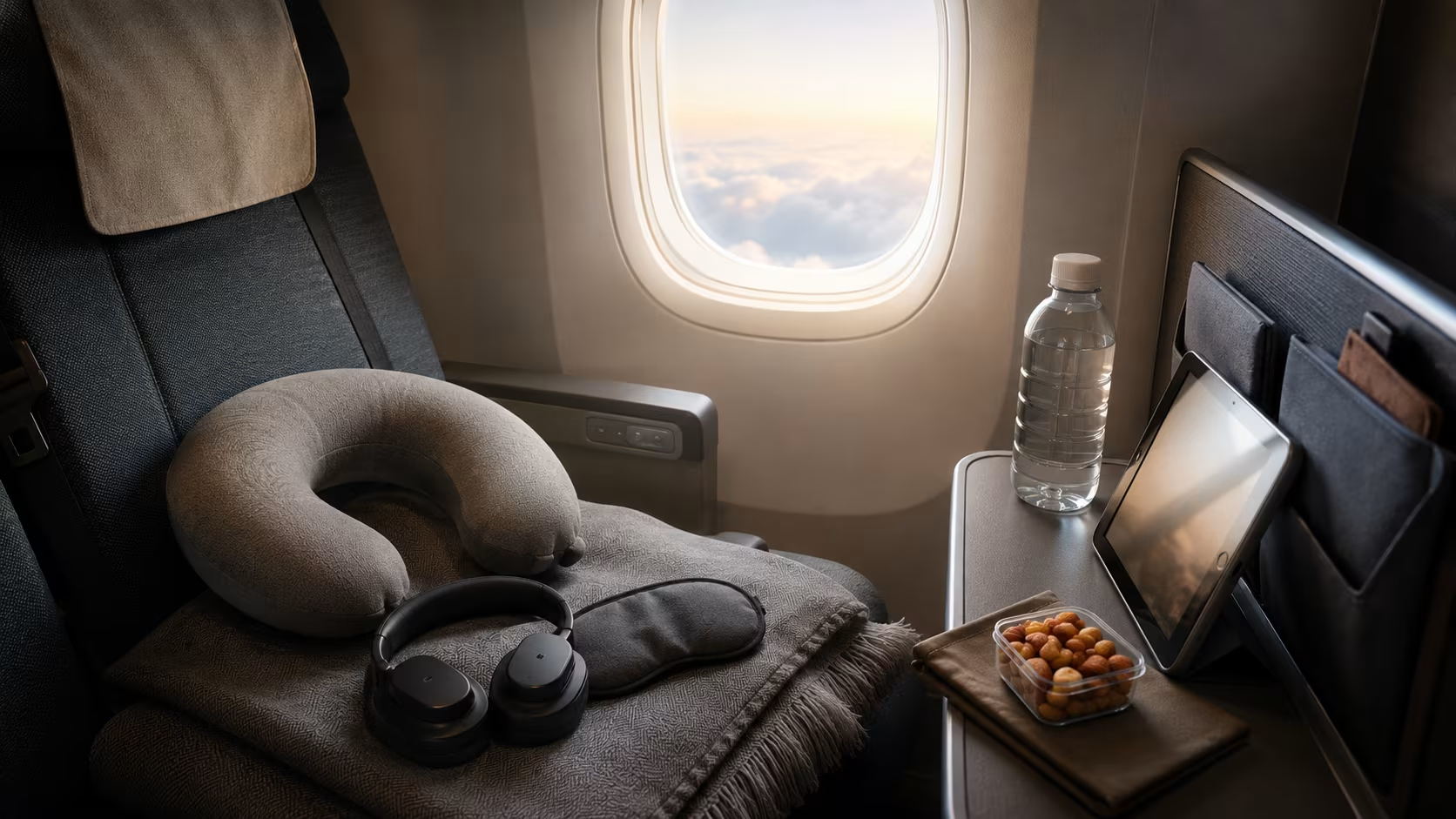
A 12-hour flight in economy is a physical event. Your blood pools, your sinuses dry out, your circadian rhythm gets jostled, and the cabin air sits at roughly 20% humidity (a sleep-friendly bedroom is 30–50%). The travelers who land ready to function on day one aren't lucky; they're prepared. The travelers who land destroyed for three days didn't fail genetically; they failed at preparation.
This is what actually works on long-haul flights, based on the practices of frequent flyers, sleep researchers, and aviation medicine sources, not the recycled "drink water and walk every two hours" tips that float around airline websites.
The Big Picture: What Actually Wrecks You
Four mechanisms degrade you on a long flight:
| Mechanism | What it does | Counter |
|---|---|---|
| Circadian disruption | You arrive at a wrong-time-zone version of your body | Strategic light + caffeine + meal timing |
| Dehydration | Cabin air is 4–10% humidity at altitude; the body loses water 2x faster | Aggressive water intake + skip alcohol |
| Hypoxia (mild) | Cabin pressure equivalent to ~2,400m altitude | Slower breathing, no extra alcohol |
| Immobility / poor posture | Stiff joints, lower-back compression, blood pooling in legs | Movement every 60–90 min, footrest, lumbar support |
Fix these four and you arrive functional. Skip any one and you arrive degraded.
Before You Fly
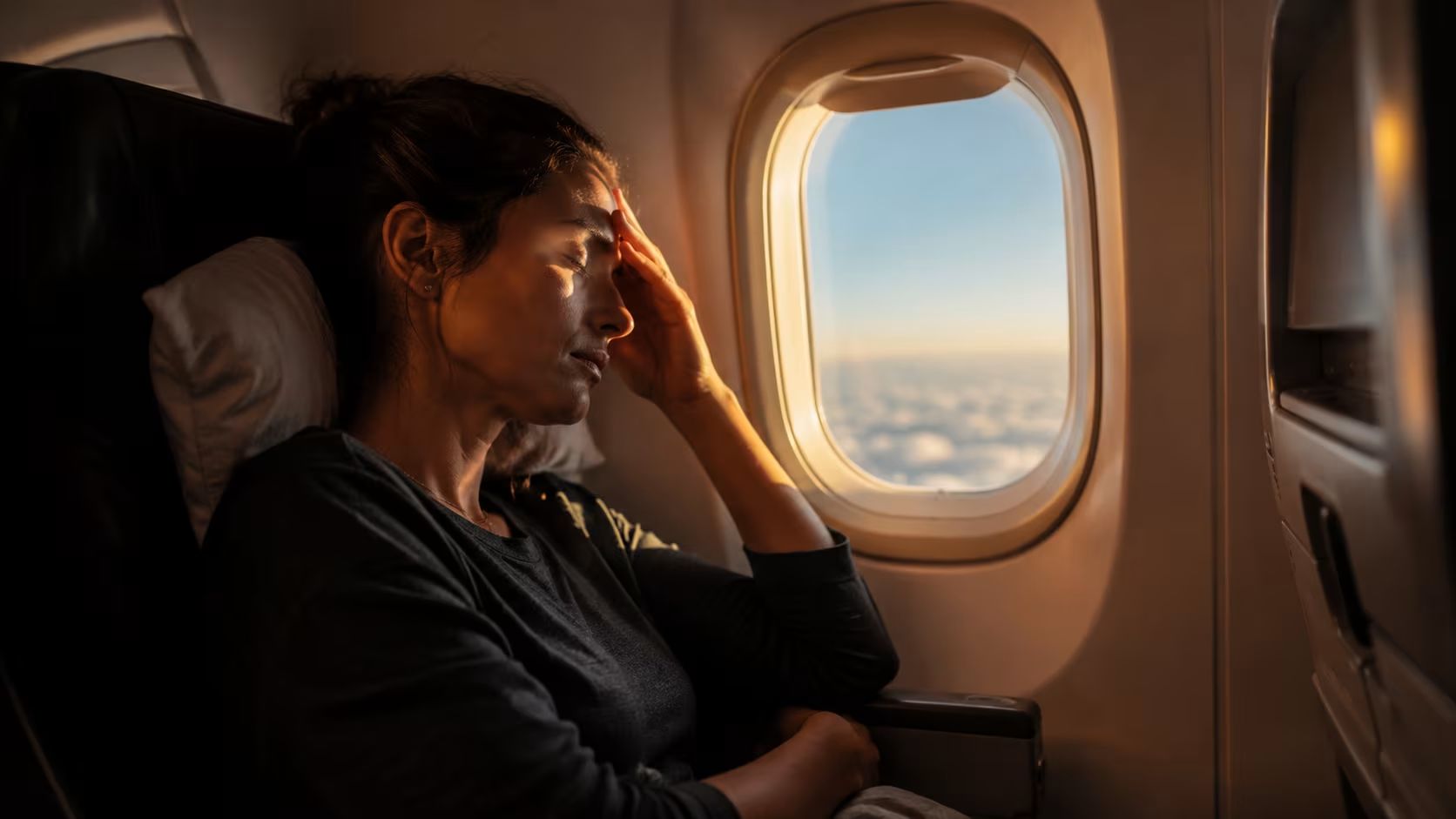
1. Sleep the Night Before
Flying tired multiplies the damage. Get 8 hours minimum the night before.
2. Stay Hydrated for 24 Hours
Drink 2.5–3 L of water in the 24 hours before flight. Pre-loading hydration matters because once you're at altitude, the loss rate exceeds intake.
3. Eat Lightly Before Flight
A heavy meal 1–2 hours before flight produces the worst version of cabin digestion. A medium-sized meal 3–4 hours before, or a light meal 1 hour before, is better.
4. Plan Your Sleep Schedule
The single most useful pre-flight act: figure out what your destination time zone is, and decide when on the flight you'll sleep.
Eastward Flights (europe → Asia, US → Europe)
You're losing time. Sleep on the flight if it overlaps with destination's nighttime.
Westward Flights (europe → US, Asia → US)
You're gaining time. Sleep less; arrive at destination's daytime ready to push through to local bedtime.
Apps like Timeshifter turn this into a personalized schedule. Free for basic versions; the paid version ($25 one-time) maps light, caffeine, and melatonin timing.
5. Choose Your Seat Wisely
The single most important pre-flight choice. The hierarchy:
| Seat type | Pros | Cons |
|---|---|---|
| Window | Wall to lean against; sleep easier | Trapped if neighbor sleeps |
| Aisle | Easy bathroom + walking access | Bumped by cart and aisle traffic |
| Middle | Avoid at all costs | Both pros, both cons inverted |
| Exit row | Extra legroom | Cold; can't recline; under-seat storage limited |
| Bulkhead | More legroom; baby bassinet attaches | Often near baby; under-seat storage limited |
| Back of plane | More empty seats; faster off | Bumpier; engine noise; last food choices |
| Front of plane | Smoother; first food + drink | Earlier boarding; near galley noise |
For Sleeping
Window seat, midway down the cabin (before the engines, after the wings).
For Comfort
Exit row or bulkhead.
For Introverts
Aisle in the rear half, least walked past, most empty middle seats nearby.
Use SeatGuru or AeroLOPA to identify the actual seat (some "window" seats lack a window; some have a misaligned window).
What to Pack in Carry-On
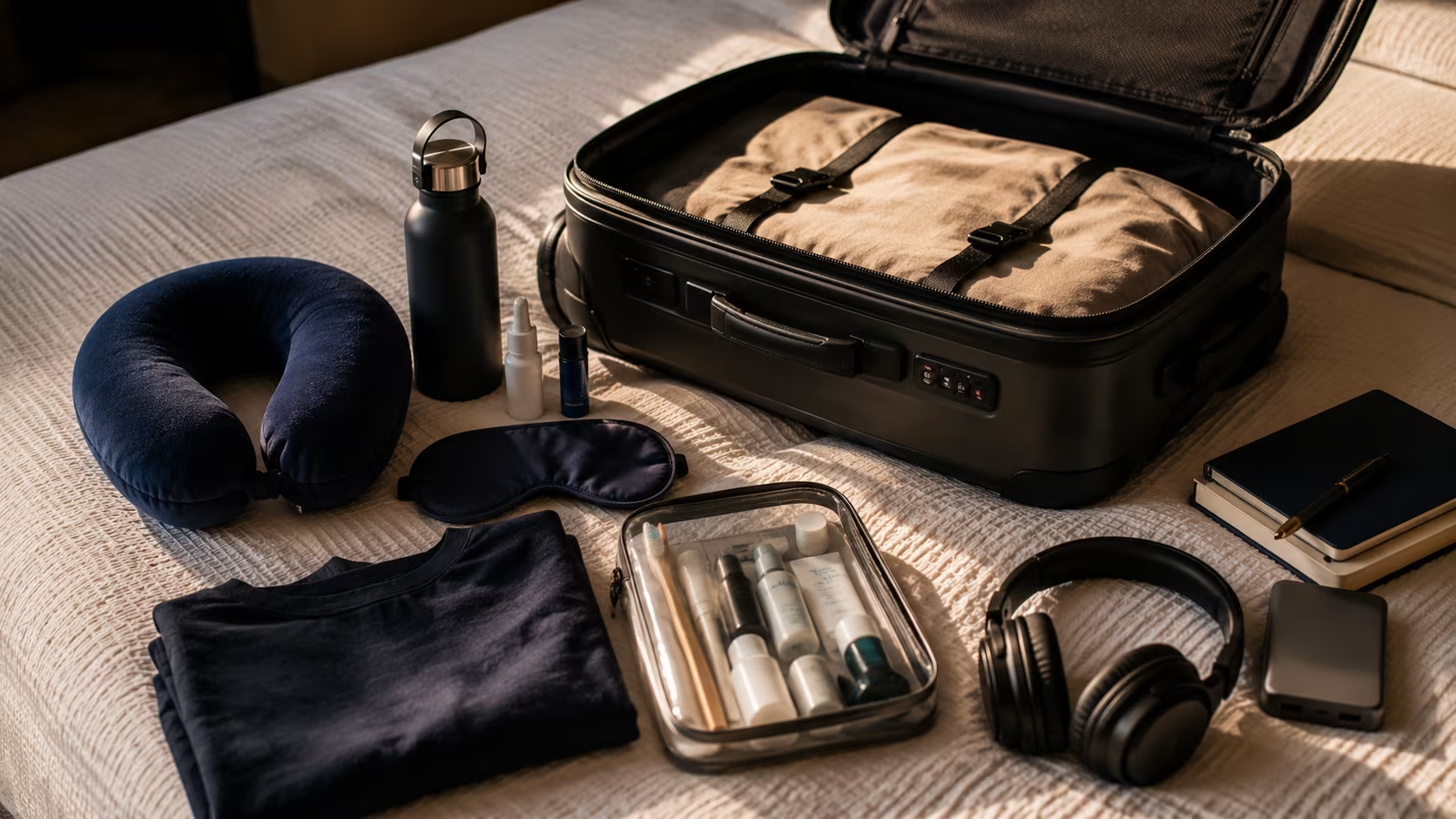
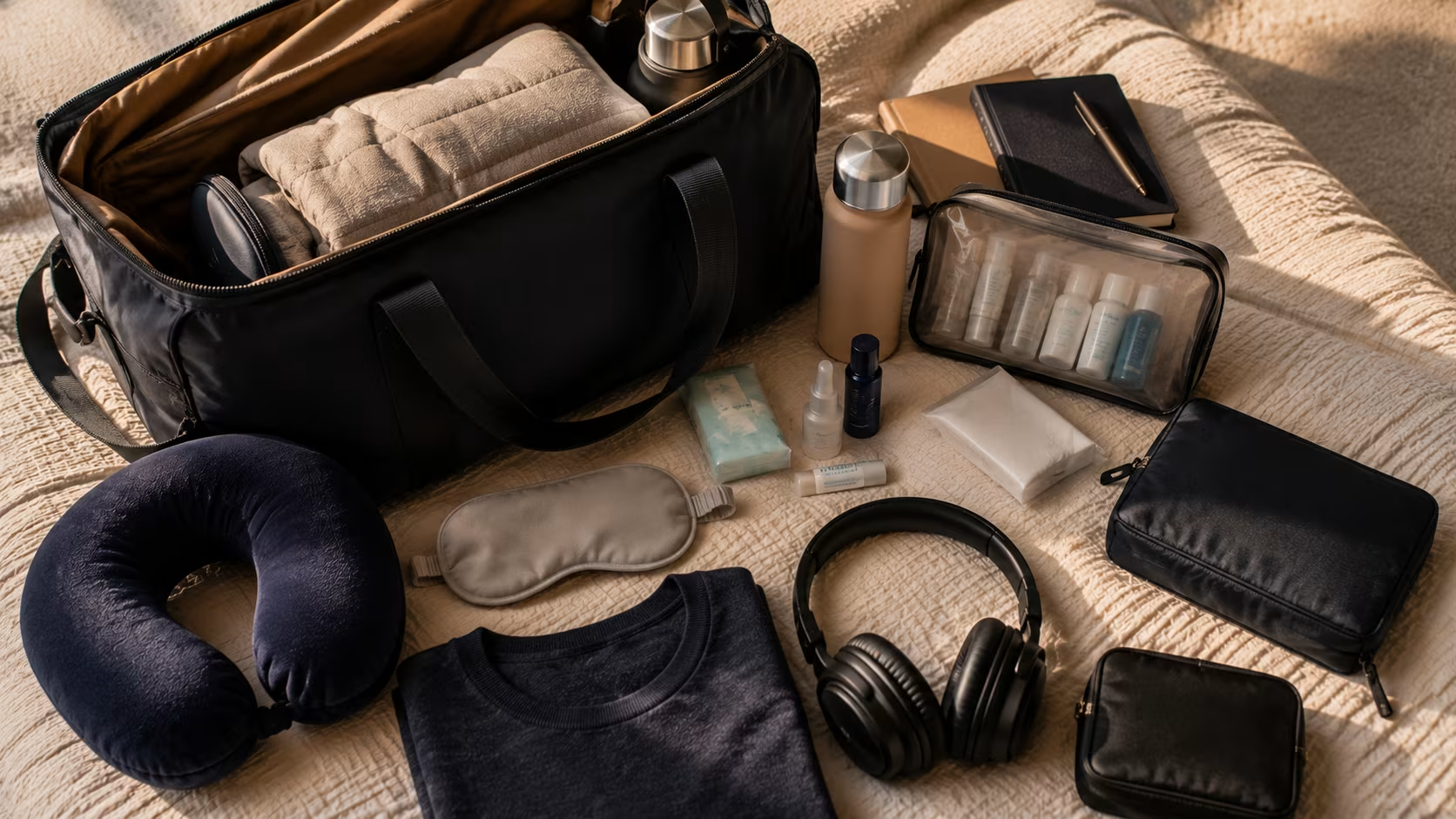
Essential
- Empty water bottle. Fill at the gate fountain after security. 1L minimum; 1.5L better.
- Headphones. Active noise-cancelling makes a serious difference. Charge fully before flight.
- Phone charger + power bank. Long flights drain devices; airlines' seat power is unreliable on older planes.
- Compression socks. Reduce leg swelling and DVT risk on flights over 6 hours. $20–40 pair; wear them on board.
- Eye mask. Cabin lights stay on for hours during meal service.
- Earplugs. Backup for headphone failure or to wear under noise-cancelling headphones for double-blocking.
- Toothbrush + toothpaste (small). Brushing teeth 8 hours into a flight resets your face-feeling significantly.
- Lip balm + face moisturizer. Cabin humidity destroys skin and lips.
- Saline nasal spray. Counters dry-cabin-air sinus damage.
- Layers. Cabin temperature varies 16–24°C; a thin merino layer + a hoodie handles the range.
Worth Considering
- Travel pillow. Memory foam beats the cheap inflatable kind. Cabeau Evolution S3 and Trtl Pillow are the most-recommended.
- A book or downloaded show. Don't rely on in-flight entertainment; sometimes broken, sometimes movies are bad.
- Snacks. Almonds, protein bar, fruit. Airline meals are sometimes 6+ hours apart.
- Pen. For immigration cards still required in some countries.
- Spare contact lenses or glasses. If you wear contacts, the cabin's dry air dries them out within 4 hours.
- Spare set of underwear and a t-shirt. For 14+ hour flights or if you'll continue traveling immediately on landing.
What to Skip
- Travel pillow + neck horseshoe + lumbar pillow + footrest. Pick one; you can't use four.
- Multiple electronic devices. A phone + tablet covers everything. Laptops are heavy and rarely used in economy.
- Heavy book. Kindle weighs less.
- Sleep aids stronger than melatonin (Ambien, Lunesta). The risk of needing to evacuate during a sleep aid's peak is genuine. Many airlines and aviation medicine sources discourage prescription sleep aids on aircraft.
At the Airport
Hydrate at the Gate
The gate water bottles aren't infinite. Get to the gate 60+ minutes before boarding. Drink 0.5–1 L of water there. Refill your bottle.
Don't Drink at the Airport Bar
Even if it's a 17:00 flight and the bar is right there. Alcohol pre-flight + cabin altitude + dehydration is a triple multiplier. The headache that lasts 6 hours of flight isn't worth the pre-flight beer.
Move
Walk 10–15 minutes pre-boarding. Stretch your back. Roll your ankles.
Bathroom
Right before boarding. The first 90 minutes of a flight are taxi + climb + meal service; the bathroom queue at hour 2 is real.
During the Flight
First Hour
- Settle in. Stow your bag, keep essentials at your seat (water, charger, headphones, eye mask).
- Set your watch to destination time. Mental commitment to the new time zone helps adjust faster.
- Skip the welcome drink. Or accept water only.
Eating Strategy
The meal service patterns:
- Meal 1 typically 60–90 min after takeoff.
- Snack mid-flight on long routes.
- Meal 2 typically 60–90 min before landing.
Eat the first meal if you'll be awake; sleep through the second meal if you can. Or better: align meals to your destination's clock. If it's nighttime at destination, decline the meal that should be midnight; sleep through it.
Skip the airline alcohol. Two drinks at altitude has the systemic effect of three on the ground. Cumulative dehydration + impaired sleep + worse jet lag.
Hydration Targets
Drink 250 ml every hour. On a 10-hour flight, that's 2.5 L. The dry-cabin loss rate makes this not optional.
Sleep Window
- Eat first. Sleeping immediately after eating is harder.
- Bathroom first. You don't want to wake up two hours in.
- Window seat with the shade down + eye mask.
- Headphones with noise cancelling on + ambient music or white noise. Apps like Noisli or Endel generate sleep-friendly sound.
- Recline + footrest if your seat has it.
- Compression socks + loose clothing.
- Melatonin (0.3–0.5 mg) about 30 min before your intended sleep onset, if you've taken it before. Higher doses are not better.
Movement
- Stand up and walk every 60–90 minutes when not sleeping. 5 minutes minimum.
- In-seat stretches: ankle rolls, calf raises, knee-to-chest pulls, neck rotations.
- Avoid crossing your legs, which restricts blood flow to the lower leg.
Specific Tactics for the Worst Flights
14+ Hour Flights (Singapore-NYC, Auckland-Doha, Sydney-LA)
- Sleep twice if needed. Two 4-hour sleep cycles often easier than one 8-hour cycle.
- Pace meals. Decline the meal during your sleep windows.
- Move every 60 minutes. Lower-leg DVT risk increases meaningfully on flights over 8 hours.
Daytime Flights to Eastward Destinations
The hardest pattern. You're flying overnight in destination time but during your home daytime. Forcing sleep is the entire ballgame.
- Don't drink coffee in the airport. Even one coffee will wreck the in-flight sleep window.
- Eat lunch heavier than dinner pre-flight. Easier to sleep on a non-recently-fed stomach.
- Melatonin small dose in the first hour of flight.
- Light blocking: eye mask is mandatory. Cabin lights stay on for ~3 hours after takeoff for dinner service.
Red-Eye Flights (NYC-London, LA-NYC)
Shorter (6–7 hours), but the sleep window is genuinely small.
- Skip dinner at the airport. Eat at the boarding lounge or skip entirely.
- Decline the in-flight meal. Sleep instead.
- Sleep aids only if you've used them on land. A red-eye is not the time to test melatonin or anything stronger.
Jet Lag: the Recovery Plan
The 2.5x Rule
Full recovery from jet lag takes roughly 1 day per 1.5 hours of time zone shift, on average. A 6-hour shift takes 4 days; a 9-hour shift takes 6 days. You can shorten this with deliberate strategy.
The Three-Lever Recovery
Three levers shift your circadian rhythm:
- Light. Sunlight in the morning advances your clock; in the evening, delays it. Specifically: in the 2 hours after your wake time, get bright outdoor light.
- Caffeine. Coffee in the destination morning. Avoid coffee after 14:00 destination time.
- Melatonin. 0.3–0.5 mg about 30 min before destination bedtime, for the first 3 nights.
After Eastward Travel
(NYC → Europe, etc.) You're advancing your clock. Hardest direction.
- Day 1 arrival: stay awake until 21:00 destination time minimum. Take a 30-min nap if needed before 14:00, never after 15:00.
- Days 2–4: wake at 06:00–07:00; bright outdoor light immediately; no caffeine after 14:00; melatonin at bedtime.
After Westward Travel
(Europe → NYC, Asia → US, etc.) You're delaying your clock. Easier direction.
- Day 1 arrival: stay awake until destination bedtime. The body wants to keep going east; delaying is natural.
- Days 2–3: light exposure in evening helps; bright morning light less critical.
What Doesn't Work
- Sleeping pills speed up sleep but don't shift your clock; you wake at home time.
- Adaptogens, jet-lag pills (NoJetLag, etc.): limited evidence; some may help mildly with fatigue but don't shift circadian.
- "Rolling slowly" into the time zone before the trip: only works for trips long enough to make the pre-trip shift worthwhile (usually 5+ days at destination).
Class Upgrades: Worth the Money?
The price gap between economy and premium economy is usually 2–3x; economy to business 4–8x.
Premium Economy
For flights over 8 hours, often a meaningful improvement. 2–3 inches more legroom, better recline, dedicated cabin (less crowded), better food. Pricing usually $400–800 above economy. Worth considering.
Business Class
Flat-bed seats are a different experience. The price gap usually $2,000–7,000+ above economy on a US-Asia flight. Worth it if your trip is short enough that arrival quality matters disproportionately, or if you can use miles.
Award Tickets
The most cost-effective path to business class. Programs like Aeroplan, Air France/KLM Flying Blue, Avianca LifeMiles, Virgin Atlantic transfer well from credit card points and price business class reasonably. 60,000–120,000 miles for a one-way premium ticket from US to Europe is common in 2026.
The 5 Worst Long-Haul Mistakes
- Drinking 2+ alcoholic drinks during the flight. Multiplies dehydration; worsens jet lag; impairs sleep quality.
- Not refilling water bottle at gate. Cabin water service is intermittent; the once-per-2-hours offering doesn't keep up with cabin air loss rate.
- Sleeping 8 hours through the day on arrival. Locks the home-time-zone schedule. Limit naps to 30 minutes if absolutely needed.
- Sitting still for 8 hours. DVT risk + lower-back stiffness + poor circulation. Move every 60–90 minutes.
- Watching screens for the entire flight. Eye fatigue + poor sleep onset. Mix screen time with reading + sleeping.
Anti-Fatigue Tactics That Actually Work
- Saline nasal spray every 2 hours. Cabin air dries sinuses; saline replenishes.
- Lip balm + face moisturizer every 2 hours.
- Take off shoes; change into fresh socks mid-flight. Dramatic comfort improvement.
- Alternate caffeinated and uncaffeinated water when awake. Coffee's diuretic effect compounds dehydration.
- Bathroom every 2 hours while awake. Prevents the bigger discomfort of holding it 4 hours.
- Don't watch sad/intense movies. Emotional movies trigger genuine cortisol release; you arrive more stressed.
Specific Routine for a 10-Hour Flight (US-Europe Eastbound)
Departure 18:00 local; arrival 09:00 destination time.
- 17:00. Gate. Refill water bottle to 1.5L. Bathroom. Walk 10 min. No coffee, no airport beer.
- 18:00. Boarding. Settle window seat. Watch ascent.
- 19:00. Meal arrives. Eat moderately. Decline alcohol.
- 20:00. First bathroom + walk. Brush teeth. Change to merino layer.
- 20:30. Eye mask + earplugs + headphones with white noise. Compression socks. Recline. Try to sleep.
- 00:00. Wake briefly. Hydrate. Bathroom. Back to sleep.
- 04:00. Wake. Hydrate. Walk. The body is now near destination wake time.
- 05:00. Coffee + breakfast service.
- 08:00. Land. Bright outdoor light immediately. Hydrate.
- All day. Push through to 21:00 local bedtime. Melatonin if needed at 21:30.
Final Notes
Long-haul flights aren't fun, but they're not the punishing experience most travelers report. The travelers landing fresh aren't tougher; they prepared, hydrated, slept strategically, and skipped the airport beer.
The single highest-leverage tactic pick a window seat, drink 250 ml of water per hour, and sleep when the destination clock says sleep. Everything else is secondary.
The second-highest don't drink alcohol on the flight. The temptation is real; the cost is genuine. The flight will end either way; arrive in shape to enjoy what you came for.
0 Comments
No comments yet — start the conversation.