

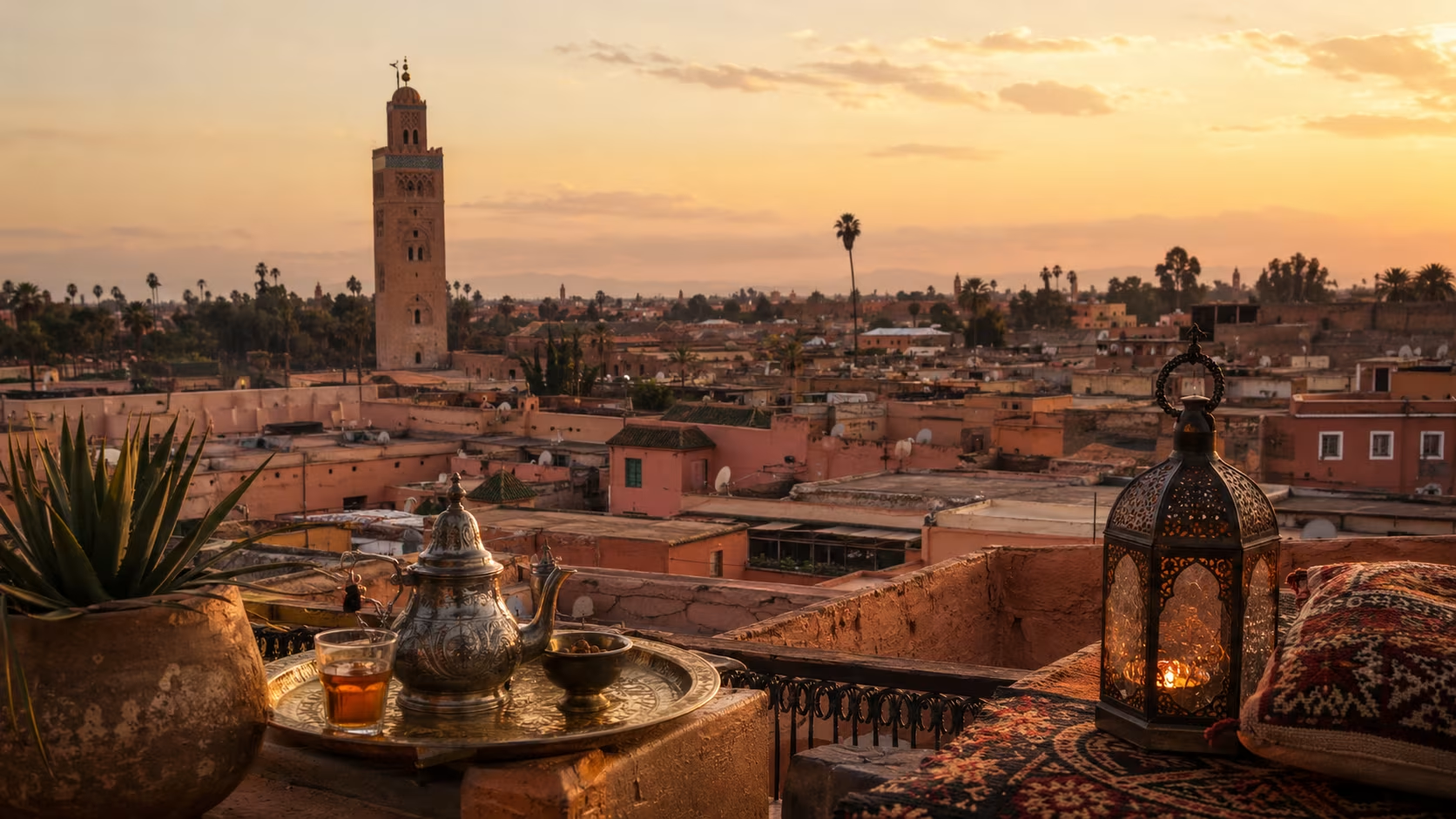
Marrakech is one of the most rewarding and most exhausting cities in North Africa for first-time visitors. The Medina (the walled old city) is a sensory event: narrow alleyways, motorbikes weaving through pedestrians, spice mounds taller than children, the call to prayer five times a day, and a tourist-dense market where the line between aggressive sales and charming hustling can feel uncertain. The 2023 earthquake (which damaged some Medina buildings) accelerated the city's restoration efforts, and most heritage sites have been repaired or are in active restoration through 2026.
The travelers who love Marrakech treat it as a city to slow into, not to optimize. Three to four days is the right length for a focused first trip: enough to see the headline sites, eat well, take one excursion, and have one calmer day. Less than that and you'll arrive overwhelmed and leave frazzled.
Quick Facts
| Item | Detail |
|---|---|
| Country | Morocco |
| Currency | Moroccan dirham (MAD), ~10 MAD/USD in 2026 |
| Language | Arabic + Berber; French widely spoken; English in tourist areas |
| Time zone | WET (UTC+0); during Ramadan, returns to UTC+0 from UTC+1 |
| Tourist tax | ~30 MAD per night for hotels |
| Best time | March–May, October–November |
| Visa | Visa-free for US, EU, UK, Canada, Australia, etc. (90 days) |
| Trip length | 3–4 days |
When to Go
March to May
The sweet spot. Weather pleasant (highs 22–28°C), fruit orchards in flower, gardens at their best. Late April to early May is peak.
October to November
The other prime window. Cooled from summer, fewer tourists than spring.
June to August
Hot. Often 38–45°C. Tolerable mornings only; afternoons require staying inside or at a riad pool.
December to February
Cool (10–18°C), occasional rain. Comfortable for walking; pool weather skips out.
Ramadan (varies by Year)
Fasting month. Many restaurants close during the day; non-Muslim restaurants stay open. Cafés in the Medina close. Dinners (iftar at sunset) are spectacular events; tourist experience is genuinely different. Acceptable but not ideal as a first visit. Ramadan in 2026 falls late February to late March.
Avoid:
- Summer peak (mid-June to late August) for first-timers.
- The week before and after Eid al-Fitr (end of Ramadan) for crowded transit and partial closures.
Getting in
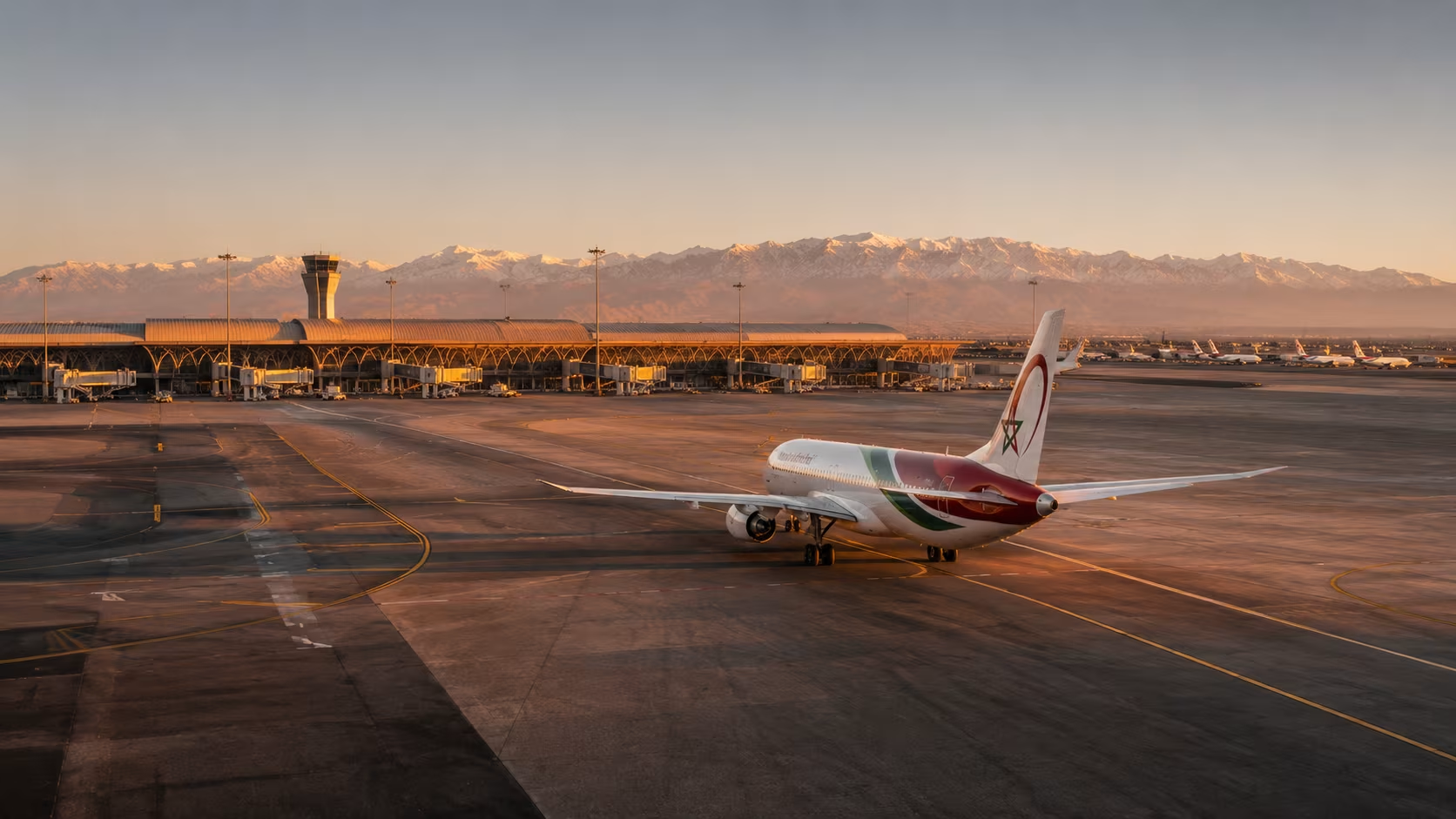
Marrakech Menara Airport (RAK)
6 km from the Medina. Easy to reach.
From RAK:
- Bus 19: 30 MAD, 30 min to Jemaa el-Fnaa.
- Taxi: 100–150 MAD by day; 150–200 MAD at night. Insist on the meter ("compteur") or negotiate a flat rate before getting in.
- Hotel pickup: most riads offer airport pickup for 100–200 MAD; usually worth it for the first arrival when you're disoriented.
Marrakech is also a major rail hub. Direct trains to Casablanca (3 hours), Fez (7 hours), Tangier (7 hours).
Getting Around
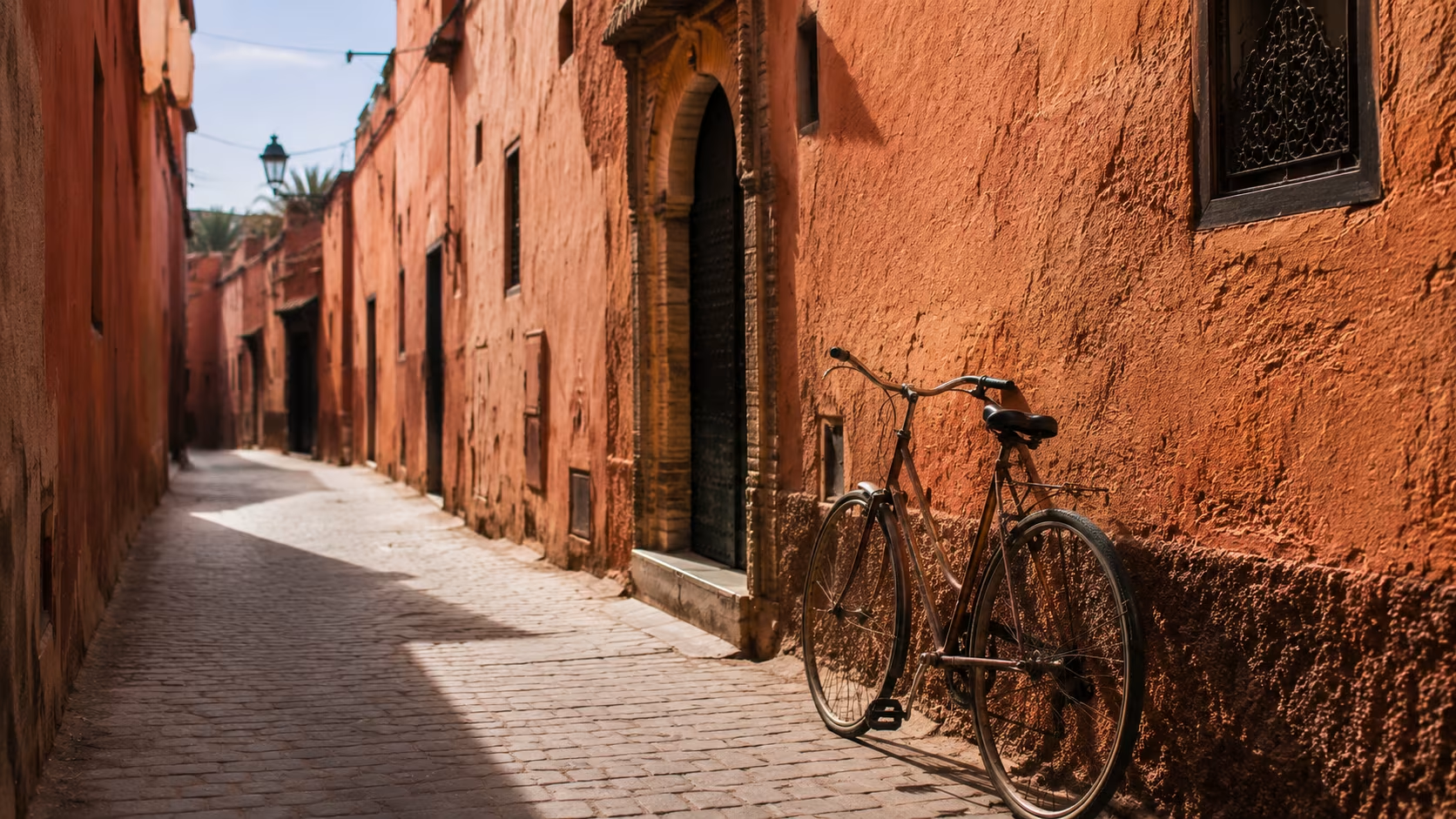
Marrakech is a city of two parts: the walled Medina and the modern New City (Gueliz, Hivernage, Palmeraie).
The Medina
Walking
The Medina is a labyrinth of unmarked alleys; Google Maps works imperfectly here (alleys often unrecognized). Embrace getting lost; it's part of the experience.
Caleches (horse carriages). Tourist transport, expensive (~150–250 MAD for short trips). Decorative more than practical.
Between Medina and New City
Petit taxi (small red/yellow taxis, hold 3 passengers). 30–60 MAD for typical trips. Insist on meter or negotiate before getting in.
Grand taxi (older Mercedes, hold up to 6 passengers). For longer distances or shared rides.
Careem (the Middle Eastern Uber-equivalent) operates in Marrakech but coverage is patchy in the Medina. Bolt has been launching in Morocco gradually.
Where to Stay: Riad Vs. Hotel
The single most consequential decision after booking flights.
Riads
A riad is a traditional Moroccan house with rooms arranged around a central courtyard, usually with a small fountain or pool. The Medina is full of them, most converted into 4–10-room boutique hotels.
Pros:
- Authentic architecture and atmosphere.
- Small (usually 4–10 rooms), personalized service.
- Often have rooftop terraces with city views.
- Most include traditional Moroccan breakfast.
- Walking distance to all Medina sights.
Cons:
- Reach via narrow alleys; first arrival disorienting.
- Rooms often interior (windowless to courtyard), quieter but darker.
- No elevator usually; old buildings, lots of stairs.
- Limited amenities (small pools, no gym, no business center).
- Some have noise carry from the central courtyard.
Modern Hotels
In Gueliz, Hivernage, or Palmeraie. Larger, more amenities, less character.
Pros:
- Easier first-time arrival.
- Full amenities (pool, spa, gym, business services).
- Air conditioning typically more reliable.
- Easier for travelers with mobility issues.
Cons:
- Less authentic.
- Removed from the Medina experience; you'll commute in for sightseeing.
- More expensive for equivalent room quality in the modern districts.
For first-time visitors: stay in a Medina riad. The architecture and the immersion are the trip. Pick a riad with a rooftop terrace and a small plunge pool.
For Second-Time Visitors or Families
Consider a Palmeraie luxury resort outside the city; come into the Medina by taxi for sightseeing.
Realistic 2026 nightly prices (mid-range, weekday):
| Type | Mid-range | Higher-end |
|---|---|---|
| Medina riad | 600–1,400 MAD ($60–140) | 1,800–4,500 MAD ($180–450) |
| Gueliz hotel | 800–1,400 MAD ($80–140) | 2,000–4,000 MAD ($200–400) |
| Hivernage 5-star | 1,400–2,500 MAD ($140–250) | 3,500–8,000 MAD ($350–800) |
| Palmeraie resort | 1,800–3,500 MAD ($180–350) | 5,000–15,000+ MAD ($500–1,500+) |
What to Book in Advance
Riad
Book 2–4 months ahead for spring/autumn peak. Some of the most respected boutique riads:
- Riad Yasmine: design-forward, photographic.
- Riad Jardin Secret: quiet, central.
- El Fenn: large, restored, multiple terraces.
- Riad Kniza: classic luxury riad.
- Riad BE: boutique, beautifully restored.
Hammam
The traditional Moroccan steam bath. Two tiers:
Tourist hammam modern luxury setting, multilingual staff, 600–1,200 MAD for full ritual (steam, scrub, massage). Les Bains de Marrakech, La Mamounia spa, Hammam de la Rose.
Public/local hammam traditional working-class, men/women separate, ~50–100 MAD for entrance + scrubber. Hammam Bab Doukkala is the most accessible public hammam to tourists. Bring your own soap and pumice; ask the staff if you need help.
For first-timers, pick the tourist hammam: the cultural experience is similar; the physical comfort is much greater.
Cooking Class
Many operators. Cafe Clock (in the Medina, near the Bahia Palace), La Maison Arabe (luxury cooking school), Souk Cuisine (market shopping + lunch). Half-day, 600–1,200 MAD per person. Book 2–3 days ahead.
Day Trip
Most day trips (Atlas Mountains, Essaouira, Ouzoud Falls, Ait Benhaddou) need to be booked at least 1 day ahead.
Day 1 — Jemaa el-Fnaa and Central Medina
08:30. Breakfast at your riad. Most riads serve a Moroccan breakfast (msemen flatbreads, beghrir pancakes, jam, honey, olives, mint tea, orange juice).
09:30. Walk to Jemaa el-Fnaa, the central square. Mornings are calm; the square doesn't peak until evening. Visit the Koutoubia Mosque on the western edge (non-Muslims cannot enter, but the exterior is the Marrakech postcard).
10:30. Bahia Palace (70 MAD, opens 09:00). 19th-century palace with elaborate stucco, tile, and painted ceiling work. 90 minutes.
12:00. Saadian Tombs (70 MAD). 16th-century burial complex, recently restored. The tile work and the colonnade are the highlight. 60 minutes.
13:00. Lunch in the Medina. Café Clock (Kasbah branch) for casual modern Moroccan + camel burger. Le Trou au Mur for traditional. Naranj for upscale Moroccan.
14:30. Slow afternoon. Walk Mellah (the historic Jewish quarter, partially restored). Visit the Lazama Synagogue (50 MAD, no booking needed).
16:00. Coffee + slow time at your riad terrace. The afternoon heat is real; locals slow down.
18:30. Return to Jemaa el-Fnaa for the evening transformation. The square fills with food stalls, snake charmers, henna artists, storytellers, monkey handlers (the animal welfare here is genuinely problematic, and many travelers decline to engage). The crowd builds to 22:00.
20:00. Dinner at the food stalls (numbered, varies in quality; Stall 1, 14, 31 generally well-reviewed for tourists) or escape to a rooftop restaurant with Jemaa view (Le Marrakchi, Café de France, Café Glacier). The rooftops cost more but offer the iconic above-the-square view.
Day 2 — Souks + Major Sights
09:00. Coffee at the riad.
09:30. Enter the souks (markets). The labyrinth north of Jemaa el-Fnaa, organized loosely by trade: the babouche (slipper) souk, the spice souk, the dyer's souk, the leather souk, the carpenter's souk, etc.
Souk strategy for first-timers:
- Walk in with no specific purchases planned.
- Note shops you find interesting; circle back for serious negotiation.
- The first quote is 3–4x what locals would pay; counter at 25–30% of the asking price; settle around 40–60%.
- Some shops will demand a 30-minute mint tea conversation as part of the sale; this is the cultural form, not aggressive selling.
- If you don't intend to buy, say so politely upfront. The merchant may still try to engage; a firm "thank you, just looking" plus walking is acceptable.
- Carpets and leather goods are the city's specialty. Real leather shows fine grain and has uneven natural texture; plastic-coated imitations are increasingly common.
- Spices: the small piles in fancy shops are decorative; locals buy from less photogenic spots at 1/4 the price.
12:30. Lunch. Nomad (rooftop modern Moroccan, the most-recommended for tourists). Café des Épices (Place des Épices, central). Pepe Nero for casual Italian-Moroccan.
14:30. Madrasa Ben Youssef (50 MAD). 14th-century Islamic school, recently restored 2020–2022. The most striking interior architecture in the city. 60 minutes.
15:30. Marrakech Museum (next to Madrasa, 50 MAD). Combined ticket with Madrasa for a discount. Modest collection in a beautiful courtyard building.
16:30. Walk through the Mouassine quarter (the dyers' souk, with hanging dyed wool above the alley) and back to the central area.
17:30. Return to riad for slow afternoon. Many riads have rooftop terraces, and the call to prayer at sunset (around 19:00–20:00 depending on season) from the Koutoubia and surrounding minarets is the city's most evocative sound.
19:30. Dinner. Le Tanjia for upscale Moroccan with belly dancing show (touristy but well-done). La Famille for casual courtyard restaurant. Dar Yacout for traditional banquet experience.
Day 3 — Modern Marrakech and Garden Day
09:30. Breakfast at the riad. Then taxi to Gueliz (the modern New City, 5 km from the Medina, 30–50 MAD by petit taxi).
10:00. Yves Saint Laurent Museum (200 MAD). The fashion designer's collection, in a striking modern building (opened 2017). Allow 90 minutes.
11:30. Jardin Majorelle (next door to YSL museum, 150 MAD). The famous cobalt-blue garden bought and restored by Yves Saint Laurent. The most photographed garden in Morocco. Allow 60 minutes; arrive at opening (08:00) for fewer crowds, but the morning slot from 11:00 is also workable.
13:00. Lunch in Gueliz. Le Salama for modern Moroccan. Plus 61 for fusion. Comptoir Darna for upscale.
14:30. Le Jardin Secret (60 MAD). Two restored Andalusian-Moroccan gardens within a riad complex in the Medina. Quiet, lovely, often less-visited than the bigger sites. 60 minutes.
15:30. Hammam. Most luxury hammams have afternoon slots (2–4-hour ritual). Les Bains de Marrakech for the boutique experience. La Mamounia for the headline luxury (and the cost).
18:30. Sunset rooftop drink. El Fenn rooftop. Nomad rooftop. Le Salama rooftop bar.
20:00. Dinner.
Day 4 — Day Trip
Three real options.
Path A: Atlas Mountains
The High Atlas range south of Marrakech. Half-day or full-day excursions are the standard.
- Setti Fatma (1.5 hours from Marrakech). Berber village with waterfalls. Easy half-day.
- Imlil (1.5 hours). Base for Mt. Toubkal hikes. Half-day or full-day option.
- Ourika Valley (45 min). Most popular day trip; Berber villages, tagine lunches, restful river-side cafés.
Book through hotels or operators ($40–80 per person for shared, $150–250 private).
Path B: Essaouira
The coastal walled town, 175 km west. Long day (7+ hours including drive). Argan oil cooperatives en route. Whitewashed-and-blue Atlantic medina, fish auction on the harbor, more relaxed than Marrakech. Booking with a private driver: 800–1,500 MAD.
Path C: Ait Benhaddou + Ouarzazate
The famous Game of Thrones / Gladiator / multiple-film-location Berber-walled village. 195 km southeast. Long day (8+ hours including drive over the Tizi-n-Tichka pass). Spectacular scenery; longer day than Essaouira.
Path D: Stay in the City (for Recovery)
Marrakech is genuinely tiring. A fourth day in the city (slow morning at the riad, late lunch, afternoon spa, sunset on a rooftop) is a legitimate "day trip" for travelers who got worn down by the souks.
What to Eat
Moroccan cuisine is one of the world's great regional traditions. The headline dishes:
| Dish | What it is |
|---|---|
| Tagine | Slow-cooked stew in a conical clay pot. Lamb-and-prune, chicken-and-preserved-lemon, kefta (meatball), vegetable. |
| Couscous | Steamed semolina with vegetables and meat. Friday lunch tradition. |
| Pastilla / Bastilla | Pigeon (or chicken) in flaky pastry, dusted with cinnamon and sugar. Sweet-savory. |
| Harira | Tomato-and-chickpea soup. The Ramadan iftar standard. |
| Mechoui | Slow-roasted lamb. Specifically, a whole lamb, roasted in a pit. Mechoui Alley (off Jemaa el-Fnaa) sells by the kilo. |
| Briouats | Fried savory pastries, meat or cheese filling. |
| Msemen / Beghrir | Square flatbread / honeycomb pancake. Breakfast standards. |
| Tangia | Marrakech specialty: slow-cooked beef in clay urn at the public baths' fire. Different from a tagine despite similar name. Le Tanjia restaurant is named for this. |
| Sellou / Sfouf | Roasted-flour-and-honey sweet. |
| Mint tea | Pour from height; sweet; the cultural ritual of hospitality. |
Costs and Budget
2026 daily budgets per person, excluding flights and hotel:
| Style | Per day | Notes |
|---|---|---|
| Backpacker | 250–400 MAD ($25–40) | Riad budget room, street food, walking |
| Mid-range | 500–900 MAD ($50–90) | Mix of riad food and proper restaurants, museums, taxis, occasional hammam |
| Comfortable | 1,200–2,000 MAD ($120–200) | Better restaurants, full hammam day, premium day trip, taxis |
| Higher-end | 3,000+ MAD ($300+) | Luxury riad, upscale dining, private guide, premium spa |
Practical Info
- Currency. Moroccan dirham. Most card-accepting places work normally; some smaller riads only accept cash. Bring euros or USD; exchange at hotels or licensed exchanges. Avoid the beach-resort-hotel exchange rates (worst in Morocco).
- Cards. Higher-end restaurants and hotels accept cards; many smaller restaurants and most souk shops are cash-only.
- Tipping. 10% at restaurants. 5–10 MAD for porters. 50–100 MAD per day for tour guides (high end).
- Language. French is the European language locals are most comfortable with; English is improving but variable. Learning "shukran" (thank you) and "min fadlik" (please) is appreciated.
- Religion. Modest dress for visiting religious sites. Shoulders and knees covered. Mosques generally not accessible to non-Muslims.
- Ramadan. If visiting during Ramadan, eat discreetly during the day. Many tourist restaurants stay open; respect that locals are fasting.
- Dress code outside religious sites. Generally relaxed in Marrakech, but cover-ups feel comfortable. Shorts/tank tops are increasingly common but locals notice.
- Pickpocketing. Real in tourist-dense areas. Standard precautions.
- Tourist scams. Helpful directions to lost tourists often end with a demand for money. "The tannery is just here" can become a 200 MAD entrance fee. The fake guides who attach themselves to you in the souk are a long-running issue. Polite but firm refusal works.
- Animals. The animal welfare situation in Jemaa el-Fnaa (chained monkeys, charmed snakes) is genuinely problematic. Many travelers decline to support these stalls.
Common First-Timer Mistakes
- Trying to optimize the souks. Wandering and getting lost is the experience; checklist-shopping in 90 minutes will leave you frazzled.
- Booking a riad in a hard-to-reach corner of the Medina. The first walk from the taxi drop-off (cars can't enter most of the Medina) is 5–15 minutes; if your riad is deep in the maze, the carry-luggage walk is brutal. Pick a riad close to a main alley.
- Eating only in tourist restaurants. Walk three blocks off the main tourist alleys; the food improves.
- Underestimating the souk experience. First-time visitors are sometimes overwhelmed in 60 minutes. Build in slow time.
- Over-paying in the souks. First quotes are 3–4x; learn to negotiate or you're funding inefficient retail.
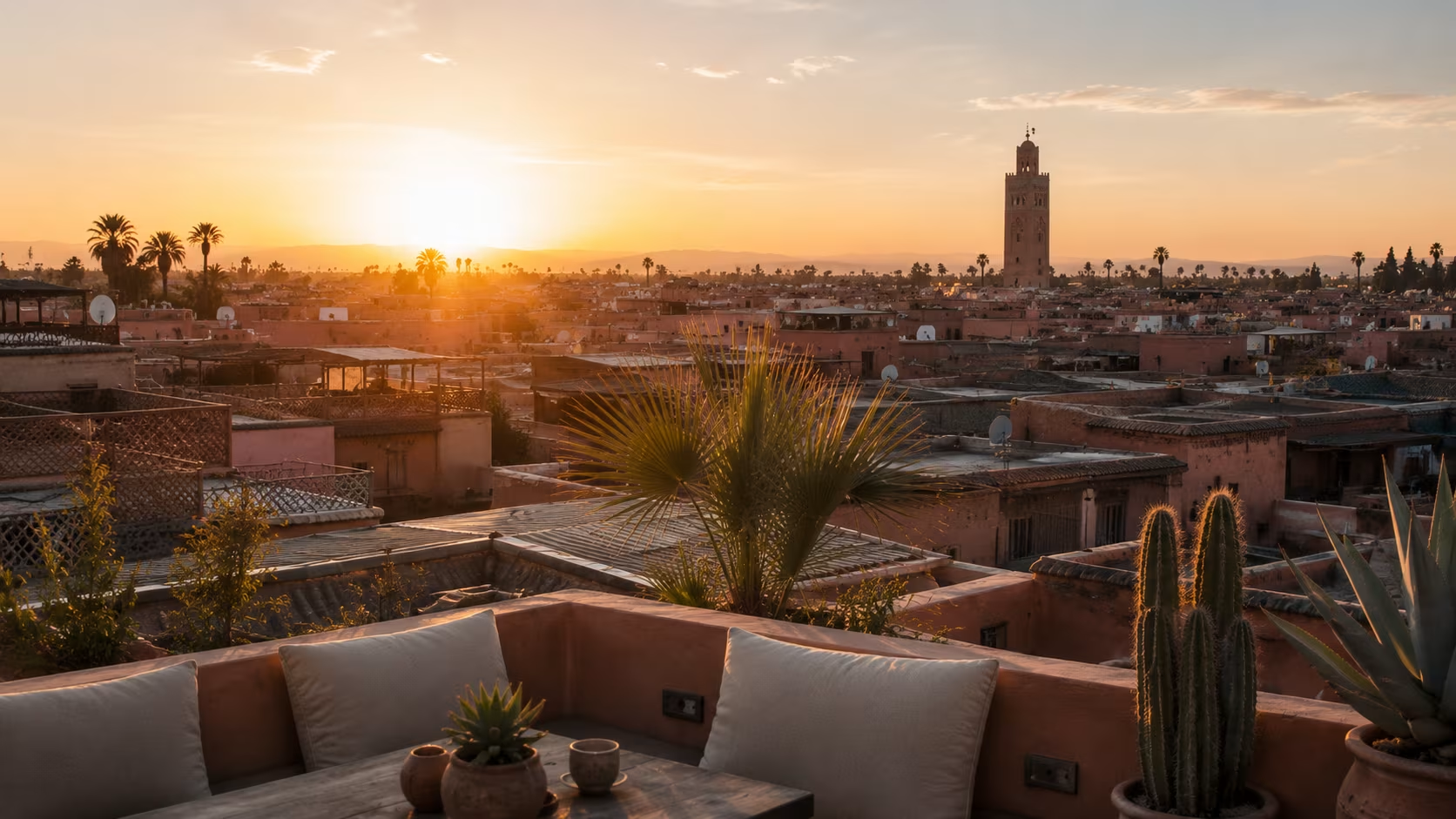
- Skipping the riad rooftop. The sunset call to prayer + the rooftop view is the most evocative Marrakech moment.
- Going during peak summer. 45°C is genuine heat; many travelers leave with worse memories than the cooler months produce.
- Photographing locals without asking. Especially women in conservative dress. Ask first; some will refuse, some will accept payment.
- Trying to do Marrakech + Fez + Sahara in 5 days. It's possible and exhausting; 8+ days for that combination.
Final Notes
Marrakech is a city that resists being conquered in 4 days. The best first trip accepts that you'll only see fragments: the Medina's headlines, one full souk afternoon, one mountain or coast excursion, one slow rooftop evening. The city rewards travelers who slow down to its rhythm.
The quietest piece of advice: pick one riad rooftop, go up at sunset, and don't move until the call to prayer has finished. The whole Medina, the smell of cooking smoke and orange blossom, the sound of a thousand minarets singing to each other from across the rooftops: that's the Marrakech that stays with you. Not the souk transactions; the moments when the city stops moving and you're just standing in it.
0 Comments
No comments yet — start the conversation.