

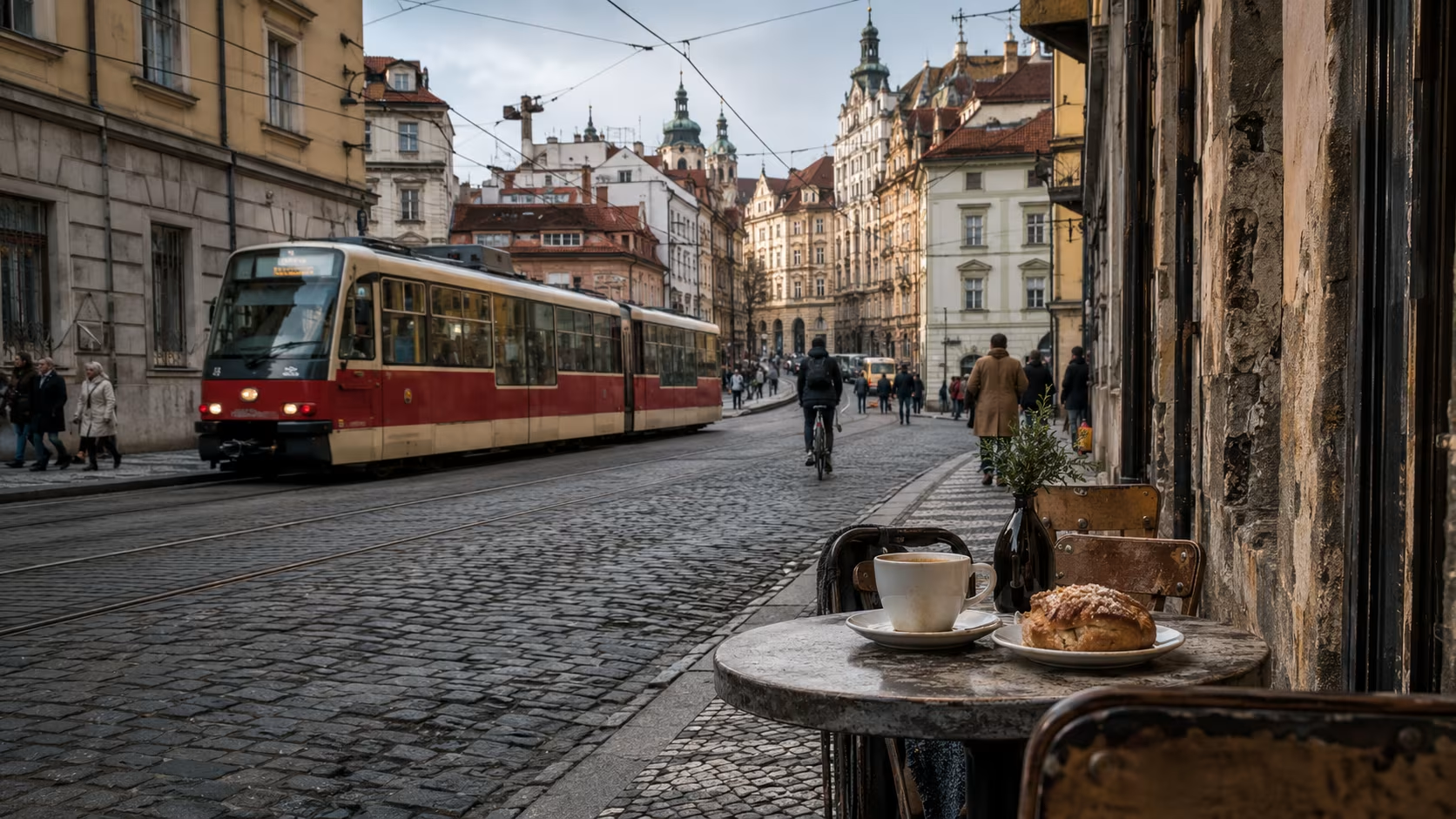
Prague's Old Town is the most beautiful 1 km² in Central Europe. It's also one of the most touristically saturated, with crowds that can make Charles Bridge unwalkable on a summer weekend afternoon. The city has spent the past five years actively trying to redirect visitors away from the historic core: closing the worst stag-party venues, restricting Airbnb in the Old Town, and quietly funding marketing for the lesser-known neighborhoods.
The payoff for visitors who follow that lead is real. Žižkov, Vinohrady, and Holešovice are quieter, cheaper, and more recognizably Czech than the Old Town has been in twenty years. The food scene has also genuinely improved: once a deserved punchline (boiled beef and dumplings forever), now a credible mid-tier European dining city with Michelin stars and the pre-prepared 1990s tourist menus pushed to the periphery.
This is a 4-day guide for someone who wants the headline architecture without the headline crowds.
Quick Facts
| Item | Detail |
|---|---|
| Country | Czech Republic (Czechia) |
| Currency | Czech koruna (CZK), ~25 CZK/USD in 2026 |
| Language | Czech; English in central tourist areas |
| Time zone | CET (UTC+1) / CEST (UTC+2) |
| Tourist tax | 50 CZK (~€2)/night |
| Best time | April–May, September–October |
| Visa | Schengen, 90 days for most non-EU |
| Trip length | 3–4 days |
When to Go
April to early June. The sweet spot. Trees in flower along the Vltava, gardens of Petřín Hill open, average highs 16–22°C, daylight long. Easter markets if you hit them.
Mid-June to August. Tourist peak. Crowds heavy, hotels expensive, but long warm evenings on Náplavka (the riverside boardwalk) are one of the best urban summer experiences in Europe.
September to October. The other prime window. Schools resumed, prices drop, autumn light is gentle on the sandstone facades. Mid-October is when the city looks its most photogenic.
November to February. Cold, often gray. The Christmas markets (Old Town Square and Wenceslas Square) are crowded but real. New Year's Eve in Prague is a major European destination: book months ahead or skip.
Avoid:
- Last weekend of April (Walpurgis night, witches and bonfires, normal but locally crowded).
- Easter weekend (closed museums, restaurants packed).
- Trade-fair weeks at the Prague Convention Centre (varies year-to-year).
Getting in
Václav Havel Airport Prague (PRG), 17 km west of the city.
From PRG to central Prague:
- Bus 119 to Nádraží Veleslavín metro, then metro to center: 40 CZK total, 35 minutes. Works at any hour.
- Airport Express bus: 100 CZK direct to Hlavní nádraží (main station), 35 minutes.
- Taxi: 700–900 CZK to central neighborhoods. Use a marked taxi or app, never a freelance driver who approaches you in arrivals.
- Uber/Bolt: 400–600 CZK.
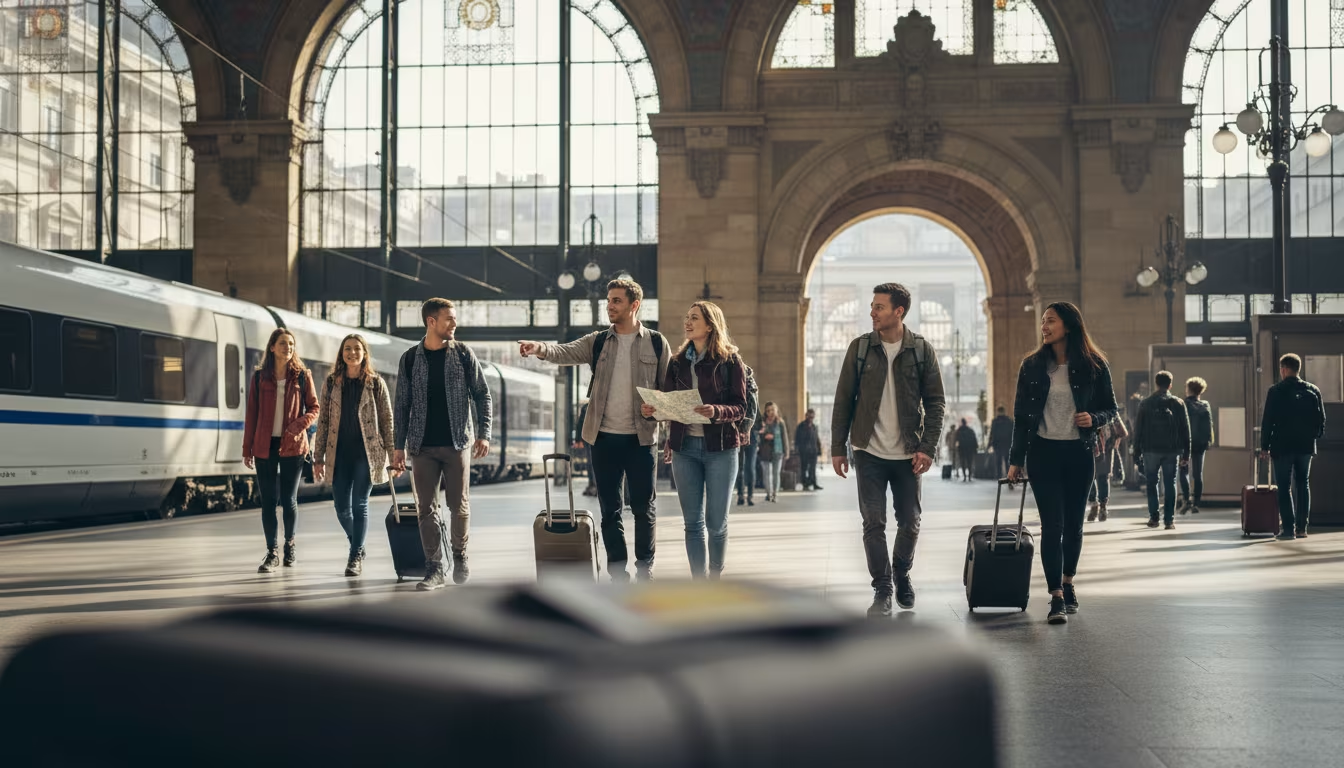
Prague is also a regional rail hub. Direct trains to Vienna (4 hours), Berlin (4.5 hours), Budapest (7 hours), Krakow (6 hours).
Getting Around
Prague's transit is excellent and cheap. Most of what visitors come to see is walkable.
Tickets (zone 0+B, central city):
- 30 minutes: 30 CZK
- 90 minutes: 40 CZK
- 24 hours: 120 CZK
- 72 hours: 330 CZK
Validate the paper ticket in the yellow machines on the metro entrance, tram, or bus. Like Berlin, Prague is honor-system; ticket inspectors do random checks. Fine for not validating: 1,000 CZK.
Apple Pay / Google Pay tap-in is now standard on all trams, buses, and the metro. Tap on entry; the system charges you the appropriate fare.
Trams are the heart of the system. Lines 22 and 23 cross most central destinations.
Walking. Old Town to Lesser Town to Castle is ~2.5 km, a full afternoon's walking pace.
Taxis. Use Bolt or Uber. Street taxis have a long history of overcharging tourists; avoid them unless you're fluent enough to negotiate.
Where to Stay
Old Town (staré Město)
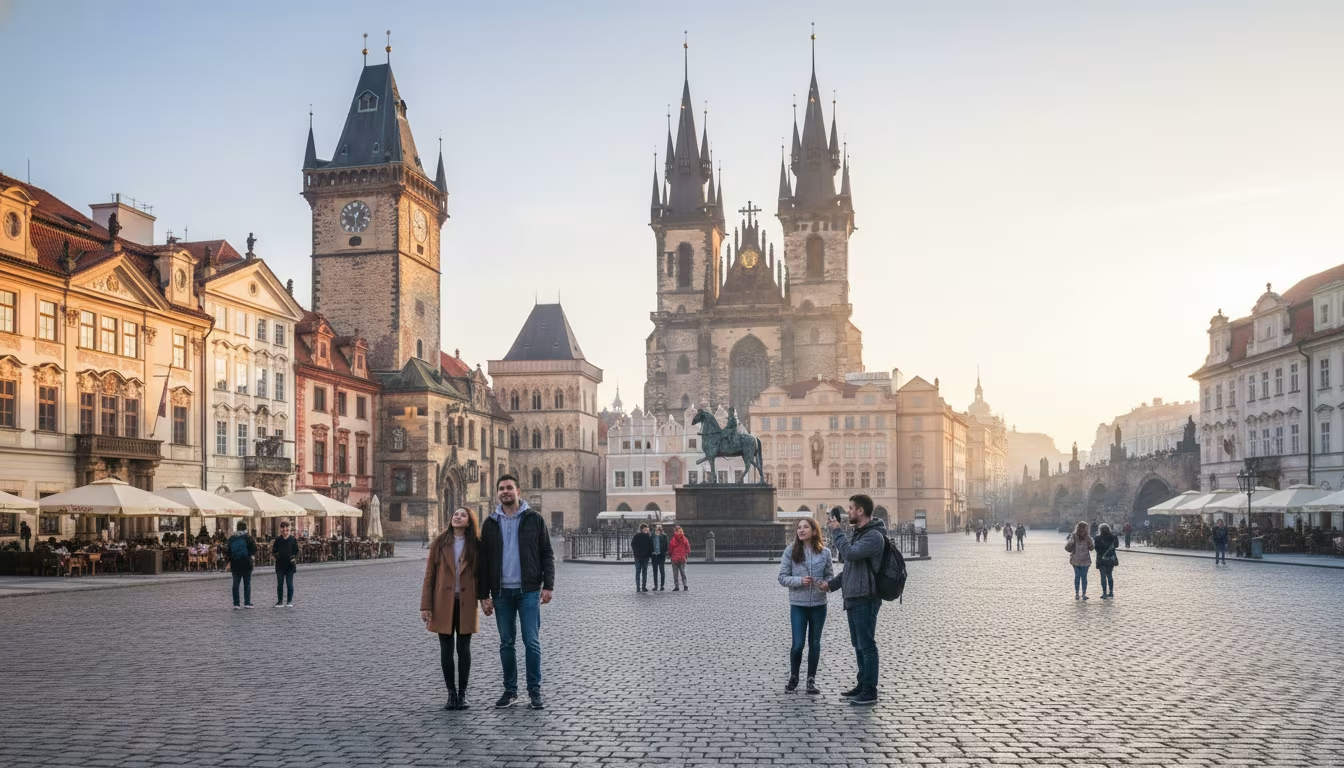
The headline neighborhood, the historical core, walking distance to everything. Tourist density highest in the city. Hotel prices premium. Stay here only if convenience matters more than authenticity: many residents have left, replaced by short-term rentals.
Lesser Town (malá Strana)
West of the Charles Bridge, between the river and the castle. Smaller, quieter than Old Town, photogenic at every corner. Walking distance to castle and Old Town. Mid- and higher-range hotels.
Vinohrady
East of the city center, the prime residential district. Tree-lined streets, boutique shopping, real cafés (where Czechs actually drink coffee). 15-minute tram or 30-minute walk from Old Town. Best first-timer pick after Lesser Town.
Žižkov
Northeast, formerly working-class, now creative-bohemian. The famous Žižkov Tower, more bars per capita than any Prague district. Less polished than Vinohrady; more interesting at night.
Holešovice
North, across the river bend, the latest creative migration zone. Industrial-chic with the Letná park and DOX contemporary art center. Rough edges balanced by the closest thing to a 2010s-Berlin energy still left in Central Europe.
Karlín
East, recently revitalized after the 2002 floods, now a startup-and-design quarter. Quietly excellent restaurants, riverside walking, an easy commute by metro.
Avoid as a Base
- Wenceslas Square (Václavské náměstí). Convenient but the city's main tourist plaza with little neighborhood feel.
- Far suburbs (Černý Most, Háje). No reason for a 4-day trip.
Realistic 2026 nightly prices (4-star, weekday, shoulder):
| Neighborhood | Mid-range | Higher-end |
|---|---|---|
| Old Town | 4,500–6,500 CZK | 9,000–18,000 CZK |
| Lesser Town | 4,200–6,000 CZK | 8,500–16,000 CZK |
| Vinohrady | 2,800–4,200 CZK | 5,500–9,500 CZK |
| Žižkov | 2,200–3,500 CZK | 4,500–7,500 CZK |
| Holešovice | 2,300–3,800 CZK | 5,000–8,500 CZK |
| Karlín | 2,800–4,200 CZK | 5,500–9,000 CZK |
In euros, that's roughly €90–260 mid-range, €180–700 higher-end.
What to Book in Advance
Prague Castle
The complex is enormous; tickets cover specific sites within. Three circuit options (B Circuit at 250 CZK is enough for first-timers: Old Royal Palace, St. Vitus Cathedral, St. George's Basilica, Golden Lane). Walk-up usually fine; book online to skip the security queue.
Charles Bridge
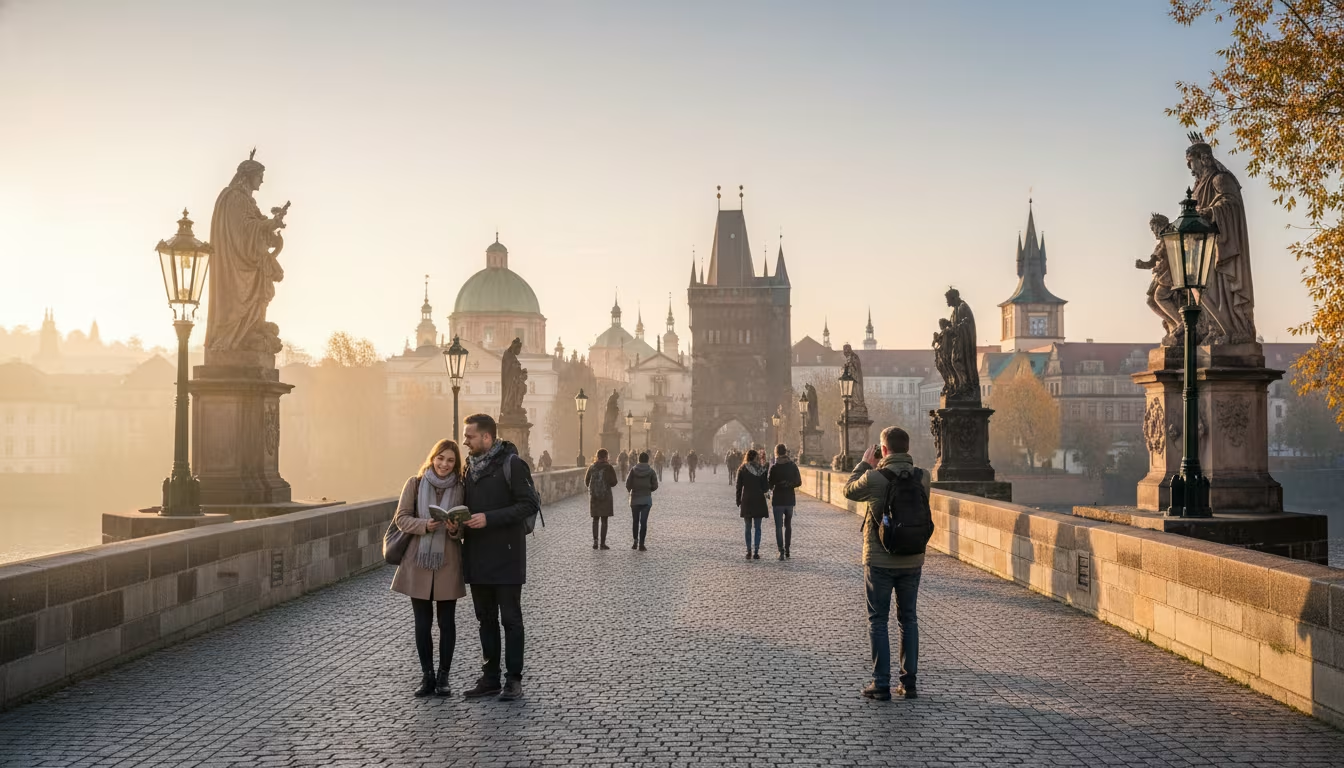
Free, no booking. Visit at 06:30–08:00 for the photographs without crowds. By 10:00 it's shoulder-to-shoulder.
National Museum (národní Muzeum)
The historical building at Wenceslas Square reopened after a major renovation in 2018; collection is improving annually. 250 CZK. Walk-up fine.
Mucha Museum
Small museum dedicated to the Art Nouveau master Alfons Mucha, walk-up 280 CZK. Allow 90 minutes. Worth it.
Klementinum Library Tour
Baroque library hall (one of the most photographed library interiors in the world) only viewable on a guided tour, ~25 minutes, 350 CZK. Book online for specific time slots.
Vyšehrad
Fortress and historic district south of central, free to enter, beautiful gardens and views. Old Cemetery (Slavín) where Smetana, Dvořák, and Mucha are buried. Half day if you walk it slowly.
Day 1 — Old Town and Charles Bridge
07:00. Coffee at a Czech café. EMA Espresso Bar, Café Lounge, Kávovna co hledá jméno.
07:30. Charles Bridge at sunrise, the only time it's photographable without crowds. Walk slowly. The 30 baroque statues lining the bridge are originals or replicas; mostly the originals are in the Lapidarium.
08:30. Continue into Old Town. Walk the small streets between the bridge and Old Town Square: Karlova, Husova, Liliová.
09:00. Old Town Square. Astronomical Clock chimes on the hour, 09:00–23:00. The crowd assembles 5 minutes before; the show is 30 seconds. Worth seeing once.
09:30. Climb the Old Town Hall tower (250 CZK, elevator access) for the view down on the square. Or skip and visit the Týn Church (free, modest dress required).
10:30. Walk through the Jewish Quarter (Josefov). The Jewish Museum's combined ticket (550 CZK) covers six sites including the Old-New Synagogue (one of Europe's oldest functioning synagogues, since 1270) and the Old Jewish Cemetery (12,000 graves stacked on top of each other across centuries, visually striking and historically important).
13:00. Lunch in Old Town. Lokál Dlouhááá for proper Czech pub food (svíčková, goulash, potato dumplings) at non-tourist prices. Sisters Bistro in the Jewish Quarter for casual Czech sandwiches.
14:30. Slow afternoon. Walk along the Vltava on the Old Town side: Smetana Embankment north of the bridge.
16:00. Coffee or pivo (beer) at a café terrace.
18:00. Náplavka (the riverside boardwalk) on Old Town side or just south. In summer, Saturday farmers market and full evening crowd. In other months, calmer but still active.
20:00. Dinner. Field Restaurant for Michelin-starred modern Czech (book ahead). Eska in Karlín for casual modern Czech. Lokál for pub food.
Day 2 — Castle Side
08:30. Coffee in Lesser Town.
09:00. Walk up to the Castle. Three options:
- Tram 22 to Pražský hrad (the laziest)
- Walk up Nerudova street (most photogenic)
- Walk up the steep stairs from Malostranská metro (fastest)
09:30. Castle Complex. B Circuit ticket, 250 CZK. Allow 3 hours.
- St. Vitus Cathedral (the headline; the Mucha-designed stained glass window is on the third pillar from the back)
- Old Royal Palace (Vladislav Hall, used for presidential elections)
- St. George's Basilica (the city's oldest preserved church, Romanesque)
- Golden Lane (the small craftsman houses; Kafka briefly lived at #22)
12:30. Lunch in Lesser Town. Café Savoy for Habsburg-era elegant breakfast/lunch. U Modré Kachničky for Czech with duck specialties. Augustine if your budget supports the high-end.
14:00. Walk to Petřín Hill. Funicular (covered by transit pass) or 20-minute walk up. The Petřín Tower (a small Eiffel-Tower replica from 1891, 187 CZK) is the city's western viewpoint.
16:00. Walk down through Petřín gardens to Strahov Monastery and its baroque library hall (the larger hall, free to view through the doors but no inside access without a paid tour).
17:30. Walk back to Lesser Town via the Hunger Wall (the medieval defensive wall) or the rose gardens.
19:30. Dinner in Lesser Town or Vinohrady. U Glaubicù for traditional pub-restaurant. Restaurace Sokolovna for higher-end Czech.
Day 3 — Local Prague
The day to leave the historic core.
09:30. Coffee in Vinohrady. Můj šálek kávy, Kavárna Místo, Den Noc.
10:30. Vinohrady walking. Náměstí Míru (the central square), Riegrovy sady (the park with city skyline view), Havlíčkovy sady (with its small vineyard, Czech wine bar).
13:00. Lunch in Vinohrady. Bistro Bichu for Vietnamese-Czech fusion. Pho Vietnam Tuan & Lan for proper Vietnamese (Prague has the EU's largest Vietnamese population). Aloha Poke if you want light.
14:30. Walk or tram to Žižkov. Visit the Žižkov Television Tower (216 m, the city's tallest structure, with restaurant + observation deck, 250 CZK). The Žižkov Cemetery and the New Jewish Cemetery (where Kafka is buried) are walking distance.
16:30. Žižkov pub crawl preview: the neighborhood reportedly has more bars per capita than any other in Europe. Stop at one or two on the way back.
18:00. Walk down to Vítkov Hill for the view of central Prague at sunset, then to Karlín below.
20:00. Dinner in Karlín. Eska (mentioned earlier) for modern Czech in a converted printing factory. Bistro Proti Proudu for casual high-quality. Pivovar Hostivar for proper Czech beer with food.
22:00. Continue with drinks back in Žižkov or Vinohrady. Bukowski's Bar for hidden mood, Vzorkovna ('Dog Bar') for the most Czech alternative experience (literally a basement bar with a dog wandering between tables).
Day 4 — Choose: Vyšehrad, Day Trip, or Holešovice
Path A: Vyšehrad and South Side
09:30. Walk or tram to Vyšehrad fortress. Free entry. Allow 3 hours.
- Fortress walls and views over the Vltava
- St. Peter and Paul Basilica (50 CZK, neo-Gothic interior with Mucha-designed elements)
- Old Cemetery (Slavín), graves of major Czech cultural figures
- Casemates and underground passages
13:00. Lunch on the south side. U Kroka for traditional Czech with views. Café Vyšehrad for casual.
14:30. Walk along the south Náplavka boardwalk back toward the city center.
Path B: Day Trip to Kutná Hora
UNESCO town 60 km east of Prague, 1 hour by train (180 CZK).
09:30. Train to Kutná Hora hlavní nádraží.
10:00. Sedlec Ossuary ("Bone Church"), the famous chapel decorated with the bones of 40,000–70,000 people. 160 CZK. 30 minutes.
11:00. Walk to Kutná Hora town center. St. Barbara's Cathedral (160 CZK), Italian Court (the medieval royal mint building, 130 CZK), Stone House. Allow 4 hours including lunch.
16:00. Train back to Prague.
Path C: Holešovice and Letná
09:30. Walk or tram to Letná Park. The plinth where the giant Stalin statue stood (demolished 1962) is now the city's quiet skyline-view spot. The metronome installed there in 1991 is one of the city's quirkier monuments.
11:00. Walk down into Holešovice. DOX Center for Contemporary Art (220 CZK, the city's main contemporary art space). National Gallery, Trade Fair Palace for 19th–20th century European art, including a major Mucha collection (220 CZK).
13:30. Lunch in Holešovice. Mr. HotDog, Erhartova cukrárna for cake, Vnitroblock for the converted-warehouse cafe-store-gallery experience.
15:00. Walk along the river back toward central Prague.
What to Eat
Czech cuisine is honest, heavy, and meat-and-dumpling-centric. The international layer in Prague is now genuinely strong.
Czech Classics
| Dish | What it is |
|---|---|
| Svíčková na smetaně | Beef sirloin in cream sauce with cranberries and dumplings. The national dish. |
| Guláš | Czech goulash, beef-and-onion stew with bread dumplings. Heavier than Hungarian. |
| Vepřo-knedlo-zelo | Roast pork, dumplings, sauerkraut. The Czech holy trinity. |
| Smažený sýr | Fried cheese (typically Edam) with tartar sauce. Pub classic, vegetarian-default. |
| Knedlíky | Bread or potato dumplings. Side with everything. |
| Trdelník | Cinnamon-sugar pastry sold everywhere in tourist areas. Not actually Czech (it's a 21st-century tourist invention from Slovakia). Fine if you want it; don't be told it's traditional. |
Pivo (beer)
Prague's beer culture is a real institution. Czech beer culture predates Bavarian by centuries; the Pilsner style was invented in 1842 in Plzeň, 90 km west.
- Pilsner Urquell (Plzeňský Prazdroj): the original pilsner, the standard.
- Budvar (Czech Budweiser): different from American Budweiser; the original.
- Kozel: darker, slightly sweeter.
- Staropramen: the Prague-brewed standard.
- Krušovice: older, more bitter.
A half-liter (0.5 L) of pivo at a real pub costs 50–80 CZK (~€2–3). At Old Town tourist places, 80–150 CZK. Drink at a real pub.
Modern Czech (and Beyond)
The last decade has produced a serious modern-Czech scene:
- Field Restaurant: Michelin-starred modern Czech
- Eska: accessible modern Czech in Karlín
- Sansho: modern with Asian influences
- La Degustation: three-tasting-menus, Bohemian-traditional roots
- Spices: Indian-Czech fusion
Costs and Budget
2026 daily budgets per person, excluding flights and hotel:
| Style | Per day | Notes |
|---|---|---|
| Backpacker | 800–1,400 CZK (€32–55) | Hostel, pub meals, walking |
| Mid-range | 1,800–2,800 CZK (€72–112) | Mix of pubs and good restaurants, museums, transit |
| Comfortable | 3,500–5,500 CZK (€140–220) | Better restaurants, occasional taxi, tasting menus |
| Higher-end | 8,000+ CZK (€320+) | Michelin meals, private tours, luxury hotel breakfasts |
Prague is still meaningfully cheaper than Western European capitals, though the gap has closed since 2019.
Practical Info
- Currency. Czech koruna, not euros. Some Old Town tourist places display euros on the menu; pay in CZK, since the euro conversion is always unfavorable.
- Cards. Accepted almost everywhere. Cash for some markets and small pubs.
- Tipping. 10% expected at sit-down restaurants. Round up at cafés and bars. Tell the server the total amount when paying ("three hundred," they'll add the right change).
- English. Wide in tourist areas; less so in residential neighborhoods. Younger Czechs almost always speak English.
- Pickpocketing. Real on tram 22, around the Astronomical Clock, on Charles Bridge. Phone in front pocket.
- Tram tickets. Apple Pay tap-in works; otherwise validate before boarding.
- Stag parties. Prague has a deserved reputation. The city actively pushed back against the worst venues; the Old Town is significantly calmer at night than 2015. Avoid Dlouhá and the immediate Old Town Square at 23:00 onward if you're staying nearby.
- Smoking. Banned indoors at all bars and restaurants since 2017; outdoor terraces sometimes allow it.
Common First-Timer Mistakes
- Eating on Old Town Square. Tourist factories with menus in eight languages; quality is inversely correlated with the menu language count.
- **Buying trdelník as "traditional Czech." It isn't, but it tastes fine.
- Drinking on Charles Bridge mid-day. The bridge becomes shoulder-to-shoulder by 10:00 most months.
- Skipping Vinohrady. It's a 15-minute tram ride; the trip's most pleasant café and dinner experiences are there.
- Booking the casino-style hotels around Wenceslas Square. Convenient for transit, depressing for the trip.
- Falling for the "taxi from arrivals" scam. Use Bolt, Uber, or the official taxi stand (AAA Radiotaxi).
- Visiting Prague in late April without booking. The city fills up around Walpurgis night.
- Trying to do Vienna and Prague in 4 days. Either city deserves the time.
Final Notes
Prague rewards walking and a willingness to leave the postcard. Three days at the headline sites plus one full day in a residential neighborhood is the right balance for a first trip. The city's Baroque skin is what gets it on the postcards; the Czech culture underneath is what keeps people coming back.
The quietest piece of advice: pick one neighborhood you haven't been told to visit. Sit at a café for an hour. Watch the city go past. The Prague that stays with you is the one you find in the residential blocks where the tourist density drops to zero and everyone speaks Czech.
0 Comments
No comments yet — start the conversation.