

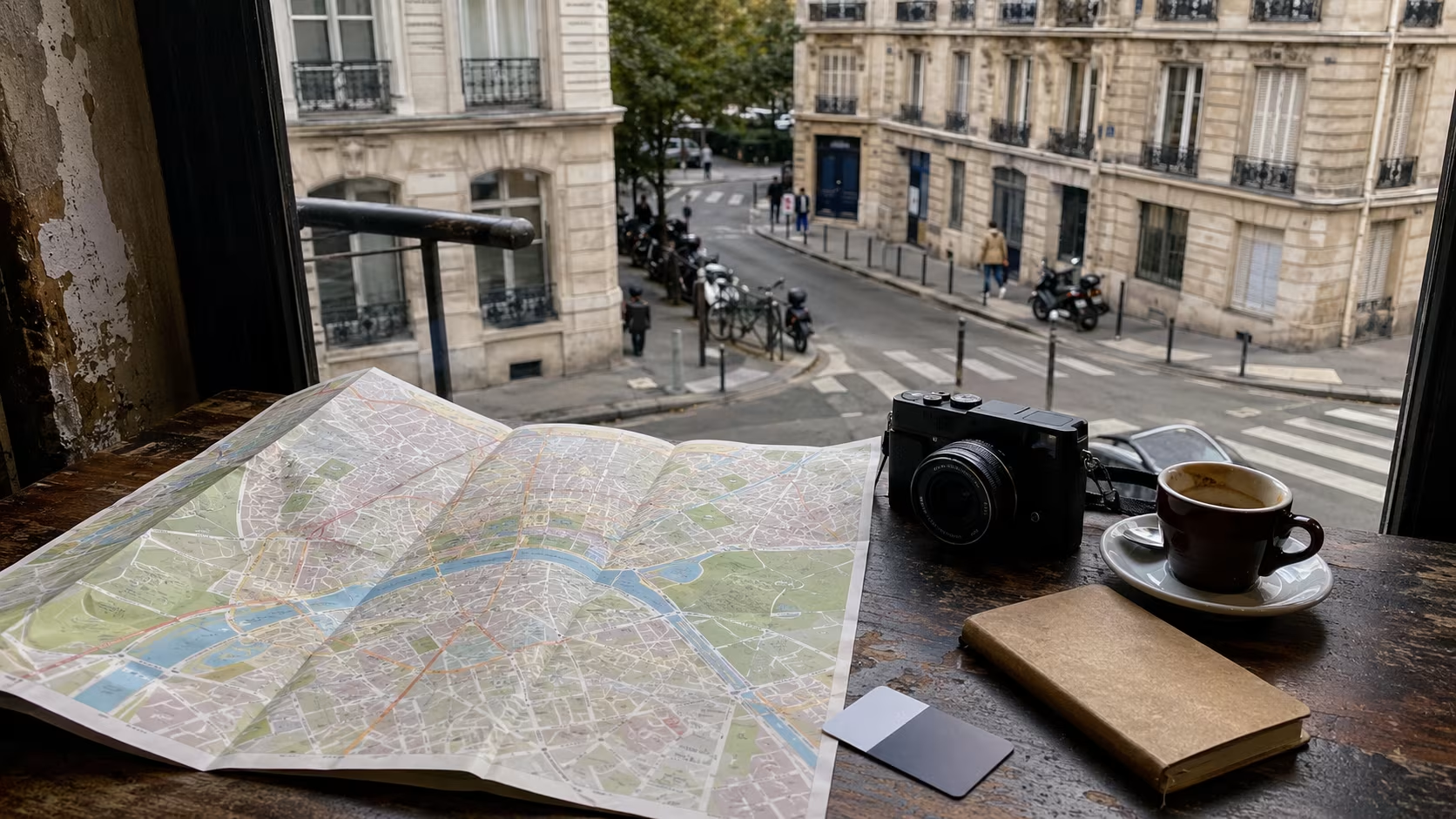
Four days in Paris is enough to leave with the city under your skin, but only if the days are structured. The classic mistake (Eiffel Tower morning, Louvre afternoon, dinner near Notre-Dame) produces a string of long lines and low-quality meals while a real, walkable, cafe-shaped Paris sits two metro stops away.
This itinerary is built for someone landing for the first time, with four full days, and a normal mid-range budget. It assumes Paris is the trip, not a stop on a five-country tour. Each day has anchors, suggested timing, and built-in slack.
Quick Facts
| Item | Detail |
|---|---|
| Country | France |
| Currency | Euro (€) |
| Language | French; English in tourist zones, less elsewhere |
| Time zone | CET (UTC+1) / CEST (UTC+2) |
| Tourist tax | €0.65–€14.95 per person/night (band by hotel star) |
| Best time | April–June, September–October |
| Itinerary length | 4 full days + 1 day trip optional |
Before You Go
Book three things in advance. Most first-time disappointment in Paris comes from showing up at sights without tickets.
- Eiffel Tower: entry tickets release exactly 60 days ahead at 08:30 local. Lift to the top (€29) sells out within an hour for sunset slots in summer. Stairs to second floor (€14.20) almost always available.
- Louvre: timed entry mandatory since 2019. Book 2–3 weeks ahead. €22.
- Catacombs: small daily capacity, sells out a week ahead. €29.
Everything else (Orsay, Orangerie, Rodin, Versailles palace) can be booked 2–3 days out.
Skip the Paris Pass. The Paris Museum Pass is fine if you'll do 4+ museums in 2 days. The broader "Paris Pass" with transit and bus tour bundled rarely pays back. Most first-timers under-use it.
Get a Navigo Easy card at any metro station for €2. Load it with €2.15 single tickets or a 24-hour pass for €13.55. Works on metro, RER (within zones), buses, and trams.
Where to Stay
Pick one neighborhood and don't move. Paris is small enough that everything is reachable from anywhere central in 30 minutes by metro.
Le Marais (3rd, 4th)
The sweet spot for first-timers. Walkable to Notre-Dame, Pompidou, and the Seine. Lively but not deafening. Good cafes, vintage shopping, picture-perfect streets. Higher prices but worth the neighborhood premium.
Saint-Germain-des-Prés (6th)
Left Bank, classic. Café de Flore, Les Deux Magots, the Luxembourg Gardens 10 minutes away. Calmer than Marais at night. Great for older travelers and design-shop afternoons.
Latin Quarter (5th)
Student-heavy, more casual, cheaper. Walkable to Notre-Dame, the Panthéon, the Jardin des Plantes. Some streets are tourist-trap restaurant strips; sleep here but eat elsewhere.
South Pigalle / SoPi (9th)
Once sketchy, now one of the city's strongest neighborhoods. Wine bars, contemporary bistros, cocktail spots. Walking distance to Opéra and Montmartre.
Avoid as Your First Base
Montmartre (touristy by day, isolated at night, hilly), Champs-Élysées (sterile and overpriced), République (fine but residential).
Realistic 2026 nightly prices (4-star, weekday, shoulder):
| Neighborhood | Mid-range | Higher-end |
|---|---|---|
| Le Marais | €220–320 | €450–700 |
| Saint-Germain | €230–340 | €480–800 |
| Latin Quarter | €170–250 | €350–550 |
| SoPi (9th) | €180–270 | €380–600 |
Day 1 — the Right Bank Anchors
Start at the Louvre or skip it on day one. The Louvre is a half-day commitment minimum and worth it once, but doing it on day one tires you for the rest of the day. If you go, book the 09:00 entry slot through the pyramid's Pyramide entrance (skip the side entrances; they all funnel you to the same security).
09:00–12:30: Louvre. Do not try to see everything. Pick three: the Mona Lisa is the predictable stop (10 minutes, you'll see it through phones), the Winged Victory of Samothrace (one of the museum's actual emotional payoffs), and the Vermeer room (small, easily missed, transcendent). Add the Sully wing for the Egyptian collection if antiquities interest you.
12:30: Lunch. Skip the museum café. Walk 10 minutes to Saint-Honoré or rue Sainte-Anne (small Japanese pocket of the city) for a working lunch. Around €18–25.
14:00: Tuileries Garden walk. Statues, fountains, light tree cover. End at the Place de la Concorde. The Orangerie is at the western corner: small museum, two oval rooms of Monet's water lilies, takes 90 minutes, €13. Worth it.
16:00: Walk the Seine. From Concorde, cross the Pont de la Concorde to the Left Bank, walk the Quai Anatole France past the Orsay (don't enter today). Stop at a café terrace.
18:30: Eiffel Tower. Sunset slot if you booked it. The view from the second level (€14.20 stairs, €18 lift) is honestly better than from the top: you see the city, not just lights. The top is a vertical photo opportunity.
20:30: Dinner. Stay on the Left Bank in the 7th arrondissement near rue Saint-Dominique. Avoid restaurants directly facing the Eiffel Tower; they are tourist factories. Walk three blocks east. €40–60 per person.
Day 2 — Île de La Cité, Marais, and the Centre Pompidou
08:30: Notre-Dame. Reopened December 2024 after the 2019 fire. Free entry; advance reservations recommended for guaranteed slots since 2025. The interior is back to working condition; the spire is rebuilt. The plaza in front is open in 2026 after the surrounding work finished.
10:00: Sainte-Chapelle. Three minutes' walk from Notre-Dame. The upper chapel's stained glass is one of the most affecting interiors in the city. €13 entry, €11 if combined with Conciergerie (worth doing). Mornings are best: the windows are east-facing.
12:00: Lunch in Marais. Cross Pont au Change, walk into the 4th. Two non-negotiable Marais lunches:
- L'As du Fallafel on rue des Rosiers: cash queue, takeaway preferred.
- Café Charlot on rue de Bretagne: sit-down, classic French café food, Sundays bring locals.
14:00: Centre Pompidou. The biggest modern art museum in Europe. Closing for major renovation late 2025–2030; check current status before your trip. If open: the rooftop view alone is worth the entry. €15.
16:00: Place des Vosges. Walk down to the 4th's central square. Victor Hugo's house museum is on the corner, free, small, charming.
17:30: Wandering. Marais is a wandering neighborhood. Side streets in the 3rd (rue de Bretagne, rue Charlot, rue de Saintonge) hide design shops, art galleries, and cafés that don't show up on Instagram lists.
20:00: Dinner in the 11th. Cross rue de Turenne and walk east into the 11th. Mid-range bistros without the Marais markup: Septime La Cave, Clamato, Bistrot Paul Bert (older institution). €45–70 per person.
Day 3 — Left Bank and the Orsay
09:00: Musée d'Orsay. Impressionist and post-Impressionist core. Manet, Monet, Renoir, Degas, Cézanne, Van Gogh, Gauguin. Two to three hours. €16. The clock window on the fifth floor is a free photo, no extra ticket.
12:00: Lunch at Orsay's Café Campana (the actual museum café, set in a 1900 World's Fair restaurant) or walk five minutes to the rue de l'Université.
13:30: Saint-Germain wandering. Two of the world's most famous cafés (Café de Flore, Les Deux Magots) are on the same block. They're tourist destinations; sit at one for the experience, but the coffee is twice the city average. Around the corner: Église de Saint-Germain-des-Prés (oldest church in Paris, free) and the boutique-rich rue Bonaparte.
15:30: Luxembourg Gardens. Twenty minutes' walk south. The Senate's gardens are the city's calmest large green space: chairs spread around the pool, locals reading on benches. Bring a coffee and a book and lose an hour.
17:00: Latin Quarter walk. Down rue Soufflot to the Panthéon. Continue to the Cluny Museum (medieval art including the Lady and the Unicorn tapestries). Down to Shakespeare and Company bookstore (touristy but the building is real history).
19:30: Aperitif. Wine bar on rue Mouffetard or rue de l'Université. €8–14 per glass at proper natural-wine spots.
20:30: Dinner. Le Comptoir du Relais if you can get a sitting (no reservations for the late dinner; queue 19:30). Otherwise Allard or L'Avant Comptoir de la Mer. €50–85.
Day 4 — Montmartre or Versailles
This is the divergence point. Two valid Day 4 paths.
Path A: Montmartre and Northern Paris
09:00: Montmartre. Get there before 11:00 to walk the streets without the cruise-ship crowds. Take metro Line 12 to Abbesses (avoid the funicular until later; uphill through quieter streets is the better entrance). Through Place des Abbesses, up rue des Trois Frères, to Place du Tertre.
Sacré-Cœur itself is free; the dome climb is €8 and the view from the church steps is essentially identical. Skip the dome unless you're a completist.
12:00: Lunch. Avoid Place du Tertre restaurants entirely. Walk down the back side to the rue Lepic for working bistros.
14:00: Pigalle and SoPi. Walk south. Modern Paris in a former red-light district. Le Pantruche for a late lunch, Buvette for wine.
16:00: Galeries Lafayette / Printemps. Department store flagships on Boulevard Haussmann. The Galeries Lafayette glass dome is worth a five-minute walk through. Free rooftop view from the eighth floor.
18:00: Apéro and dinner. Stay in the 9th. Bouillon Pigalle for a budget classic bistro experience (€12–16 mains, no reservations, queue 30–45 min).
Path B: Versailles
08:30: RER C from central Paris. 35 minutes to Versailles Château Rive Gauche. €4.55 round trip. Buy the ticket at the station, not from someone offering one outside.
09:30: Palace. Book the 09:30 entry slot (60 days ahead, this is the one that matters). Book the Passport ticket (€31.50) which includes the gardens and Trianon estate.
12:00: Gardens. Vast, formal, free to walk. Pack a picnic from the village or eat at the tea room near the Hameau de la Reine.
14:30: Trianon and the Queen's Hamlet. Marie Antoinette's small estate. Quieter than the palace, often the highlight. The hamlet is a peasant village she built to play in.
17:00: Back to Paris. Train back, dinner in your home neighborhood.
Versailles is a long but rewarding day. Skip if you've seen many European palaces; it's exceptional but more of the same.
What to Eat
Paris food culture is broad enough that you can eat well at three price points all week.
The Anchor Dishes
Croissant. A real one is laminated dough that shatters with the slightest pressure. Try Du Pain et des Idées (10th), Cédric Grolet (1st), or any neighborhood bakery with a queue at 08:30.
Steak frites. A classic bistro. Le Relais de l'Entrecôte does one dish only: secret-sauce steak with frites, refilled until you stop. €30 lunch, €36 dinner. Three locations across the city.
Soupe à l'oignon. Caramelized onions, beef broth, melted Comté on toast. Au Pied de Cochon (1st) does it 24 hours. Touristy but historically accurate.
Cassoulet. Slow-cooked white beans, duck confit, Toulouse sausage. Heavy lunch dish. Chez Dumonet in the 6th is the institution.
Wine. France grows roughly a third of the world's wine. A glass of decent café wine: €4–7. Natural wine bar ("cave"): €8–14 per glass. Stay away from anything labeled simply "vin de table."
Where Locals Eat
The 11th and 10th arrondissements have the densest cluster of modern, mid-priced bistros that aren't showing up on tourist guides. Septime, Le Servan, Clamato, Bistrot Paul Bert, Le Pantruche, Le Châteaubriand are all in this band.
Costs and Budget
Realistic 2026 daily budgets per person, excluding flights and hotel:
| Style | Per day | Notes |
|---|---|---|
| Backpacker | €60–90 | Boulangerie breakfast, lunch from Picard frozen food shops, casual dinners |
| Mid-range | €100–150 | Mix of bistros and casual, 1–2 museums, occasional taxi |
| Comfortable | €180–280 | Bistros at lunch, brasseries at dinner, full museum days |
| Higher-end | €400+ | Tasting menus, private tours, Champagne by the glass |
Practical Info
Language. French language matters in Paris. Even broken French opens conversations. Walking into a shop and saying "Bonjour" before anything else is the single biggest etiquette win. Skipping it reads as rudeness, even if you're polite afterward.
Money. Card payments accepted everywhere. Carry €40–60 in cash for the rare exception (some bakeries, public toilets). Avoid Euronet ATMs; use bank ATMs (BNP Paribas, Société Générale).
Tipping. Service is included by law ("service compris"). Round up at cafés or leave €1–2 per person at a sit-down meal. Do not double tip.
Safety. Pickpocketing is the main concern. Metro lines 1, 4, and around the Eiffel Tower are highest-risk. Keep your phone and wallet in front pockets, not back. Do not engage with the petition-signing group near major sights.
Strikes. France runs on labor stoppages. Check before booking: a strike day can shut down a museum, a transit line, or both. The website vianavigo.com lists current disruptions.
Sundays. Many small businesses close. Museums mostly stay open. The Marais is one of the few neighborhoods that stays lively on Sundays since the BHV department store and most boutiques can open.
Common Mistakes
- Buying Eiffel Tower tickets at the door. Online release is exactly 60 days out. After that, queue tickets sell out by mid-morning.
- Trying to do every museum. Pick 3 major museums maximum for 4 days. More than that turns the trip into a slog.
- Eating dinner before 19:30. Real Parisian restaurants don't seat dinner before 19:30; many open at 20:00.
- Sleeping near the Eiffel Tower. The 7th arrondissement around the tower is a tourist desert. Stay central.
- Saying "Bonjour" only in tourist French. A polite "Bonjour, parlez-vous anglais?" gets a much warmer response than a confident English opener.
- Skipping the Orsay because it's smaller than the Louvre. The Orsay is, for many, the better experience.
Final Notes
Paris is an old city that's still figuring out how to handle 30 million annual visitors. The honest read: the central postcard zones (Champs-Élysées, the Eiffel Tower's own square, Montmartre after 11:00) are now too crowded to feel like Paris. The city's pleasures sit two metro stops east of where everyone else is going.
Four days is enough to leave with the city's pace inside you: the long lunch, the unhurried walk along the Seine, the apéro before dinner, the slow second espresso the morning after. Don't optimize every hour. The trip you'll remember is the one with built-in slack: an empty afternoon, a wander without a target, an extra glass at the wine bar.
0 Comments
No comments yet — start the conversation.