

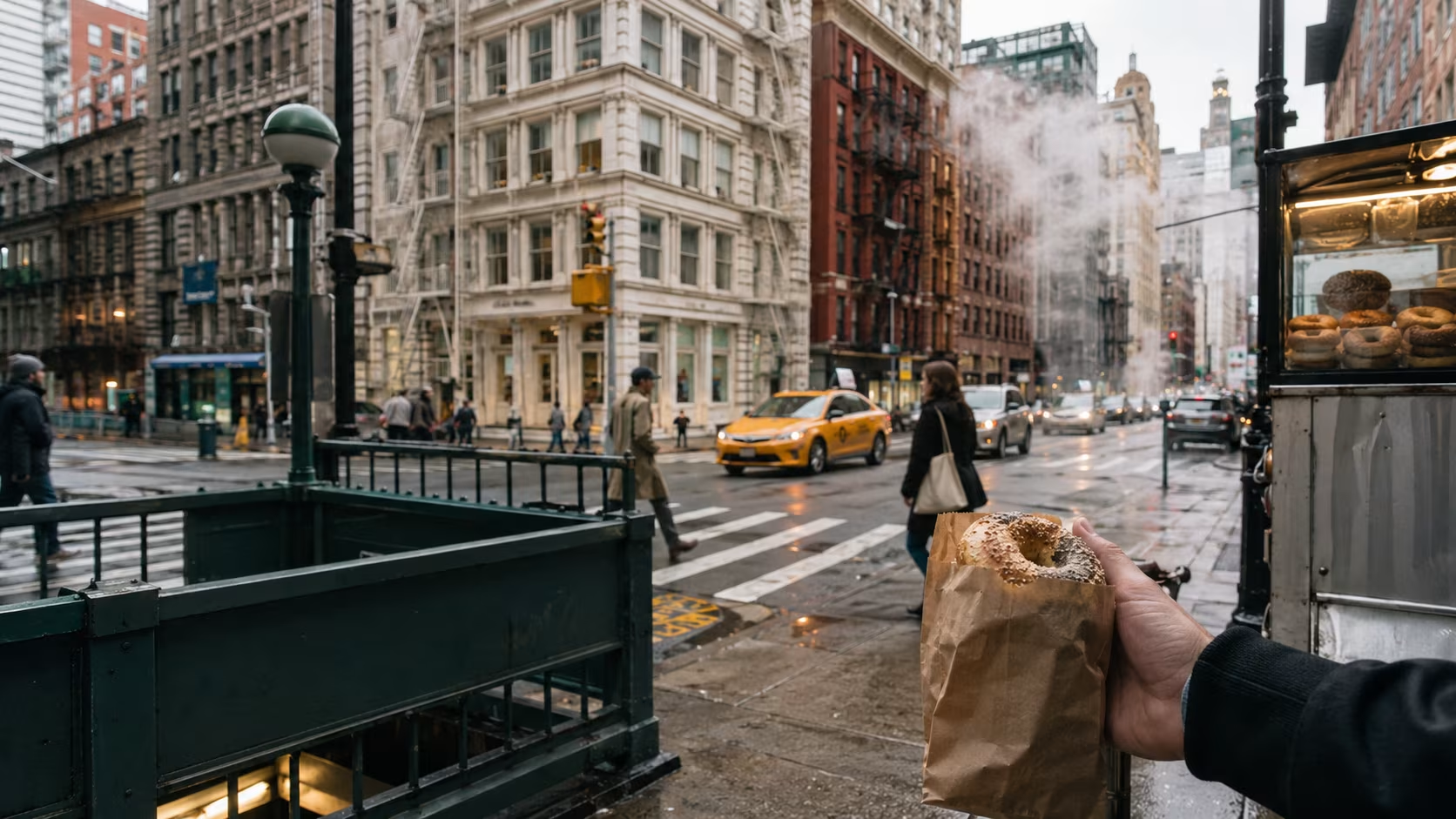
New York is the most-visited city in the United States, the most-photographed in the world, and one of the most-misunderstood by first-timers. The classic New York mistake is the tour-bus version: Times Square, Statue of Liberty harbor cruise, Empire State Building observation deck, hot dog from a street cart, photograph of yellow taxis, repeat. That itinerary covers the famous landmarks while missing what makes the city actually compelling: the neighborhoods.
Manhattan alone has 50+ distinct neighborhoods. Brooklyn has another 60. The difference between a Friday night in Williamsburg and a Friday night in the Upper East Side is bigger than the difference between most European capitals. The first-time visitor's job is to pick a smaller subset and walk it properly rather than checking off tourist boxes.
This is a 4-day guide for first-timers who want the headline experiences plus enough off-tourist-bus material to actually understand the city.
Quick Facts
| Item | Detail |
|---|---|
| Country | United States |
| Currency | US dollar ($) |
| Language | English (and 200+ others audibly on the subway) |
| Time zone | EST (UTC-5) / EDT (UTC-4) |
| Tourist tax | 14.75% hotel tax + $3.50/night occupancy |
| Best time | April–June, September–early November |
| Visa | ESTA (Visa Waiver) for 41 countries; B-2 visa otherwise |
| Trip length | 4–5 days |
When to Go
 New York City for First-Time Visitors: A 2026 Guide That Skips the Tourist Bus" loading="lazy" width="1672" height="941" srcset="https://compassdraft.com/uploads/images/2026/06/new-york-city-first-time-visitors-2026-guide-img02-bfb933f2-medium.avif 800w, https://compassdraft.com/uploads/images/2026/06/new-york-city-first-time-visitors-2026-guide-img02-bfb933f2-large.avif 1600w" sizes="(max-width:640px) 100vw, (max-width:1024px) 50vw, 800px">
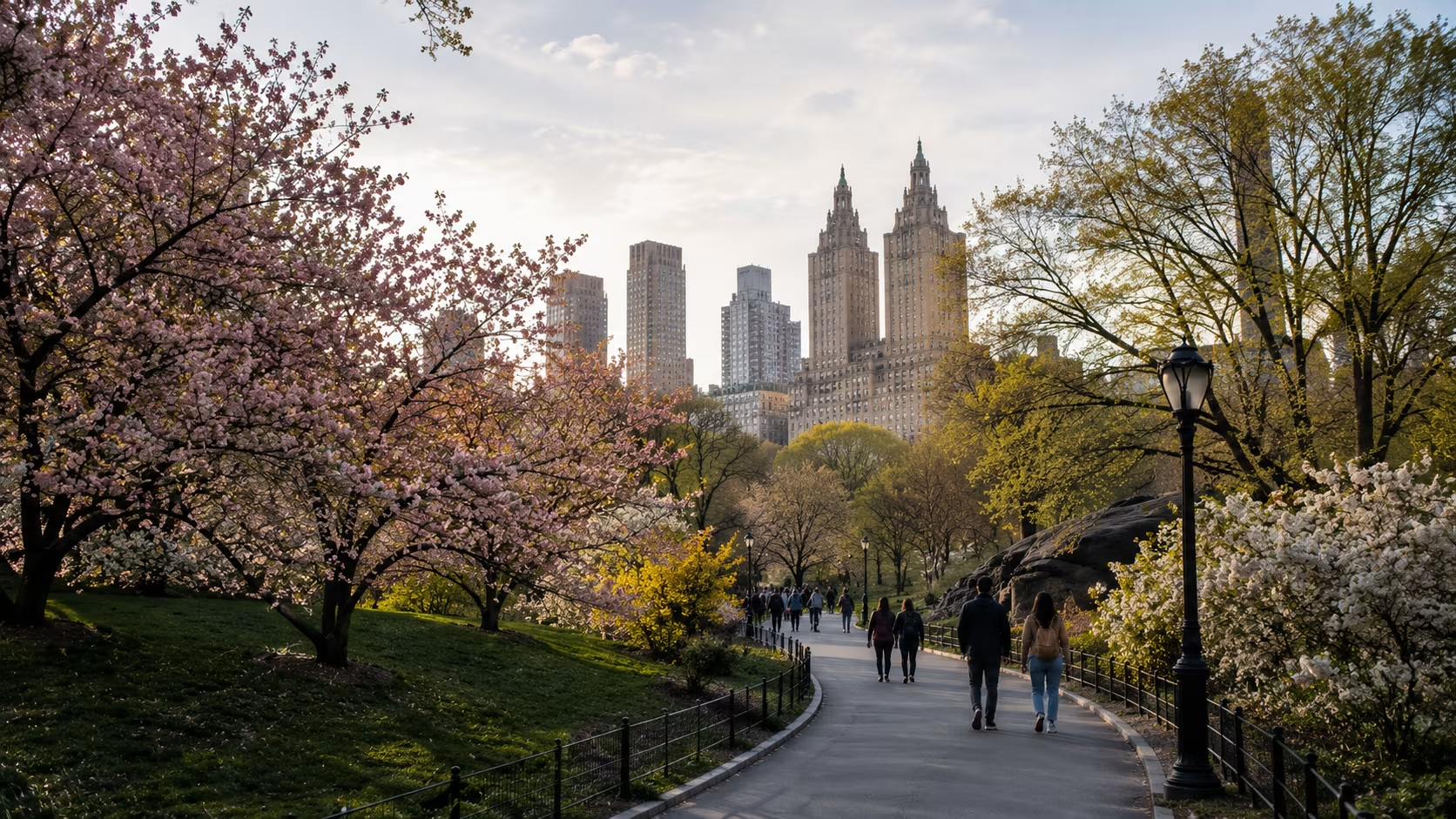
April to June. The sweet spot. Average highs 16–26°C, parks in flower (Central Park's cherry blossoms peak late April), evening streets pleasant. June can already feel humid by month's end.
September to early November. The other prime window. October is the city's most photogenic month; foliage in Central Park peaks late October.
July to August. Hot (often 32°C+), humid, garbage smells noticeably stronger. Many residents leave for the Hamptons. Tourist crowds peak; hotel prices peak.
Late November to early March. Cold, often gray. Christmas through New Year's is the peak tourist season for the holiday displays (Rockefeller tree, Fifth Avenue windows). January and February are the cheapest months and the city is genuinely operating quietly.
Avoid
- New Year's Eve in Times Square unless that's specifically what you came for. The reality is 8 hours standing in cold barriers without bathroom access.
- Marathon Sunday (early November) for transit complications.
- Holiday-shopping weekends late November and December for hotel and restaurant booking.
Getting in
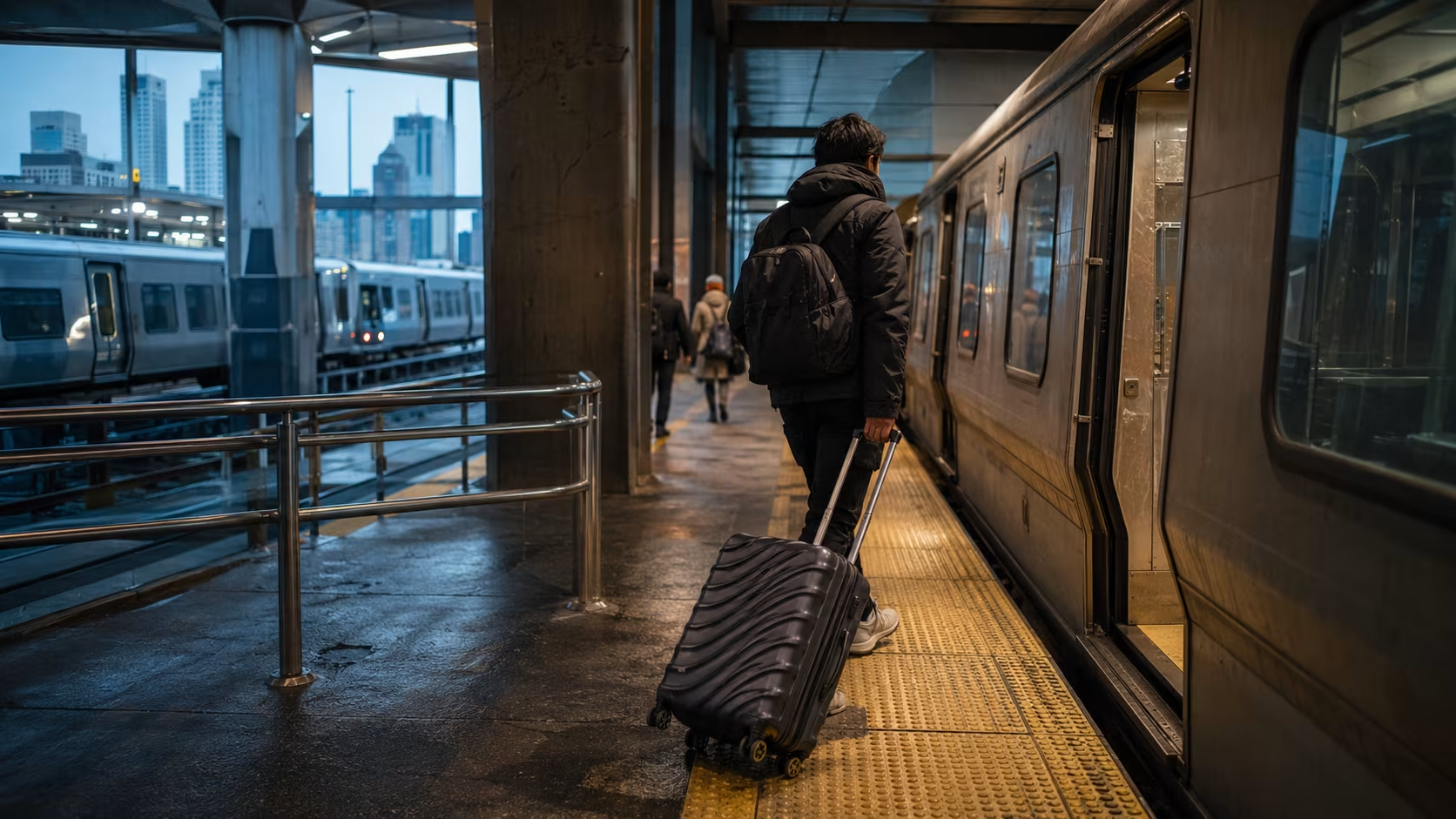
Three airports.
JFK
28 km southeast of Manhattan. Default international.
- AirTrain to Jamaica + LIRR: $11.45, 35 min to Penn Station. Fastest reliable option.
- AirTrain to Howard Beach + A train subway: $11, 70 min. Cheapest.
- Taxi: $80 flat fare to Manhattan (plus tolls + tip = ~$100–120).
- Uber/Lyft: $60–100 (surge pricing applies).
LaGuardia (LGA)
13 km from Midtown. Domestic and Caribbean. Renovated 2018–2022, no longer the joke it was.
- LaGuardia Link (free shuttle bus to nearest subway): connects to multiple lines, ~30–45 min total.
- Taxi: $40–55 to Manhattan plus tolls.
- Uber/Lyft: $35–55.
Newark (EWR)
26 km west, in New Jersey. International + domestic.
- AirTrain + NJ Transit: $15.75 to Penn Station, 30 min.
- Taxi: $80–100 plus toll.
- Uber/Lyft: $50–80.
Getting Around
The subway is the single best urban transit system in North America.
Subway and Bus
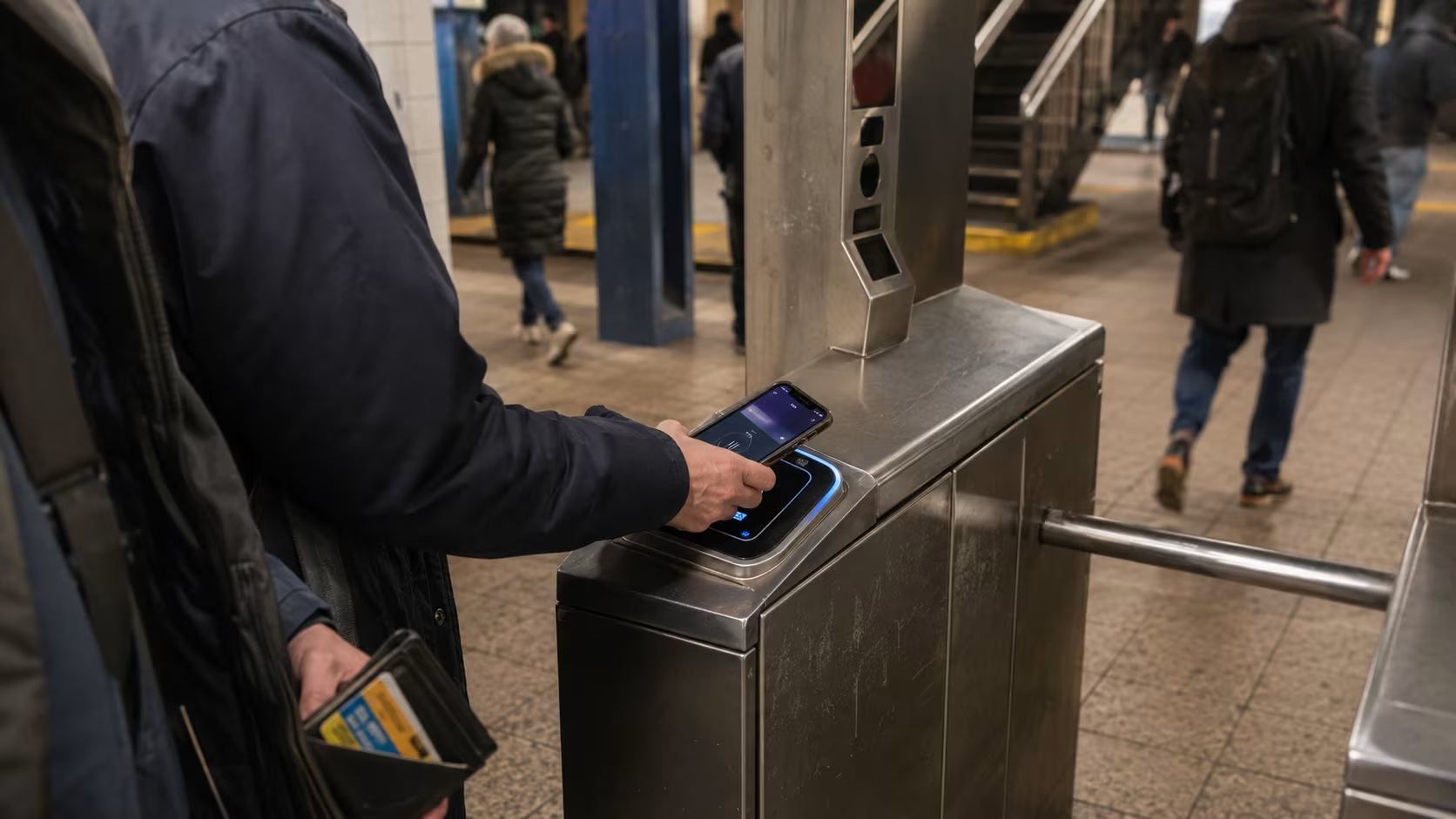
OMNY is the modern fare system (replaced MetroCard in 2024). Tap any contactless credit card or your phone (Apple Pay, Google Pay) at the turnstile. Single ride $2.90. Weekly cap: $34. After 12 rides in a calendar week, all additional rides are free until the week resets. No need to buy a pass; the cap kicks in automatically.
The OMNY card (a physical refillable card, $5) is for travelers without contactless cards or phones. Most foreign cards work.
Lines
Numbered (1, 2, 3, 4, 5, 6, 7) and lettered (A, B, C, D, E, F, G, J, L, M, N, Q, R, W, Z). Express vs. local trains run on the same lines; signs and announcements clarify.
Reading the Subway
- Uptown = north (toward higher numbered streets).
- Downtown = south.
- Express trains skip stations; local trains stop everywhere.
- Manhattan-bound vs. Brooklyn-bound etc.
Walking
Manhattan is grid-organized above 14th Street, so walking is straightforward. Each avenue block is ~80m (north-south) and each street block ~250m (east-west). 20 streets ≈ 1 mile.
Taxis and Rideshare
Yellow taxis are still common in Manhattan; less so in outer boroughs. Hail at curb (look for the rooftop light when on duty). Standard fare: $3 base + $0.70/0.2 mile. Average ride: $15–30. Tip 18–20%.
Uber and Lyft are usually 20–40% more expensive than yellow taxis but more reliable for outer-borough trips. Curb app lets you hail real yellow taxis like Uber.
Citi Bike
The city's public bike-share. $4.50 single ride or $19/day pass. Stations everywhere in Manhattan and inner Brooklyn. The day pass is excellent value if weather is good.
Where to Stay
The neighborhood you choose changes the trip dramatically. Average mid-range hotel prices have risen substantially since 2020.
Midtown West (times Square / Hell's Kitchen)
Convenient for Broadway, but Times Square itself is a tourist plaza locals avoid. Hell's Kitchen (one block west) is the better local-feel base.
Lower East Side / East Village
The historical immigrant neighborhood, now mixed nightlife and food. Smaller hotels, walkable to most of downtown Manhattan.
SoHo / Tribeca
Downtown Manhattan, expensive boutique hotels, walking distance to most downtown sights, design-and-fashion shopping. Best central-but-cool base.
Williamsburg, Brooklyn
Creative-class Brooklyn, walking distance to many restaurants, 2 stops on the L train to Manhattan. Bowery Hotel-ish boutique options. Best Brooklyn base.
Greenpoint, Brooklyn
Quieter than Williamsburg, lower prices, slightly less convenient transit but real neighborhood feel.
Upper East Side / Upper West Side
Residential-feeling, near Central Park, museums-adjacent. Generally calmer, fewer restaurants per block than downtown.
Avoid as a Base
- Times Square hotels unless specifically convenient for Broadway.
- Far outer boroughs (Queens beyond Long Island City, far Brooklyn) for short trips.
- Financial District evenings (deserted on weekends).
Realistic 2026 nightly prices (4-star, weekday, shoulder):
| Neighborhood | Mid-range | Higher-end |
|---|---|---|
| Midtown West | $260–420 | $500–900 |
| Lower East Side | $240–380 | $480–800 |
| SoHo/Tribeca | $300–500 | $700–1,500 |
| Williamsburg | $220–360 | $450–800 |
| Upper East Side | $280–420 | $550–1,000 |
What to Book in Advance
Broadway Show
Broadway is the city's signature evening experience.
- TodayTix app or TKTS booth at Times Square or downtown for same-day discounted tickets (10–50% off). Show up 2–3 hours before curtain.
- Lottery options (Hamilton, etc.): sign up via the app the morning of, $10–40 for winners.
- Standard online booking via show's website or Telecharge / Ticketmaster, full price.
2026 must-sees: long-running classics (Hamilton, Wicked, The Lion King), plus newer shows that vary year-to-year. Off-Broadway often offers higher-quality theater at lower prices.
Statue of Liberty / Ellis Island
Ferry to Liberty Island ($24 base ticket via Statue City Cruises). Crown access ($25 add-on) must be booked 3+ months ahead; it sells out. Pedestal is more accessible. Grounds-only still requires the ticketed ferry.
Skip Alternative
The Staten Island Ferry runs free from Whitehall Terminal, passes Liberty Island at close range, and takes 25 minutes each way. Most travelers find this provides the iconic skyline-and-statue photograph at zero cost.
Top of the Rock Vs. Empire State Vs. Edge Vs. SUMMIT One Vanderbilt
Four competing observation decks; each has its angle.
- Top of the Rock (Rockefeller Center, $44): Empire State Building in your photo.
- Empire State Building ($47, $79 with 102nd floor): historical, the original. Skip the 102nd floor unless you specifically want it.
- Edge at Hudson Yards ($40): outdoor glass-floor cantilever.
- SUMMIT One Vanderbilt ($43): newest (opened 2021), mirrored interior installation, the most photogenic.
For first-timers: Top of the Rock for the postcard skyline; SUMMIT for the experiential.
MoMA / Met
The Met (Metropolitan Museum of Art, Upper East Side): $30 suggested admission ($30 for non-NY residents now, since 2018 it's no longer pay-what-you-wish). Allow 4–6 hours minimum.
MoMA (Museum of Modern Art, Midtown): $30. Allow 3 hours.
9/11 Memorial: free. Museum: $33. Allow 2 hours minimum.
Day 1 — Lower Manhattan
08:30. Coffee in SoHo or Tribeca. La Colombe, Stumptown, Devoción (Williamsburg HQ but multiple SoHo locations).
09:30. Statue of Liberty / Ellis Island ferry from Battery Park (or take the free Staten Island Ferry round-trip if not paying for Liberty Island access).
12:30. Lunch in Lower Manhattan. Eataly at the Oculus for casual Italian counter food. Locanda Verde in Tribeca for sit-down. Two Hands for casual cafés.
14:00. 9/11 Memorial + Museum. Allow 2.5 hours. Heavy and necessary. The reflecting-pool memorial is free; the museum is the comprehensive history.
17:00. Walk through Battery Park, up through Wall Street (touristy but free). The Charging Bull statue is at Bowling Green; the Fearless Girl statue is at Wall Street.
18:00. Walk across the Brooklyn Bridge as sunset starts. ~30-min walk. Continue into DUMBO for the famous photograph of the Manhattan Bridge framing the Empire State Building.
19:30. Dinner in DUMBO or Brooklyn Heights. Vinegar Hill House (American). Juliana's Pizza (the original Patsy Grimaldi). Atrium DUMBO (modern American).
Day 2 — Midtown and Central Park
08:30. Coffee in Midtown. Black Fox, Joe Coffee.
09:30. Top of the Rock or SUMMIT One Vanderbilt at opening (smaller crowds before 10:30).
11:00. Walk Fifth Avenue from Rockefeller Center north. St. Patrick's Cathedral. Then choose:
- MoMA (53rd Street). 3 hours.
- The Met (5th Ave + 80th Street). 4–6 hours. The single best museum in North America.
14:00. Lunch near the museum.
15:30. Central Park. Allow at least 2 hours. Start at Bethesda Terrace (the most photographed spot in the park). Walk to the Bow Bridge. The Mall (the tree-lined walkway). The Loeb Boathouse rowboat rental. Skating rink (winter) or Sheep Meadow (summer). The North Woods feel rural and are underused.
18:00. Walk down Fifth Avenue or take the subway down for the evening.
19:30. Dinner. The Modern at MoMA (high-end, Michelin-starred). Smith & Wollensky for a classic American steakhouse. Marea for high-end Italian seafood.
21:30. Broadway show if booked. Otherwise: jazz at Village Vanguard (Greenwich Village) or Smalls Jazz Club (West Village).
Day 3 — Brooklyn
The day to leave Manhattan.
09:00. Coffee in Williamsburg. Devoción (the Brooklyn flagship) or Sey Coffee (Bushwick).
10:00. Walk Williamsburg. Bedford Avenue (the main commercial strip) and side streets. Boutiques, vintage shops, record stores. The Williamsburg Bridge has its own pedestrian path back to Manhattan.
12:30. Lunch. Roberta's (Bushwick, the famous wood-fired pizza). Nha Trang One for Vietnamese. L'Industrie Pizzeria for Williamsburg's most respected slice.
14:30. Smorgasburg if Saturday or Sunday (the famous open-air food market in Williamsburg's Marsha P. Johnson State Park). 100+ food vendors.
16:00. DUMBO walking. The Empire Stores, Brooklyn Bridge Park along the waterfront. Time Out Market for indoor food court.
18:00. Sunset at the Brooklyn Heights Promenade (panoramic Manhattan skyline view, free, accessible from Brooklyn Heights subway).
20:00. Dinner in Brooklyn. Lilia (Italian, Williamsburg, books fast). Llama Inn (Peruvian). Gage & Tollner (historic American chophouse, restored). Rolo's (Queens, but worth the trip).
22:00 onward. Cocktails. Dead Rabbit in Lower Manhattan if going back. Donna in Williamsburg. Maison Premiere for oysters and absinthe. Long Island Bar in Cobble Hill.
Day 4 — Choose: Museums Day, Greenwich Village Walk, or Day Trip
Path A: Museums Day
09:30. Whichever museum you didn't do on Day 2 (Met or MoMA).
14:00. Lunch.
15:30. Choose a smaller museum:
- The Frick Collection (Upper East Side, recently reopened after renovation). Old Masters in a Carnegie-era mansion. $30. 2 hours.
- The Whitney Museum of American Art (Meatpacking District). 20th–21st century American. $30. 3 hours.
- Neue Galerie (UES). Klimt's Adele Bloch-Bauer I, German and Austrian art. $25. 90 min.
Path B: Village + High Line + Chelsea
10:00. Walk Greenwich Village. Washington Square Park (street performers, NYU students, chess hustlers). The narrow streets (Bleecker, MacDougal, Sullivan) that pre-date the grid.
12:00. Lunch in the West Village. L'Artusi for Italian. By Chloe for casual vegan. Sant Ambroeus for café-restaurant.
13:30. Walk the High Line, the elevated railway converted to park, 1.45 miles, runs from Gansevoort Street to 34th Street.
15:30. Chelsea Market (under the High Line, indoor food hall and shopping).
16:30. Hudson River walk back to lower Manhattan.
Path C: Day Trip to Hudson Valley or Coney Island
Hudson Valley: Train from Grand Central to Beacon (90 min) for Dia:Beacon (a converted factory, modern-art mecca, $25). Or to Cold Spring (90 min) for hiking and Hudson River views.
Coney Island: Subway D, F, N, or Q to Coney Island/Stillwell Avenue (~60 min from Manhattan). Beach, Cyclone roller coaster, Wonder Wheel, Nathan's Famous hot dogs. Touristy but a real piece of New York Americana.
What to Eat
New York is the most diverse food city in the United States. Categories worth pursuing:
Pizza
New York pizza is its own cuisine. The classic slice (foldable, thin, oily-corner) at any old-school slice joint:
- Joe's Pizza (Greenwich Village, Times Square)
- Prince Street Pizza (SoHo): Sicilian-style square slice with pepperoni cups
- L'Industrie Pizzeria (Williamsburg)
- Patsy's (East Harlem, since 1933)
- Lucali (Carroll Gardens, Brooklyn): coal-oven, no reservations, hour-long wait
- Roberta's (Bushwick): wood-fired Neapolitan
- Di Fara (Midwood, Brooklyn): old-school institution
Bagel + Lox
The Sunday morning institution.
- Russ & Daughters (Lower East Side, since 1914): the most famous, also a sit-down Café
- Ess-a-Bagel (Midtown)
- Black Seed Bagels (Nolita)
- Sadelle's (SoHo)
Deli (pastrami)
- Katz's Delicatessen (Lower East Side, since 1888): pastrami on rye, the institution. Cash only at the counter; cards at tables.
- 2nd Ave Deli (now in Midtown East and UES, descendent of original Lower East Side).
Steakhouse
- Peter Luger (Williamsburg, Brooklyn). Cash only. Famous and contested: beef quality genuinely good, service famously brusque.
- Keens Steakhouse (Midtown). Historic from 1885.
- Smith & Wollensky (Midtown).
- The Grill (rebuilt iconic Four Seasons location). High-end.
Korean BBQ
Koreatown (32nd Street between 5th and 6th Avenues) is the densest. Cote, Atomix (high-end). Budget casual: Kang Ho Dong Baekjeong, Jongro BBQ.
Chinese
The city has multiple Chinatowns. Manhattan Chinatown is the most famous. Flushing (Queens) is the better food destination. Sunset Park (Brooklyn) the largest.
Modern Fine Dining
New York has more Michelin-starred restaurants than any US city. Key bookings (4–8 weeks ahead):
- Le Bernardin (3-star, French seafood)
- Eleven Madison Park (3-star, plant-based since 2021)
- Per Se (3-star, Thomas Keller)
- Atomix (2-star, modern Korean)
- Cote (1-star, Korean steakhouse)
- Don Angie (1-star, Italian)
Costs and Budget
2026 daily budgets per person, excluding flights and hotel:
| Style | Per day | Notes |
|---|---|---|
| Backpacker | $80–130 | Hostel, slice pizza, walking, free museums day |
| Mid-range | $160–260 | Mix of casual and proper restaurants, museums, transit |
| Comfortable | $300–500 | Better restaurants, Broadway show, taxis |
| Higher-end | $700+ | Tasting menus, premium hotel breakfasts, private guide |
New York is among the most expensive cities in the world. Coffee + bagel + tip: $7–10. Slice of pizza + soda: $7. Fast-casual lunch: $15–25. Sit-down dinner mid-range: $50–90 per person before drinks.
Practical Info
- Tipping. 18–22% standard at restaurants. $1–2/drink at bars. 18–20% taxis. $3–5/day hotel housekeeping. Auto-gratuity on parties of 6+ is common; check the bill before tipping again.
- Tax. 8.875% sales tax on most goods. Hotel tax adds $20–40+ per night. Quoted prices are pre-tax.
- Cards. Universal except cash-only old-school spots (Katz's counter, Peter Luger). Carry $50 cash for occasional cash-only.
- Bathrooms. Few public restrooms. Hotel lobbies (walk in confidently), Starbucks (post-2018 open-bathroom policy still informal), department stores, and museums.
- Subway after midnight. Runs 24 hours but with reduced frequency. Single rides feel longer at 03:00.
- Crime. Statistically lower than most major US cities, but petty theft on the subway and at tourist sites is real. Standard precautions.
- Walking pace. New Yorkers walk fast and don't tolerate sidewalk-blocking. Stand to one side of escalators (right). Don't stop in the middle of sidewalks to look at maps.
- Sundays. Most things open. Christmas Day is the city's only universally-quiet day.
Common First-Timer Mistakes
- Spending too long in Times Square. It's a 30-minute photo stop, not a half-day destination.
- Booking a Times Square hotel "to be in the middle of it." It's loud, pricey, and surrounded by tourist trap restaurants.
- Eating at the obvious Times Square restaurants. Olive Garden, Bubba Gump, etc. Walk three blocks in any direction; quality jumps dramatically.
- Trying to do too many neighborhoods in a day. Brooklyn + Manhattan + Queens in one day is technically possible and miserable.
- Skipping the outer boroughs. Brooklyn (especially Williamsburg, Greenpoint, DUMBO) is where the best food and most interesting nights are.
- Buying ferry tickets for Liberty Island when the free Staten Island Ferry would suffice. Skip the paid ferry unless you specifically want to climb to the crown.
- Not booking Broadway in advance and paying full price at the box office. TodayTix and TKTS booths exist for a reason.
- Planning around "the" tourist sites without picking neighborhoods. Empire State Building + Statue of Liberty + Times Square + Central Park is 4 disconnected stops covering 0 neighborhoods.
- Trying to drive in Manhattan. Traffic is brutal, parking costs $40–80/day, the subway is dramatically better.
- Eating only the obvious dishes (NY pizza + bagel). The city's food range is the actual gift.
Final Notes
Four days in New York is the right length for a first trip with a focused approach: one downtown day (Lower Manhattan + Brooklyn Bridge), one midtown + Central Park day, one Brooklyn day, and one flexible final day. A fifth day buys you the museums tour or a Hudson Valley trip.
The quietest piece of advice: pick one 6-block stretch of one neighborhood and walk it slowly. Sit at one café for an hour. The city the locals love is the one in between the headline sights: the corner deli, the bookshop with cats, the late-night diner where you eat eggs at 02:00 because the kitchen never closed. That's the New York that stays with you.
0 Comments
No comments yet — start the conversation.