

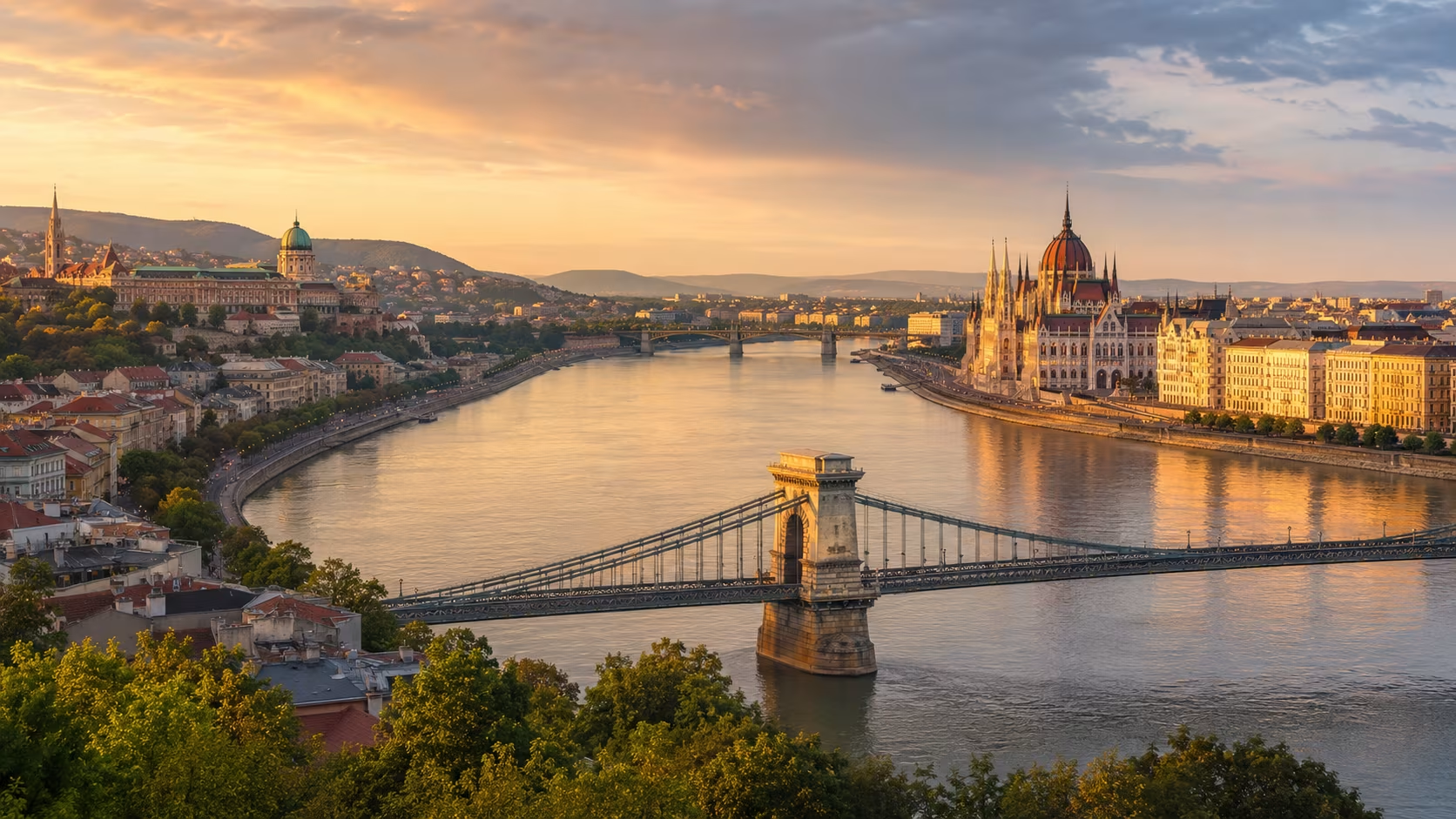
Budapest is two cities — Buda on the western hilly bank, Pest on the eastern flat bank, joined into a single capital in 1873. The Danube River separates them; the iconic Chain Bridge and Liberty Bridge connect them; the geographic split gives the city its distinctive character. Buda is older, hillier, more residential — castles, churches, viewpoints. Pest is denser, flatter, more commercial — the parliament, museums, ruin bars, restaurants.
The 2026 city is genuinely affordable for travelers from western Europe and the US. Hungary's economic struggles + the forint's weakness mean that a serious dinner in Budapest costs what a casual lunch costs in Vienna. The trade-off is real: Budapest's tourist infrastructure is very developed in central neighborhoods, but the city has its share of friction — the famous ATM scams, the menu-switch tactics at central restaurants, the high tip expectations from waiters.
The travelers who get this right plan accordingly. The trip rewards a 4-day visit covering the imperial-Hungarian heritage, the famous thermal baths, the food scene that has gained Michelin stars in the past decade, and at least one ruin-bar evening that doesn't get cut from the schedule.
This is a 4-day guide for first-timers who want both the postcard-photogenic Budapest and the city locals actually live in.
Quick Facts
| Item | Detail |
|---|---|
| Country | Hungary |
| Currency | Hungarian forint (HUF), ~370 HUF/USD or ~395 HUF/EUR in 2026 |
| Language | Hungarian; English in tourist areas |
| Time zone | CET (UTC+1) / CEST (UTC+2) |
| Tourist tax | 4% added to most accommodations |
| Best time | April–June, September–October |
| Visa | Schengen, 90 days for most non-EU |
| Trip length | 3–4 days |
When to Go
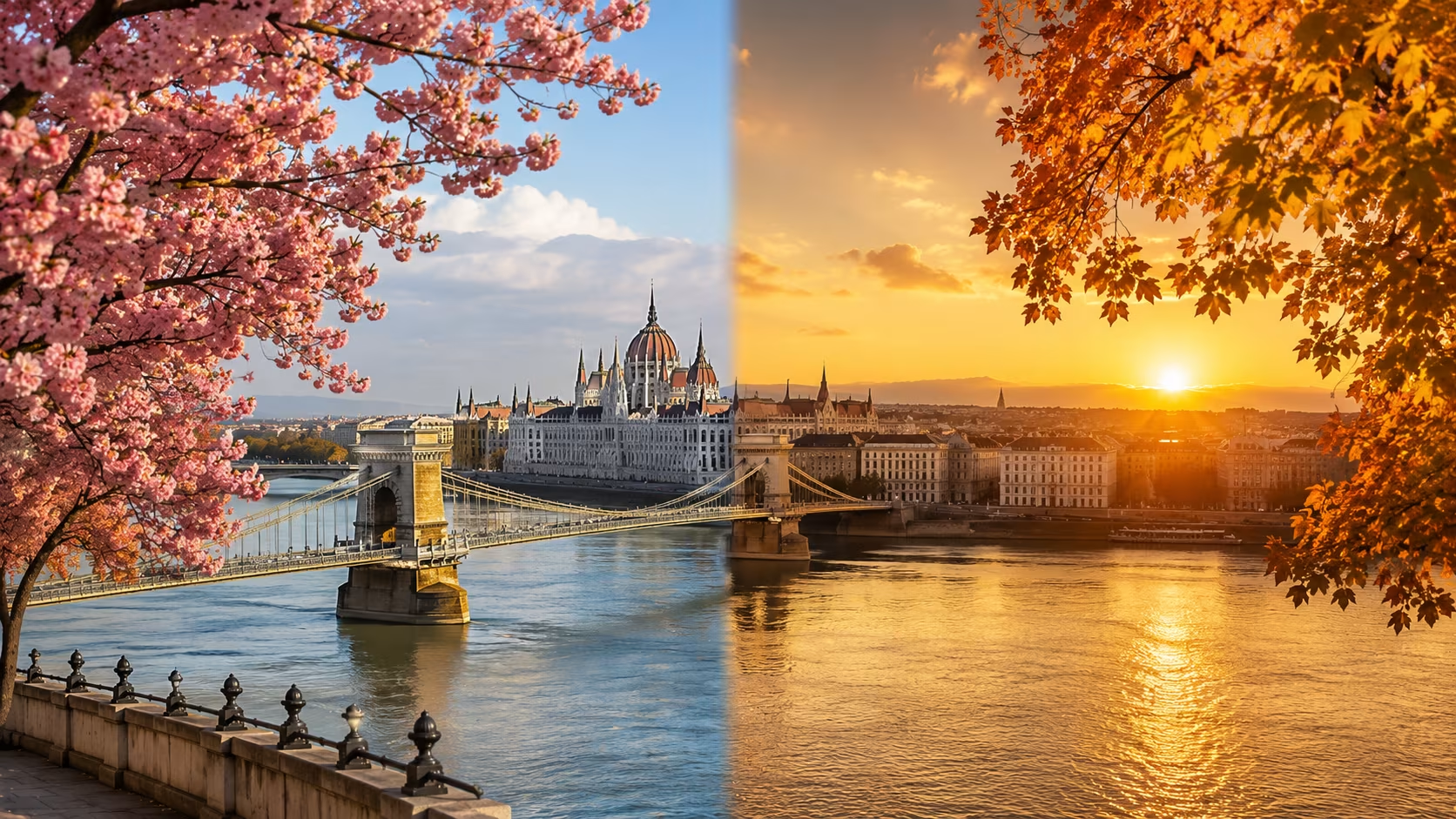
April to June. The sweet spot. Mild (15–25°C), trees in flower, terraces open, the Sziget Festival hasn't started yet.
September to October. The other prime window. Schools resumed, autumn light excellent, prices drop.
June to August. Hot (28–35°C+), tourist-dense. Sziget Festival mid-August (one of Europe's biggest music festivals); the city floods with festival-goers.
November to March. Cool to cold (-2 to 10°C). Christmas markets in late November-December (Vörösmarty Square + Basilica) are famous local events. The thermal baths are at their best in cool weather (steam rising off the outdoor pools).
Avoid:
- Sziget Festival week (mid-August) for hotel prices and crowd density.
- Major Hungarian holidays for closures.
- Christmas Day when most things close.
Getting In

Budapest Ferenc Liszt Airport (BUD). 16 km southeast of central.
From BUD:
- 100E direct shuttle bus to central: 2,200 HUF, 30 min.
- Bus 200E + Metro M3: 1,000 HUF total, 50 min.
- Taxi (Főtaxi): 9,500-13,000 HUF flat fare, 30-45 min.
- Bolt: 6,500-9,000 HUF.
- Hotel transfer: 12,000-18,000 HUF.
Budapest is also a major rail hub. Trains to Vienna (3 hours), Prague (7 hours), Bratislava (2.5 hours).
Getting Around
Metro
Four lines (M1, M2, M3, M4). M1 is the second-oldest underground railway in the world (1896, after London). Single ride 450 HUF. 24-hour pass 2,500 HUF; 72-hour pass 5,500 HUF.
Bus + Tram
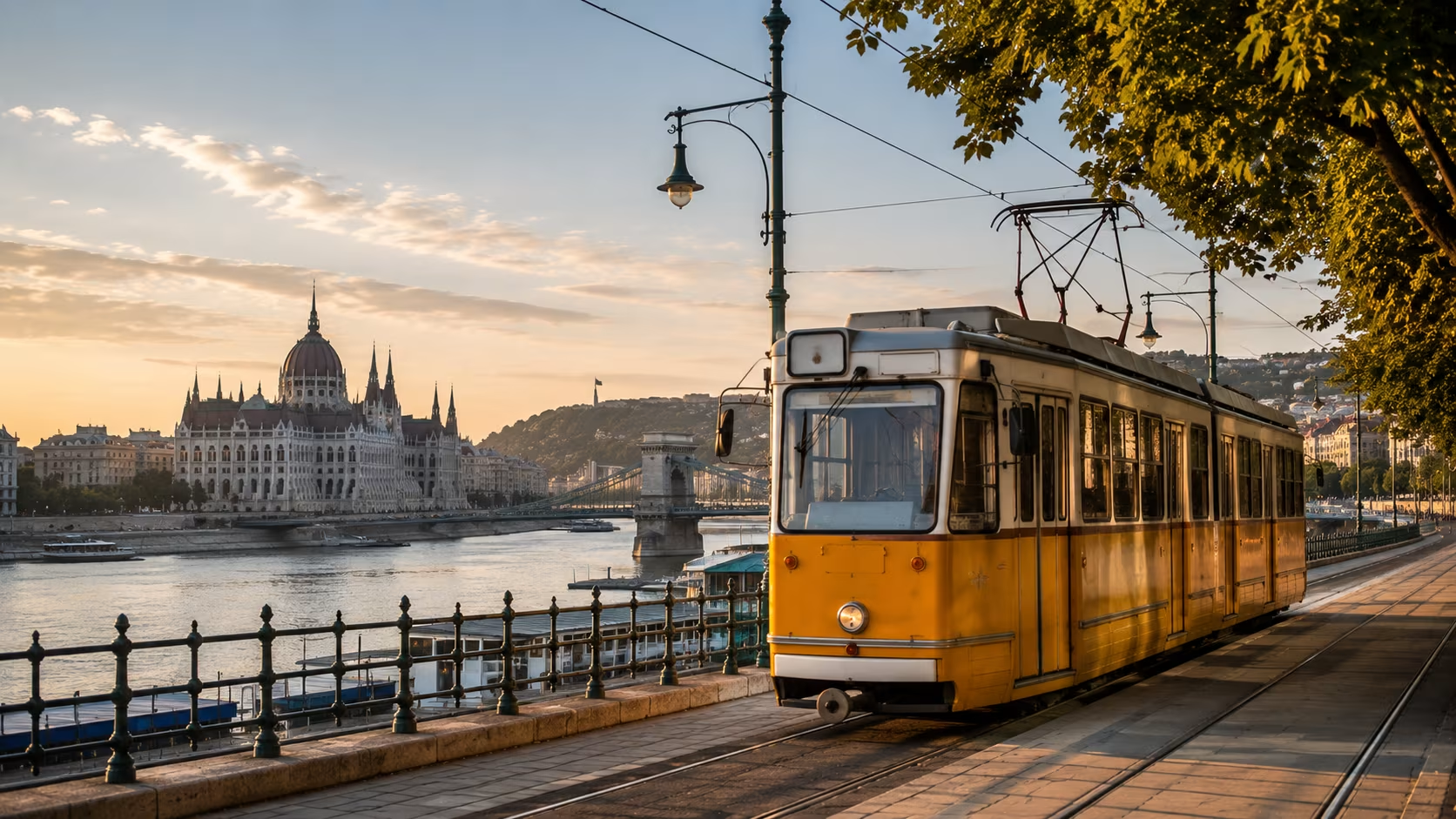
Comprehensive tram network. Same payment system. Tram 2 along the Danube is one of the world's most-photographed urban tram rides.
Walking
Central Pest is walkable internally. Buda Castle Hill is steep; the Castle Hill funicular (1,800 HUF round-trip) is the easiest way up.
Bolt + Uber
Both operational. Bolt is the local default; cheap (1,500-3,500 HUF for typical central trips).
Taxis
Use only Főtaxi, City Taxi, or 6×6 — the official metered companies. Avoid hailing on the street; the freelance taxi scams are real.
Where to Stay
Budapest's neighborhoods feel different on each side of the river.
Pest — Belváros (Inner City) / District V
The central business district. Walking distance to St. Stephen's Basilica, Parliament, Chain Bridge, and most major sights. Premium hotels.
Pest — Jewish Quarter (District VII)
The historic Jewish quarter. Now also the ruin-bar district. Atmospheric streets, mid-range to higher-end boutique hotels. Lively at night.
Pest — District VI / Andrássy Avenue
The Andrássy avenue (UNESCO) connects Belváros to Heroes' Square + City Park. Mid-range to premium hotels.
Pest — District IX
The "Palace Quarter." Upcoming neighborhood; less tourist; more residential character.
Buda — Castle District
Near the Royal Palace + Fisherman's Bastion. Atmospheric and quiet at night; less convenient for evening dining (most restaurants are in Pest). Premium hotels.
Buda — Gellért Hill area
Around the famous Gellért Baths. Mix of mid-range and boutique hotels.
Avoid as a base
- Far suburbs (District XVII+).
- Around Keleti train station only — convenient but transitional.
Realistic 2026 nightly prices (4-star, weekday, shoulder, USD equivalent):
| Neighborhood | Mid-range | Higher-end |
|---|---|---|
| Pest Belváros | $130-220 | $300-650 |
| Pest Jewish Quarter | $100-180 | $250-500 |
| Pest Andrássy | $130-220 | $300-700 |
| Buda Castle | $130-220 | $350-800 |
| Buda Gellért | $100-180 | $250-500 |
What to Book in Advance
Hungarian Parliament Building Tour
The massive neo-Gothic parliament. 60-minute guided tour. 12,000-15,000 HUF. Books 2-3 weeks ahead for English tours. Allow 90 minutes.
Buda Castle + Hungarian National Gallery
The royal palace + national art museum. 4,500 HUF. Walk-up usually fine.
Széchenyi Thermal Bath
The famous outdoor thermal bath complex in City Park. 8,500-12,000 HUF (varies by day). Walk-up but lockers/cabins limited; book a cabin online for premium experience.
Gellért Thermal Bath
The historic Art Nouveau thermal bath. 8,500-11,000 HUF. Walk-up.
Premium Restaurants
- Costes Downtown (Michelin one-star).
- Onyx (Michelin one-star, books months ahead).
- Rumour (modern Hungarian).
- Stand 25 by Hungarikum Bisztró (modern Hungarian, mid-tier).
Caving + Nightlife Tours
Multiple ruin-bar tour packages available; usually 3-bar walking tours with a guide for 8,000-15,000 HUF.
Day 1 — Pest Old City
08:30. Coffee at a Hungarian café. Espresso Embassy (specialty). Hipster's Cafe. My Little Melbourne Coffee.
09:30. St. Stephen's Basilica. Free entry to the church; 1,500 HUF for the panoramic dome view. Allow 60 minutes.
10:30. Walk Andrássy Avenue. UNESCO. The Hungarian "Champs-Élysées" — 2.3 km from Erzsébet Square to Heroes' Square.
12:00. Hungarian State Opera House. Recently renovated (reopened 2022). Tour available even without a performance.
13:00. Lunch at Café Gerbeaud (since 1858, the most-famous Budapest café — touristy but genuinely beautiful). Or Stand25 for working-class Hungarian, or Café Pava for casual.
14:30. Walk to Heroes' Square at the end of Andrássy. The 14-statue monument to Hungarian historical figures. Free.
15:30. City Park (Városliget) + Vajdahunyad Castle (the late-19th-century neo-Gothic castle replica in the park). Allow 60 minutes.
17:00. Széchenyi Thermal Bath (booked). The famous outdoor thermal bath in City Park. Full ritual: thermal pool soaking + sauna + cold plunge. Allow 2 hours.
19:30. Dinner. Rumour (modern Hungarian). Onyx (Michelin one-star, book ahead). Vagina Vault for casual.
22:00 onward. Ruin bars in the Jewish Quarter (Day 1 or Day 3 depending on energy).
Day 2 — Buda Side
09:00. Coffee in Pest before crossing.
10:00. Walk across Chain Bridge (the iconic 1849 chain bridge connecting Buda + Pest). Free.
10:30. Take the Castle Hill Funicular (1,800 HUF round-trip) or walk up the steep stairs to Buda Castle.
11:00. Buda Castle. The 13th-century royal palace, partially destroyed in WWII, rebuilt 1980s. Walk the courtyards (free). Visit the Hungarian National Gallery within (4,500 HUF). Allow 2.5 hours.
13:30. Lunch on the Castle Hill or back in Pest. Borkonyha Winekitchen in Pest (Michelin one-star) for upscale. 21 Magyar Vendéglő in Buda for traditional.
15:30. Matthias Church (1,500 HUF). The 14th-century coronation church, distinctively colored tiled roof. Allow 60 minutes.
16:30. Fisherman's Bastion. The white neo-Gothic terrace with panoramic views over Pest + the Parliament. Free during the day; the upper terraces ticketed in evening (1,000 HUF).
17:30. Walk down Buda streets back to the river.
19:00. Cross back to Pest via Liberty Bridge or Chain Bridge for sunset.
20:00. Dinner. Costes Downtown (one-star). Borssó Bistro (modern). Bock Bistro (Hungarian wine + food).
Day 3 — Jewish Quarter + Ruin Bars
09:30. Coffee in District VII.
10:30. Dohány Street Synagogue. The largest synagogue in Europe; the second-largest in the world. 8,500 HUF. Allow 90 minutes including the museum.
12:30. Holocaust Memorial Center. Free. Heavy and historically essential. Allow 90 minutes.
14:00. Lunch in the Jewish Quarter. Mazel Tov (the famous restored synagogue-courtyard restaurant). Stand 25 by Hungarikum Bisztró for casual modern Hungarian. Köleves for casual.
15:30. Great Market Hall (Nagyvásárcsarnok). The 1897 market on Vörösmarty Square. Hungarian paprika, salami, hand-painted Hungarian pottery, cheese. Allow 60 minutes.
17:00. Coffee at a District VII café. Hipster's Cafe for the modern atmosphere.
18:30. Walk the "Shoes on the Danube" memorial. Iron shoes representing the Jews killed by Hungarian fascists during WWII. Heavy.
19:30. Dinner. Mazel Tov mentioned. Stand25 mentioned. Két Szerecsen for casual.
22:00 onward. Ruin bars. The famous abandoned-building bars in the Jewish Quarter. Pick 2-3:
- Szimpla Kert (the original since 2002; touristy now but iconic).
- Mazel Tov doubles as restaurant + ruin bar.
- Instant + Fogas Ház complex (multiple bars in one labyrinth).
- Ellátó Kert (smaller, less touristy).
- Anker't (the courtyard ruin bar).
Day 4 — Choose: Day Trip, More Baths, or Slow Day
Path A — Eger Day Trip
130 km northeast. The wine region with the famous "Bull's Blood" (Egri Bikavér) red blend. Half-day to full-day excursion. Train + walking through the Valley of Beautiful Women (the wine cellar district).
Path B — Szentendre Day Trip
20 km north. The artist village along the Danube. Train: 30 minutes. Half-day excursion. Cobblestoned streets, art galleries, Serbian Orthodox heritage.
Path C — More Thermal Baths
Gellért Baths (Art Nouveau interior).
Rudas Baths (the Turkish bath since 1550 — original Ottoman heritage; mixed-gender weekends + male/female-specific weekdays).
Lukács Baths (the working-class local's thermal bath; less touristy).
Path D — Slow Budapest Day
Morning at the Hungarian National Museum (1,500 HUF).
Afternoon at the House of Terror Museum (the former secret police HQ, now a museum about Soviet + fascist Hungary). 4,000 HUF.
Evening at a wine bar — Doblo for natural wine, Tasting Table for Hungarian wines.
What to Eat
Hungarian cuisine is meat-heavy, paprika-influenced, and substantial. The headline dishes:
Headline Dishes
| Dish | What it is |
|---|---|
| Goulash (gulyás) | Beef soup with paprika, onions, and potatoes. NOT the thick stew called "goulash" abroad — that's pörkölt. |
| Pörkölt | Slow-cooked beef or pork stew with paprika. The thick "Hungarian goulash" of foreign menus. |
| Paprikás csirke | Chicken paprikash. Chicken in cream-paprika sauce, with nokedli (small dumplings). |
| Halászlé | Fish soup with paprika. Spicy, intense red color. |
| Tökfőzelék / Lecsó | Vegetable stew (lecsó with peppers and tomatoes; tökfőzelék with squash). Sides. |
| Hortobágyi palacsinta | Crepes filled with meat (chicken paprikash style). |
| Lángos | Deep-fried bread topped with sour cream + cheese (or garlic, sausage). Working-class snack at markets. |
| Kolbász | Hungarian sausage. Spicy paprika-cured. |
| Töltött káposzta | Stuffed cabbage rolls. Winter classic. |
| Dobos torta | The famous layered cake (chocolate buttercream + caramel top). Invented 1885. |
| Kürtős kalács | "Chimney cake" — sweet cylindrical pastry. Christmas market staple. |
| Egri Bikavér | "Bull's Blood of Eger" — the famous red blend. |
| Tokaji aszú | The famous Hungarian dessert wine (since the 17th century; Louis XIV called it the "king of wines and wine of kings"). |
| Pálinka | Fruit brandy, often plum, apricot, or pear. Strong (40-50% ABV). |
Where to Eat
Modern Hungarian:
- Onyx (1-Michelin-star).
- Costes Downtown (1-star).
- Borkonyha Winekitchen (1-star).
- Stand 25 by Hungarikum Bisztró (mid-tier modern).
- Rumour (modern, 1-star).
Traditional:
- Gerlóczy Kávéház (since 1937).
- Café Gerbeaud (since 1858; touristy but historical).
- Két Szerecsen (casual).
- Mazel Tov (Jewish-Mediterranean in synagogue courtyard).
Working-Class:
- Frici Papa Kifőzdéje (working-class lunch institution).
- Belvárosi Disznótoros for sausage + casual.
- Café Karavan for street food (lángos + sausages on Kazinczy Street).
Markets:
- Great Market Hall (Nagyvásárcsarnok) for upper-floor lunches.
- Karaván Street Food (in the Jewish Quarter) for lángos + Hungarian street food.
Costs and Budget
2026 daily budgets per person, excluding flights and hotel (USD):
| Style | Per day | Notes |
|---|---|---|
| Backpacker | $30-55 | Hostel, working-class meals, walking |
| Mid-range | $60-110 | Mix of casual and proper restaurants, museums, transit |
| Comfortable | $130-220 | Better restaurants, premium thermal bath, ruin bar tour |
| Higher-end | $300+ | Tasting menus, premium hotel breakfasts, private guide |
Budapest is dramatically cheaper than Vienna or Prague. A working-class lunch: 2,500-4,500 HUF ($7-12). A sit-down dinner mid-range: 8,000-15,000 HUF ($22-40). Premium tasting menu: 35,000-65,000 HUF ($95-175).
Practical Info
- Cards. Universal in tourist areas. Cash for some markets and small vendors.
- Tipping. 10-12% standard at sit-down restaurants. Watch for service charge (sometimes 12% added automatically; tip beyond is optional but Hungarian waiters can be aggressive about it).
- English. Common in tourist areas. Less in residential neighborhoods. Younger Hungarians speak more English than older.
- Pickpocketing. Real around tourist sites and on busy buses. Standard precautions.
- Sundays. Most museums open. Many shops closed except in tourist zones.
- Forint volatility. The Hungarian forint has weakened dramatically since 2022. Withdraw from bank ATMs (avoid Euronet machines + currency exchanges).
- ATM scams. Real and persistent. Use ATMs at major banks (OTP, K&H, Erste). Cover the keypad. Decline "dynamic currency conversion" — always pay in HUF.
- Menu-switch tactics. Some central restaurants (especially around Vörösmarty Square + along Andrássy) charge 30-100% more than menu rates. Photograph the menu before ordering.
- Aggressive tip-asking. Some waiters will request specific tip amounts ("15% is standard"). Tip what you've decided.
- Crime. Generally low. Standard urban precautions.
- Smoking. Banned indoors at restaurants. Outdoor terraces sometimes allow.
Common First-Timer Mistakes
- Eating only on Vörösmarty Square. Tourist factories with menu-switch tactics.
- Skipping the thermal baths. They're the city's signature experience.
- Going to ruin bars only at Szimpla Kert. It's the original but most-touristy. Walk one street over for less-tourist alternatives.
- Not booking the Parliament tour. English tours sell out; book 2-3 weeks ahead.
- Trying to do Buda + Pest in 1 day. Each side deserves a focused day.
- Visiting Sziget Festival without a ticket. The city is mobbed; the festival itself sells out.
- Paying for street tours offered by random people. Use established operators (Rolling Budapest, Free Budapest Walking Tours).
- Booking only Pest hotels and not crossing to Buda. The contrast is the city's character.
- Drinking pálinka at lunch. It's 40-50% ABV; afternoon-pálinka wrecks the day.
- Not declining "dynamic currency conversion." Always pay in HUF; the conversion adds 5-10% to the bill.
- Trusting freelance taxis. Use Bolt or Főtaxi only.
Final Notes
Four days in Budapest is the right length for a focused first visit. One Pest day, one Buda day, one Jewish Quarter + ruin bar day, one slow or excursion day.
The quietest piece of advice: spend a slow afternoon at one of the smaller thermal baths. Lukács Baths (the working-class local's spot) at 14:00 on a Tuesday — older Hungarian men playing chess in the warm pool, locals reading newspapers, no tourist density at all. The Budapest that stays with you isn't the postcard from Fisherman's Bastion; it's the simple cultural ritual of the city's relationship with its underground hot springs — a tradition that predates the Romans, predates the Ottomans, predates even Budapest itself, and that locals continue to practice as a matter of weekly life.
0 Comments
No comments yet — start the conversation.