

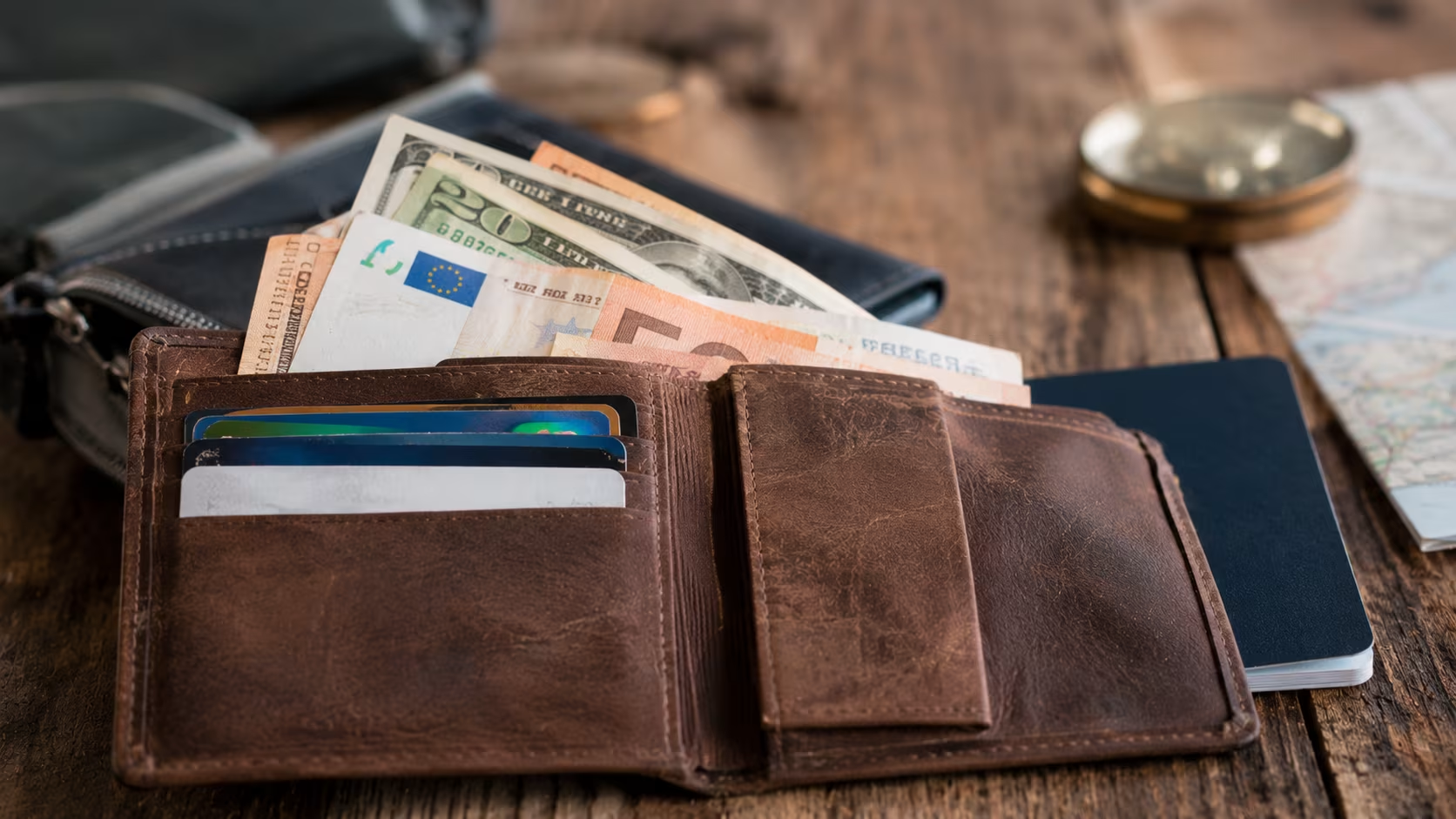
Money management during long-term travel is fundamentally different from money management at home. Currency conversion, foreign-transaction fees, ATM withdrawal limits, multi-currency accounting, tax considerations, and the absence of a fixed billing address all combine into a system that requires deliberate setup. The traveler who builds the right financial infrastructure spends 15-30% less than the unprepared traveler — sometimes more — and avoids the catastrophic scenarios (frozen cards, lost cash, currency-conversion losses) that wreck trips.
This is a 2026 field guide for travelers planning extended trips (3+ months) or repeated long trips. The advice maps to digital nomads, slow travelers, sabbatical-takers, and anyone whose financial life involves regular international transactions.
The Core Setup
Before departure, configure these:
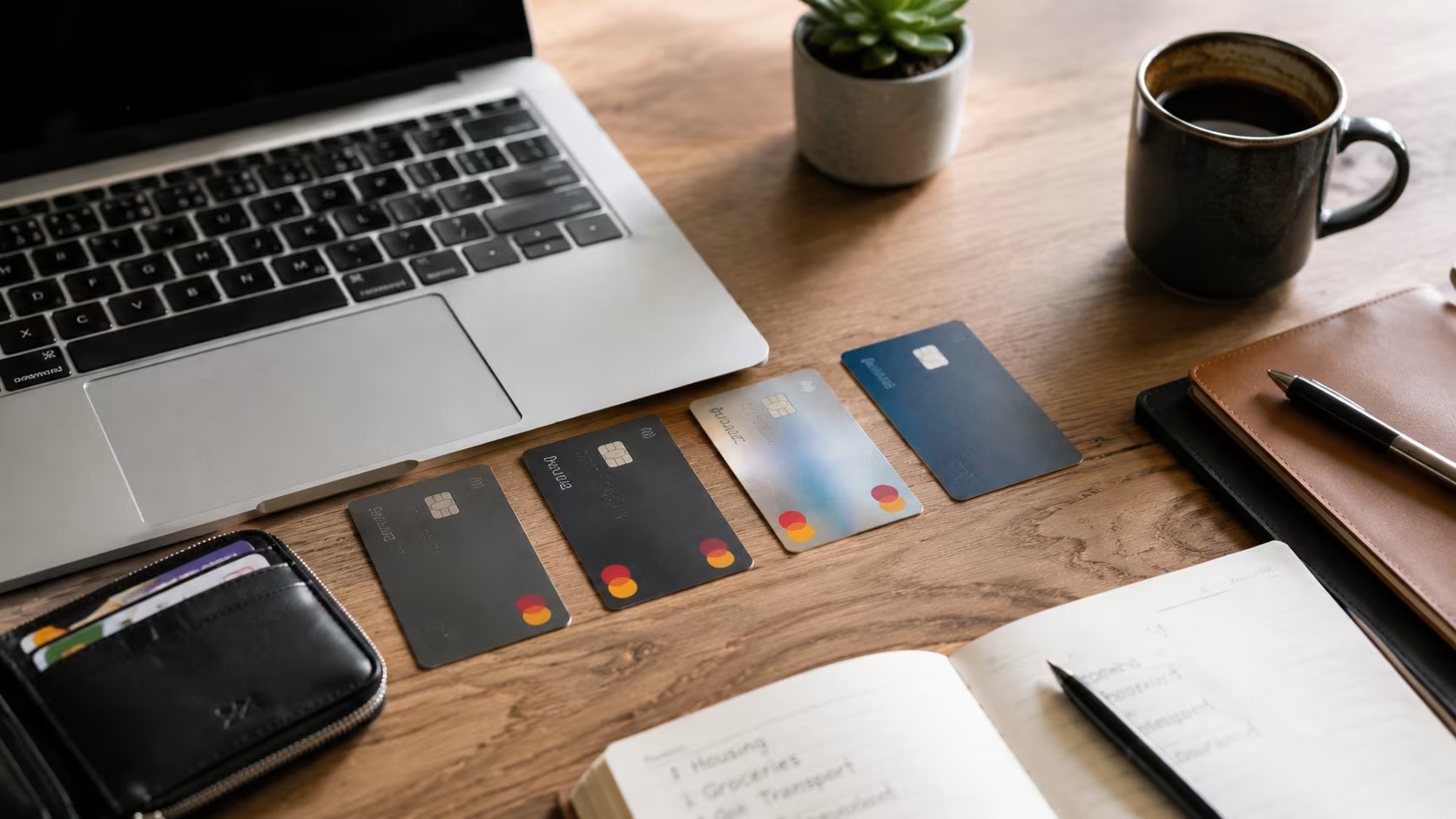
1. Two Premium Travel Credit Cards
Not one. Two, in different bags during travel.
Why two:
- If one is lost, stolen, or frozen for fraud detection, the other works.
- Different cards have different network acceptance globally (Mastercard, Visa, Amex).
- Different cards have different reward structures.
The right cards in 2026:
- Chase Sapphire Reserve (US). $550/year. 3x points on travel + dining; 50% bonus when redeemed for travel through Chase portal; $300 travel credit; lounge access.
- Chase Sapphire Preferred (US). $95/year. 3x points on travel + dining; 25% bonus through portal; lower fees.
- Amex Platinum (US/UK/EU). $695/year. 5x flights/hotels through Amex portal; multiple credits; lounge access.
- Capital One Venture X (US). $395/year. 2x miles on everything; 10x on hotels through portal; $300 travel credit.
- HSBC Premier World Elite (international). For HSBC customers; some markets.
- Wise Business Mastercard (multi-currency for some entrepreneurs).
2. Multi-Currency Account
Wise (formerly TransferWise). The travelers' multi-currency account.
- Holds 50+ currencies.
- Real exchange rate (mid-market) when converting between currencies.
- Multi-currency debit card for spending in any currency.
- Free ATM withdrawals up to monthly limits.
- Ability to receive payments in 10+ currencies with local account numbers.
For non-US travelers, Revolut is a similar alternative with stronger European presence.
3. Backup Bank Account
A secondary account with a different bank. If your primary account has issues (fraud freeze, technical problem), you have access to funds.
4. Multiple Cash Stashes
Not all in one place:
- $200-300 in primary wallet.
- $200-300 hidden in laptop bag or other location.
- $100-200 in hotel safe (when applicable).
If one location is lost or stolen, you're not stranded.
5. Emergency Funds
- Liquid funds equivalent to 4-6 weeks of travel expenses, accessible immediately.
- Travel insurance covering medical evacuation + lost-baggage scenarios.
- Backup credit card with high limit for genuine emergencies.
Currency Strategies
Use Local Currency, Always
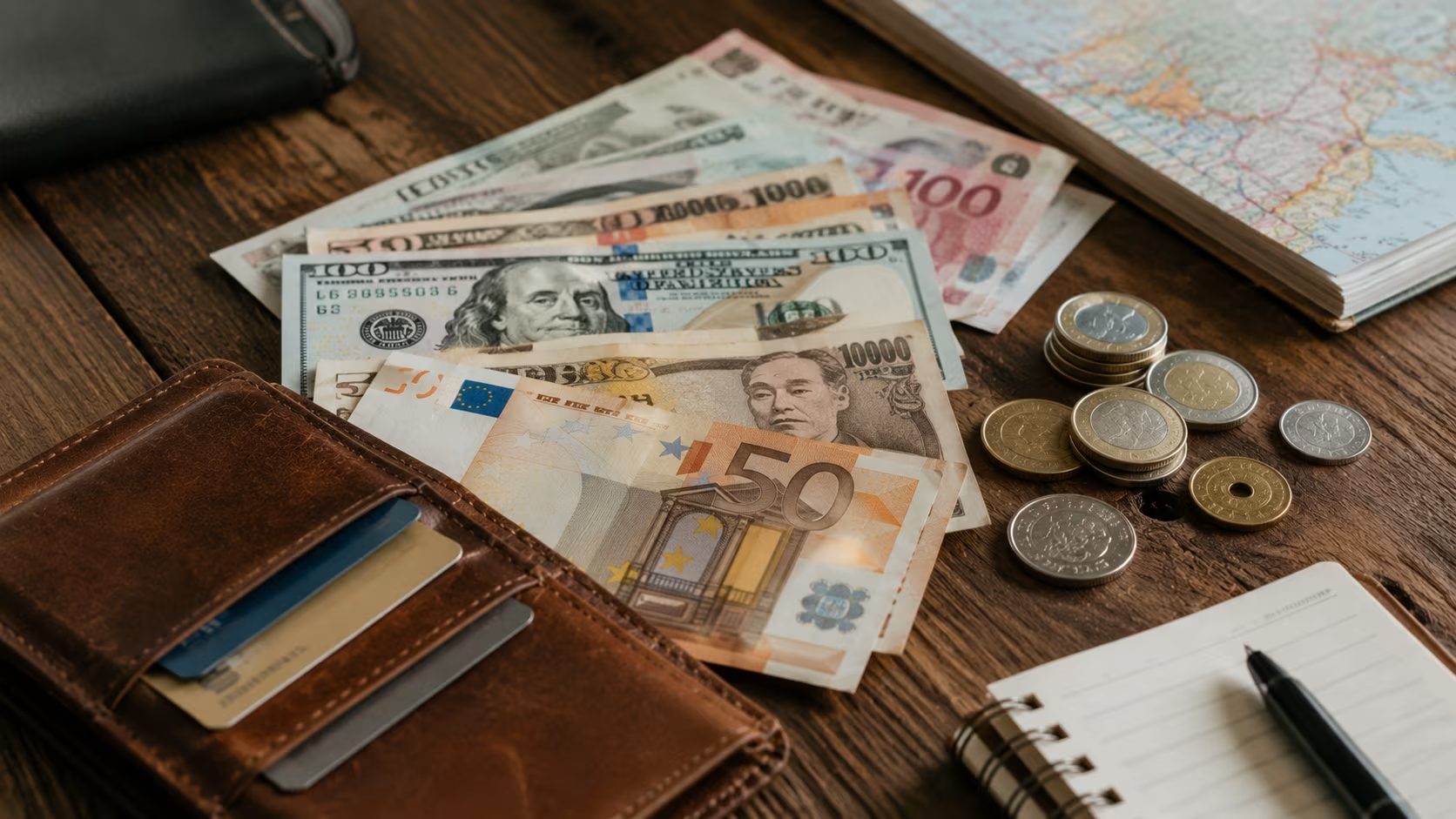
Decline "dynamic currency conversion" at every point. ATMs, restaurants, and shops sometimes ask: "Pay in [your home currency] or local?" Always pay in local. The DCC system marks up exchange rates by 5-15%.
The phrase to look for at the ATM: "Continue with conversion?" — say no.
Withdraw from Bank ATMs Only
Bank ATMs (HSBC, Citibank, BBVA, BNP Paribas, etc.) almost always offer the best rates with the lowest fees.
Avoid:
- Euronet (the airport + tourist-area ATM brand).
- ATMs at currency-exchange storefronts.
- ATMs branded with the words "Travelex" or similar.
These typically charge:
- Operator fee: $5-15.
- Bad exchange rate: 5-12% above mid-market.
- Sometimes a "verification" fee.
Withdraw Larger Amounts Less Often
Most cards charge per-transaction ATM fees ($3-5). Withdrawing $400 once is cheaper than withdrawing $100 four times. Match withdrawals to your local cash needs for 1-2 weeks.
Avoid Currency Exchange Storefronts
The storefront exchanges (especially in tourist zones) are dramatically worse than bank ATMs. Even "0% commission" stores have hidden margins of 8-15%.
Exceptions:
- At an airport before you arrive in countries where ATMs are unreliable. Carry a small starter amount in local currency.
- In countries with capital controls (Argentina pre-2024, some others) where the parallel market may exist legitimately.
Spending in Local Currency
Tap-to-Pay (Apple Pay / Google Pay)
Widely accepted in 2026. Most countries except some Asian markets (Japan + South Korea require their own systems for some transactions).
Apple Pay:
- Works at almost any contactless terminal.
- Same exchange rates as the underlying credit card.
- Lower fraud risk than physical card.
Link your premium travel cards to Apple Pay before departure.
Physical Cards
Carry both cards. Use whichever has the best rewards for the specific transaction (3x dining at Sapphire Reserve, 5x flights through Amex Platinum portal, etc.).
Cash for Specific Categories
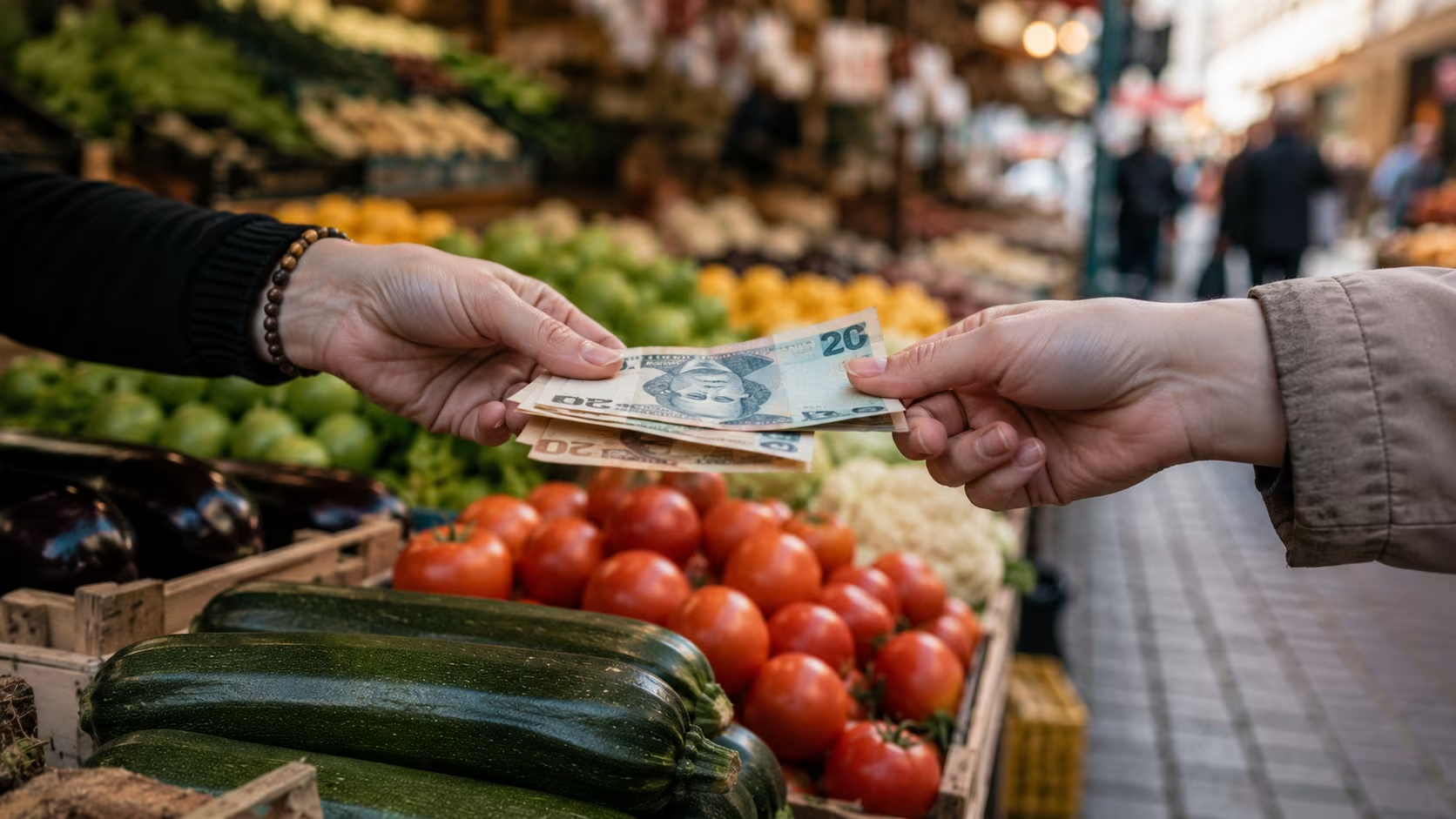
Most markets, smaller restaurants, taxis in some countries, tipping, smaller shops. Carry $30-100 in local currency for these scenarios.
Mobile Wallets in Specific Countries
- Japan + South Korea + China + India: local mobile wallets dominate (PayPay, KakaoPay, Alipay, UPI). Tourists usually use cards or international apps for these markets.
- Vietnam: Grab handles most cab fares; cash for street food.
- Some African markets: Mobile money (M-Pesa, etc.) dominates; tourists rarely use this.
Avoiding Card Issues
Notify Your Bank Before Travel
Most cards no longer require notification (they detect via app + spending patterns). Some still do. Check your bank's policy.
Use the Bank's App
Monitor transactions daily. Catch fraud immediately; freeze cards instantly via app if needed.
Have Backup Plans
- Phone number on file with bank for fraud-detection calls.
- Backup phone or way to receive 2FA codes (some banks send to home-country phone numbers; have a way to access these).
- 24/7 fraud line saved in phone.
Specific Cost-Saving Tactics
1. Pre-paid Local SIMs / eSIMs
Over-paying for cell service is among the most common traveler mistakes. Airalo, Holafly, Saily offer eSIMs for $5-25 for the trip.
2. Avoid Hotel Currency Exchange
Hotels charge dramatically above market. Use bank ATMs in advance.
3. Public Transit Over Taxis
Most European, Asian, Latin American capitals have excellent public transit. Tap-to-pay works on many. Saves significant money over taxis for typical tourism patterns.
4. Daily Spending Limits
Even slow travelers benefit from setting a daily target ($60, $100, $200 depending on style). Track via app (Trabee Pocket, TravelSpend, the bank's own).
5. Eat Where Locals Eat
Working-class restaurants in non-tourist neighborhoods are typically 30-60% cheaper than equivalent quality in tourist zones, especially in major cities.
6. Stay in Apartments for Long Stays
For 5+ night stays, apartments + cooking some meals saves $20-40/day vs. hotels + every meal restaurant.
7. Off-Season Travel
The single biggest financial lever. Same hotel; same city; 40-60% cheaper in shoulder season.
8. Loyalty Programs
If you'll repeat-stay at the same chain, loyalty programs deliver real value. Hilton Honors Gold (free breakfast = $30-50/night value). Hyatt Globalist (lounge access + free breakfast).
9. Travel Credit Card Sign-Up Bonuses
Major cards offer 60,000-100,000 points sign-up bonuses worth $500-1,500. Time these around major travel.
Multi-Currency Accounting
For stays of multiple months in different countries:
Track Spending by Country
- Trabee Pocket for travel-specific expense tracking.
- Splitwise for shared expenses with travel partners.
- TripLog for business travel.
- Spreadsheet (the simplest, most-flexible option) — Google Sheets with daily expense categories.
Convert Periodically
At month-end, convert all expenses to one home currency for proper tracking. Wise + Revolut both calculate this automatically.
Tax Documentation
Keep detailed records:
- Receipts photographed (cloud-stored).
- Bank statements downloaded monthly.
- Currency conversion rates used.
For US tax filers + others with worldwide-income obligations, this matters at year-end.
Banking Logistics
Mail / Statements
- All accounts on paperless statements.
- Mail forwarding service (Earth Class Mail, Anytime Mailbox) for physical mail you can't avoid.
- Family/friend as backup for unexpected packages.
Receiving Money
If working remote during travel:
- Wise multi-currency account for receiving in multiple currencies.
- Stripe / Direct Deposit for payments in your home currency.
- Crypto (USDT, USDC) for some destinations + freelance scenarios — useful but introduces complexity.
Bill Payments
- Auto-pay all home bills (rent, utilities, insurance, etc.).
- Calendar reminders for non-auto-pay bills.
- Email + app notifications for any bill issues.
Currency-Specific Considerations
Argentina (Pre + Post Milei Reforms)
The Argentine peso has been highly volatile since 2018. As of late 2024, the dual exchange rate ("blue dollar" + official rate) has mostly been unified after Milei reforms. Western Union remains a useful option for getting Argentine pesos at favorable rates.
For 2026: check current exchange-rate situation; Argentina's economic situation continues to evolve.
Cash-Heavy Economies
Some countries are still cash-dominant:
- Germany (cards work but cash is preferred at smaller places).
- Japan (cards work at hotels + tourist sites; cash dominant in smaller restaurants + traditional shops).
- Iran, Cuba, parts of Africa (US/EU sanctions or banking infrastructure).
Plan accordingly.
Cashless Economies
Some countries have moved to nearly-cashless:
- Sweden + most Scandinavia.
- South Korea + Hong Kong for retail.
- China for everything (but mostly via Alipay/WeChat Pay; tourists struggle without local bank accounts).
Weak Currencies
In countries with weak currencies (Turkey, Argentina pre-stabilization, parts of Africa): your dollar/euro buys dramatically more. Travelers' lifestyles can be high-quality on lower budgets. Currency volatility is real; what's $50 today can be $40 next month.
Stable Currencies
Most Western markets. Plan based on standard prices.
Tax Considerations
US Citizens
US citizens owe US tax on worldwide income regardless of residency. The Foreign Earned Income Exclusion (~$120,000+ in 2026) shelters earned income up to that limit if you meet specific tests (Physical Presence Test or Bona Fide Residence Test).
Self-employed US citizens still owe Social Security + Medicare on worldwide self-employment income.
State tax: depends on state. Some states are easy to escape (move legal residence to TX, FL, NV, WA, SD, TN, NH); some are difficult (CA, NY).
Other Citizens
Most other countries tax based on residency. Lose tax residency in your home country before leaving — easier in some countries (Australia, NZ) than others (UK, Germany).
Tax Residency in Travel Destinations
- 183-day rule is the most common threshold.
- Center of vital interests can trigger before 183 days.
- Each country has its own rules.
For 6+ month sabbaticals, consult an international tax advisor before departure. The consultation pays for itself many times over.
Insurance and Safety
Travel Insurance
Required for long-term travel.
- Comprehensive policies (Allianz, World Nomads, IMG Global) for trip-cancellation + medical.
- Long-term plans (SafetyWing Nomad Insurance, Cigna Global) for digital nomads.
- Annual multi-trip policies for repeated travelers.
Verify what's covered. Most policies have limits on:
- Pre-existing conditions.
- Adventure activities (diving, climbing, motorbike).
- Pregnancy.
- Cancellation reasons.
- Medical evacuation limits.
Lost Card Recovery
Have a recovery plan before traveling:
- 24/7 phone numbers for each card.
- Backup credit cards in different bag.
- Cash reserves accessible.
- Wise account as backup.
Wallet Loss
- Don't carry primary wallet at all times. Day-bag wallet with daily amount; primary wallet at hotel.
- Photocopy of passport + cards in cloud storage.
- Embassy contact in phone notes.
Specific Mistakes Travelers Make
1. Using Debit Cards as Primary Spending
Debit cards take money directly from your account. If skimmed or fraudulent, the money is gone first; you recover it later. Credit cards put the bank's money at risk first; you dispute and the bank typically refunds.
Rule: spend on credit cards; use debit for ATMs only.
2. Carrying One Card Only
If it's lost or frozen: stranded.
3. Not Notifying the Bank
Some banks freeze cards on first foreign transaction.
4. Using Hotel ATMs or Hotel Money Exchange
Poor rates.
5. Forgetting to Verify Currency Conversion
Dynamic currency conversion at the point of sale costs 5-15%.
6. Buying Unnecessary Items Because "They're Cheap Here"
Souvenirs accumulate; the cumulative cost is real.
7. Not Tracking Spending
Without tracking, the budget drift is invisible until the bank app shows the truth.
8. Ignoring Tax Implications
183 days in any country triggers tax considerations.
9. Cash-Only Travel
Weighted, lost more easily, exchange-rate inefficient. Cards + small cash is the right balance.
10. Not Using Apple Pay / Google Pay
Faster + lower fraud + tracked automatically.
A 6-Month Sabbatical Money Setup
A pre-departure checklist:
- 2 premium travel credit cards (different networks if possible).
- Wise account funded.
- Backup bank account.
- All home bills on auto-pay.
- Mail forwarding service set up.
- International health insurance purchased.
- Travel insurance for trip purchased.
- $500 cash in small bills (mix of $100s + smaller).
- Multi-currency account with starter funds.
- Bank apps + 24/7 numbers in phone.
- Cards linked to Apple Pay / Google Pay.
- Photo of passport + cards in cloud storage.
- Tax-residency strategy confirmed (consult advisor).
- Daily spending budget set + tracking app installed.
- Family/friend with backup contact info if needed.
- Emergency fund accessible.
Final Notes
Money management on long-term travel is a system. The travelers who get this right invest 5-10 hours pre-trip on setup and save thousands during the trip. The travelers who don't pay tourist-rate fees, lose money to bad exchange rates, and waste energy on financial logistics that should be invisible.
The single best advice open a Wise (or Revolut) account before traveling. The multi-currency setup + the real-exchange-rate ATM access + the multi-currency card pays for itself within the first week.
The second-best have two premium credit cards in different bags. The redundancy prevents the most-common travel-money emergencies.
The quietest piece of advice track your spending daily, even if just by photographing receipts. The 30 seconds per day prevents the budget surprise at month-end. The travelers who finish a 6-month sabbatical without financial anxiety are the ones who knew exactly where they stood every Friday morning. The travelers who finish with anxiety are the ones who avoided looking and discovered the truth too late.
Money infrastructure:
| Item | Figure |
|---|---|
| Payoff | right setup spends 15–30% less |
| Chase Sapphire Reserve | $550/yr; 3x travel+dining; $300 credit; lounges |
| Multi-currency account | receive in 10+ currencies with local account numbers |
| Cash stashes | $200–300 in wallet + $200–300 hidden elsewhere |


0 Comments
No comments yet — start the conversation.