

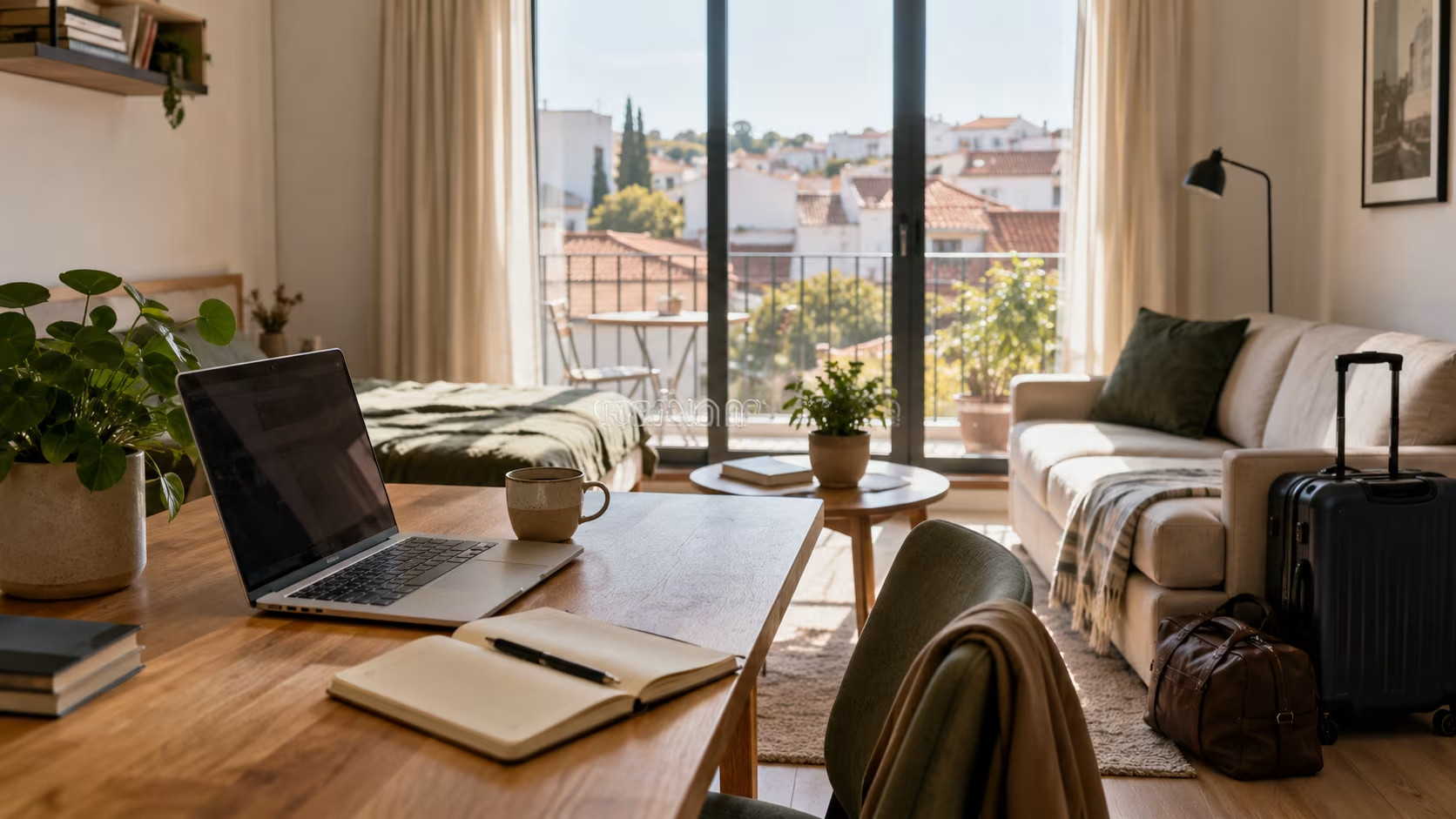
A 2-night Airbnb is a low-stakes decision. A 30-night Airbnb is the difference between a productive month and a frustrated one. The wrong apartment with bad Wi-Fi, a noisy street, an uncomfortable mattress, or a non-functioning kitchen turns into 30 days of compounding small frictions. The right one fades into the background of a great month.
This is a 2026 guide for remote workers, digital nomads, and slow travelers who book Airbnbs for 14+ nights at a time. The advice maps to apartments in Lisbon, Mexico City, Bali, Buenos Aires, and 100 other cities: the principles are the same. Hotel-vs-Airbnb decisions for short trips are different.
Why Long Stays are Different
A 2-night booking forgives almost any flaw. A 30-night booking compounds them.
What Matters More on Long Stays
- Internet reliability and speed.
- Mattress quality and bed comfort.
- Workspace setup (desk, chair, lighting).
- Kitchen functionality.
- Noise (street, building, neighbors).
- Climate control (AC in summer; heat in winter).
- Walking-distance amenities (grocery, café, gym, laundry).
What Matters Less
- Aesthetic photography (looks great in photos rarely correlates to comfort).
- Location centrality (10-minute walk from "the action" is often better than living in it).
- Style and design (you'll stop noticing within a week).
The Five Non-Negotiables for Long Stays
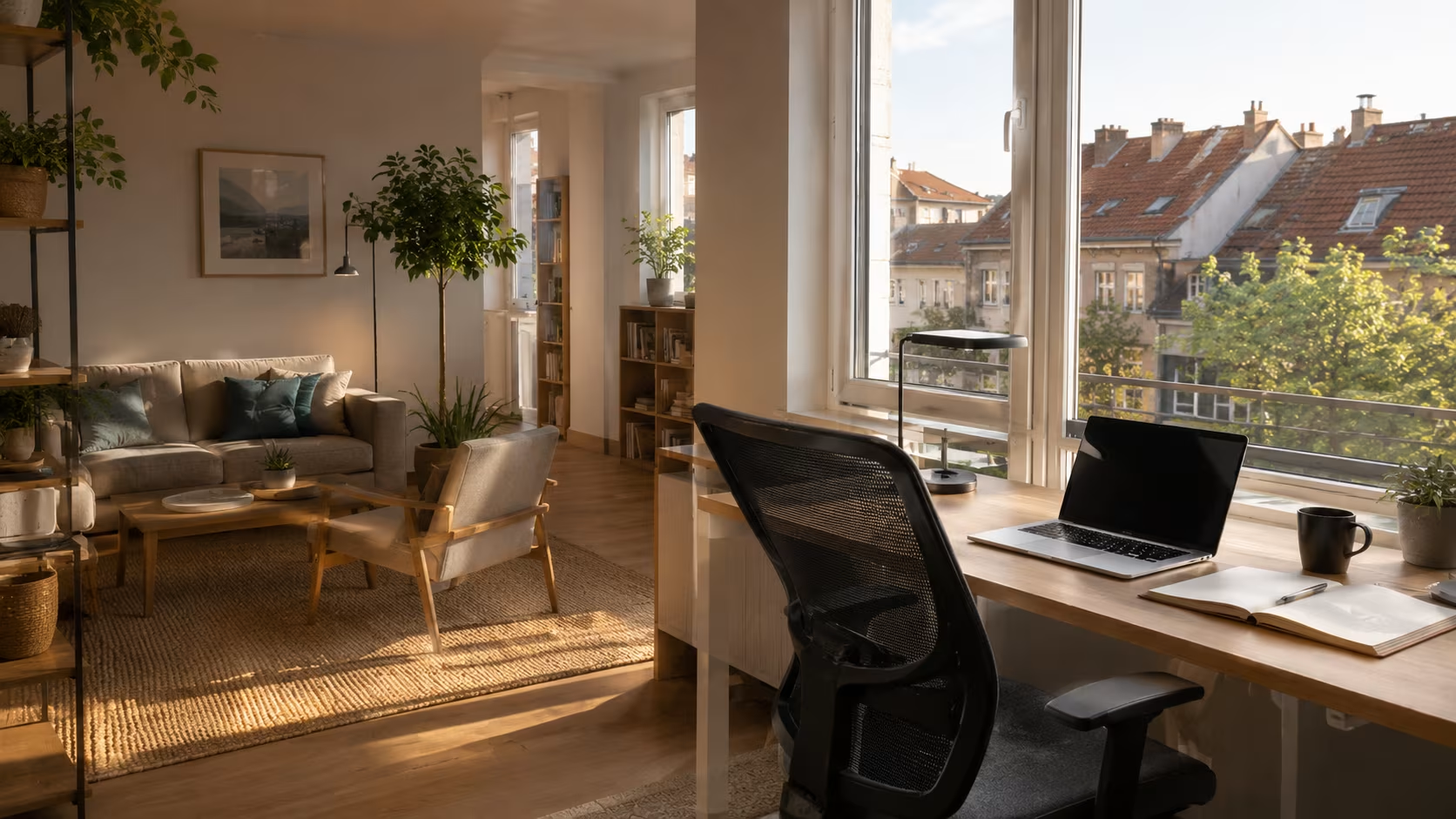
1. Internet (verified)
The most-failed Airbnb commitment. Listings claim "high-speed Wi-Fi" without specifying.
What to Verify Before Booking
- Actual speed, not adjective claims. Ask the host for a screenshot of a recent fast.com or speedtest.net result. "100+ Mbps down / 30+ up reliable" is the working remote-worker minimum.
- Type of internet: fiber preferred over cable preferred over DSL preferred over mobile-tethering.
- Backup: does the host have a mobile hotspot or backup connection?
- Outage frequency: "how often does Wi-Fi drop?" The host's answer is informative even if not a complete commitment.
Red Flags
- "Strong Wi-Fi" without numbers.
- Hosts who say speed depends on "how many people are using it."
- Listings in countries with known infrastructure issues (parts of Latin America, parts of Africa) without specific speed claims.
2. Workspace
A real desk, chair, and lighting. Not a kitchen-counter setup.
What to Verify in Photos
- An actual desk (not just a kitchen table that doubles).
- A chair with a backrest (not a stool or a dining chair).
- Lighting for video calls (window light or a real lamp; not just overhead fluorescents).
- Power outlets within reach of the desk.
- Privacy: closed door possible (for partners or roommates with different schedules).
If the listing has no clear photos of a workspace, it doesn't have one. Long-stay listings increasingly highlight workspace; lack of photos signals lack of feature.
3. Bed and Mattress
A bad mattress for 30 nights wrecks a month.
What to Verify
- Mattress age and type: ask the host directly. "How old is the mattress?" "Is it firm or soft?"
- Pillows: number, firmness.
- Sheets: material, quality.
- Duvet weight: can you remove or add layers for season?
- Reviews mentioning sleep: search reviews for "mattress," "slept well," "firm," "sagging," "old."
Red Flag
Old hosts who skip the question. "It's comfortable" without details means the host hasn't tested it recently.
4. Kitchen Functionality
For stays over 7 days, you'll cook at home at least sometimes. The kitchen needs to actually function.
What to Verify
- Stove + oven working (recent reviews; or ask).
- Refrigerator size and temperature.
- Pots and pans: basic cookware (frying pan, pot, knife, cutting board).
- Coffee maker: drip, French press, espresso machine. The lack of one is the most-common complaint.
- Dishwasher: increasingly standard in apartments; helpful for long stays.
- Clean bottle of olive oil + salt: small but indicative of a working kitchen.
5. Noise and Neighborhood
The single most-underrated long-stay factor.
Verify Before Booking
- Building location: corner buildings are loud. Top floor is quieter from below; loud from above.
- Window orientation: bedroom window facing a busy street vs. courtyard.
- Reviews mentioning noise: search reviews for "noisy," "loud," "quiet," "street," "neighbors."
- Time of year: some neighborhoods are quiet in winter, loud in summer (terrace season).
Red Flags
- Photos taken from the apartment window (informative; what does the host show vs. hide?).
- Listings near nightlife streets (Bairro Alto in Lisbon, Calle Arenal in Madrid, Khao San in Bangkok).
- Listings in tourist-heavy zones for long stays: the daily street performances and tour groups become wearing.
Beyond the Non-Negotiables
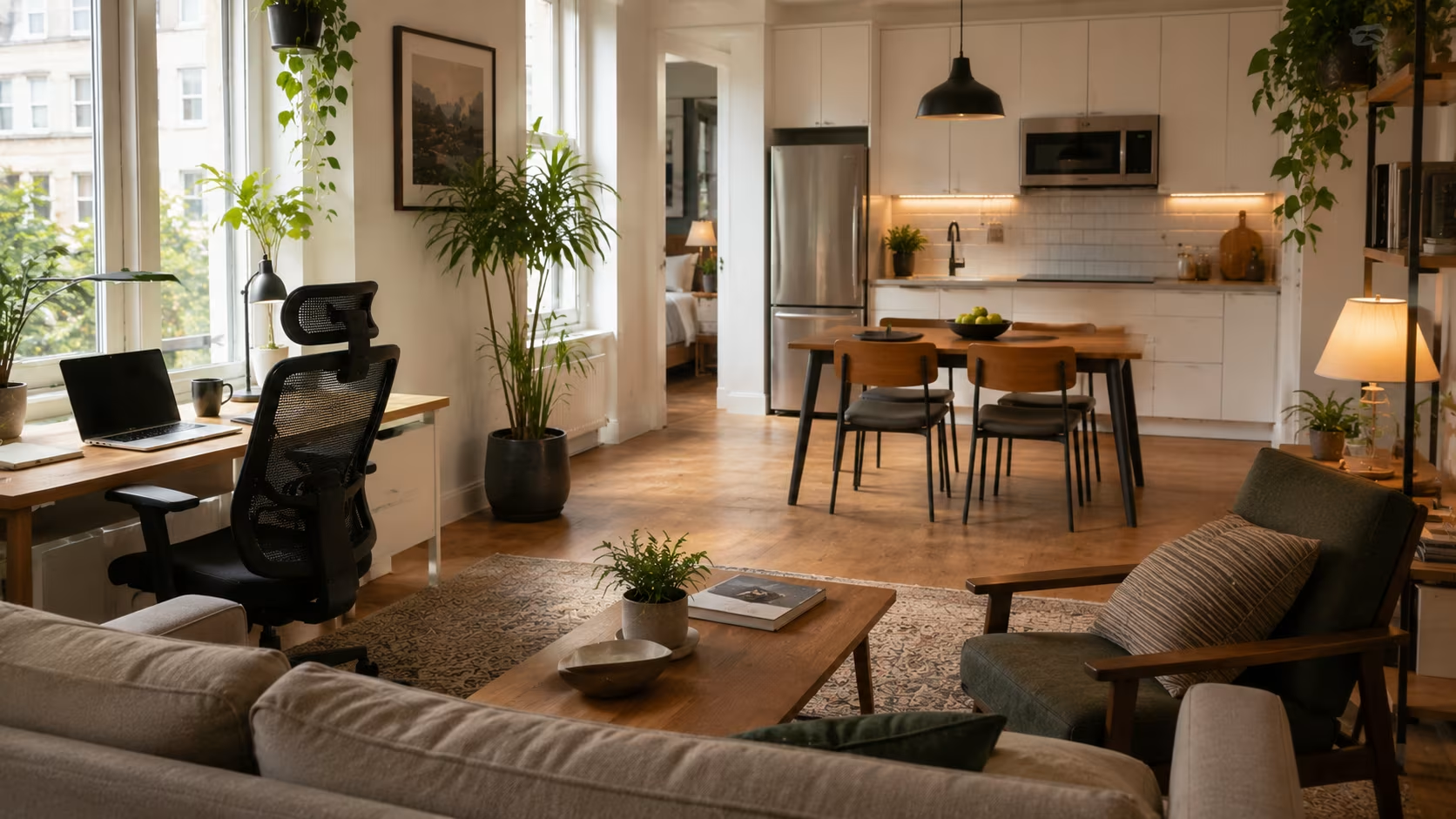
Climate Control
- Air conditioning is non-negotiable in any city above 28°C summer highs. Verify it's in the bedroom, not just the living area.
- Heating matters for winter stays. Some southern European apartments have minimal heating.
- Water heater capacity: some Airbnbs run out of hot water in 5–10 minute showers.
Laundry
Long stays mean laundry. Three options:
- Washing machine in apartment. Best.
- Building laundry room.
- Local laundromat or wash-and-fold service (research before booking).
A 1-month stay with no in-apartment laundry means 4+ trips to wash clothes. Adds up.
Location for Long Stays
For short trips, central is usually right. For long stays, the calculation shifts.
The Right long-stay Neighborhood has
- Grocery store within 5-min walk.
- 2–3 cafés you'd actually like.
- A walkable park or green space.
- Public transit access.
- Reasonable safety walking at night.
- Some character, not just modern condos.
- Less tourist density than the headline neighborhoods.
Examples: instead of central Lisbon (Bairro Alto), choose Estrela or Anjos. Instead of Polanco in Mexico City, choose Roma Norte or Coyoacán. Instead of Akihabara in Tokyo, choose Yanaka or Setagaya.
Building Access and Logistics
- Elevator vs. stairs. 4 flights of stairs is fine on day 1, exhausting on day 14 with groceries.
- Buzzer/intercom system: does it work?
- Mail/package delivery: increasingly important for long stays where Amazon/DHL deliveries happen.
- Bicycle storage if relevant.
How to Vet a Listing Remotely
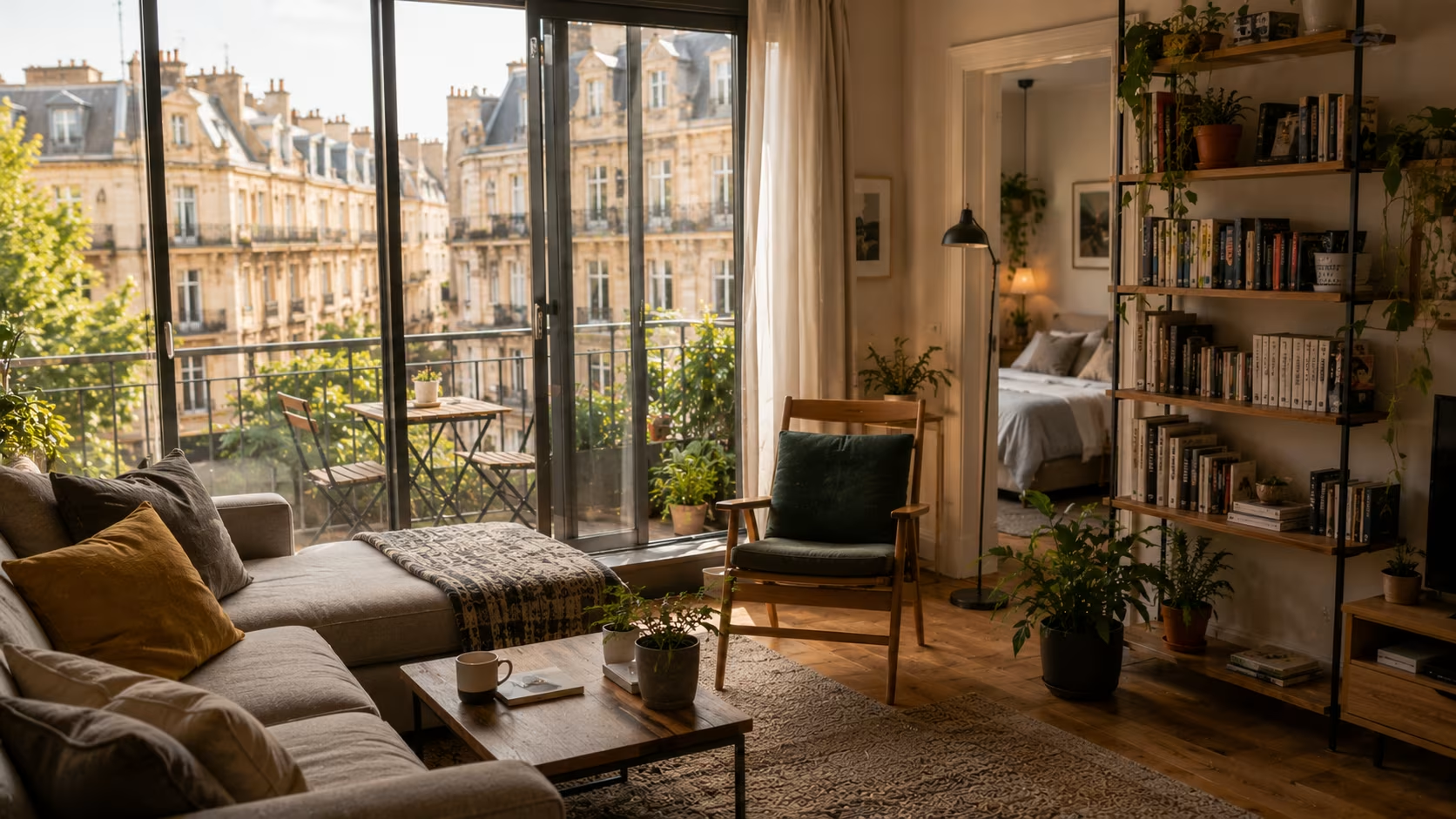
Read the Reviews Carefully
Not just the recent ones; not just the 5-stars. Look for:
- Long-stay reviews specifically. Sort by review date and find people who stayed 14+ days. Their feedback is more relevant than 2-night reviewers.
- Pattern of complaints. A single negative review may be a difficult guest. Three negative reviews about the same issue (mattress, Wi-Fi, noise) is a real problem.
- Recent reviews. A listing's quality changes over time; reviews from 2022 don't tell you about 2026 conditions.
- Host's response style. Defensive responses to legitimate complaints are red flags.
Search Specific Keywords in Reviews
Use Airbnb's search-within-reviews function to find:
- "Wi-Fi" / "internet" / "speed"
- "mattress" / "bed" / "slept"
- "noise" / "loud" / "street" / "neighbors"
- "hot water" / "shower"
- "AC" / "air conditioning"
- "work" / "workspace" / "desk"
- "clean" / "dirty" / "dust"
- "check-in" / "keys"
Cross-Reference with Google Maps Street View
The listing photos show what the host wants. Street View shows what the building actually looks like, what the surrounding street is like, and what the immediate neighborhood feels like.
Look at the Host
- Superhost badge: not a guarantee but indicative.
- Multiple listings: many properties = professional management. Sometimes good, sometimes impersonal.
- Single listing, lived-in apartment: often better personal attention, but less professional polish.
- Response time: how fast they reply to questions. Slow responses pre-booking suggest slow responses during stay.
Pre-Booking Questions to Ask the Host
Direct message before booking:
- "Could you share a recent screenshot of an internet speed test from the apartment?"
- "What's the noise like in the bedroom at night? Do windows face the street or interior?"
- "How old is the mattress? Is it firm or soft?"
- "Is there a real workspace with a chair I could use for video calls 6+ hours a day?"
- "How does heating/cooling work?"
- "Is there in-apartment laundry?"
- "What's nearby for grocery shopping?"
- "For a stay this long, would you offer a discount?" (See negotiation section.)
A host who answers these directly and specifically is a host who'll handle problems during the stay. A host who answers vaguely or doesn't reply is a red flag.
Negotiating Long-Stay Discounts
Most Airbnb listings have a published "weekly discount" (often 5–15%) and "monthly discount" (10–30%). Many hosts will negotiate beyond these.
When to Negotiate
- Stays of 21+ days.
- Off-peak season for the destination.
- Long-vacant listings (search for the listing on multiple weeks; if always available, it's not popular).
- Last-minute bookings (within 7 days of arrival).
How to Negotiate
Send a message via the listing's "Contact Host" button:
"Hi [host name], I'm interested in a [X-day] stay starting [date]. The listed rate is [Y]. For a stay this length, would you consider a rate of [Z]? I'm flexible on dates if that helps with your booking calendar."
Keep it polite, specific, and offer flexibility. Hosts often respond by countering 10–25% off the listed rate for confirmed long stays.
What Hosts Care About
Hosts maximize revenue + minimize hassle. A long-stay guest with strong reviews represents:
- Filled calendar without daily turnover work.
- Lower cleaning fees per night.
- Lower risk of damage (long-stay guests treat the apartment as home).
A reasonable discount for a verified guest is good business for the host. They know it.
Red Flags to Walk Away from
- No reviews or only 1–2 reviews for an established-looking listing.
- No real photos (only stock or staged shots).
- Host won't share an internet speed screenshot.
- Reviews mentioning bedbugs. Always.
- Reviews mentioning cleanliness issues that the host hasn't addressed (response style matters).
- Listings advertising "close to nightlife" for long stays, which translates to noise.
- Hosts asking for off-platform payment. Always book through Airbnb (or your platform); never wire money directly.
- Photos that look professionally staged vs. what the listing actually delivers: a 3-star property dressed for a 5-star photoshoot.
- Hosts who haven't logged in for weeks before your stay: indicates inattention.
Alternative Platforms
Airbnb
The largest platform. Best variety. Strong support process.
Booking.com
Now includes apartment listings alongside hotels. Better for travelers who want hotel-grade trust signals + apartment style.
VRBO / HomeAway
Family-friendly, larger apartments and houses. Less common in compact urban Airbnb cities.
Local Platforms
In cities with strong local rental markets, local platforms often have better deals:
- Idealista + Fotocasa in Spain/Portugal
- MercadoLibre in Latin America
- Yad2 in Israel
- AtSquare in Singapore
Requires direct Spanish/Portuguese/Hebrew/etc. communication with landlord.
Direct Booking
Some professional Airbnb hosts have parallel websites. Direct booking sometimes saves 5–15% (no platform fees) but loses platform protection (mediation, refunds, dispute resolution).
Selina, Outsite, Outpost (Nomad-Specific)
Built for digital nomads. Predictable Wi-Fi, included coworking, community. More expensive than Airbnb but lower friction.
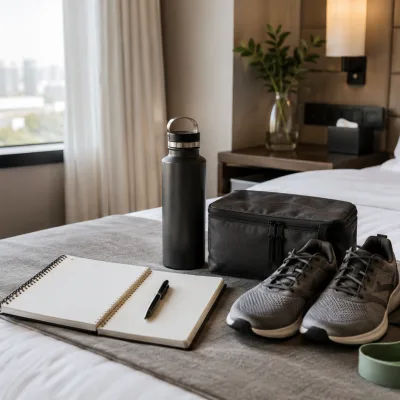
What to Pack for a Long Stay
Long stays let you bring more than carry-on travel.
- Ergonomic items: lumbar pillow, footrest, USB hub for monitor (if working), trackball or external mouse.
- Sleep items: silicone or foam earplugs, eye mask, melatonin. Air mattress topper if reviews suggest mattress issues.
- Water filter: Brita or similar pitcher if tap water is questionable.
- Cooking basics: good knife (in checked luggage), travel French press, your own coffee.
- Medications: more than enough for full stay plus 1 week.
- Workout gear: resistance bands (a 200g substitute for a gym subscription).
- Tea kettle / electric kettle: for water heating in apartments without one.
Legal and Practical Issues
Local Restrictions on Short-Term Rentals
Many cities have tightened rules since 2018:
- Lisbon: short-term rental licensing required; some buildings prohibit.
- Barcelona: new rentals halted; existing licenses transferable.
- Amsterdam: 30-day cap per year (residential); some districts banned.
- Berlin: restrictions on apartment rentals; cluster-housing zones.
- New York: strict rules on short-term rentals since 2023.
- San Francisco: primary-residence requirements.
Stays longer than 30 days often skirt these restrictions. Verify the specific listing has a valid license if local rules apply.
Tax Residency and Long Stays
A 30-day Airbnb doesn't trigger tax residency anywhere. A 6-month Airbnb in some countries (Portugal, Spain, Mexico) starts to.
- 183-day rule is the most common threshold.
- Center of vital interests can trigger residency before 183 days.
- EU Schengen 90/180-day rule caps non-EU travelers at 90 days in a 180-day window across the entire Schengen zone.
If staying longer than 90 days, research visa options (digital nomad visas, etc.).
Common Long-Stay Mistakes
- Choosing the cheapest option. A bad apartment for $1,500/month is more expensive than a good one for $2,200 when you factor in productivity loss, café costs (because you can't work at home), and emotional friction.
- Picking the most photogenic listing. Aesthetic ≠ comfort.
- Booking in the most central neighborhood. Tourist density is exhausting daily; locals live in adjacent calmer neighborhoods.
- Skipping the host conversation. A 10-minute pre-booking exchange tells you most of what you need to know.
- Ignoring reviews from people who stayed long. Their feedback is uniquely relevant.
- Not asking about the workspace. Surprise: the apartment has no chair.
- Trusting the listing's photos as accurate representation. Cross-check with Street View.
- Booking before testing internet. Always ask for current speed test.
- Forgetting laundry logistics. A 30-day stay without in-apartment laundry costs you 4–6 hours of laundromat time.
- Underestimating noise during high season. A quiet apartment in March may be loud in July.
- Not negotiating. Hosts often discount 10–25% if asked politely.
Final Notes
A well-chosen long-stay Airbnb is one of the more underrated travel skills. The right apartment fades into the background of a productive month; the wrong one becomes the dominant memory.
The single best advice spend 30 minutes vetting your top 3 candidates before committing to any. Read reviews, ask the host the 8 questions above, look at Google Street View. The investment of half an hour up front saves 30 days of compounding frictions.
The second-best book a smaller commitment first if you can. A 7-night booking lets you test before committing to 30. A 14-night booking lets you test before extending to 90. Build in optionality.
The quietest piece of advice if a place feels off in the first 48 hours, change. Airbnb has flexible cancellation for some listings; the platform's customer service handles relocations. Living somewhere that doesn't work isn't a sunk cost; it's an ongoing tax. Move.
Long-stay non-negotiables:
| Check | Figure |
|---|---|
| Wi-Fi floor | 100+ Mbps down / 30+ up, reliable |
| Stakes | 2 nights forgives flaws; 30 nights compounds them |
| Location rule | 10-minute walk from the action beats living in it |
| Mattress | a bad one wrecks the month — ask for photos/brand |


0 Comments
No comments yet — start the conversation.