

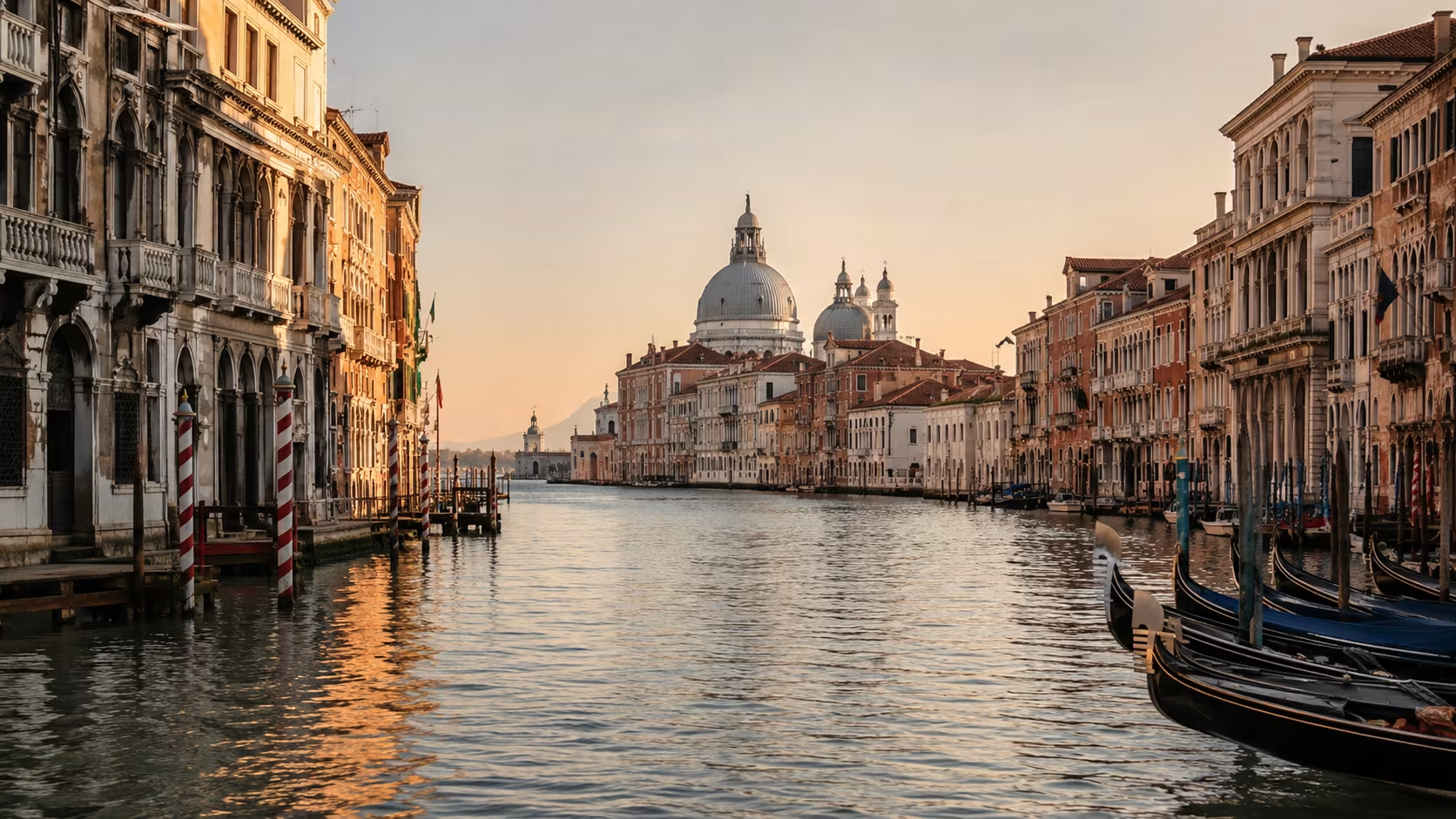
Venice is the most-visited and most-talked-about city in Italy after Rome. The 118-island lagoon city, connected by 400+ bridges, has been negotiating between residential life and tourism for over 60 years. The 2026 city is trying harder than ever — the new €5 day-tripper entrance fee (introduced 2024 for peak days) is the first such restriction at any major European city. Cruise ship traffic has been redirected. Some neighborhoods (Cannaregio, Castello, Giudecca) remain genuinely residential.
For first-time visitors, the challenge is the contradiction. Venice is uniquely beautiful — there's nothing else like it on earth. It's also genuinely overcrowded in central San Marco; the prices are inflated; the tourist version of Venice can feel like a theme park. The travelers who get this right stay 2+ nights (avoiding the day-tripper crowds at peak hours), eat at proper Venetian restaurants instead of tourist menus, and walk the calmer neighborhoods.
This is a 4-day guide for first-time visitors who want both the postcard Venice and the residential city beneath it.
Quick Facts
| Item | Detail |
|---|---|
| Country | Italy |
| Currency | Euro (€) |
| Language | Italian; English in tourist areas |
| Time zone | CET (UTC+1) / CEST (UTC+2) |
| Tourist tax | €1-5 per person/night by hotel category + €5 day-tripper fee on peak days (2024-onward) |
| Best time | April–May, October–November |
| Visa | Schengen, 90 days for most non-EU |
| Trip length | 2–4 days |
When to Go
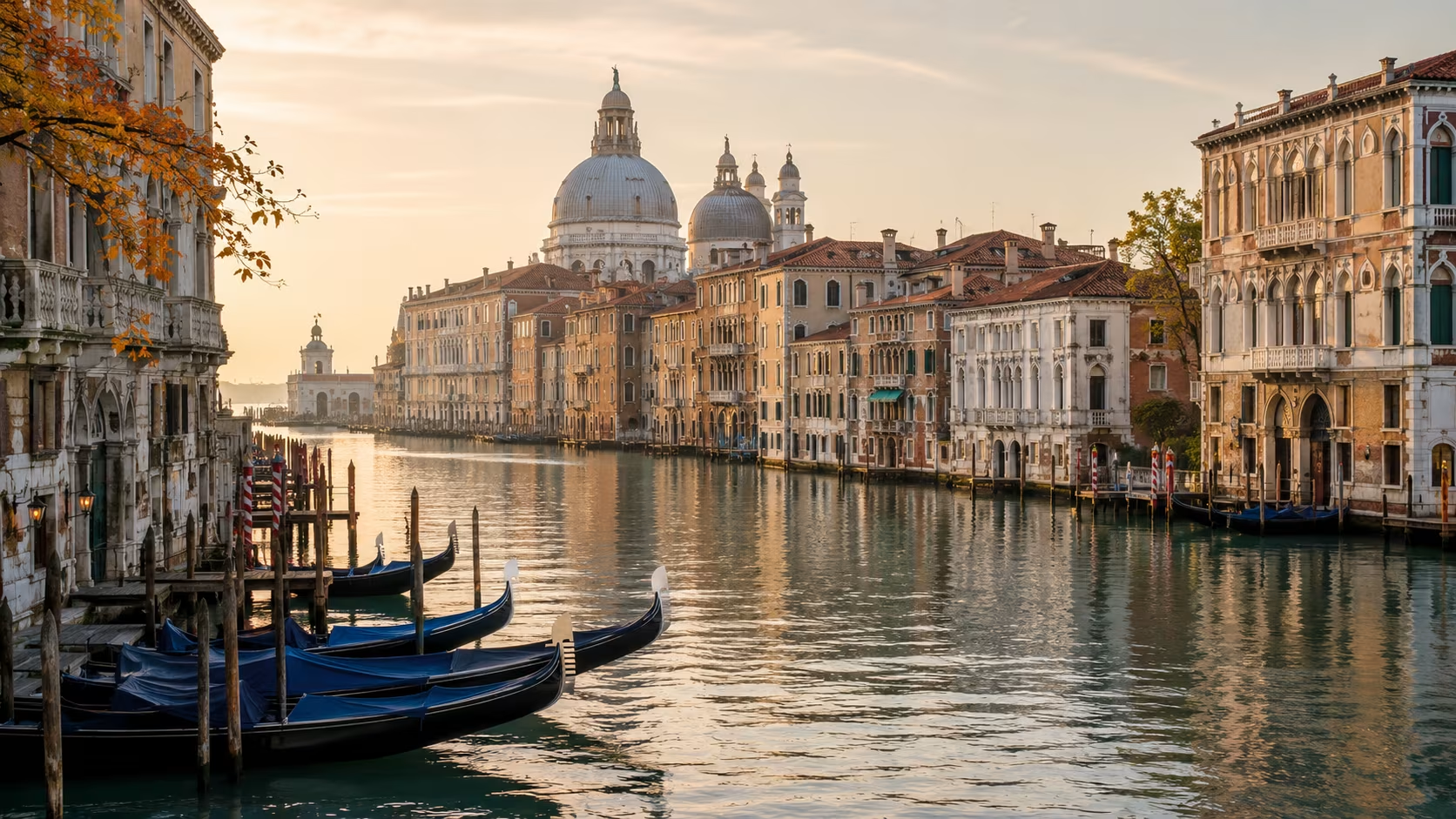
April to May. The sweet spot. Mild (15-22°C), gardens flowering, manageable tourist density.
October to early November. The other prime window. Schools resumed, tourist density drops, the high tides (acqua alta) are infrequent before mid-November.
Late November to early March. Cool to cold (3-12°C). Acqua alta (high tides) is most common — flooding of San Marco and other low-lying areas can disrupt walking routes. The city is genuinely quieter; hotels 30-40% cheaper. Carnival in February brings crowds back.
Mid-June to August. Heat (30-35°C) + tourist density at peak + occasional flood waters. The most-difficult version of Venice.
Avoid:
- Carnival weekends (10 days before Lent, varying dates). Hotel prices triple.
- Mid-July to mid-August for the heat-and-crowd combination.
- Easter weekend for some closures.
- Major holidays for crowds.
Day-Tripper Entrance Fee
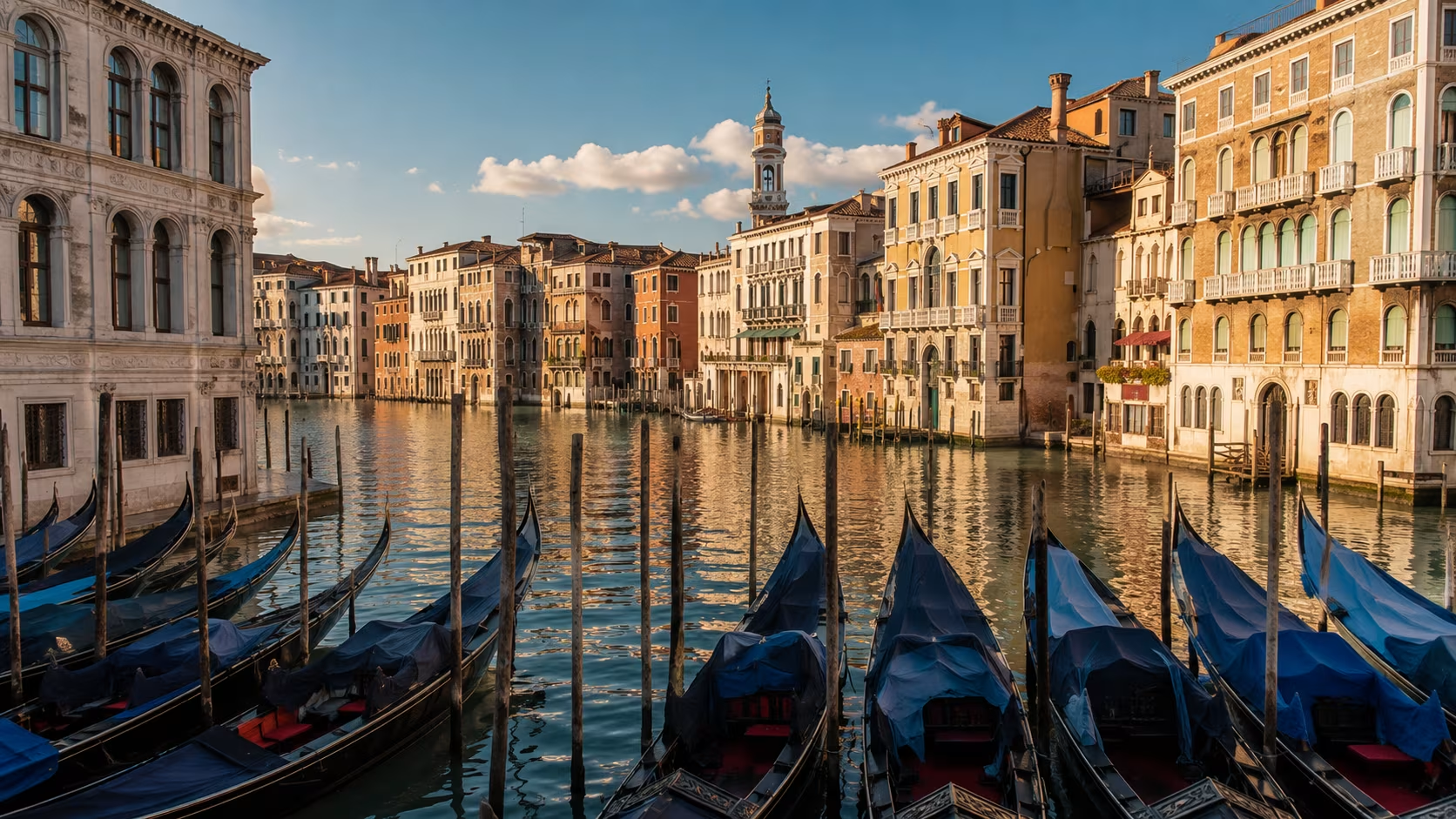
Since 2024, Venice has charged €5 to day-trippers entering the historic city on specific peak days (most spring + summer weekends + holidays). The fee applies to visitors not staying overnight in Venice. Hotel guests are exempt.
The fee is paid online via the Venice Access Fee website before arrival; QR code shown upon entry checks. Random spot-checks at major arrival points (train station, Piazzale Roma, water bus stops). Penalties for non-payment are €50-300.
Implications: if you stay overnight in Venice, no fee. If you day-trip, factor in €5 per person + the time to register.
Getting In
Marco Polo Airport (VCE). 12 km north of central Venice on the mainland.
From VCE:
- ATVO Express bus to Piazzale Roma: €10, 20 min.
- Alilaguna water bus (vaporetto): €15, 60-90 min direct to St. Mark's. Atmospheric arrival.
- Water taxi: €120-150 for private boat to your hotel's water entrance.
- Taxi to Piazzale Roma: €40 then walking.
Treviso Airport (TSF). 25 km north (Ryanair, low-cost carriers). Bus to Venice: €15, 90 min.
Venice is a major rail hub. Trains from Florence (2h 5m), Rome (3h 50m), Milan (2h 25m). The terminal is Santa Lucia station (in Venice itself).
Getting Around
No cars in central Venice. The city is walked or boated.
Walking
The primary mode. Distances are short — anywhere in central Venice is within 30 minutes' walk. The bridges (400+) and narrow alleys (calli) make walking unique. Allow extra time; you will get lost.
Vaporetto (Water Bus)
The public transit on water. Lines 1 + 2 run the Grand Canal; multiple other routes serve outer areas + lagoon islands.
Tickets:
- Single ride: €9.50 (75 minutes).
- 24-hour pass: €25.
- 48-hour pass: €35.
- 72-hour pass: €45.
- 7-day pass: €65.
For anything beyond 1-2 rides, the day pass pays back. Buy at vaporetto stops or via the AVM Venezia app.
Traghetto
The gondola-style ferries that cross the Grand Canal at specific points. €2 per crossing, locals stand. Cheap + atmospheric. Useful for skipping bridge walks.
Gondola Ride
The iconic tourist experience. €90 for 30 minutes (daytime), €110 for 30 minutes (after 19:00). Per gondola, not per person — share with up to 5 others. Negotiate slight discounts during slow afternoon hours; minimum prices fixed.
Water Taxis
Private water taxis. Expensive (€80-150 for short trips). Useful for hotel arrivals + late-night when vaporetti are slower.
Where to Stay
Venice is divided into 6 districts (sestieri). Each has its own character.
San Marco
The central district with St. Mark's Basilica + Doge's Palace. Tourist density at peak. Premium hotels (Hotel Danieli, Gritti Palace).
Castello
East of San Marco. Quieter, more residential, close to the Arsenale (the historic naval shipyard) + Biennale gardens. Good first-time pick if you want central but calmer.
Cannaregio
North side. Quieter; the Jewish Ghetto (the world's first Jewish ghetto, 1516); residential character. Walking distance to the train station + 20 minutes to San Marco.
Dorsoduro
South side, across the Grand Canal. Universities, museums (Accademia, Peggy Guggenheim), riverside walking. Less tourist-dense than San Marco. Best for art-focused travelers.
San Polo + Santa Croce
West of San Marco. Walking distance to Rialto + Frari Basilica. Mid-range hotels.
Giudecca
The long thin island south of central Venice. Very quiet, residential, vaporetto-only access. Premium hotels (Belmond Hotel Cipriani). Best for travelers who want true quiet.
Avoid as a base
- Lido di Venezia (the beach island east) — convenient for some but disconnected from central Venice for sightseeing.
- Mestre (the mainland city) — cheaper but you're commuting 20-30 min daily by bus or train.
Realistic 2026 nightly prices (4-star, weekday, shoulder):
| District | Mid-range | Higher-end |
|---|---|---|
| San Marco | €280-450 | €600-2,000 |
| Castello | €230-380 | €450-1,200 |
| Cannaregio | €200-320 | €380-800 |
| Dorsoduro | €220-360 | €450-900 |
| San Polo / Santa Croce | €200-340 | €380-800 |
| Giudecca | €260-420 | €600-2,500 |
What to Book in Advance
Doge's Palace (Palazzo Ducale)
€30. Walk-up usually fine; queue 30-60 min in summer. Allow 2.5 hours including the prison crossing the Bridge of Sighs.
St. Mark's Basilica
€3 nominal entry fee + €5 access to the Pala d'Oro + €7 access to the Treasury. Walk-up but timed-entry needed. Free entry at certain hours (mass times).
Doge's Palace Secret Itineraries Tour
The "Itinerari Segreti" tour to the parts of the palace not on the standard tour. €40. Books 2-3 weeks ahead.
Accademia Gallery
Venetian Renaissance painting. €15. Books online.
Peggy Guggenheim Collection
Modern art in Peggy Guggenheim's former palazzo. €18. Walk-up usually fine.
Premium Restaurants
- Quadri (1-Michelin-star, on Piazza San Marco).
- Glam (1-star).
- Met (modern Venetian).
Vaporetto Tour to Murano + Burano
The glass-blowing island + the colorful fishing village. Half-day or full-day excursion via Line 12 vaporetto. Allow 5-6 hours.
Carnival Mask Workshop
For travelers in Venice during Carnival (or anytime, really). Books online.
Day 1 — San Marco Cluster
07:30. Coffee in San Marco or near. Marchini Time for traditional. Caffè Florian (since 1720, on the square — touristy + the historic Casanova-haunting venue).
08:00. Piazza San Marco before the crowds. The 09:00 opening of the Basilica + 09:30 opening of the Doge's Palace are the targets; arriving 30 minutes early at the square gives you photos + watching the city wake up.
09:00. St. Mark's Basilica. The Byzantine-Italian cathedral with Pala d'Oro + the four bronze horses (originals inside, replicas outside). Allow 90 minutes including upper galleries.
11:00. Doge's Palace. The 14th-century gothic palace. The Sala del Maggior Consiglio has the world's largest oil painting on canvas (Tintoretto's Paradiso). Cross the Bridge of Sighs to the prison. Allow 2.5 hours.
13:30. Lunch in San Marco area or nearby. All'Anfora for traditional Venetian. Vino Vero for upscale wine bar with food. Trattoria da Fiore (since 1827, the institution).
15:30. Walk through San Marco's narrow streets. Get deliberately lost; the back alleys reveal the city.
16:30. Climb the Campanile di San Marco (€10). The 99m bell tower with elevator access; panoramic view over the lagoon + city.
17:30. Aperitivo at Caffè Florian or Caffè Quadri (the two historical cafés on Piazza San Marco; touristy + expensive but the orchestral live music + the architecture are real). Cocktails at €25-35.
19:30. Dinner. Quadri (Michelin one-star, on the square). Met for modern Venetian. Antiche Carampane for traditional seafood (book ahead).
Day 2 — Cannaregio + Jewish Ghetto
09:00. Coffee in Cannaregio. Torrefazione Cannaregio (the local roaster).
10:00. Jewish Ghetto. The world's first Jewish ghetto, established 1516. Free to walk through. Five synagogues survive; tours of three are available daily (€12). The Jewish Museum: €12 standalone. Allow 2 hours.
12:30. Lunch in Cannaregio. Vino Vero for cicchetti + wine. Osteria Bea Vita for traditional. Hostaria al Ghetto Vecchio for kosher Italian-Jewish.
14:00. Walk Strada Nova (the main Cannaregio thoroughfare) toward Rialto. The walk passes the city's quieter character.
15:30. Rialto Bridge + Rialto Market (open Tuesday-Saturday mornings; afternoons it's mostly closed but worth the architectural walk).
16:30. Frari Basilica. Free. The 14th-century Gothic church with Titian's Assumption and his tomb. Allow 60 minutes.
17:30. Walk through San Polo's small streets back toward your hotel.
19:00. Aperitivo. Bacaro Risorto for cicchetti. Vinarium for natural wine. Cantina Aziende Agricole for casual Venetian wine + small plates.
20:30. Dinner. Antiche Carampane for traditional seafood. CoVino for upscale modern Venetian. Trattoria al Gatto Nero for traditional (Burano-style).
Day 3 — Dorsoduro + Lagoon Islands
09:30. Coffee in Dorsoduro. Caffè Quadri (the smaller Quadri at the Accademia bridge).
10:30. Accademia Gallery. €15. Venetian Renaissance painting (Bellini, Tintoretto, Veronese, Titian). Allow 2.5 hours.
13:00. Lunch in Dorsoduro. Osteria Al Bacareto for traditional. All'Anfora mentioned. Acqua Stanca in nearby Murano for casual.
14:30. Peggy Guggenheim Collection. €18. Modern art in the former Peggy Guggenheim home (Palazzo Venier dei Leoni, never finished). Allow 90 minutes.
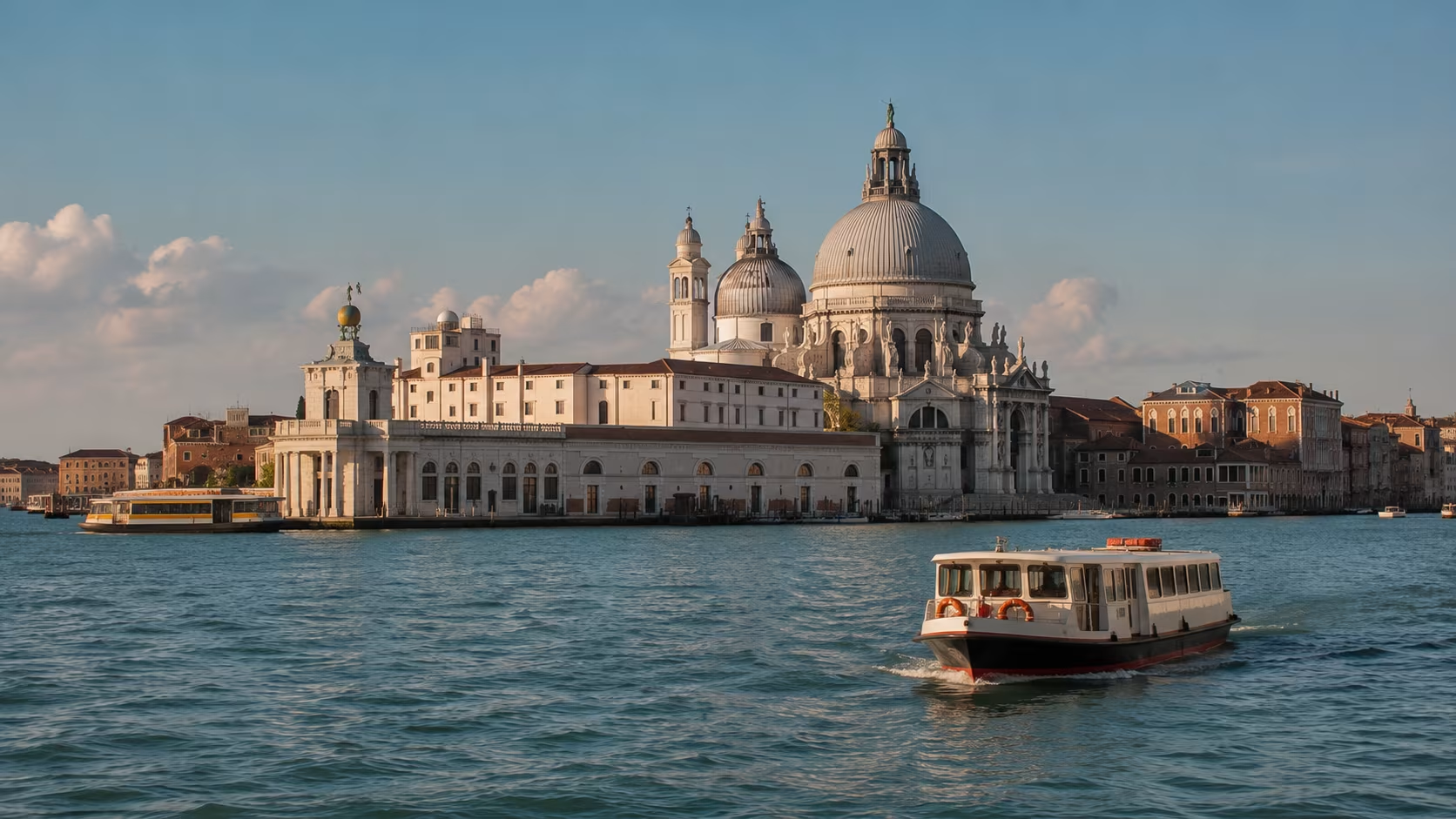
16:30. Punta della Dogana (modern art in the historic Customs Building) or Santa Maria della Salute church (the iconic baroque dome at the entrance to the Grand Canal).
17:30. Vaporetto to Murano (Line 12 from Fondamente Nove). Allow 90 minutes on Murano:
- Glass-blowing demonstration at one of the working glasshouses.
- Murano Glass Museum (€10).
- Walking the smaller canals.
19:30. Vaporetto to Burano. The colorful fishing village with rainbow houses + lacemaking tradition. Allow 60 minutes for slow walking + sunset.
21:00. Vaporetto back to central Venice for dinner.
Day 4 — Choose: Castello + Arsenale, Lido Beach, or Slow Day
Path A — Castello + Arsenale
Morning at the Arsenale (the historic Venetian shipyard, currently used as Biennale exhibition space; access depends on Biennale schedule). Walking the surrounding Castello district reveals working-class Venice.
Lunch at Trattoria Corte Sconta (Castello, traditional Venetian seafood, books ahead).
Afternoon at San Pietro di Castello + the Giardini della Biennale (during Biennale years).
Path B — Lido di Venezia (Beach Island)
Vaporetto from central Venice (15-20 min). The beach island east of central Venice. Beach + walking + the famous Hotel Excelsior (since 1908). The Lido Film Festival in late August/early September draws crowds.
Path C — Slow Venice Day
Morning at Scuola Grande di San Rocco (the famous Tintoretto-frescoed school, €15).
Lunch in San Polo.
Afternoon walking calli (alleyways) you haven't explored. Get lost. Stop for gelato at SuSo or Gelato di Natura.
Sunset at Punta della Dogana for the view back at San Marco.
Final dinner at one of the restaurants you haven't tried.
Path D — Day Trip to Padua or Verona
Padua (Padova): 30 min by train (€4-12). The university town; St. Anthony's Basilica; Giotto's frescoes at the Scrovegni Chapel (book ahead).
Verona: 90 min by train (€11-22). Roman amphitheater + Romeo and Juliet's balcony + the Castelvecchio Museum.
What to Eat
Venetian cuisine emphasizes seafood + lagoon ingredients + Eastern Mediterranean spices (the historic trade-port heritage).
Headline Dishes
| Dish | What it is |
|---|---|
| Cicchetti | Venetian "tapas" — small plates eaten standing at bacari (small bars). The defining lunch + aperitivo experience. |
| Sarde in saor | Sardines marinated in onions, vinegar, raisins, pine nuts. The historic preservation dish. |
| Bigoli in salsa | Whole-wheat thick pasta with anchovy + onion sauce. Traditional Venetian. |
| Risotto al nero di seppia | Cuttlefish-ink risotto. Black; seafood-flavored; classic. |
| Risi e bisi | Rice + peas in light broth. Spring classic. |
| Fegato alla veneziana | Calves' liver with onions. The Venetian classic. |
| Baccalà mantecato | Whipped salt cod (different from Spanish/Portuguese versions). Standard cicchetti. |
| Polenta | Cornmeal porridge. Side or base. |
| Mozarella in carrozza | Fried mozzarella sandwich. Cicchetti standard. |
| Spritz | Aperol or Select + Prosecco + soda + olive. Invented in Venice. The signature aperitivo drink. |
| Bellini | White peach + Prosecco. Invented at Harry's Bar (1948). |
| Cicchetti & Ombre | An ombra is a small glass of wine. The cicchetti + ombra combination is the Venetian aperitivo institution. |
Where to Eat
Cicchetti / Bacari:
- All'Arco (Rialto, the institution).
- Cantina Do Mori (since 1462, the oldest bacaro in Venice).
- Vino Vero (Cannaregio, modern + natural wine).
- Bacaro Risorto (Castello).
- Cantina Aziende Agricole (Cannaregio).
Traditional Venetian:
- Antiche Carampane (San Polo, traditional seafood, books months ahead).
- Trattoria Corte Sconta (Castello, traditional seafood).
- Trattoria da Fiore (1827, central — different from the famous Da Fiore restaurant which is also worth visiting).
- All'Anfora (San Polo, casual traditional).
- Osteria Al Bacareto (Dorsoduro).
Modern Venetian:
- Quadri (1-Michelin-star, San Marco).
- Glam (1-star).
- Met (Hotel Metropole).
- CoVino (modern, San Marco).
Premium Fine Dining:
- Quadri (mentioned).
- Don Alfonso 1890 at Sant'Andrea (1-star).
- Glam (mentioned).
Burano-Style Seafood:
- Trattoria al Gatto Nero (Burano).
- Riva Rosa (Burano).
Costs and Budget
2026 daily budgets per person, excluding flights and hotel:
| Style | Per day | Notes |
|---|---|---|
| Backpacker | €80–120 | Hostel, cicchetti + casual lunches, walking |
| Mid-range | €140–230 | Mix of casual and proper restaurants, museums, vaporetto pass |
| Comfortable | €280–420 | Better restaurants, gondola ride, Murano + Burano excursion |
| Higher-end | €600+ | Tasting menus, premium hotels, water taxi |
Venice is the most-expensive Italian city per capita. Tourist prices in central San Marco are 30-50% higher than equivalent quality elsewhere. Walk one block off; quality + price both improve.
Practical Info
- Cards. Universal. Cash for some smaller bacari.
- Tipping. Service usually included. 5-10% for very good service. Tell the server when paying.
- Coperto. Cover charge €1-4 per person at most restaurants — legitimate. Higher charges (€10+) at tourist places are gouging.
- English. Universal in tourism. Less in residential.
- Sundays. Most museums open. Many shops closed except in tourist zones.
- Pickpocketing. Real around major sights + on busy vaporetti. Standard precautions.
- Acqua alta. Annual flooding of low areas (typically October-March). Wear waterproof boots if visiting in flood season; the city installs raised wooden walkways at major sites.
- Heat. Summer brutal; many parts of the city without shade. Pack water + cooling tools.
- Bridges. 400+ bridges; serious walking with stairs. Comfortable shoes essential. Mobility-impaired travelers have real challenges; some accessible paths exist but the city is fundamentally difficult.
- Photography. Don't shoot maids on Burano without permission; don't shoot inside St. Mark's basilica (forbidden in some areas).
- Crime. Low. Standard urban precautions.
- The dress code at religious sites. Shoulders + knees covered.
Common First-Timer Mistakes
- Day-tripping from Mestre. Venice deserves overnight stays.
- Eating at restaurants with multilingual photographic menus. They're tourist factories. Walk one block off.
- Booking only Hotel San Marco. Cannaregio + Castello are quieter + more interesting.
- Doing only the headline sites in 1 day. It's a checklist trip; misses the city's actual character.
- Skipping cicchetti + aperitivo culture. The bacari are how locals socialize.
- Visiting in mid-July or August. Heat + crowds peak.
- Riding the gondola during peak hours. €90-110 for 30 minutes when the canals are at maximum boat traffic.
- Not learning to navigate by yellow signs. The signs point to the major locations (San Marco, Rialto, Accademia, Stazione). Learning to recognize them prevents 80% of the "lost in Venice" friction.
- Photographing the Bridge of Sighs from the wrong side. The famous photo is from the Ponte della Paglia, with the Doge's Palace on the right.
- Thinking 1 day is enough. It isn't.
- Ignoring the day-tripper fee. €5 per person is small but registration is required on peak days.
- Drinking only Aperol Spritz. The Select Spritz is more bitter + arguably more authentic.
- Rushing through the Doge's Palace. It's larger than visitors expect.
Final Notes
Four days in Venice is the right length for a focused first visit. One San Marco day, one Cannaregio + Jewish Ghetto day, one Dorsoduro + lagoon islands day, one slower or excursion day.
The quietest piece of advice: walk Venice at 06:30 in the morning. The city before the cruise-ship crowds + day-trippers arrive is the city locals see daily. The light on the canals, the empty bridges, the working bacari opening for the morning espresso, the silence of the small calli. The Venice that stays with you isn't the photograph of San Marco at 11:00 with 5,000 other tourists; it's the morning when you stood on a bridge in Cannaregio and there was nobody else there, just the sound of a far-away church bell and the lap of the canal water.
0 Comments
No comments yet — start the conversation.