
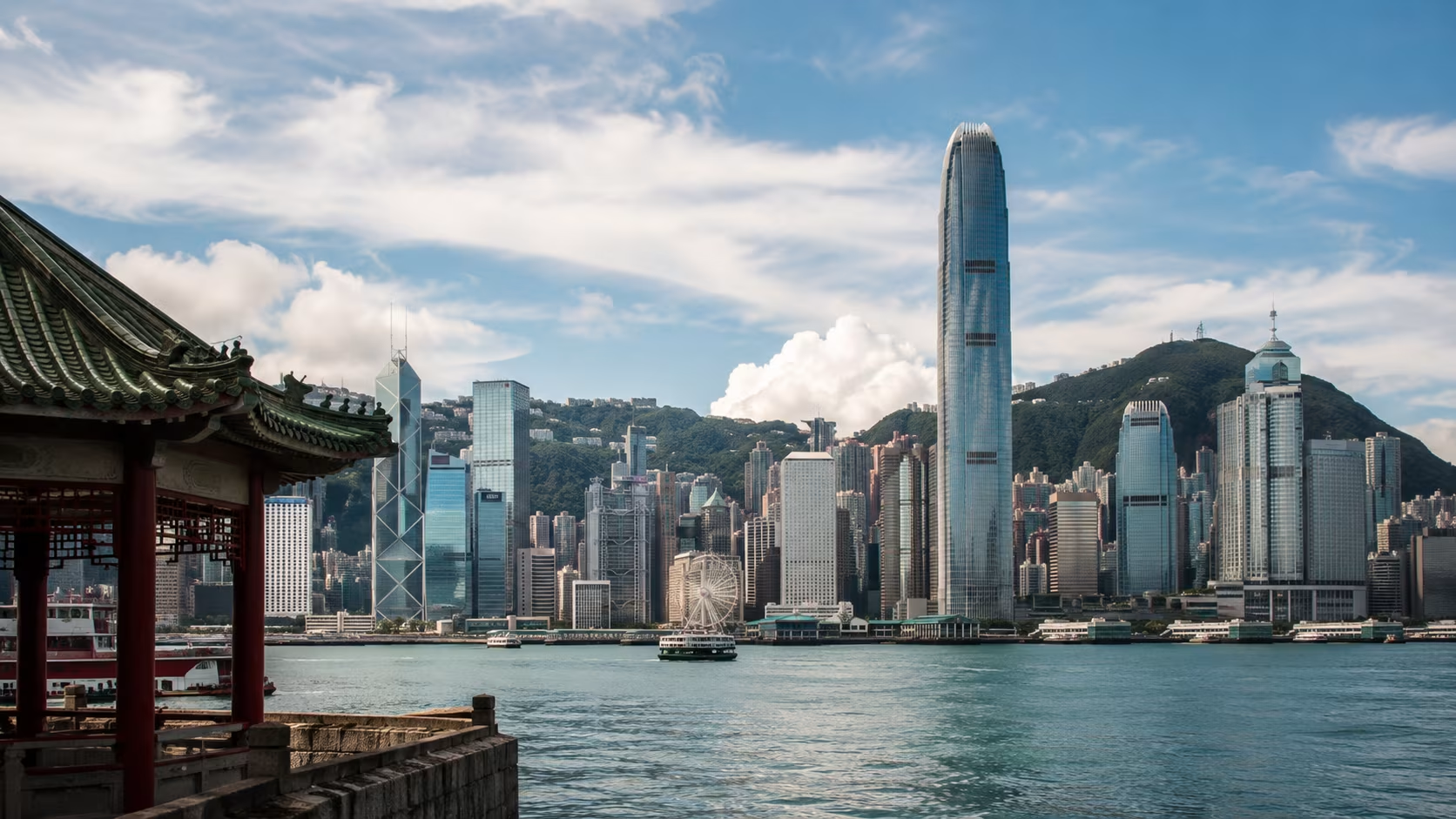
Hong Kong in 2026 is a different city than it was in 2018. The 2019 protests and 2020 National Security Law changed the political environment; many businesses and residents emigrated to the UK, Canada, and Singapore. Tourism dropped sharply during 2020–2022 and has rebuilt slowly. The city's relationship with mainland China is closer; English-language signage and service are slightly less universal than they were a decade ago; some businesses have closed and been replaced by mainland chains.
None of this has erased what makes Hong Kong distinctive. The skyline is still one of the world's three most-photographed. The food scene remains exceptional, particularly in dim sum and Cantonese seafood. The harbor and the trams, the night markets and the temples: the city's tangible texture is intact. The version travelers see in 2026 is more polished and slightly less raw than the 2010s version, with a quieter political atmosphere.
This is a 4-day guide for first-timers who want to understand the city as it is now.
Quick Facts
| Item | Detail |
|---|---|
| Country/Region | Hong Kong Special Administrative Region of China |
| Currency | Hong Kong dollar (HKD), pegged at ~7.8 HKD/USD |
| Languages | Cantonese, Mandarin, English |
| Time zone | HKT (UTC+8, no DST) |
| Tourist tax | 0% (no hotel tax in Hong Kong) |
| Best time | October–December, March–April |
| Visa | Visa-free 14–180 days for most countries |
| Trip length | 3–4 days |
When to Go
October to Early December
The sweet spot. Cooler (18–25°C), low humidity, dry. November is the city's most pleasant month.
Mid-March to April
The other prime window. Warm (18–25°C), occasional rain, less humid than summer.
May to September
Hot (26–33°C) and very humid. Typhoon season runs July to September; severe typhoons can shut down the city for 24–36 hours. Rain is common; afternoon thunderstorms typical.
January to February
Cool, dry. Chinese New Year (varies by year, late January or early February) is the biggest local holiday: most shops and restaurants close for several days; transit packed.
Avoid:
- Chinese New Year week if you don't want closures.
- Major typhoon signal-8+ days. Outdoor activities cancel; transit suspends.
- Seven Sevens (mid-summer) if you're heat-sensitive.
Getting in
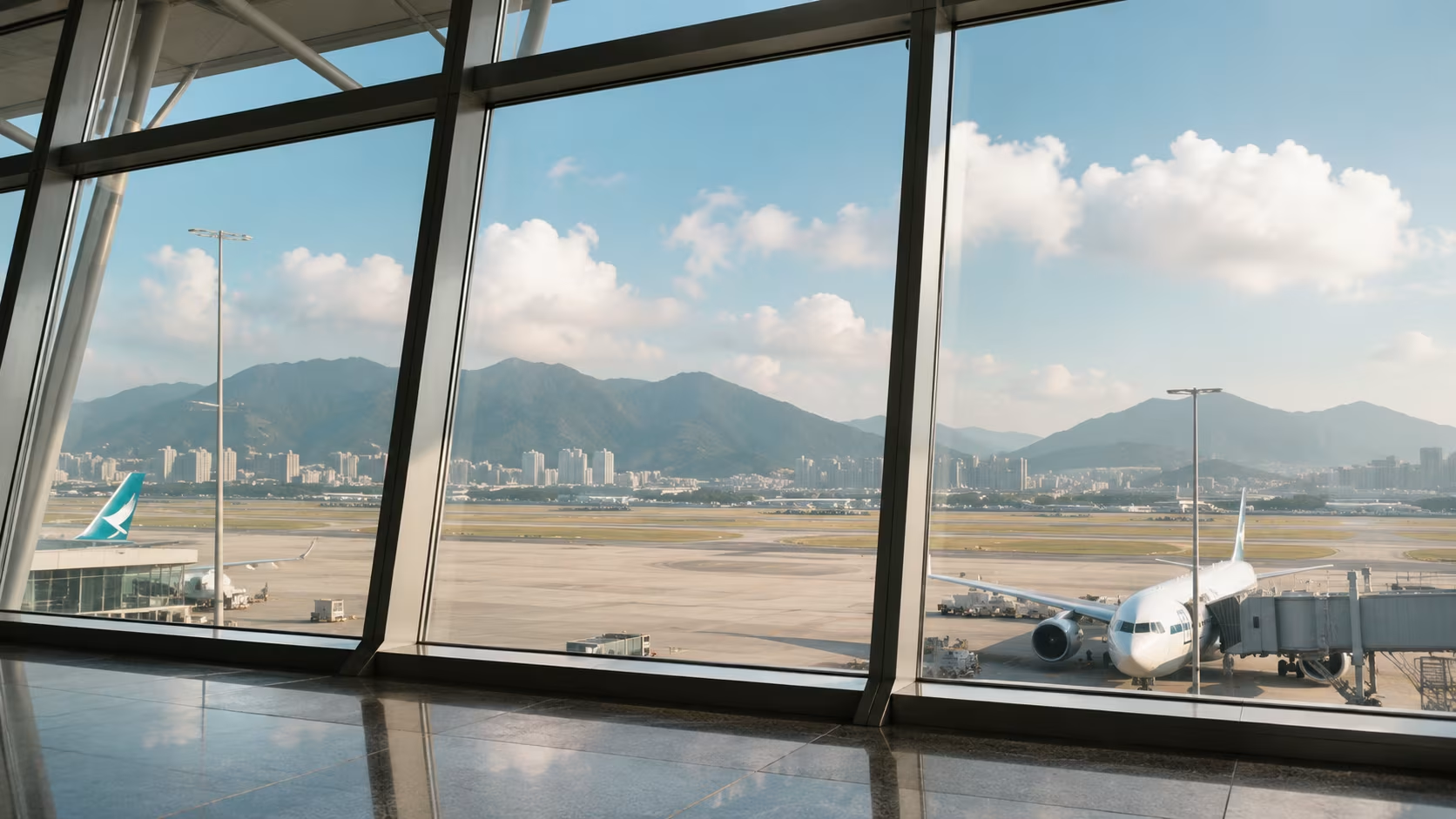
Hong Kong International Airport (HKG). 30 km from central Hong Kong, on Lantau Island.
From HKG:
- Airport Express (MTR): HKD 115 to Hong Kong station, 24 min. The default.
- A11/A21 buses: HKD 40, 60–90 min to most central destinations.
- Taxi: HKD 290–380 to Hong Kong Island (Causeway Bay, Wan Chai); HKD 220–290 to Kowloon. Tunnel toll extra.
- Uber: operational since 2014; HKD 280–400.
Getting Around
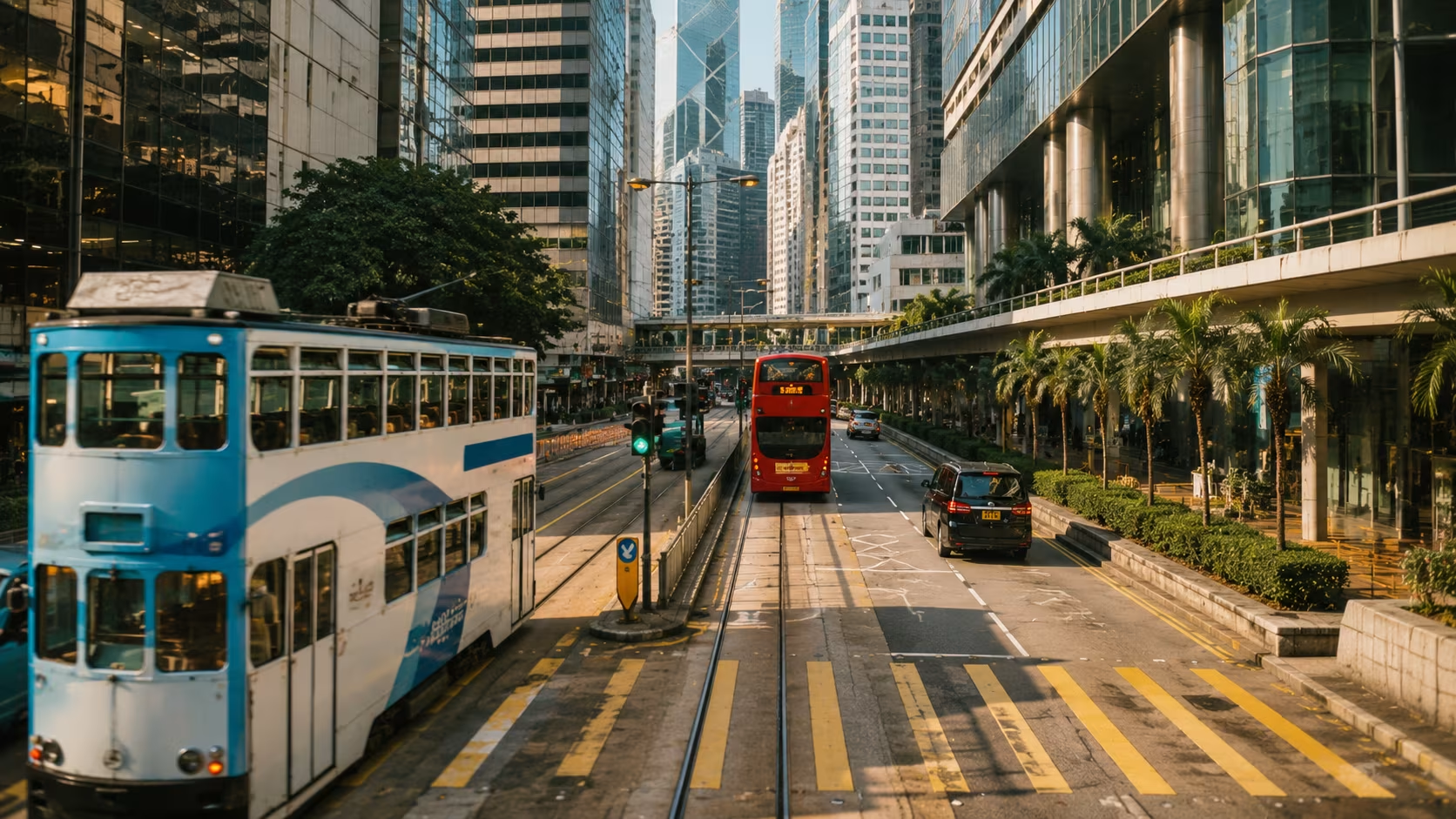
Hong Kong's transit is among the world's best.
MTR (subway)
Ultra-clean, fully driverless on most lines. Single ride: HKD 5–55. Octopus Card is the rechargeable smart card: one of the world's first contactless payment systems (1997). HKD 50 deposit + HKD 100 stored value. Tap on entry; tap on exit.
Apple Pay / Google Pay tap-in works on most MTR lines. Octopus on iPhone is a built-in app that emulates the physical card.
Buses + Trams
Double-decker buses cover routes the MTR doesn't. The trams on Hong Kong Island ("ding ding" trams since 1904), slow, scenic, 100% local rather than tourist, run between Sheung Wan and Shau Kei Wan. HKD 3 flat fare; tap Octopus on exit.
Star Ferry
The iconic green-and-white ferry across Victoria Harbour, Hong Kong Island ↔ Kowloon. HKD 5 lower deck; HKD 6.5 upper deck. The 8-minute crossing is genuinely one of the world's great cheap urban experiences.
Taxi
Three colors:
- Red: Hong Kong Island, Kowloon, central New Territories.
- Green: New Territories rural areas only.
- Blue: Lantau Island.
Flag drop: HKD 27. Reasonable city trip: HKD 60–120. Drivers' English varies; have your destination written in Chinese characters or shown on a map.
Walking
Central, Wan Chai, Causeway Bay, Tsim Sha Tsui (TST) are walkable internally. Steep hills make some walks more difficult than the map suggests; the Mid-Levels escalator (the longest outdoor covered escalator in the world, 800m) connects Central to the residential Mid-Levels.
Where to Stay
Hong Kong is divided into Hong Kong Island (the original British colony) and Kowloon (across the harbor on the mainland-side peninsula). The character is different.
Hong Kong Island: Central
The financial heart. Bank towers, the SoHo and Lan Kwai Fong nightlife districts, the Mid-Levels escalator. Premium pricing.
Hong Kong Island: Wan Chai / Causeway Bay
More mid-range hotels. Causeway Bay is shopping-and-dining dense; Wan Chai mixes business and bars.
Hong Kong Island: Sheung Wan
The northwest quarter. More boutique hotels, antique shops, the slow gentrification zone. Walking distance to Central.
Kowloon: Tsim Sha Tsui (TST)
The waterfront-facing district with the famous skyline view back to Hong Kong Island. Premium hotels (Peninsula, Intercontinental). Star Ferry connects to Central.
Kowloon: Mong Kok
Denser, working-class. Markets, street food, less polished. Cheaper hotels.
Kowloon: West Kowloon (m+ + Cultural District)
The new arts district (M+ Museum opened 2021, Hong Kong Palace Museum opened 2022). Some new luxury hotels here.
Avoid as a Base
- New Territories far suburbs (Tuen Mun, Yuen Long): too far for short trips.
- Outlying islands (Lantau, Cheung Chau) for a 4-day trip: convenient for residents, less for tourists.
Realistic 2026 nightly prices (4-star, weekday, shoulder, USD):
| Neighborhood | Mid-range | Higher-end |
|---|---|---|
| Central | $300–500 | $700–2,500 |
| Wan Chai/Causeway Bay | $200–340 | $500–1,200 |
| Sheung Wan | $180–300 | $450–1,000 |
| TST | $250–420 | $600–2,000 |
| Mong Kok | $130–230 | $300–600 |
What to Book in Advance
Victoria Peak Tram
The historic tram up to The Peak observation. Booked online for skip-line; otherwise weekend queues exceed 90 minutes. HKD 99 round-trip + HKD 75 Sky Terrace.
Symphony of Lights
Free, 20:00 daily. The harbor lightshow synchronized with music. Free public viewing from the TST Promenade. The 18:00 ferry across is a great approach.
M+ Museum
The new contemporary art museum in West Kowloon (opened 2021). HKD 120. Walk-up usually fine; book online for time slots.
Hong Kong Palace Museum
New (opened 2022) in West Kowloon. Treasures from Beijing's Palace Museum (Forbidden City). HKD 150. Book online.
Tian Tan Buddha (big Buddha) on Lantau
Free to visit; the Ngong Ping Cable Car (HKD 270 round-trip Crystal Cabin) is the headline access. Book ahead for time slots.
Premium Restaurants
- Lung King Heen (Four Seasons, the world's first 3-Michelin-star Cantonese, books 2–4 weeks ahead).
- Caprice (Four Seasons, French, 3-Michelin-star).
- Forum Restaurant (the famous abalone master, 3-Michelin-star).
Day 1 — Hong Kong Island
08:30. Coffee in Central. The Coffee Academics. NOC Coffee Co. Cupping Room.
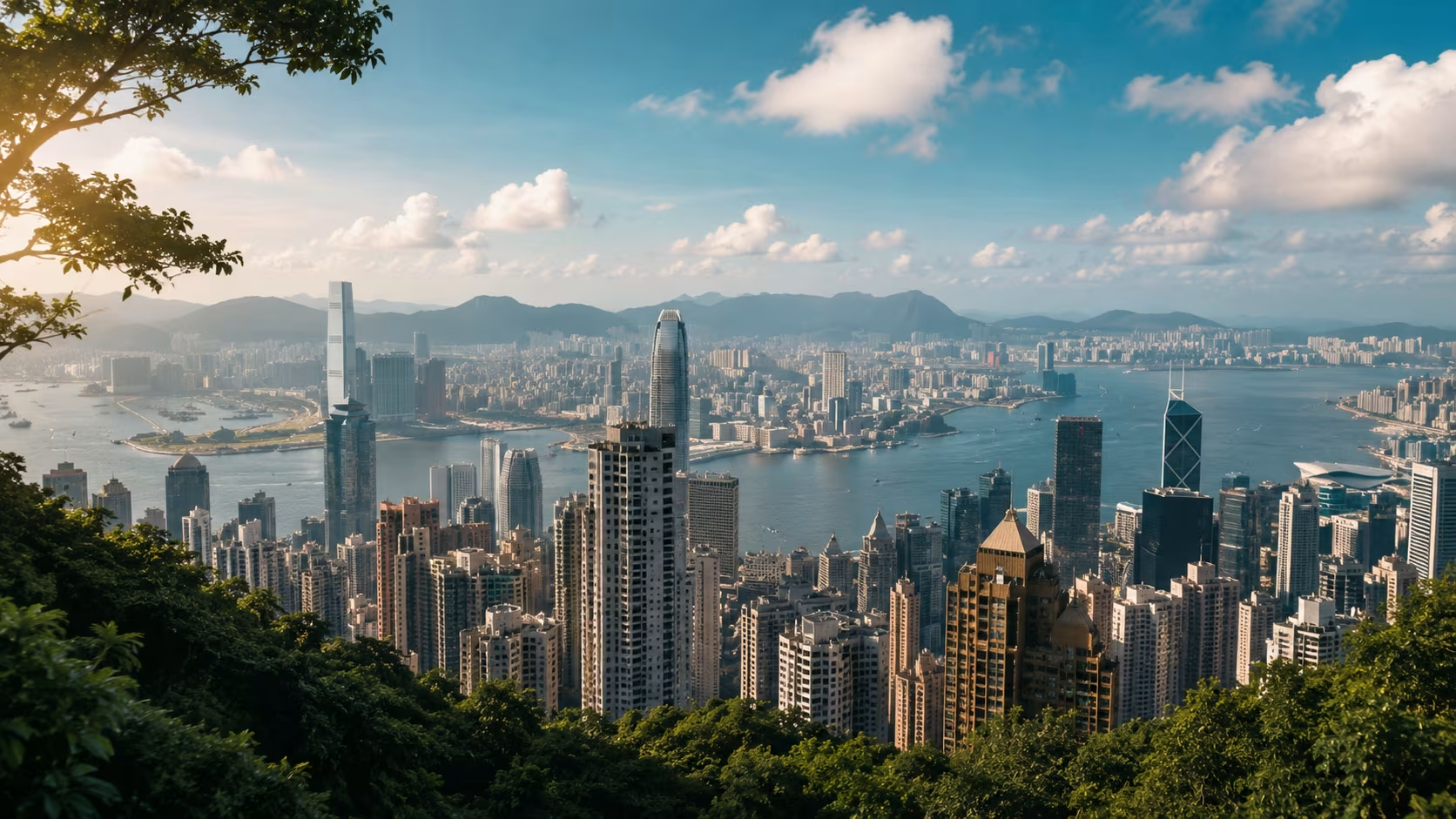
09:30. Victoria Peak (The Peak). Take the Peak Tram (booked). Walk the Peak Circle (the 3.5 km circular walk around the peak with skyline views in multiple directions). The Sky Terrace 428 has the iconic photograph view. Allow 2.5 hours.
12:00. Walk down to the Mid-Levels via Hong Kong Park. The park has the Lock Cha tea house (an excellent introduction to Chinese tea ceremony). HKD 50 for a tea tasting.
13:30. Lunch in Central. Tim Ho Wan (the world's most accessible Michelin-starred dim sum). Lin Heung Tea House (since 1928, walking dim sum tradition where the carts come to you). Yat Lok for roast goose (Michelin Bib Gourmand).
15:00. Soho + Mid-Levels escalator. Walk down Hollywood Road through the antique shops. Man Mo Temple (free, oldest temple in Hong Kong, atmospheric incense smoke). 60 minutes.
16:30. PMQ (the former Police Married Quarters, now a design and creative center). Multiple boutiques, cafés, art studios. 60 minutes.
18:30. Take Star Ferry from Central to TST. Sunset crossing is spectacular.
19:30. Symphony of Lights at 20:00. Watch from the TST Promenade.
20:30. Dinner. Tin Ho Wan (Sham Shui Po location). Hutong (TST, modern Chinese with skyline view). Spring Deer (Cantonese institution). Lung King Heen if you booked.
Day 2 — Kowloon
09:00. Coffee in TST.
10:00. M+ Museum (West Kowloon). Allow 3 hours. The contemporary art museum in the new West Kowloon Cultural District. Strong on Chinese contemporary; Asian visual culture.
13:00. Lunch. Add+ at M+ for casual. Mott 32 (Central) for upscale. Australia Dairy Company for Hong Kong-style breakfast/lunch (the famous scrambled eggs and macaroni soup).
14:30. Hong Kong Palace Museum (next to M+). Allow 2 hours. Treasures from Beijing's Palace Museum.
16:30. Star Ferry back across to Central. Skip if you did it yesterday.
17:00. Walk Kowloon's older districts. Mong Kok is the working-class urban center. The Ladies' Market (Tung Choi Street) for cheap fashion + souvenirs. The Goldfish Market (Tung Choi Street north) for the famous fish-shop strip. The Flower Market for the dense daily flower-vendor street.
19:00. Temple Street Night Market (Yau Ma Tei). Open from 18:00. Street food, fortune-tellers, opera performances. Eat a working-class dinner here.
21:30. Cocktails back in Central. The Aubrey (premium Japanese cocktails). Quinary (molecular). The Diplomat (modern speakeasy).
Day 3 — Lantau Island and Big Buddha
Full day excursion to Lantau.
09:00. MTR to Tung Chung station. Ngong Ping 360 Cable Car to the Big Buddha. 25-minute ride; the Crystal Cabin (glass floor) for the premium version.
10:30. Tian Tan Buddha (Big Buddha). Free. Climb the 268 steps. The 34m bronze Buddha is one of the world's largest seated Buddha statues. Allow 60 minutes including views.
11:30. Po Lin Monastery. Active Buddhist monastery. Vegetarian lunch hall (HKD 100, advance ticket recommended).
13:00. Lunch at the monastery vegetarian hall.
14:30. Tai O fishing village. Bus from Ngong Ping (or taxi). Stilted houses on the water, the last traditional fishing village near Hong Kong. Boat tours for 30 minutes (HKD 30) often spot Chinese white dolphins.
16:30. Bus back to Tung Chung; MTR back to central area.
19:30. Dinner. Yardbird (yakitori, downtown). Roganic for British modern. Kau Kee for beef brisket noodles.
Day 4 — Choose: Hiking, Macau, or Slow City Day
Path A: Dragon's Back Hike
The city's most popular and accessible hike. Ridge trail with skyline views; 8 km, 3 hours. Take MTR to Shau Kei Wan station, then bus 9 to To Tei Wan stop. End at Big Wave Bay beach.
Path B: Day Trip to Macau
65 km west by ferry from the Hong Kong-Macau Ferry Terminal. 60-minute crossing, HKD 200 round-trip. Different country (technically a separate Special Administrative Region with Portuguese colonial history). Visa-free for Hong Kong visitors.
Sights: Senado Square + the historic Portuguese-built old town. Ruins of St. Paul's (the iconic facade). The Cotai Strip (Asia's Las Vegas, with mega-resorts). The egg tarts (Lord Stow's, the original).
Full day; intense.
Path C: Cheung Chau Island
Ferry from Central, 60 minutes. Small island, no cars, beach + walking trails. Ideal for slow recovery day.
Path D: Sai Kung
Fishing village in the New Territories. Premium seafood lunches at the harbor where you can pick your fish from the tanks. Hike to Sharp Peak or visit Hong Kong Geopark.
What to Eat
Hong Kong is one of the world's great food cities. Cantonese cooking is the headline; the multicultural overlay (Chinese regional + Western + Japanese + Southeast Asian) makes it dense.
Dim Sum
The headline tradition. Cart-pushed or order-by-form, depending on restaurant.
Must-try items:
- Har gow (shrimp dumplings)
- Siu mai (open-topped pork dumplings)
- Char siu bao (BBQ pork buns; can be steamed or baked)
- Cheung fun (rice noodle rolls with shrimp or BBQ pork)
- Egg tart (Hong Kong-style baked egg tart)
- Lo mai gai (sticky rice in lotus leaf)
- Phoenix claws (chicken feet, acquired but classic)
Where:
- Tim Ho Wan (multiple locations, the famous "world's cheapest Michelin-starred restaurant").
- Lung King Heen (Four Seasons, 3-Michelin-star).
- Lin Heung Tea House (since 1928, traditional cart service).
- DimDimSum (multiple locations).
- Sun Yuen Cuisine in Mong Kok for working-class.
Cantonese Roast Meats
Whole-meat-roasting tradition.
- Char siu (BBQ pork): sweet, dark glaze.
- Roast goose: Hong Kong's signature; Yat Lok is the institution.
- Roast pork (siu yuk): crispy skin.
- Soy chicken (see yau gai): soft, dark sauce.
Where:
- Yat Lok for roast goose.
- Yung Kee (since 1942, large traditional restaurant).
- Joy Hing Roasted Meat for working-class lunch.
- Kam's Roast Goose (Wan Chai, Michelin-starred working-class).
Cantonese Seafood
Live seafood ordered from tanks; cooked simply.
- Sai Kung harbor restaurants: the village specialty.
- Lei Yue Mun seafood district.
- Sun Tung Lok (Tsim Sha Tsui, premium).
- Forum Restaurant for abalone (3-Michelin-star).
Hong Kong Café (cha Chaan Teng)
Working-class fusion cafés. Hong Kong's everyday meal experience.
- Macaroni soup with ham + scrambled eggs for breakfast.
- Pineapple bun (bo lo bao): sweet bun, no actual pineapple.
- Hong Kong-style milk tea: strong black tea with evaporated milk.
- Egg waffle (gai daan jai): bubble waffle, street-food classic.
Where:
- Australia Dairy Company (Jordan).
- Tsim Chai Kee for working-class noodles.
- Yee Shun Milk Company for milk pudding.
Modern Dining
Hong Kong has more Michelin stars per capita than nearly any city.
- Lung King Heen (3-star Cantonese).
- Caprice (3-star French).
- 8 1/2 Otto e Mezzo (3-star Italian, the only 3-star Italian outside Italy).
- Sushi Shikon (3-star Japanese).
- Roganic (1-star British).
- Yardbird (yakitori, more Bib Gourmand).
Costs and Budget
2026 daily budgets per person, excluding flights and hotel (USD):
| Style | Per day | Notes |
|---|---|---|
| Backpacker | $40–70 | Hostel, dim sum + cha chaan teng, MTR, walking |
| Mid-range | $100–170 | Mix of casual and proper restaurants, museums, transit |
| Comfortable | $250–400 | Better restaurants, premium tour, taxi over MTR |
| Higher-end | $700+ | Tasting menus, private guide, luxury hotel breakfasts |
Hong Kong is among the more expensive cities globally. Hotel breakfast can run $40–60 per person at premium hotels; dim sum lunch $20–40 per person at mid-tier; serious dinner $80–250 per person.
Practical Info
- Cards. Universal. Octopus Card for transit and convenience-store purchases.
- Tipping. Service charge typically 10% included on bills. Tipping beyond not required; round up at cafés. Hotel housekeeping HKD 30–50/day.
- English. Common in Central, Tsim Sha Tsui, hotels. Less common in working-class districts (Mong Kok, Sham Shui Po). Younger Hong Kongers speak more English than older.
- Cantonese vs. Mandarin. Cantonese is the local language. Mandarin is increasingly common since 2010. Tourist services usually offer both.
- MTR card vs. cash. Octopus saves friction; cash works at most places.
- Sundays. Many shops open. Some Sundays have Filipino domestic worker gatherings in public spaces (especially Central), they take their day off in shared outdoor spaces; respect that.
- Pickpocketing. Lower than European tourist cities. Standard precautions in dense markets.
- Heat / humidity. Real and constant May–September. AC is the default; build heat breaks into your day.
- Smoking. Banned indoors at restaurants and most public spaces.
- Political sensitivity. Avoid public discussions of 2019 protests, Hong Kong-China relations, or Tiananmen. The political environment is more sensitive in 2026 than pre-2020.
Common First-Timer Mistakes
- Spending all day in Tsim Sha Tsui. It's tourist-dense; less character than other districts.
- Skipping the trams. The 100% local working-class experience is worth a 30-minute ride.
- Eating only at chain restaurants. Hong Kong's food is in the working-class noodle shops, dim sum carts, and roast meat counters.
- Trying to do Hong Kong + Macau in one day. Possible but exhausting; better to choose one.
- Booking hotels far from MTR. Walking 15 minutes to MTR in summer humidity is brutal. Verify proximity.
- Visiting Big Buddha during typhoon-season storms. Cable car closes; entire Lantau experience cancels.
- Not reserving at premium dim sum. Lung King Heen and Yat Lok can have 60+ min waits.
- Photography sensitivity. Some businesses (especially older ones) prefer no photography.
Final Notes
Four days in Hong Kong is enough for a focused first trip: one Hong Kong Island day (Peak + Soho), one Kowloon day (museums + Mong Kok), one Lantau day (Big Buddha + Tai O), one slow or excursion day.
The quietest piece of advice: take the Star Ferry across the harbor at three different times: late morning when the city is awake, sunset when the skyline lights up, and late at night when the lights reflect on the water. The 8-minute ride is the same; the city around it is three different cities. That's the Hong Kong worth coming for.
0 Comments
No comments yet — start the conversation.