
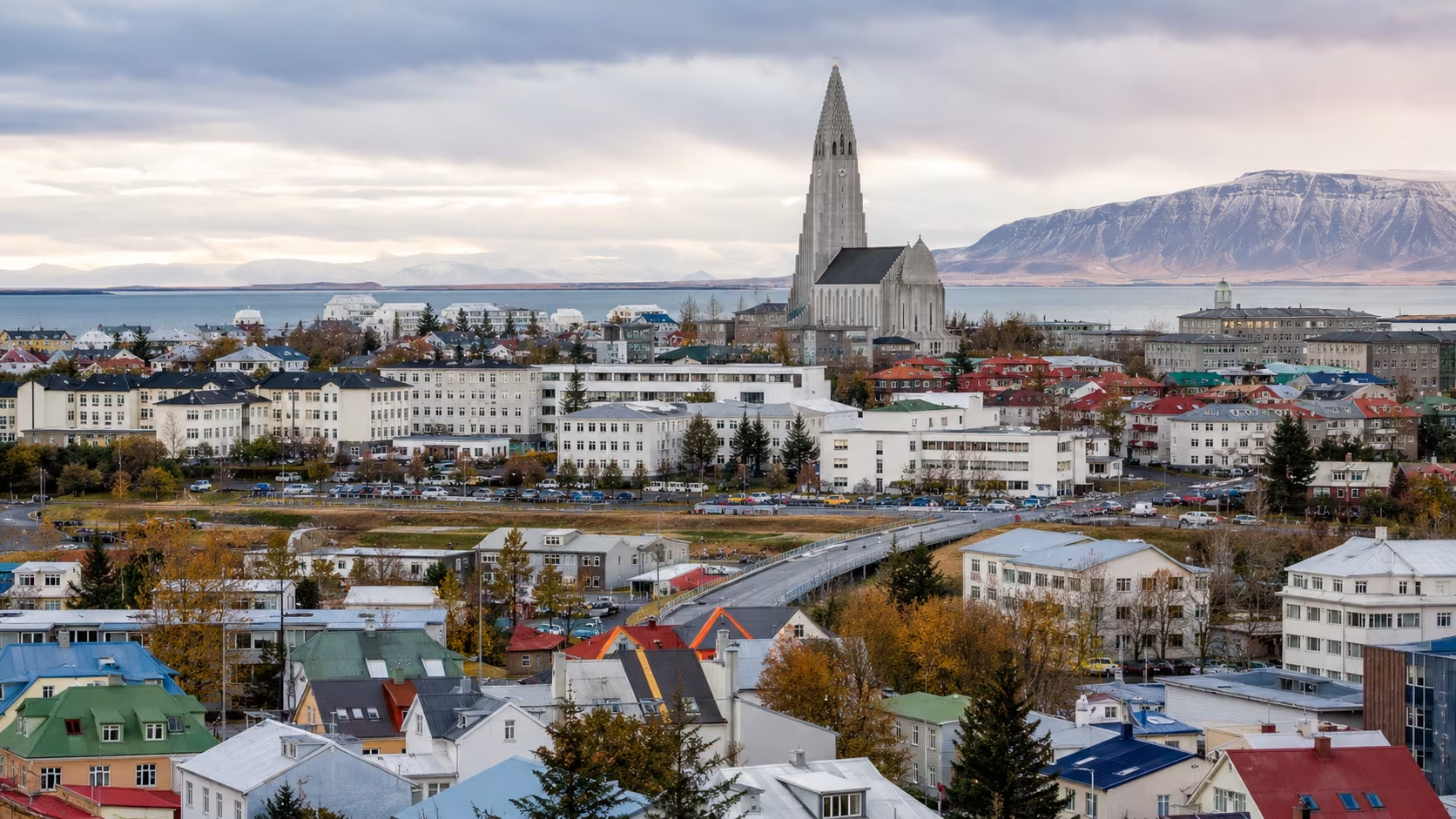
Reykjavik is one of Europe's smallest capitals — only 134,000 residents. The metropolitan area has 230,000, which is 60% of Iceland's entire population. The city sits on the southwestern coast, 64°N latitude, with the North Atlantic on three sides + the lava plains stretching east toward the country's interior. The 2026 city has been transformed by Iceland's tourism boom: 2.5+ million visitors annually compared to 488,000 in 2010. The city center has rebuilt itself around tourism while the surrounding country remains the actual draw.
For first-time visitors, Reykjavik works best as a 2-3 day base for Icelandic exploration. The city itself is small + easily walkable + culturally interesting (concert hall, design museums, distinctive food scene). The country surrounding it is the main reason to come — the Golden Circle, the South Coast, the Snæfellsnes Peninsula, the glaciers, the Northern Lights in winter.
This is a 4-day guide that uses Reykjavik as a base for both the city itself and 2-3 day trips into the wider country.
Quick Facts
| Item | Detail |
|---|---|
| Country | Iceland |
| Currency | Icelandic króna (ISK), ~140 ISK/USD in 2026 |
| Language | Icelandic; English near-universal |
| Time zone | GMT (UTC+0, no DST) |
| Tourist tax | None |
| Best time | June–August (long daylight) or February–March (Northern Lights) |
| Visa | Schengen, 90 days for most non-EU |
| Trip length | 3-5 days for Reykjavik + day trips |
When to Go
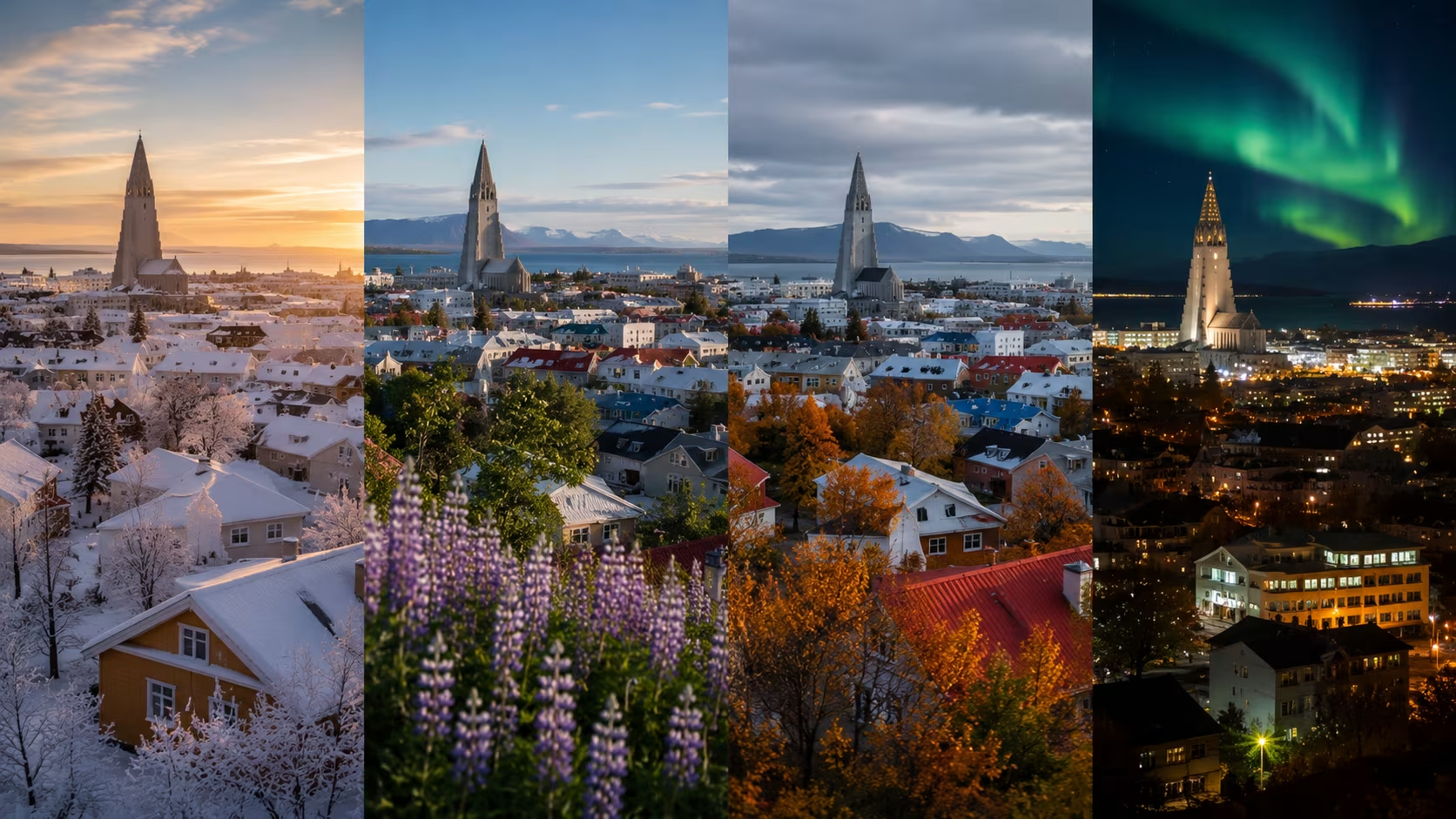
June to mid-August (summer). Long daylight (24-hour midnight sun in late June at the city's latitude). Highs 10-17°C; cool. Tourist density at peak. Ring Road fully accessible.
Mid-August to early September. Late summer; lower crowds; daylight starting to shorten.
Mid-September to mid-November (autumn). Tourist density drops; Northern Lights start to be visible at night. Weather variable.
Late November to February (winter). Cold (-2 to 4°C), short days (4-7 hours of daylight), aurora season at peak. Many tourists come specifically for Northern Lights.
March to early May (spring). Days lengthen quickly; some snow remains; aurora still possible early in this window.
Avoid:
- December-January if you can't handle 4 hours of daylight.
- Mid-July to mid-August if you want low tourist density.
- Major weather days — Iceland storms can shut down outdoor activities; check Icelandic Met Office.
Getting In
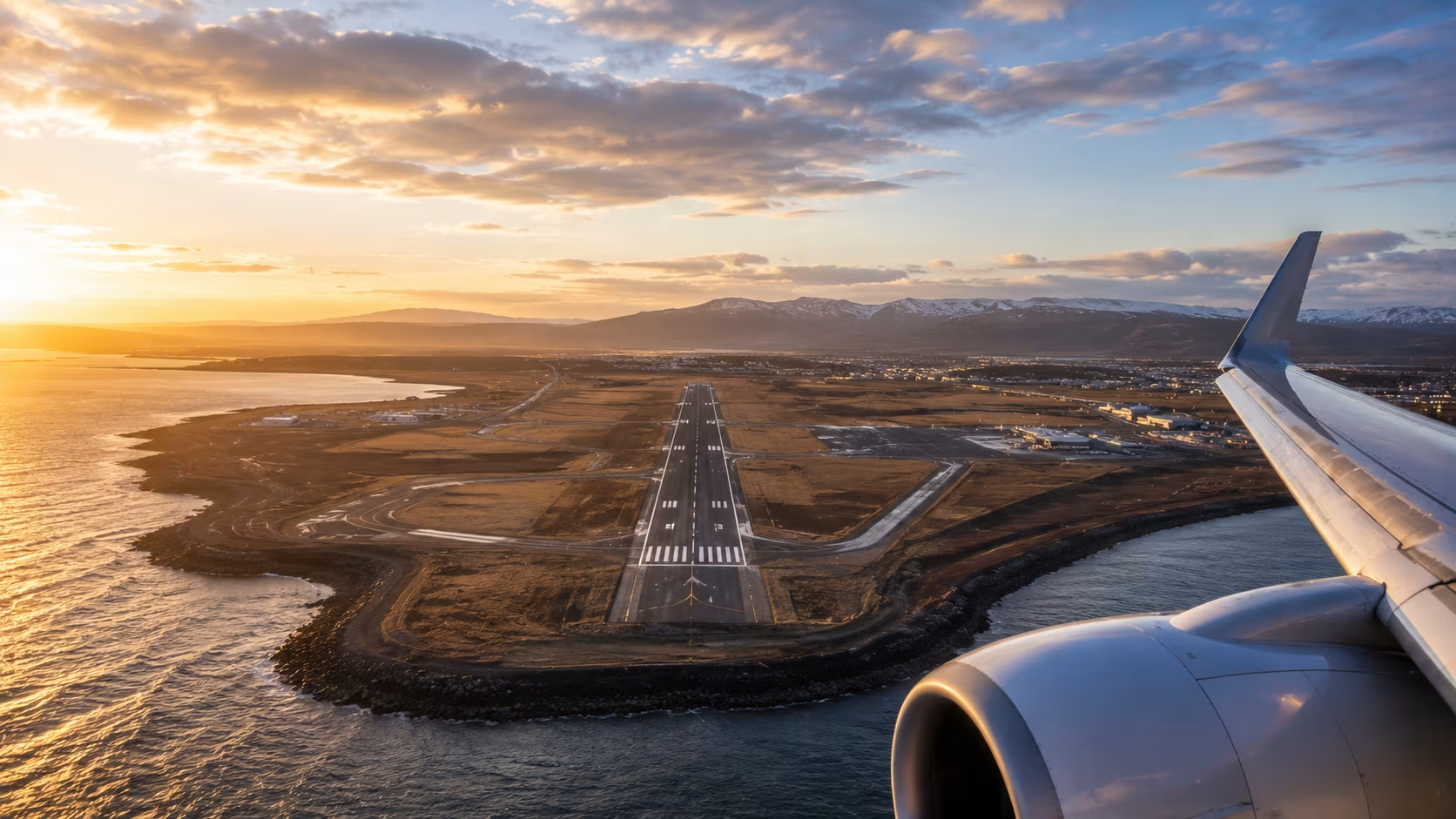
Keflavík International Airport (KEF). 50 km from central Reykjavik. The international gateway for Iceland.
From KEF:
- Flybus (or other shuttle): 3,500-4,500 ISK ($25-32), 50 min to BSI Bus Terminal in Reykjavik.
- Taxi: 13,000-18,000 ISK ($93-130). Skip; the bus is faster + cheaper.
- Hotel transfer: similar to bus rates with hotel pickup.
- Rental car: pickup at airport for Ring Road + day-trip plans.
Getting Around
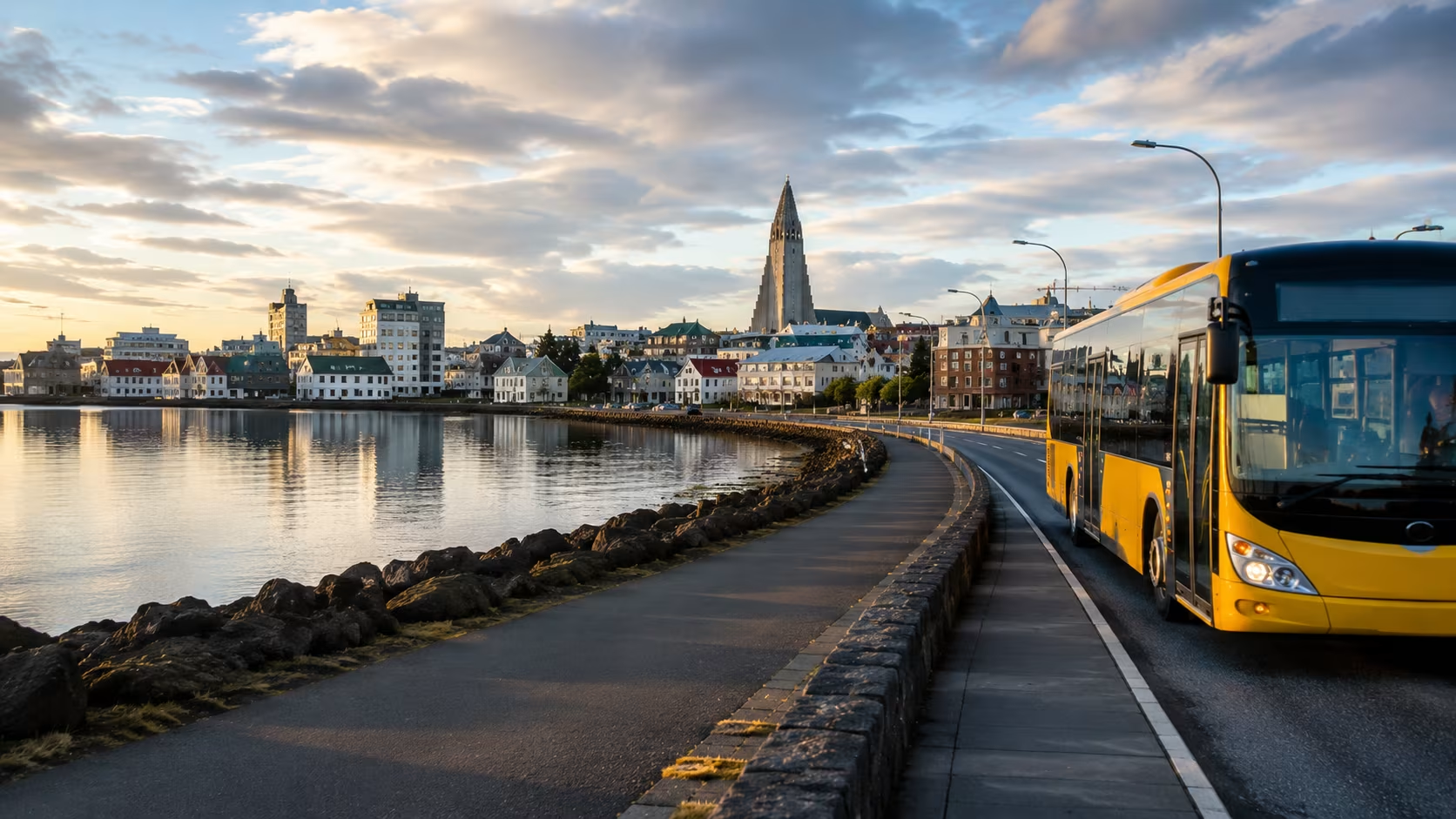
Walking
Central Reykjavik (the area around Hallgrímskirkja, the Old Town, the harbor) is walkable in 30-40 minutes corner to corner. Most central tourist attractions within a 1-km circle.
Bus
Strætó is the city bus system. Single ride 540 ISK; day pass 2,000 ISK. The Klappið app is the standard payment method.
Rental Car
Necessary for day trips outside Reykjavik. Standard compact 4WD: $80-150/day. Don't drive at night in winter without confidence in icy roads.
Taxi
Reliable but expensive. Single trips within central: 2,500-4,000 ISK ($18-29). Apps: Hreyfill, BSR.
Bicycle
Free Bike Rentals at some hotels. Reykjavik is moderately bike-friendly in summer.
Where to Stay
Reykjavik is small enough that most central locations are convenient.
Downtown (101 Reykjavik)
The central tourist district. Walking distance to Hallgrímskirkja, the harbor, Laugavegur shopping street. Premium hotels (Hotel Borg, Center Hotel Plaza) + boutique guesthouses.
Around Harpa (Concert Hall)
Near the harbor. Walking distance to most central sights. Mid-range to higher-end hotels.
Hlemmur Area
North of central. Hlemmur Mathöll (the food hall). Quieter; mid-tier hotels.
Avoid as a base
- Far suburbs (Hafnarfjörður, Mosfellsbær) — too far for a short trip.
- Around Keflavík (the airport) — convenient for early flights only.
Realistic 2026 nightly prices (4-star, weekday, shoulder, USD):
| Neighborhood | Mid-range | Higher-end |
|---|---|---|
| Downtown 101 | $250-380 | $500-1,200 |
| Around Harpa | $230-360 | $450-1,000 |
| Hlemmur Area | $180-280 | $380-700 |
Reykjavik is among the most expensive capitals in Europe, comparable to Stockholm or Copenhagen.
What to Book in Advance
Blue Lagoon
The famous geothermal spa near the airport. Books 1-3 months ahead in summer; 1-2 weeks off-season. Comfort tier: €70-95. Premium tier: €125-170 (includes restaurant access). Sky Lagoon in Reykjavik proper is the local alternative — newer, smaller crowds, ocean view (€85-130).
Northern Lights Tour
Mid-September to mid-April only. Multiple operators run nighttime aurora hunting tours. €60-110 per person; pickup from hotel; the operator drives to clear-sky areas.
Golden Circle Day Tour
Bus tour with multiple operators: €60-110 per person. Pickup from hotel. Visits Þingvellir + Geysir + Gullfoss.
South Coast Day Tour
The glacier + waterfalls + black-sand-beach day. €100-160 per person.
Whale Watching
From Old Harbor in central Reykjavik. €70-110 per person; 3-hour tour. Best summer (May-September).
Premium Restaurants
- DILL (1-Michelin-star, modern Icelandic).
- Moss (modern Icelandic).
- Matur og Drykkur (modern traditional).
Day 1 — Reykjavik Walking
08:30. Coffee. Reykjavik Roasters (specialty). Stofan Café (casual). Mokka-Kaffi (since 1958, the city's oldest café).
09:30. Hallgrímskirkja. The 73-meter Lutheran church (1986) modeled on basalt rock formations. Free entry; 1,000 ISK to climb the tower (best view of the city). Allow 60 minutes.
10:30. Sólfar (Sun Voyager). The famous abstract steel sculpture on the harbor. Free; iconic photograph spot.
11:00. Harpa Concert Hall. The 2011 concert hall with the geometric glass facade. Free to enter the lobby. The interior is as architecturally significant as the exterior.
12:00. Reykjavik Old Harbor. Walk through. Whale-watching boats; restaurants; the Maritime Museum (free) for the country's nautical history.
12:30. Lunch in Old Harbor or downtown. Sjávargrillið for upscale Icelandic seafood. Bæjarins Beztu Pylsur for the famous hot dog (since 1937; Bill Clinton ate here in 2004; the standard order is "with everything" — eina með öllu — mustard, ketchup, fried onions, raw onions, remoulade).
14:00. Laugavegur shopping street. The main pedestrian shopping boulevard. Icelandic design (66°North outerwear, Geysir clothing), bookshops, gift shops. Walk slowly.
15:30. National Museum of Iceland (1,500 ISK). The country's history from settlement (874 AD) to modern day. Allow 90 minutes.
17:00. Sundhöllin (the historic 1937 swimming pool with thermal baths) or Vesturbæjarlaug (a working-class neighborhood pool with hot tubs). Iceland's pool culture is a local cultural ritual; visiting one is the deepest local experience available. 1,200 ISK entry.
19:00. Aperitivo at a downtown bar. Slippbarinn. Public House. Kaffibarinn (since 1996, the famous bar Damon Albarn part-owns).
20:30. Dinner. DILL if booked (Michelin one-star). Matur og Drykkur (modern traditional). Sjávargrillið (upscale seafood). Saffran (working-class Icelandic).
Day 2 — Golden Circle
The classic introductory Icelandic day trip. 230 km loop, 6-8 hours including stops.
08:30. Tour pickup or rental car start.
09:30. Þingvellir National Park. UNESCO. The rift valley between European + North American tectonic plates. The original Icelandic parliament (Alþingi) was held here from 930 AD. Walk the Almannagjá rift; visit the Lögberg (Law Rock) where laws were proclaimed. Free. Allow 90 minutes.
11:30. Geysir Geothermal Area. The original geyser (the word "geyser" comes from this one). Today, the active Strokkur erupts every 5-8 minutes, 15-30m high. Free. 45 minutes.
13:00. Lunch at the Geysir Visitor Center or nearby.
14:30. Gullfoss Waterfall. "Golden Falls" — two-tier 32m waterfall in a canyon. Free. Allow 60 minutes.
16:30. Optional additional stops on Golden Circle:
- Kerið Crater Lake (the volcanic crater, 400 ISK).
- Friðheimar Tomato Farm (the geothermal-greenhouse tomato farm with tomato lunch).
- Secret Lagoon (small natural geothermal pool, less commercial than Blue Lagoon, 3,500 ISK).
18:30. Return to Reykjavik.
20:00. Dinner.
Day 3 — South Coast Day Trip
Long day; spectacular landscape. 220 km one way.
07:30. Tour pickup or rental car start.
09:00. Seljalandsfoss Waterfall. 60m drop; you can walk behind it (wear waterproof gear). 30 minutes.
09:45. Gljúfrabúi Waterfall. 200m walk from Seljalandsfoss; hidden inside a canyon. Less touristy. 20 minutes.
10:30. Skógafoss Waterfall. 60m wide, 60m drop. Climb the staircase to the top for panoramic view. 60 minutes.
12:30. Lunch at Skógafoss Bistro Bar or pack lunch.
13:30. Reynisfjara Black Sand Beach. Iconic basalt columns + Reynisdrangar sea stacks. Sneaker waves are dangerous — never turn your back to the ocean; warning signs are not optional. 60 minutes.
14:30. Vík í Mýrdal village. Lunch or coffee at the small café.
15:30. Return drive to Reykjavik.
18:30. Arrive Reykjavik.
20:00. Dinner.
Day 4 — Choose: Snæfellsnes Peninsula, Northern Lights, or Slow Day
Path A — Snæfellsnes Peninsula
The "Iceland in miniature" peninsula 200 km north. Snæfellsjökull glacier + Kirkjufell mountain ("Game of Thrones" Arrowhead) + Arnarstapi cliff walk + Black Beach (Djúpalónssandur) + Búðakirkja black church.
Full-day tour: $130-200 per person. Or self-drive (4-5 hours each way).
Path B — Blue Lagoon (or Sky Lagoon) Day
Spa morning + afternoon at Blue Lagoon (50 km from Reykjavik). Allow 4-5 hours.
Or Sky Lagoon (in Reykjavik) for the local alternative.
Light afternoon at the Reykjavik downtown.
Path C — Glacier Hiking + Ice Cave Tour
Full-day excursion to Sólheimajökull glacier or Vatnajökull glacier. Glacier hike (€100-180) + optional ice cave tour (winter only, €150-250).
Path D — Northern Lights Pursuit (Winter Only)
If visiting October-March, dedicate one evening to the Northern Lights. Tour pickup + drive to clear sky areas. €60-110.
Path E — Slow Reykjavik Day
Morning at the Whales of Iceland museum (4,500 ISK; the largest exhibit of life-size whale models in Europe).
Lunch at Hlemmur Mathöll (the modern food hall).
Afternoon at the Reykjavik Art Museum (1,950 ISK).
Late afternoon at a swimming pool — Sundhöllin or Laugardalslaug.
Evening at a downtown restaurant + bar.
What to Eat
Icelandic cuisine has been undersold globally. The 2010s-2020s have produced a serious modern-Icelandic restaurant scene built on indigenous ingredients (lamb, fish, dairy, geothermal-grown vegetables, foraged herbs).
Headline Dishes
| Dish | What it is |
|---|---|
| Lamb | Free-roaming, herb-fed lamb. Iceland's classic protein. Slow-roasted leg of lamb, lamb stew (kjötsúpa). |
| Arctic char + salmon | Cold-water fish. Often served simply: grilled, smoked, or cured. |
| Plokkfiskur | Fish stew with potatoes. Working-class staple. |
| Skyr | Yogurt-like dairy product, lower-fat, higher-protein. Standard breakfast. |
| Hot dogs (pylsur) | A national institution. Bæjarins Beztu Pylsur in central Reykjavik is the famous one. |
| Rye bread (rúgbrauð) | Sweet, dark, often baked in geothermal areas underground. |
| Hákarl | Fermented shark. Notoriously pungent. Traditional preservation method. Tourist novelty; locals don't eat much. |
| Brennivín | Caraway-flavored aquavit. Traditional pairing with hákarl. |
| Kleinur | Twisted donut pastry. Working-class snack. |
| Pönnukökur | Thin Icelandic crepes; the Sunday-coffee classic. |
| Lobster soup | Warming traditional creamy soup with lobster. |
Where to Eat
Modern Icelandic:
- DILL (1-Michelin-star).
- Moss (modern Icelandic).
- Matur og Drykkur (modern traditional, in the Maritime Museum building).
- Sjávargrillið (upscale seafood).
- Mat Bar (modern Italian-Icelandic).
Traditional / Working-Class:
- Bæjarins Beztu Pylsur (the famous hot dog stand).
- Saffran (working-class Icelandic).
- Café Loki (traditional Icelandic; opposite Hallgrímskirkja).
- Kaffi Vest (casual Icelandic).
- Grái Kötturinn (since 1995, brunch institution).
Hlemmur Mathöll (Modern Food Hall): - Multiple stalls including Mexican, Asian, Italian — the food-court tier of central Reykjavik.
Premium:
- DILL (mentioned).
- Moss (mentioned).
- Brút (modern Icelandic at Hotel Marina).
- The Reykjavik EDITION dining.
Costs and Budget
2026 daily budgets per person, excluding flights and hotel (USD):
| Style | Per day | Notes |
|---|---|---|
| Backpacker | $80-130 | Hostel, supermarket food, walking, occasional bus |
| Mid-range | $160-260 | Mix of casual and proper restaurants, tour days, transit |
| Comfortable | $300-450 | Better restaurants, premium spa, taxis |
| Higher-end | $700+ | Tasting menus, premium hotel, private excursions |
Reykjavik is among the most expensive cities in Europe — particularly for food + alcohol.
Specific anchors:
- Coffee + pastry: 600-900 ISK ($4-7).
- Hot dog at Bæjarins Beztu: 700 ISK ($5).
- Lunch at Mathöll: 2,500-4,000 ISK ($18-29).
- Mid-tier sit-down dinner: 5,500-8,500 ISK ($40-60).
- Premium tasting menu: 22,000-35,000 ISK ($160-250).
- 1.5L bottled water at gas station: 350-550 ISK.
Practical Info
- Cards. Universal; Iceland is essentially cashless.
- Tipping. Service charge included. Round up at restaurants for very good service.
- English. Universal. Icelandic is the daily language but everyone in tourism speaks fluent English.
- Sundays. Most things open. Some shops close.
- Weather. Variable; pack waterproof layers regardless of season.
- Daylight. June 21: 21+ hours. December 21: 4 hours. Plan accordingly.
- Iceland speed cameras. Strict + everywhere. €100+ fines for speeding.
- Don't go off-road. Driving off-track is illegal + ecologically damaging.
- Sneaker waves at Reynisfjara. Don't turn your back to the ocean. People die annually here.
- Pickpocketing. Very rare. Standard precautions only.
- Crime. Among the lowest in Europe.
- Smoking. Banned indoors at restaurants.
- Pool culture. Iceland's swimming pools are central social spaces. Strict shower-naked-before-entering rule. Visiting one is the most-Icelandic activity available.
Common First-Timer Mistakes
- Spending all 4 days in Reykjavik. The country is the draw; the city is the base.
- Trying to do the Ring Road in 4 days. It needs 7+. See the dedicated Ring Road guide.
- Visiting Blue Lagoon without booking. Sells out 1-3 months ahead.
- Driving without 4WD in winter or shoulder season. Some routes require it.
- Skipping a swimming pool visit. The city's most-distinctive cultural ritual.
- Visiting in mid-December expecting normal city. Daylight is 4 hours.
- Not waterproofing for outdoor day trips. Iceland weather changes hourly.
- Eating only at chain restaurants. Modern Icelandic restaurants are excellent.
- Drinking only Brennivín thinking it's the local drink. Local beer scene is strong; craft breweries (Borg, Einstök) genuine.
- Underestimating distances. Iceland is large; day trips can be 6-10 hour days.
- Going to Reynisfjara without reading the warning signs. Sneaker waves kill annually.
Final Notes
Four days for Reykjavik + day trips is a workable first-Iceland visit. One city day, one Golden Circle, one South Coast, one excursion or slow day.
The quietest piece of advice: visit a local swimming pool on a Tuesday afternoon. Sundhöllin or Vesturbæjarlaug. Watch how Icelanders use their hot tubs — older men playing chess in the warm water, friends catching up after work, parents bringing toddlers. Pool culture is the country's most-distinctive social ritual; visitors often miss it because it's not on the tourist circuit. The Iceland that stays with you isn't the photograph from Gullfoss; it's the simple cultural ritual of geothermal-warmed water in the cold air, available daily at every Icelandic neighborhood for less than $10.
0 Comments
No comments yet — start the conversation.