
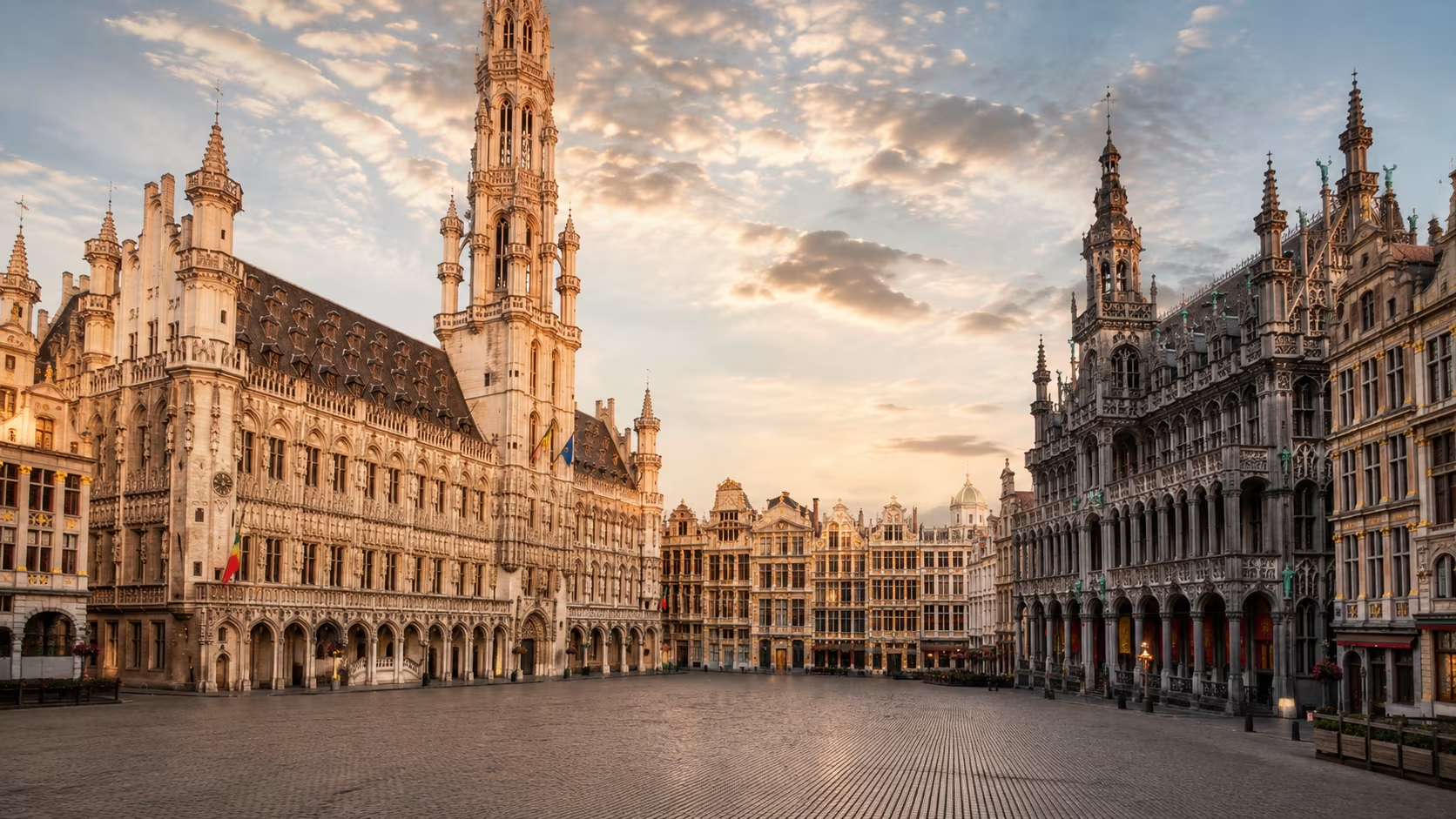
Brussels is one of Europe's most-underrated capitals. The Belgian capital + de facto EU capital is often dismissed by travelers as a bureaucratic stopover; the city is dramatically more interesting than its reputation suggests. The 2026 city has Belgian beer culture (some of the world's most-respected brewing tradition), chocolate (Belgian chocolatiers established the modern luxury chocolate industry), waffles + frites + mussels (the casual food scene), the Grand Place (UNESCO since 1998 — one of the most beautiful squares in Europe), Art Nouveau architecture (the world's largest concentration), and the unique linguistic complexity (officially trilingual French + Dutch + German, the city itself bilingual French + Dutch).
The trip works as a 2-3 day stop, often combined with Bruges, Ghent, Antwerp, or as part of a Western Europe tour. The city is small enough to walk; the food + beer culture rewards focused engagement; the Art Nouveau heritage rewards architectural attention.
Quick Facts
| Item | Detail |
|---|---|
| Country | Belgium |
| Currency | Euro (€) |
| Languages | French + Dutch (officially bilingual); English widely spoken |
| Time zone | CET (UTC+1) / CEST (UTC+2) |
| Tourist tax | €4.95 per night per room (Brussels city) |
| Best time | April–June, September–October |
| Visa | Schengen, 90 days for most non-EU |
| Trip length | 2–3 days |
When to Go
April to June. Sweet spot. Mild weather (12-22°C). Outdoor terraces opening; gardens flowering.
September to October. Other prime window. Schools resumed; weather still pleasant; lower tourist density.
July to August. Warm (18-26°C). Tourist density at peak. Brussels Summer Festival.
November to March. Cool (3-10°C); often gray. Christmas markets in Grand Place + Place Sainte-Catherine in late November-December are real local events.
Avoid:
- Major Belgian holidays for closures.
- Christmas Eve + Day when most things close.
- EU summit weeks for hotel scarcity.
Getting In
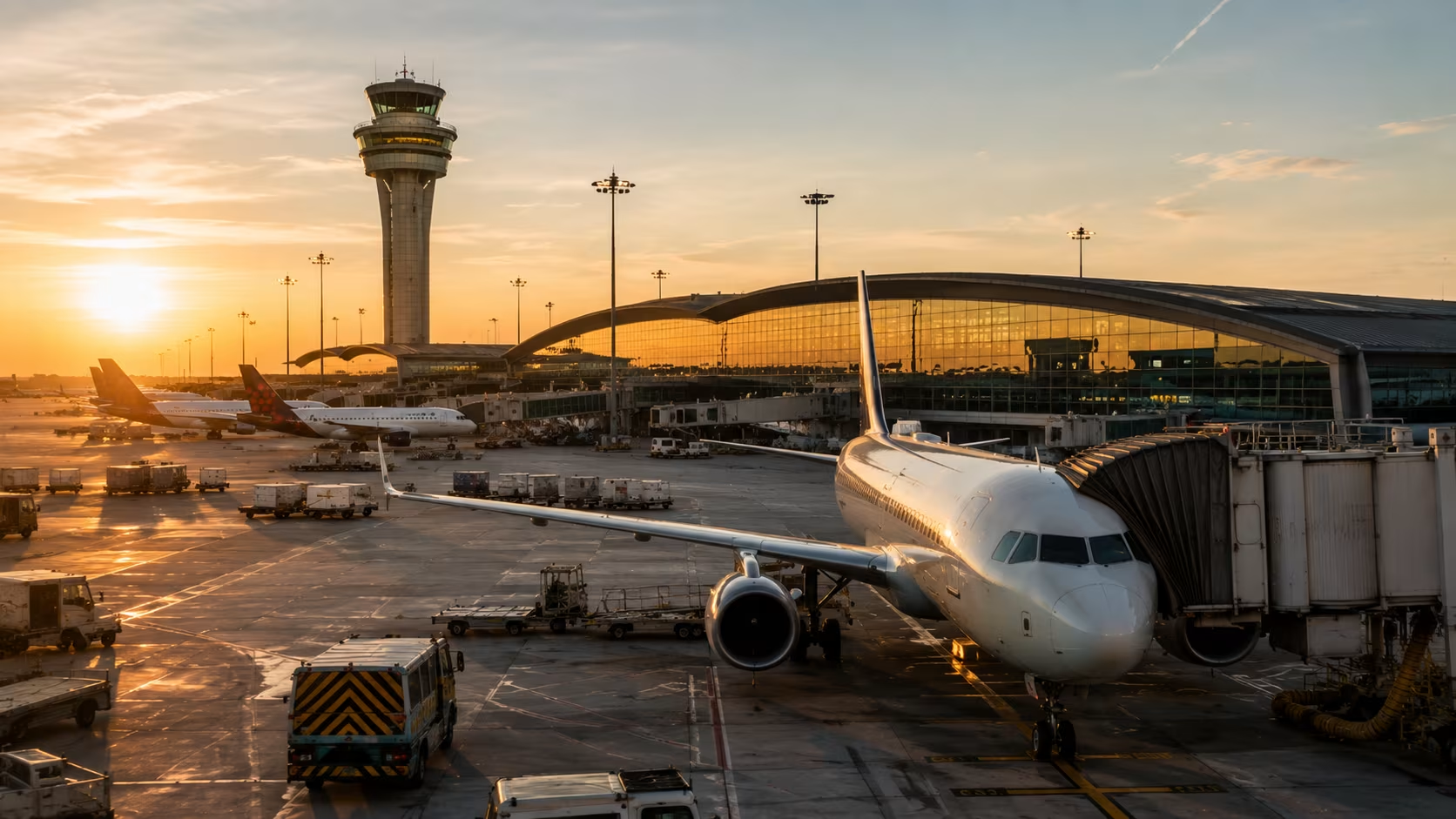
Brussels Airport (BRU). 12 km northeast of central.
From BRU:
- Train: €11.40 to Brussels Central, 17 min.
- Bus 12 / 21: €4.50, 35-45 min.
- Taxi: €40-50 to central.
- Uber/Bolt: €25-40.
Brussels is a major rail hub. Trains to Paris (1h 22m by Eurostar/Thalys), Amsterdam (1h 50m), London (2h via Eurostar), Cologne (1h 50m).
Getting Around
Walking
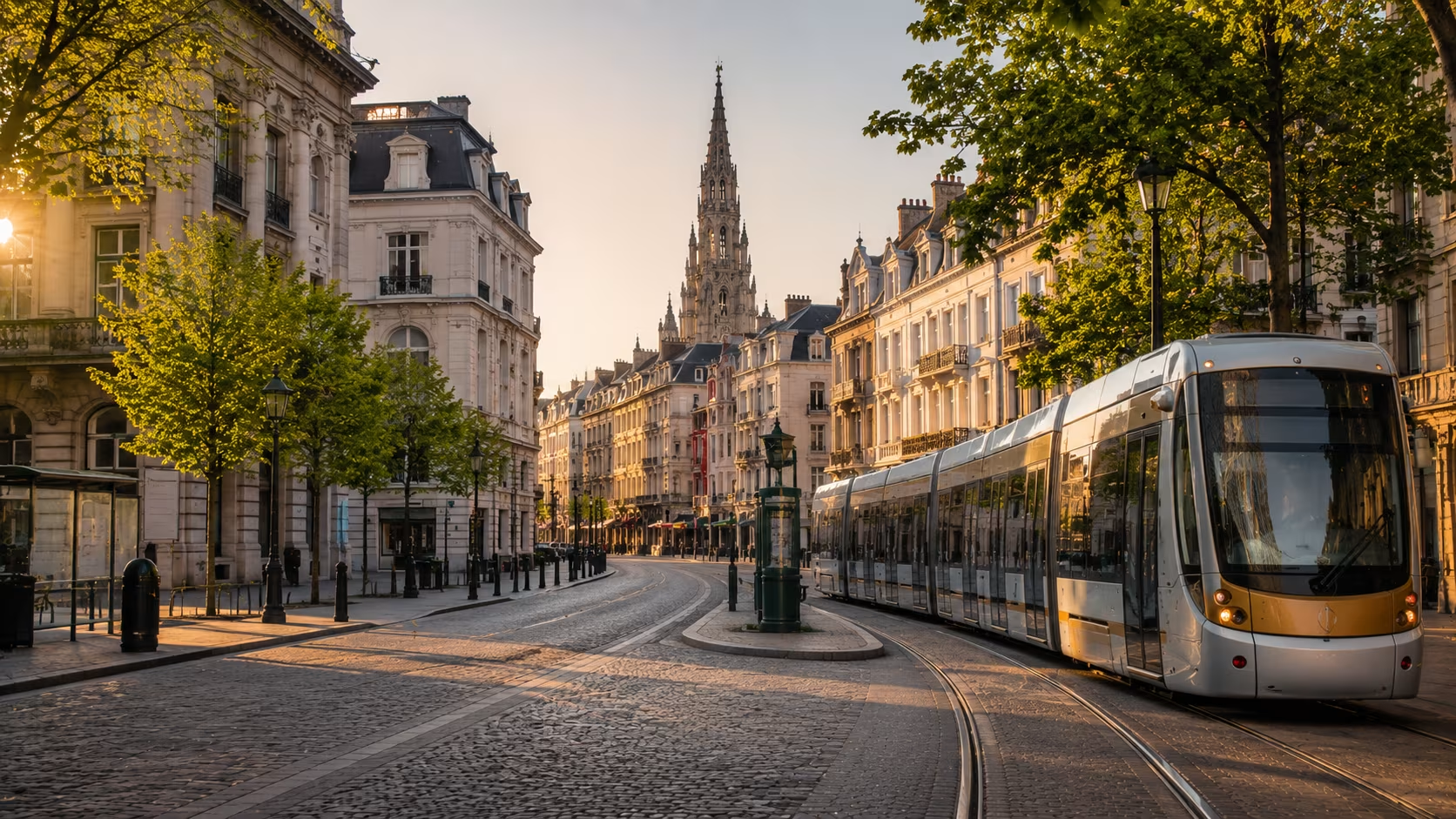
Central Brussels is small + walkable. The Grand Place + surrounding neighborhoods within 1.5 km.
Metro + Tram + Bus
STIB / MIVB is the unified transit system. Single ride €2.10; 24-hour pass €8. Apple Pay tap-in works on most lines.
Bicycle
Villo! is the public bike share. Reasonable infrastructure.
Taxi
Reliable but expensive. Apps: Uber, Bolt. Most central trips: €10-20.
Where to Stay
Brussels' neighborhoods feel different from each other.
Grand Place / Centre Ville
The central tourist district. Walking distance to Grand Place + Manneken Pis + Royal Galleries. Premium hotels.
Sablon / Marolles
The upscale antique + boutique district. Walking distance to Centre. Mid-range to higher-end hotels.
Sainte-Catherine / Marché aux Poissons
The central food + dining district. Boutique hotels.
Saint-Gilles
South of Centre. Bohemian + creative-class neighborhood. Mid-range hotels.
Ixelles / Châtelain
Upscale residential. Walking distance to Place du Châtelain (the famous Wednesday market). Boutique hotels.
Avoid as a base
- Around Brussels Midi station at night (transitional).
- Far suburbs for short trips.
Realistic 2026 nightly prices (4-star, weekday, shoulder):
| Neighborhood | Mid-range | Higher-end |
|---|---|---|
| Grand Place / Centre | €170-280 | €380-700 |
| Sablon | €160-260 | €350-650 |
| Sainte-Catherine | €150-240 | €330-600 |
| Saint-Gilles | €110-180 | €260-450 |
| Ixelles | €130-220 | €300-550 |
What to Book in Advance
Atomium
The 1958 World's Fair sphere structure. €18. Walk-up usually fine.
Magritte Museum
The museum of Belgian surrealist René Magritte. €10. Walk-up.
Royal Museums of Fine Arts
The combined art museums (Old Masters, Modern, Magritte, Fin-de-Siècle). €15. Walk-up.
Premium Restaurants
- Bon Bon (3-Michelin-star Belgian).
- Comme chez Soi (2-star, modern Belgian, since 1926).
- Sea Grill (2-star, seafood).
Brewery Tour
Multiple operators. Cantillon Brewery (lambic brewing tradition) tours daily. Brussels Beer Project in Dansaert.
Day 1 — Centre + Grand Place
08:30. Coffee at a Centre café. OR Coffee (specialty). MOK Coffee Roasters.
09:30. Grand Place (Grote Markt). UNESCO. The 17th-century guildhalls + Town Hall. Free + iconic. Allow 60 minutes.
10:30. Manneken Pis (the famous small fountain statue, 5 min walk from Grand Place). Iconic but anticlimactic; locals find tourists' enthusiasm amusing. 5 minutes.
11:00. Royal Galleries of Saint-Hubert. The 1847 covered shopping arcade — the prototype of modern shopping malls. Walk through; chocolate shops + bookstores + cafés. Allow 30 minutes.
11:30. Royal Museums of Fine Arts (€15 combined). The Old Masters Museum (Bruegel, Rubens, etc.) + the Magritte Museum (René Magritte). Allow 3 hours.
14:30. Lunch in Centre. Vincent for traditional Belgian. L'Ogenblik for casual. Le Cercle des Voyageurs for casual.
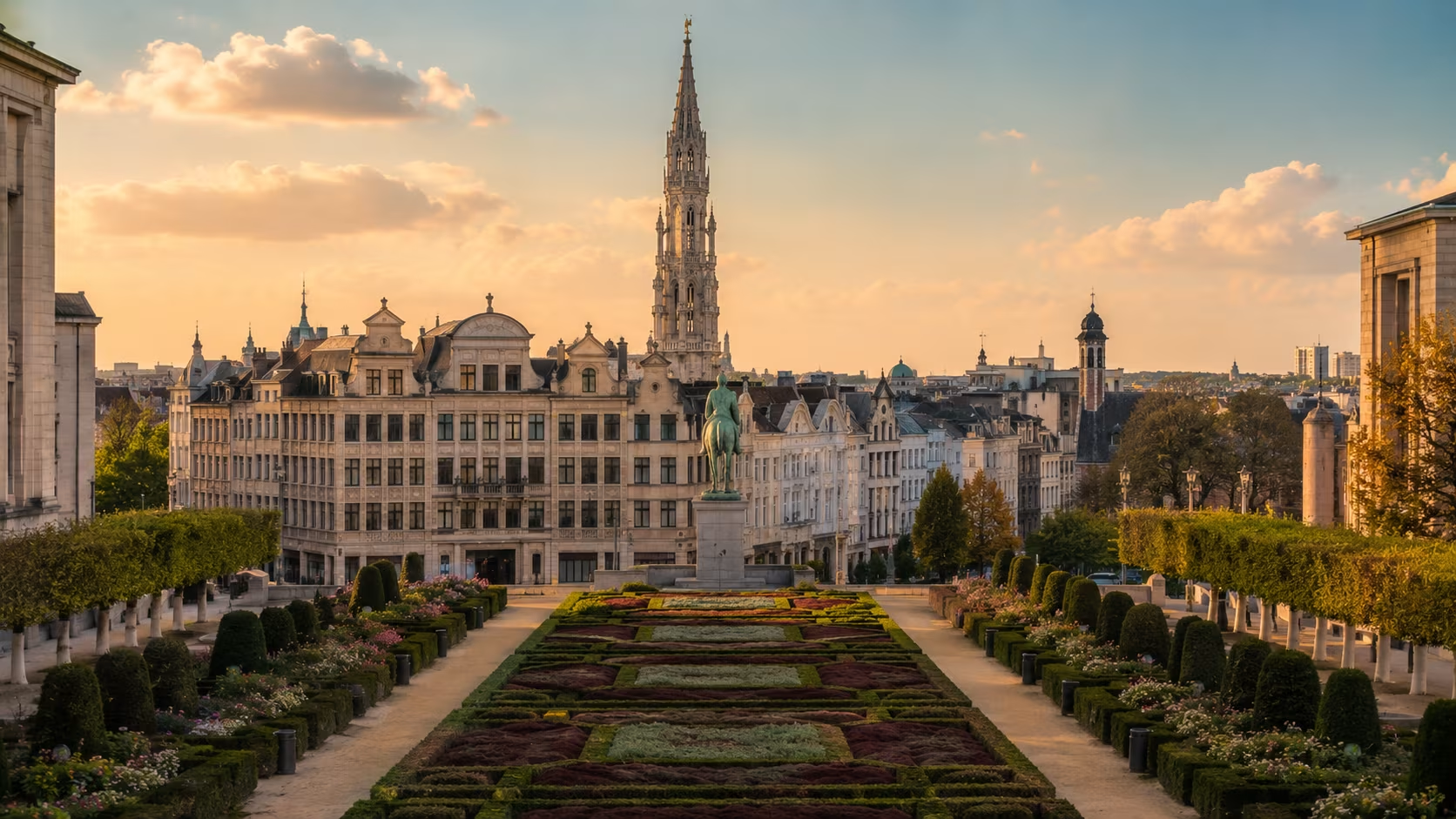
16:00. Walk Mont des Arts (the cultural complex with views over central Brussels) + Sablon (the upscale antique district + the Notre-Dame du Sablon church).
17:30. Sablon afternoon. Antique shops + chocolate shops (Pierre Marcolini flagship is here).
19:00. Aperitivo. Le Cirio (since 1886, the famous Belgian café). Greenwich Café (the famous chess café since 1914). Goupil le Fol (the absurd liqueur bar).
20:30. Dinner. Bon Bon if booked (3-star). Comme chez Soi (2-star). Restaurant Vincent (traditional Belgian). Sea Grill (2-star seafood).
Day 2 — Marolles + EU Quarter + Beer Day
09:00. Coffee.
10:00. Marolles district. The traditional working-class neighborhood. Walking the Place du Jeu de Balle flea market (the daily morning antique market — the city's most-distinctive cultural experience). Allow 90 minutes.
12:00. Lunch in Marolles or central. La Belle Maraîchère for traditional Belgian. L'Idiot du Village for upscale Belgian (Marolles).
14:00. EU Quarter. Walk through Place Schuman + the European Parliament + the Berlaymont (European Commission headquarters). The House of European History (free) + Parlamentarium (free).
Brussels' identity as EU capital is real; visiting the institutions reveals the bureaucratic-democratic-international layer of the city.
16:00. Walk back to central via Cinquantenaire Park (the 19th-century park with triumphal arch).
17:30. Beer culture afternoon. Choose:
- Délirium Café (Guinness-record holder for most beers — 2,000+ varieties).
- À La Mort Subite (since 1928, the famous lambic brewery bar).
- Brasserie de la Senne for craft beer.
- Cantillon Brewery tour for traditional lambic brewing.
19:30. Dinner with beer pairings. Chez Léon for moules-frites (the famous mussels-and-fries institution). Volle Gas for casual modern Belgian.
Day 3 — Choose: Bruges Day Trip, Ghent Day Trip, or Slow Brussels
Path A — Bruges Day Trip
Bruges is 100 km northwest. Train: 1 hour. UNESCO heritage city. The medieval canals + market square + the Béguinage (the historical women's religious community). Day excursion: 6-8 hours.
Path B — Ghent Day Trip
Ghent is 60 km northwest. Train: 35 minutes. Less-touristy than Bruges; the historic Gravensteen castle + St. Bavo's Cathedral with the famous Ghent Altarpiece. Day excursion.
Path C — Antwerp Day Trip
Antwerp is 50 km north. Train: 35 minutes. The diamond capital + fashion district + Rubens House. Day excursion.
Path D — Slow Brussels Day
Morning at the Train World (the railway museum) or Musée Horta (the Victor Horta-designed Art Nouveau house — the world's largest concentration of Art Nouveau architecture is in Brussels).
Lunch in Saint-Gilles or Ixelles.
Afternoon at Place du Châtelain or shopping in Sainte-Catherine.
Evening at one final restaurant.
What to Eat
Belgian cuisine is the most-underrated in Europe. The combination of French + Dutch + Brabantic + colonial-derived (Indonesian, Congolese) influences produces a distinctive food culture.
Headline Belgian Dishes
| Dish | What it is |
|---|---|
| Moules-frites | Mussels + Belgian fries (twice-fried with thick wedges, served with mayo). The national institution. |
| Carbonnade flamande | Beef stew braised in dark Belgian beer. Working-class winter classic. |
| Waterzooi | Cream-based stew with chicken or fish + vegetables. Ghent specialty but available in Brussels. |
| Stoemp | Mashed potatoes with various vegetables (carrots, leeks, peas). Working-class side. |
| Boudin | Belgian blood sausage. |
| Vol-au-vent | Puff pastry with chicken in cream sauce. |
| Witloof / chicons au gratin | Endive wrapped in ham, baked with cheese. |
| Fries (frites) | Twice-fried; served from windows ('friterie'/'frituur'); thick-cut; mayo + various sauces. |
| Belgian waffle | Two main types: Brussels (lighter, square, eaten with toppings) + Liège (denser, sweeter, eaten plain). |
| Pralines | The Belgian invention of filled chocolates (1912). |
| Speculoos | Spiced biscuits + the famous spread. |
| Belgian beer | One of the world's great beer traditions. Multiple categories: Trappist (only 5 in Belgium qualify), Lambic (spontaneous fermentation), Saison, Witbier, Quadrupel, Strong Belgian Ale. |
Where to Eat
Modern Belgian:
- Bon Bon (3-Michelin-star).
- Comme chez Soi (2-star, since 1926).
- Sea Grill (2-star seafood).
- L'Idiot du Village (modern Belgian).
Traditional:
- Vincent (traditional Belgian since 1905).
- Chez Léon (the famous moules-frites institution since 1893).
- Volle Gas (casual modern Belgian).
- In 't Spinnekopke (since 1762).
- La Belle Maraîchère (traditional Belgian seafood).
Beer Bars + Cafés:
- À La Mort Subite (since 1928, lambic).
- Délirium Café (2,000+ beers).
- Le Cirio (since 1886).
- Greenwich Café (since 1914, chess players).
Friteries:
- Maison Antoine (Place Jourdan, the famous fries institution since 1948).
- Frit Flagey (the famous fries place at Place Flagey).
Chocolate:
- Pierre Marcolini (multiple locations, modern luxury).
- Mary Chocolatier (since 1919).
- Wittamer (since 1910).
- Neuhaus (the original 1857 chocolatier; invented filled pralines 1912).
Costs and Budget
2026 daily budgets per person, excluding flights and hotel:
| Style | Per day | Notes |
|---|---|---|
| Backpacker | €60-90 | Hostel, working-class meals (frites + casual), walking |
| Mid-range | €110-170 | Mix of casual and proper restaurants, museums, transit |
| Comfortable | €200-320 | Better restaurants, beer bar visits, taxis |
| Higher-end | €450+ | Tasting menus, premium hotels, private tours |
Practical Info
- Cards. Universal.
- Tipping. 5-10% standard at sit-down restaurants. Round up at cafés. Hotel housekeeping €1-2/day.
- Languages. Brussels is officially bilingual French + Dutch. Most signage in both. English widely understood; default to French in Brussels (Dutch-speakers in Brussels generally accept French).
- Sundays. Most museums open. Many shops closed except in tourist zones.
- Pickpocketing. Real around Grand Place + on metro lines. Standard precautions.
- Heat. Rare; layers usually sufficient.
- Crime. Generally low. Standard urban precautions.
- The 'taxes' on bills. Service typically included; double-check.
Common First-Timer Mistakes
- Spending all day at Grand Place. It's iconic but small (60 minutes covers it).
- Eating at restaurants directly facing Grand Place. Tourist factories. Walk one block off; quality jumps.
- Trying chocolate from chains in Centre. Buy from Wittamer, Mary, Marcolini, or Neuhaus instead.
- Drinking only Stella Artois. Belgium has 1,500+ beer varieties; explore Trappist + Lambic + Saison styles.
- Visiting EU Quarter expecting tourism. It's bureaucratic; primarily for free House of European History visit.
- Not booking premium restaurants. Bon Bon + Comme chez Soi sell out 1-2 weeks ahead.
- Underestimating moules-frites. Real Belgian moules cooked properly (white wine + celery + onion) in a steamy pot is genuinely good.
- Skipping the Marolles flea market. It's the city's most-distinctive cultural experience.
- Not trying real Belgian fries. Twice-fried with thick wedges from a friterie.
- Pretending to understand Dutch when spoken to. Both languages get equal respect; English fallback works.
Final Notes
Three days in Brussels is the right length. One Grand Place + Centre + Sablon day; one Marolles + EU + Beer day; one excursion (Bruges or Ghent) or slow Brussels day.
The quietest piece of advice: spend a slow afternoon at Place du Jeu de Balle's flea market in Marolles. The market has been daily since 1873. Older Brussels residents selling family items + foreign collectors picking through; cafés around the square serving locals having morning beer; the working-class character that the tourist Centre has lost. The Brussels that stays with you isn't the Grand Place photograph; it's the cumulative density of a city that hosts the EU + speaks two languages + brews 1,500 beers + makes the world's best chocolate + still feels like a manageable walking-scale capital where you can do all this in two days + still come back for more.
0 Comments
No comments yet — start the conversation.