

Barcelona is the most uneven major European city to visit in 2026. The architecture is unmatched, the food culture is honest, the Mediterranean light is what photographers lie about, and the hostility toward mass tourism is the highest of any capital-class destination. Pickpocketing is at near-record numbers, the Airbnb ban means rentals work differently than in 2019, and the Sagrada Família is now a different building than the one in your guidebook from five years ago.
This is a clear-eyed first-timer guide. Five days, mid-range budget, no language background. What to actually book, where to actually sleep, what to skip, and the city's specific traps.
Quick Facts
| Item | Detail |
|---|---|
| Country | Spain (Catalonia) |
| Currency | Euro (€) |
| Languages | Catalan and Spanish; English in tourist zones |
| Time zone | CET (UTC+1) / CEST (UTC+2) |
| Tourist tax | €4–€6.75 per person/night (city + Catalonia layer) |
| Best time | April–June, September–October |
| Visa | Schengen, 90 days for most non-EU |
| Trip length | 4–5 days |
When to Go
Barcelona's microclimate is famously gentle, which is also why it gets crushed by visitors most of the year.
April to mid-June
The sweet spot. Highs of 18–25°C, the Sant Jordi day on April 23 fills La Rambla with book stalls and roses, jacarandas bloom in May. Crowds are present but manageable.
Mid-June to August
Brutally crowded, hot and humid (32°C+ regularly), beach mobbed, hotel prices peak. The Primavera Sound and Sónar festivals drive an extra surge in early June. Skip unless you specifically want festival energy.
September to October
The other peak window. Sea is still warm, light goes gold in the late afternoon, La Mercè festival in late September fills the city with parades and human towers (castellers).
November to March
Quietest. Cool but rarely cold (10–16°C). Christmas markets at Fira de Santa Llúcia and the Three Kings parade on January 5 are real local events. Hotel prices drop 30–40%.
Avoid: the week of Mobile World Congress (late February/early March, when hotel rates triple) and Sant Joan night (June 23), if you need sleep.
Getting There
Barcelona–El Prat (BCN) is 12 km southwest. Three options:
- Aerobús (A1, A2): €7.25 single, €13 round trip. Direct to Plaça Catalunya. Every 5–10 minutes, 30–40 minutes total. The simplest choice.
- Metro Line 9 Sud (orange line): €5.70 single Hola Barcelona ticket. Connects to the broader metro at Torrassa or Collblanc. Slower (40–50 minutes) but cheaper if you're heading anywhere except center.
- Taxi: €30–40 to most central neighborhoods. Metered, regulated, no airport supplement scam.
The high-speed rail from Madrid (AVE) takes 2h 30min and costs €40–80 booked in advance. Trains from France (Renfe-SNCF) connect Barcelona to Paris in 6h 30min direct.
Getting Around
Barcelona's metro is straightforward. Buy a T-Casual card at any vending machine for €13.07, good for 10 rides on metro, bus, tram, FGC suburban rail, and RENFE within Zone 1. The card is shareable across travelers. Single ticket: €2.65.
Avoid the multi-day passes for short trips. The math only works if you use 5+ rides per day, which most first-timers don't because the city is walkable.
Walking is the right default. The old city, Eixample, and Gràcia are all interconnected on foot. Comfortable shoes, not fashion sneakers; the cobblestones in Barri Gòtic are real.
Bicing (city bike share) is for residents; registration requires a Spanish ID. Donkey Republic is the practical visitor option, around €15 for 24 hours.
Where to Stay
2026 update: Barcelona's mayor announced in 2024 that all short-term rental licenses (around 10,000 apartments) will be revoked by November 2028. Airbnb-style rentals still exist for now, but the supply is shrinking and prices have shifted upward. Hotels are correspondingly more competitive than they were.
Eixample
The grid neighborhood north of the old city, Gaudí's Casa Batlló and La Pedrera in walking distance. Wide tree-lined streets, neighborhood feel, less tourist density than Barri Gòtic. Best base for first-timers. Right Eixample (Dreta de l'Eixample) is calmer; Left Eixample (Esquerra) is more residential.
Gothic Quarter (barri Gòtic)
Narrow medieval streets, central, walkable to everything. Photogenic but very loud at night, especially around Plaça Reial and La Rambla. Pickpocket density is highest here. Stay if you want to be in the middle of it; choose another base if you want to sleep.
El Born
West of Gothic, slightly more boutique-shopping vibe, the Picasso Museum and Santa Maria del Mar nearby. Better mid-range balance: lively but not chaotic.
Gràcia
North of Eixample, formerly a separate village. Small plazas, more local than tourist, indie restaurants. Real neighborhood feel. Slightly less central but a 15-minute metro to anywhere.
Poblenou
Old industrial district, now design and tech, beach-adjacent. Quieter, more affordable, longer commute to historic center. Good for longer stays of a week or more.
Avoid as Your First Base
- El Raval west of La Rambla. Improving but still uneven; bag-snatching incidents above city average.
- La Barceloneta beach. Cool to visit, terrible to sleep in (loud, hot in summer, far from real food).
- Anywhere on La Rambla itself. The street is a tourist machine. Sleep one block off it at most.
Realistic 2026 nightly prices (4-star, weekday, shoulder):
| Neighborhood | Mid-range | Higher-end |
|---|---|---|
| Eixample | €160–230 | €350–600 |
| Gothic | €140–200 | €280–500 |
| El Born | €170–250 | €340–600 |
| Gràcia | €120–180 | €240–420 |
| Poblenou | €110–170 | €220–380 |
What to Book in Advance
Barcelona's headline sights are now booking-essential. The walk-up era ended around 2018.
Sagrada Família
The official completion target is now 2034 (gradually slipped from the 2026 announced earlier). Six towers are still incomplete. Tickets release 60 days ahead at sagradafamilia.org. Book the morning sun slot (10:00–12:00): light through the eastern stained glass is the entire reason to enter. €36 with audio guide. Tower access €10 extra; the basic ticket sees the same interior.
Park Güell
Timed-entry tickets only since 2019. €13. Book 1–2 weeks ahead in summer. The free zone (outside the monumental zone) is still walkable without a ticket if you only want the park views and don't need the famous lizard mosaic.
Casa Batlló
Gaudí's Manzana de la Discordia anchor. €35 basic ticket. The night version ("Magic Nights") with rooftop wine adds €15 and is genuinely better.
Casa Milà (la Pedrera)
A 10-minute walk up Passeig de Gràcia from Casa Batlló. €28. The rooftop chimneys are the photo, but the apartment recreation on the lower floor is the actual education.
Picasso Museum
Somewhat overlooked. Strong collection of his Barcelona-period work. €14, free Thursday evenings 17:00–19:00 (book ahead, lines).
Camp Nou
FC Barcelona's stadium reopens fully in 2026 after the 2023–2025 renovation. Tour and museum tickets are €30–35; matches obviously cost more.
Pickpocketing — the Specific Reality
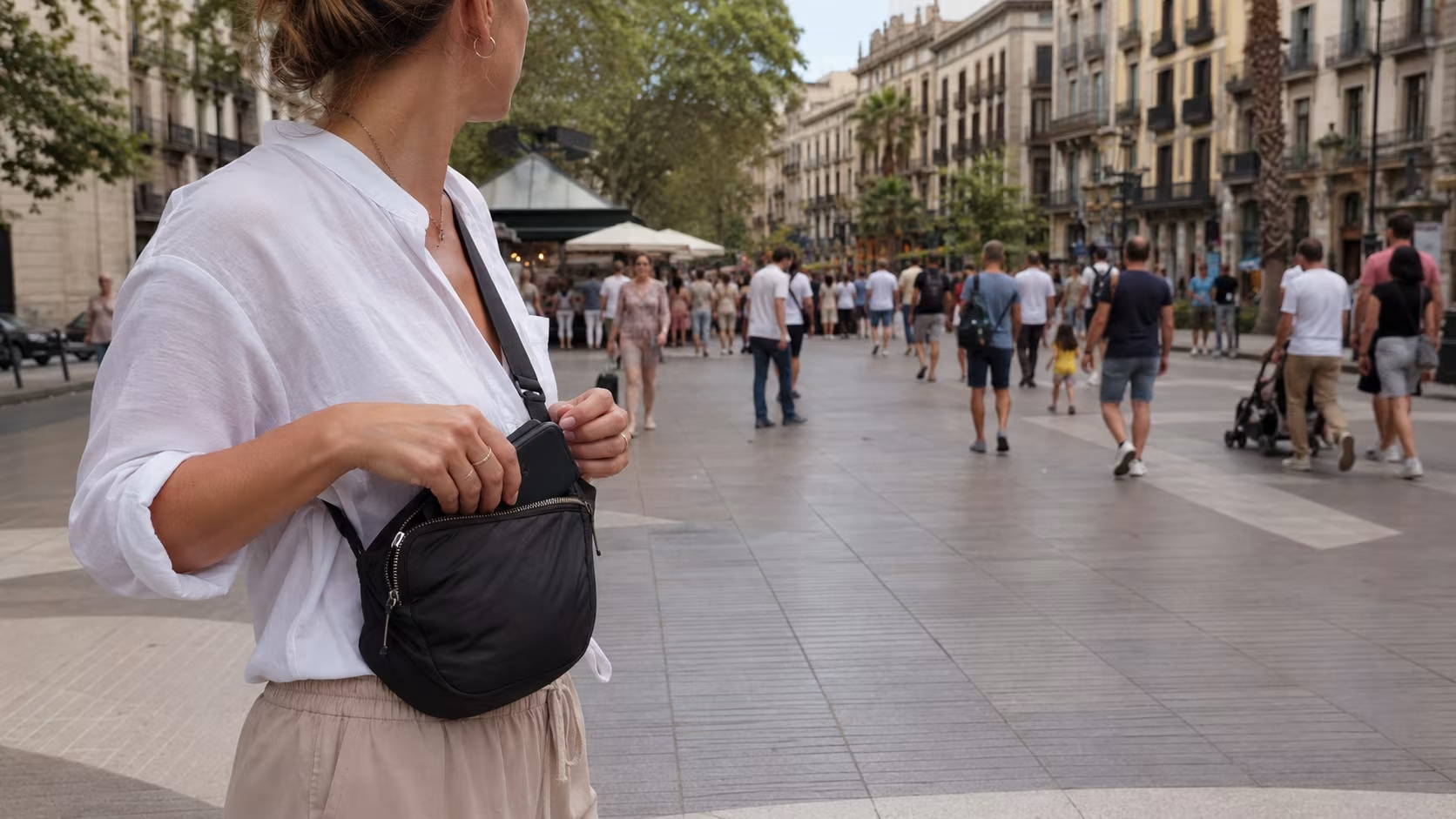
Barcelona's pickpocketing is among the worst in any major European city. The 2024 city government data put incidents at over 30,000 reports per year, concentrated in metro Line 3 (the green line, hits all the major sights), La Rambla, Plaça Catalunya, and the immediate area around Sagrada Família.
The methods you'll see:
- The flower seller distraction (someone hands you a flower; their partner accesses your bag).
- The map question (someone asks for help; their partner reaches into your pocket).
- The metro doors timing (someone bumps you as the doors open, hand into pocket on the way out).
- The fake football game (a chaotic crowd around what looks like a soccer ball; everyone's hand is in someone else's pocket).
The defenses:
- Crossbody bag with the zipper in front, hand on the zipper in crowds.
- Phone in front pocket only, never back.
- Wallet in a zipped inner jacket pocket, not in the bag.
- Don't engage with the flower-handing, map-asking, petition-signing strangers near major sights.
- On the metro, stand with your back against the door away from the platform side.
It's not paranoia; it's specific prevention against a specific high-frequency event. The same protocols that stop pickpocketing in Rome or Naples work here.
What to Eat
Catalan cuisine is its own thing: lighter than Castilian Spanish, leaning Mediterranean, technique-driven. The dishes worth ordering and where to find good versions.
The Anchor Dishes
Pa amb tomàquet. Toasted bread rubbed with ripe tomato, garlic, olive oil, salt. The default Catalan starter. Should appear at almost every meal.
Tapas, Barcelona-style. Smaller plates than Andalusia, more refined. Cal Pep in El Born is the institution; queue at 19:00 to be seated by 19:45. Quimet & Quimet in Poble-sec is a tiny standing-only spot with stacked-can tapas, equally good.
Esqueixada. Salt cod salad with tomato, onion, peppers, olive oil. Summer dish.
Fideuà. Like paella but with thin noodles instead of rice, often with seafood. Look for it on lunch menus near the marina.
Crema catalana. Burnt-sugar custard, the local cousin of crème brûlée, supposedly older.
Cava. Catalan sparkling wine, often better than its price suggests. Local glass: €4–7.
Vermut. A Saturday-lunch ritual. Vermouth on draft with a slice of orange and a green olive, always before noon, always with potato chips. Take this ritual seriously; it's one of the city's best small pleasures.
Restaurants Worth the Trip
| Restaurant | Known for | Price |
|---|---|---|
| Cal Pep | Tapas, queue-only | Mid |
| Quimet & Quimet | Standing-tapas, vermut | Low–mid |
| Bar del Pla | Modern small plates | Mid |
| Disfrutar | Tasting menu (3 Michelin) | Higher |
| Bodega 1900 | Adrià-affiliated tapas | Mid–high |
| Granja Petitbo | Brunch, decent coffee | Low–mid |
| Mont Bar | Updated tapas | Mid–high |
| Can Vallès | Old-school paella in Poble-sec | Mid |
| Bar Pinotxo | Boqueria market counter | Low–mid |
Where Locals Don't Eat
La Rambla restaurants. Without exception. The food is bad, the prices are inflated, the tourist menus exist nowhere else on Earth. Walk one block off La Rambla in any direction for better and cheaper.
Areas to Explore
Barri Gòtic (half Day)
Narrow medieval streets, the Barcelona Cathedral, Plaça Sant Jaume (city hall, regional government). Get lost on purpose. Avoid the streets directly off La Rambla; they're tourist trap density.
El Born and Picasso Museum (half Day)
More boutique-y, less chaotic. Carrer Montcada is the museum-cluster street. Santa Maria del Mar, a 14th-century basilica, is the locals' Sagrada Família before there was a Sagrada Família. Free entry except guided tours.
Eixample and Gaudí (full Day)
Walk Passeig de Gràcia from Plaça Catalunya north. Casa Batlló (book ahead), Casa Milà (book ahead), then turn east on Provença for Sagrada Família. End with a late lunch in Eixample.
Gràcia (half Day)
Metro to Fontana, walk south to Plaça del Diamant, Plaça de la Vila de Gràcia, Plaça del Sol. Smaller squares, working cafés, more Catalan than Spanish in feel. End with Park Güell uphill if you booked a slot.
Montjuïc (half Day)
Cable car or Funicular up. Castle, Montjuïc Communications Tower, the Olympic stadium. The Joan Miró Foundation is the cultural anchor. Sunset viewpoint from the Magic Fountain (no longer running due to drought restrictions through 2026; check current status).
Beach (as Long as You Want)
Barceloneta is the closest. The beaches further northeast (Bogatell, Mar Bella, Nova Mar Bella) are progressively quieter and more local. Topless sunbathing is normal; beach vendors selling massages, beer, and mojitos are also normal. Don't buy the mojitos.
Day Trips
Sitges
40 minutes by RENFE train, €4.50 one way. A coastal town with white-and-yellow architecture, gay-friendly, calmer than Barcelona. Half-day or full-day depending on lunch ambitions.
Montserrat
The serrated mountain monastery. Train + cable car/funicular combination, around €25 round trip from Plaça d'Espanya. Half day. The monastery, the boys' choir at noon, the hiking trails behind.
Girona
40 minutes north on the high-speed AVE. Medieval old town, Jewish quarter, walking the city walls. Day trip, doable in 5–6 hours including travel.
Costs and Budget
Daily 2026 budgets per person, excluding flights and hotel:
| Style | Per day | Notes |
|---|---|---|
| Backpacker | €50–75 | Hostel, market lunches, casual dinners, walk |
| Mid-range | €100–150 | Mix of cafés, tapas, 1–2 attractions, metro |
| Comfortable | €170–260 | Full sights, decent restaurants, taxi when convenient |
| Higher-end | €350+ | Tasting menus, private guides, premium drinks |
Practical Info
Language. Catalan is the regional co-official language. Most Barcelonans speak Spanish too. English is widely spoken in tourist zones; less so in Gràcia, Poblenou, and outer neighborhoods. Learning "hola" / "si us plau" / "gràcies" in Catalan opens doors.
Money. Cards everywhere; €30–50 cash for the rare cash-only spot. Avoid Euronet ATMs. ATMs marked with major Spanish bank names (BBVA, Sabadell, CaixaBank) charge nothing or minimal fees.
Tipping. Not expected. Round up at cafés. 5% at sit-down dinners is generous.
Drug-store hours. Most close on Sundays. The 24-hour pharmacies are listed on every closed pharmacy's window.
Drinking water. Tap is safe but tastes mineral-heavy. Most restaurants will bring bottled by default; ask for tap if you want it ("agua del grifo").
Common Mistakes
- Walking La Rambla and thinking that's Barcelona. It's a tourist artery; the city is in the side streets.
- Eating dinner at 19:00. Real Barcelona dinners start 21:00. Anything full at 19:30 is a tourist place.
- Skipping booking the major Gaudí sights. Walk-up tickets stopped existing.
- Carrying a phone in a back pocket on the metro. It will be gone before the next stop.
- Buying a multi-day metro pass on day one. T-Casual is enough for most first-timers.
- Eating paella for dinner. Locals eat it for lunch. Restaurants serving paella as a dinner main are tourist-targeted.
- Going to Park Güell without a ticket. The free zone is fine; the famous bits cost €13 timed.
Final Notes
Barcelona has changed a lot in five years. The pre-pandemic city had near-mythic status as Europe's perfect short-trip destination. The current city is harder, more expensive, more overrun, more tense between residents and tourists. None of that means it's not worth visiting: the architecture is still extraordinary, the food culture is still intact, the light is still perfect on a Tuesday afternoon in October. It just means you have to plan more, book earlier, sleep further from La Rambla, and watch your bag.
Four or five days is enough to leave with the city in your bones. Go. Just don't go casually.
0 Comments
No comments yet — start the conversation.