

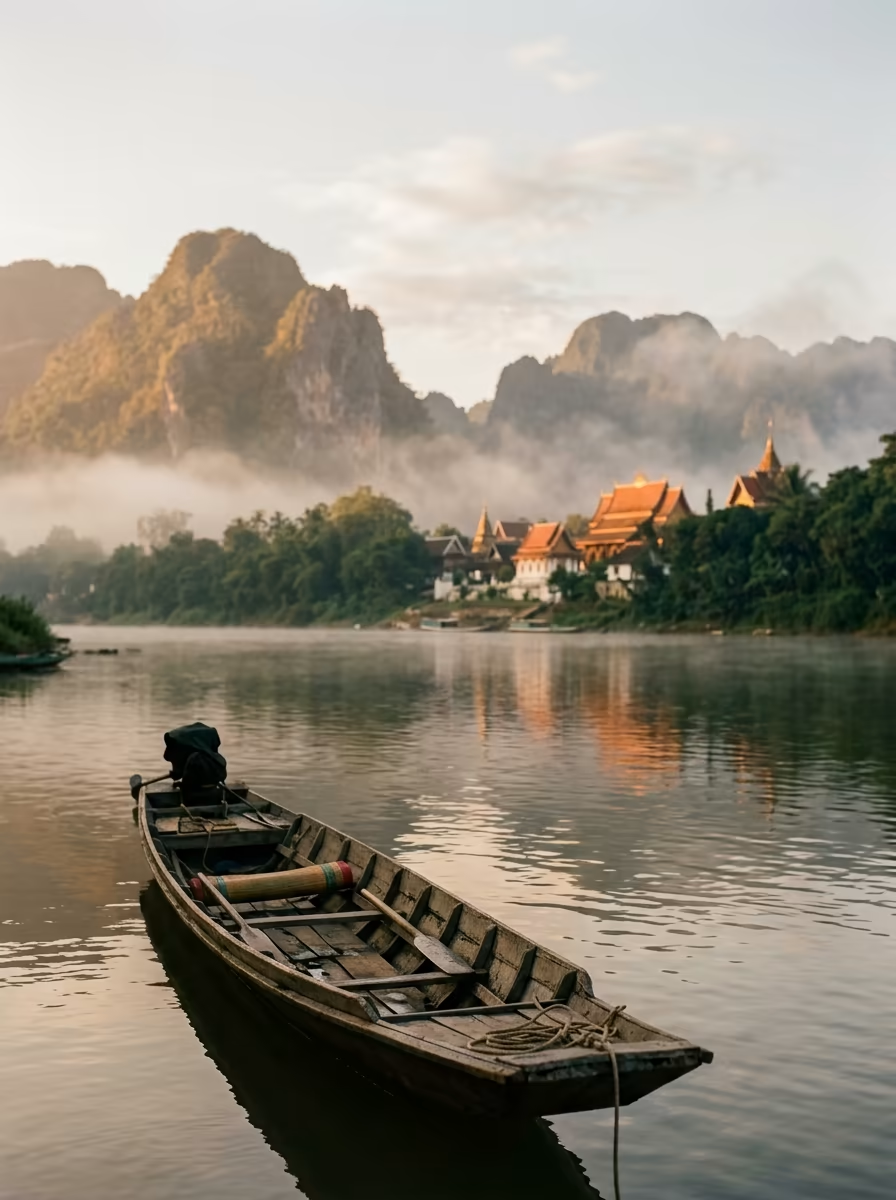
The slow boat from the Thai border at Huay Xai takes two days to reach Luang Prabang: two days on a converted cargo boat with wooden bench seats, a cooler of Beer Lao, and 200km of the upper Mekong River unspooling past limestone karsts and bamboo villages that have no road access. It is uncomfortable in the way that overnight trains are uncomfortable: entirely tolerable, occasionally meditative, and the correct way to arrive at a place you want to understand rather than just visit.
I didn't intend to take the slow boat. I had a flight booked from Chiang Rai to Luang Prabang: 45 minutes, air-conditioned, normal. I cancelled it on the advice of someone I met at a guesthouse in Chiang Mai, who said only: "The slow boat changes how you feel about the whole trip. The plane doesn't." She was right, and I was wrong to have needed convincing, and by the time we arrived at Luang Prabang's riverfront on the second afternoon I already felt I'd earned something, not just an arrival but a genuine transition from wherever I'd been to wherever I was.
Laos is not Southeast Asia's most dramatic country and it knows it. There is no Bangkok, no Ha Long Bay, no Angkor Wat in Laos: the sights are scaled to a country that had three million people (it now has about seven million) and never developed the monumental ambitions of its neighbors. What Laos has instead is texture and pace, and Luang Prabang specifically has a combination of physical beauty, Buddhist cultural depth, and genuine quietness that make it one of the most calming places I've spent extended time in Asia.
Laos after Thailand and Cambodia
Luang Prabang is the right choice for travelers who've been to Thailand and Cambodia and found them, particularly their tourist corridors, somewhat exhausting at high volume. It's not a third alternative to those countries; it's a different kind of experience. The crowds exist (it has been UNESCO World Heritage listed since 1995 and the tourism consequences are visible), but the city's physical layout (a peninsula between the Mekong and the Nam Khan rivers) limits its footprint, and the surrounding country empties out very quickly.
The three-week itinerary I'm describing here uses Luang Prabang as a base for the first ten days, then moves south through the Vang Vieng corridor (overrated in its party incarnation but actually beautiful walking country), and ends at Si Phan Don (Four Thousand Islands) in the far south near the Cambodian border, one of the few places in mainland Southeast Asia where you can sit on a river island for three days and genuinely not feel guilty about it.
Laos is not ideal for travelers in a hurry. Infrastructure is genuinely limited: roads are bad, buses are slow, the domestic flight network connects only major cities, and nothing happens at the speed travelers from developed countries expect. This is part of the point, and it's worth being honest about: if you have ten days and want to maximize sights-per-day, Thailand or Vietnam will serve you better.
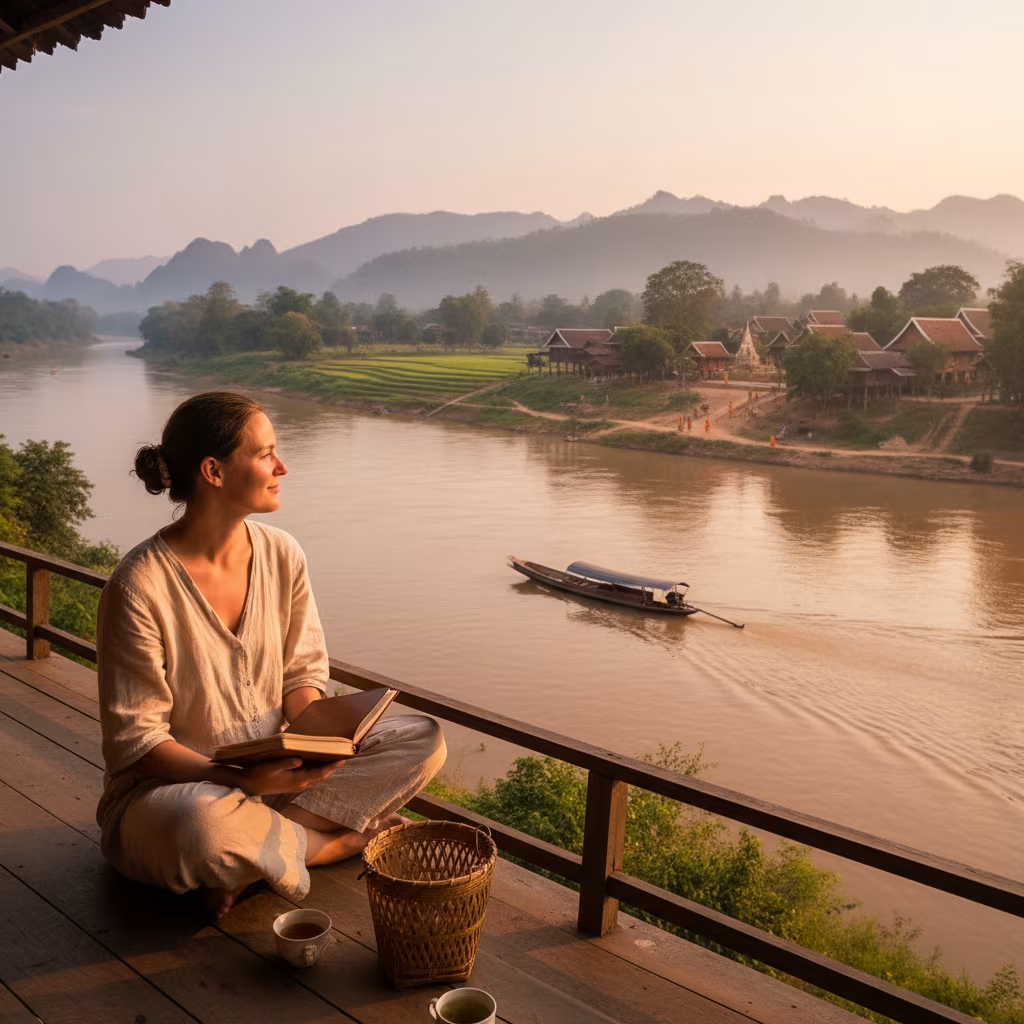
Three weeks: slow boat, Luang Prabang, the north
Days 1–2: Arrive via slow boat or fly into Luang Prabang. If arriving by slow boat, you land at the riverside pier in late afternoon on day two and walk to your guesthouse through the old city, the French colonial-era shophouses and the golden wats immediately visible. If flying, you arrive at Luang Prabang International Airport (a 12-minute tuk-tuk from the center) and still walk through the same peninsula. Either way: first evening at Utopia Bar on the Nam Khan riverbank, bamboo platforms over the river, sunset, Beer Lao at ₭15,000 (less than $1). Book dinner at Tamarind the next night (Lao cuisine tasting menu, one of the best meals in Luang Prabang).
Days 3–5: Temples, cycling, and the morning alms. The tak bat, the monks' morning alms procession, occurs at 5:30–6:30 AM daily. Watch it from a respectful distance rather than from the middle of the procession, which has become a tourist-management problem. The procession is extraordinary; the experience of being surrounded by tourists photographing it is less so. Walk the main temple circuit: Wat Xieng Thong (the finest Lao temple, the mosaic on the rear wall of the main sim), Wat Visoun (the smaller, quieter, more meditative option), and Mount Phousi for the city view at sunset. Rent a bicycle (₭20,000–30,000/day, everywhere) and cross the Nam Khan bridge to the opposite bank: the villages there have neither tourism nor expectations.
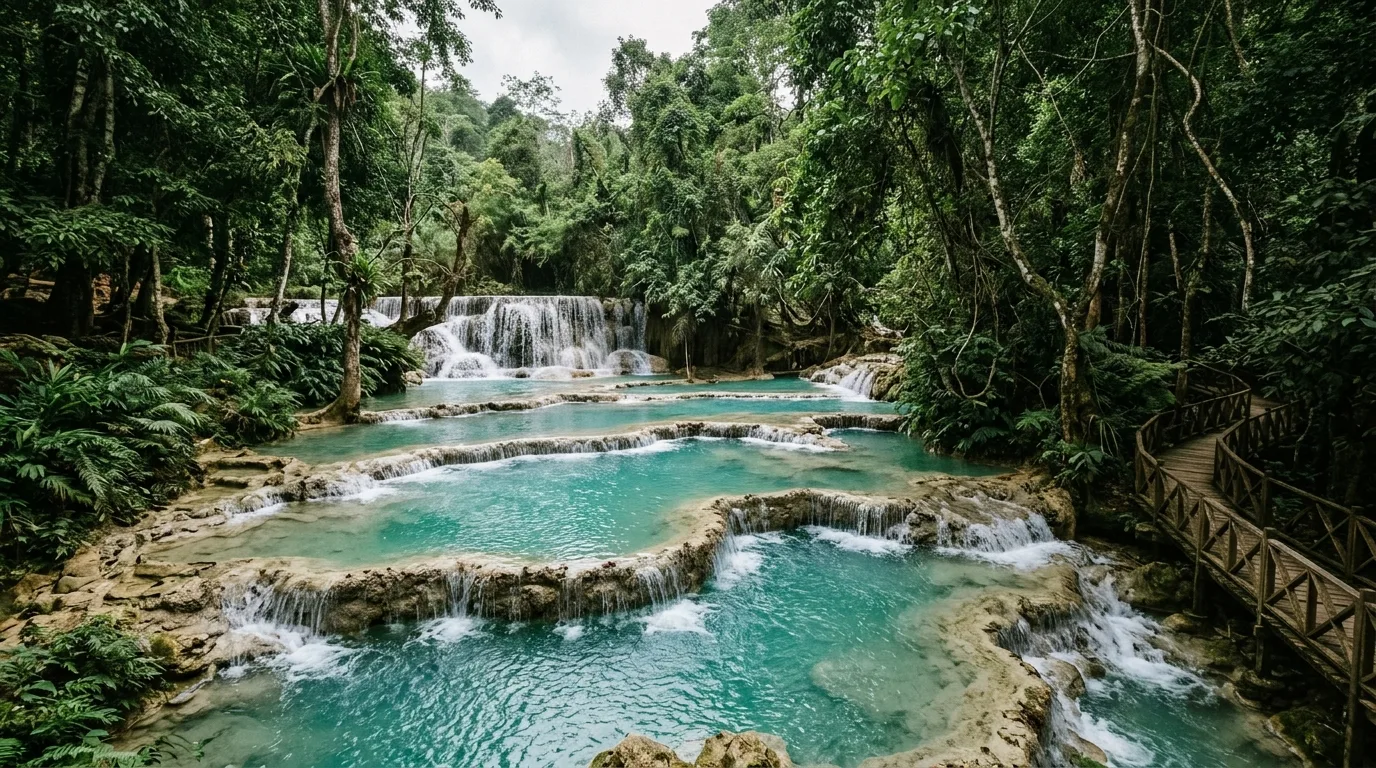
Days 6–8: Kuang Si Waterfall and surrounding villages. Kuang Si is 29km south of Luang Prabang, a series of turquoise-blue terraced pools and a 60m main falls. It's popular and well-managed; arrive before 9 AM to beat the day-trip buses. The pools are swimmable (and genuinely beautiful). The drive there and back by scooter (rent for ₭80,000/day from any guesthouse) passes through rural lowland Laos: rice paddies, water buffalo, villages of wooden houses on stilts. Take the longer route back through Ban Ou and stop at the village. This is not a contrived village visit; it's a village on a road that you happen to be on.
Days 9–10: Nong Khiaw. A small town 4 hours north of Luang Prabang by minibus, one of the most beautiful settings in Laos. The town sits in a narrow limestone gorge where the Nam Ou River bends between vertical karsts. Kayaking on the Nam Ou (half-day tours, ₭150,000 from guesthouses), the Pha Tok caves (communist Pathet Lao hiding places during the bombing campaign, the most historically weighty site I visited in Laos), and two nights of complete quiet. Return to Luang Prabang, day 11.
Days 11–14: Vang Vieng without the party. Vang Vieng has a reputation (justified, in its southern backpacker strip) for low-frequency excess. The northern side of town and the surrounding karst landscape are something else. Rent a bicycle and explore the caves and rice paddies of the Tham Sang Triangle. Take one half-day kayaking trip on the Nam Song River. Eat at Nisha, a small Indian restaurant near the market that serves the best food in town. Stay at the Riverside Boutique Resort (₊₊₊, €50–70/night) to avoid the party strip.
Days 15–21: Si Phan Don (Four Thousand Islands). The southernmost part of Laos, where the Mekong spreads across a vast flood plain and breaks into hundreds of islands and channels. Don Det is the main backpacker island: hammocks, guesthouses, bicycles, and the Khone Phapheng Falls (the largest waterfall by volume in Asia, genuinely spectacular). Don Khon, connected by a French colonial bridge, is quieter. The Irrawaddy dolphins visible at the Cambodia border (Kampi pool area) are the most reliably sighted population in the Mekong. Three or four days here doing essentially nothing, and it's exactly the right amount.
From the Amantaka to riverside guesthouses
Luang Prabang
The Amantaka is the extraordinary splurge option (from $600/night, a converted French colonial hospital, worth knowing about even if you don't stay). The Apsara Rive Droite across the Nam Khan is a mid-range highlight at €80–110/night: beautiful wooden architecture, excellent service, a short walk from the town center. For budget travelers, the numerous €15–25/night guesthouses on Khem Khong Road facing the Mekong are well-run and have river views.
Si Phan Don
Don Det guesthouse bungalows run €8–15/night: simple bamboo or wooden structures on stilts, mosquito nets, fans (no air-conditioning on most islands). Sommaylay Guesthouse is a reliable mid-range at €20–30/night with an unexpectedly good restaurant.
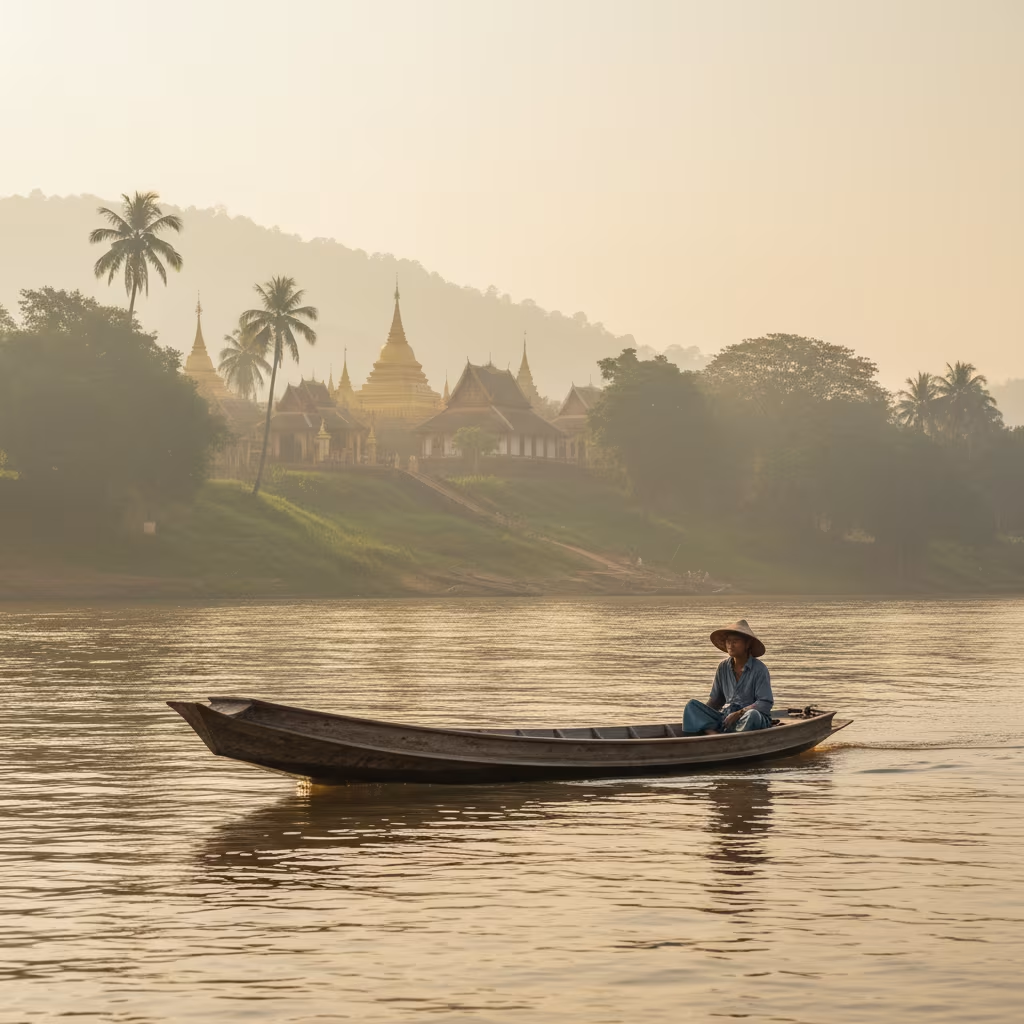
Entering via Bangkok — or on the slow boat
Most travelers enter Laos via Bangkok (Thai Airways, Bangkok Airways, Lao Airlines to Luang Prabang) or overland from Thailand via the slow boat crossing described above. Vietnam Airlines connects to Hanoi for onward travel.
Within Laos: tuk-tuks and songthaews (covered pickup trucks used as shared taxis) for short distances; minibuses and VIP buses between cities. The Lao–Chinese railway now connects Vientiane to the Chinese border, a significant new infrastructure link that also runs to Luang Prabang via a gorgeous mountain section. A local SIM (Unitel or LTC) available at the airport for ₭50,000–70,000 with adequate data. Kip (₭) is the currency; US dollars are also widely accepted in tourist areas, though at poor rates, so use kip.
November to February, and what the hot season does
November to February
The cool dry season. Best weather (24–28°C), no rain, clear skies. Peak tourist season, but Laos doesn't peak the way Thailand does: the crowds are manageable even at their height.
March to May
Hot season. Very warm (32–38°C), dusty. Not ideal but off-peak prices and fewer tourists. The Lao New Year (Pi Mai) in mid-April is an extraordinary street water festival worth experiencing.
June to October
Wet season. Heavy rains, swollen rivers, some roads impassable. The Mekong is dramatic; the Kuang Si pools are fullest; the landscape is vivid green. A legitimate choice for travelers who don't mind getting wet.
Laos: the questions worth settling first
Do I need a visa for Laos?
Citizens of most developed nations can get a Laos visa on arrival at major entry points (Luang Prabang Airport, Vientiane Wattay Airport, most major land border crossings) for $30–42 USD. A passport photo and the exact fee in US dollars are required. The e-visa is also available in advance at laoevisa.gov.la.
Is Laos safe?
Generally very safe for tourists. Crime against tourists is rare. The primary safety concern is unexploded ordnance (UXO) in rural areas, particularly in Xieng Khouang province (Plain of Jars) where American bombing during the Vietnam War left significant UXO contamination. Stay on marked paths in rural areas, particularly off the main tourist circuits.
Can I use cards in Laos?
In major cities and tourist areas, some ATMs dispense kip for international cards. Beyond that, the country is largely cash-dependent. Bring US dollars (in good condition; torn notes are sometimes refused) to exchange locally, or withdraw kip from ATMs in Luang Prabang or Vientiane before heading into smaller towns.
How long should I spend in Luang Prabang?
Ten days is the right length for genuinely understanding the town and its surroundings without repeating yourself. Seven days is the realistic minimum. Five days feels rushed. The town is small enough that three days is technically sufficient to see the main sites, but insufficient for understanding what makes it worth the trip.
Luang Prabang numbers:
| Item | Figure | Note |
|---|---|---|
| Slow boat from Huay Xai | 2 days | flight from Chiang Rai: 45 min |
| Beer Lao at Utopia | ₭15,000 (< $1) | — |
| Bicycle rental | ₭20,000–30,000/day | — |
| Morning alms (tak bat) | 5:30–6:30 AM daily | — |
| Kuang Si falls | 29 km south; 60 m main fall | UNESCO listed since 1995 |
0 Comments
No comments yet — start the conversation.