

The Royal Jordanian flight from London descends over a landscape that looks, from altitude, like a pale sand painting: limestone hills bleached to near-white, the occasional dark smudge of an olive grove, and then the city spreading across its own hills in a density that surprises people who expected desert. Jordan is not what first-time visitors picture: it's a country with mountains, pine forests, a Roman colonial legacy, an extraordinary Nabataean civilization, and a capital that is, by the standards of the surrounding region, functional, safe, moderately cosmopolitan, and extremely good at feeding people.
I came to Amman three times before I understood it. The first time, I used it as a one-night transit point for Petra. The second time, I gave it two nights and found Rainbow Street and a mezze restaurant in the old city and realized I'd been making an error. The third time, I stayed four nights and used it as a base: a morning drive to Jerash, a full day in the Roman city; then west to the Dead Sea; then south to Wadi Rum for a night in the desert. I came home with a layered understanding of a country that deserves far more of the travel conversation than it currently occupies.
Four days in Amman-and-environs is the correct unit. The city alone might feel slim at four days; the combination of the city and two or three day trips produces something close to complete.
Jordan as a first trip to the region
Jordan is the right Middle East entry point for travelers who've not been to the region, and Amman is the right base, for a specific set of reasons. The country's political stability (relative to its neighbors: Syria, Iraq, and the Palestinian territories all share borders) makes it logistically predictable in a way that Egypt, Lebanon, and Turkey currently are not, for various reasons. The tourist infrastructure, particularly for Petra and Wadi Rum, is genuinely excellent. The people are extraordinarily hospitable in a way that is not performance-for-tourists but something older and more structural: Jordan has absorbed Palestinian, Iraqi, Syrian, and South Sudanese refugees in numbers proportional to its population that are among the highest in the world, and the society has not collapsed into hostility. This fact is visible in daily life in Amman in ways that a traveler can perceive without fully comprehending.
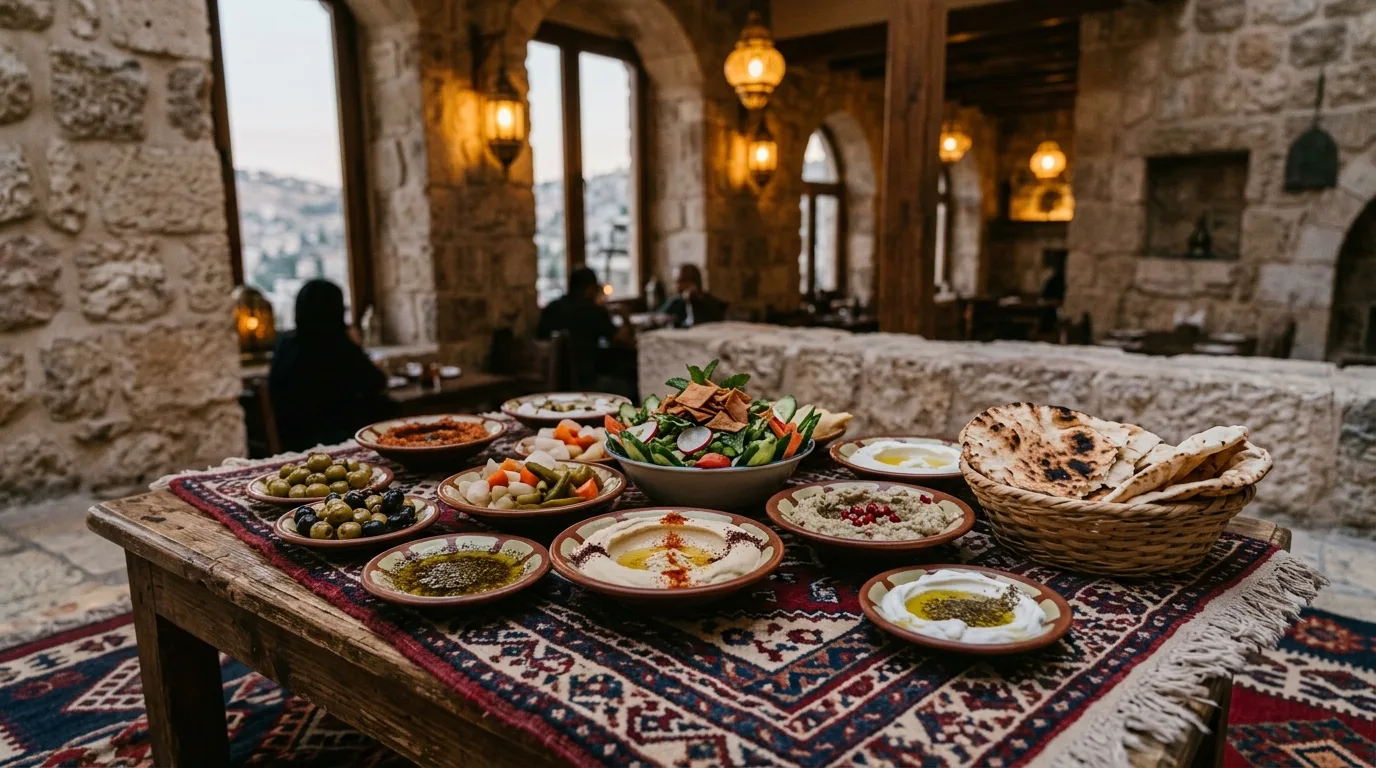
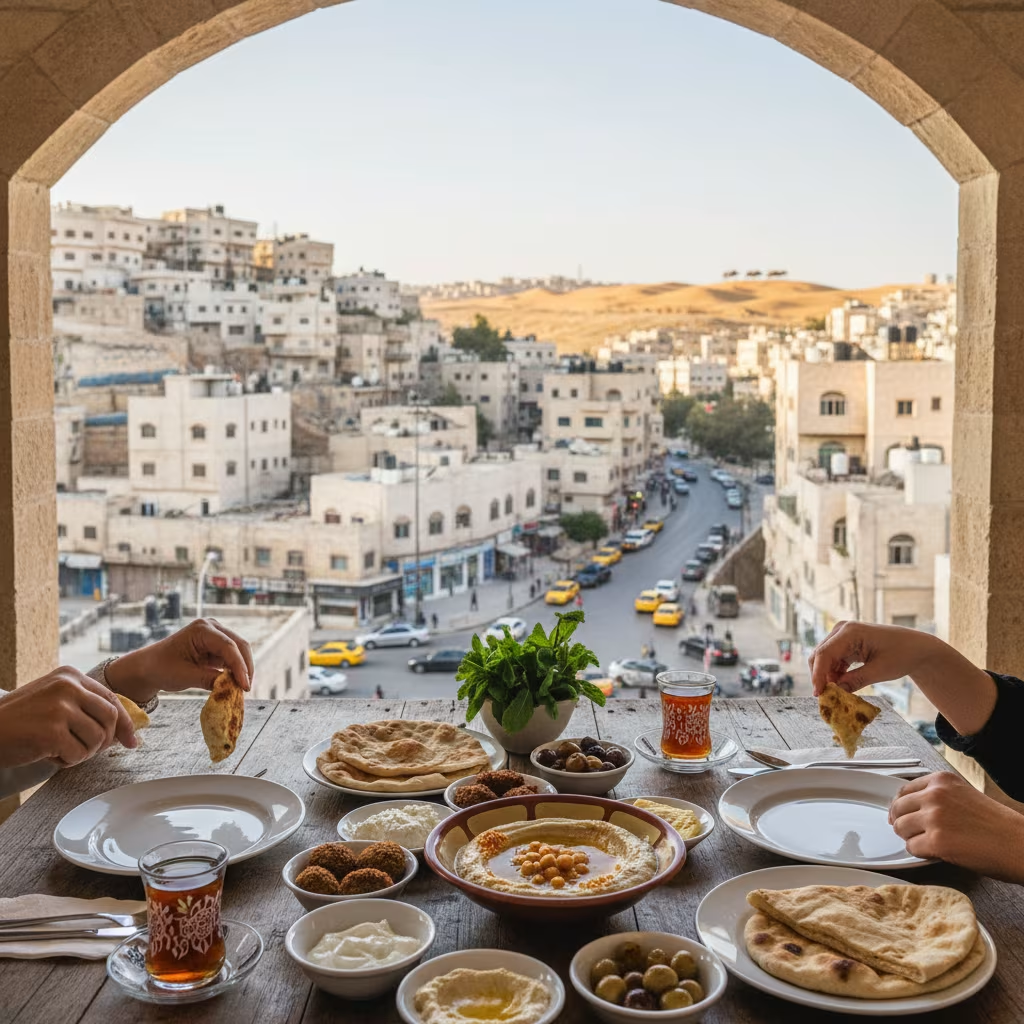
The cuisine is one of the best arguments for Jordan as a destination: mansaf (lamb slow-cooked in fermented dried yogurt, served over rice and flatbread), maklouba (the "upside-down" rice and vegetable dish turned out tableside), and the Levantine mezze tradition at its Eastern Mediterranean best. The food alone, in the old city restaurants and the modest local places that surround the Amman Citadel, is a reason to visit.
Amman is not ideal for travelers who want beach access (Aqaba on the Red Sea is 4 hours south by bus (feasible as a separate trip, not a day trip) or a city with a significant arts and nightlife scene. The social environment is conservative by European standards: alcohol is available but not pervasive, dress codes apply in certain neighborhoods. It's also not a city that rewards the kind of spontaneous wandering that Rome or Lisbon does; Amman requires a little more intention.
Four days: Al-Balad, the Citadel, and day trips
Day 1: Downtown, the Citadel, and the Roman Theatre
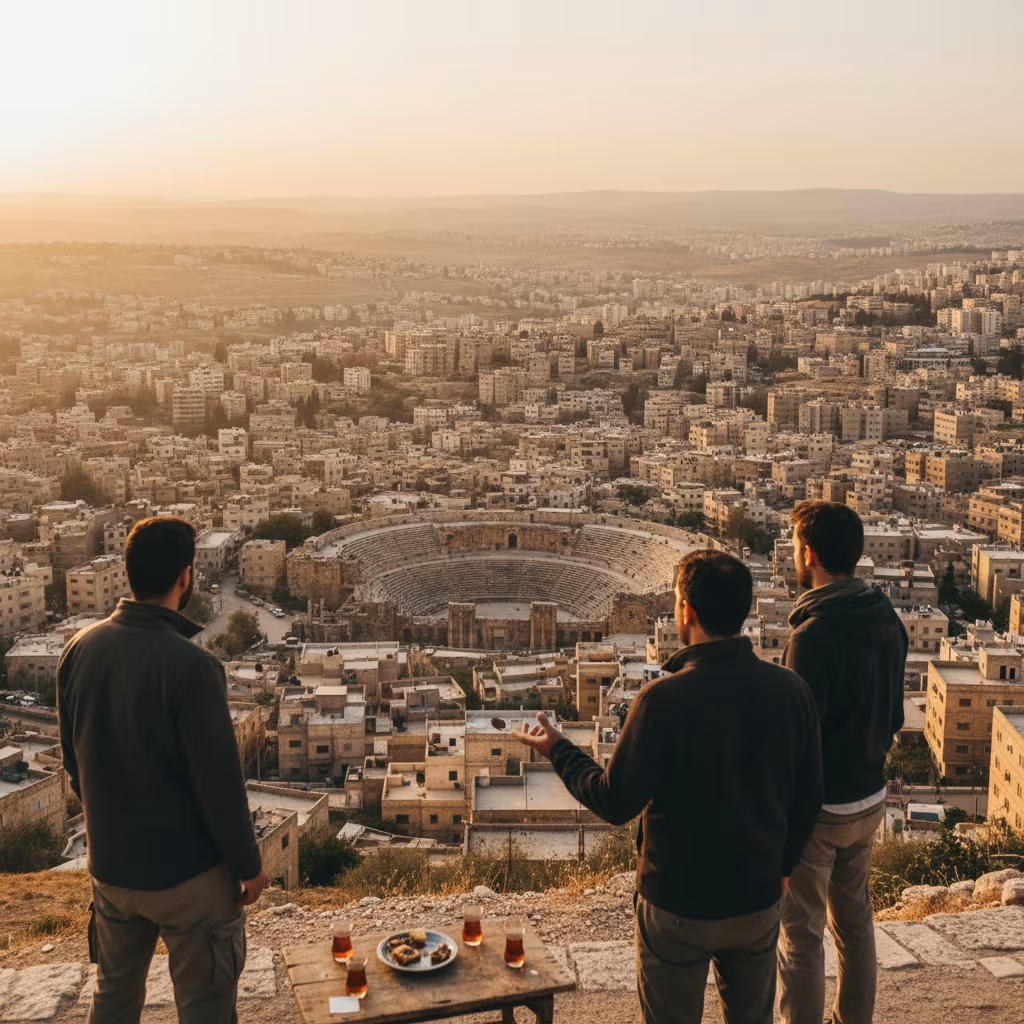
Amman's downtown (Al-Balad) is the oldest and most compressed part of the city. The Roman Theatre (2nd century CE, still used for performances) is the centerpiece, visible from the surrounding hills. Buy a Jordan Museum of Popular Traditions ticket for ₹1: the Byzantine mosaics from Madaba in the collection are extraordinary and almost no one goes. Walk up the hill to the Amman Citadel, which has the Temple of Hercules (the partially reconstructed columns are recognizable from every Amman photograph) and the Umayyad Palace (early Islamic, 8th century, recently stabilized). Evening on Rainbow Street (the hip, slightly bohemian strip in the 1st Circle area) for dinner at Sufra or one of the Lebanese-influenced mezze restaurants at the street's western end.
Day 2: Day Trip to Jerash
Jerash is 48km north of Amman, one of the best-preserved Roman provincial cities in the world, significantly less visited than Petra and in my estimation more interesting architecturally. The colonnaded street (Cardo Maximus), the south theatre, and the Oval Plaza give a scale of Roman urbanism that the Italian sites rarely achieve as completely. The drive from Amman takes about 45 minutes; JETT buses run regularly, or hire a taxi for the day ($40–50 round trip with waiting time). Allow four hours at the site. Return for late afternoon and dinner in the old city: Abu Jbara on Al-Hashimi Street does fuul (fava bean stew) and falafel that represents the Levantine breakfast-as-dinner tradition at its finest.
Day 3: Dead Sea
The lowest point on earth (430m below sea level), an hour's drive west from Amman. The Dead Sea's extreme salinity makes you float without effort, a physical experience that is genuinely strange. The main resort beaches on the Jordanian side (Amman Beach, O Beach, the resort hotel beaches) charge admission ($20–30) that includes use of freshwater showers (essential to remove the salt) and lounge chairs. The mineral-rich black mud from the lake floor is worth applying for the 15-minute ritual locals have practiced for millennia. Return to Amman for dinner at Sufra restaurant in the Rainbow Street area (a different experience from the old city lunch; Sufra is Jordan's most serious traditional dining room, with mansaf done correctly, at $25–35/person).
Day 4: Wadi Rum Dawn to Dusk
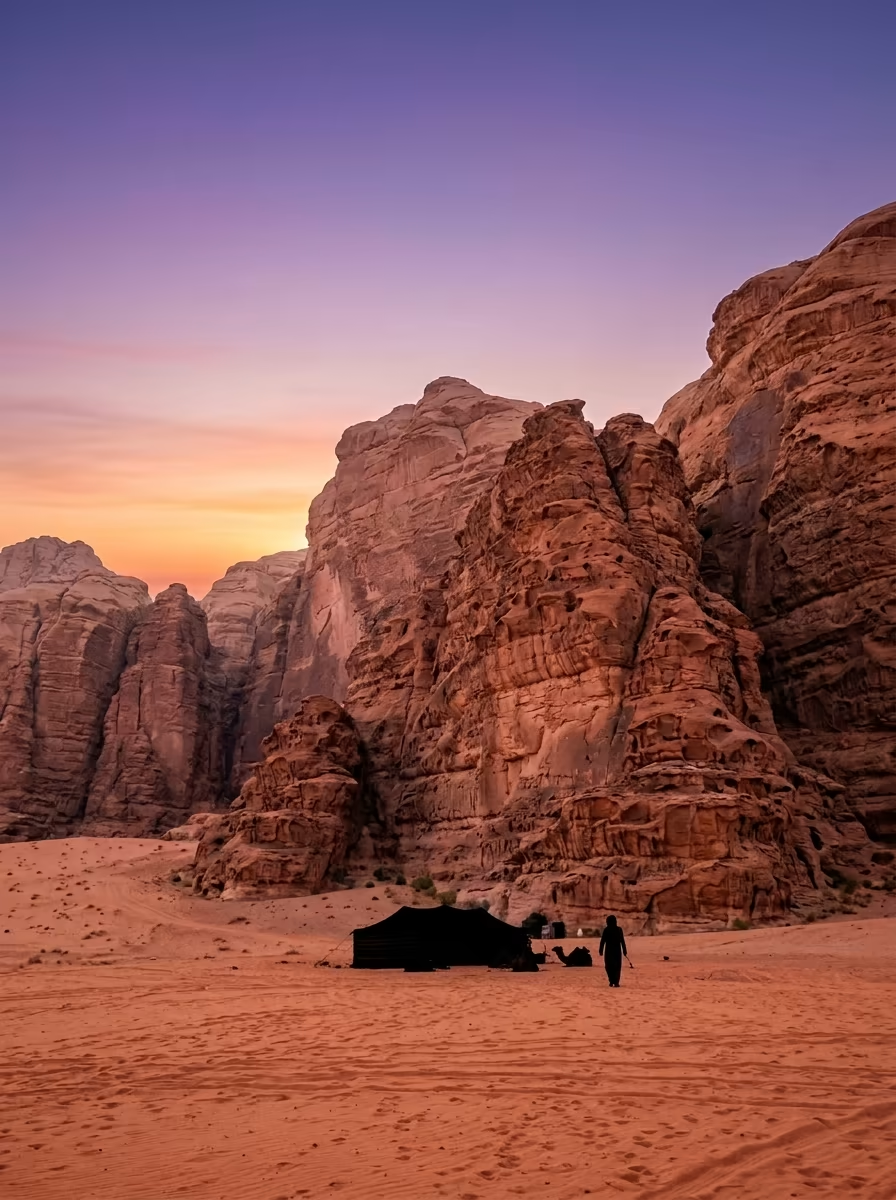
Wadi Rum is the desert landscape in the country's south: the rose-red sandstone mountains and ochre plains that provide both the backdrop for most imagination of the Middle East and the filming location for numerous Hollywood desert sequences. A direct car from Amman takes about three hours (hire, or book a Wadi Rum tour from any hotel). Arrive by 10 AM and take a 4WD tour ($35–60/half day) through the valley, stopping at the Nabataean inscriptions, the Lawrence's Spring, and the red sand dunes. A night in a Bedouin camp under the desert sky (from $60–80/person half-board) is a legitimate choice; if you're returning to Amman the same day, target a 7 AM departure.
Rainbow Street and the 1st Circle area
Rainbow Street / 1st Circle Area
The most useful base for food and neighborhood atmosphere. The Boutique Hotel Amman (on Rainbow Street itself) is a well-run mid-range at $80–110/night. The Caravan Hotel nearby is a budget classic at $30–45/night, simple but clean and perfectly located.
Jabal Al-Weibdeh
The arts neighborhood slightly northwest of Rainbow Street: independent galleries, good cafés, slightly more residential. The Afandina Boutique Hotel is here at $90–120/night, a converted house with a genuinely good breakfast.
Five-star district (Abdali / Shmeisani)
The Four Seasons Amman is the city's prestige option at $250–350/night, used primarily by business travelers and Gulf visitors, with excellent facilities. The InterContinental is a step down at $160–200/night, well-located for the business district. Neither is necessary for the trip described here.
Queen Alia, and the Jordan Pass maths
Queen Alia International Airport (AMM) is served by Royal Jordanian (extensive European and Middle Eastern network), Ryanair (from several European cities), British Airways, Lufthansa, and most Gulf carriers as transit hubs. From London, direct flights take about 5 hours.
Airport to city center the Airport Express Bus (JD3 each way, about $4) runs hourly to the 7th Circle; from there, taxis to Rainbow Street or downtown run JD5–8. Uber operates in Amman and is reliable and metered.
Within Amman private taxis (negotiate first or use the meter; meters are rarely used, agree price before entering) and Uber are the primary modes. The city is extremely hilly and not pedestrian-friendly beyond the immediate downtown and Rainbow Street areas. Day trips to Jerash and the Dead Sea are most practically done by hired driver or rental car. Jordanian dinar (JD) is cash-important: many restaurants and all small establishments are cash-only. ATMs are widely available in the main neighborhoods.
For connectivity a Zain or Orange Jordan SIM from the airport provides good 4G coverage throughout the country for about JD7–10 for a week's data.
March to May, before Wadi Rum becomes a furnace
March to May
Optimal. Temperatures in Amman are warm (18–26°C), the Jordan Valley is green, Wadi Rum is comfortable and not the furnace it becomes in July. The spring wildflower season in the Ajloun forest and the Dana Biosphere Reserve is a secondary bonus.
September to November
The second optimal window. Temperatures dropping back to comfort (22–28°C), the tourist season thinning after August. Wadi Rum is back to manageable temperatures.
June to August
Hot in Amman (30–38°C), extreme in Wadi Rum (40–45°C). Still visited but less pleasant for walking and desert touring. Aqaba on the Red Sea is an alternative summer base.
December to February
Cool in Amman (8–15°C), occasionally below zero at night. Wadi Rum in winter can be cold enough for frost. Fewer tourists, lower accommodation prices. The Jordan winter is manageable with layers and is a legitimate choice for budget travelers.
Amman and Jordan: common questions
Do I need a visa for Jordan?
Citizens of most Western nations can obtain a visa on arrival at Queen Alia International Airport for JD40 ($56). The Jordan Pass ($70–80, available online in advance at jordanpass.jo) includes the visa fee AND entry to Petra and over 40 other sites. If you plan to see Petra (you should), the Jordan Pass saves money and time at immigration. Apply online before travel.
Is Jordan safe for tourists?
Jordan has maintained a stable security environment during a period of significant regional instability. It is one of the safest countries in the Middle East for international visitors. The main areas of concern are the border regions with Syria and Iraq, not accessible or relevant to the tourist circuit. Check your government's current travel advisory for specific regional updates.
Is Amman appropriate for solo women travelers?
Generally yes, with caveats. Harassment is less pervasive than in some neighboring countries and Amman is among the more liberal cities in the Arab world. Covering arms and legs in the old city and in more conservative neighborhoods is advisable; on Rainbow Street and in Abdali, dress norms are more relaxed. Exercise standard urban awareness, particularly in the evenings.
Can I see Petra and Wadi Rum as day trips from Amman?
Technically yes for Petra (4 hours each way) but not practically: Petra requires at minimum a full day inside and deserves two days. Plan a separate two-night base in Wadi Musa village adjacent to the Petra entrance. Wadi Rum is more manageable as a day trip from Amman with an early start, though a night in the desert is the authentic experience.
Amman day-trip matrix:
| Trip | Figure |
|---|---|
| Jerash | 48 km north, ~45 min; JETT buses or day taxi $40–50 |
| Dead Sea | 1 hour west; 430 m below sea level; beach entry $20–30 |
| Roman Theatre | 2nd century CE, still in use |
| Aqaba (Red Sea) | 4 hours — separate trip, not a day trip |
0 Comments
No comments yet — start the conversation.