

The shinkansen from Tokyo arrives at Kyoto Station in 2 hours and 15 minutes, and the station itself is a significant work of contemporary Japanese architecture: a vast glass and steel structure that sits oddly against the surrounding traditional city, which is part of the point. I'd been to Kyoto once before, ten years earlier, and seen Kinkaku-ji (the Golden Pavilion) in a crowd of several hundred other visitors, walked the Arashiyama bamboo grove in a shoulder-to-shoulder procession, and come away feeling I'd seen the photographs more than the place.
This time I came back with a different operating principle: the famous things are worth seeing exactly once, early, before 8 AM if possible, and after that the city is best approached from its edges rather than its center. The Nishiki Market at dawn. The Philosopher's Walk in November light, before the tour groups. The Fushimi sake breweries in the late afternoon, when the kura have closed to walk-ins but the street outside smells of fermenting rice. The neighborhood of Kyoto that has essentially no temples at all and very good soba instead.
Ten days is long enough for this approach to work, long enough for the city to stop feeling like a series of sights and start feeling like a place.
Kyoto beyond the mythologised version
Kyoto's problem is the opposite of most destinations' problems: it's been so consistently presented as a singular cultural experience that travelers often arrive with expectations calibrated to a slightly mythologized version of the city. The reality is that Kyoto is a genuinely extraordinary place: 1,600 Buddhist temples and Shinto shrines, a preserved geisha district (Gion) that still functions, a cuisine tradition (Kyoto kaiseki) that is the most refined Japanese cooking form. It's also a mid-size Japanese city of 1.5 million that has traffic, convenience stores, and neighborhoods where nobody cares about tourists.
The recommendation here is to see the famous things but not to make them the structure of the trip. Kinkaku-ji is wonderful; it's also 30 minutes of your day at most, and going back to the famous temple circuit on day two and three is when Kyoto starts to feel like a temple museum rather than a city. The alternative structure: use the temples as punctuation for a trip built primarily around food, neighborhoods, and the kind of slow observation that Kyoto rewards more than almost any other city in Asia.
Kyoto is not ideal if you want beach proximity, significant nightlife beyond quiet izakayas and sake bars, or a city that feels modern and kinetic. Tokyo is 2h15m away and provides all of those things. The combination (Kyoto for a week, Tokyo for four days) is the standard itinerary for good reason.
Ten days away from the famous temples
Day 1: Arrive and do Nothing Purposeful
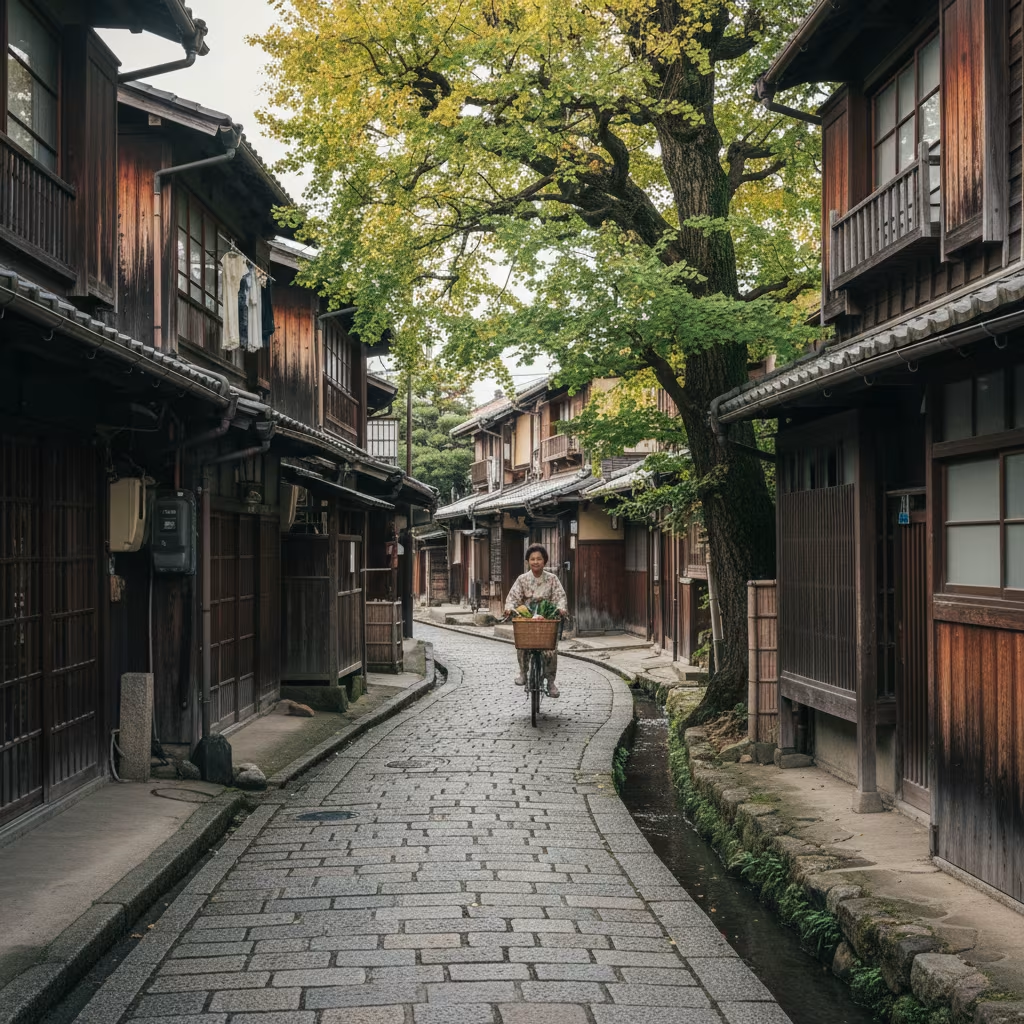
Walk from the station through Gion toward the Kamo River, which runs through the center of the city. Sit by the river in the early evening. The Kamo River embankments (dōtonbori equivalent in Kyoto) are where the city relaxes: couples, families, students. Dinner in the Pontocho alley (a narrow pedestrian lane of restaurants running parallel to the river). Find a counter-style restaurant serving set menus rather than the tourist-facing places at the alley's entrance.
Day 2: Kinkaku-ji at 9 AM, then Walk the Kinugasa Neighborhood
Kinkaku-ji opens at 9 AM; arrive at 9:10 before the first tour buses arrive at 9:30. Thirty minutes is enough: the Gold Pavilion reflecting in Kyōko-chi pond is exactly what you've seen in photographs, except the scale is more modest and the garden is quieter. Then walk north into the Kinugasa neighborhood, which has essentially no tourists, some interesting old wooden machiya townhouses, and a very good coffee shop (Kurasu, or the smaller Weekenders Coffee) for a mid-morning pause. Afternoon at Ryōan-ji (the rock garden), which also opens at 9. Go late afternoon when the busiest tour groups have cleared. The garden requires patience to read; give it 45 minutes rather than 15.
Day 3: Nishiki Market, Gion, and Fushimi Inari at Dusk
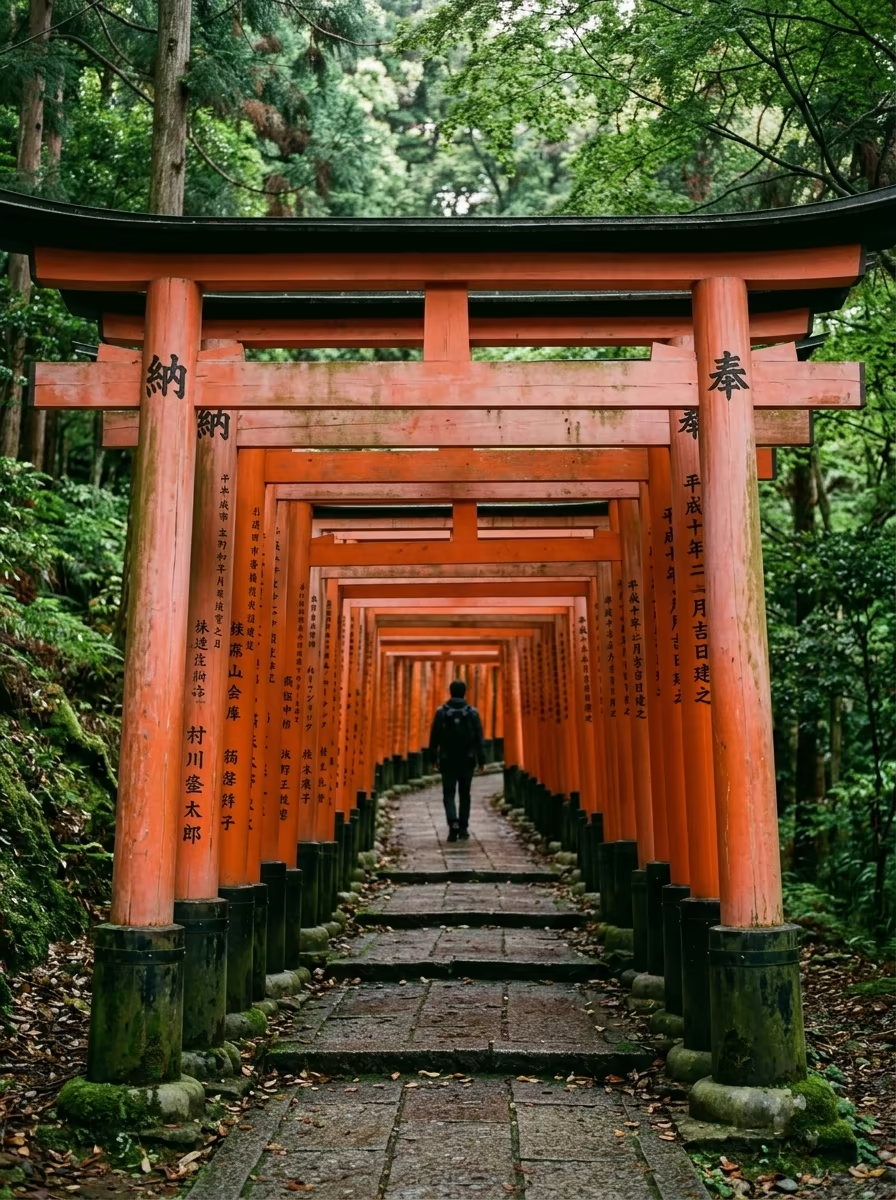
Nishiki Market ("Kyoto's Kitchen," the covered market street running parallel to Shijō Street) at 7:30 AM when the vendors are setting up and the only people there are residents shopping for the day's cooking. Two aisles: try the dashimaki tamago (rolled sweet omelette), the pickles, and the yuba (tofu skin) vendors. Afternoon in Gion: watch the machiya architecture rather than waiting to spot maiko. Fushimi Inari Taisha at 4:30 PM, the thousand-torii mountain path. The famous dense-orange-torii photographs are taken at the lower gates; walk 45 minutes up the mountain to the point where the crowds stop, and the path continues through forest with isolated gates and silence.
Days 4–5: Arashiyama Without the Crowds
Arashiyama at 7 AM. The bamboo grove is not empty even at this hour, but it's walkable. The morning light through the bamboo is genuinely beautiful in a way that photographs don't prepare you for (they prepare you for the texture; not for the sound, which is constant, and the filtered light, which is extraordinary). After the grove, rent a boat on the Hozu River or walk the less-traveled Sagano Scenic Railway trail. Lunch at Yoshida-ya, a small kaiseki-influenced lunch restaurant near Tenryu-ji that does a set lunch for ¥2,000–3,000. Afternoon at Tenryu-ji's garden, which is underrated relative to Kinkaku-ji and has a pond garden by the master Musō Soseki that rewards longer attention. Day 5: Sagano area more thoroughly, including the bamboo craft village and the Okochi Sanso villa (¥1,000, includes matcha and a sweet, garden views extraordinary).
Day 6: Fushimi Sake District
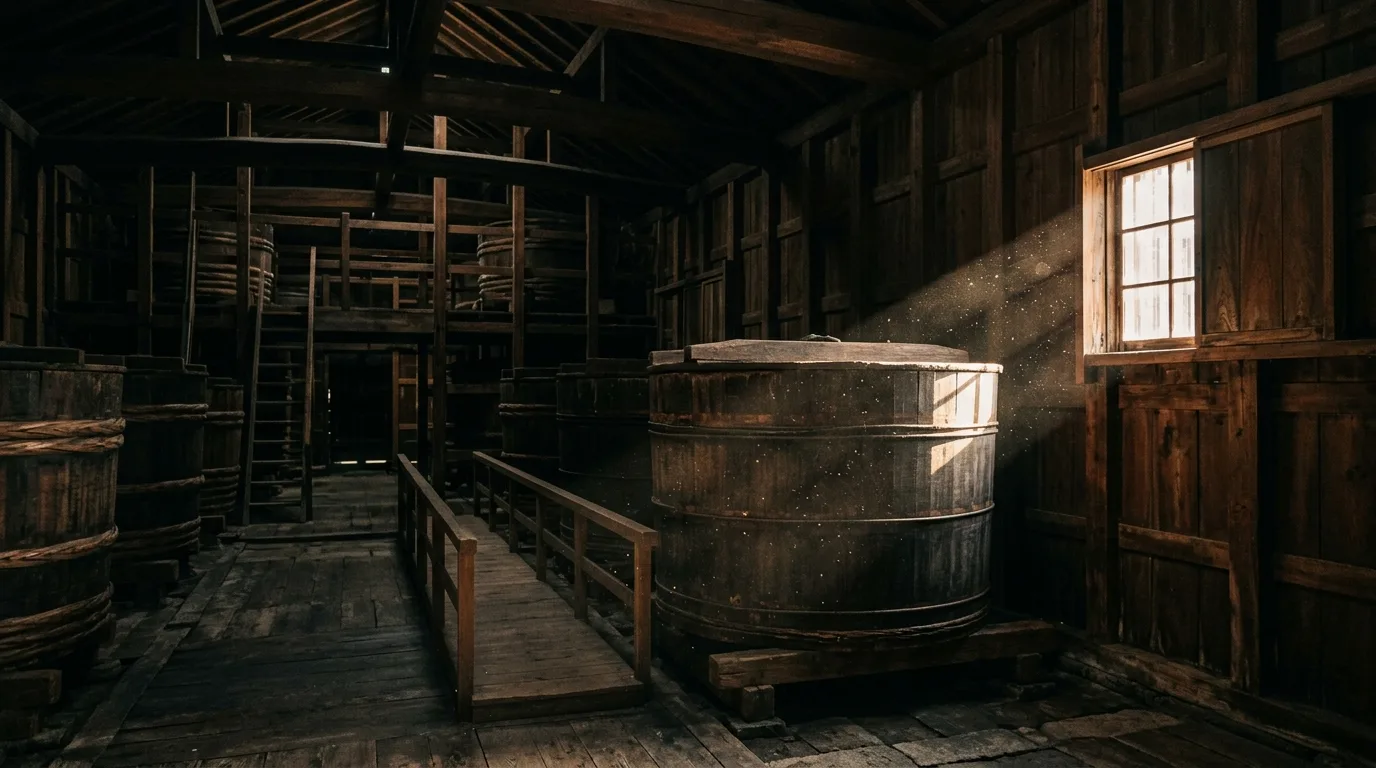
Fushimi, 15 minutes south of Kyoto by Kintetsu Railway, is one of Japan's two major sake-brewing regions (the other being Nada in Kobe). The main brewing street, Teramachi street in the Fushimi district, with the old kura (breweries) identifiable by the cedar ball (sugidama) hanging above the entrance, is best mid-afternoon when the tourist sake bars are quiet and the street has its working atmosphere back. Gekkeikan Okura Sake Museum (¥600) has an excellent production exhibit and a tasting included in the entry. Dinner back in Kyoto at Yakitori Nankou on Takakura Street: eight-seat counter, omakase yakitori, ¥4,000–5,000, book a day ahead.
Days 7–8: Philosopher's Walk and the Higashiyama District
The Philosopher's Walk (Tetsugaku-no-Michi) runs 2km along a canal lined with cherry trees from Ginkaku-ji (the Silver Pavilion) south to Nanzen-ji. In November it's free of the spring cherry blossom crowds and the light through the remaining leaves is amber. Walk it north to south, stopping at Ginkaku-ji first (¥500, the moss garden and sand garden are impeccable). Then into the Higashiyama district, the preserved machiya street of Ninenzaka and Sannenzaka, which is the most photographed traditional streetscape in Kyoto and also genuinely beautiful even when busy. Go before 9 AM or after 4 PM.
Days 9–10: Slower Pace and a Kaiseki Meal
The Kyoto National Museum (¥700, collection of Japanese art and archaeology that is outstanding). Afternoon in the Fuyachō neighborhood north of Nishiki: independent textile shops, a good second-hand bookshop with English books, a small gallery showing contemporary Kyoto craft. The kaiseki meal: book Kichisen, Nakamura, or the more accessible Mizai (¥20,000–40,000/person) at least six to eight weeks ahead. Kyoto kaiseki at this level is one of the best dining experiences in the world. For a more accessible version: Kikunoi Honten (¥10,000–15,000) takes reservations two to three weeks ahead and maintains the kaiseki form without the price ceiling.
Gion, Higashiyama or near the station
Gion / Higashiyama
The most atmospheric base. Hiiragiya Ryokan is one of the oldest operational ryokan in Kyoto (founded 1818) and begins at ¥50,000/person half-board (a once-in-a-trip splurge). The Kyoto Brighton Hotel is a reliable mid-range at ¥25,000–35,000/night. For a more budget-friendly ryokan experience, Kyomachiya Ryokan Sakura is a converted machiya at ¥12,000–18,000/night.
Central / Karasuma
More business hotel infrastructure: the Hyatt Regency Kyoto is well-positioned and frequently has good rates at ¥30,000–40,000/night. The Richmond Hotel Kyoto Ekimae (near the station) offers good value at ¥12,000–18,000/night.
Arashiyama
Two or three nights in the Arashiyama area for proximity to the western sights. The Tenryu-ji Shigetsu restaurant is inside the temple grounds and the neighborhood is quietest before 8 AM and after 5 PM when day visitors leave.
Shinkansen from Tokyo, buses inside Kyoto
From Tokyo Shinkansen Nozomi service from Shin-Osaka to Kyoto, then the standard JR line from Osaka/Shin-Osaka, for a total of 2h15m from Tokyo Station to Kyoto Station. The Japan Rail Pass covers shinkansen travel; calculate whether it saves money against point-to-point tickets for your specific itinerary (the break-even point for a 7-day pass is roughly ¥50,000 in covered travel).
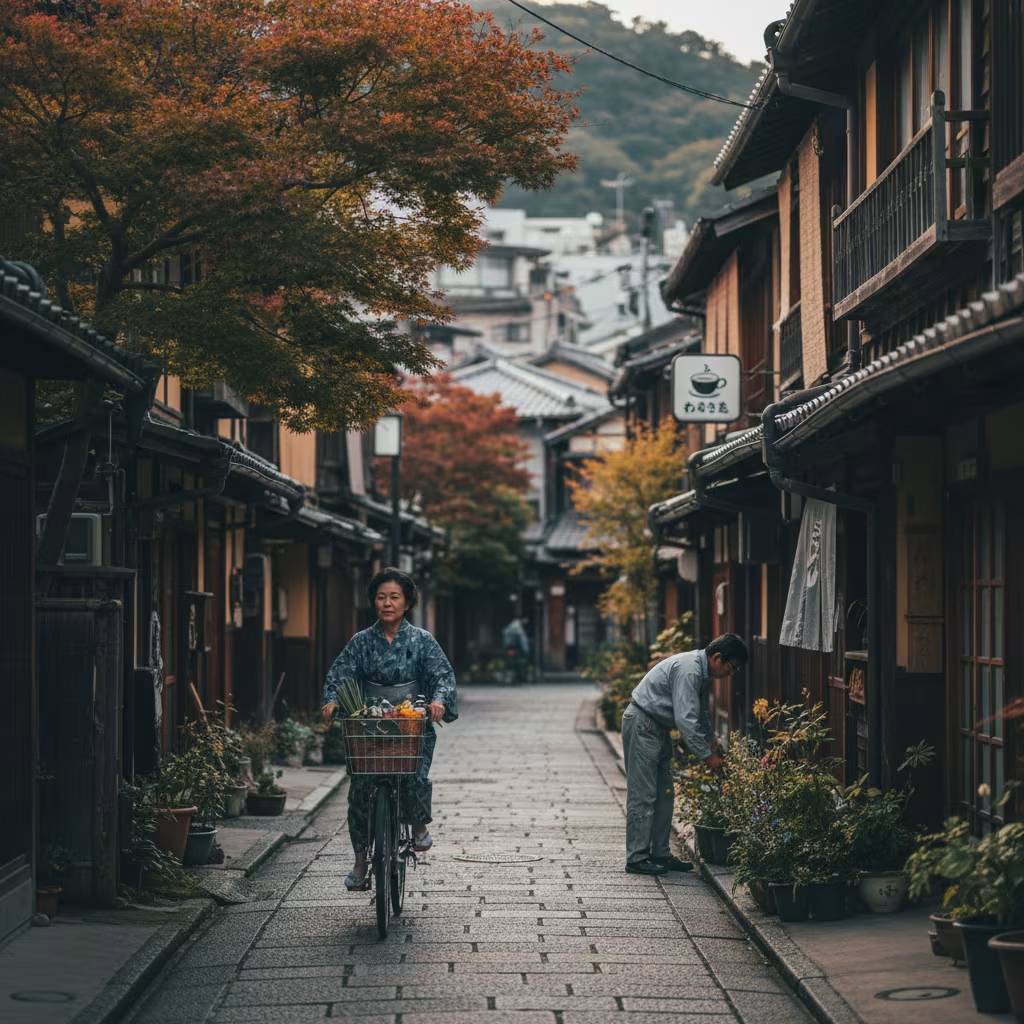
Within Kyoto the city bus system covers all major sights (day pass ¥700 available from the tourist information center at the station). The Kintetsu Railway line runs south to Fushimi and north to the outer neighborhoods. Taxis are abundant but expensive. Bicycles are ideal for the flat central city; rent from the station area for ¥1,000–1,500/day.
Cherry blossom — and the quieter months either side
March to April (cherry Blossom)
The most famous window. Kinkaku-ji, the Philosopher's Walk, and Maruyama Park are extraordinary, and extremely crowded. Book accommodation 3–4 months ahead.
May and June
Post-cherry-blossom quiet. Warm, occasionally rainy, the city at a more human scale. Good value.
October and November
Autumn foliage (koyo) season, the second major crowd peak, for good reason. The red maples at Tofuku-ji and the Philosopher's Walk in late November are among the most beautiful things in Japan. Book 2–3 months ahead.
July and August
Hot and humid (35°C+). The Gion Matsuri festival in July is a major cultural event worth planning around; the heat around it is manageable with proper midday breaks.
January to February and June
The honest off-season. Cheaper, fewer crowds, some shrines and gardens at their most peaceful. Rain in June; cold in January but never extreme.
Kyoto: what people ask most
Do I need the Japan Rail Pass?
For a trip combining Tokyo and Kyoto, the 7-day JR Pass (¥50,000) covers both shinkansen legs and metro travel within cities. Run the math: Tokyo–Kyoto shinkansen one-way is ¥14,000; if your itinerary includes other JR-covered destinations, the pass pays off. For Kyoto-only trips, point-to-point tickets are often cheaper.
Is cash necessary in Kyoto?
More than you'd expect in Japan's most traditional city. Older ryokan, temple entry fees, and many small restaurants are cash-only. 7-Eleven ATMs in Japan reliably accept international cards and dispense yen, the most reliable option. Keep ¥20,000–30,000 in cash at all times.
Is English spoken in Kyoto?
Tourist-facing establishments (hotels, major temples, larger restaurants) have English-capable staff. Smaller restaurants, neighborhood shops, and most local izakayas operate in Japanese. A translation app (Google Translate's camera function for menus) is extremely useful. Learning the numbers in Japanese is worth the twenty minutes it takes.
How do I book a ryokan?
Reputable ryokan book through their own websites or through Ryokan.or.jp (the official Japanese Inn Group listing). For the most famous ryokan, reservations six to twelve months ahead are necessary in cherry blossom and autumn foliage seasons. Most ryokan require half-board (dinner and breakfast) which adds to the cost but includes one of the better meals you'll eat.
Kyoto pacing rules:
| Rule | Figure |
|---|---|
| Shinkansen from Tokyo | 2 h 15 m |
| Scale | 1,600 temples and shrines; city of 1.5 million |
| Kinkaku-ji | opens 9 AM — arrive 9:10, buses come 9:30; 30 minutes is enough |
| Ryōan-ji rock garden | give it 45 minutes, not 15 |
0 Comments
No comments yet — start the conversation.