

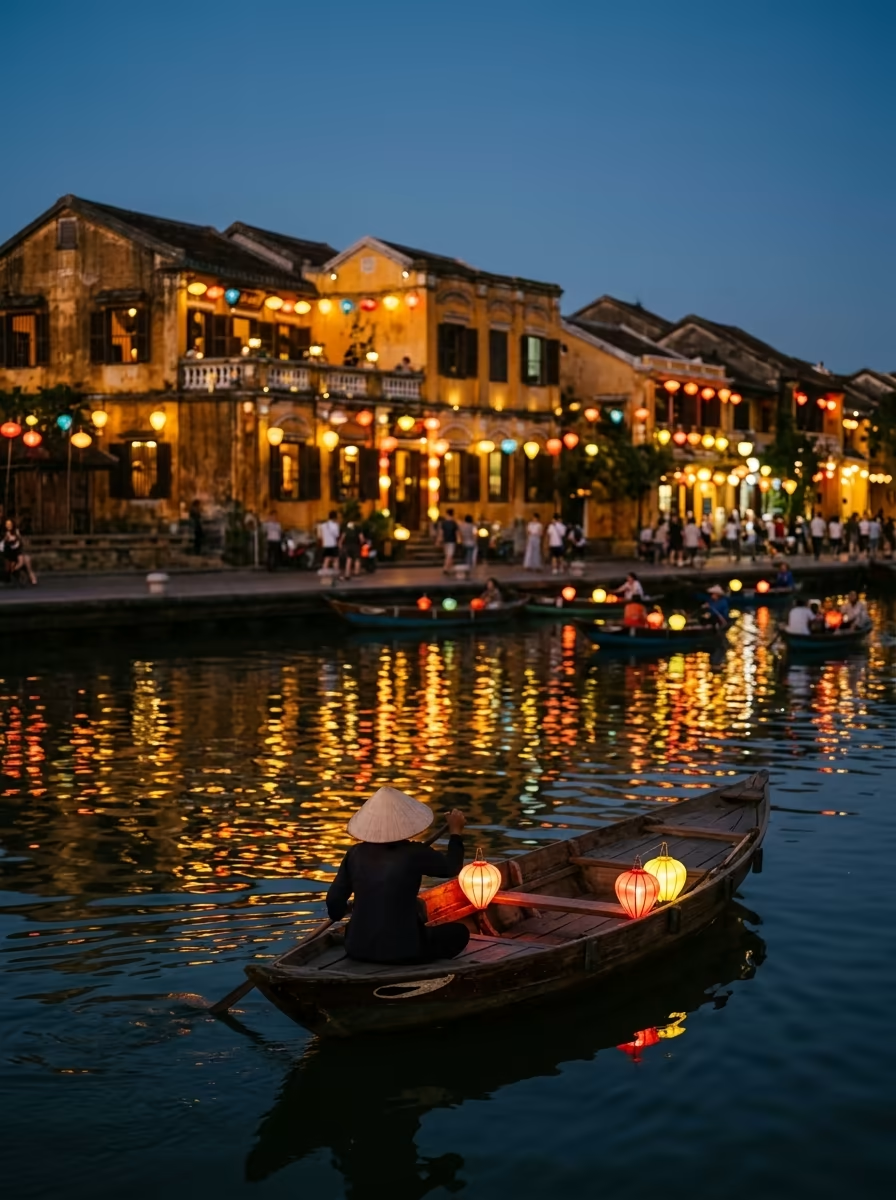
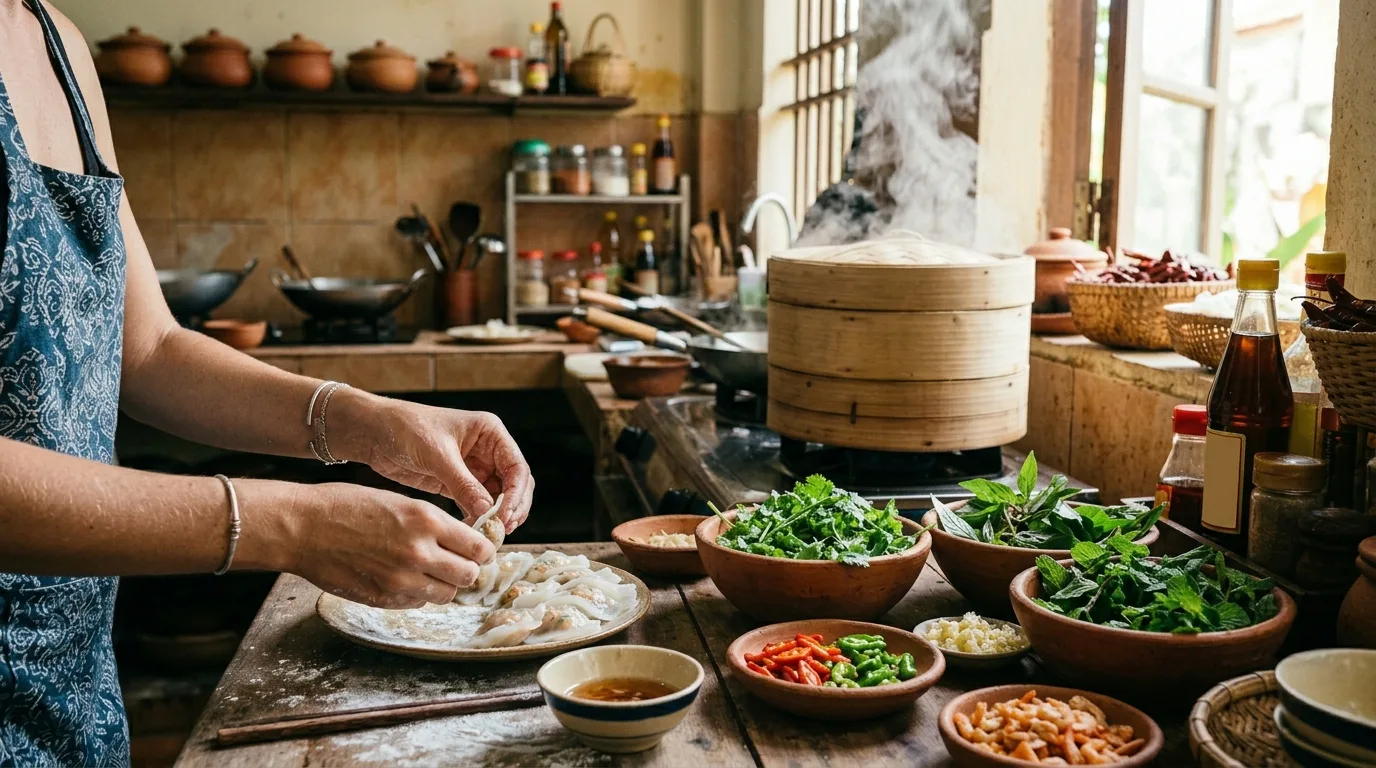
The taxi from Đà Nẵng Airport to Hội An takes about 45 minutes along a road that follows the coast (the Marble Mountains visible to the right as dark karst shapes against a flat coastal plain, the South China Sea appearing at intervals on the left) and delivers you to the edge of the old town's vehicle exclusion zone, where you carry your bag to wherever you're staying on foot through streets already warm at 9 AM with the particular wet heat of the Central Vietnamese coast. The smell: frangipani, exhaust, something frying in a wok from a building you can't identify, river water.
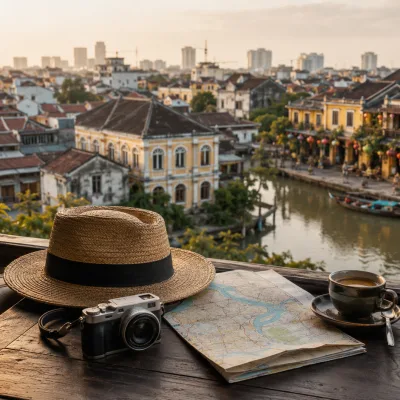
Hội An is the most visited city in central Vietnam and, on the evidence of the old quarter, this is not unreasonable: the Japanese merchant houses, the Chinese Assembly Halls, the French colonial warehouses along the Thu Bồn River (all dating from the 15th through 18th centuries, when the town was one of Southeast Asia's most significant trading ports) have been preserved with a care that few historic districts anywhere manage without becoming a theme park. The question Hội An asks of the traveler is not whether it's worth seeing (it is) but whether you can find the city that exists behind the lantern-lit night market spectacle. The answer is yes, and it requires about three days to locate.
Seven days is long enough to do both things: see the famous version properly, and then find the less famous version. The cycling routes out of town, the cooking classes that actually teach you something, the tailors who are genuinely skilled rather than factory-fast: these things take time to find but reward the finding.
Hội An instead of Hà Nội or Hồ Chí Minh City
Hội An is the correct Vietnamese destination for travelers who want cultural depth and a slower pace rather than the kinetic energy of Hà Nội or the backpacker scale of Hồ Chí Minh City. It's a coastal town (the An Bàng Beach is 4km from the old town, accessible by bicycle) at a size (90,000 people) that feels manageable in a way the major Vietnamese cities do not. The food is remarkable and specific to the region: white rose dumplings (bánh vạc) and Cao Lầu noodles (made with water historically drawn from a specific well, a geographic food that doesn't exist at the same quality anywhere else) are alone worth the journey.
The honest caveat: the old town is heavily touristed. The main streets, Trần Phú and Nguyễn Thái Học, are dense with shops selling lanterns, tailored clothing, and the same silk items that line tourist streets across Southeast Asia. The Full Moon Lantern Festival (the 14th day of each lunar month, when the old town is lit exclusively by lanterns and motor traffic is banned) is extraordinary and also draws enormous crowds. The tourist infrastructure is excellent, which is both a benefit (good guesthouses, functioning food scene) and a cost (the local-versus-tourist price differential is significant).
Hội An is less suited to travelers who want beach as their primary activity (An Bàng is good but not among Vietnam's best; Đà Nẵng's My Khê beach is better, 45 minutes away). It's also less suited to travelers who want urban energy: Hội An slows down by 10 PM and the nightlife options thin out quickly.
Seven days: Old Town, An Bàng, Mỹ Sơn
Day 1: the Old Town at Two Speeds
Morning at 6:30 AM before the lantern vendors appear: walk Trần Phú Street from the Japanese Covered Bridge (the most photographed object in Hội An, a 16th-century wooden bridge with a small temple inside) east along the river, then back through the parallel alley of Nguyễn Thái Học. The old town at this hour has residents using it: the morning market at the river end of Trần Phú, the older Vietnamese women carrying produce, the smell of Cao Lầu being prepared in kitchens you can't see. Afternoon in the Chinese Assembly Halls: the Cantonese Assembly Hall (Quảng Triệu) and the Phúc Kiến Assembly Hall are the two strongest architecturally. Evening dinner at Mango Rooms on the riverside: creative Vietnamese-Western fusion, $20–30/person.
Day 2: Cooking Class and the Cẩm Kim Bicycle Loop
The Hội An cooking class options range from hotel-attached tourist experiences to the Morning Glory Cooking School (run by Triệu Thị Chơi, the cook behind Morning Glory Restaurant and multiple Vietnamese cookbooks). Go to the real one, which requires booking ahead ($35/person). The class begins at the market, moves through four dishes, and ends at a table eating what you made. Afternoon: rent a bicycle ($2–3/day from any guesthouse) and take the ferry from the boat landing at the bottom of Nguyễn Thái Học Street across to Cẩm Kim Island, a quiet village across the river from the old town, with wood-carving workshops, rice paddies, and essentially no tourism. 2-hour loop, mostly flat.
Day 3: My Son and the Cham Ruins
My Son Sanctuary is 40km inland, a complex of Hindu temples built by the Champa Kingdom between the 4th and 14th centuries in a river valley surrounded by steep hills. Significantly damaged by American bombing in 1969 (a fact the site documents with unusual directness), but what remains is extraordinary. The approach: hire a motorbike driver ($15 round trip) rather than joining a tour bus. Arrive before 8 AM when the first buses appear, and you have the jungle-fringed ruins largely to yourself. Allow three hours. The return route through the Vietnamese countryside (coconut palms, flooded rice paddies, a bridge over the Thu Bồn River) is as good as the site.
Days 4–5: Tailors and Beach Days
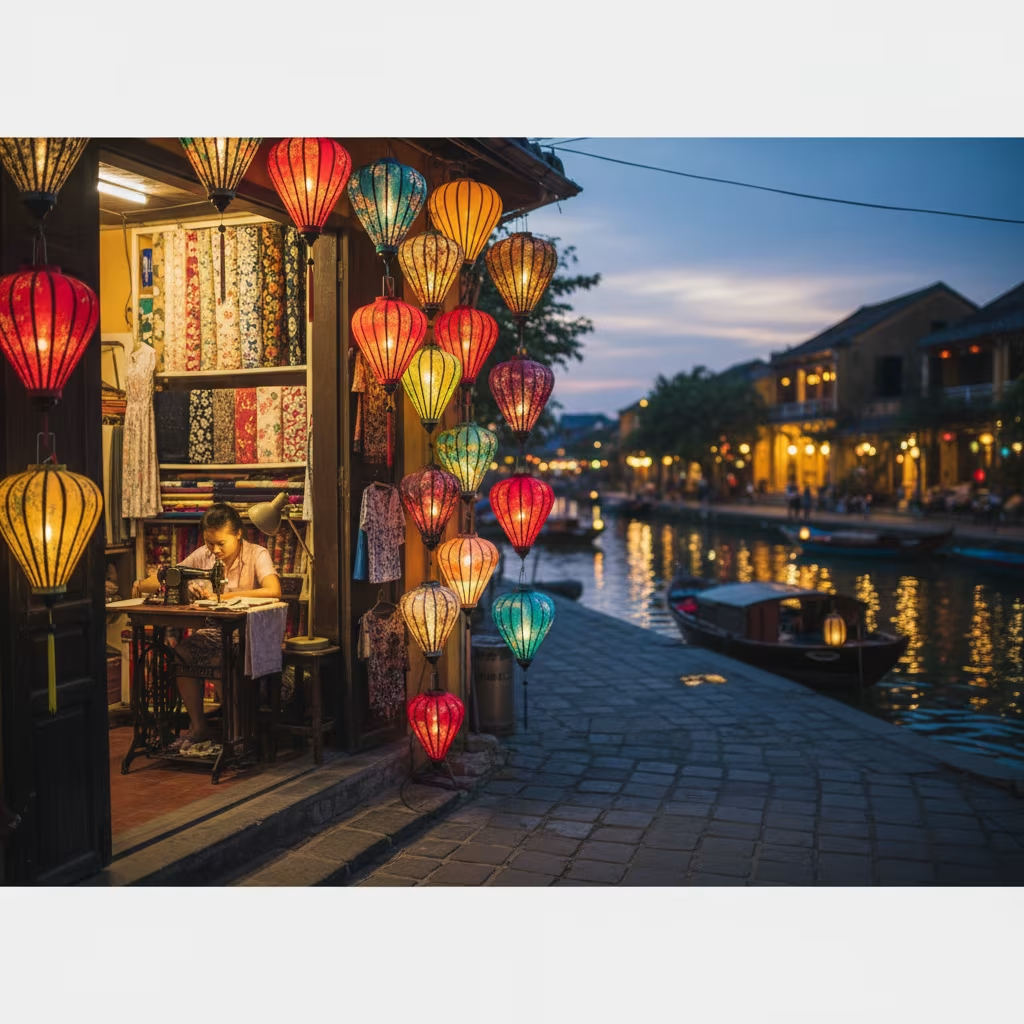
Hội An has the highest density of skilled tailors in Southeast Asia: over 400 shops. The best ones (Yaly Couture, Bảo Khách, A Dong Silk) take 48–72 hours for a properly fitted garment and require two fittings. Day four morning: go to your chosen tailor, select fabric, get measured, leave your specifications. Day four afternoon and day five: An Bàng Beach (4km by bicycle or $3 motorbike taxi), low-key by Vietnamese beach standards, with a row of beach bars (Soul Kitchen is a good daytime base). Day five afternoon: first fitting at the tailor.
Days 6–7: the Cooking School Visit, the Cù Lao Chàm Island
Cù Lao Chàm is an island marine sanctuary 20km offshore from Hội An, accessible by fast boat from the riverside boat dock ($15 return, departs 8 AM). The island has snorkeling in a coral reef that, by Southeast Asian standards, is in reasonable health. The boat trip through the South China Sea, with the coast receding behind and the island visible ahead, is the best the immediate ocean offers here. Return by 4 PM. Final evening: the Full Moon Festival if the timing aligns (check the lunar calendar before booking your trip) or simply the old town at dusk: the lanterns lit along the river, the light on the water, what the place actually looks like when the day cools.
Old Town, riverfront or out at the beach
Old Town / Riverfront
The La Siesta Resort & Spa is the mid-range highlight: $80–120/night for a very well-appointed room with pool access and a good breakfast. Anantara Hội An Resort occupies a colonial building on the river at $200–280/night. Budget: Hội An Historic Hotel at $35–50/night, slightly aging but well-located and reliable.
Cẩm Châu / Cẩm Nam (quieter Residential Areas)
Walking distance from the old town but without the old-town pricing. Numerous guesthouses at $20–35/night for private rooms. Better for longer stays where you want kitchen access. Airbnb options at $30–50/night for standalone houses with garden.
An Bàng Beach
A cluster of small boutique guesthouses at the beach end, 4km from the old town. The An Bang Beach Village ($60–90/night, beachfront bungalows) is the best of the mid-range options. More suitable for travelers who prioritize beach access over old town proximity.
Đà Nẵng airport, and bicycles after that
The nearest major airport is Đà Nẵng International (DAD), served from most major Asian hubs (Hà Nội, Hồ Chí Minh City, Singapore, Seoul, Taipei, Bangkok, Tokyo) and direct from some European cities on Vietnam Airlines and Korean Air. Taxi from Đà Nẵng airport to Hội An: 45 minutes, $12–18 (Grab app or fixed price from airport taxi desk). The Đà Nẵng–Hội An transfer is also bookable through most Hội An hotels for $10–15.
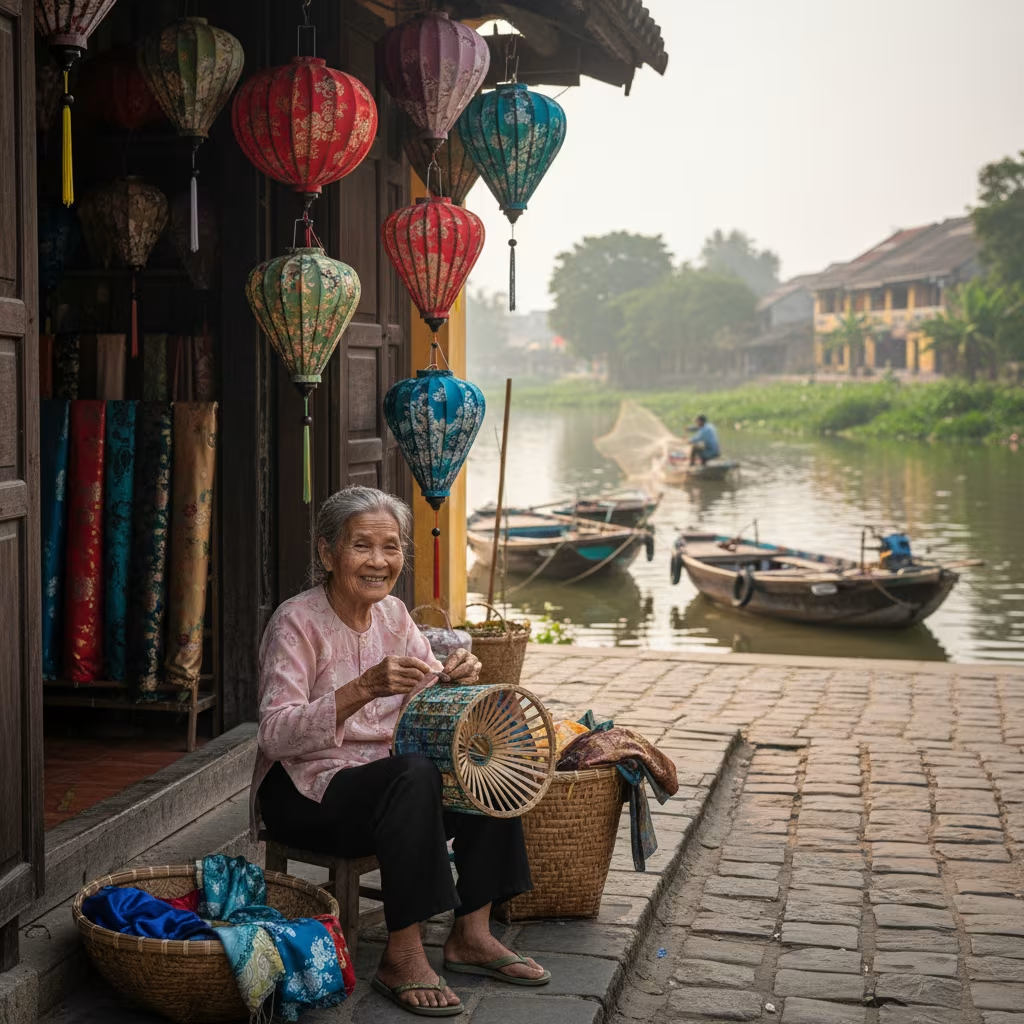
Within Hội An: bicycle is the correct mode. The town is flat and compact, and most destinations are within a 15-minute ride. Rentals from guesthouses for $2–3/day. Motorbike taxis (xe ôm) for further destinations at $3–6/trip. The old town vehicle exclusion zone applies to all motor traffic during certain hours; factor this into arrival logistics.
A Viettel or Vinaphone SIM from the airport provides excellent 4G coverage throughout the country for about $5–10/month. Cash (Vietnamese đồng, VND) is essential for street food, market vendors, and bicycle rentals; the old town shops and restaurants take cards. Withdraw dong from ATMs in the new town (slightly better rates than inside the old town exclusion zone).
February to May, and the flooding months
February to May
The optimal window. The northeast monsoon has passed, temperatures are warm (25–32°C), humidity manageable, and the flooding season months away. The Lunar New Year (Tết, late January or February) transforms the old town: intense and magnificent, but accommodation books months ahead.
June to August
Hot and humid (32–38°C), thunderstorms possible in the afternoon, but the beach season is in full swing and the tourist crowds are at their peak. Still a good time to visit if you can operate in heat.
October to January
The wet season in Central Vietnam is serious: Hội An is one of the most flood-prone UNESCO sites in the world. In October and November, the Thu Bồn River floods the old town streets to knee-height or more in bad years. The experience of the old town in flood is extraordinary; the experience of your ground-floor guesthouse flooding is not. Book upper-floor accommodation. December and January are drier within this window.
Hội An questions
Do I need a visa for Vietnam?
Citizens of the US, UK, Germany, France, Italy, Spain, and most EU nations can enter Vietnam visa-free for 45 days under the 2023 expansion of the visa exemption program. Citizens of other nationalities should check the current exemption list at evisa.xuatnhapcanh.gov.vn. An e-visa ($25, valid 90 days) is available online for most nationalities without a prior exemption.
How do I find a reliable tailor in Hội An?
The best tailors are not the ones with the most aggressive touts outside. Yaly Couture, Bảo Khách, and A Dong Silk have long-standing reputations for quality and accurate fitting. Go in person, look at samples of finished work, ask about turnaround time: 48–72 hours minimum for a properly fitted piece. Avoid any shop promising same-day turnaround; that speed is incompatible with good fitting work.
Is it safe to eat street food in Hội An?
Yes, with standard precautions: eat at stalls that are busy with locals, where food is cooked to order and served hot. The morning market (Chợ Hội An) has excellent pho and bánh mì vendors that locals use daily. Avoid pre-cooked dishes sitting at room temperature. The stomach adjustment to Vietnamese street food is real for most travelers; plan a lighter day one or two if your gut is sensitive.
What is the Full Moon Lantern Festival and is it worth planning around?
The Hội An Lantern Festival occurs on the 14th night of each lunar month: motor traffic is banned from the old town, electric lights are turned off, and the streets are lit only by paper lanterns. It's genuinely beautiful and unlike anything else in Southeast Asia. It's also crowded (domestic Vietnamese tourists fill the old town as much as international ones). The first festival falls roughly 14 days after each new moon; check a lunar calendar and book accommodation before the lunar month begins if you want to be there for it.
Hội An practical figures:
| Item | Figure |
|---|---|
| Đà Nẵng airport taxi | ~45 minutes along the coast |
| Old town rhythm | walk at 6:30 AM; nightlife ends ~10 PM |
| Lantern Festival | 14th day of each lunar month |
| Cooking class (the real one) | $35/person, book ahead |
| Bicycle | $2–3/day; An Bàng beach 4 km away |
0 Comments
No comments yet — start the conversation.