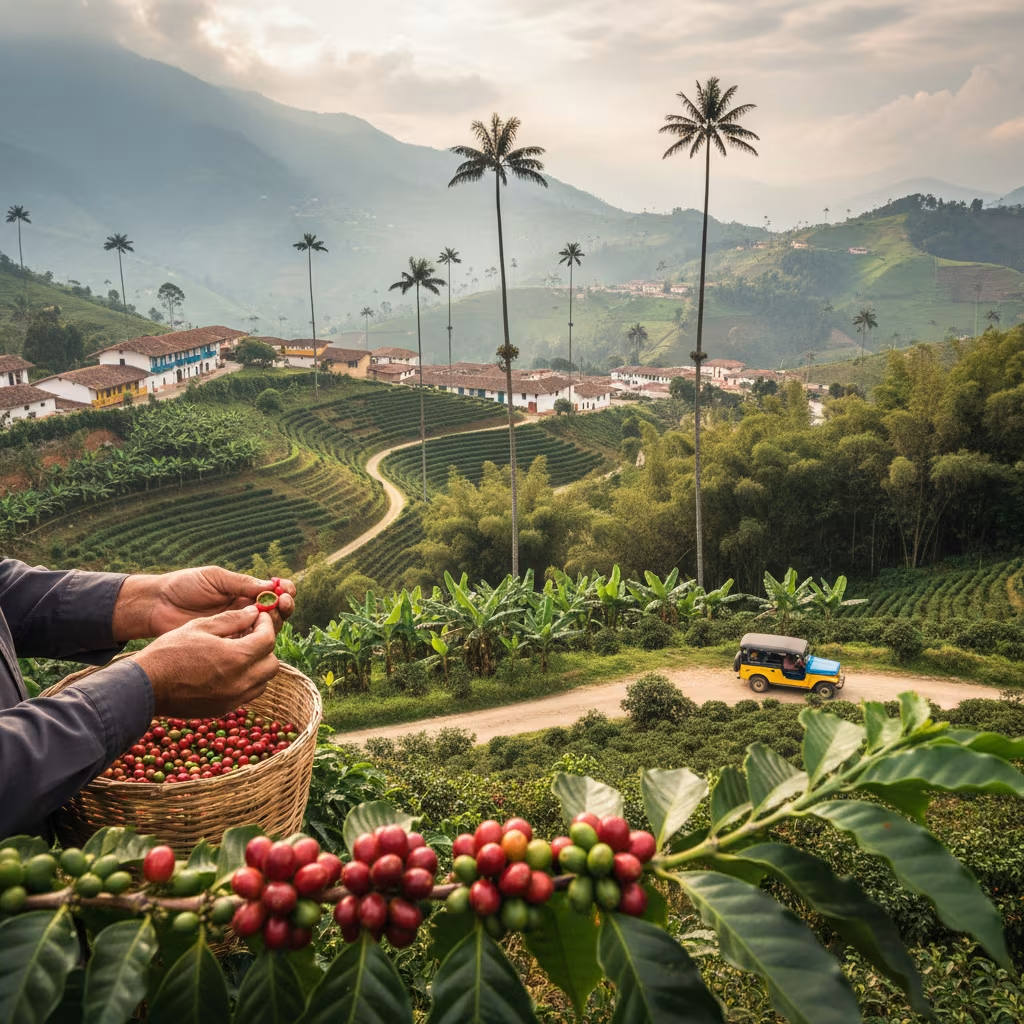
The taxi from Pereira to Salento takes about an hour and a half along a road that climbs through coffee plantations and banana farms and occasional patches of cloud forest, and you arrive in a town of approximately 7,500 people that has been consistently identified as one of the most beautiful towns in Colombia for twenty years and has somehow not been ruined by it. The main plaza is genuine: local families using it, children on the stairs of the church, a jeep Willys parked at one side with its load of coffee workers. The tourist restaurants are on one side of the plaza; the local comedores are on the other. The prices are different at each.
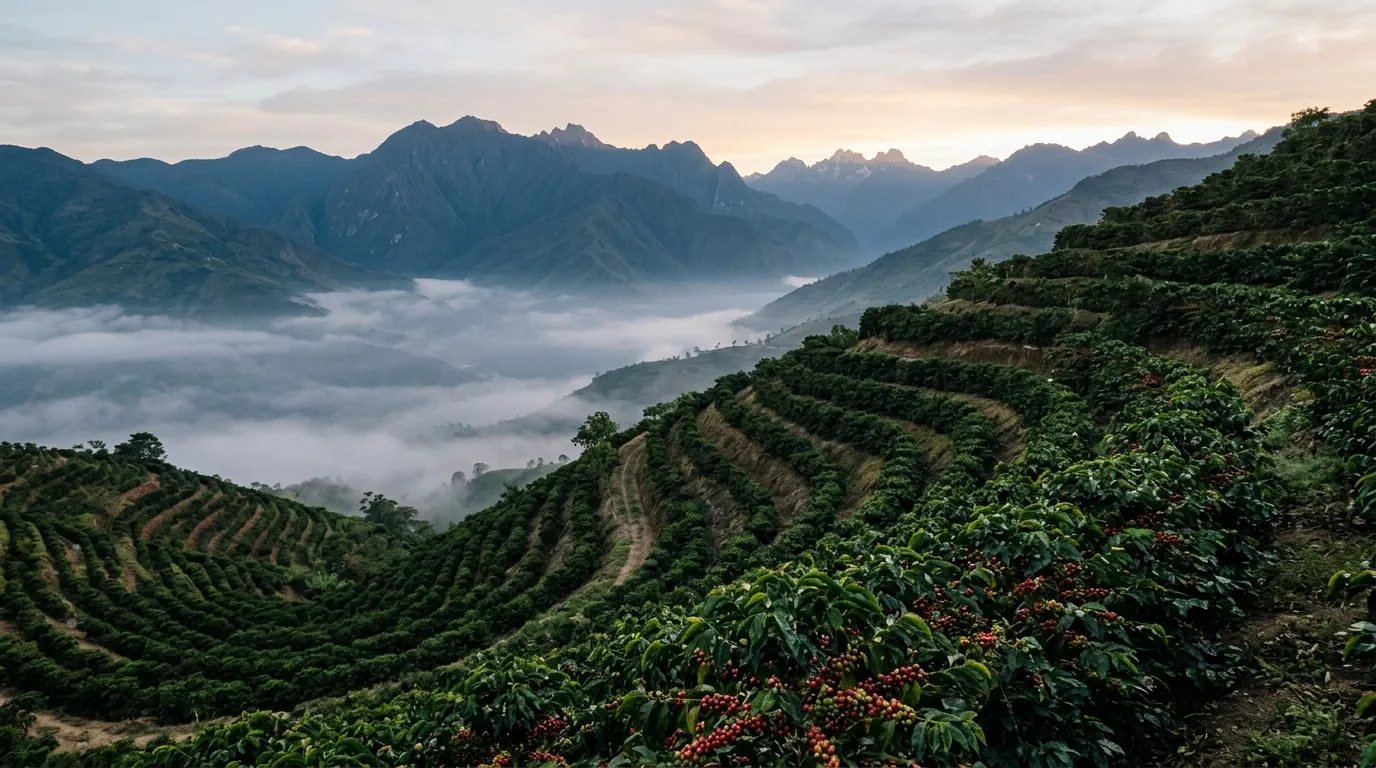
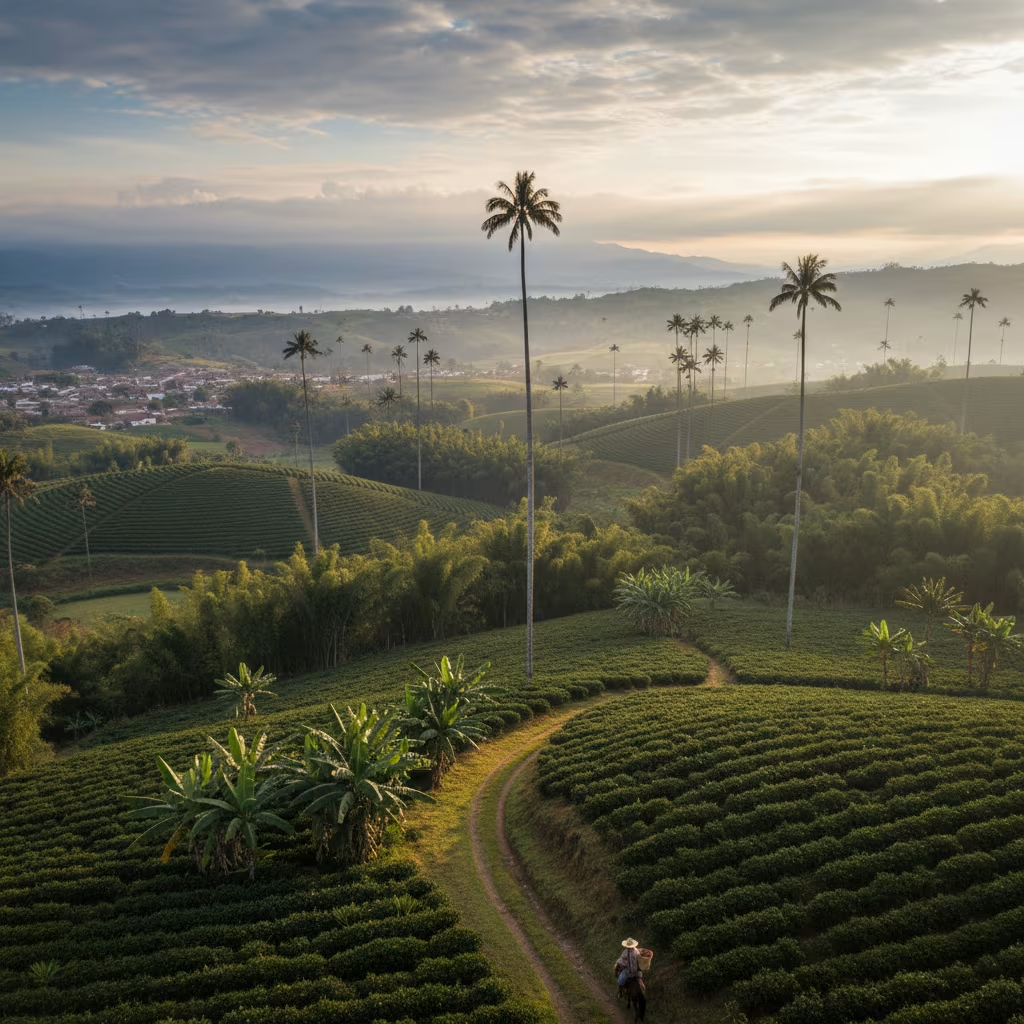
I'd been hearing about the Coffee Triangle for years before I went (the Eje Cafetero, the region of Caldas, Quindío, and Risaralda departments that produces a significant portion of Colombia's famous arabica), and the reality is both more mundane and more beautiful than the description. More mundane because coffee farming is work, and the farms open to visitors show you work in progress: not a romantic aesthetic but a complicated agricultural operation. More beautiful because the landscape is the Andes at a specific altitude (1,500–2,000m) where the light is extraordinary, the air is cool enough to be comfortable, and the valley geometry (steep ridges, deep gorges, cloud forest at the upper edges) is among the most dramatic in South America outside Patagonia.
Outdoors and culture at finca prices
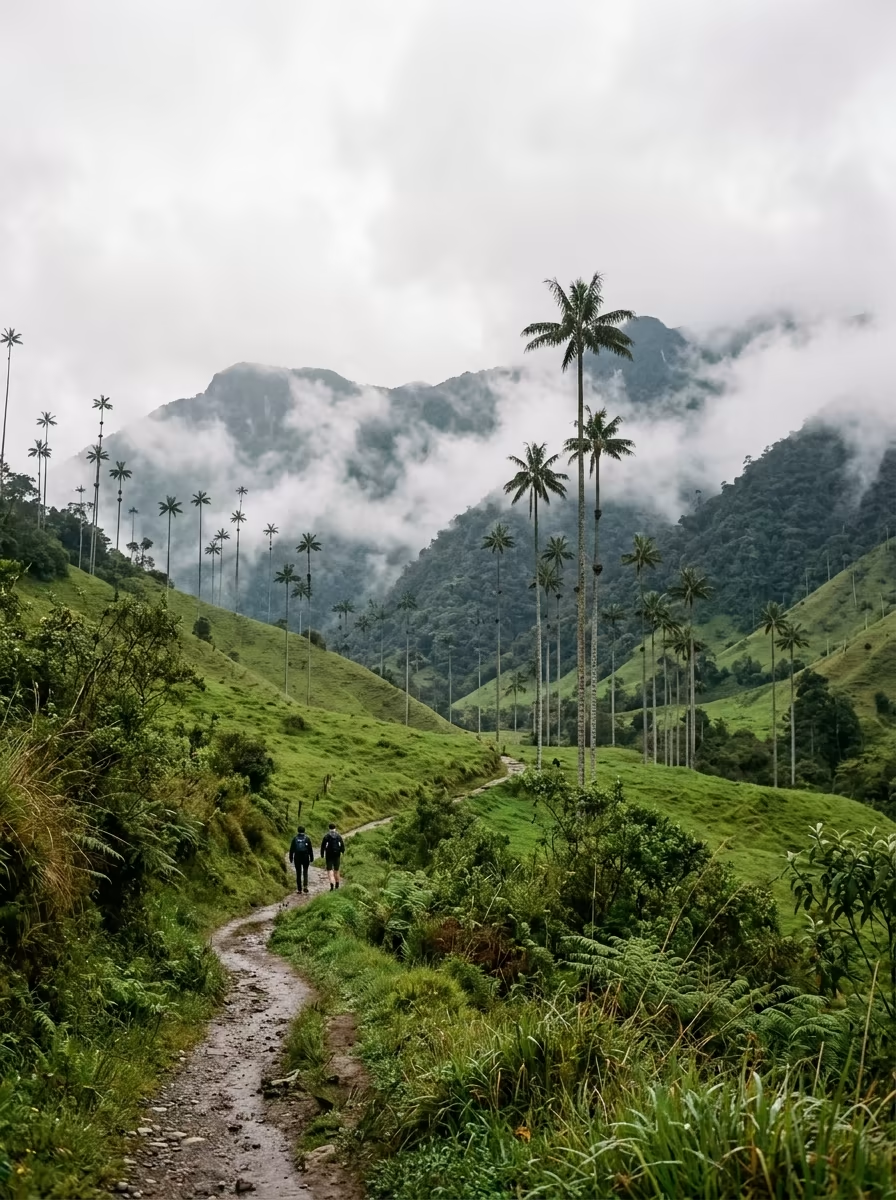
The Coffee Triangle works for travelers who want to combine outdoor experience with cultural depth at a budget significantly lower than most alternatives. A night at a good coffee farm finca runs $35–60 with breakfast; a full-day guided coffee tour (from cherry picking to the finished cup) runs $25–40. Salento's best restaurant does a set lunch for $5. The hiking in the Valle de Cocora (the wax palm valley) is accessible without technical equipment or a guide and is among the most distinctive landscapes in the Americas.
This region is not ideal for travelers who want beach access (the Pacific and Caribbean coasts are several hours away), want significant urban infrastructure and nightlife, or are not comfortable with a degree of Spanish dependence in smaller towns. Salento and Filandia have tourist facilities; the farms and smaller villages are Spanish-only environments.
The honest comparison: the Coffee Triangle against Medellín as a Colombia destination. Medellín is the more obvious choice for first-time visitors: larger, more cosmopolitan, excellent food scene, better night transport. The Coffee Triangle is slower, more agricultural, more physically active, and produces a different understanding of what Colombia actually is economically. They're complementary, and both/and is the best answer for anyone with ten or more days in the country.
Seven days: Salento, Filandia and the fincas
Day 1: Arrive in Pereira, Transfer to Salento
Pereira's Matecaña Airport (PEI) is the primary gateway: domestic flights from Bogotá take 45 minutes (Avianca, LATAM, Wingo), multiple daily. Taxi or bus to Salento (90km, 1.5 hours). Check into a finca or guesthouse on or near the main plaza. Evening on the plaza: this is a place where sitting on the church steps with a coffee from one of the local cafés is the correct activity for an arrival day.
Day 2: Coffee Farm Tour in Salento
The farms closest to Salento (Finca El Ocaso, Finca La Victoria) offer daily tours ($25–40/person) that cover the full coffee production process: visiting the cherry trees, picking (seasonal), wet processing (pulping, fermentation, washing), drying, and cupping. The cupping, a formal coffee tasting protocol, at the end of a tour at which you've watched the coffee being made is a significantly different experience from cupping at home. Book directly with the farm rather than through hotel intermediaries, which add a margin without adding value.
Day 3: Valle de Cocora and the Wax Palms
The Valle de Cocora is 12km from Salento; a jeep Willys ride ($3 each way, departs from the main plaza) delivers you to the trailhead. The standard circuit (6–7km, 3–4 hours, moderate difficulty) crosses the valley floor through a dairy farming landscape of extraordinary beauty and climbs into the cloud forest preserve (Acaime hummingbird sanctuary, ₹7,000 entry, hummingbirds in remarkable quantity) before descending back through the wax palm meadows. The wax palms (Ceroxylon quindiuense) are the national tree of Colombia and reach 60m in height. They look genuinely surreal standing in groups against the mountain backdrop. Take the jeep back rather than walking the road.
Day 4: Filandia and the Mirador
Filandia is a smaller colonial town 30km from Salento, reached by a shared Willys taxi from the plaza (₹15,000). The town is even less visited than Salento and has a wooden lookout tower (mirador) with a 360-degree view of the Quindío Valley and the coffee mountains that is one of the best viewpoints in the region. Lunch at a local comedor in the plaza. Back to Salento by mid-afternoon.
Days 5–6: Base Change to Manizales
Manizales is the capital of Caldas department and the northern point of the Coffee Triangle: a university city of 430,000, significantly more urban than Salento. The main draw for travelers: the Nevado del Ruiz (a still-active stratovolcano at 5,321m) and the Los Nevados National Natural Park, which contains some of the best high-altitude hiking in Colombia. The access road to the Nevado is managed (entry permit required, $15/person; arrange through your hotel or a local guide) and the landscape above the cloud forest (páramo, volcanic terrain, sulfur vents) is extraordinary. It requires acclimatization if you've been at Salento's altitude; allow a rest day.
Day 7: Return via Pereira
The Bioparque Ukumarí near Pereira is a wildlife rescue center and zoo worth a half-day if you have a morning before your flight. It's not the same as seeing wildlife in the wild, but the Andean bear and tapir populations are significant. Return flight from PEI.
Salento, Filandia or a working coffee farm
Salento
Numerous finca-style guesthouses on the main plaza and surrounding roads at $20–50/night for private rooms. Finca El Mirto is a particularly good mid-range option at $40–55/night with breakfast included and mountain views. The Hostal Bamboo Garden is a reliable budget option at $15–20/night. Finca stays on working coffee farms typically run $45–65/night including breakfast.
Manizales
The Hotel Estelar Las Colinas is the comfortable business standard at $80–100/night. The Bristol Hotel is a mid-range option at $55–70/night. The Termales del Ruiz (hot spring hotel on the access road to Nevado del Ruiz) is an unusual option: volcanic hot springs on site, altitude around 3,400m, at $100–150/night half-board.
Pereira as the gateway
Fly into Pereira (PEI) from Bogotá (45 minutes). El Dorado International Airport in Bogotá connects from most major North American and European cities. Domestic carriers: Avianca, LATAM, and the budget carrier Wingo. From Pereira to Salento: shared minibus from the bus terminal ($2.50) or taxi ($15–20). Within the triangle, jeep Willys taxis are the local institution and primary way to access the farms and valleys; haggle briefly, fares are well understood locally.
Cash is important in rural areas farms and Willys taxis are cash-only. Bring Colombian pesos from Pereira. ATMs in Salento exist but sometimes have supply issues; have cash on hand.
The altitude gradient matters Pereira is at 1,400m, Salento at 1,895m, Manizales at 2,160m, and the paramo at 4,000m+. Acclimatize before strenuous hiking at high altitude.
Two dry seasons, two wet ones
December to February and June to July
The dry seasons, with the best hiking and farm access weather. The Coffee Triangle has a bimodal rainfall pattern (two wet seasons, two dry); these windows are the most reliable.
March to May and August to November
Wet season periods, with afternoon rains that rarely ruin the day but affect the cloud forest hiking conditions. The landscape is deeply green; the coffee cherries are at various stages of the cycle depending on the month.
Christmas and New Year
The domestic high season: Colombian families travel intensively and accommodation in Salento books weeks ahead. Prices rise 30–50%. Book well in advance.
Coffee Triangle questions
Is the Coffee Triangle safe?
The region is among the safest in Colombia for tourists. Salento, Filandia, Manizales, and the farm areas have minimal crime. Standard common-sense urban precautions apply in Pereira and Manizales. Check current government travel advisories for the region; the Coffee Triangle has been consistently safe for travelers and the local economy is strongly tourism-oriented.
Do I need to speak Spanish?
In Salento, guesthouses and the main tourist infrastructure function adequately in English. Farms and smaller villages are Spanish-only. For the most interesting interactions (with farm workers, in local comedores, with the Willys drivers), Spanish matters. A basic level is very useful; a good translator app handles the gaps.
What's the best way to drink the local coffee?
Dark, freshly brewed, often served already sweet (tinto). At a serious café in Salento (try Café Jesús Martín on the plaza), the baristas will serve it unsweetened in multiple preparation methods. The local tradition of serving coffee in a long glass called a perico (with warm milk) is worth trying once as a cultural artifact and then deciding if it's your thing.
Is Medellín or the Coffee Triangle better for a first Colombia trip?
Medellín for urban energy, food scene, cultural transformation narrative, and tourist infrastructure. Coffee Triangle for landscape, outdoor activity, agricultural culture, and a more rural understanding of Colombia. With ten days or more, do both: fly into Bogotá, transfer to Pereira, a week in the triangle, then a three-day bus or flight to Medellín.
Coffee Triangle costs at a glance:
| Item | Figure | Note |
|---|---|---|
| Finca night (with breakfast) | $35–60 | — |
| Full-day coffee tour | $25–40/person | Finca El Ocaso, Finca La Victoria near Salento |
| Pereira → Salento | 90 km, ~1.5 hours | — |
| Valle de Cocora jeep | $3 each way from the plaza | standard circuit 6–7 km, 3–4 hours |
| Set lunch in Salento | $5 | wax palms on the circuit reach 60 m |
0 Comments
No comments yet — start the conversation.