

The Air New Zealand flight from Sydney arrives in Queenstown just before noon, descending between mountain walls into a narrow valley with a lake at the bottom and a town that looks, from the air, improbably small for its reputation. Then you're on the ground and you understand the scale differently: the mountains are enormous, the lake is very clear, and the town has been built exactly to the scale of the landscape rather than over it. The rental car is ready at the terminal. The road north is empty.
I've been to the South Island three times, each time in a different season, and the landscape has never felt repetitive: it changes so completely between the alpine interior (the Southern Alps running the length of the island like a spine), the fjord coast (Fiordland, the least accessible and most dramatic), the eastern plains (Canterbury, flat and agricultural and lit differently from everywhere else), and the wine valleys of Marlborough (the Wairau Valley, where sauvignon blanc grows at a scale and quality that makes other regions' attempts seem exploratory). Ten days is enough to connect three or four of these faces of the island in a route that doesn't feel rushed.
The rental car is not optional here. The South Island's most extraordinary places are connected by two-lane roads through mountain passes, and no public transport schedule matches the timing and spontaneity the landscape requires.
Landscape over cities
The South Island is the right New Zealand choice for travelers who prioritize landscape over urban experience. Christchurch (the largest city on the island, still rebuilding from the 2010–2011 earthquake sequence) is interesting architecturally but not the reason to come. The reason is the landscape: specifically, the combination of scale and accessibility that allows a traveler with a car and moderate hiking fitness to reach places that, in any other country, would require guided expeditions.
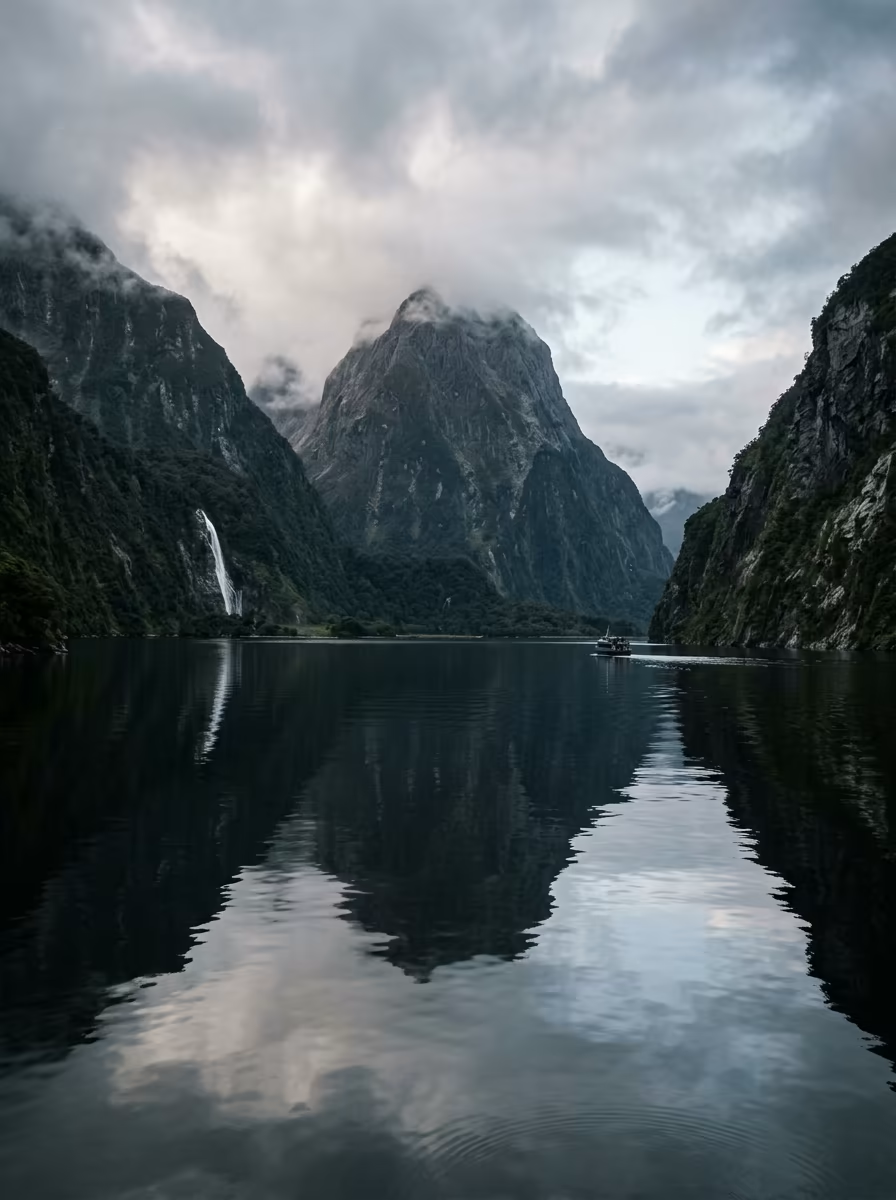
Milford Sound (Piopiotahi) is the most famous example: a 14km fjord carved by glacial action to a depth of 265m, accessible by a single road through the Fiordland mountains, with no development inside the park boundaries except a small visitor complex at the end of the road. The sound itself (the sheer cliff faces rising directly from the black water, the Mitre Peak dominating the view, the waterfalls appearing from every vertical surface after rain) is the kind of landscape that demands a word that doesn't exist in English, somewhere between the German Erhabenheit and the Japanese 幽玄.
The South Island is less suitable for travelers who want cosmopolitan city infrastructure, significant nightlife (Queenstown has a scene, but it's focused on outdoor-adventurer demographics), or easy beach access (the west coast beaches are wild and cold; the east coast beaches near Kaikoura and Abel Tasman are accessible and beautiful but on a different itinerary).
New Zealand is expensive by most Southeast Asian and even some European standards. Accommodation in quality establishments runs NZ$150–300/night. Petrol (gasoline) is expensive. Groceries from New World or Countdown supermarkets, however, are reasonable, and self-catering for most lunches and some dinners significantly reduces the daily cost.
Ten days: Queenstown, Fiordland, the west coast
Day 1: Queenstown and Lake Wakatipu
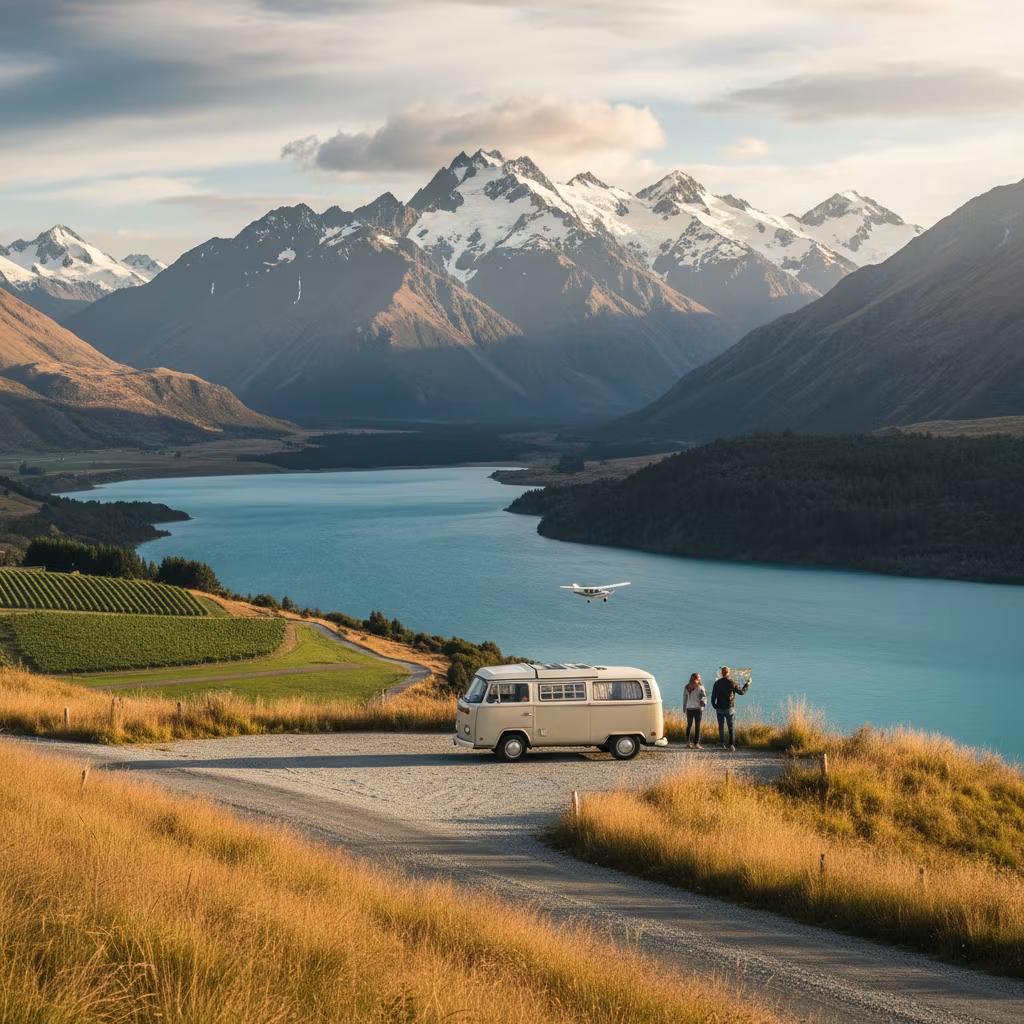
Settle into Queenstown and walk the lake shoreline to get a sense of the scale: the Remarkables range across the lake, the Coronet Peak ski area visible to the north. Walk up to the Queenstown Hill viewpoint (2 hours round trip from town, no guide needed) for the best overview of the lake and surrounding valleys. Dinner at Rata in the center of town: executive chef Josh Emmett's restaurant, New Zealand produce done correctly, $60–80/person.
Days 2–3: the Milford Road
This is the trip's centerpiece. Drive from Queenstown to Te Anau (2.5 hours) on day two. Te Anau is the gateway town for Fiordland and deserves a night at a lakeside guesthouse rather than treating it as a transit point. Walk the Kepler Track day-walk section along the lake shoreline ($5 DOC hut fees, no booking needed for a day walk). Day three: drive the Milford Road (SH94, 120km from Te Anau to Milford Sound, 2 hours). The road climbs through beech forest into alpine meadows and through the Homer Tunnel, a hand-drilled single-lane tunnel through the Darran Mountains at 945m that opens suddenly onto the Fiordland fjord world. Arrive at Milford Sound by 11 AM, take the 2-hour cruise on the sound (Southern Discoveries, NZ$75–95/person, book ahead), have lunch at the visitor complex (straightforward, not exciting), and be back in Te Anau by 6 PM.
Day 4: Wanaka
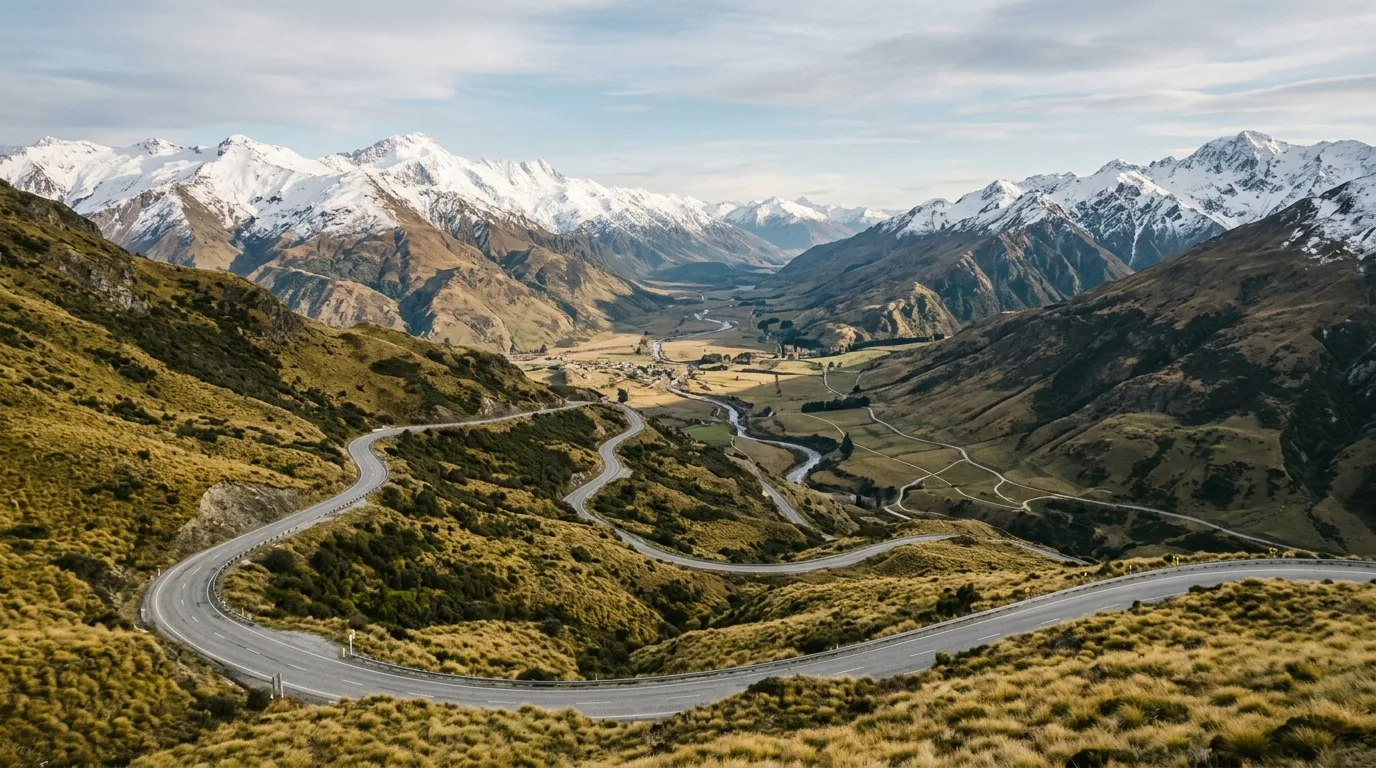
Drive north from Te Anau to Wanaka (2.5 hours via Queenstown if you need to return the car temporarily, or direct via the Crown Range Road, a stunning alternative road at 1,076m, closed in snow). Wanaka is Queenstown's quieter, less commercial equivalent: smaller, with a beautiful lake (Lake Wanaka) and good independent restaurants without the adventure-sport circus. Rob Roy Glacier Track (4 hours return, moderate, extraordinary alpine scenery in the Mount Aspiring National Park access road) is the day walk from Wanaka that earns its reputation.
Days 5–6: the West Coast
Drive from Wanaka or Queenstown over the Haast Pass (SH6, one of New Zealand's great road experiences) to the West Coast. The west coast receives 5–10 meters of annual rainfall and is consequently the most dramatically vegetated part of the island: the bush is dense and wet, the waterfalls are everywhere, and the grey-green Tasman Sea is completely different in character from the clear inland lakes. Fox Glacier and Franz Josef Glacier (two glaciers accessible by guided walks on foot or helicopter) are the standard west coast activities. Book in advance; weather windows on the west coast are specific and unpredictable.
Days 7–8: Christchurch and the Canterbury Plains
Drive north along the west coast, turn east over the Lewis Pass, and arrive in Christchurch. The city's earthquake recovery is an ongoing architectural experiment: the cardboard cathedral (a temporary structure made of cardboard tubes, still functioning fifteen years later), the Cashel Mall rebuild, and the gap-site art and market culture that emerged after 2011 make Christchurch a genuinely interesting urban design study. Walk the Ōtākaro Avon River Precinct, the park created from the cleared red zone residential land along the Avon River. Dinner at The Monday Room or Gatherings, both excellent contemporary New Zealand cuisine.
Days 9–10: Marlborough Wine Region
Drive from Christchurch to Blenheim in Marlborough (3.5 hours on SH1 north, or train, the Tranz Coastal scenic service along the coast is one of New Zealand's better train journeys). Marlborough produces 70% of New Zealand's wine and essentially all of its internationally recognized sauvignon blanc. Winery visits: Cloudy Bay (the famous one, free tasting), Greywacke (smaller, excellent pinot gris), and Framingham (off the main tourist route, extraordinary rieslings). The cycle trail through the Wairau Valley (Marlborough Wine Trail, 25km, flat, fully signposted) connects most of the major wineries. Rent a bicycle in Blenheim and return to Christchurch or fly home from Blenheim Airport (BHE) to Wellington or Auckland.
Queenstown, Te Anau and Wānaka
Queenstown
The Eichardt's Private Hotel on the lakefront is the definitive luxury option at NZ$600–900/night. The Rees Hotel & Luxury Apartments is a step down at NZ$300–450/night, still excellent. Budget: YHA Queenstown Central at NZ$60–90/night for private rooms.
Te Anau
The Fiordland Lodge is the beautiful mid-range at NZ$250–350/night (a lodge in native bush above the town, with views of the lake). The Te Anau Lodge (former holiday home of the Milford Sound helicopter pilots) at NZ$200–280/night. Budget: Te Anau YHA at NZ$50–75/night.
Wanaka
Criffel Station Homestead (a high-country sheep station accommodation at NZ$300–450/night) is extraordinary. The Wanaka Hotel at NZ$130–180/night is reliable and central. Self-contained holiday houses on the lake at NZ$180–250/night through Bookabach or Holiday Houses.
Queenstown or Christchurch, and the drive times
Queenstown Airport (ZQN) accepts direct international flights from Sydney and Melbourne (Air New Zealand, Jetstar, Qantas) and is the South Island's best entry point for this itinerary. Christchurch Airport (CHC) has more direct connections from further afield (Singapore, Shanghai, Los Angeles via Auckland) and works as an alternative entry with a reversed itinerary.
A car is essential and the entire trip depends on it. Rental cars from the Queenstown or Christchurch airport terminals: Budget, Hertz, and Jucy are all represented. Fuel costs: New Zealand petrol is NZ$2.80–3.20/liter as of 2026, adding NZ$150–200 to a ten-day road trip. All major road surfaces on this itinerary are sealed tarmac; a 4WD is not necessary.
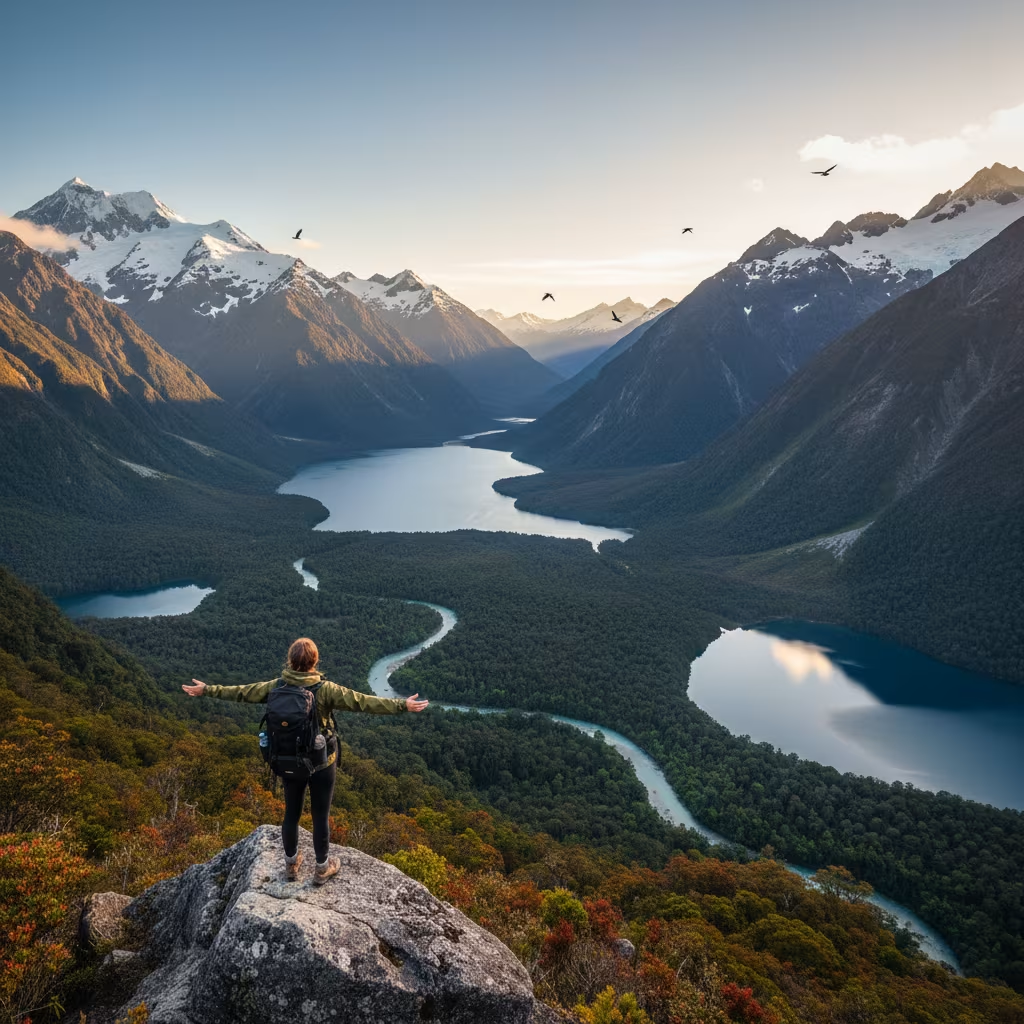
New Zealand drives on the left. The roads are excellent but narrow in mountain areas, with one-lane bridges common on rural roads; give way rules for these are clearly posted and apply. Take the driving slowly and stop when the view demands it; this is the entire point.
Connectivity: a Spark or One NZ SIM from the airport provides 4G in all towns and most highways. Rural coverage in Fiordland is limited (no signal in the Homer Tunnel area or inside the national park). Download offline maps before leaving each town.
December to March, and the shoulder trade-off
December to March
The Southern Hemisphere summer. Long days (sunset after 9 PM in December–January), warm temperatures in the inland basins (20–28°C in Queenstown), reliable (not guaranteed) weather windows in Fiordland. Peak season; accommodation books months ahead, Milford Sound cruises sell out. Book everything before you arrive.
April to May and September to October
The shoulder seasons. Autumn (April–May) brings the most dramatic foliage colors in the Central Otago valleys; the crowds thin, prices drop 20–30%, and the weather remains good. Spring (September–October) has lingering snow on the passes and the occasional closed mountain road but produces extraordinary mountain views and lamb in the paddocks.
June to August
The ski season. Queenstown (Coronet Peak, The Remarkables) and Wanaka (Cardrona) are major ski destinations; the skiing is genuinely good. Non-skiing road travel is possible but the Milford Road and Crown Range can close in heavy snow. The off-season pricing and empty landscapes are worth the weather risk for flexible travelers.
South Island questions
Do I need a visa for New Zealand?
Citizens of the UK, EU, US, Canada, Australia, and most OECD nations can enter New Zealand visa-free for up to 90 days. From October 2019, most eligible travelers must obtain a New Zealand Electronic Travel Authority (NZeTA) in advance online (NZ$23). Australian citizens have a separate arrangement. Check the Immigration New Zealand website for your specific nationality.
Is a 4WD necessary for this itinerary?
No. All roads on this itinerary are sealed tarmac and driveable in a standard rental car. A higher-clearance vehicle would be advisable only if you're planning unpaved gravel roads in the back-country (Skippers Canyon, Molesworth Station), none of which are on this itinerary. Check the NZTA road conditions website before driving any mountain pass in winter.
Is New Zealand as expensive as people say?
Yes, but the cost is front-loaded: accommodation and activities are expensive (NZ$150–300/night for mid-range accommodation, NZ$75–95 for the Milford Sound cruise). Groceries from supermarkets are reasonable, and self-catering lunches significantly reduce daily spend. Budget NZ$250–350/day per person including accommodation and activities, less if camping or using YHA hostels.
When is the best single week to visit Milford Sound?
The fjord is technically accessible year-round, but the most dramatic conditions are immediately after rainfall: the waterfalls are fullest and the clouds lifting from the peaks produce a shifting, layered quality of light that clear days don't match. Coming in a mixed-weather period (autumn or spring) actually produces better Milford Sound photography than coming in guaranteed sunshine. Check the MetService New Zealand forecast for Fiordland before driving the road.
South Island numbers:
| Item | Figure |
|---|---|
| Milford Sound | 14 km fjord, 265 m deep |
| Milford Road | SH94: 120 km from Te Anau, ~2 hours |
| Queenstown → Te Anau | 2.5 hours |
| Kepler Track day walk | $5 DOC hut fee, no booking |
| Quality stays | NZ$150–300/night; Rata dinner $60–80/person |
0 Comments
No comments yet — start the conversation.