

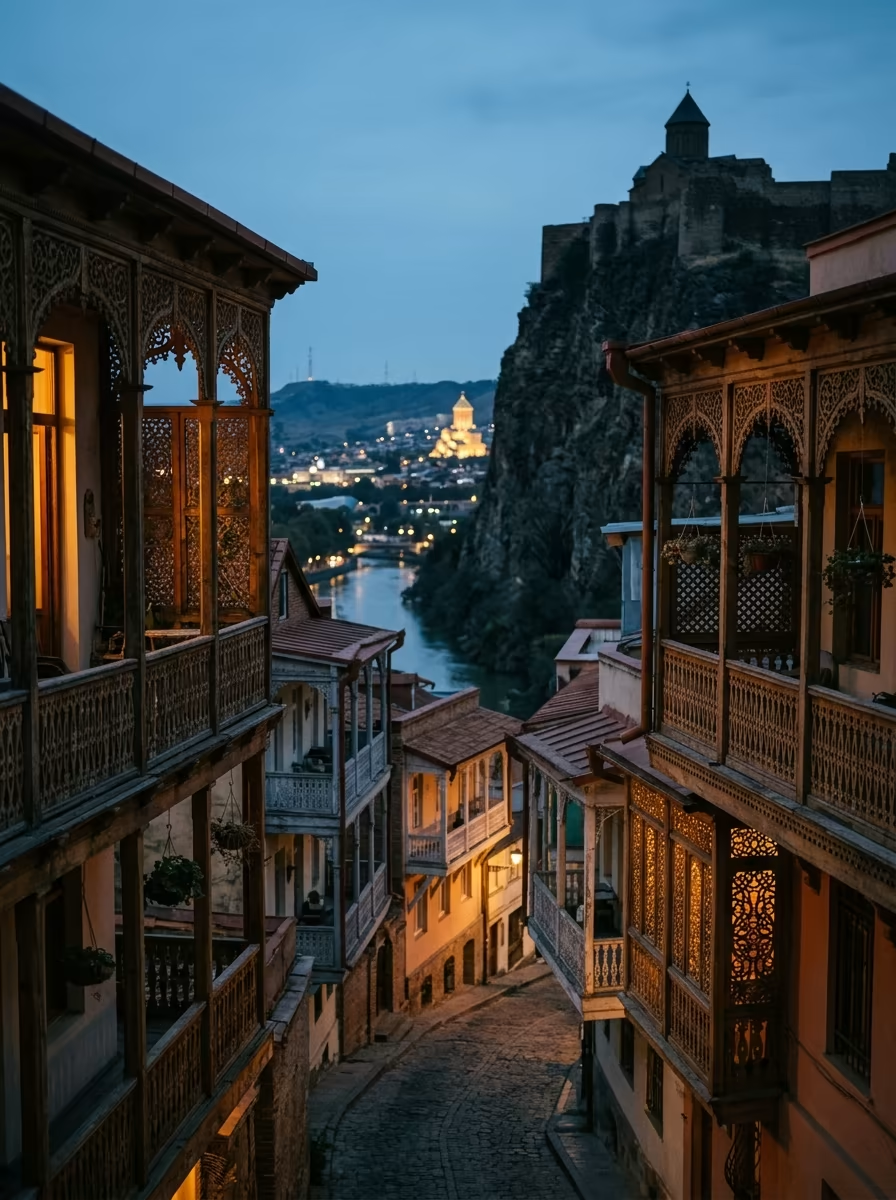
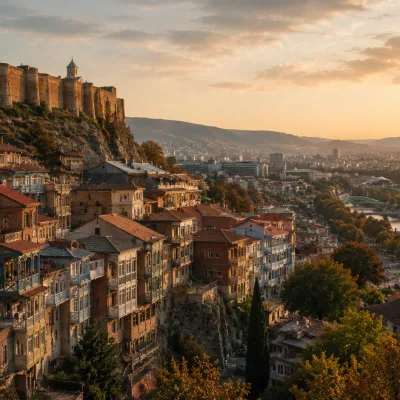
The Ryanair flight from Warsaw touches down at Tbilisi Shota Rustaveli International Airport shortly after midnight, and the taxi ride into town takes you through twenty minutes of ex-Soviet apartment blocks under amber streetlights. It's unprepossessing in the way that many great cities are unprepossessing at their edges. Then the driver turns onto Rustaveli Avenue and you see the Old Town in the headlights: the cliffside houses with their carved wooden balconies hanging over the Mtkvari River gorge, the fortress lit from below on the ridge above. The cab costs about €8 and the currency exchange at the airport gave you a rate that made everything seem improbably cheap, and you already know you're going to stay longer than you planned.
Georgia is one of those destinations that inspires a specific kind of loyalty in the people who've been there: a combination of wine, warmth, and genuine weirdness that doesn't quite translate in description and is self-evident in person. Tbilisi is the center of it: a city of 1.1 million that feels like a large town, where every neighborhood has a distinct character, where the natural wine revolution has produced some of the most interesting things happening in any wine bar anywhere in the world, and where the sulfur baths in Abanotubani have been operating continuously since the 5th century. Ten days is long enough to stop being a tourist and start being a person in a place.
Who Tbilisi is actually for
Tbilisi is the correct answer for a specific type of traveler: curious, moderately adventurous (not in a physical sense but in a willingness-to-navigate-Cyrillic sense), interested in food and wine in a way that goes beyond restaurant checkboxes, and looking for a place that costs significantly less than Western Europe while delivering an experience that most of Western Europe cannot.
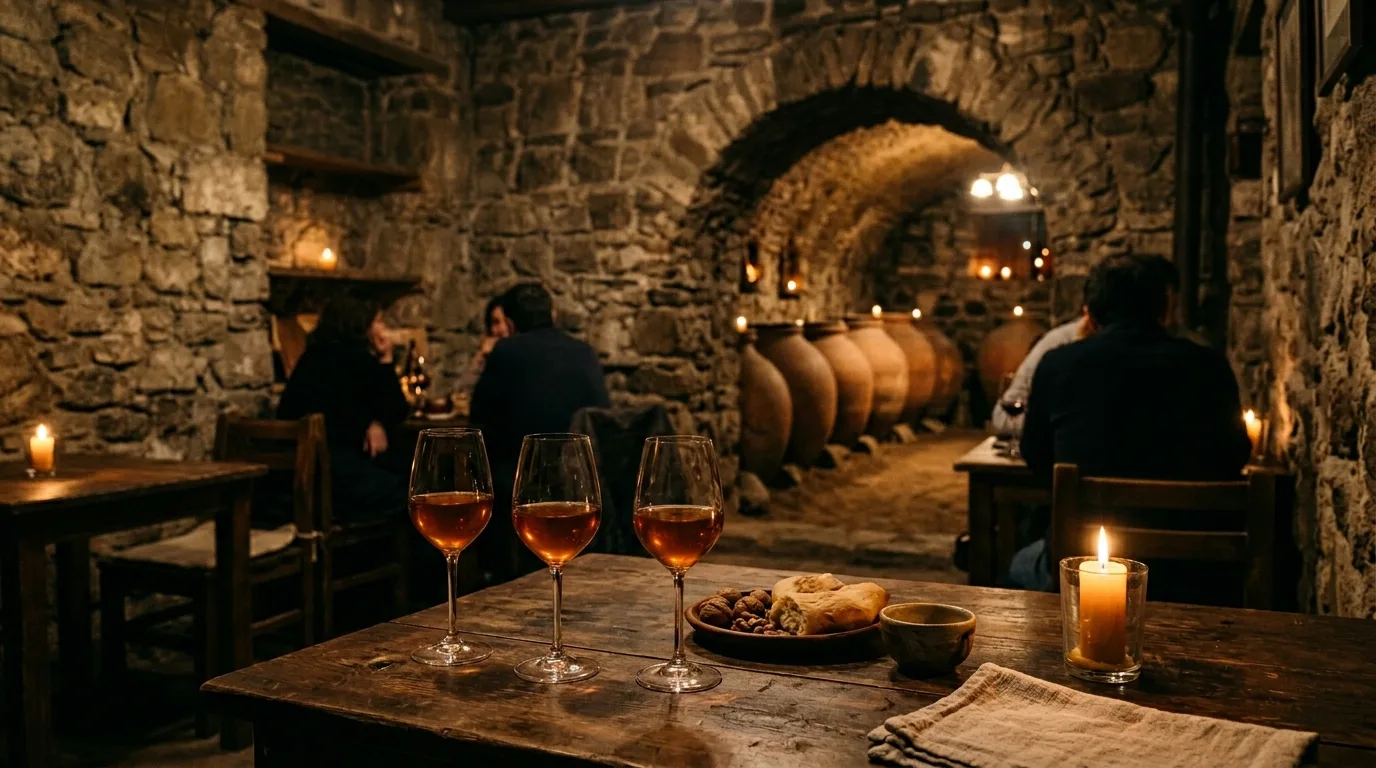
The average daily budget in Tbilisi (comfortable accommodation, three meals, wine, a few museum entries, local transport) runs €30–50/day depending on accommodation. A glass of excellent natural wine at Vino Underground or Wine Bar Mego costs €3–5. A meal at a traditional Georgian restaurant (khinkali, chicken in walnut sauce, lobiani) for two people with a bottle of wine costs €20–25. A private room in a well-regarded guesthouse in the Old Town runs €35–50/night.
Tbilisi is not the right choice if you want guaranteed good weather (the city is humid in summer, rainy in spring and autumn), luxury hotel infrastructure (the international chains have arrived but the supply is thin), or a city that has been fully organized for tourism. Navigation in Georgian script requires patience; some of the best restaurants don't have English menus; public transport is cheap but requires working out the system. For travelers who experience these conditions as inconveniences, another destination is a better fit. For the rest, they're part of the point.
Ten days: Old Town, Kakheti and the Caucasus
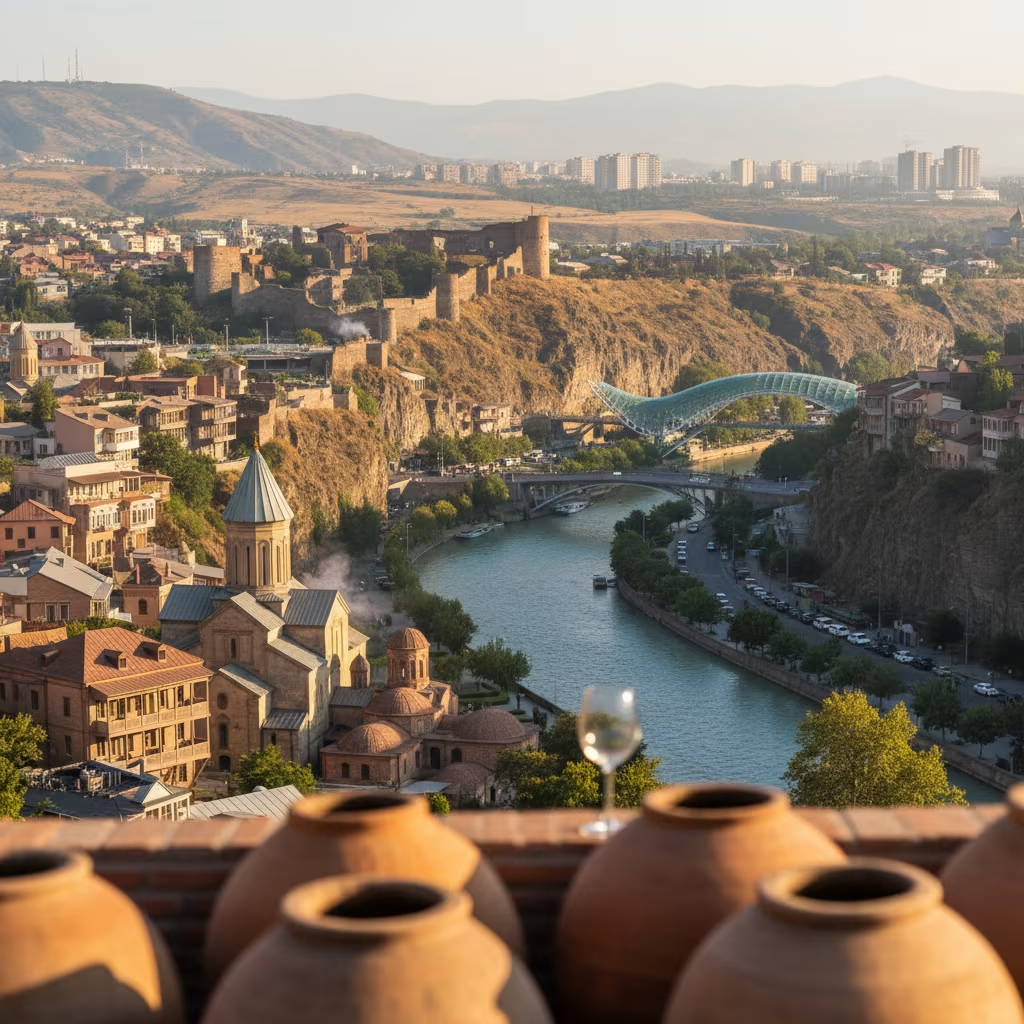
Days 1–2: The Old Town and Abanotubani. Spend your first morning in the Abanotubani district, the sulfur bath quarter below the Narikala Fortress. The Royal Bath (also called Orbeliani Bath, the one with the blue-tiled mosaic exterior) charges €4–10 for a general entry, or €25–40 for a private room with attendant scrub. Go before noon on a weekday. Walk up to the Narikala via the Botanical Garden path (the city's best kept secret: a deep gorge park that the tourist literature underemphasizes). Evening on Erekle II Street, the pedestrian strip where a cluster of natural wine bars and small restaurants has made Tbilisi genuinely famous among wine professionals. Vino Underground and Fabrika (the converted Soviet factory-complex-turned-bar-and-restaurant district) are both worth your time.
Days 3–4: Vera and Vake neighborhoods. The districts west of the center: Vera is bohemian and residential, Vake is greener and slightly wealthier. Walk Kostava Street from Rustaveli toward Freedom Square, cut through Vera's back streets, and find your lunch at one of the hole-in-the-wall khinkali specialists that exist on almost every block. Afternoon in Vake Park (the large hilltop park overlooking the city) and the area around the Vake Cinema. Dinner at Barbarestan (book weeks ahead); the menu is drawn from a 19th-century Georgian cookbook by Princess Barbare Jorjadze, and it is genuinely one of the best meals I've had anywhere.
Days 5–6: Day trip to Mtskheta and Gori. Mtskheta is the ancient capital, 20km north of Tbilisi, a UNESCO site containing Svetitskhoveli Cathedral (11th century, active, extraordinary interior) and the hilltop Jvari Monastery across the river confluence. Spend the morning here by shared minibus (marshrutka, ₾1.50 from Didube station, 30 minutes). Gori (Stalin's birthplace) is darker and stranger: the Stalin Museum there is a genuinely unsettling experience, neither hagiographic nor critical but something more confused, which is perhaps accurate. Return to Tbilisi by late afternoon.
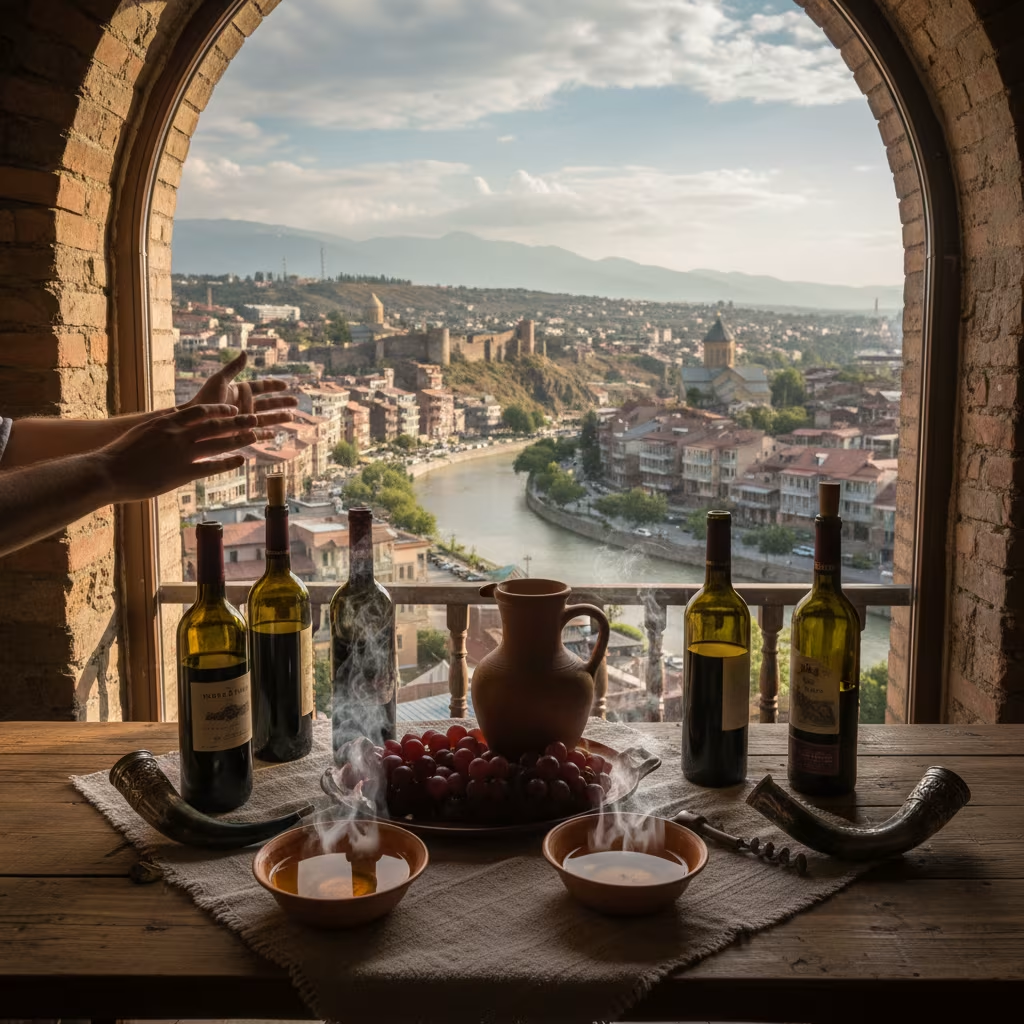
Days 7–8: Kakheti wine region. Two nights in the Kakheti wine region, the heartland of Georgian viticulture, three hours east by marshrutka. Base yourself in Sighnaghi (the walled hilltop town with views across the Alazani Valley toward the Caucasus) or Telavi (the regional center, larger, better restaurant infrastructure). The wineries worth visiting: Pheasant's Tears in Sighnaghi (iconic, book lunch ahead), and Iago's Wine in Chardakhi (small production, qvevri fermentation, the owner speaks English and gives extraordinary tours for €5 including the wine). Spend one afternoon just driving through the valley.
Days 9–10: Back in Tbilisi, slower pace. The Georgian National Museum on Rustaveli (the Gold Treasury room is remarkable). A morning in the Marjanishvili and Chugureti neighborhoods, Tbilisi's street-art corridor. Dinner at Café Leila on your last night, a small place on Davit Aghmashenebeli that does a changing menu of contemporary Georgian food that is unlike anything else in the city.
Old Town, Sololaki or Vera
Old Town
The most atmospheric base, within walking distance of the sulfur baths, the wine bars, and the main sights. Fabrika Hostel has excellent private rooms at €45–60/night and one of the best courtyard bars in the city. The Rooms Hotel Tbilisi (on Kostava) is the prestige option at €180–250/night, worth it if design hotels are your thing. Numerous guesthouses in the Old Town run €35–50 for a private room with breakfast.
Vera and Vake
Quieter and more residential, good for longer stays. Fewer hotels but excellent Airbnb availability at €40–65/night for apartments. The Stamba Hotel (a converted Soviet publishing house) in Vera is architecturally extraordinary at €160–200/night.
Budget Option
Fabrika's dormitory beds start at €12/night; the shared spaces are excellent and the crowd is good. Don't underestimate hostel common rooms in Tbilisi: they're often where the best conversations happen.
Flying into TBS, then marshrutkas and metro
Tbilisi Shota Rustaveli International Airport (TBS) is served by direct flights from a growing list of European cities: Warsaw, Berlin, Paris, Amsterdam, Istanbul (multiple daily), Dubai, and Tel Aviv. Ryanair, Wizz Air, LOT, and Turkish Airlines are all worth checking. From the airport to the city center: the metro connection doesn't reach the airport; use a metered taxi (agree the price first, should be 25–40 GEL, about €8–12) or the Bolt/Yandex Go app.
Within Tbilisi: the metro (two lines, covers the main districts) costs ₾1 per journey (about €0.35). Buses and minibuses are similarly cheap. Walking is viable in the Old Town and Vera; Vake is hilly. Marshrutkas to day-trip destinations (Mtskheta, Gori) leave from Didube station. Always have some Georgian lari in cash, since many small establishments don't take cards.
A local Magti or Geocell SIM is available at the airport for a few GEL with reasonable data packages. Or use Airalo for an eSIM before arrival.
April to June, and the October festival calendar
April to June
The best shoulder season. The city is green from spring rains, temperatures comfortable (18–25°C), and wine bars in outdoor season. The festival calendar (Tbilisoba, the city festival, is in October; but spring has various neighborhood events). Slightly rainy but agreeable.
July to August
Hot (30–38°C in the city), crowded by Georgian standards, accommodation in the Old Town books quickly. Still a good time to visit but not the easiest.
September to November
The harvest season in Kakheti (September–October) is the wine tourism peak and probably the best time overall: warm, the city is full of energy, qvevri trampling festivals happen at various wineries. October brings the Tbilisoba city festival.
December to March
Cold and occasionally snowy, some cafés and restaurants reduce hours. The Fabrika complex stays lively year-round; the wine bars don't close. A legitimate off-season visit for the right type of traveler.
What travellers ask about Georgia
Do I need a visa for Georgia?
Citizens of the EU, US, UK, Canada, Australia, and most other developed nations can enter Georgia visa-free for up to 365 days. Georgia operates one of the world's most generous visa policies: it is actively trying to attract long-stay visitors and digital nomads.
Is cash necessary in Georgia?
More than in most European cities, yes. Major supermarkets, hotels, and larger restaurants take cards. But smaller guesthouses, marshrutkas, market vendors, and many independent cafés and wine bars operate cash-only. Keep 100–200 GEL in cash at all times; ATMs are widely available in Tbilisi and generally reliable.
Is Tbilisi safe?
Generally very safe, including for solo women travelers. Georgia has a strong hospitality culture and street crime against tourists is rare. The political environment (the ongoing Russian occupation of South Ossetia and Abkhazia, domestic political tensions) is worth monitoring through travel advisories, but these situations have not historically affected tourist safety in Tbilisi itself.
Can I drive to Armenia or Azerbaijan from Tbilisi?
To Armenia: yes, the Bagratashen border crossing is reliable and the road from Tbilisi to Yerevan takes about 5–6 hours. To Azerbaijan: yes, via the Red Bridge crossing, with Baku about 6–7 hours away. Note that the Armenia-Azerbaijan border is closed due to the conflict between those two countries; you cannot travel between them directly.
Tbilisi budget sheet:
| Item | Figure |
|---|---|
| Daily budget (comfortable) | €30–50 |
| Airport cab | ~€8 |
| Natural wine by the glass | €3–5 |
| Georgian dinner for two + bottle | €20–25 |
| Old Town guesthouse room | €35–50/night |
| Sulphur bath | €4–10 general, €25–40 private |

0 Comments
No comments yet — start the conversation.