

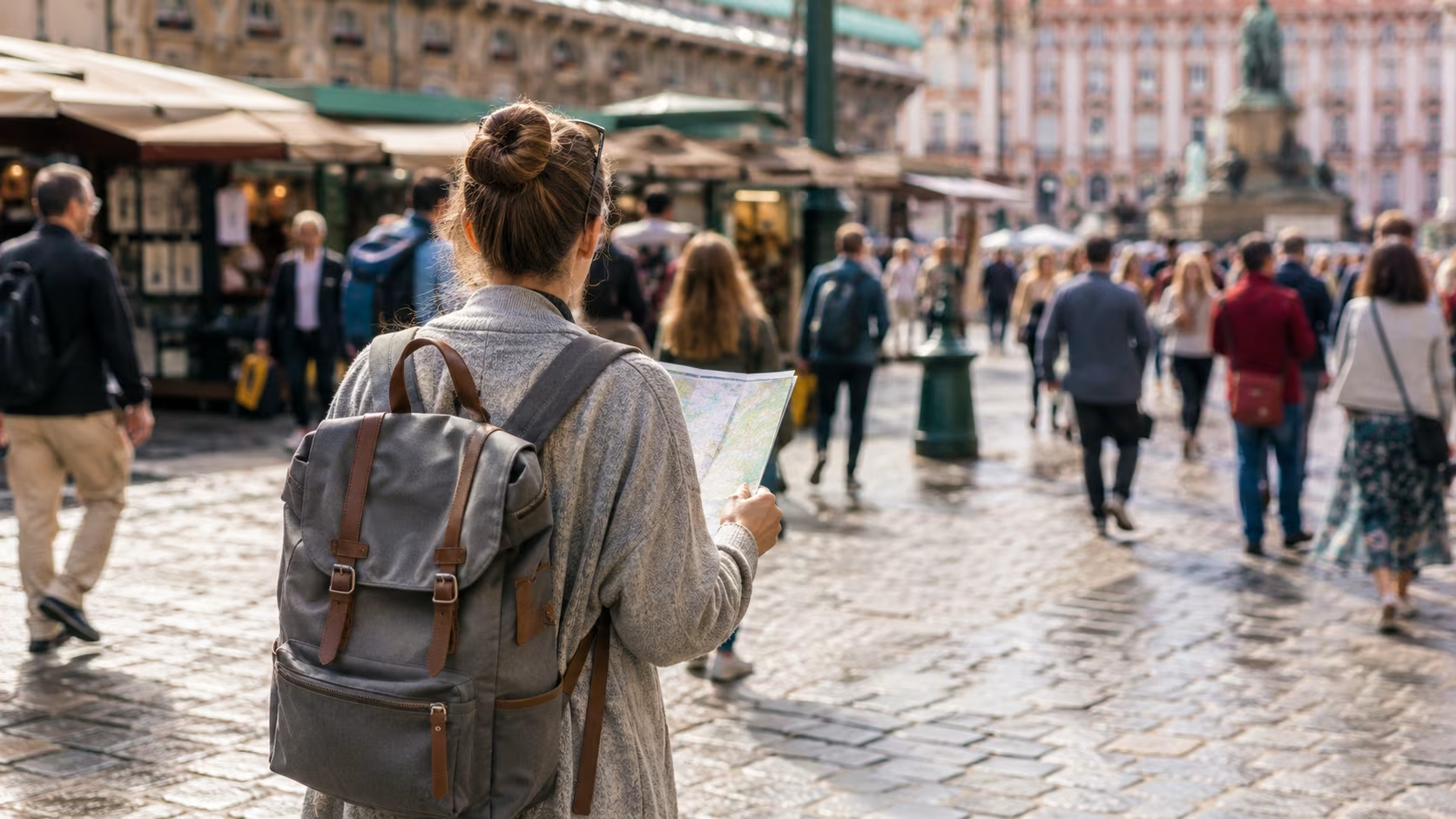
Most tourist scams are old. Versions of the shoeshine scam date to the 1880s. The friendship-bracelet scam in Paris was already mature in the 1990s. The taxi-meter scam outdates the meter itself.
What changes is the city, the language, and the pretext. The mechanics are nearly always the same: an attention grab, a manufactured social obligation, a moment of confusion, and a cash demand. Recognizing the pattern matters more than memorizing the specific variant.
This is a 2026 guide to the scams still working today, organized by category. The headline lesson: scams target politeness. The polite traveler, the one who doesn't want to seem rude, is the easiest mark. Brisk indifference is the best defense.
Category 1 — Taxi and Transit Scams
1. the Broken Meter
Where
Common worldwide. Particularly entrenched in Istanbul, Cairo, Marrakech, parts of Italy, Bangkok, Manila.
How It Starts
You get into a taxi. The driver claims the meter is broken or won't turn it on. Quotes a flat rate that's 3–10x the legitimate fare.
Defense
Use Bolt, Uber, or local equivalents (BiTaksi in Istanbul, Grab in Southeast Asia, Careem in the Middle East). When you must use a street taxi, confirm the meter ("taksimetre" / "meter") before entering. If they refuse, get out and find another.
2. the Long-Way Drive
Where
Universal.
How It Starts
The driver takes a route 30–80% longer than necessary. The meter runs honestly, but the route doesn't.
Defense
Open Google Maps with directions before getting in. Watch the route as you drive. If they deviate noticeably, ask why ("Why is this route?"); they'll often correct silently. Use ride apps that show the optimized route.
3. the "my Hotel Closed" Detour
Where
Bangkok and other Asian cities; Cairo; Cusco.
How It Starts
Taxi or tuk-tuk driver tells you your hotel is closed/booked/burned down, and offers to take you to a friend's hotel instead. The other hotel pays the driver a kickback.
Defense
Ignore. Insist on going to the original destination. Call the hotel from the taxi if needed.
4. the Wrong Bill Switch (Cab-Specific)
Where
Worldwide, especially Argentina, Vietnam, Romania.
How It Starts
You hand the driver a 500-peso note. He fumbles, hands it back, says "this isn't real, give me a real one." The 500 he hands back is a 50.
Defense
Hand over only one bill at a time, watching it leave your hand. State the denomination out loud ("five hundred"). In countries with currency forgery problems, refuse to accept any bill back from the driver; keep your own bill in sight.
Category 2 — Pedestrian and Street Scams
5. the Friendship Bracelet (or "free" Anything)
Where
Paris (Sacré-Cœur), Rome (around the Spanish Steps and Trevi), Barcelona (Las Ramblas), Florence.
How It Starts
A friendly man approaches you, ties a string bracelet onto your wrist while smiling and chatting. Then demands €10–30 for it. The bracelet is hard to remove without help.
Defense
Don't let anyone tie anything on you. Walk past with hands in pockets, no eye contact, polite "no thank you" if needed. If someone starts to tie something on you, pull away firmly.
6. the Ring Drop
Where
Paris, Rome.
How It Starts
A passerby "finds" a gold ring on the ground in front of you, pretends to consider whether it's yours, then offers it as good luck, and asks for a small payment for finding it. The ring is worthless brass.
Defense
Don't engage. Walk past. The ring is a prop, not a real find.
7. the Petition
Where
Paris, Rome, Madrid, Athens.
How It Starts
Young people (often presenting as deaf-mute) approach with a clipboard asking you to sign a petition. While you sign, accomplices pickpocket. After signing, they demand a donation.
Defense
Don't engage. Don't sign anything on the street.
8. the Helpful Photographer
Where
Worldwide, especially major sights.
How It Starts
A stranger offers to take your photo. They run off with the phone.
Defense
Either skip the group photo or hand the phone only to obvious other tourists (with similar phone tech, not a person who looks like they have nothing).
9. the Free Tour Tip Demand
Where
Major European tourist cities.
How It Starts
A "free walking tour" sign brings you onto a 2-3 hour tour. At the end, the guide says firmly that the suggested tip is €15–25 per person.
Defense
This isn't really a scam; it's the model. Decide before joining whether you'll tip and what you can afford. Tip the amount you decided. The guide may pressure; you can leave.
Category 3 — Restaurant and Bar Scams
10. the Menu Switch
Where
Tourist-zone restaurants worldwide.
How It Starts
A menu in your language has prices. You order. The bill arrives in local language with substantially higher prices.
Defense
Photograph the menu before ordering. Ask in advance about any "specials" without prices. If the bill differs from the menu, demand to see the original menu.
11. the "special" with No Price
Where
Italy (especially around tourist sights), Spain, Greece.
How It Starts
Server recommends a "special": fish, truffle pasta, a particular wine. Doesn't quote a price. The bill arrives at €60–200 for the dish.
Defense
Always ask the price of any unlisted item. "Quanto costa?" / "How much?" is non-negotiable.
12. the Cover Charge Fluff
Where
Italy (legitimate coperto), Spain, Greece, Eastern Europe.
How It Starts
Bread arrives without being ordered. A small dish of olives appears. At the end of the meal, you're charged €5–15 per person for these.
Defense
Refuse extras you didn't order. Push the bread away or ask the server to take it back. Some establishments charge a legitimate cover (Italy's coperto, usually €1–4); higher charges are gouging.
13. the Karaoke Bar Trap (asia)
Where
Bangkok, Manila, Tokyo (Roppongi), Beijing.
How It Starts
A friendly local invites you to a bar/karaoke for "a drink with friends." Drinks arrive priced at $50–200 each. Bouncers prevent leaving until you pay.
Defense
Be skeptical of strangers who immediately invite you to private bars. If you're already inside, demand the menu before ordering. If trapped, threaten to call the embassy or police.
14. the "closed" Restaurant Redirect
Where
Tourist neighborhoods of major Asian cities.
How It Starts
Outside a famous restaurant, a man says it's closed/full/under renovation, but offers to take you to "the same chef's other location." The other location is unrelated.
Defense
Walk past. Verify with Google Maps. If the restaurant looks open but someone tells you otherwise, the someone is lying.
Category 4 — Pickpocketing and Distraction
15. the Spilled Drink / Mustard / Bird Poop
Where
Worldwide. Particularly Buenos Aires, Barcelona, Rome.
How It Starts
Something cold/wet hits your shoulder or back. A stranger appears with napkins to help clean up, profusely apologizing. Their accomplice or their own hand reaches into your pocket.
Defense
If something hits you in a crowded area, immediately back away from anyone offering help. Check your pockets first. Put hands on valuables. Get to a safe location before cleaning up.
16. the Crowd Shove (public Transit)
Where
Rome (metro), Paris (line 1), Barcelona (metro), Mexico City, São Paulo.
How It Starts
As metro doors open, a crowd shoves into the train. In the chaos, hands enter pockets and bags. The pickpockets exit before doors close.
Defense
Phone and wallet in front pocket only. Backpack on front in crowded areas. If shoved, immediately put hand on pocket.
17. the ATM Helper
Where
Worldwide.
How It Starts
At an ATM, a friendly local offers to help you with the buttons. They watch your PIN. Later, your card is skimmed or your PIN is shoulder-surfed.
Defense
Use ATMs inside banks during banking hours. Cover the keypad with your other hand. Refuse all help.
Category 5 — Accommodation and Tour Scams
18. the Fake Booking.com Site
Where
Online, worldwide.
How It Starts
A Google search for "Hotel X booking" returns a near-clone of Booking.com or the hotel's site. You book and pay. The booking doesn't exist.
Defense
Type Booking.com or hotel URLs directly into the address bar. Verify URL spelling. Never click sponsored ads if you're unsure.
19. the Phantom Tour
Where
Cusco, Sapa (Vietnam), Marrakech, Bali.
How It Starts
Street tout sells you a tour at a discount. The tour either doesn't exist, is dramatically reduced from advertised, or is a different (worse) tour than booked.
Defense
Book through hotels (whose reputation depends on customer service), Get Your Guide, Viator, or other established platforms with reviews and refund policies. Pay by card so you can dispute.
20. the Pre-Paid SIM Lockout
Where
Major airports worldwide.
How It Starts
A "vendor" sells you a SIM at the airport that stops working after 24 hours. They've used a temporary one-day plan but charged you for a multi-day plan.
Defense
Buy SIMs from carrier-branded stores in town, not airport touts. Or use eSIM (Airalo, Ubigi, Holafly), pre-installed before you land. Airport stores from major carriers (Vodafone, Orange, etc.) are usually fine; tiny independent kiosks vary.
Category 6 — Money and Currency
21. the Bad Exchange Rate
Where
Tourist-zone currency exchanges in major cities.
How It Starts
"0% commission" is the come-on. The exchange rate is 8–15% worse than mid-market.
Defense
Use bank ATMs with your home debit card; the bank's exchange rate is usually within 1% of mid-market. Avoid airport exchange counters. The worst-rate exchanges are usually closest to major tourist sights.
22. the Wrong-Bill Slow Count
Where
Worldwide, especially in countries with high-denomination currencies.
How It Starts
A street vendor or small shopkeeper hands you change, but slowly, to make you walk away before you've counted. The change is short.
Defense
Count change immediately, in front of the vendor, before pocketing. Be willing to ask politely if a bill is missing. Most short-changing is opportunistic; vendors back down when caught.
The Universal Patterns
Reducing 22 scams to their patterns reveals 4 underlying templates:
| Pattern | Mechanism | Defense |
|---|---|---|
| Manufactured kindness | Stranger creates a gift or favor; demands payment | Politely refuse the initial "gift" |
| Manufactured emergency | Drink spill, broken meter, closed hotel | Slow down before reacting |
| Manufactured authority | Fake police, fake guide, fake official | Ask for ID; refuse to hand over passport |
| Manufactured familiarity | Quick rapport, invitation to a bar, free tour | Trust slowness; declines are not rude |
How to Reduce Your Scam Surface Area
1. Don't Carry More Than €100 in Cash
Lost or pickpocketed cash is gone. Cards can be cancelled.
2. Use the Front Pocket
Wallet in front pocket; phone in front pocket; bag closed and zipped facing front in crowded areas.
3. Use 2 Cards
A primary card in your wallet; a backup in a different bag or hotel safe. If one is lost or skimmed, you're not stranded.
4. Save Embassy Contact Info
Lost passport scenarios are real. Save your embassy phone number to your phone notes before you leave home.
5. Photograph Your Passport and Travel Documents
Keep photos in cloud storage (Google Drive, iCloud) accessible from any device. Lost-passport recovery is dramatically faster with photo proof.
6. Tell Your Bank You're Traveling
Less important in 2026 than 2010 (cards rarely block automatically), but still wise. Call or set notifications via app.
7. Use Credit Cards over Debit when Possible
Fraud reversal is far easier on credit. Debit fraud takes money from your account immediately and is recovered after the fact.
When a Scam Happens — What to do
If you fall for a scam (and most experienced travelers have at some point), the immediate response matters:
- Get to a safe, populated location. Don't stay where the scam happened.
- If money was taken, decide whether it's worth pursuing. Small amounts (€5–30) usually aren't worth more time. Larger amounts may justify going to police.
- Cancel cards immediately if any card information was exposed. Use the bank's 24-hour line.
- If your passport is lost or stolen, contact your embassy. Photographing it ahead saves significant time.
- Report to police for insurance claims. Most travel insurance requires a police report number for theft claims.
- Don't engage with the scammer afterward. No revenge, no confrontation. They're not equipped to lose face; the situation can escalate.
- Don't catastrophize. A €30 scam is bad luck, not failure. Even seasoned travel writers fall for new variants.
Final Notes
The traveler who fears scams everywhere has a worse trip than the traveler who recognizes patterns and moves through the world calmly. Scams are a small percentage of any traveler's experience; even in a heavily-targeted city like Paris or Barcelona, most days pass without incident.
The single most useful mindset: brisk indifference. You don't have to be rude. You don't have to engage. "No thank you" plus walking past is a complete answer. Scammers are looking for the polite traveler who won't say no clearly. Be the traveler who does.
Sources and verification
Check current details with these primary or subject-authority sources before acting on the information.

0 Comments
No comments yet — start the conversation.