

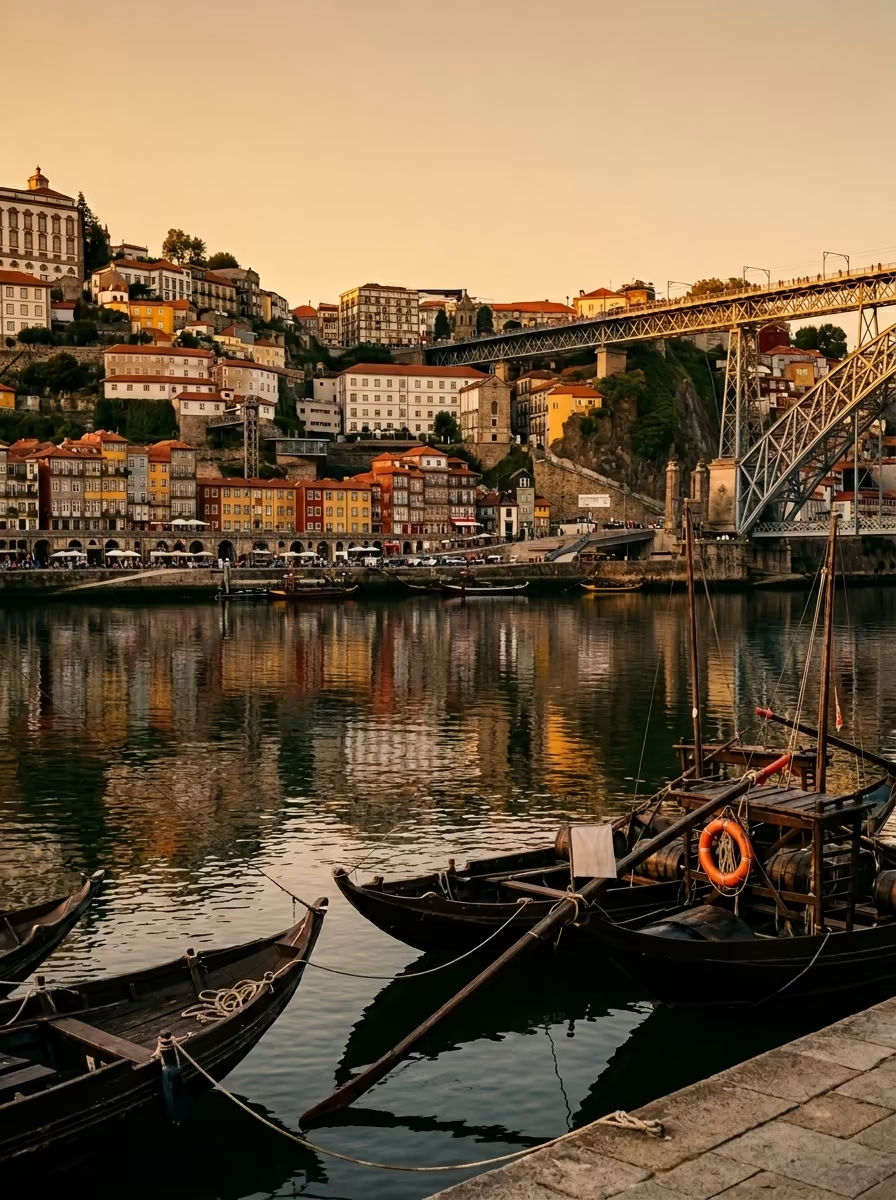
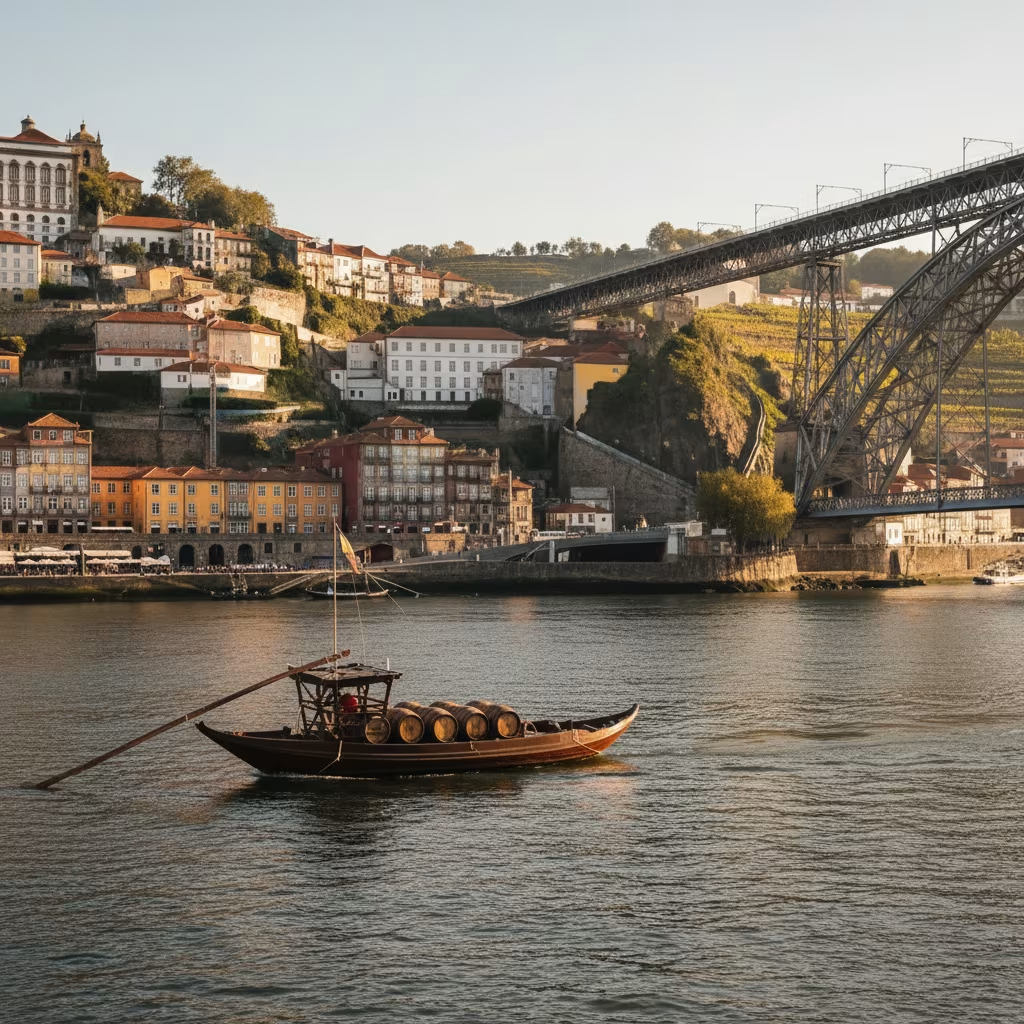
The TAP flight from London descends steeply over the coast, then swings inland over the Douro, and for about thirty seconds you see the city in its entirety: the gorge the river cuts through, the tilework on the church facades catching the afternoon light, the impossibly steep streets running down toward the water, and the low arch of the Dom Luís I bridge connecting everything to the lower, quieter south bank. Then the plane banks away and you don't see any of it again until you're in a taxi heading into Ribeira, and by then you're already trying to figure out how to extend your stay.
I've been to Porto four times, each time with the intention of staying fewer days than I actually stayed. It's a city that works on you slowly: less immediately seductive than Lisbon, less monumental than Madrid, but more lived-in than either. The tourism is real and it's busy in peak months, but the city is large enough and layered enough that you can walk twenty minutes from the main sights and find yourself in a neighborhood that doesn't seem to have noticed tourism at all.
This guide is for four days, which is enough to understand the city without exhausting it. The Douro Valley day trip on day four is the reason to stay that long: it's one of the most beautiful train rides in Europe and the wine tastings at the quintas are the best argument I know for slow travel.
Porto without the Disneyfication
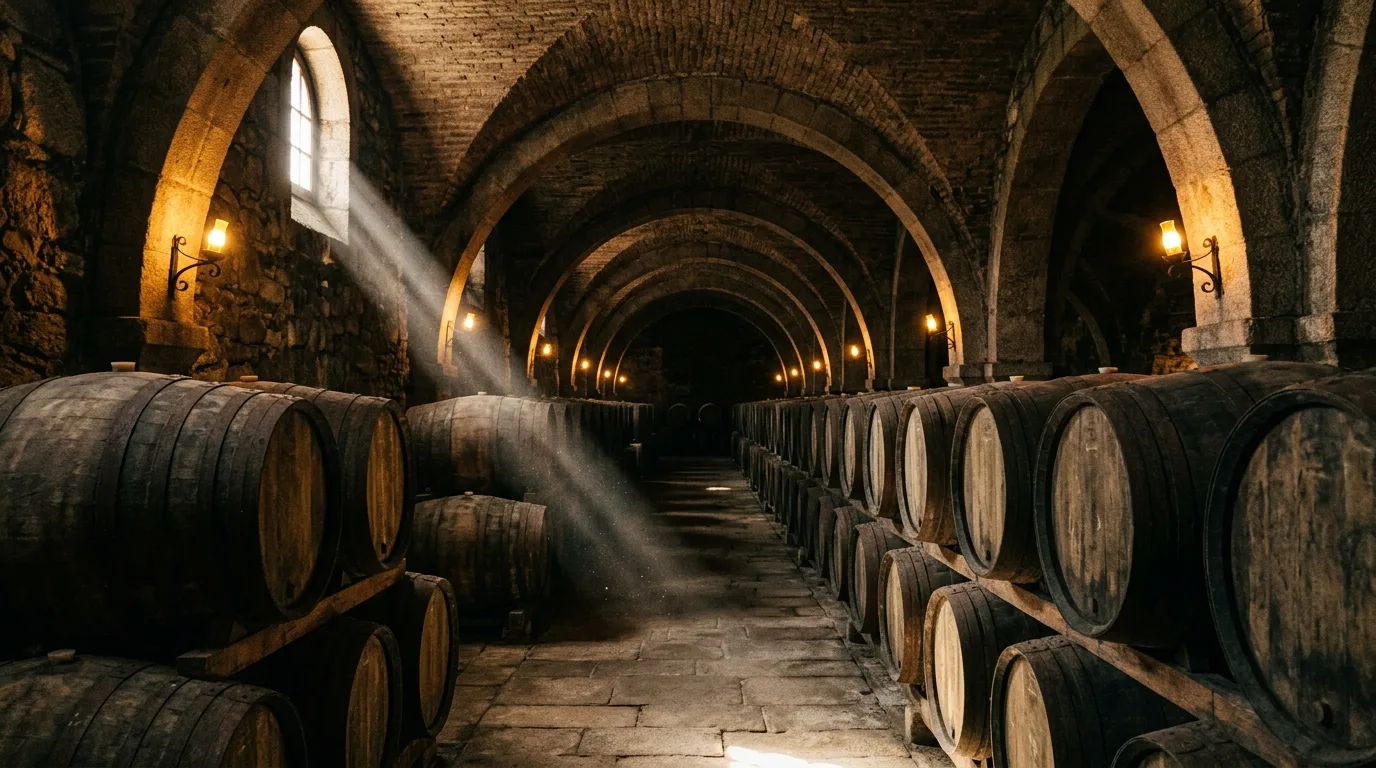
Porto makes sense as a destination if you're interested in the honest version of European travel: a city that has beautiful things but hasn't been Disneyfied around them, where the famous bookshop (Livraria Lello) is genuinely famous but also genuinely one of the most beautiful bookshop interiors in Europe, where the port wine tastings at the Vila Nova de Gaia lodges cost €10–15 and are conducted by people who actually work with the wine. It doesn't require significant travel budget to do well. The food is good and cheap by Western European standards: a full meal at a tasca in the Bonfim neighborhood costs €8–12 with wine.
Porto is not the right city for people who need a beach within walking distance (the closest beach, Foz do Douro, is a bus ride away and faces cold Atlantic water), want club-heavy nightlife, or are looking for the kind of curated boutique hotel experience that Lisbon's Chiado neighborhood delivers. It's also a city with significant hills: the Ribeira waterfront is beautiful but the neighborhoods above it (Vitória, Cedofeita) require either the funicular or serious climbing, which matters if you have limited mobility.
For people who want wine, architecture, interesting food at non-London prices, and a city that rewards walking without a map, Porto is one of the strongest cases for a European city break that isn't the obvious five.
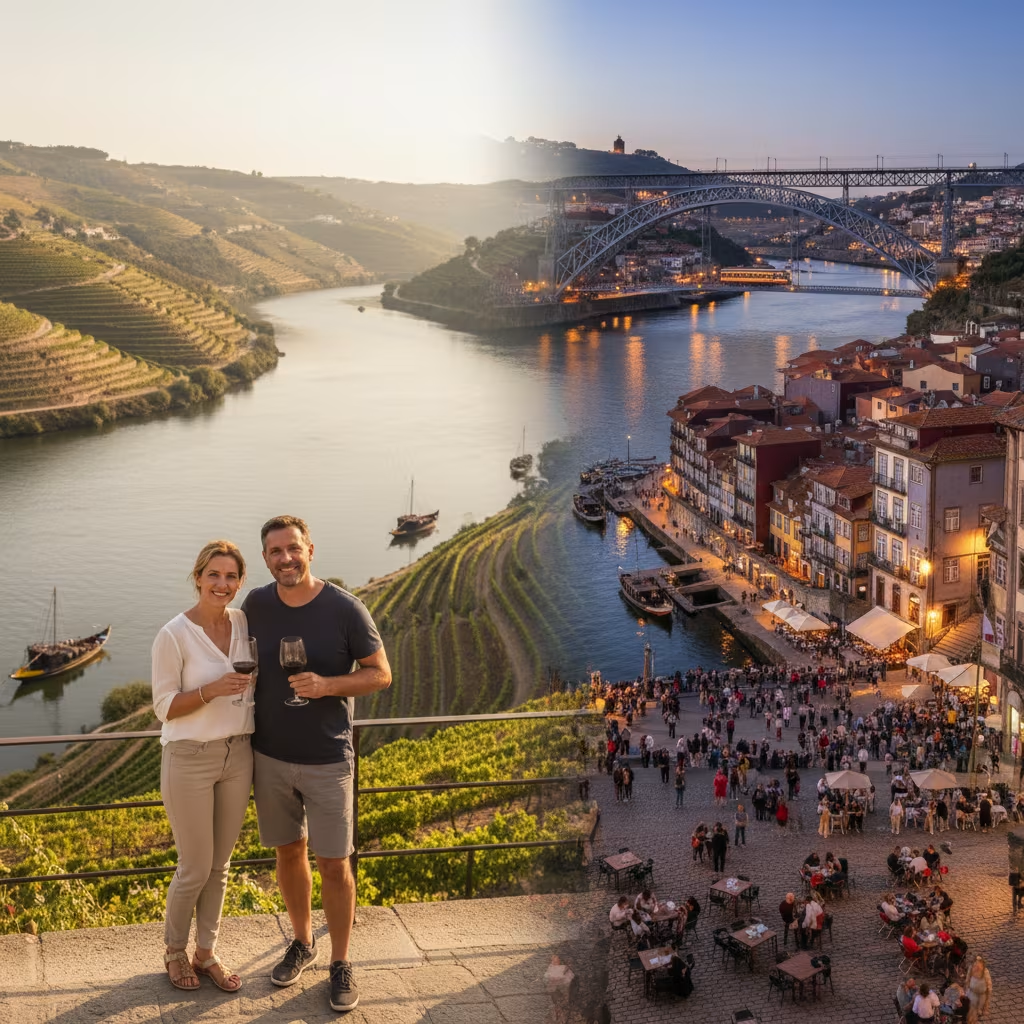
Four days: Ribeira, Gaia and the Douro
Day 1 Ribeira and the south bank. Arrive and walk directly to the riverfront: Cais da Ribeira is the stone quay that runs along the north bank, and it's the first thing you should see even if it's the most touristy. Get your orientation from the water. Cross the Dom Luís I bridge on the upper deck (pedestrian, free) for the view back across the city. Come down to the lower south bank and walk into Vila Nova de Gaia, the port wine lodge district, arriving at the Graham's or Ramos Pinto lodge for a late-afternoon tasting (€12–15, book ahead in July–August). Walk back across the bridge on the lower deck as the light fades. Dinner at Cantinho do Avillez in the Ribeira, António Avillez's more casual Porto outpost, where a meal for two with wine runs about €45.
Day 2 Cedofeita and the churches. Morning at the Livraria Lello (€5 entry, deductible from any book purchase) before the crowds arrive: get there at 9:15 AM. Then walk north to the Cedofeita neighborhood, which has the best independent shops, the best second-hand bookshops, and some of the most interesting café culture in the city. Lunch at the Mercado de Bom Sucesso, a covered market with a wide selection of local food stalls at fair prices. Afternoon at the Igreja de São Francisco for the gold-encrusted interior, which is genuinely extraordinary; then walk the Clérigos Tower for the view. Evening in the Bonfim neighborhood: dinner at Taberna Santo António (€15–20/person, excellent bacalhau) and a glass of wine at a wine bar on Rua do Anjo.
Day 3 Foz and the Atlantic coast. Take tram line 1 (the historic yellow tram, runs along the river to the coast) to Foz do Douro, where the river meets the ocean. Walk the Marginal (the coastal promenade) north. Lunch at Cafeína in Foz, a neighborhood institution, the Sunday brunch queue is long but the weekday lunch is calm. Afternoon back in the Matosinhos neighborhood, which has the best fish restaurants in Porto: the whole area around Rua de Heróis de França is lined with restaurants serving grilled catch of the day from the adjacent fish market. Book at Restaurante Gavina or simply walk in and order the fish of the day (€12–18 with accompaniments). Return by metro from Matosinhos Sul.
Day 4 Douro Valley train. The CP regional train from Porto Campanhã station to Pinhão runs along the Douro River valley, an 80km journey that takes about two hours and is considered one of the most scenic rail routes in Southern Europe. At Pinhão, walk to the Quinta do Crasto or Quinta do Vale Meão (the latter requires a taxi, 15 minutes) for a vineyard visit and tasting. Return to Porto by early evening. This day costs: train €15 return, tasting €15–25, lunch at a quinta restaurant €20–30. It is the best €60 you will spend in Porto.
Ribeira, Cedofeita or Gaia: choosing a base
Ribeira / Historic Center
Staying in or immediately adjacent to the riverfront puts you in the most photographed part of the city but also the noisiest at night (bars close at 2 AM). The Flores Village Hotel is a mid-range option in a converted town house: €100–130/night, beautiful common areas, slightly small rooms. For a splurge, the Torel Avantgarde on the hill above Ribeira has extraordinary views and costs accordingly (€200–280/night).
Bonfim
The neighborhood east of the center where locals actually live, with independent restaurants and cafés that don't have English menus. A 15-minute walk from the main sights. Best for Airbnb rentals (€60–90/night for an apartment) or the Tattva Design Hostel, which has excellent private rooms at €70–85/night.
Boavista
The western residential neighborhood, quieter, more local, better restaurant-to-tourist ratio. The Sheraton Porto Hotel is the business traveler's default here and occasionally has good rates (€100–150). Best for travelers who prefer peace over access.
Getting in from Lisbon, then walking everywhere
Flights to Porto Francisco Sá Carneiro Airport (OPO) operate from most major European cities, including direct services from the UK, France, Germany, and Scandinavia. From Lisbon, the CP Alfa Pendular train takes 2h45m and costs €25–35, running roughly hourly: this is the correct option if you're combining cities.
From the airport, the metro (Line E, violet) runs directly to the center for €2.45 (Andante card). Taxis cost €25–30. The Andante card is rechargeable and works across metro, tram, and bus: buy it at the airport metro station for €0.60, then load credit. A day pass is €4.15.
Within the city, you'll walk most places: Porto's neighborhoods are compact and dense. For the riverfront tram (line 1) and funicular, €3–4/ride or use the Andante card. A local SIM or Airalo eSIM is advisable for Maps navigation on the steep, sometimes confusing street network.
April to June, and what São João does to prices
April through June is the optimal window: warm enough (18–24°C), not crowded by July-August standards, the azaleas in the city parks blooming, and the Douro Valley just entering growing season. The São João festival (June 23–24) fills the Ribeira with an extraordinary street party that is worth planning around rather than avoiding.
July and August are busy and hot (28–32°C, sometimes more). The Ribeira is crowded, accommodation prices rise 30–40%, and the Douro Valley wine tours are at full capacity. Still worth visiting, but requires earlier bookings.
September and October bring harvest season in the Douro Valley (the best time for wine tourism) and comfortable city temperatures (20–25°C). October is arguably the best single month.
November through March is the honest off-season. Prices drop significantly (accommodation 40–50% below peak), rainfall is frequent (November and December particularly), and several smaller restaurants and wine lodges reduce hours or close Mondays. The city is beautiful in low-light winter conditions and worth considering for budget travelers who don't mind the rain.
Questions people ask before booking Porto
These are the questions that come up most often about visiting Porto.
Do I need a visa to visit Portugal?
EU citizens need only a national ID card. Citizens of the US, UK, Canada, Australia, and most other OECD countries can enter Portugal visa-free for up to 90 days within a 180-day period. Check your country's specific agreement with the Schengen Area if in doubt: Portugal is a full Schengen member.
Should I use cash or card in Porto?
Porto is largely card-friendly: most restaurants, shops, and attractions accept Visa and Mastercard. Some older tascas and market vendors prefer cash. Carry €30–50 in cash for small purchases and market stalls, and use a no-foreign-fee card for everything else.
Is Porto safe for solo travelers?
Porto is generally safe, including for solo women travelers. The Ribeira and Cedofeita neighborhoods are well-lit and busy until late. As with any European city, watch for pickpockets in very crowded areas (the riverfront in peak season, tram line 1). The Campanhã train station area and some streets in the Bonfim periphery are rougher at night, so take taxis rather than walking alone late in those specific areas.
Can I do Porto and Lisbon in one trip?
Yes, and the combination works well. Porto deserves a minimum of three nights; Lisbon four or five. The Alfa Pendular train between them (2h45m) runs frequently enough that you don't need to route through Lisbon coming or going if you're flying in and out of Porto. A common and workable sequence: fly into Porto, four nights, train to Lisbon, four nights, fly out of Lisbon.
Porto meal-price ladder:
| Meal | Figure |
|---|---|
| Tasca in Bonfim (with wine) | €8–12 |
| Taberna Santo António | €15–20/person |
| Fish of the day in Foz | €12–18 |
| Cantinho do Avillez, two with wine | ~€45 |
| Livraria Lello | €5 entry, deductible from a book — arrive 9:15 AM |
0 Comments
No comments yet — start the conversation.