

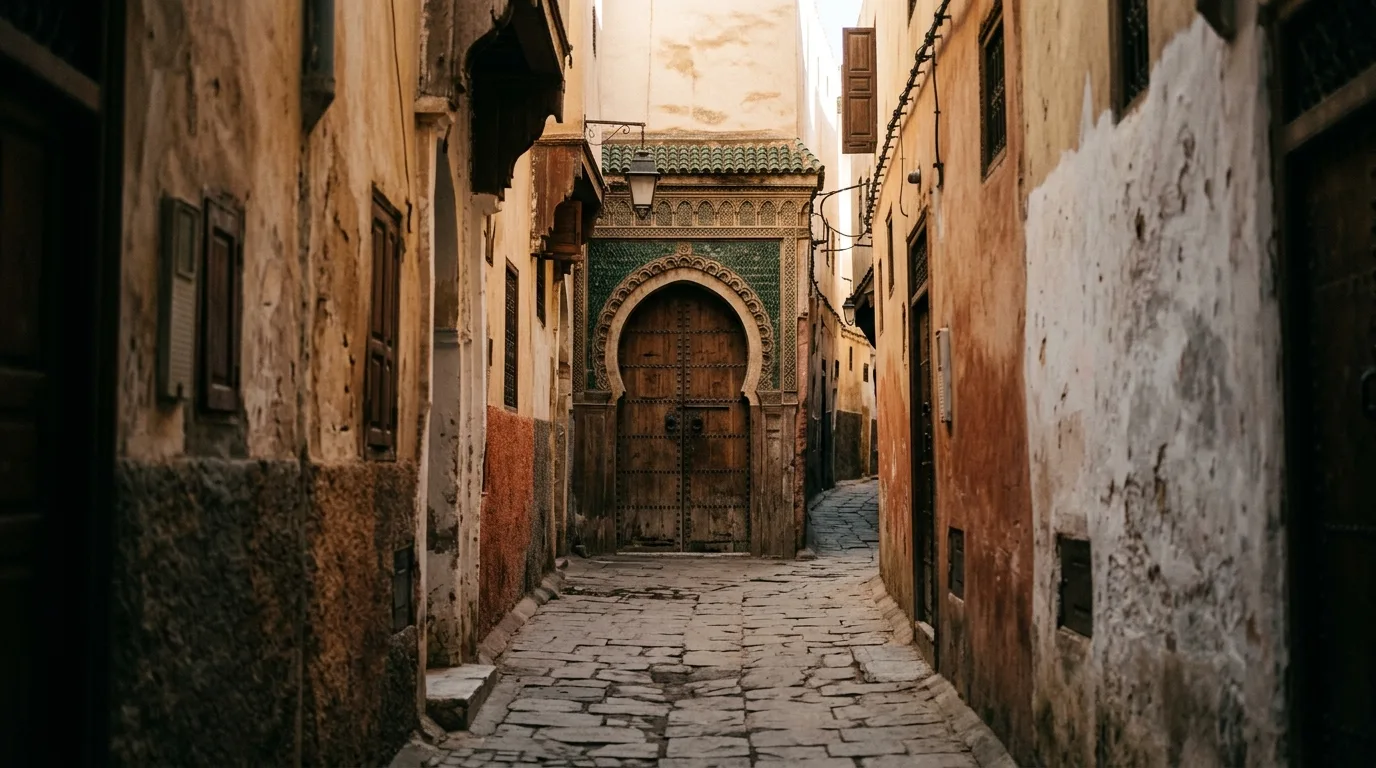
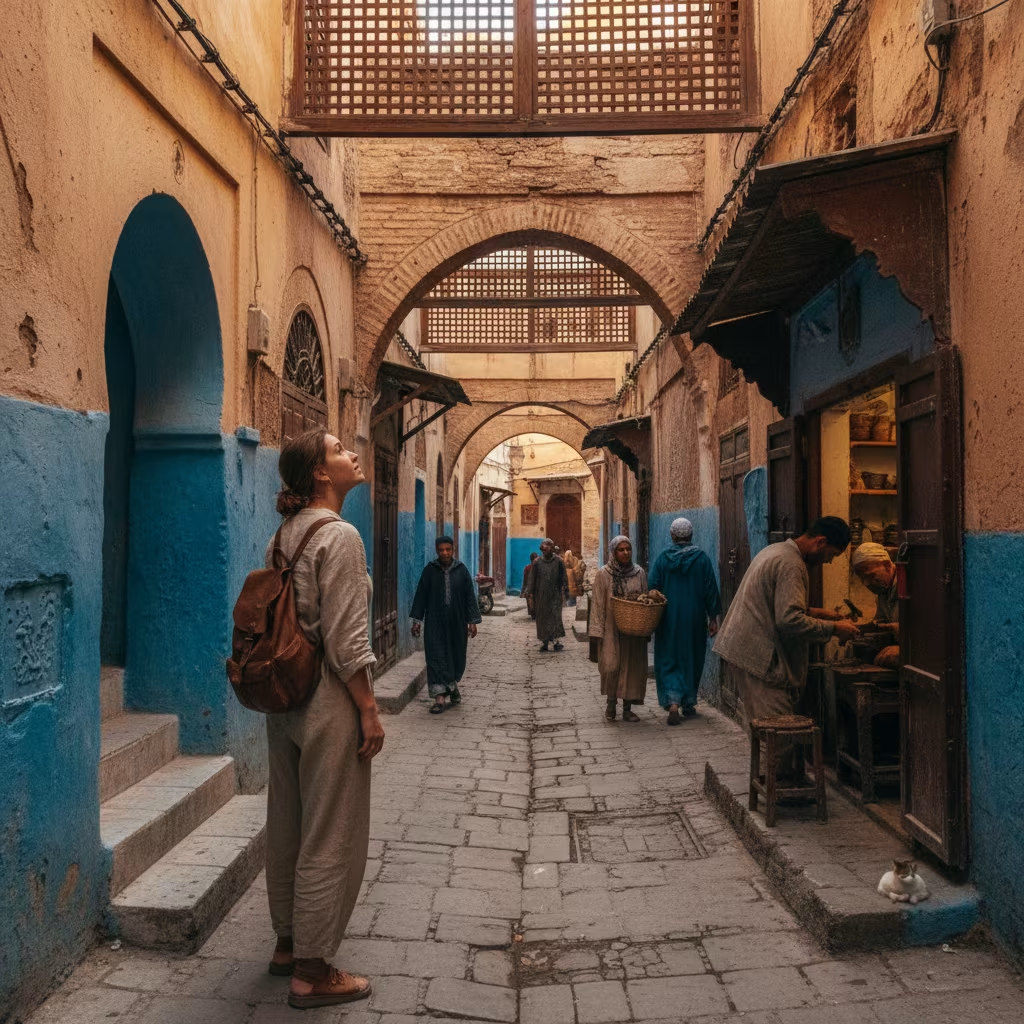
The taxi from Fez-Saïss Airport to the medina takes about thirty minutes along a fast highway, then slows for the new city (Fez el-Jdid), and then you hit the Bab Bou Jeloud — the blue-tiled gate to the old medina, Fez el-Bali — and the driver stops and says this is as far as vehicles go. He's right: beyond the gate, the medina has exactly 9,000 narrow passageways, the widest of which can admit a laden donkey, and cars have not been inside since cars were invented. You carry your bag the 400 meters to the riad, sweating in the dark cool of the alley, and you pass a man carrying an iron door on his head, and another man leading a mule loaded with hides, and a woman in a djellaba turning a corner so quickly she's gone before you fully register her, and you understand that whatever framework you use to understand cities is going to need adjustment.
Fez el-Bali is a UNESCO World Heritage Site founded in 859 CE. The Qarawiyyin University, which still operates within it, is the oldest continuously operating educational institution in the world. The medina's layout has not changed significantly in 900 years. It has 150,000 residents. And it is, to first-time visitors, genuinely, productively confusing — the kind of environment that strips your navigational confidence and forces you into a different mode of attention.
Six days is the correct amount of time. Four is not quite enough. Eight would be extraordinary.
A living medina, not a museum of one
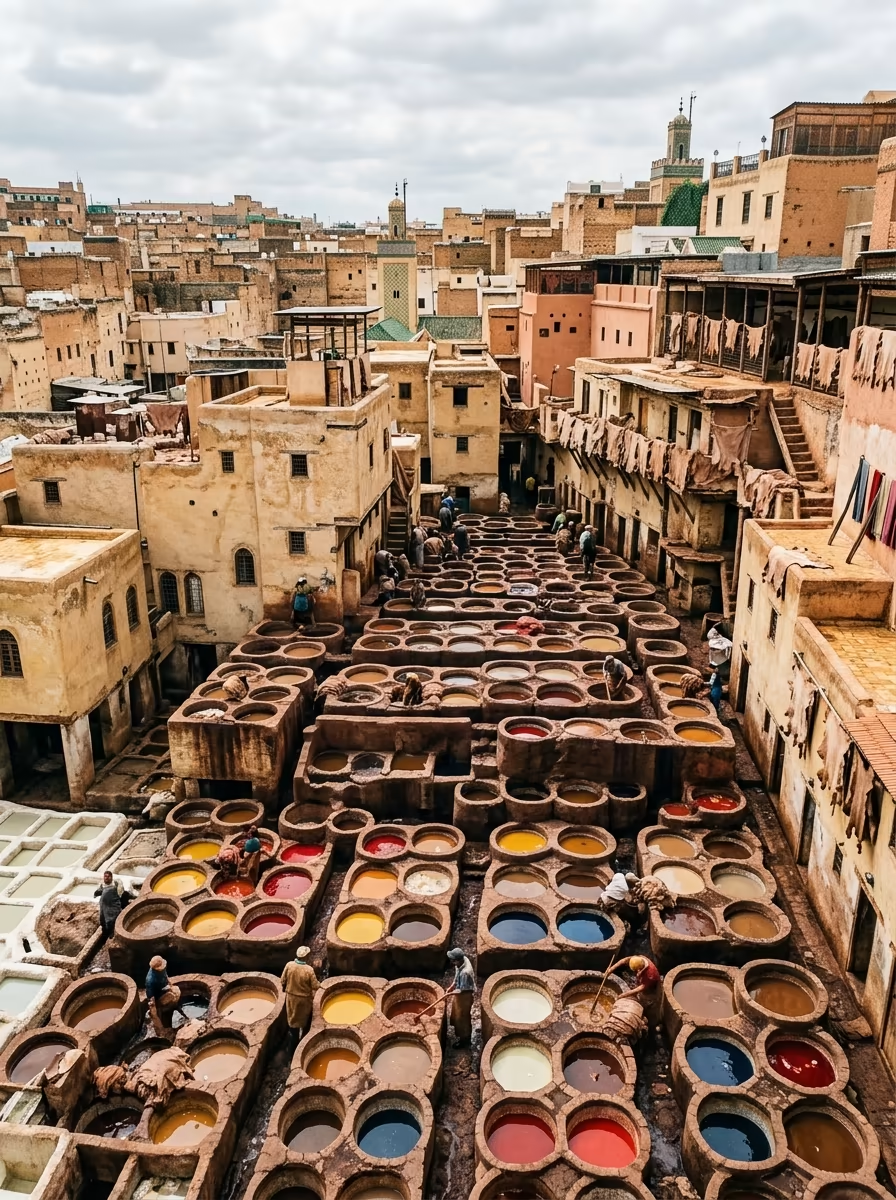
Fez is the right choice for travelers who want an urban historical experience that has not been cleaned up and organized into a tourist route. It remains a living city — not a museum of a medina — with all the inconveniences and all the rewards that entails. The tanneries are still functional and malodorous because they are still producing leather in the same vats they've been using for a thousand years, not because someone decided to preserve them for heritage tourism. The souks (craft markets) still have a clear sectoral logic — coppersmiths in one quarter, carpenters in another, textile merchants in a third — because the guild system that established that logic is still broadly operative.
The honest caveat: Fez is not Marrakech. Marrakech has been significantly more organized for tourism — better hotel infrastructure, more international restaurant options, a more developed arts scene, and a jemaa el-fna that functions as a nightly entertainment district. Fez has a more intense, less curated, more demanding version of the medina experience. For some travelers, this is exactly the point; for others, Marrakech is the better option.
Fez is not suitable if you need predictable navigation (you won't have it), reliable English language support in most of the medina (you won't have it), or the kind of relaxation that doesn't involve productive disorientation. For travelers who can engage on the medina's own terms, it is one of the most extraordinary cities in the world.
Six days at the medina's pace
Day 1 Orientation without a map. Arrive, check into your riad, and spend the rest of the day walking without a route. Deliberately. The goal is not to find anything specific but to understand what type of environment you're in — the sonic landscape (calls to prayer, hammering, mules, children), the olfactory environment (leather, spices, baking bread, sewage in passages where the drainage is old), and the visual density (every surface is decorated, every doorway is carved). Find your way back to the riad using landmarks, not Maps. Dinner at the riad.
Day 2 The tanneries and the leather souk. Chouara Tannery, best viewed from the leather shops surrounding it — arrive before 10 AM before the smell becomes overwhelming and before tour groups fill the viewing terraces. The vats (stone pools of pigment, lime, and pigeon dung used in the curing process) are medieval chemistry that still works; the colors are extraordinary (saffron yellow, poppy red, indigo blue). A sprig of mint is offered at the viewing terraces to hold over your nose. Then: walk through the leather souk with no purchase obligation — look at the craft relationship between what you just saw and the finished goods around you. Afternoon more slowly, less purposefully.
Day 3 The Qarawiyyin Mosque and the Nejjarine Museum. The Qarawiyyin Mosque (founded 859 CE, the largest mosque in Africa) is closed to non-Muslims, but the outer courtyard and the streetscapes adjacent to it are accessible and atmospheric. The recently restored Qarawiyyin Library (a separate institution, oldest in the world, some maps and manuscripts of extraordinary antiquity visible through glass on tours — check current access at the tourism office). The Nejjarine Museum of Wooden Arts (a beautifully restored funduq — medieval caravanserai — at 30 MAD entry, the architecture is as interesting as the collection). Lunch at a street-side harira vendor — the thick legume soup with bread is the correct midday meal.
Day 4 Cooking class and evening souk. Morning at the Rcif market (the main fresh food souk adjacent to the medina — the produce, spice, and meat sections are extraordinary and entirely non-tourist-facing). A cooking class in the afternoon in one of several riad kitchens that offer them ($45–60/person): bastilla, a tajine, and a salad preparation session that teaches Moroccan spice logic in a way that simply eating it doesn't. Evening in the brass and copper souk (Souk el-Haddadine) when the lantern-makers are still working by the light of their own product.
Day 5 Day trip to Meknes and Volubilis. Meknes is 60km west by CTM bus (45 minutes, 30 MAD) — the imperial city of Sultan Moulay Ismail, whose 17th-century ambitions produced granaries, stables, and palace walls that still impress by scale alone. The Bab Mansour gate is one of the finest examples of Moroccan triumphal architecture. From Meknes, a petit taxi to Volubilis (30km, 60–80 MAD) brings you to the best-preserved Roman ruins in Morocco — a significant North African Roman city with intact triumphal arch, mosaic floors in situ, and a surprisingly uncrowded site. Return to Fez by early evening.
Day 6 At your own pace. Return to the streets where you got lost on day one and notice what you now recognize. The neighborhood you couldn't place is now mappable in your head. The stall whose function was opaque on day one is identifiable as a dyer's shop. The call to prayer schedule has been unconsciously internalized. This is what extended time in a city does — not accumulation of sights, but calibration of perception. Buy something from the medina before you leave; something made there, not assembled for export.
Riads inside the walls, hotels outside them
Inside the medina A riad is the correct choice — a traditional courtyard house converted into a guesthouse. Most have eight to fifteen rooms, serve breakfast, and provide a calm center in what can be an overwhelming environment. Riad Laaroussa is an elegant mid-range option at $120–160/night. Dar Roumana is smaller and more intimate at $100–140/night. Budget: Dar Batha Hostel has private rooms at $35–50/night near the Bou Jeloud gate.
Outside the medina The Sofitel Fes Palais Jamaï is a luxury hotel built from a 19th-century vizier's palace on the medina's edge at $180–250/night — the garden terrace is extraordinary. For travelers who want a base outside the medina's intensity, this or one of the new ville hotels is an option; but for the full experience, staying inside is right.
Fez-Saïss, the Al Boraq, and walking
Fez-Saïss Airport (FEZ) has direct flights from Paris, Amsterdam, Brussels, Madrid, and London, plus domestic connections to Marrakech and Casablanca. From Casablanca, the Al Boraq high-speed train runs to Fez in 1h45m.
Within the medina: walking only. For the new city, taxis are cheap (15–30 MAD for most trips) and can be hailed easily. Grand taxis (shared long-distance taxis) serve inter-city routes. The CTM bus network covers Meknes, Rabat, and Casablanca at low prices. A Maroc Telecom SIM provides reliable coverage and data throughout the country.
Cash is essential in the medina. ATMs are available outside the Bou Jeloud gate and in the new city. Credit cards work in hotels and some larger restaurants; inside the medina, cash is almost universal.
Spring and autumn — and why to avoid July
March to May and October to November: The optimal windows. Temperatures in the medina are manageable (18–26°C), not the extreme summer heat (40°C+ in July–August inside the walls) or winter cool. Spring flowers in the riad gardens. Less crowded than summer.
June to September Hot and increasingly crowded, particularly in July and August. Ramadan (dates vary annually) changes the medina dramatically — many restaurants close during daylight, and the evening atmosphere is extraordinary; worth understanding before you book.
December to February Cooler and much less visited. Some riads close or reduce services. Rain is possible (December–January). The medina in winter light is very beautiful; the cold is manageable with layers.
Fez: the questions that matter
Do I need a guide in the medina?
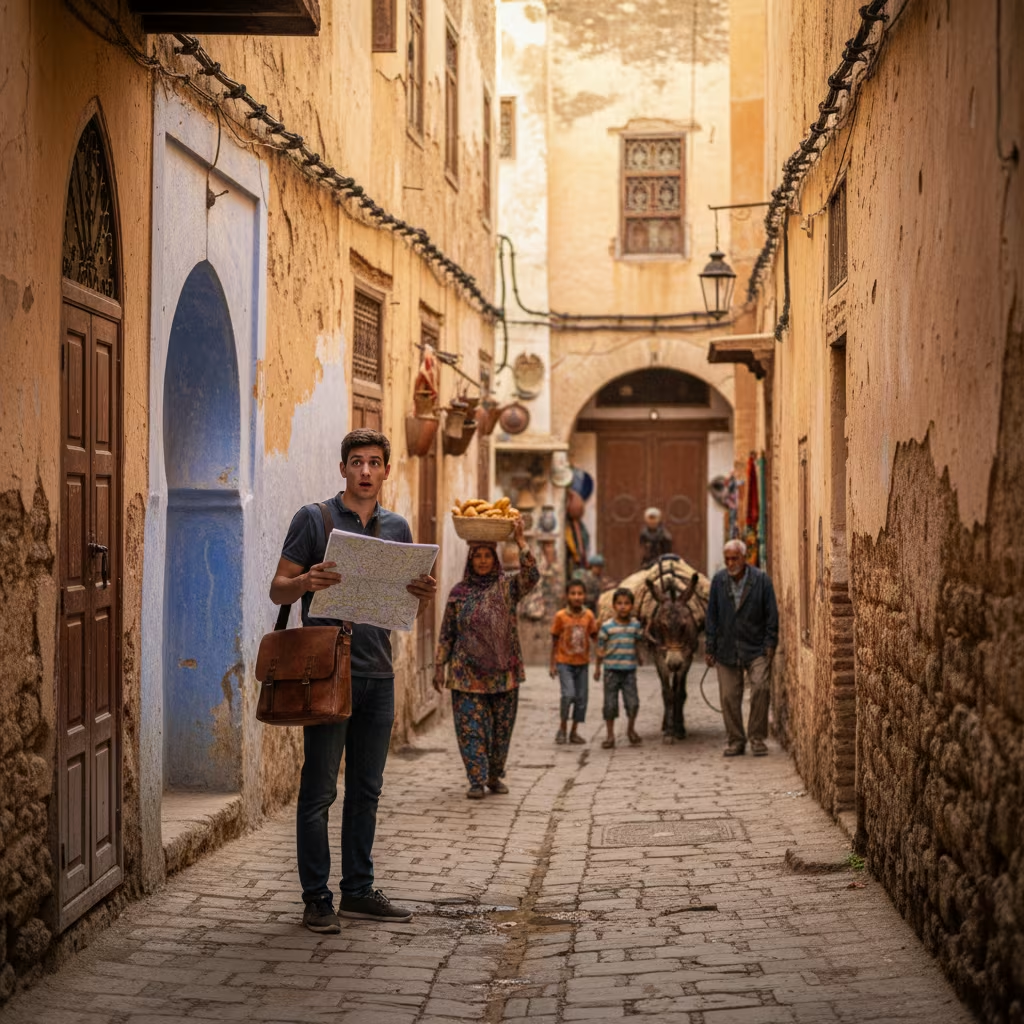
A licensed guide for the first morning — from the official guide office near Bab Bou Jeloud, not the unofficial fixers who approach at the gate — is genuinely useful for orientation and context. After that, the medina is navigable independently with Maps.me offline maps (more reliable in the medina's alley geometry than Google Maps). You do not need a guide for the full six days.
Is Morocco safe?
Morocco is generally safe for tourists, including solo women, with caveats. Persistent commission-based tout culture in the medina is the most common traveler complaint — unofficial guides approach with offers of help that lead to shops where the guide earns a commission. Knowing this in advance defuses it. Crime against tourists is relatively rare. Check current government advisories.
What's the correct response to persistent touts?
A firm, unhurried "la shukran" (no thank you) in Arabic, once, without breaking stride or engaging further. Engaging — even to say no in English — prolongs the interaction. The phrase, delivered calmly, is effective in the vast majority of cases.
Can I visit the tanneries without entering a shop?
The standard access to the tannery overlook is through leather shops that surround it — the shops provide the terrace access and a sprig of mint, and there is social pressure to browse their merchandise. You can decline to buy; do so politely. There is one public rooftop near the Chouara tannery that provides a free view — ask at your riad for the current access point, as it changes seasonally.
Fez medina in figures:
| Fact | Figure |
|---|---|
| Passageways | ~9,000; widest fits a laden donkey |
| Founded | 859 CE — layout unchanged for ~900 years |
| Residents | 150,000 |
| Nejjarine Museum | 30 MAD entry |
| Chouara Tannery | arrive before 10 AM (smell + tour groups) |
0 Comments
No comments yet — start the conversation.