
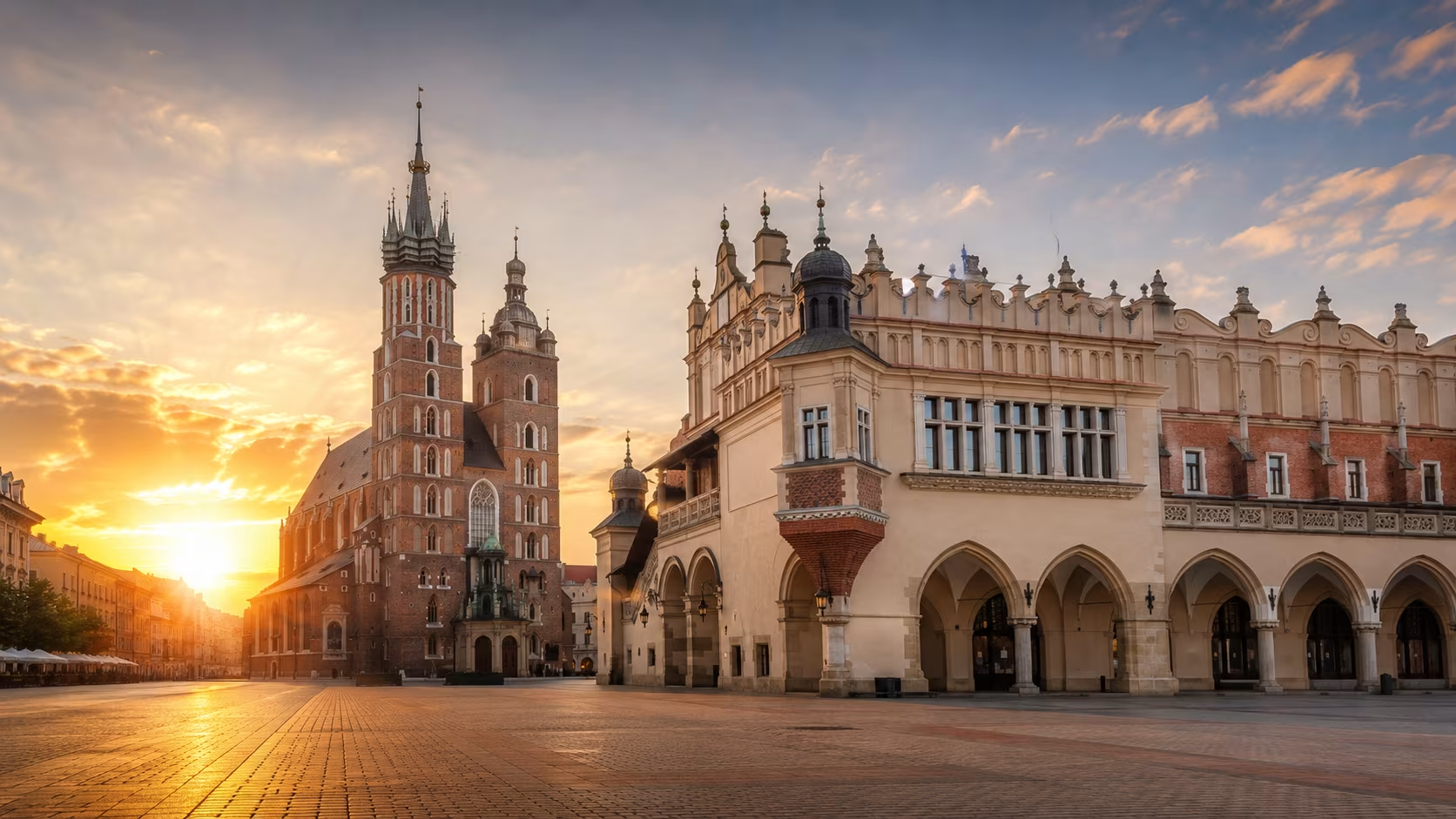
Krakow is Poland's most-loved tourist city. The medieval Old Town (UNESCO since 1978) survived WWII largely intact while most Polish cities were destroyed; the result is the most-preserved medieval cityscape in Central Europe. The 2026 city is firmly in Poland's modernizing trajectory — high-speed rail, modern coffee culture, food scene that has gained international recognition — while retaining the medieval-and-WWII layered history that makes it culturally distinct.
The trip is shaped by one element above others: the proximity of Auschwitz-Birkenau, 70 km west. Most travelers visit Auschwitz during their Krakow trip; the day reshapes the entire visit emotionally. The city itself + the Wieliczka Salt Mine + the Schindler Factory Museum + Kazimierz (the Jewish quarter) all engage with WWII and the Holocaust in ways that other European cities don't, with the same depth.
This is a 4-day guide for first-time visitors who want both the medieval-cultural Krakow and the historical depth surrounding it.
Quick Facts
| Item | Detail |
|---|---|
| Country | Poland |
| Currency | Polish złoty (PLN), ~4.2 PLN/USD or ~4.5 PLN/EUR |
| Language | Polish; English in tourist areas |
| Time zone | CET (UTC+1) / CEST (UTC+2) |
| Tourist tax | 2 PLN per person/night in Krakow |
| Best time | April–June, September–October |
| Visa | Schengen, 90 days for most non-EU |
| Trip length | 3–4 days |
When to Go
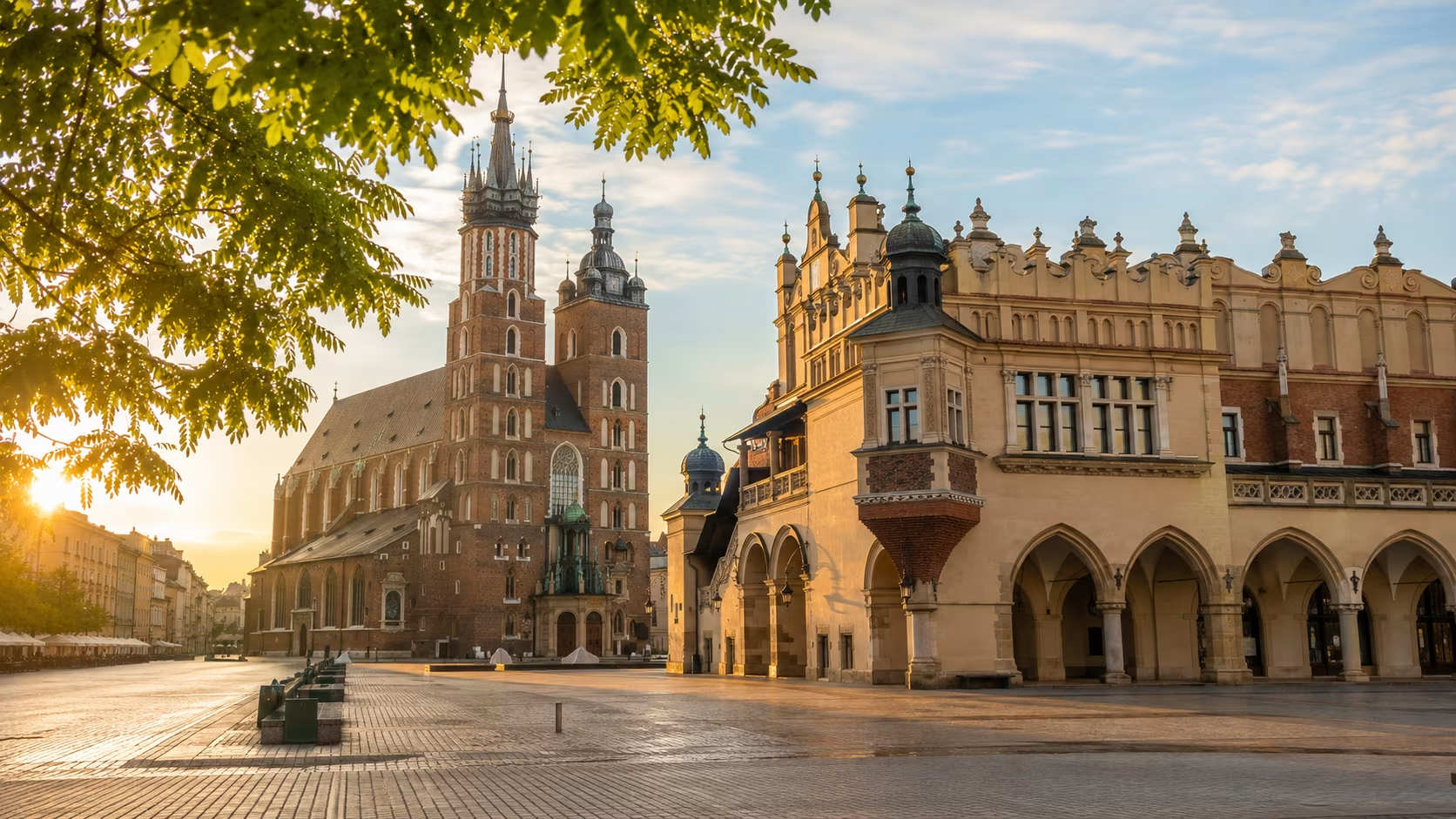
April to June. The sweet spot. Mild (15–22°C), parks flowering, terraces opening.
September to October. The other prime window. Schools resumed, autumn colors in late October, lower crowds.
November to March. Cool to cold (-5 to 8°C). Christmas markets in late November-December are real local events.
Avoid:
- Major Polish holidays for closures (Easter Monday, Independence Day November 11, etc.).
- Mid-July to mid-August for tourist density peak.
- Christmas Eve + Christmas Day when many things close.
Getting In
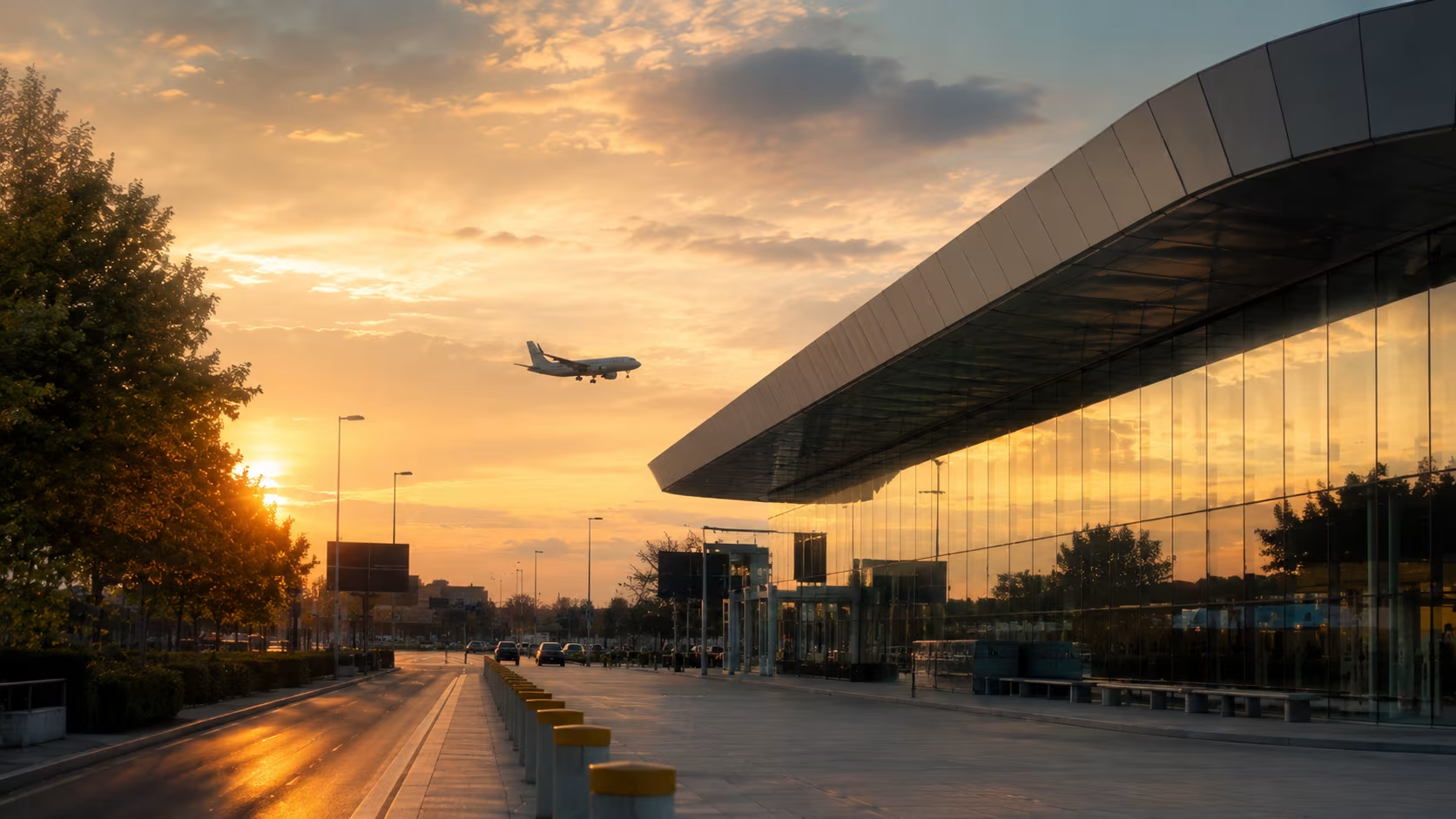
Kraków Airport (KRK). 15 km west of central.
From KRK:
- Train (KMD): 17 PLN, 17 min to central station.
- Bus 252: 4 PLN, 35 min.
- Taxi: 80–120 PLN.
- Uber/Bolt: 50–80 PLN.
Krakow is also a major rail hub. Trains to Warsaw (2h 30m on the new Pendolino), Wroclaw (3h), Berlin (8h), Prague (8h), Vienna (6h).
Getting Around
Walking
The Old Town + Wawel + Kazimierz (Jewish quarter) are all walkable internally. Most central sights are within 1 km of each other.
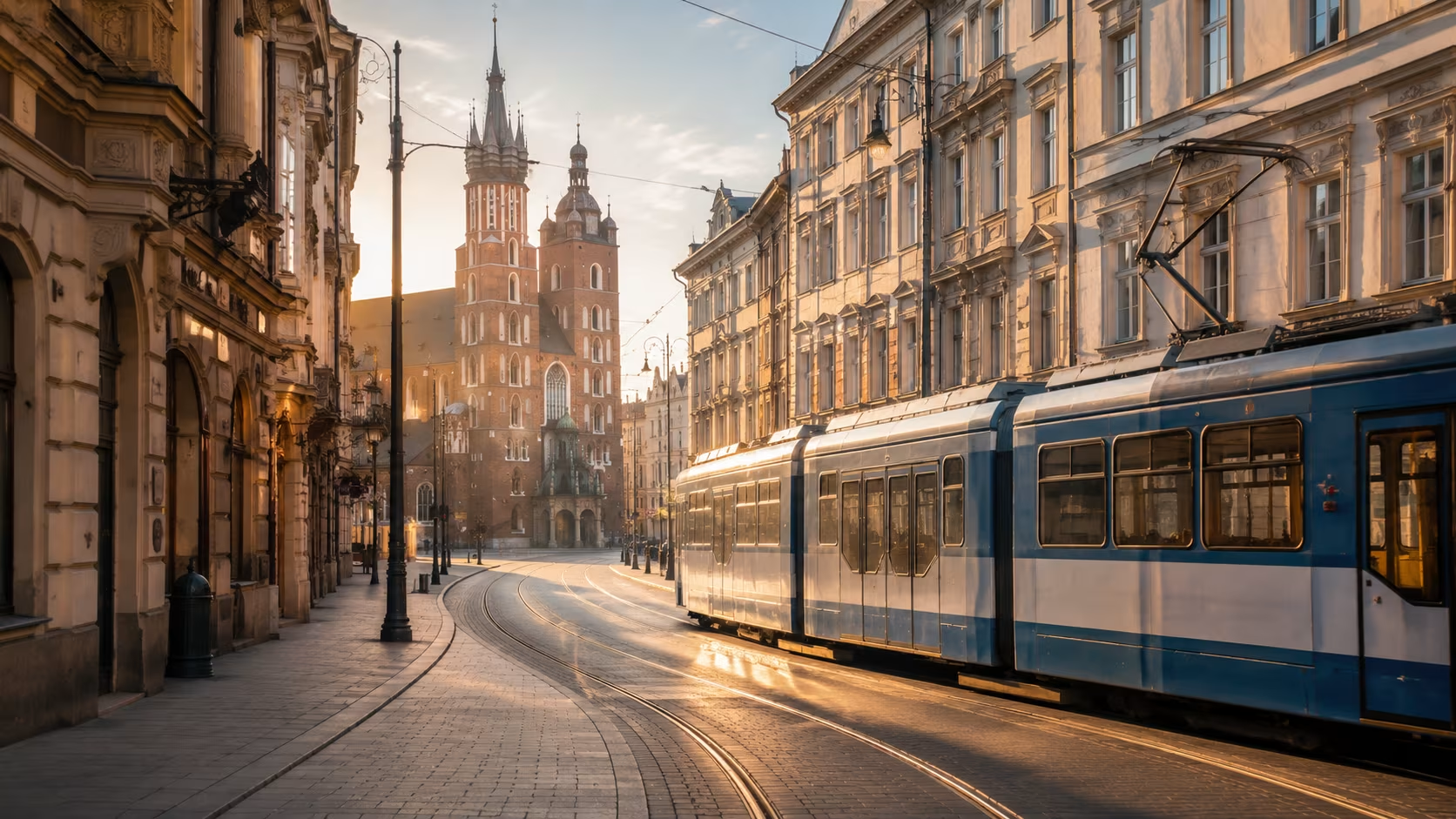
Tram
Krakow's tram network is comprehensive. Single ride 6 PLN; 24-hour pass 22 PLN. Apple Pay tap-in works on many lines.
Taxi / Uber / Bolt
Reliable. Uber/Bolt for tourist-friendly pricing. Most central trips: 15–35 PLN.
Where to Stay
Krakow's neighborhoods feel different from each other.
Old Town (Stare Miasto)
The historical core. Walking distance to the Main Market Square + Wawel Castle. Tourist density at peak. Premium hotels (Hotel Stary, Hotel Copernicus) + boutique guesthouses.
Kazimierz (Jewish Quarter)
South of the Old Town. The historic Jewish quarter; now also the trendy creative-class district. Walking distance to the Old Town. Cafés, bars, restaurants, ruin-bar-style nightlife. Best base for repeat visitors.
Podgórze
South across the river. The former Jewish ghetto + Schindler Factory. Quieter; mid-range hotels.
Around Wawel
Close to the castle + the river. Mix of mid-range to higher-end hotels.
Avoid as a base
- Far suburbs — too far for a 4-day trip.
- Around Krakow Główny station — convenient for trains but transitional.
Realistic 2026 nightly prices (4-star, weekday, shoulder, USD equivalent):
| Neighborhood | Mid-range | Higher-end |
|---|---|---|
| Old Town | $130–230 | $300–650 |
| Kazimierz | $90–170 | $250–500 |
| Podgórze | $70–130 | $200–400 |
| Around Wawel | $120–210 | $280–550 |
Polish currency strength fluctuates; current prices are at the lower end of European capitals.
What to Book in Advance
Auschwitz-Birkenau Day Trip
The Auschwitz-Birkenau memorial site, 70 km west of Krakow. Free entry but timed-entry reservations are mandatory (since 2019). Reservations open 90 days ahead and fill quickly. Book at visit.auschwitz.org.
Three options for visiting:
- Self-drive or public transport: book reservations directly. Trains + bus take 90 min each way; total day 6-7 hours.
- Group tour from Krakow: $40-80 per person. Bus pickup + guided tour + return.
- Private guide: $200-400 per person. Same itinerary, smaller group, more thorough explanation.
Allow 4 hours minimum on site (Auschwitz I: 90 min; Auschwitz II Birkenau: 90 min; transit between them: 30 min). The visit is heavy + historically essential.
Wawel Castle
The royal residence on the hill above the Old Town. Multiple sections sold separately with different ticket combinations. The State Rooms + Royal Apartments + Treasury are the key sections. Total ~80 PLN for combined ticket. Walk-up usually fine; book online for time slots in summer.
Wieliczka Salt Mine Day Trip
The medieval salt mine outside Krakow, UNESCO. 99 PLN entry. Bus/tour from Krakow: 30-45 min each way. Allow 5 hours total.
Schindler's Factory Museum
The former enamel factory of Oskar Schindler, now a museum about Krakow under Nazi occupation. 32 PLN. Books out 1-2 weeks ahead.
Premium Restaurants
- Bottiglieria 1881 (1-Michelin-star, the city's premier).
- Copernicus Restaurant (Hotel Copernicus, modern Polish).
- Trzy Rybki (modern Polish).
Day 1 — Old Town
08:30. Coffee. Cytat Cafe for specialty. Karma Coffee Roasters. Cafe Camelot for traditional café feel.
09:30. Main Market Square (Rynek Główny). The 13th-century medieval square — Europe's largest medieval main square. Visit:
- St. Mary's Basilica (15 PLN) — the famous trumpet call from the tower every hour.
- Sukiennice (the Cloth Hall, the medieval merchants' hall, free) + the Sukiennice Museum (30 PLN, the Polish 19th-century painting collection upstairs).
- Town Hall Tower (free; 16 PLN to climb for panoramic view).
Allow 2.5 hours total.
12:30. Lunch in the Old Town. Pierogarnia Krakowiacy for working-class pierogi. Pod Wawelem for upscale Polish. Café Camelot for casual.
14:00. Walk through Old Town small streets. Florianska Street (the famous shopping/walking street). The Floriańska Gate + Barbican at the northern end (the medieval defensive structures).
15:00. Czartoryski Museum (50 PLN). Recently renovated. Holds da Vinci's Lady with an Ermine + Rembrandt's Landscape with the Good Samaritan. Allow 90 minutes.
16:30. Walk back through the Old Town as evening light arrives.
17:30. Aperitivo at Massolit Books & Café (English-language bookshop + bar, atmospheric). Bania Luka (rooftop with Wawel view).
19:30. Dinner. Bottiglieria 1881 (1-star, book ahead). Copernicus Restaurant. Pod Aniolami for traditional Polish in cellar setting (since 14th century building).
Day 2 — Wawel + Kazimierz
09:00. Coffee.
10:00. Wawel Hill. Walk up to the castle complex. Visit:
- Wawel Cathedral (15 PLN) — the Polish coronation church, burial place of kings.
- Wawel Castle State Rooms (35 PLN) — the Renaissance palace.
- Royal Apartments (35 PLN) — additional ticket.
- Treasury + Armory (25 PLN) — additional ticket.
- Dragon's Den (10 PLN) — the legendary cave; opens spring-autumn.
Allow 3.5 hours total for the full Wawel complex.
13:30. Lunch near Wawel or in Kazimierz. Klezmer Hois for traditional Jewish-Polish.
15:00. Walk to Kazimierz (15 minutes). The historic Jewish quarter, now also a creative-class neighborhood. Visit:
- Old Synagogue (15 PLN) — the oldest synagogue in Poland, 15th century.
- Remuh Synagogue + Cemetery (10 PLN) — the working synagogue.
- Galicia Jewish Museum (16 PLN) — the modern museum about Jewish life in pre-war Galicia + the Holocaust.
Allow 2.5 hours.
18:00. Plac Nowy in Kazimierz. The central square; the famous zapiekanki (open-faced toasted sandwiches) at the round market hall. Working-class evening dinner.
19:30. Choose: stay in Kazimierz for dinner (Klezmer Hois, Hotel Pod Roza, Marchewka z Groszkiem) or back in Old Town.
22:00 onward. Kazimierz nightlife. Singer (the famous bar with sewing machines as tables). Mleczarnia (atmospheric).
Day 3 — Auschwitz-Birkenau Day Trip
The most-important + heaviest day of the trip.
08:00. Tour pickup or self-drive start.
09:30. Arrive at Auschwitz I. The original concentration camp; the museum of the Nazi extermination program. Allow 90 minutes. Wear comfortable walking shoes.
11:00. Bus or driver to Auschwitz II Birkenau (3 km away). The larger extermination camp; the famous railway tracks + gatehouse. Allow 90 minutes for slow walking through.
13:00. Lunch. The visitor center has a basic café; some travelers prefer not to eat at the site.
14:30. Drive back to Krakow.
16:30. Arrive central Krakow. Most travelers want quiet time after.
19:00. Dinner.
Day 4 — Choose: Wieliczka, Schindler's Factory, or Slow Day
Path A — Wieliczka Salt Mine + Schindler's Factory
Morning: Wieliczka Salt Mine. Bus 304 from MOS Kurdwanów (30 min) or guided tour. The medieval salt mine with chapels, sculptures, an underground lake. UNESCO. Allow 4 hours total including transit.
Lunch back in central Krakow.
Afternoon: Schindler's Factory Museum (Podgórze district, 32 PLN, booked). The interactive museum about Krakow under Nazi occupation, featuring Oskar Schindler's story but covering the broader history. Allow 2.5 hours.
Evening in Old Town for final dinner.
Path B — Day Trip to Zakopane
The Tatra Mountains, 110 km south. Train + bus to Zakopane (3-4 hours each way). Hiking, traditional highland villages, Polish mountain culture. Better as overnight than day trip; possible as long day if motivated.
Path C — Slow Krakow Day
Morning at Manggha Museum (Japanese art museum, 20 PLN) or MOCAK (Museum of Contemporary Art, 14 PLN).
Lunch at Plac Nowy for zapiekanki.
Afternoon at Schindler's Factory Museum (if not done above).
Final dinner at one of the restaurants you haven't tried.
Path D — Day Trip to Tarnów
70 km east. The Renaissance town with preserved Old Town. Less-touristy alternative for a quiet day. Train: 90 min.
What to Eat
Polish cuisine is heavier and meat-centric, with strong influence from neighboring countries (Russian, German, Hungarian, Austrian).
Headline Dishes
| Dish | What it is |
|---|---|
| Pierogi | Filled dumplings. Multiple fillings: ruskie (potato + cheese), z mięsem (meat), z kapustą i grzybami (sauerkraut + mushroom), sweet versions with fruit. |
| Bigos | "Hunter's stew" — slow-cooked sauerkraut with meat (often pork + beef + game). Heavy winter dish. |
| Żurek | Sour rye soup, often with sausage + egg. Distinctive. |
| Barszcz | Beetroot soup. Christmas Eve classic. |
| Schabowy | Breaded pork cutlet. Polish Sunday classic. |
| Gołąbki | Cabbage rolls stuffed with meat + rice. |
| Bigos | Mentioned. |
| Oscypek | Smoked sheep cheese. Traditional Highland specialty. |
| Zapiekanki | Open-faced toasted sandwiches with mushrooms + cheese. Plac Nowy specialty in Kazimierz. |
| Sernik | Polish cheesecake. |
| Pączki | Filled doughnuts. Eaten especially on Fat Thursday. |
| Vodka | Multiple Polish brands (Belvedere, Wyborowa, Chopin). Drunk straight, cold, often as shots. |
| Żubrówka | Bison-grass-flavored vodka. |
| Polish beer | Tyskie, Żywiec, Lech are the major brands. Craft scene growing. |
Where to Eat
Modern Polish:
- Bottiglieria 1881 (1-Michelin-star).
- Copernicus Restaurant at Hotel Copernicus.
- Trzy Rybki (modern Polish + seafood).
- Studio Qulinarne (modern, contemporary).
Traditional Polish:
- Pod Aniolami (since 14th-century building, atmospheric cellar).
- Klezmer Hois in Kazimierz (traditional Jewish-Polish).
- Pod Wawelem (working-class Polish near Wawel).
- Marchewka z Groszkiem in Kazimierz (modern interpretation of traditional).
Working-Class:
- Pierogarnia Krakowiacy for working-class pierogi.
- Bar Mleczny Pod Temidą (the famous "milk bar" — Soviet-era working-class lunch institution; cheap + traditional).
- Plac Nowy zapiekanki vendors (Kazimierz, working-class evening institution).
- Café Camelot for casual European-Polish.
Costs and Budget
2026 daily budgets per person, excluding flights and hotel (USD equivalent):
| Style | Per day | Notes |
|---|---|---|
| Backpacker | $30-50 | Hostel, milk bar lunches, walking |
| Mid-range | $60-110 | Mix of casual and proper restaurants, museums, transit |
| Comfortable | $130-220 | Better restaurants, premium tour, taxis |
| Higher-end | $300+ | Tasting menus, premium hotel breakfasts, private guide |
Krakow is among the most affordable major European cities. A working-class lunch: 25-50 PLN ($6-12). A sit-down dinner mid-range: 100-200 PLN ($24-48). Premium tasting menu: 350-650 PLN ($85-155).
Practical Info
- Cards. Universal in tourism. Cash useful at smaller working-class places.
- Tipping. 10% standard at sit-down restaurants. Round up at cafés. Hotel housekeeping 5-10 PLN/day.
- English. Common in tourist areas. Less in residential neighborhoods. Younger Poles speak more English than older.
- Sundays. Most museums open. Most shops closed (Polish Sunday-closing law since 2018). Restaurants generally open.
- Pickpocketing. Real around tourist sites. Standard precautions.
- Smoking. Banned indoors at restaurants.
- Crime. Generally low. Standard urban precautions.
- The aggressive promoters. Restaurants in Old Town sometimes have promoters trying to bring tourists in; politely decline + walk to a place you've researched.
Common First-Timer Mistakes
- Skipping Auschwitz because it's heavy. It's foundational; most travelers value the visit despite the difficulty.
- Eating only at restaurants on the Main Market Square. Tourist factories. Walk one block off; quality jumps + prices drop dramatically.
- Not booking Auschwitz in advance. Sells out 4-8 weeks ahead in summer.
- Visiting Auschwitz after a heavy lunch. Many travelers regret eating just before; the visit affects appetite.
- Trying to do Auschwitz in 2 hours. It's a 4-hour minimum visit.
- Skipping Kazimierz. It's the city's most-distinctive neighborhood beyond the Old Town.
- Drinking vodka shots without food. Polish vodka tradition pairs with food (zakąski — small bites).
- Visiting only Old Town. Wawel + Kazimierz + Podgórze are essential.
- Photographing inside synagogues without permission. Some require modesty + photo restrictions.
- Not booking Schindler's Factory. Walk-up sometimes works but reservations are safer.
Final Notes
Four days in Krakow is the right length for a focused first visit. One Old Town day, one Wawel + Kazimierz day, one Auschwitz day, one Wieliczka or slow day.
The quietest piece of advice: spend 30 minutes at the Galicia Jewish Museum in Kazimierz, specifically with the Polin Andrey Spielmann photographic exhibition that documents Jewish life in pre-war Galicia. The photographs of vibrant Jewish communities — schools, weddings, work, family meals — reveal what was lost in a way the Auschwitz visit (necessarily focused on the destruction) cannot. The Krakow that stays with you isn't only the medieval Old Town photograph; it's the cumulative weight of understanding what the city was, what it lost, what it has rebuilt, and what remains.
0 Comments
No comments yet — start the conversation.